
Reviewed · COOKING CLASSES
Verona: Authentic Pasta Making Class with a Local Family
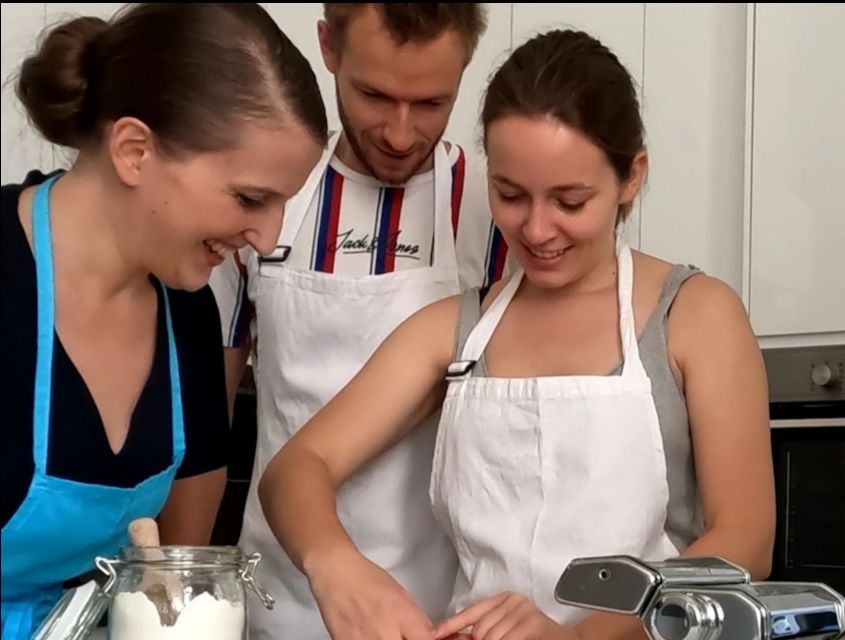
The best part of this Verona experience is that you do not simply watch someone roll pasta. You make the dough yourself, shape several pasta cuts, prepare ravioli, and then sit down with Valentina and Dave to eat what you cooked. It has the feel of an Italian family evening, held inside historic Palazzo Balladoro near Castelvecchio.
I like two things in particular: the small group of no more than 10, which gives you room to work and ask questions, and the practical range of techniques. You move from tagliatelle and ravioli to tagliolini, pappardelle, farfalle, maltagliati, decorated pasta, and colored pasta. Valentina teaches, while Dave adds plenty of humor at the table.
The main consideration is time. Four hours is a sizeable part of a Verona day, and this is a social cooking evening rather than a quick demonstration. The low or no salt and sugar approach may also feel unusual if you prefer heavily seasoned food, though it is meant to let you notice the basic flavors.
In This Review
- Key points to know before booking
- A family-style evening at Palazzo Balladoro
- Starting with pasta dough from scratch
- Tagliatelle and ravioli are the main practical lessons
- Two quick sauces and a meal made by you
- Why the small group and hosts matter
- How the four hours are likely to feel
- What makes this feel more personal than a standard class
- Who should book this Verona pasta class?
- Booking details that affect your choice
- Should you book it?
- FAQ
- Where does the pasta-making class take place?
- How long does the experience last?
- Who teaches the class?
- What kinds of pasta will I make?
- Is food and wine included?
- Can I cancel or pay later?
Key points to know before booking
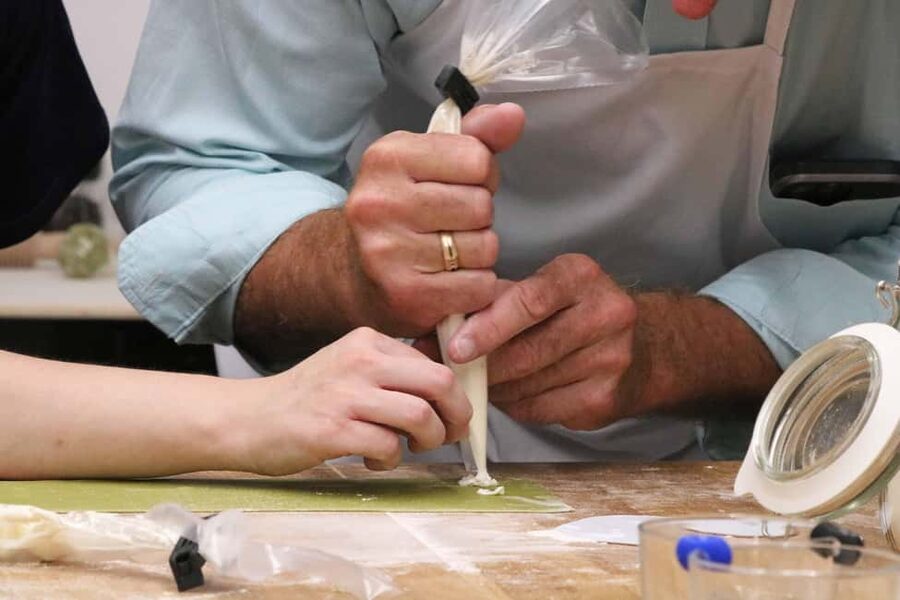
- Make several pasta shapes by hand: Learn classic cuts including tagliatelle, tagliolini, pappardelle, farfalle, and maltagliati, plus fresh ravioli.
- Cook with Valentina and Dave: Valentina leads the pasta work, while Dave helps create the relaxed, funny mood praised by many guests.
- Eat a three-course meal: Your finished pasta becomes part of the meal, served with two quick sauces and a glass of wine from the Veneto region.
- Work in a central Verona setting: Palazzo Balladoro is a historic building one minute from Castelvecchio and about five minutes from the Arena.
- Keep the group intimate: The class is limited to 10 participants, useful for hands-on instruction rather than a sit-back lesson.
- Take the class home: Recipes and practical tips are included so you can repeat the pasta-making process in your own kitchen.
A family-style evening at Palazzo Balladoro
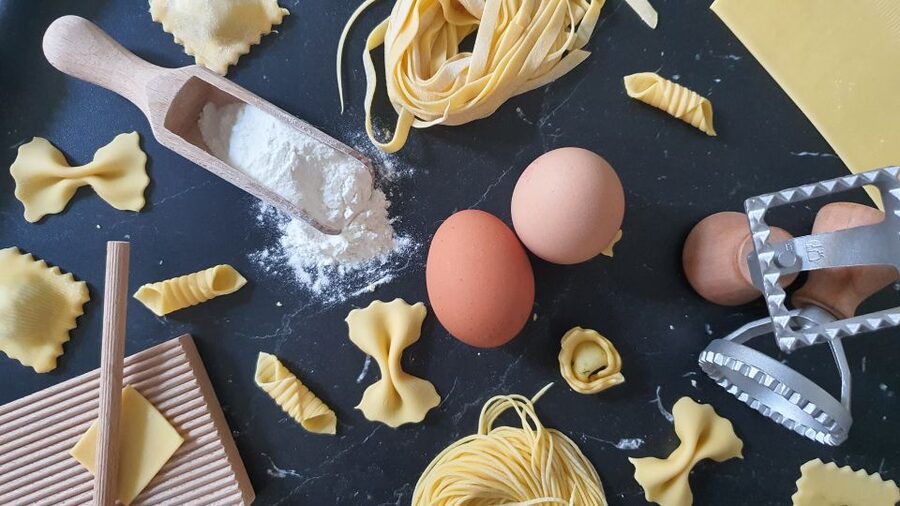
This class begins at Palazzo Balladoro, a historic building in the heart of Verona. Its location is handy: you are about one minute on foot from Castelvecchio and roughly five minutes from the Arena. That makes the experience easy to pair with a day of sightseeing, though you should allow four hours rather than trying to squeeze it between short visits.
The setting matters here. You are not being taken to a distant farm or restaurant outside the city. You meet in central Verona, then settle into a meal and cooking session with a local couple. The atmosphere is meant to feel like joining an Italian household for an evening, with shared work, conversation, and food at the same table.
Valentina and Dave are the hosts. Valentina handles the teaching and pasta techniques, while Dave brings an entertaining presence to the evening. The combination is important because pasta making can become overly technical if the class focuses only on measurements and cutting. Here, the lesson is balanced with conversation and laughter.
You should arrive ready to participate. The supplied equipment and ingredients are provided, so you only need an appetite, enthusiasm, and perhaps a camera for the experience. The activity ends back at the same meeting point, which keeps the evening simple from a transport point of view.
More Cooking Classes in Verona
- Verona: Pasta and Tiramisu Cooking Class with Fine Wine
★ 4.8 · 633 reviews - Verona: Pasta and Tiramisu Cooking Class With Free Flowing Wine
★ 5.0 · 575 reviews - Verona: Hands-on Fresh Pasta and Tiramisù Cooking Class
★ 4.9 · 295 reviews
Starting with pasta dough from scratch
The foundation of the class is fresh pasta dough. You will work with the basic process from the beginning rather than receiving dough that has already been prepared. That gives you the most useful lesson to take home, since the texture of the dough determines how easily it rolls, cuts, and holds its shape.
Valentina explains the techniques and small adjustments that help beginners. The class is designed for a range of abilities, so you do not need to arrive with professional kitchen skills. You will have a chance to practice, make corrections, and repeat the motions instead of simply watching a perfect result appear.
This is where the small group makes a real difference. With a maximum of 10 participants, the class can remain hands-on. You can ask about the dough, cutting, filling, or sauce preparation as you work. The experience is less suited to someone who wants a polished show and more suited to someone who wants to leave with a usable foundation.
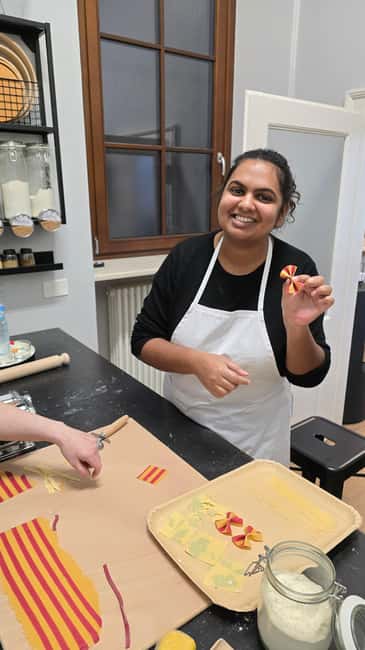
I particularly like that the lesson covers more than one familiar noodle. Many pasta classes stop at a single shape, but this one introduces several cuts. You will see tagliolini, tagliatelle, pappardelle, farfalle, and maltagliati, along with decorated and colored pasta.
Each shape teaches something different. Thin cuts require control and even rolling. Wider ribbons show how pasta thickness affects texture and cooking. Farfalle and maltagliati demonstrate that fresh pasta does not need to look perfectly uniform to be good. Decorated and colored pasta add a creative side to the class, though the supplied information does not specify which colors or designs you will make on a particular evening.
Tagliatelle and ravioli are the main practical lessons
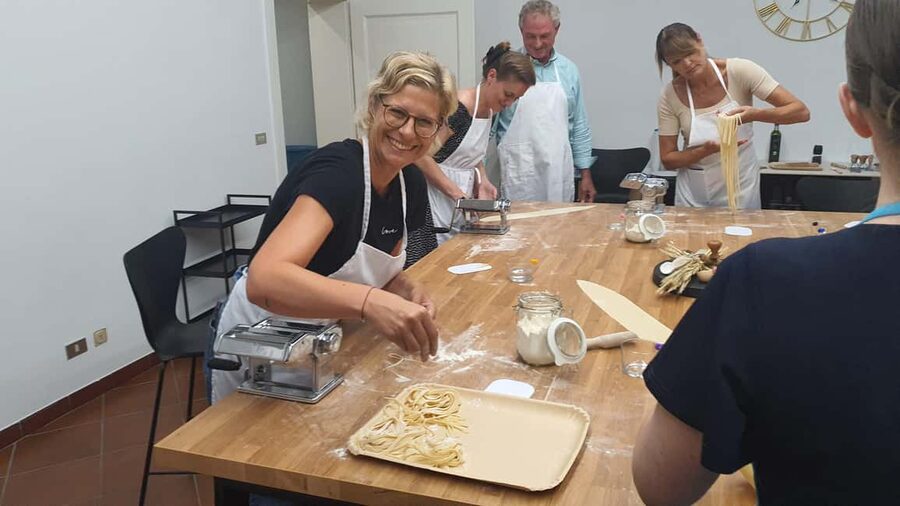
The class highlights homemade tagliatelle and ravioli in particular. These are useful choices for a first pasta lesson because you learn both a cut pasta and a filled pasta. Tagliatelle gives you practice rolling and slicing, while ravioli introduces filling, folding, and sealing.
Ravioli also rewards patience. The dough needs to be handled carefully so the filling stays inside and the edges close properly. You will learn by doing this yourself, with Valentina offering tips as you work. The aim is not just to produce a plate for the evening, but to understand a process you can repeat at home.
You also receive recipes and tips after the class. That adds value to the $107.62 price because the lesson does not end when dinner is cleared away. You have written guidance for practicing again, and the class gives you the memory of how the dough should feel and how the cuts should look.
The reviews supplied for this experience repeatedly praise the clear instructions and the strong foundation for future cooking. That is a useful sign for beginners. You should still expect to practice at home before your pasta looks exactly as you want, but the class gives you a starting point rather than a single meal with no follow-up.
Two quick sauces and a meal made by you
Along with the pasta shapes, you learn the techniques and secrets behind two quick and easy sauces. The information does not name the sauces, so you should not book this expecting a specific recipe such as carbonara or ragù. The useful promise is simpler: you learn sauce methods that can fit into an ordinary home kitchen.
This part of the class helps connect pasta making with actual cooking. Fresh pasta is only half the lesson. You need to know how to finish it, how to pair it with sauce, and how to taste the basic ingredients. The class brings those steps together before you sit down for dinner.
The meal is three courses, with the pasta you prepared during the class included in the food you taste. Water is unlimited, and you receive a glass of a special wine produced in the Veneto region by a small company. It is a modest but welcome regional touch, especially after several hours of cooking.
The food is prepared and served with low or no salt and sugar. This is deliberate. The hosts want you to notice the natural taste of the ingredients rather than rely on strong seasoning. I see this as a plus if you enjoy learning how food is built, but it is worth keeping in mind if you usually prefer salty or sweet dishes.
The meal is also part of the social side of the class. You are not sent away with a container of pasta after the lesson. You sit around the table, eat together, and continue the conversation. Many of the strongest comments about the experience focus on the warmth of this meal and the feeling of being welcomed into a home.
More Workshops in Verona
- Verona: Gelato Making Class
★ 4.8 · 348 reviews - Verona: Italian Cooking Class with Pasta, Risotto and Tiramisù
★ 5.0 · 268 reviews - Homemade Gelato Making Class in Verona
★ 5.0 · 146 reviews - Verona: Wine Tasting Workshop near Juliet’s Balcony
★ 4.7 · 76 reviews
Why the small group and hosts matter
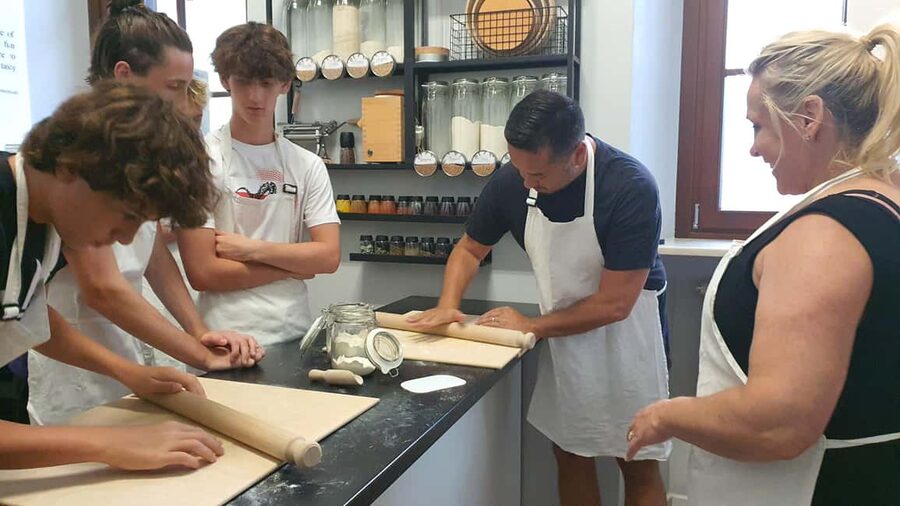
A cooking class can feel awkward when the group is large. You may spend much of the lesson standing behind other people or waiting for access to the work surface. This experience limits participation to 10 people, which gives it a more personal scale.
The smaller format also supports different skill levels. If you already cook, you can ask about shaping, sauces, or ways to repeat the recipes. If you are new to fresh pasta, you have a better chance of receiving direct help when your dough or ravioli needs attention.
Valentina is repeatedly praised for her teaching. Her role is more than showing a finished dish. She provides tips and explanations while participants practice. Dave is praised for being funny and entertaining, which helps the evening feel social rather than like a formal culinary lecture.
I would choose this class if you want to meet people as much as you want to learn a recipe. Couples, solo visitors, and small groups can all fit the format, but the experience works best for people willing to share a table and talk with others. If you want complete privacy or a highly structured professional workshop, this may not be the right match.
The language options are English and Italian. That makes the class workable for English speakers, while Italian speakers can also participate in the hosts’ native language. No other languages are listed, so you should plan around those two.
How the four hours are likely to feel
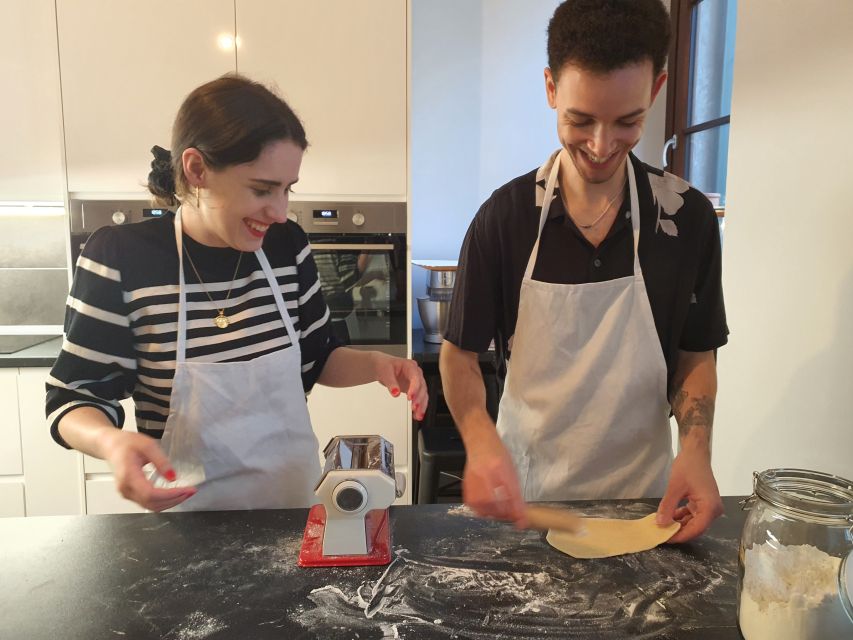
The four-hour duration allows the class to unfold at an easy pace. You begin with pasta dough and move through shaping, ravioli, decorated or colored pasta, and sauces before sitting down for the meal. The exact starting times depend on availability, so check the schedule when choosing your date.
This is not a rushed activity you complete in an hour before dinner. The hands-on work takes time, and the meal is part of the experience rather than an optional extra. I would keep the rest of that evening fairly open so you can enjoy the table conversation without watching the clock.
The duration also explains part of the price. At $107.62 per person, this costs more than buying a plate of pasta in Verona. But you are paying for instruction, ingredients, equipment, recipes, a three-course meal, unlimited water, wine, and four hours with a host couple in a small group.
The value is strongest if you will actually use what you learn. Someone who wants only dinner could find a restaurant better suited to the budget. Someone who wants an activity, a meal, and practical pasta skills receives considerably more from the fee.
You should also remember that the class ends at Palazzo Balladoro. There is no separate transfer, sightseeing stop, or transport component included. The central location is useful, but the activity itself stays focused on cooking and dining.
What makes this feel more personal than a standard class
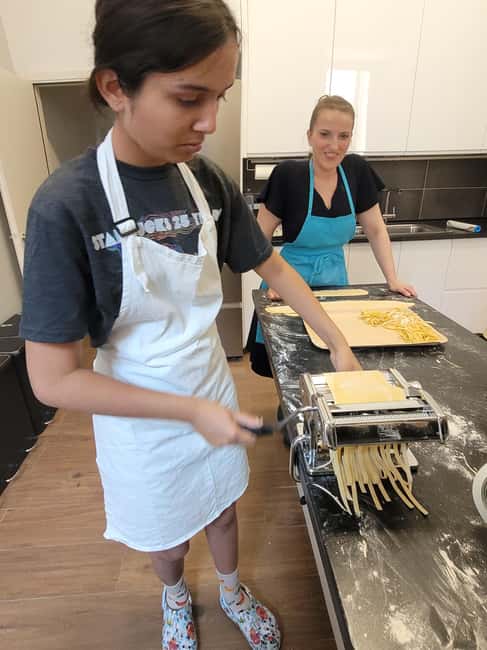
The hosts describe the event as becoming part of their family for an evening. That does not mean you should expect a staged village performance or a formal cultural presentation. The appeal is more direct: you prepare food together, share jokes, and eat at the same table.
The comments supplied about the class repeatedly highlight the hosts’ friendliness, the laughter during the evening, and the intimate setting. That matches the structure of the activity. You work with your hands, talk while you cook, and then share the results.
I like this approach because food traditions are easier to understand when you participate. You see how pasta changes as it is rolled and cut. You learn that uneven pieces can still become a good meal. You also get a better sense of the time and care behind homemade pasta than you would from ordering it in a restaurant.
The family focus does require a little flexibility from you. You need to be comfortable with a communal meal, instruction from hosts with their own style, and a seasoning approach that keeps salt and sugar low. In return, you get an evening centered on people and food rather than a checklist of Verona sights.
Who should book this Verona pasta class?
I would recommend it most strongly to:
- First-time pasta makers who want clear instruction and a chance to practice.
- Home cooks who will use the recipes and tips after returning home.
- Couples and solo visitors looking for a friendly evening activity in central Verona.
- Food-focused families and friends who enjoy working together rather than watching a demonstration.
- People who value local contact, shared conversation, and a meal prepared during the class.
It may be less suitable for anyone looking for a fast activity, a private class, or a full restaurant-style tasting with many named dishes. The class is also not the best choice if you strongly prefer heavily salted or sweet food, since the hosts intentionally keep seasoning restrained.
The 5.0 rating from 64 reviews is unusually consistent, and the praise centers on specific features: Valentina’s teaching, Dave’s humor, the hands-on work, the small group, and the meal at the end. Those are the parts most likely to shape your experience.
Booking details that affect your choice
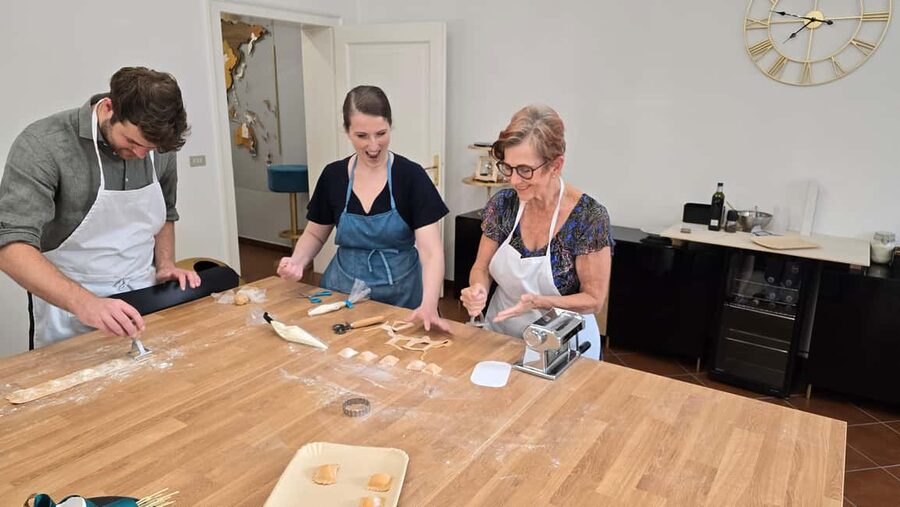
The price is $107.62 per person. Included are the hands-on class, three-course meal, unlimited still and sparkling water, one glass of regional wine, recipes, and tips for making pasta at home.
You can cancel up to 24 hours before the activity for a full refund. The reserve-now, pay-later option also lets you hold a place without paying immediately, useful when your Verona schedule is still changing.
The class lasts four hours, but the available start times can vary. Check the date and start time carefully, especially if you plan to visit the Arena or Castelvecchio on the same day. The meeting point is Palazzo Balladoro, and the activity returns there at the end.
Bring your appetite and enthusiasm. The hosts provide what you need for the cooking, so there is no need to pack equipment. A camera is suggested if you want a record of the evening, but the important item is a willingness to get flour on your hands.
Should you book it?
Book this class if you want more than a meal in Verona. You will learn several pasta forms, prepare ravioli and sauces, eat a three-course dinner, and spend the evening with Valentina and Dave in a small group.
At $107.62, it is a good value for a four-hour cooking and dining experience, especially if you plan to use the recipes later. Skip it if you want a short demonstration, a private setting, or a menu built around strong seasoning. For most food lovers who enjoy conversation and practical skills, this is one of the better ways to give a Verona evening a personal touch.
FAQ
Where does the pasta-making class take place?
The class begins and ends at Palazzo Balladoro, a historic building in central Verona. It is about one minute on foot from Castelvecchio and five minutes from the Arena.
How long does the experience last?
The cooking class and meal last four hours. Starting times vary, so check availability for your chosen date.
Who teaches the class?
Valentina teaches the pasta-making techniques, and Dave helps host the evening. The class is offered in English and Italian.
What kinds of pasta will I make?
You will prepare homemade tagliatelle and fresh ravioli. You will also learn classic cuts including tagliolini, pappardelle, farfalle, and maltagliati, plus decorated and colored pasta.
Is food and wine included?
Yes. The experience includes a three-course meal made with the food prepared during the class, unlimited still and sparkling water, and one glass of regional wine from a small Veneto producer.
Can I cancel or pay later?
You can cancel up to 24 hours in advance for a full refund. The reserve-now, pay-later option lets you book without paying immediately.
More Pasta in Verona
- My Granny’s secrets: Making pasta in the heart of Verona
★ 5.0 · 131 reviews - Prosecco and Pasta Making Class at Local’s Home in Verona
★ 5.0 · 30 reviews - Venice: Pasta and Tiramisu Cooking Class with Wine
★ 4.9 · 1,010 reviews - Pasta and Tiramisu Cooking Class with Wine in Venice
★ 5.0 · 945 reviews
Just added around Verona
- Verona: Private 2-Hour Walking Tour★ 4.9 · 41 reviews
- Valpolicella Lunch or Dinner Wine & Food tasting with Amarone★ 5.0 · 43 reviews
- The 10 Tastings of Verona With Locals: Private Food Tour★ 4.5 · 45 reviews
- Arena di Verona Opera Ticket Package★ 4.0 · 46 reviews
- Unique Wine tasting in Verona, with Amarone docg★ 5.0 · 46 reviews
- Verona: the Arena at the Gladiators’ time★ 5.0 · 48 reviews
- Verona: Juliet’s House Fast-Track Entry Ticket & Audio Guide★ 3.5 · 52 reviews
- Valpolicella Wine Experience at Montresor winery★ 5.0 · 54 reviews
Cooking Classes, compared.
Pasta and Tiramisu Cooking Class with Wine in Venice
Read our review →Pasta and Tiramisu Cooking Class with Fine Wine
Read our review →
Market Tour and Cooking Class with a Local Venetian Chef
Read our review →
Hands-on Fresh Pasta and Tiramisù Cooking Class
Read our review →
Italian Cooking Class with Pasta, Risotto and Tiramisù
Read our review →
Pasta and Tiramisu Cooking Class at a Local’s Home
Read our review →Browse the lists this tour appears in