
Reviewed · MURANO GLASS TOURS
Create Your Own Murano Glass: Beginner’s Glassblowing Class
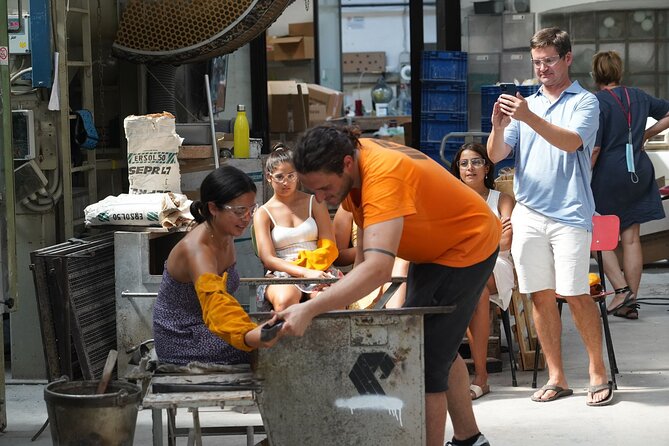
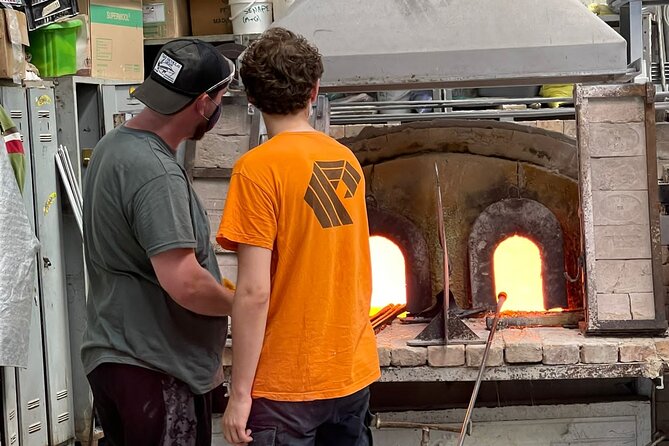
Murano glassblowing is not a spectator sport here. You work beside the furnace, practice the movements, handle molten glass heated to about 1,000°C, and finish with a cup, bowl, or small vase made with your own hands. The instructors, including Hillary, Tam, Melissa, Emilia, and Stefania, guide each step closely.
I like the maximum group size of four, which gives you real time with the instructor instead of a quick turn at the furnace. I also like the honest progression from dry exercises to hot glass, because it lets you learn the basic hand and eye movements before the heat enters the picture.
The catch is simple: this is hot, physical work. You need closed shoes, sensible clothing, a moderate fitness level, and a calm head around intense heat. If you panic easily or have health problems that make this unsafe, choose a standard Murano demonstration instead.
In This Review
- Key points to know before booking
- Why making glass on Murano feels different
- At Fondamenta da Mula 152 in Murano
- Step one: dry practice before the furnace
- Step two: learning to control 1,000°C glass
- Step three: shape your cup, bowl, or vase
- What the small group changes
- Cooling, collection, and shipping
- Timing your Murano day
- Is the $296.41 price fair?
- Who should book this class
- Should you book Create Your Own Murano Glass?
- FAQ
- Where does the Murano glassblowing class meet?
- How long does the experience last?
- How many people can join the class?
- Is the workshop offered in English?
- What can I make during the class?
- Is the glass piece included?
- When can I collect my glass piece?
- Can the finished piece be shipped home?
- What should I wear?
- Is the class suitable for children?
- What happens if I need to cancel?
Key points to know before booking
- You make a real Murano glass piece: Choose a drinking cup, bowl, or small custom vase with help from a working glass artisan.
- Only four people take part: The small group keeps the class personal and allows hands-on instruction.
- The class begins without hot glass: Dry practice builds coordination before you work near the furnace.
- The studio gets hot: Water, safety glasses, and a heat-protective sleeve are provided, but clothing is not.
- Your piece needs time to cool: Pick it up the next day, return later after it has annealed, or pay for shipping.
- The price buys participation, not just a show: At $296.41 per person, this suits you if making something matters more than finding the cheapest Murano tour.
Why making glass on Murano feels different
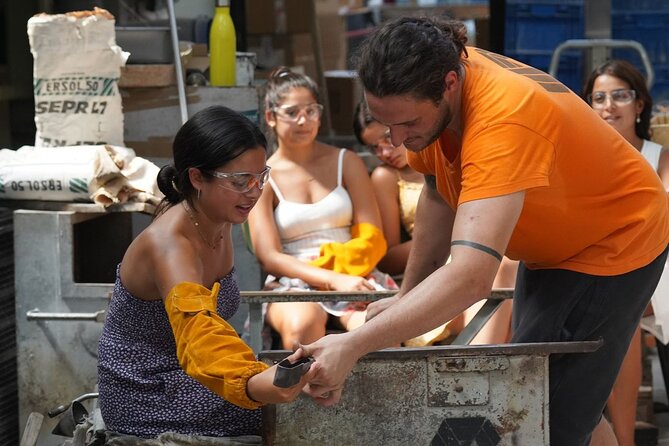
Murano is famous for its glass tradition, but many island visits stop at watching an artisan work from a safe distance. This class changes the balance. You still see the workshop and the artists at work, but you also take a turn with the tools and hot glass.
That distinction matters. Glass looks soft and slow when you see a finished vase in a shop window. At the furnace, it moves quickly and demands constant control. You must keep the glass turning, watch its shape, follow instructions, and act before the material cools too much.
The workshop gives you a practical lesson in why Murano glass requires such skill. The process is not a relaxed craft project where you can stop, rethink, and start again. Your instructor helps you make decisions on the spot, often stepping in to keep the piece safe and on course.
I especially like that the experience takes place in the working factory rather than in a classroom set apart from the craft. You get a close look at the production space and see artists and assistants sharing the area while work continues around you. That can make the session feel less polished than a staged demonstration, but it also makes it more real.
More Workshops in Venice
- Venice: Carnival Mask Workshop
★ 4.5 · 1,925 reviews - Venice: Pasta and Tiramisu Cooking Class with Wine
★ 4.9 · 1,010 reviews - Pasta and Tiramisu Cooking Class with Wine in Venice
★ 5.0 · 945 reviews
At Fondamenta da Mula 152 in Murano
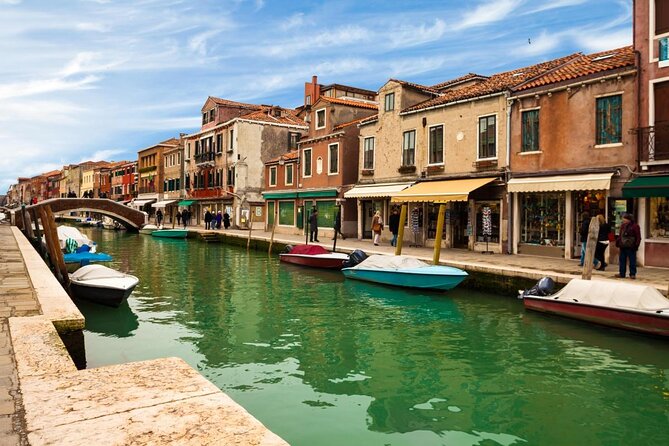
The meeting point is Fondamenta da Mula, 152, 30141 Venezia VE. Check the address carefully before you set out. Murano has several glass companies, and it is easy to walk into the wrong workshop, especially if you arrive by boat and see signs for similar activities nearby.
The location is near public transportation, which helps when planning your route from Venice. Still, give yourself enough time to find the exact building. One participant reached the wrong glass company, and the instructor called to help with the meeting point. That sort of assistance is useful, but it is better not to count on a last-minute rescue.
The activity ends back at the same meeting point. You should plan the rest of your day around the class, since your finished item may not be ready when the workshop ends.
Step one: dry practice before the furnace
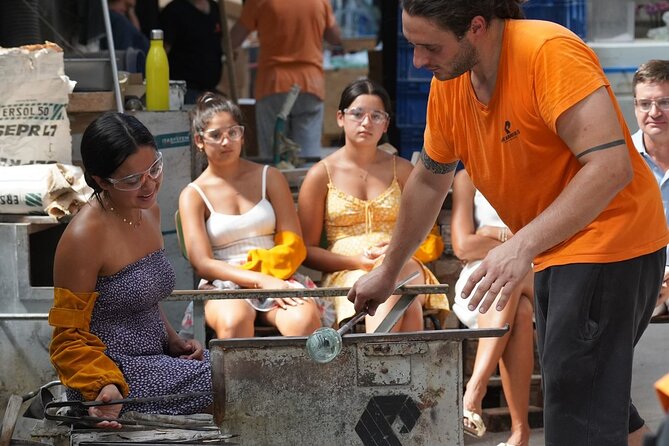
The class starts with practical exercises using no glass. This may sound basic, but it is one of the most useful parts of the lesson. You work on the movements needed for glassblowing and build hand-eye coordination before standing near molten material.
That early practice gives you a chance to listen, watch, and get your hands working together. Glassblowing depends on motion, and the instructor needs you to understand the rhythm before the real piece begins. You are not expected to arrive with artistic or technical experience.
This stage also helps you judge your own comfort level. If the movements already feel stressful, the work with hot glass will demand even more focus. The instructors are patient and adjust their help to each person. Some participants need close guidance at every stage, while others can take more control once they understand the basic actions.
For families, this gradual start is important. The class has been completed by children and teenagers with full support from the staff, including a 12-year-old and a 17-year-old. The physical demands and heat still deserve serious attention, so parents should decide based on the child’s ability to stay calm and follow directions.
Step two: learning to control 1,000°C glass
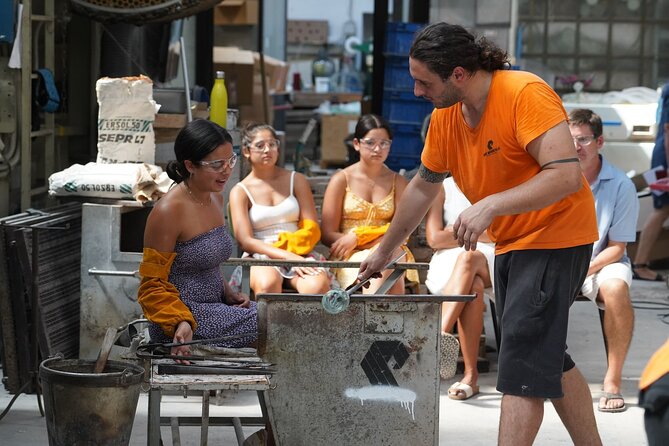
Next comes practice with hot glass. You begin to develop a feel for how the molten material moves and how quickly it responds to your actions. The point is not to work alone. Your instructor remains close and helps you manage the process.
The heat is the main challenge. Water is provided for rehydration, and you receive safety glasses plus a sleeve to protect your arm from the furnace heat. You must bring your own suitable clothing, and synthetic fabric is not recommended.
Wear closed shoes. Do not arrive in slippers, sandals, or flip-flops. Long trousers are a wise choice, too. A family who took part noted that small splashes of hot glass reached exposed legs, without causing a serious problem, but bare skin is an avoidable risk in this setting.
The studio can be hot, though the air movement in the factory may make it more manageable than you expect. Even so, plan for a demanding session rather than a cool indoor activity. If you struggle with extreme heat, panic easily, or have a health condition that makes intense physical work unsafe, this is not the right choice.
More Murano glass visits:
- Boat Trip: Glimpse of Murano, Torcello & Burano Islands
★ 4.3 · 15,699 reviews - Venice: Burano, Torcello & Murano Boat Tour w/Glassblowing
★ 4.4 · 10,245 reviews - Venice: Murano and Burano Boat Tour with Glass Factory Visit
★ 4.2 · 9,527 reviews - Murano, Burano and Torcello Half-Day Sightseeing Tour
★ 3.5 · 7,928 reviews
Step three: shape your cup, bowl, or vase
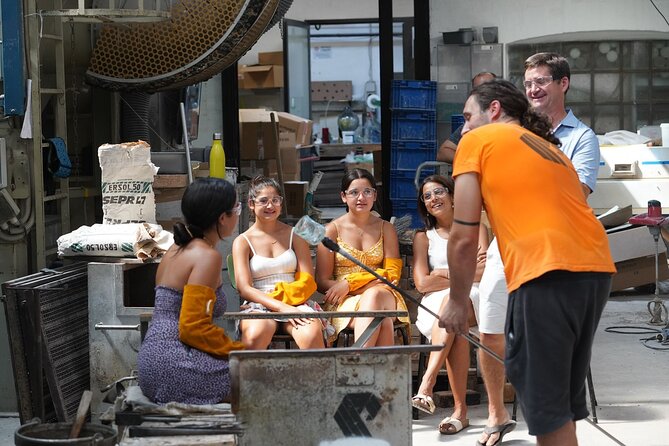
The final stage is your chance to make an original object. You can choose a drinking cup or bowl, or create a small custom vase. The instructor helps you through the process and steps in when precision or safety requires it.
You will not produce a perfect museum piece on your first attempt, and that is part of the appeal. The value is in seeing how your decisions affect the shape, color, and finish. You blow the glass, turn it through colored fragments, and work toward the form you chose.
One instructor explained the process as 87 separate steps. You will not need to memorize all of them, since the teacher talks you through the work as it happens, but the number gives you a sense of the craft’s demands. The finished object is a souvenir with a story, not just something bought from a shelf.
Your instructor may be Hillary, Tam, Melissa, Emilia, or Stefania, depending on the session. The teaching team includes English-speaking instructors, and several of the praised teachers have backgrounds as working glass artists. Tam is originally from Australia, and Emilia is from the United States, so English communication is central to the class.
What the small group changes
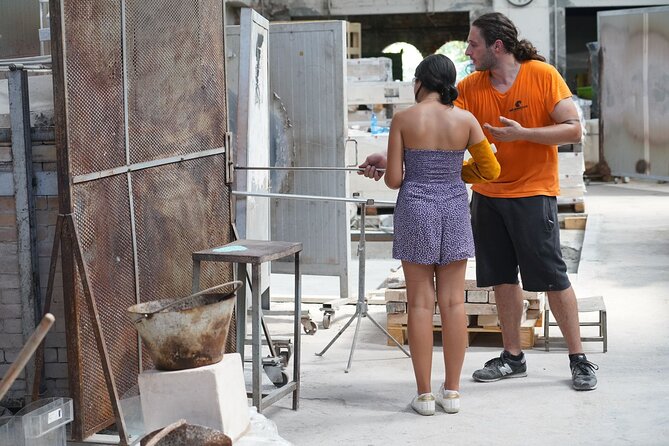
A maximum of four people is a major part of the experience. You are not standing in a large crowd waiting for a brief chance to touch the work. The instructor can watch your movements, answer questions, and give each person a different level of support.
That matters because beginners do not all learn at the same speed. One person may need help holding the tool steady, while another is ready to shape the form with less assistance. The instructors are expected to know when to guide closely and when to let you try.
The small format also makes the workshop feel personal for couples. If only two people book, you may have an especially quiet session, depending on availability. Families should note that a group is limited to four, so a family of five may need to split into separate sessions. One person can join the outing as a camera holder, but only four take part in the class at a time.
The tradeoff is cost. At $296.41 per person, this is a serious splurge in a city full of free churches, inexpensive cicchetti, and lower-cost glass demonstrations. I think the price makes sense if your priority is a guided, hands-on activity and a personal object to take home. It makes less sense if you mainly want to see an artisan demonstrate the process.
Cooling, collection, and shipping
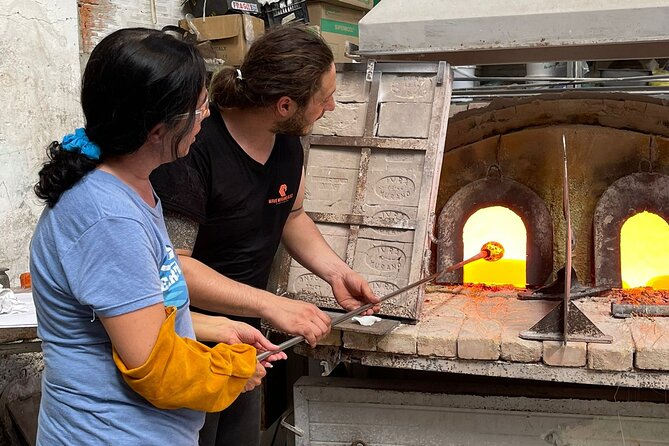
Your object cannot go straight into your bag after you make it. The glass must anneal overnight so it can cool safely and stabilize. This is an essential part of glassmaking, not an administrative delay.
You can pick up the piece the next day. Depending on the schedule, an early morning class may allow collection later that same afternoon, after the required cooling time. A later class may require you to return on another day.
You can also pay to ship the piece anywhere in the world. Shipping is not included in the class price. One family paid €40 to ship two pieces to Indiana, but the exact cost depends on the destination and package.
Think about this before booking. If you are leaving Venice immediately after the class, shipping is the simplest option. If you are staying overnight or longer, collection may save money. Pack your itinerary with some flexibility, since the workshop itself is listed at about two hours in the tour details, while the practical session is described elsewhere as roughly 2.5 hours.
Timing your Murano day
The class is offered in English and is booked well ahead, with reservations often made about 52 days in advance. That is a useful warning for a popular Venice itinerary. If you have fixed travel dates, do not leave this until the final day.
An early appointment is the best choice if you want a chance to collect your object later that day. A late appointment may work better if you plan to spend the morning elsewhere, but you should then expect to return the following day or use shipping.
The studio closes at 5 p.m., according to one detailed account, and a piece may need at least three hours to cool before collection. Since the exact timing can vary, ask about pickup when you arrive and keep your afternoon open.
If you are visiting Venice for the day from outside the historic center, check the city access rules before you go. On certain dates, many day visitors must pay a €5 access fee. Exemptions and applicable dates are listed at cda.ve.it.
Is the $296.41 price fair?
This is not a budget activity. You are paying for a small group, an English-speaking instructor, safety equipment, time in a working factory, and direct help creating a piece. Water, safety glasses, and a protective sleeve are included. Clothing and shipping cost extra.
The strongest value comes from the access. A standard glass demonstration can show you the speed and skill of the artisans, but this class lets you feel how difficult the work is. You gain a much sharper respect for the finished objects because you have tried to control the material yourself.
The souvenir also has more meaning than a store purchase. Your cup, bowl, or vase may have uneven details, but it records a specific morning in Murano. That is worth more to me than a generic decorative item when the activity is a major part of the trip.
Still, you should not book it simply because Murano glass is famous. If you dislike heat, physical exertion, close instruction, or the possibility of an imperfect result, spend less on a demonstration. The class is valuable because it is demanding, not because it promises effortless success.
Who should book this class
I would choose this for couples, families with older children, and creative people who like learning by doing. Potters, artists, and anyone curious about tools and materials may find the contrast with slower crafts especially interesting.
It also suits you if you want a special Venice memory that is not another church, palace, or boat ride. The workshop connects place, skill, and souvenir in one activity.
You should think twice if you have difficulty resisting extreme heat, health issues, or a tendency to panic in intense settings. A moderate fitness level is recommended. The class is not described as suitable for people who cannot manage those conditions safely.
Wear long trousers and closed shoes made from sensible natural fabric if possible. Bring a water bottle if you like, though water is provided. Keep your schedule flexible for pickup, or budget for shipping before you book.
Should you book Create Your Own Murano Glass?
Book it if you want the real work rather than a quick demonstration. The four-person limit, patient instructors, English instruction, and step-by-step practice make this a strong choice for a first attempt at glassblowing.
I would book an early session, especially if you want to collect your piece later that day. Confirm the meeting address at Fondamenta da Mula 152, prepare for serious heat, and treat the $296.41 cost as payment for a craft lesson and a personal souvenir.
Skip it if you want a relaxed tour or if heat and physical exertion are a concern. For the right person, though, this can become the most memorable part of a Venice visit because you leave with both an object and a clear understanding of the skill behind Murano glass.
Free cancellation is available up to 24 hours before the start time for a full refund. Changes or cancellations made less than 24 hours ahead are not accepted for a refund.
FAQ
Where does the Murano glassblowing class meet?
The meeting point is Fondamenta da Mula, 152, 30141 Venezia VE, Italy. The activity ends back at the same meeting point.
How long does the experience last?
The tour details describe it as approximately two hours, while the workshop description gives a duration of about 2.5 hours. Plan for roughly 2 to 2.5 hours at the studio.
How many people can join the class?
The maximum group size is four people.
Is the workshop offered in English?
Yes. The activity is offered in English.
What can I make during the class?
You can make a drinking cup, a bowl, or a small custom glass vase.
Is the glass piece included?
Your original glass creation is part of the experience. Shipping is not included and costs extra.
When can I collect my glass piece?
The piece must anneal overnight before normal collection. An early session may allow pickup later the same day, while other sessions may require collection the next day.
Can the finished piece be shipped home?
Yes. The studio can ship your piece anywhere in the world for an additional fee.
What should I wear?
Wear closed shoes. Sandals, flip-flops, and slippers are not allowed. Synthetic clothing is not recommended, and long trousers are a sensible choice because the studio contains hot glass.
Is the class suitable for children?
The experience requires moderate physical fitness and the ability to follow safety instructions around extreme heat. Children and teenagers have taken part with staff assistance, but the activity is not recommended for people who panic easily, have health issues, or cannot tolerate intense heat.
What happens if I need to cancel?
You can cancel up to 24 hours before the local start time for a full refund. Cancellations or changes made less than 24 hours before the experience are not accepted for a refund.
Just added around Venice
- Exclusive Private Venice Jewish Ghetto Tour★ 5.0 · 41 reviews
- The Secret Corners of Burano★ 5.0 · 41 reviews
- Verona: Private 2-Hour Walking Tour★ 4.9 · 41 reviews
- St Mark’s Basilica & Doge’s Palace Skip the Line – Semi-Private★ 5.0 · 42 reviews
- Venice: 3-Course Dining Experience at Local Home★ 4.8 · 41 reviews
- Wine Tasting in Venice★ 4.6 · 42 reviews
- Venice Skip lines at Doge’s & St. Mark’s with Exclusive Sky Walk★ 4.5 · 42 reviews
- Venice Saint Mark’s Basilica afternoon guided tour★ 4.5 · 42 reviews
Murano Glass Tours, compared.
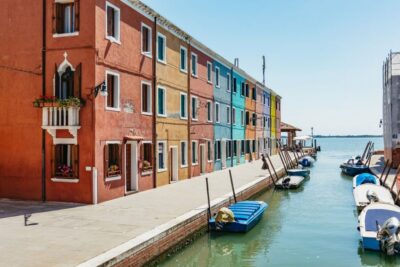
Boat Trip: Glimpse of Murano, Torcello & Burano Islands
Read our review →
Burano, Torcello & Murano Boat Tour w/Glassblowing
Read our review →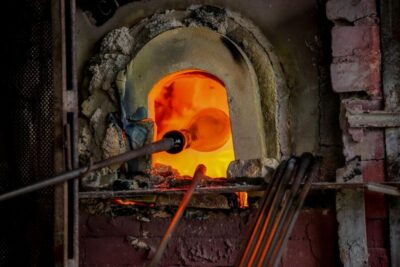
Murano and Burano Boat Tour with Glass Factory Visit
Read our review →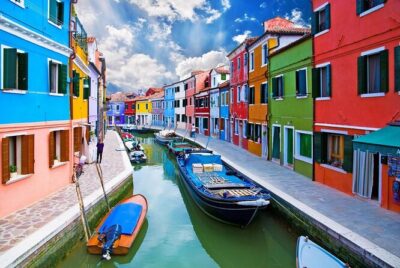
Murano, Burano and Torcello Half-Day Sightseeing Tour
Read our review →
Murano & Burano Islands Guided Small-Group Tour by Private Boat
Read our review →
Murano & Burano Panoramic Boat Tour w/ Glassblowing
Read our review →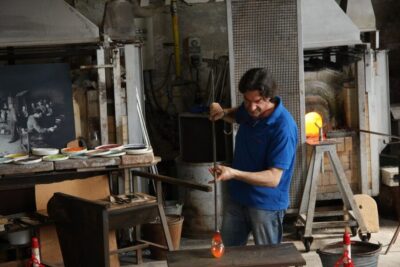
Murano, Burano, Torcello, and Glass Factory Tour
Read our review →
Venice Islands: Murano Glass & Burano Colors Guided Visit
Read our review →Browse the lists this tour appears in