
Reviewed · CITY TOURS
Padua City Sightseeing Walking Tour of Must-See-Sites with Local Guide
Padua’s best feature is the way its big sights fit into a compact walk. In about two hours, you move from the broad oval of Prato della Valle to Saint Anthony’s Basilica, the market squares, the university, and Caffè Pedrocchi, with a local guide supplying the stories that make the stones matter.
I like the route for two clear reasons: it connects Padua’s religious, civic, academic, and literary sides, and the maximum group size of 10 should make it easier to hear your guide and ask questions. I also like the human touch reported from Giovanni, whose interest in Padua’s culture and willingness to explain details made the visit memorable for one family.
The main drawback is the price, $241.94 per person, for a tour lasting about two hours. That is a serious spend, especially since food, drinks, souvenir photos, and any admission costs are not listed as included. The itinerary is also ambitious, so confirm which sites you enter and which you see from outside.
In This Review
- Key points to know before booking
- Starting at Prato della Valle and its 72 statues
- Saint Anthony’s Basilica and Padua’s devotional heart
- Giotto’s Scrovegni Chapel and the artistic centerpiece
- Piazza delle Erbe, Piazza della Frutta, and the daily market
- Palazzo della Ragione and the civic center
- Padua University and the botanical gardens
- Caffè Pedrocchi and the tour’s literary finish
- What the $241.94 price means
- Timing, meeting points, and the walking effort
- Who will get the most from this Padua walk
- Should you book the Padua City Sightseeing Walking Tour?
- FAQ
- Where does the tour start?
- Where does the tour end?
- How long does the walking tour last?
- Are morning and afternoon departures available?
- What sights are included in the route?
- Is a local guide included?
- How many people can join the tour?
- Are food and drinks included?
- Are children allowed to join?
- Can I cancel for a full refund?
Key points to know before booking
- Prato della Valle is the opening scene: Begin in one of Europe’s largest squares, with an elliptical design, a central fountain, lawns, and 72 statues.
- Padua’s major identities meet in one walk: The route links Saint Anthony, Giotto, the university, markets, and nineteenth-century café culture.
- The Scrovegni Chapel is the artistic high point: Its Giotto frescoes are the tour’s most important artistic feature.
- Caffè Pedrocchi is more than a coffee stop: It is tied to Padua’s literary and political life and serves as the endpoint.
- Small groups are a real advantage: The tour accepts no more than 10 people, which suits anyone who wants room for questions.
- The family test is encouraging: Children aged 10 and 8 were able to follow the explanations on one drizzly day.
Starting at Prato della Valle and its 72 statues
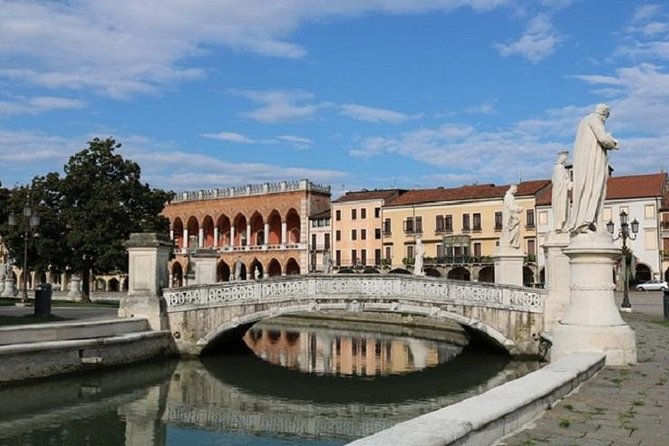
Your meeting point is Prato della Valle, a dramatic place to begin. Its large elliptical shape reflects the area’s Roman connection, while the center has a fountain, lawns, and 72 statues arranged around the surrounding waterway.
This is not just a quick landmark photo. Your guide can use the square to explain how Padua has developed over time, moving from its Roman roots to its later civic life. On some days, the square hosts a major market, adding a practical, everyday side to a place that can otherwise feel formal.
If you can choose your departure, consider what kind of Padua you want to see. A morning tour may give you a calmer start, while a later walk could bring different light to the square. The information provided does not specify exact departure times, so check those details before paying.
Prato della Valle is also a good place to judge the pace of the group. The square is broad and open, and the first explanations may take place before the walk reaches the tighter streets of the historic center. If you have limited mobility or dislike long periods on your feet, ask about the route in advance. The tour is a walking experience, not a bus sightseeing circuit.
More Walking Tours in Padua
- Padua: Private City Walking Tour & Scrovegni’s Chapel Visit
★ 4.7 · 124 reviews - Padua Walking Tour with the Scrovegni Chapel
★ 4.5 · 96 reviews - Padova Walking Tour with Audio and Written Guide by a Local
★ 4.5 · 61 reviews
Saint Anthony’s Basilica and Padua’s devotional heart
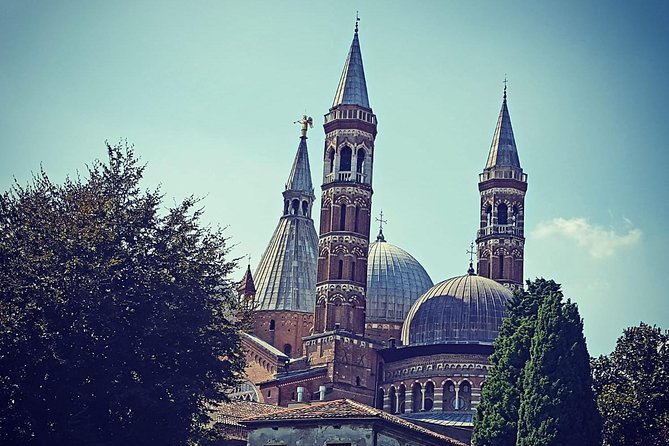
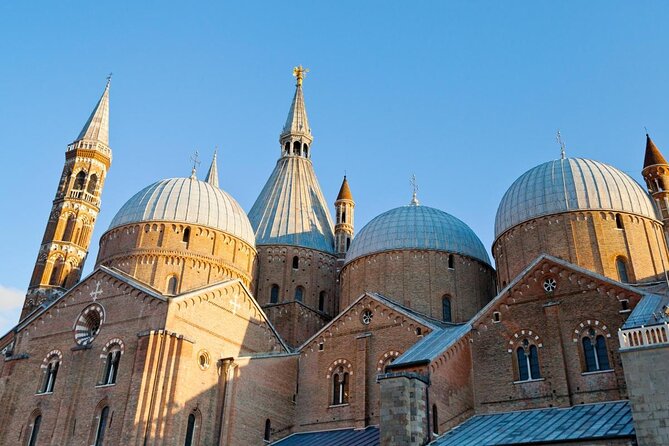
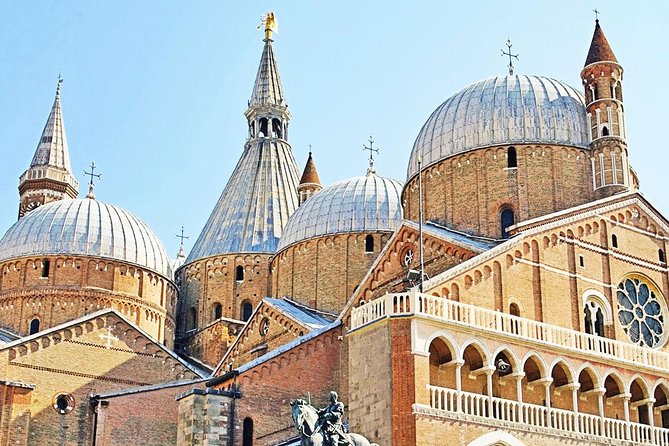
From Prato della Valle, the route turns toward the Basilica of Saint Anthony, one of Padua’s defining buildings. The city is often called the City of the Saint, and this basilica draws visitors throughout the year, with especially strong attention around June 13, the day associated with Saint Anthony’s celebration.
The value here is not only religious. The basilica helps you understand Padua as a place where faith, art, pilgrimage, and civic identity overlap. Even if you are not religious, the guide’s explanation can give the building a useful place in the city’s story.
The tour description places the basilica among the representative monuments and museums of Padua, but it does not spell out whether you receive a full interior visit or a guided explanation from outside. That distinction matters. If entering the basilica is important to you, ask before booking about admission, opening conditions, and how much time is reserved inside.
A guide adds the most value at a site like this by pointing out meaning and local custom rather than simply naming the building. The supplied details promise stories, curiosities, and suggestions about the city, so you should expect interpretation rather than a silent march from one stop to the next.
Giotto’s Scrovegni Chapel and the artistic centerpiece
The Scrovegni Chapel is the tour’s most famous art stop. Inside are Giotto’s frescoes, widely regarded as a major achievement of European painting. For many people, this will be the artistic reason to choose Padua over a general city walk.
The important practical point is that the chapel can require careful planning. The tour information names the chapel as part of the route, but the included features list only a local professional guide and pickup and drop-off from designated meeting points. It does not state that an admission ticket is included.
You should therefore confirm whether the experience includes entry, an exterior explanation, or a visit arranged separately. Do not assume that a guided walking tour price covers every monument on the route. At $241.94 per person, clarity about admission is especially important.
The two-hour duration also deserves attention here. Padua has enough major sights to fill far longer than a short walk, and a full chapel visit could affect the time available for the squares, university, botanical gardens, and café. The tour may be ideal as a broad introduction, but it cannot offer a slow art-study visit and a detailed tour of every other stop in the same short window.
Still, the chapel gives the walk a strong center. Your guide can place Giotto’s work in Padua’s artistic setting and help you notice more than color and scale. If you are choosing this tour mainly for the frescoes, ask how the schedule handles chapel access before reserving.
Piazza delle Erbe, Piazza della Frutta, and the daily market
The walk then reaches Piazza delle Erbe and Piazza della Frutta, two squares that have long formed Padua’s commercial core. Together, they are associated with one of Italy’s largest markets, giving you a look at the city as a working place rather than only a collection of monuments.
This is one of my favorite parts of the planned route because markets reveal how a city functions. The architecture matters, but so do the connections between food, trade, public space, and local routine. If market activity is taking place during your walk, you may get a more immediate sense of Padua than you would from monuments alone.
The timing of your tour could affect this stop. Market schedules are not provided, so you should not book a particular departure expecting a full market scene unless the operator confirms it. Even without stalls, the two piazzas remain important public spaces and offer a useful transition from sacred Padua to civic Padua.
The guide’s explanation of the squares should also help you read the surrounding buildings. This is where a local guide earns the fee: by showing how the spaces were used, not just reciting their names.
A different sort of day out around Padua:
- Padua to Venice Boat Cruise of the Brenta Riviera
★ 4.5 · 418 reviews - Tasting Prosecco with appetizers
★ 5.0 · 217 reviews - Full-Day Padua to Venice Burchiello Brenta Riviera Boat Cruise
★ 4.5 · 198 reviews - Prosecco tasting, appetizers and tour of the cellar and vineyards
★ 5.0 · 178 reviews
Palazzo della Ragione and the civic center
Piazza delle Erbe is overlooked by Palazzo della Ragione, an enormous building that once served as the city council assembly hall and Palace of Justice. Its size makes an immediate impression, but its former roles tell you why the square became such an important center of public life.
Today, the palace continues to host exhibitions and cultural meetings. That gives the building a useful connection to modern Padua, rather than leaving it frozen in the past. If an exhibition is running, your guide may point out how the building remains part of the city’s public life, though the tour details do not promise entry.
I like this stop because it balances the Scrovegni Chapel and Saint Anthony’s Basilica. Those sites show Padua through art and faith. Palazzo della Ragione brings in law, government, trade, and public gatherings.
Again, the compact schedule means you should expect a focused explanation, not a full architectural inspection. If you want to tour the palace interiors, check whether a separate ticket or longer visit is needed.
Padua University and the botanical gardens
Padua’s university was founded in 1222 as a school of law, and it remains one of the clearest signs that this is a student city. The university adds an intellectual layer to the walk, showing that Padua’s identity is not built only around churches and old squares.
The tour also includes the university’s botanical gardens, described as among the oldest of their kind in the world. This gives the route a welcome change of setting after the stone buildings and market spaces.
The botanical gardens are another stop where you should clarify the format. The available information names them in the itinerary but does not list entrance fees or promise a detailed interior visit. You might see the gardens as part of the walk, or you may need to arrange entry separately.
Their inclusion is still valuable. The gardens connect Padua to scientific study, plant research, and the long academic tradition linked to its university. Along with the Scrovegni Chapel, they show that the city’s cultural importance reaches beyond religious buildings.
For families, this stretch may help keep the tour varied. One family found that children aged 10 and 8 could follow the explanations, even on a drizzly day. That suggests the guide can make the material accessible, though your children’s interest will naturally depend on their patience for history and walking.
Caffè Pedrocchi and the tour’s literary finish
The final stop is Caffè Pedrocchi on Via VIII Febbraio. This is not presented as an ordinary place to grab a drink. It is a major part of Padua’s cultural identity and was a meeting place for Italian and European writers and artists during the nineteenth century.
The café also connects to the Risorgimento, the movement that shaped modern Italy. That makes it a fitting end to a tour that has already covered Roman influence, a saint, medieval law and trade, Giotto’s art, and the university.
Food and drinks are not included, so treat the café stop as cultural rather than a prepaid refreshment break. You may be able to order something separately, but the tour details do not guarantee a reserved table or a drink.
Ending here is practical, too. The final meeting point is easy to identify, and the route finishes in the historic center rather than returning you to Prato della Valle. That lets you continue exploring Padua on your own after the guide leaves, though no onward transportation is included in the stated features.
A good guide can make the café memorable by explaining its role in city life. Giovanni is specifically associated with a warm, attentive style, a strong interest in Padua’s history and culture, and a willingness to explain what guests wanted to understand. Since guide assignments can change, confirm who will lead your departure if a particular guide matters to you.
What the $241.94 price means
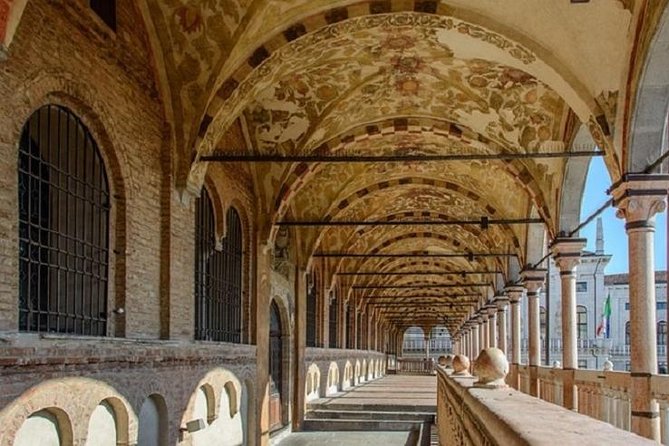
At $241.94 per person, this is not a budget walking tour. The value depends heavily on the size of your party, the quality of the guide, and what is included at the Scrovegni Chapel, botanical gardens, and other sites.
The maximum group size of 10 is a positive factor. A smaller group usually gives you a better chance to hear the guide, ask about details, and adjust the conversation to your interests. Group discounts are available, but the exact terms are not provided, so check the final booking price rather than assuming a particular reduction.
The price also includes a local professional guide and pickup and drop-off from designated meeting points. The stated start and end points are in Padua, from Prato della Valle to Caffè Pedrocchi. The experience is described for people coming from Venice, but the supplied details do not clearly state that transport from Venice is included.
Food, drinks, and souvenir photos cost extra. Admission is not listed among the included features, so I would ask for a complete cost breakdown before booking. If your main goal is a short orientation with a private-feeling small group, the price may work. If you want an inexpensive introduction or plan to visit only the squares from outside, it is harder to justify.
Timing, meeting points, and the walking effort
The tour lasts approximately two hours and offers morning and afternoon options. That flexibility helps you fit Padua around a wider Veneto itinerary, but it also means the experience moves at a purposeful pace.
You start at Prato della Valle and finish at Caffè Pedrocchi, rather than ending where you began. This is useful if you want to continue in central Padua, but plan your return trip and do not assume the guide will take you back to the starting square.
Pickup and drop-off from designated meeting points are included, while the published start and end locations are the two Padua addresses. Confirmation arrives at booking, and the city is near public transportation. The practical step is to read the confirmation carefully for the exact meeting instructions.
Wear comfortable shoes and prepare for outdoor walking. The information does not give a distance or specify the surface, so I would avoid planning another demanding activity immediately afterward if you prefer an easy pace.
Free cancellation is available up to 24 hours before the local start time. Inside that window, no refund is offered, and changes are not accepted. The experience also requires a minimum number of participants, so a cancellation by the operator would result in another date or experience, or a full refund.
Who will get the most from this Padua walk
This tour suits you if you are visiting Padua for the first time and want several major themes explained by one local guide. It is especially useful if you are coming from Venice and want a structured introduction instead of piecing together the city by yourself.
I would also consider it for families. The reported experience with 10 and 8 year olds suggests the explanations can work for children, even in poor weather. The short duration is easier for younger walkers than a full-day sightseeing program.
Art lovers should focus on the Scrovegni Chapel question before booking. If entry is guaranteed and central to the schedule, the tour could provide a strong introduction to Giotto. If not, you may prefer a visit built around the chapel itself.
The tour is less suited to you if you want long interior visits, a relaxed café meal, or detailed time in every museum and garden. Two hours is enough for a well-planned overview, not a complete examination of Padua.
Should you book the Padua City Sightseeing Walking Tour?
Book it if you value a small group, a local voice, and a carefully linked route through Padua’s main cultural landmarks. The combination of Prato della Valle, Saint Anthony’s Basilica, Giotto’s chapel, the market squares, the university, botanical gardens, and Caffè Pedrocchi gives you a strong first look at the city.
Before paying, ask three questions: Is admission to the Scrovegni Chapel included, are the botanical gardens entered or viewed from outside, and is transportation from Venice part of the arrangement? At this price, those answers matter.
My call is positive for first-time visitors who want context and can accept a brisk two-hour walk. If you are already comfortable exploring independently, the cost is harder to defend. If Giovanni is leading your departure, his reported attention to questions and local culture would be an added reason to choose that particular time, but guide availability should be confirmed.
FAQ
Where does the tour start?
The tour starts at Prato della Valle in Padua, Italy.
Where does the tour end?
The tour ends at Caffè Pedrocchi, Via VIII Febbraio 15, Padua.
How long does the walking tour last?
The tour lasts approximately two hours.
Are morning and afternoon departures available?
Yes. Morning and afternoon tours are available.
What sights are included in the route?
The route includes Prato della Valle, Saint Anthony’s Basilica, the Scrovegni Chapel, Piazza delle Erbe, Piazza della Frutta, Palazzo della Ragione, Padua University, the botanical gardens, and Caffè Pedrocchi.
Is a local guide included?
Yes. A local professional guide is included.
How many people can join the tour?
The tour has a maximum of 10 travelers.
Are food and drinks included?
No. Food and drinks are not included.
Are children allowed to join?
Yes. Children must be accompanied by an adult.
Can I cancel for a full refund?
Yes. You can cancel at least 24 hours before the experience start time for a full refund. Cancellations made less than 24 hours before the start time are not refunded.
Just added around Padua
- Padua: Private Pasta-Making Class at a Local’s Home★ 5.0 · 3 reviews
- Tour to the Walled City of Monselice DA Abano and Montegrotto Terme★ 4.5 · 3 reviews
- E-bike rental – Road bike – Mountain bike★ 5.0 · 3 reviews
- CSTRents – Padova Segway PT Authorized Tour★ 3.5 · 3 reviews
- Padua: guided walking tour with an art historian★ 5.0 · 3 reviews
- DA Venezia : Experience Padua like a local★ 5.0 · 4 reviews
- Street Food Walk in Padova★ 5.0 · 4 reviews
- From Padua: Tour to the walled town of Monselice★ 5.0 · 4 reviews
City Tours, compared.
Walking Guided Tour of the City Must-See Sites
Read our review →

Verona e-bike tour: city center and panoramic views
Read our review →
City Walking Tour with Cable Car & Wine Aperitif
Read our review →
Winter Pass Top Attractions & City Walking Tour
Read our review →
Browse the lists this tour appears in