
Reviewed · MARKETS
Discover the old market and make fresh pasta
The best part of this four-hour experience is the link between shopping and cooking. You meet the chef at Villafranca’s Scaliger Castle, choose ingredients at the old market or local shops, then carry those choices into a hands-on pasta lesson nearby. You are not just shown a finished plate. You make the dough, shape the pasta, prepare tiramisu, and eat the results with Veronese wine.
I like two things right away: the market gives the class a real sense of place, and the small group of no more than 10 people should leave room for useful advice. The chef is praised for clear cooking tips, patience, and practical ways to use the food in several dishes. The main caution is booking communication. One booking had no confirmation until about an hour before the morning tour, so check your messages carefully and contact the company early if anything is unclear.
In This Review
- Key points at a glance
- Starting beside Villafranca’s Scaliger Castle
- Choosing ingredients at Villafranca’s old market
- Learning pasta in a Venetian-style kitchen
- Making tortellini Nodo d’amore
- Preparing tiramisu before the meal
- Pairing the finished dishes with Veronese wine
- What the four-hour schedule means for you
- The strengths, and the one serious practical concern
- Who should book this pasta class?
- Booking details worth checking
- Should you book this Villafranca cooking experience?
- FAQ
- Where does the cooking experience begin?
- How long does the activity last?
- Is the Villafranca market open during every version of the tour?
- What will I learn to make?
- Is the class available in English?
- How many people can join the class?
- Can I cancel and receive a refund?
Key points at a glance
- Wednesday brings the full market experience: Villafranca’s market day is Wednesday, when you can choose produce directly from the stalls.
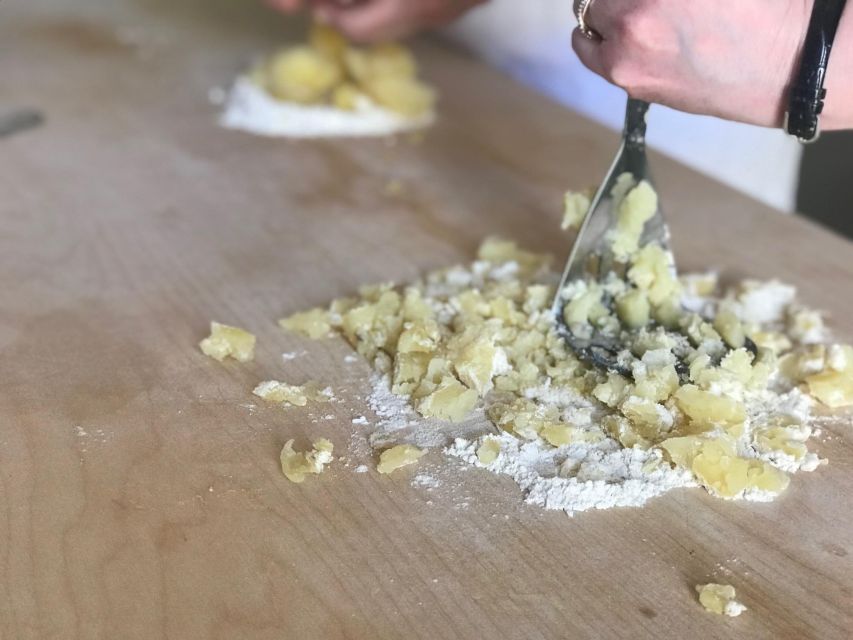
- The pasta is made by hand: You work with eggs and flour and learn old-fashioned methods used for tortellini and other pasta.
- Nodo d’amore is the local specialty: You prepare the famous love-knot tortellini associated with the area.
- Seasonal ingredients shape the meal: Depending on the market, you may make pappardelle or tortelli filled with vegetables.
- Dessert is part of the lesson: You prepare tiramisu as well as the savory dishes.
- Wine turns class into lunch: The food you make is served with renowned wines from the Verona area.
Starting beside Villafranca’s Scaliger Castle
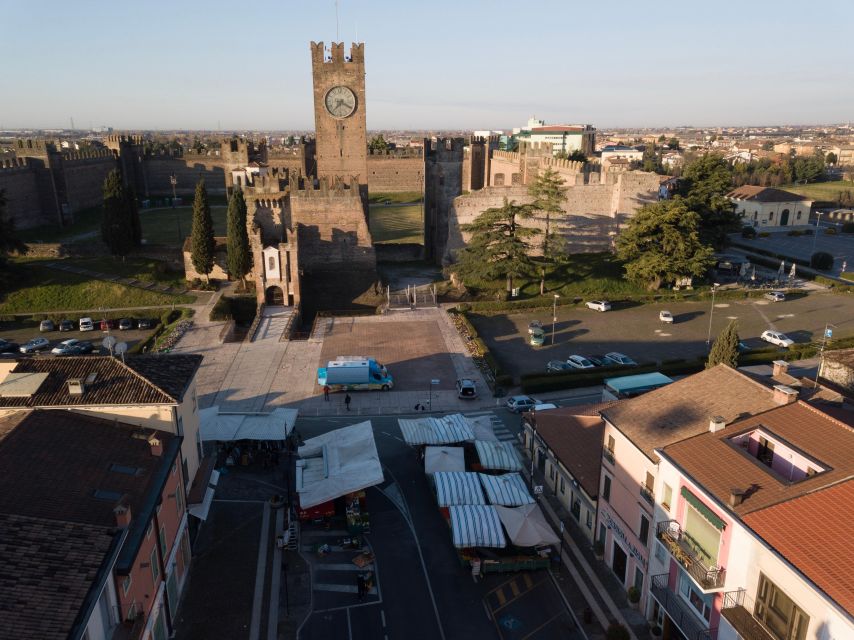
Your meeting point is in front of the Scaliger Castle in Villafranca, at approximately 45.351440, 10.846451. The host’s direct contact details are provided after booking, so save them before you set out. This is not a class that begins in central Verona and carries you by coach to a distant farm. You meet at the castle and begin on foot.
That location matters. Villafranca gives you a local setting before the cooking starts, and the castle provides a clear landmark for the rendezvous. I would allow a little extra time to find the meeting point, especially if you are unfamiliar with the town. The supplied information does not include transportation from Verona, so you should arrange your own way to Villafranca.
The class is offered in Italian and English. If you are taking the lesson in English, you can expect the chef to explain the process directly, though cooking demonstrations often include gestures, examples, and plenty of watching as well as talking. The group limit of 10 is a useful middle ground: large enough for a social meal, but small enough that you should be able to handle dough and ask questions.
A few more Verona days to weigh up
- Verona: Pasta and Tiramisu Cooking Class with Fine Wine
★ 4.8 · 633 reviews - Verona: Pasta and Tiramisu Cooking Class With Free Flowing Wine
★ 5.0 · 575 reviews - Verona: Hands-on Fresh Pasta and Tiramisù Cooking Class
★ 4.9 · 295 reviews
Choosing ingredients at Villafranca’s old market
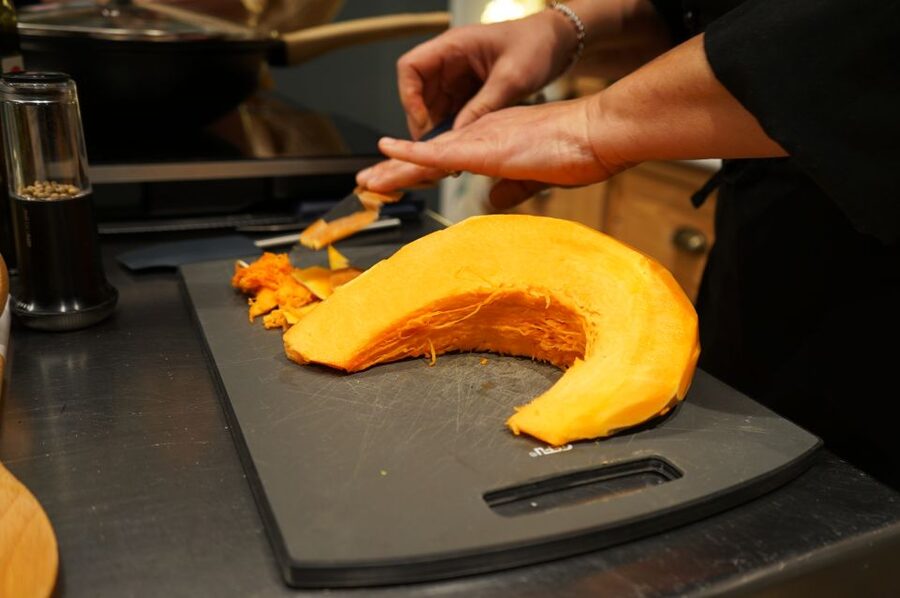
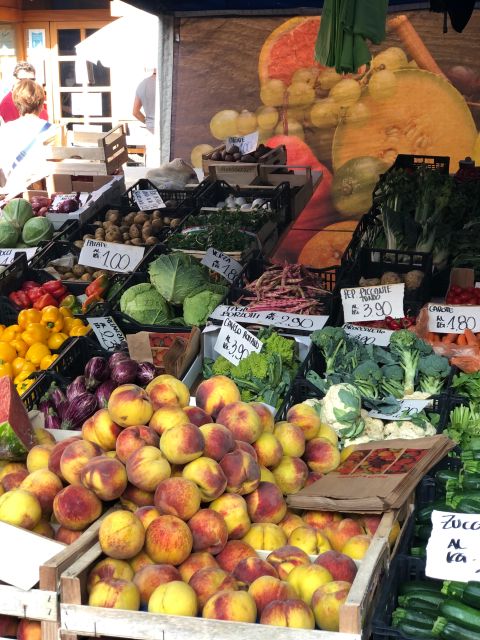
The first stage is a walk among the market stalls. On Wednesday, you shop for the ingredients that will go into the meal. This is more than a quick stop for decoration. It gives you a chance to see what is available locally and understand how seasonal produce affects an Italian menu.
I like this order of events. You see the ingredients before they are chopped, mixed, or hidden inside pasta. A cooking lesson can feel generic when every group receives the same premeasured bowls. Here, the market is meant to influence what you prepare.
The exact stalls and produce will change. That is part of the point. Seasonal vegetables may become the filling for tortelli, and other local products may be worked into the meal. You will choose the products together with the chef, so the cooking begins with decisions rather than instructions alone.
If your schedule allows it, Wednesday is the best day to book. On other days, the old market is not operating in the same way, and the group selects products with the chef from chosen local shops instead. That alternative still keeps the shopping element, but it is less of a market visit and more of a guided ingredient run.
The market walk also makes this experience a better choice for curious cooks than for people who only want a quick meal. You will spend time looking, comparing, and choosing. The payoff is a stronger connection between the town, the produce, and the recipes.
Learning pasta in a Venetian-style kitchen
After shopping, you move only a short distance to a traditional Venetian-style kitchen with a garden and a view toward the castle. The setting sounds pleasant without being fussy. You are there to work, and the garden and castle view give the meal a sense of place once the cooking is done.
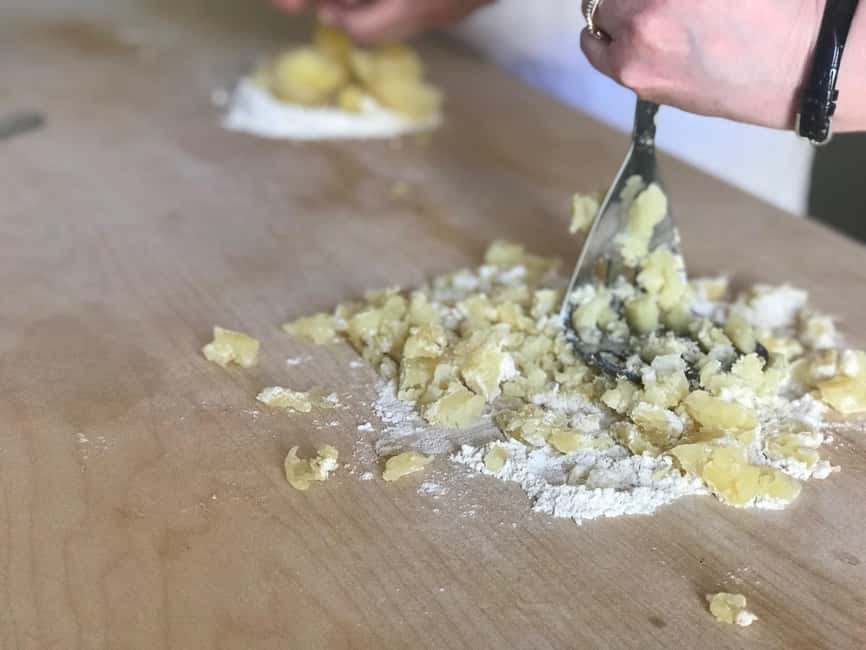
The central lesson uses the most basic pasta ingredients: eggs and flour. You knead the dough by hand and learn techniques associated with the way Italian grandmothers once made pasta. That hands-on stage is important. You can buy excellent fresh pasta in Italy, but making it teaches you what the dough should feel like, how it changes as you work it, and why patience matters.
The chef’s approach appears to focus on practical instruction rather than a showy demonstration. One participant specifically valued learning different ways to use the available ingredients, along with small tips for improving the preparation of each dish. That is the kind of information you can take home and use, even if your pasta shapes are not perfect on the first attempt.
Do not expect a silent cooking demonstration where you watch from a distance. The description calls for you to knead and shape the dough yourself. You will likely get flour on your hands, and that is exactly what makes the lesson worthwhile. The experience is aimed at participation, not polished theater.
Making tortellini Nodo d’amore
The signature pasta is tortellini Nodo d’amore, or love-knot tortellini. This local style gives the class a clear Veronese identity. You are not making an anonymous bowl of pasta that could belong to any Italian city. You are learning a shape tied to the area around Villafranca.
The supplied details do not specify the filling or the precise recipe, so I would not book this expecting a fixed menu with every ingredient announced in advance. The market and the season help determine what you prepare. Alongside the tortellini, you may also make pappardelle or tortelli filled with seasonal vegetables.
That variety is one of the class’s strengths. You get to see different kinds of pasta made from the same basic dough, and you learn that fresh pasta is not one single technique. A filled shape calls for care with sealing and portioning. A wide ribbon such as pappardelle asks for a different approach to rolling and cutting.
The chef also appears ready to explain how ingredients can be used in more than one way. That is a valuable skill for home cooks. You are not simply copying a plate for one lunch. You are learning how to adapt a basic dough and seasonal produce into several local dishes.
A different sort of day out around Verona:
- Verona: Hop-on Hop-off Tour 24 or 48-Hour Ticket
★ 4.4 · 2,010 reviews - Verona: History and Hidden Gems Guided Walking Tour
★ 5.0 · 1,379 reviews - Verona: Priority Access Arena Guided Tour
★ 4.6 · 1,152 reviews - Verona: Juliet’s House Fast-Track Entry Ticket & Audio Guide
★ 4.2 · 1,121 reviews
Preparing tiramisu before the meal
The lesson includes tiramisu, Italy’s familiar coffee dessert. This is a smart addition because it gives the class a second kind of kitchen task. Pasta involves dough, shaping, and careful handling. Tiramisu lets you work on a dessert that is assembled rather than rolled and filled.
The exact ingredient list and method are not provided, so the chef’s version may reflect the kitchen and the products available that day. You should expect to prepare the dessert yourself, not merely receive a pre-made portion at the end.
Including tiramisu also helps the schedule make sense. While the dessert rests or the pasta is finished, the group can move toward eating the meal. The class becomes a full food experience rather than a short lesson followed by a separate restaurant visit.
I particularly like that the meal includes both the food you make and the chance to sit down with the group. Cooking beside other people can be more relaxed than a formal restaurant meal, and the shared table gives you time to compare shapes, ask last questions, and enjoy the result.
Pairing the finished dishes with Veronese wine
Once the cooking is complete, you eat what you have prepared with local wines from the Verona area. Wine is not an optional extra listed at the edge of the experience. It is part of the meal and helps connect the dishes to the region.
The information does not name the bottles, producers, or number of tastings, so I would avoid expecting a formal winery tasting with detailed vineyard lectures. Think of the wine as a table pairing for the pasta and tiramisu meal. You will taste local wine while enjoying the dishes made during the lesson.
This format suits people who like food experiences with a social side. You are not rushing away after the final pasta shape. The four-hour duration leaves room for the market, instruction, cooking, eating, and conversation. If you prefer a short class with a quick sample and no lingering meal, this may feel long.
Alcohol and drugs are not allowed beyond the planned wine component. The activity is not suitable for anyone looking for a party setting. The emphasis is cooking, food, wine, and company.
What the four-hour schedule means for you
Four hours is a substantial block of a day, but the itinerary has several distinct parts. You begin at the castle, walk through the market or local shops, move to the nearby kitchen, make several dishes, and sit down to eat.
I would not place another tightly scheduled activity immediately afterward. Market timing, dough work, pasta shaping, and the meal all take attention. The class is better treated as the main event for half a day.
There is also a practical reason to value the longer format. Fresh pasta skills cannot be explained well in a few hurried minutes. You need time to handle the dough and repeat the motions. The same applies to tortellini, where filling, folding, and sealing can be awkward until your hands understand the shape.
The group limit of 10 helps here. It is not a private lesson, but it is still a small group. You should have more access to the chef than you would in a large demonstration. The experience also works well for couples, families with older children, and friends who enjoy making a meal together.
The available languages are Italian and English. No other language is listed, so confirm that the language arrangement suits your group when booking.
The strengths, and the one serious practical concern
The strongest part of this experience is the chef-led instruction. The available feedback repeatedly points to a kind, attentive teacher who explains well and shares useful cooking ideas. One participant described the chef as prepared and professional, with practical suggestions for improving dishes and using ingredients in different ways.
That praise fits the structure of the class. You are handling dough, choosing produce, and preparing more than one dish, so the chef’s personal guidance matters. A warm teacher can make the difference between a rewarding lesson and a frustrating one.
The other clear strength is the combination of local food and local place. You start at the old market, cook beside the castle, make a regional pasta shape, and drink wines from the Verona area. Each piece supports the others.
The weak point is not the cooking itself. It is communication before the activity. One booking experience involved unclear instructions, poor help from the company, and confirmation arriving only about an hour before the morning start. That is a meaningful warning, especially if you are arranging transport or planning your day around the class.
I would save the host’s contact details, check your email and booking messages, and ask for confirmation well ahead of time if the meeting instructions have not arrived. This does not mean the cooking lesson will be poor. It means the pre-tour administration may require more attention than you expect.
Who should book this pasta class?
I would choose this experience if you want to learn by doing. It is a good fit for cooks who want to improve their fresh pasta technique, people who enjoy local markets, and anyone who prefers a shared meal to a standard restaurant reservation.
It also suits visitors staying in or near Verona who want a food activity outside the city center. Villafranca’s castle setting and market give the class a different feel from a cooking school in a busy tourist district.
Families and groups of friends may enjoy the relaxed, social setup, though the available details do not specify an age minimum. If you are booking with children, confirm that the hands-on format and four-hour length are suitable for them.
I would hesitate if you want a formal wine education, a guaranteed list of exact dishes, or a fully private class. The menu changes with seasonal products, the group can include up to 10 people, and the wine details are not specified.
The published information also gives no price, so I cannot name a fair cost in euros. To judge value, compare the full package rather than a cooking class alone: a market visit, an English-speaking chef, hands-on pasta and tiramisu preparation, the meal you make, and local wine over four hours. If the fare is close to other Verona pasta classes, the market visit and regional tortellini lesson are the features that justify choosing this one.
Booking details worth checking
The experience lasts four hours, with starting times shown according to availability. Free cancellation is offered up to 24 hours before the start for a full refund, and you can reserve now while paying later. Those terms help if your Verona plans are still shifting.
The host’s contacts are provided for the meeting arrangements. Use them. Because one booking had a late confirmation and unclear instructions, I would not wait until the last morning to sort out where to go.
Plan around Wednesday if the old market is important to you. On other days, shopping takes place in selected local shops with the chef. Both versions include ingredient selection, but only Wednesday offers the market-stall setting described in the main plan.
Should you book this Villafranca cooking experience?
Book it if you want a personal, hands-on food lesson with a local market, regional tortellini, tiramisu, and wine in the same half-day. The chef’s attentive teaching and practical kitchen advice are the strongest reasons to choose it.
Skip it if you need perfect booking communication, a fixed menu, or a formal winery tour. For everyone else, this is a sensible way to spend four hours near Verona, especially on a Wednesday when the market is operating. Confirm the meeting details early, arrive ready to work with your hands, and you should come away with more than a meal: you will have a few pasta skills to use at home.
FAQ
Where does the cooking experience begin?
You meet the chef in front of the Scaliger Castle in Villafranca. The coordinates provided are 45.3514404296875, 10.846451759338379.
How long does the activity last?
The experience lasts four hours. Available starting times depend on the date you choose.
Is the Villafranca market open during every version of the tour?
The market day in Villafranca is Wednesday. On other days, you choose products with the chef in selected local shops.
What will I learn to make?
You will learn to make fresh pasta by hand with eggs and flour. The dishes can include tortellini Nodo d’amore, pappardelle, tortelli filled with seasonal vegetables, and tiramisu.
Is the class available in English?
Yes. The instructor languages are Italian and English.
How many people can join the class?
This is a small-group activity limited to 10 participants.
Can I cancel and receive a refund?
You can cancel up to 24 hours in advance for a full refund. The activity also offers a reserve-now-and-pay-later option.
More Shopping Tours in Verona
- Verona: Market and Cooking Class at a Local’s Home
★ 4.8 · 5 reviews - Venice Street Food Tour with Local Guide with Local Food Market Visit
★ 5.0 · 822 reviews - Venice: Rialto Market Food and Wine Lunchtime Tour
★ 5.0 · 383 reviews - Market Tour and Cooking Class with a Local Venetian Chef
★ 5.0 · 313 reviews
Just added around Verona
- 3 Hour Shared Walking and Aperitivo Tour of Verona★ 5.0 · 3 reviews
- Verona: Blindfolded Wine Tasting★ 5.0 · 3 reviews
- Excursion in Verona.★ 4.5 · 3 reviews
- Verona Airport (VRN) Arrival Transfer (Airport to Verona Hotels or Address)★ 4.0 · 3 reviews
- Photo Shoot in Verona: Capture Your Love Story in Pictures★ 5.0 · 3 reviews
- Incredible Verona – Family Walking Tour★ 5.0 · 3 reviews
- From Verona: discover Lake Garda and Sirmione private tour★ 5.0 · 3 reviews
- Madonna di Campiglio and Dolomites Self-Guided Tour★ 5.0 · 3 reviews
Markets, compared.
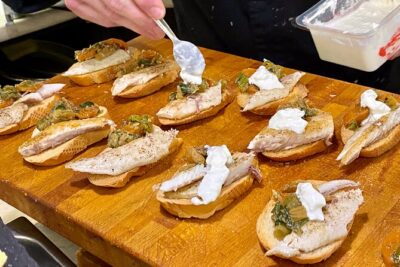
Venice Street Food Tour with Local Guide with Local Food Market Visit
Read our review →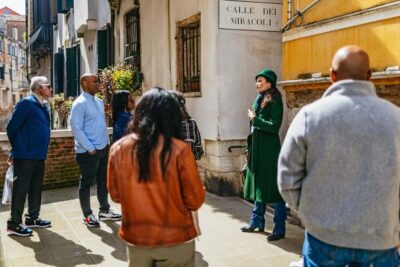
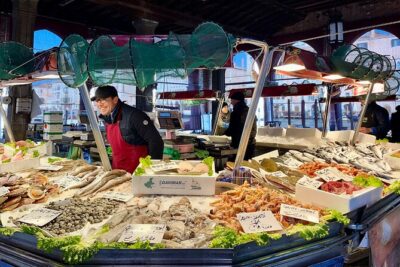
Market Tour and Cooking Class with a Local Venetian Chef
Read our review →
Rialto Market Food and Wine Lunchtime Tour of Venice
Read our review →
Private Secret Venice Tour; Rialto Market, San Polo & Food and Wine tasting
Read our review →
Rialto Market Tour & Private Cooking Class in the Heart of Venice
Read our review →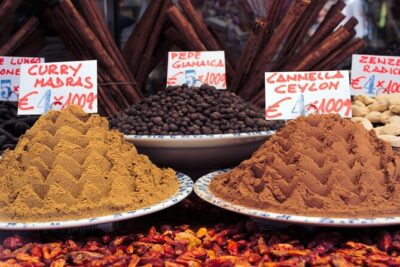
Private Venice Food Tour with Rialto Market Visit
Read our review →Browse the lists this tour appears in