
Reviewed · HISTORICAL TOURS
Verona: History and Hidden Gems Guided Walking Tour
Verona reveals its best stories in the details: a Roman gate tucked into a busy street, old city walls hiding beneath later buildings, and grand medieval squares that make more sense once you know who built them. This two-hour walk with Fabio Massimo Rapanà, a licensed Veronese guide, connects those pieces instead of treating each sight as an isolated photo stop.
I especially like the small groups of up to 10 and the supplied headsets. You can hear Fabio clearly in busy squares, and the route has room for questions. The tour also goes beyond the Arena and Juliet’s balcony, taking you through quieter lanes and overlooked corners that are easy to miss on your own.
The main consideration is pace. Two hours covers a lot of ground and includes many brief stops, so you should wear comfortable shoes and expect to walk continuously. Entry tickets, food, drinks, and transport are not included, and this is an outdoor tour in rain or shine.
In This Review
- Key points at a glance
- Starting beneath the Italian flag in Piazza Bra
- The Arena and Verona’s Roman foundations
- Porta Borsari and the old route through town
- Along the Adige to Castelvecchio and the Ponte Scaligero
- Piazza delle Erbe and the city’s public life
- Piazza dei Signori and the Scaliger rulers
- Santa Anastasia and the dramatic Scaliger tombs
- Romeo, Juliet, and the real story behind the romance
- The overlooked streets, courtyards, and small squares
- Fabio’s approach and the value of the headsets
- How much walking and planning you should expect
- Is $41 a fair price?
- Who will get the most from this walk?
- Should you book the Verona History and Hidden Corners Tour?
- FAQ
- Where does the tour meet?
- How long does the walking tour last?
- What landmarks are included?
- Does the tour enter the Arena or Juliet’s House?
- What languages are available?
- How large is the group?
- Is the tour wheelchair accessible?
- What should I bring?
Key points at a glance
- A local guide with personal knowledge: Fabio was born and raised in Verona, and his storytelling links the city’s buildings to its wider past.
- A compact route through major sights: You see Piazza Bra, the Arena, Porta Borsari, Piazza delle Erbe, Piazza dei Signori, the Scaliger tombs, Romeo’s house, and Juliet’s balcony.
- Quiet corners between the famous stops: The walk includes lesser-seen streets, old walls, courtyards, churches, and small squares.
- Headsets for easier listening: The microphone and earpieces help you follow the commentary without crowding around the guide.
- A useful first activity in Verona: You finish with a clearer map of the old center and ideas for places to revisit.
- Flexible booking: You can cancel up to 24 hours ahead for a full refund and reserve without paying immediately.
Starting beneath the Italian flag in Piazza Bra
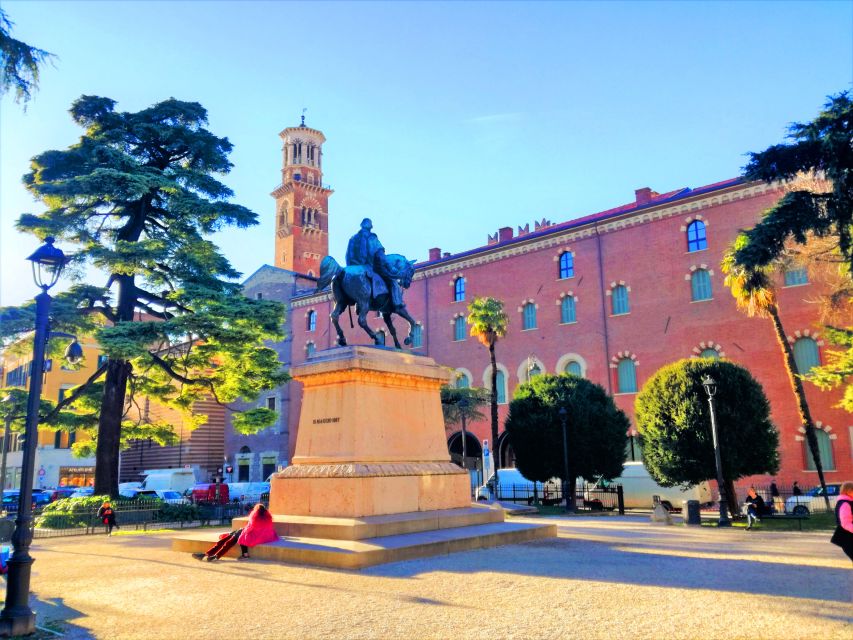
Meet Fabio beneath the Italian flag at Verona’s town hall, Palazzo Barbieri, in Piazza Bra. This is a simple meeting point in the city’s main square, with the Arena right nearby.
Piazza Bra gives you an immediate sense of Verona’s scale. It is broad, open, and framed by cafés, historic buildings, and the immense Roman amphitheater. Fabio uses the square to set up the story of the city before leading you onward, which helps you understand why Roman Verona still shapes the center today.
The tour is designed around storytelling rather than a long list of formal admissions. You stop, listen, look closely, and move on. That makes good sense for a two-hour orientation, though anyone hoping to enter the Arena or Juliet’s House should plan a separate visit and buy those tickets independently.
More History Tours in Verona
- Lazise: Historical Center Wine Tasting Tour
★ 4.9 · 110 reviews - Dark Historical Verona Walking Tour
★ 5.0 · 106 reviews - Tour to discover the Unique History of Verona, the City of Art
★ 4.5 · 90 reviews
The Arena and Verona’s Roman foundations
The Verona Arena is the first major sight. You have time for photographs and a talk about the gladiator contests held here, along with the amphitheater’s architecture.
The Arena is not just a dramatic oval in the middle of town. It is a reminder that Verona was a major Roman settlement, and its placement explains much of the later street plan. Fabio’s role here is to give you a framework: look at the stone, the surviving structure, and the way modern Verona has grown around it.
From Piazza Bra, the route follows traces of the early medieval walls toward the Corso, one of the oldest streets in the city. This transition from Roman remains to medieval development is one of the strongest parts of the walk. You begin to see Verona as a city built in layers, not as a collection of unrelated monuments.
Porta Borsari and the old route through town
Porta Borsari is a Roman-era gateway and an important short stop. It is easy to pass without noticing its age because it forms part of an active city street, but the surviving stonework gives you a direct link to ancient Verona.
This is exactly the kind of stop that makes a guided walk worthwhile. You can photograph the façade yourself, but you might not know why it matters or how it fitted into the old city. Fabio points out the overlooked details and places the gate within the movement of people, goods, and power through Verona.
The route then reaches Riva San Lorenzo, where you get views toward Castelvecchio and the Ponte Scaligero over the Adige River. These are scenic moments, but they also help orient you. The river is not simply a pretty backdrop. It has shaped Verona’s defenses, bridges, and neighborhoods.
Along the Adige to Castelvecchio and the Ponte Scaligero
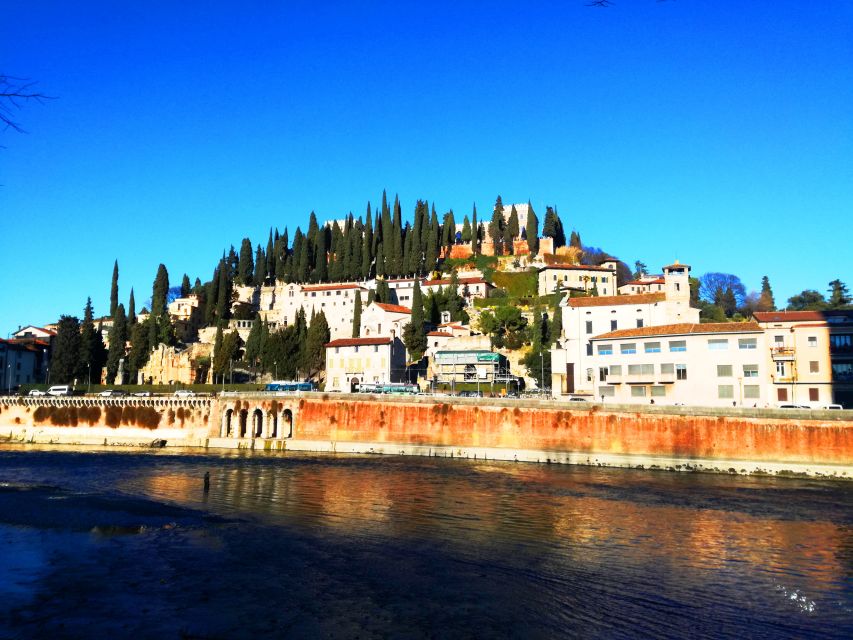
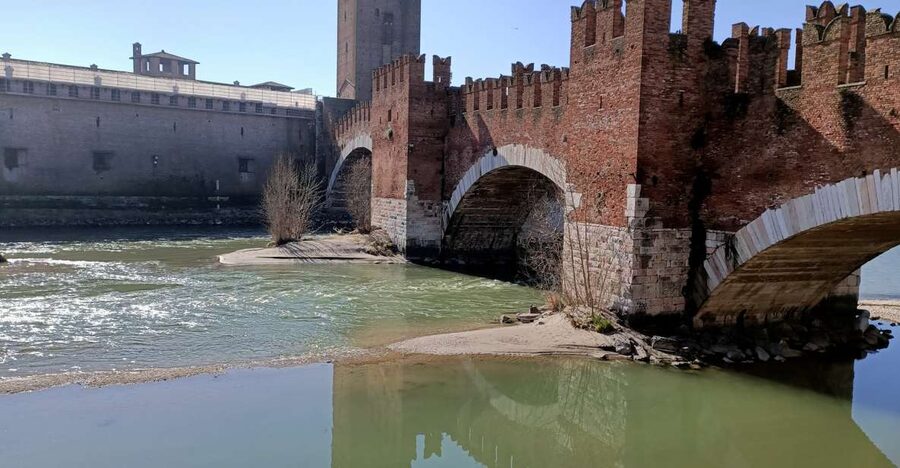
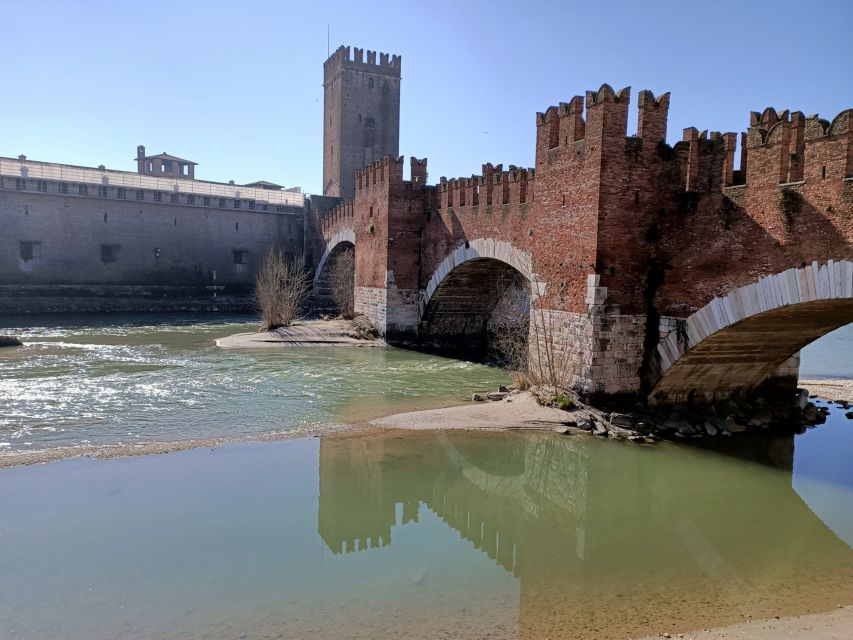
The view toward Castelvecchio and the Ponte Scaligero gives the tour a change of mood. After Roman gates and crowded central streets, the river opens the scene and lets you take in Verona’s medieval strength.
You do not enter Castelvecchio during this activity, and the tour does not include transport or admission tickets. Still, seeing the castle and bridge from the route gives you useful context if you plan to return later. The Ponte Scaligero, with its strong defensive form, makes the power of Verona’s ruling families easier to picture.
Several short, unnamed stops are included along the way. These are not filler. They are places where Fabio can point out a façade, lane, fragment, or architectural detail that would probably disappear into the background during an unplanned walk. The tradeoff is that the itinerary can feel busy on paper, with many two to five minute stops. In practice, the variety keeps the route moving.
More Walking Tours in Verona
- Verona: Small Group Guided Walking Tour with Arena Tickets
★ 4.9 · 848 reviews - Verona Highlights Walking Tour in Small-group
★ 5.0 · 493 reviews - Verona walking tour:food, wine, legends, lunch/dinner & cable car
★ 5.0 · 386 reviews - Verona All in one: Food Walking Tour, Lunch & Wine
★ 5.0 · 342 reviews
Piazza delle Erbe and the city’s public life
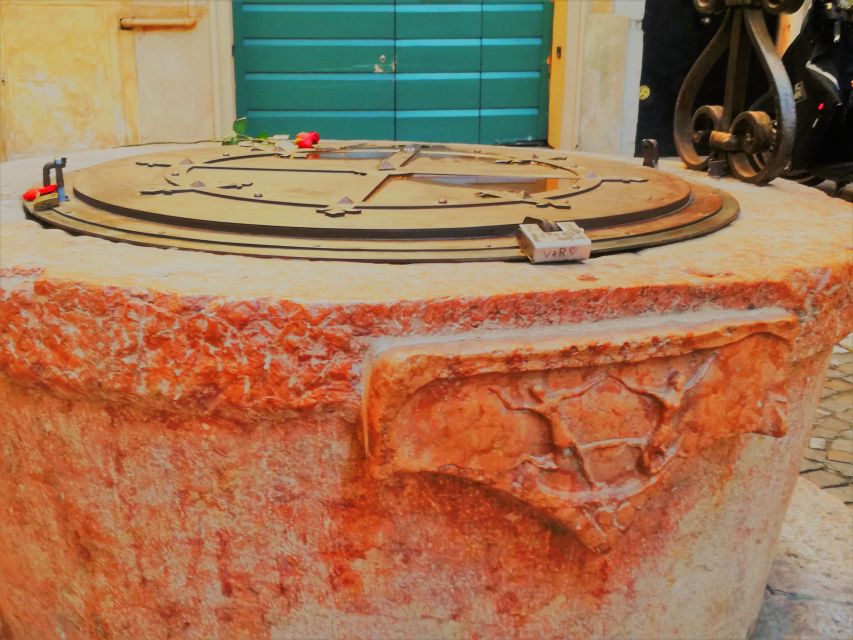
Piazza delle Erbe is one of Verona’s essential sights and receives a longer stop. You see the city’s oldest fountain, learn about the local market, and examine the historic façades around the square.
This is a good place to listen for the difference between seeing and understanding. The square is attractive at first glance, but its buildings reflect changing uses and periods of power. Fabio explains how the market functioned and draws your attention to details in the townhouses that you might otherwise overlook.
The square can be lively, so the headsets matter here. Instead of standing shoulder to shoulder around a guide who is trying to project over the noise, you can keep a little distance and still hear the explanation. That small piece of equipment received repeated praise, especially from people who find crowded walking tours hard to follow.
Piazza dei Signori and the Scaliger rulers
From Piazza delle Erbe, the route moves into Piazza dei Signori. Here you see public buildings including Palazzo della Ragione, Palazzo della Scala, and Palazzo del Capitano.
This square is a useful lesson in medieval Verona. The buildings reflect administration, wealth, and the authority of the Scaliger family. You also hear about the city’s highest tower and the political world of the medieval era.
I like this part of the walk because it gives Verona a civic dimension. The Arena and Juliet’s balcony attract most first-time attention, but squares such as Piazza dei Signori explain how the city was governed and how its ruling families left their mark. Fabio’s strength, according to the experience details, is connecting architecture to people and events rather than reciting dates without meaning.
Santa Anastasia and the dramatic Scaliger tombs
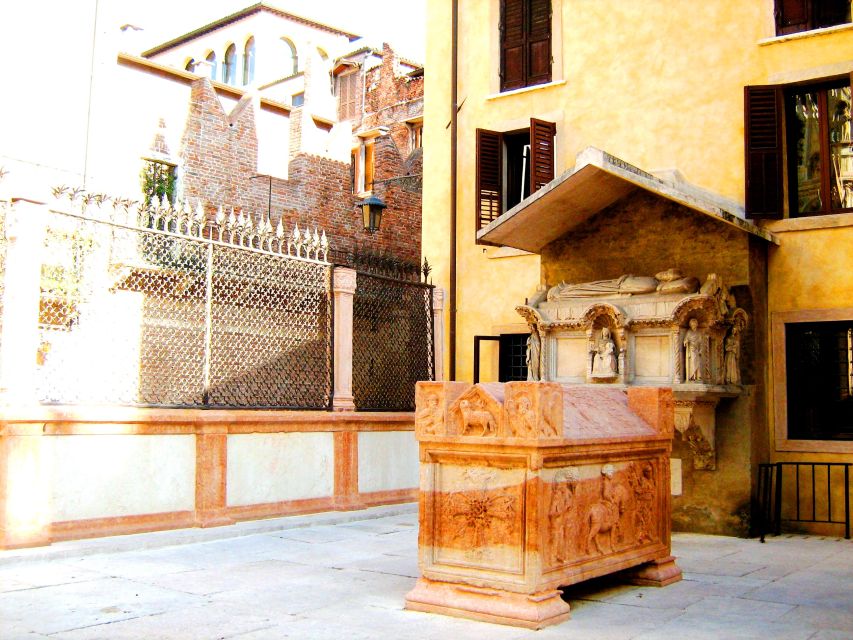
The route passes Basilica di Santa Anastasia for a photographic stop before reaching the Arche Scaligere, the ornate mausoleums of Verona’s ruling family. These tombs are among the city’s most striking medieval sights.
The Arche Scaligere can look almost theatrical, with pointed forms and elaborate decoration rising above the surrounding streets. Fabio uses them to explain the Scaligers and the way powerful families displayed status even in death.
Santa Anastasia adds another layer to the walk, though this is not an interior church visit. If you want to see the basilica inside, you will need to return separately. That is typical of this activity: it gives you a strong first look and historical context, then leaves you free to choose which places deserve a longer visit later.
Romeo, Juliet, and the real story behind the romance
The tour continues past Romeo’s house and the courtyard of the Old Market before reaching Juliet’s House. You get photo stops at both locations and hear about the historical inspiration connected with Shakespeare’s tragedy.
This is a sensible way to handle Verona’s most famous literary story. The walk acknowledges the romance without allowing Juliet’s balcony to swallow the whole city. You learn how the story relates to Verona, then see the surrounding lanes, courtyards, and medieval buildings with a more careful eye.
Juliet’s House is a popular stop, so expect it to be more tourist-focused than the quieter parts of the route. The activity does not include entry, and the balcony visit is a photo stop rather than an indoor tour. If you want to explore the house, you can return after the walk, now with a better sense of where it fits into the city.
Romeo’s house is also viewed from outside. That is enough for a quick orientation, but not a substitute for a detailed literary tour. I see this as a strength for most visitors because the tour gives equal weight to Verona’s Roman and medieval past.
The overlooked streets, courtyards, and small squares
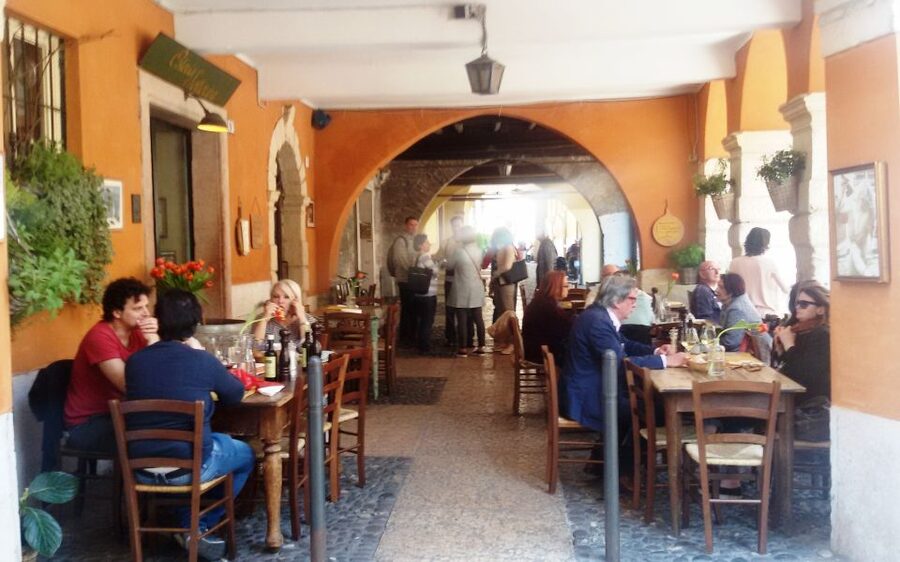
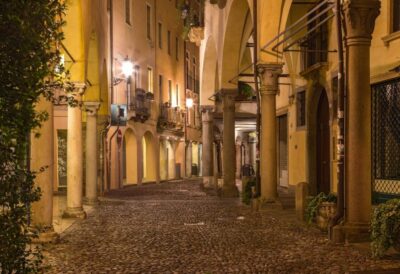
Between the headline sights, Fabio leads you through a series of less obvious places, including Piazzetta Monte, Piazzetta Bra Molinari, Piazza Indipendenza, the Courtyard of the Old Market, and Via Dietro Anfiteatro.
The supplied route also includes brief stops near San Giovanni in Foro, the synagogue, the former Convent of Saint Mary della Scala of the Servants of Mary, and other quiet corners. Some are photo stops or pass-bys lasting only a few minutes, so you should not expect a formal visit at every location.
That quick rhythm is part of the appeal. Verona rewards a slow eye, and Fabio shows you where to look: at building fronts, traces of earlier walls, small religious sites, and spaces that sit just outside the main sightseeing flow. Several people who took the walk found themselves noticing architectural details later in the day that they would previously have ignored.
The route is also practical for first-time visitors. You are not only collecting facts. You are learning how the old center fits together, which makes it easier to wander on your own after the tour.
Fabio’s approach and the value of the headsets
Fabio is the experience provider and the guide named in the tour information. He was born and raised in Verona, and the strongest feature of his approach is his personal connection to the city.
The commentary combines history, architecture, anecdotes, and local recommendations. Fabio is described as warm, witty, attentive, and patient with questions. He also kept groups engaged during hot weather by seeking shade where possible and allowing breaks to cool down. That kind of care matters more than it may sound, especially in summer when stone streets and open squares can become tiring.
The headsets are another practical advantage. Fabio speaks through a microphone, and each participant receives an earpiece. You can hear him in noisy places, and people with some hearing loss found the system particularly helpful.
The group limit is 10 people, with private options also available. A small group makes it easier to ask questions and stay connected to the guide. One useful sign of the provider’s reliability is that the tour can go ahead even when only one booking has been made, though you should confirm the exact arrangement when you book.
How much walking and planning you should expect
The activity lasts two hours and takes place entirely on foot. There is no included transport, and you should bring comfortable shoes and water.
The route is wheelchair accessible, but the experience still involves moving through historic streets and stopping at many points. If you use a wheelchair or have mobility concerns, it is sensible to confirm the current route details before booking, particularly if you want to avoid any difficult surfaces or crowded areas.
The tour runs rain or shine. Pack for the forecast rather than assuming the weather will cooperate. On hot days, water and sun protection are important, while light rain gear will make the all-weather policy easier to manage.
The meeting point is central, and the walk returns to Palazzo Barbieri. Since there is no meal or drink included, schedule a café stop before or after. I would take the tour early in your Verona stay, then revisit the places that caught your interest.
Is $41 a fair price?
At $41 per person, this is not the cheapest way to stroll through Verona, but the value is reasonable if you want interpretation rather than directions. You are paying for a licensed local guide, a carefully arranged two-hour route, a small group, and headsets.
The cost makes more sense when compared with the alternative: wandering from the Arena to Juliet’s House and seeing only the most obvious sights. You can photograph those places for free, but you may miss the Roman gate, medieval wall traces, river views, local courtyards, and architectural details that give the city its character.
The price does not include entries, so budget separately if you want to enter the Arena, Juliet’s House, or other paid sites. That separation also gives you control. You can use the walk as an orientation, then spend money only at the places you most want to explore inside.
Free cancellation up to 24 hours ahead and the reserve-now, pay-later option add useful flexibility, especially if your Verona plans are still shifting.
Who will get the most from this walk?
I would recommend it most strongly to first-time visitors, history fans, architecture enthusiasts, and anyone who prefers a small group to a large crowd following a flag.
Families can also benefit. Fabio has kept younger participants involved, including a 15-year-old, by mixing stories with historical explanation. The route is not built as a children’s tour, but an interested teenager should find plenty to grab onto.
This may not be the right choice if you want long interior visits, a food-focused experience, or a relaxed café walk with very little narration. It is also not ideal for anyone who cannot comfortably walk for two hours. For everyone else, it offers a useful balance: famous Verona for orientation, and lesser-seen Verona for character.
The tour is offered in English, German, Italian, and Spanish. You can choose a private format or a small shared group, depending on availability.
Should you book the Verona History and Hidden Corners Tour?
Book it if you want to understand Verona instead of simply ticking off the Arena and Juliet’s balcony. Fabio’s local background, clear storytelling, small group size, and excellent headsets are the strongest reasons to choose it.
I would take this walk near the start of a stay, especially if you have only a day or two in town. You will see the major landmarks, gain a working map of the center, and pick up enough context to make your later wandering more rewarding.
Skip it only if you prefer to explore entirely alone or want admission-based sightseeing rather than an outdoor overview. At $41, it offers good value for a focused two-hour introduction, provided you are ready to walk and listen.
FAQ
Where does the tour meet?
Meet the guide beneath the Italian flag at Palazzo Barbieri, Verona’s town hall, in Piazza Bra.
How long does the walking tour last?
The tour lasts two hours.
What landmarks are included?
The route includes Piazza Bra, the Verona Arena, Porta Borsari, Riva San Lorenzo, Piazza delle Erbe, Piazza dei Signori, Basilica di Santa Anastasia, the Arche Scaligere, Romeo’s house, Juliet’s House, and other historic streets and courtyards.
Does the tour enter the Arena or Juliet’s House?
No. The activity includes photo stops and outdoor explanations. Entry tickets are not included.
What languages are available?
The live guide is available in English, German, Italian, and Spanish.
How large is the group?
Shared groups are limited to 10 participants. Private groups are also available.
Is the tour wheelchair accessible?
Yes, the activity is listed as wheelchair accessible.
What should I bring?
Bring comfortable shoes and water. The tour runs rain or shine, so dress for the weather.
More Historical Tours in Verona
- Venice’s Best: Basilica, Doge’s Palace, Gondola & History Gallery
★ 4.5 · 2,478 reviews - Venice: City Center Historical Guided Walking Tour
★ 4.2 · 1,873 reviews - Venice: Bell Tower & St Mark’s Square History Gallery Ticket
★ 4.3 · 910 reviews - Basilica, Doge’s Palace, History Gallery & Bell Tower Option
★ 5.0 · 586 reviews
More Quiet Corners of Verona
- Verona: Classic and Hidden Gems Bike Tour
★ 4.9 · 577 reviews - Highlights and hidden gems Verona Bike Tour
★ 5.0 · 393 reviews - Verona: Highlights and Hidden Gems Walking Tour
★ 4.7 · 179 reviews - My Granny’s secrets: Making pasta in the heart of Verona
★ 5.0 · 131 reviews
Just added around Verona
- Verona: Private 2-Hour Walking Tour★ 4.9 · 41 reviews
- Valpolicella Lunch or Dinner Wine & Food tasting with Amarone★ 5.0 · 43 reviews
- The 10 Tastings of Verona With Locals: Private Food Tour★ 4.5 · 45 reviews
- Arena di Verona Opera Ticket Package★ 4.0 · 46 reviews
- Unique Wine tasting in Verona, with Amarone docg★ 5.0 · 46 reviews
- Verona: the Arena at the Gladiators’ time★ 5.0 · 48 reviews
- Verona: Juliet’s House Fast-Track Entry Ticket & Audio Guide★ 3.5 · 52 reviews
- Valpolicella Wine Experience at Montresor winery★ 5.0 · 54 reviews
Historical Tours, compared.
Venice’s Best: Basilica, Doge’s Palace, Gondola & History Gallery
Read our review →
Bell Tower & St Mark’s Square History Gallery Ticket
Read our review →
Basilica, Doge’s Palace, History Gallery & Bell Tower Option
Read our review →
St. Mark’s Cathedral Priority Guided Tour & History Gallery
Read our review →
Browse the lists this tour appears in