
Reviewed · GONDOLA RIDES
Venice Walking Tour and Gondola Ride
Venice reveals itself best on foot, then from the water. This three-hour tour pairs the city’s headline sights with a traditional gondola ride, giving you a quick sense of how Venice works as both grand European capital and maze of narrow lanes.
I like the small-group format and the chance to hear stories from guides such as Julian and Elisabeth. I also like that the walk includes famous places such as St. Mark’s Square and Doge’s Palace while still passing through lesser-known streets. The main concern is pace: some outings have moved too quickly, with little time to stop, rest, or hear the guide over the crowds.
In This Review
- Key points at a glance
- Starting at Santa Lucia and Finding Venice on Foot
- The Grand Canal, Venice’s Main Waterway
- St. Mark’s Square and the Campanile
- The Clock Tower and Merceria Entrance
- The Bridge of Sighs and Doge’s Power
- Rialto Bridge and Venice’s Commercial Heart
- La Fenice and the City’s Musical Story
- What the Gondola Ride Adds
- Guide Quality Makes or Breaks the Walk
- Is $185.38 a Fair Price?
- Who Will Get the Most From This Experience?
- Practical Details Before You Book
- Should You Book the Venice Walking Tour and Gondola Ride?
- FAQ
- Where does the Venice walking tour begin?
- Where does the activity end?
- How long does the tour last?
- Is a gondola ride included?
- Are admission tickets to Doge’s Palace included?
- Are food and drinks included?
- What should I wear?
- Can I cancel for a full refund?
Key points at a glance
- A gondola ride is built into the three-hour plan, so you do not need to arrange this separately.
- The route covers Venice’s major landmarks, including St. Mark’s Square, Rialto Bridge, the Bridge of Sighs, and Doge’s Palace.
- Julian and Elisabeth receive especially strong praise for clear explanations and personal attention.
- The walk starts at Santa Lucia railway station, which is useful if you arrive by train but can mean a long opening stretch before the main sights.
- The advertised price is $185.38 per person, a high cost that makes the guide quality and smooth gondola arrangements important.
- The published rating is 3.3 out of 5 from 13 reviews, showing a real split between excellent guiding and uneven pacing or communication.
Starting at Santa Lucia and Finding Venice on Foot
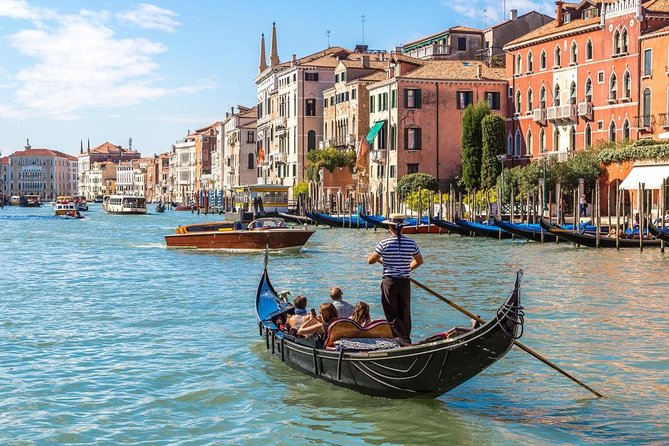
The meeting point is Stazione di Venezia Santa Lucia, Venice’s main railway station. That is a sensible arrival point if you are coming into the city by train, though you should read the final meeting instructions carefully. One person had trouble locating the guide and missed the gondola portion, so do not rely on finding the group by chance.
From the station, you begin walking through Venice’s central districts. This is part of the appeal. Venice has no ordinary road grid in its historic core. Its streets narrow into lanes, its bridges rise over canals, and the route can change from a broad view to a quiet passage in a few steps.
The tradeoff is time. The walk from the station toward the gondola area may take a substantial part of the tour. One outing was described as spending the first hour reaching the gondola, which left less time for explanations at the major sights.
You should wear comfortable shoes and expect cobblestones, bridges, and steady movement. There are no details promising regular rest stops, and some outings reportedly had few pauses. If you prefer a slow walk with plenty of time for photographs, tell the guide early.
More Walking Tours in Venice
- Venice Walking Tour and Gondola Ride
★ 3.5 · 3,630 reviews - Venice: Rialto Bridge & Offbeat Unusual Venice Walking Tour
★ 4.2 · 3,538 reviews - Private 3 hrs Venice Tour: St Mark’s, Walking tour & Boat tour
★ 4.0 · 3,372 reviews
The Grand Canal, Venice’s Main Waterway
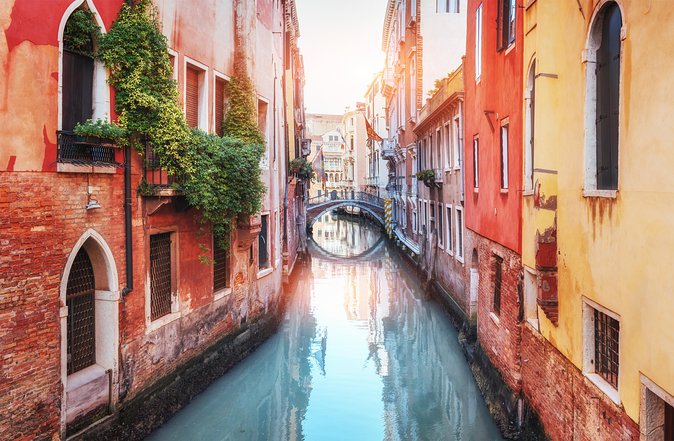
The Grand Canal is Venice’s central water route, a wide reverse-S curve that divides the historic city into two sides. It runs about 3.8 kilometers and varies from roughly 30 to 90 meters in width. Its average depth is about 5 meters.
You may see it first as a point of orientation rather than a formal sightseeing stop. The canal connects the lagoon near Santa Lucia with the basin near San Marco, and much of Venice’s layout makes more sense once you understand this shape.
The Grand Canal is also a reminder that water is not decoration here. It is the city’s main avenue. Ferries, water taxis, and gondolas use it, while smaller canals carry you into quieter parts of Venice.
The itinerary gives this stop about 10 minutes and no admission charge. That means you should expect an explanation and a view, not a long cruise along the entire canal. The longer water experience comes later in the gondola.
St. Mark’s Square and the Campanile
Piazza San Marco is Venice’s main public square and the center of its religious and political life. It is one of those places that can feel almost too familiar from photographs, yet the scale and setting are different in person. The square opens toward the lagoon through the Piazzetta, or little square, and brings together the basilica, the campanile, the Doge’s Palace, and the old government buildings.
The tour allows about 30 minutes here. That is enough to get your bearings and hear the main story, but not enough for a detailed visit to every building.
The Campanile di San Marco rises above the square beside the Basilica. The basilica’s present structure dates in part to the late 11th century and was decorated over many years. Its façade blends different artistic periods, with a heavily ornamented upper section.
The schedule lists the campanile and basilica stop as admission not included. In practice, treat this as an exterior-focused part of the walk unless your booking instructions say otherwise. The tour price does not cover entry tickets to the listed paid attractions.
The Clock Tower and Merceria Entrance
The Torre dell’Orologio sits on the north side of St. Mark’s Square at the entrance to the Merceria, one of Venice’s main shopping streets. Its clock and tower form part of the architectural frame around the square.
You get about 10 minutes here. That is a short stop, but the building is useful for understanding how Venice organized movement from the political center toward the commercial heart of the city.
The clock tower is also a good example of why a local guide can help. On your own, you may photograph the façade and move on. With an explanation, the tower becomes part of the city’s old civic machinery rather than just another ornate building.
No admission is included for this stop. The value is in the outside view and the story, not an interior visit.
More gondola rides in Venice:
- Venice: Grand Canal Gondola Ride with App Commentary
★ 4.1 · 18,908 reviews - Venice: Grand Canal by Gondola with Live Commentary
★ 4.1 · 13,681 reviews - Venice: Shared Gondola Ride Across the Grand Canal
★ 3.9 · 6,645 reviews - Grand Canal Gondola Experience with Live Commentary™
★ 4.0 · 4,223 reviews
The Bridge of Sighs and Doge’s Power
The Ponte dei Sospiri, or Bridge of Sighs, is built of white Istrian stone and dates to 1602. It connects Doge’s Palace with the New Prisons. Unlike Venice’s open pedestrian bridges, this one is covered and contains two separate corridors divided by a wall.
The tour schedules about 30 minutes in this area. That gives your guide room to explain the bridge’s purpose and place it within the government and prison system of the Venetian Republic.
This is a worthwhile stop because the romantic name can obscure the actual story. The bridge was not built as a scenic crossing for lovers. It carried prisoners between the palace and prison buildings, and its enclosed design made it part of a controlled route.
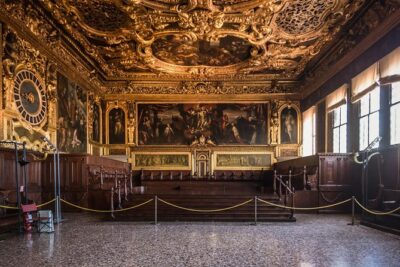
Doge’s Palace is another 30-minute stop, with admission not included. The palace served as the residence of the Doge, the highest authority in the former Venetian Republic. Its Venetian Gothic design reflects the city’s wealth and its links to the wider Adriatic and Mediterranean world.
You will get more from this section if you listen for the connection between architecture and government. The palace was not simply a royal home. It was part of the machinery of a republic, with political, judicial, and administrative roles.
Rialto Bridge and Venice’s Commercial Heart
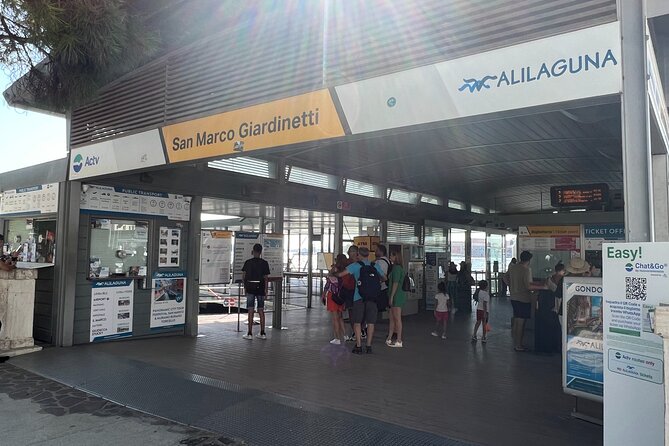
Venice has about 354 bridges, each built to solve a practical transport problem while adding to the city’s visual charm. The Rialto Bridge is the oldest of the four bridges crossing the Grand Canal and connects the districts of San Marco and San Polo.
The current stone bridge dates to 1591. Earlier versions included a crossing made with two boats and later a wooden structure. That long sequence tells you something essential about Venice: the city has repeatedly adapted its waterways rather than trying to erase them.
The tour allows 30 minutes at Rialto Bridge. This is enough time for the guide to explain its history and for you to look across the Grand Canal. It may also be one of the busiest parts of the walk, so keep close to the group and be ready for a moving conversation.
If you want a quiet, unhurried photograph from the center of the bridge, the tour pace may not suit you. If you want a first overview of Venice’s old commercial center, this stop earns its place.
La Fenice and the City’s Musical Story
Teatro La Fenice is one of Italy’s most important opera houses. During the 19th century, it hosted major premieres by composers including Rossini, Bellini, Donizetti, and Verdi.
The itinerary gives La Fenice about 10 minutes, and admission is not included. You should expect an exterior introduction rather than a full theater visit.
Even a brief stop helps broaden the tour beyond canals and medieval buildings. Venice was also a center for theater, music, and public spectacle. La Fenice adds that later cultural layer to the older stories of the republic.
If opera is a priority for you, plan a separate visit. The short stop cannot replace time inside the theater, and the entrance cost is outside the tour price.
What the Gondola Ride Adds
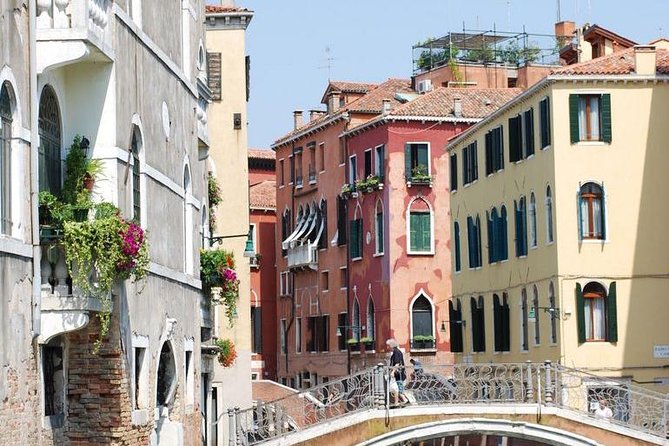
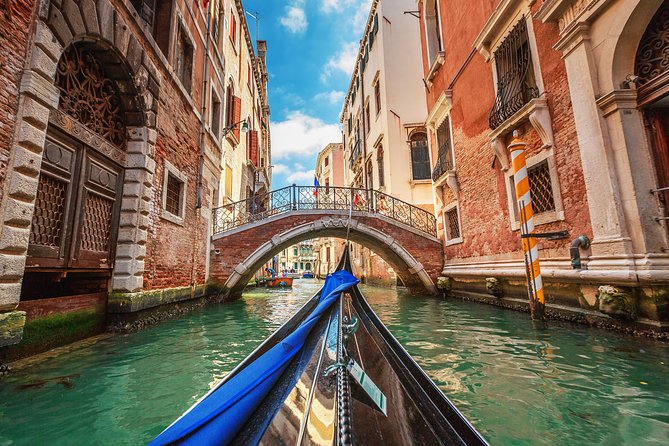
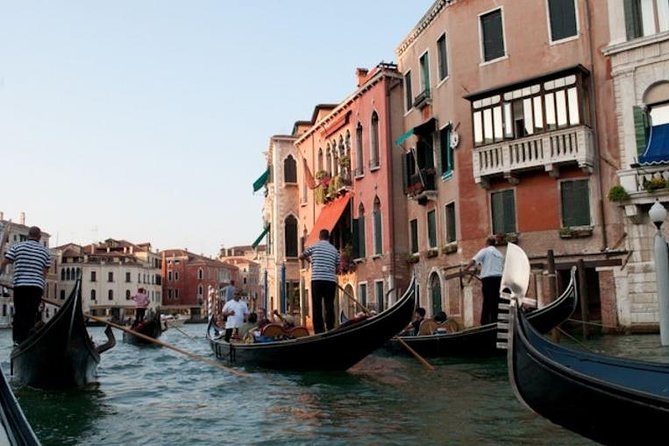
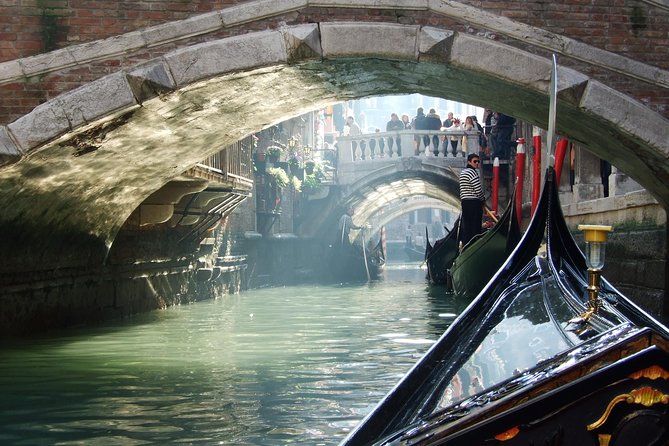
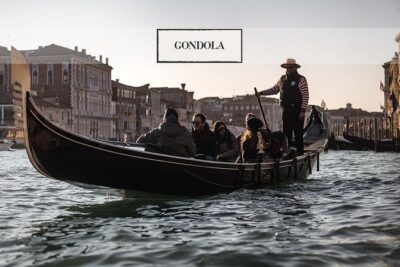
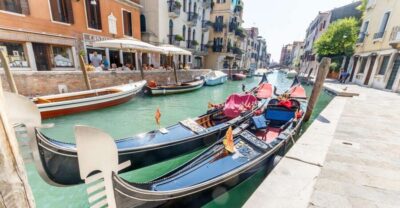
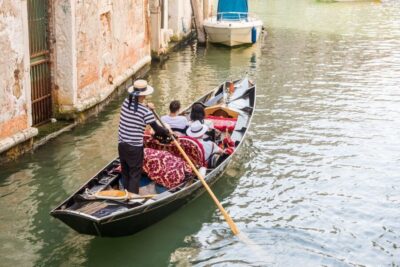
The gondola ride is the emotional center of the experience. Gondolas are not simply photo props. They are part of Venice’s long-standing transport tradition and offer a different view of the city’s buildings, bridges, and narrow waterways.
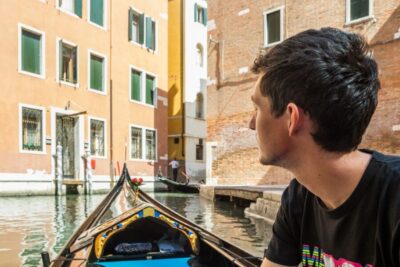
The ride helps you notice details that disappear when you are walking. From low on the water, the canal walls rise close by, doorways sit near the waterline, and the relationship between the city and its canals becomes clearer.
The itinerary does not specify the exact route, ride length, or whether singing is included. Do not assume that a singer or musical performance comes with the booking. One outing included a gondolier without singing, and interference from a microphone made some commentary hard to hear.
The gondola portion also depends on good coordination. Julian was specifically praised for making sure the group reached the gondola, then returning to continue the walking tour. That kind of handoff matters because the gondola boarding point may not be where the walk begins or ends.
One serious warning: a missed meeting or communication problem can result in missing the ride. Confirm the meeting details the day before, arrive early, and keep the provider’s contact information available.
Guide Quality Makes or Breaks the Walk
At its best, this tour feels personal. The group is limited to a small number, with the booking information giving a maximum of eight in one place and a maximum of 14 in the inclusion details. Because those figures conflict, confirm the expected group size before you pay. Either way, it is intended to be smaller than a large city tour.
Julian receives repeated praise for staying engaged, explaining Venice clearly, and helping with onward transportation after the tour. Elisabeth is also praised for explaining Venice and the surrounding area in a way that helped the group understand the city’s culture.
That personal attention is important in Venice. A guide can point out why the Grand Canal shaped the city, explain the political role of Doge’s Palace, and help you understand the practical purpose of bridges and canals.
But guiding quality is not consistent enough to ignore the drawbacks. Several accounts describe a guide moving too fast, with no rest breaks and limited time to stop between sights. Crowds make this worse. A small group does not automatically mean a relaxed walk.
You should tell the guide if you need a slower pace or clearer pauses for photographs. Stay near the guide in crowded lanes, and ask for key information to be repeated if traffic and voices make it hard to hear.
Is $185.38 a Fair Price?
At $185.38 per person, this is an expensive introduction to Venice. The price includes a guided walk and a traditional gondola ride, but not food, drinks, personal purchases, tips, or admission to the paid sights listed in the route.
The value depends on what you want from a first day. If you want one booking that connects the station, major landmarks, local streets, and a gondola, the convenience has real worth. You avoid having to arrange the ride separately and gain a historical framework for the city.
The price is harder to justify if you expect extensive interior visits. The basilica, clock tower, Doge’s Palace, and La Fenice are listed with admission not included. You may see them from outside and hear about them, but you will need separate tickets for paid entry.
The mixed 3.3 out of 5 rating from 13 published reviews also matters. Strong guide experiences can make the cost feel worthwhile, while a rushed walk or missed gondola can make it feel poor value. I would book this for convenience and orientation, not as a full museum tour.
Who Will Get the Most From This Experience?
This is best for a first-time visitor who wants a broad introduction in a short window. You get the famous square, palace, bridges, theater, Grand Canal, back streets, and gondola tradition in roughly three hours.
It also suits people arriving by train, since the walk begins at Santa Lucia Station. A private booking requires at least two people, so it is not designed for a lone participant booking by itself.
You should consider another option if you dislike fast walking, need frequent breaks, or want long periods inside the major monuments. The route is active, and the schedule gives many stops only 10 or 30 minutes.
Families and older adults can participate if they are comfortable with bridges and cobblestones, but the lack of guaranteed rest stops makes the pace worth considering. Most people can take part, and comfortable footwear is specifically recommended.
Free cancellation is available until 24 hours before the local start time. After that point, the amount paid is not refunded, and late changes are not accepted.
Practical Details Before You Book
The tour uses a mobile ticket, and confirmation is provided at booking. It ends back at the meeting point, so plan your next activity from Santa Lucia rather than assuming you will finish near St. Mark’s Square.
Venice’s access rules may add another cost. On certain dates, day visitors staying outside Venice may need to pay a €5 access fee. Check the official Venice access-fee site before your visit, since the charge depends on the date and exemptions may apply.
A tip is not included. Food and drinks are also on your own, so carry what you need for the three-hour outing. Personal purchases are not covered either.
Since the route includes popular central sights, the walk may be crowded. Keep your phone charged, save the meeting information, and do not separate from the group during the transition to the gondola.
Should You Book the Venice Walking Tour and Gondola Ride?
I would book this if you want a single, structured introduction to Venice and place a high value on having a guide connect the city’s landmarks. The gondola ride gives the tour a memorable finish, while the stops at Rialto, St. Mark’s, Doge’s Palace, and the Bridge of Sighs cover the essentials.
I would hesitate if $185.38 feels high for mostly exterior sightseeing, or if you want a slow, detailed walk. The reports of rushing, poor hearing, missed gondola arrangements, and limited breaks are meaningful concerns.
To improve your odds, confirm the meeting point the day before, arrive at Santa Lucia early, wear sturdy shoes, and tell the guide your preferred pace. If Julian or Elisabeth is leading, you can reasonably hope for the attentive, helpful style described in the strongest accounts, but guide assignment is not guaranteed in the information provided.
FAQ
Where does the Venice walking tour begin?
The tour begins at Stazione di Venezia Santa Lucia, located at 30121 Venice, Metropolitan City of Venice, Italy.
Where does the activity end?
The activity ends back at the meeting point.
How long does the tour last?
The experience lasts approximately three hours.
Is a gondola ride included?
Yes. A traditional gondola ride is included in the tour.
Are admission tickets to Doge’s Palace included?
No. Admission to Doge’s Palace is not included.
Are food and drinks included?
No. Food and drinks are not included.
What should I wear?
Comfortable shoes are recommended because the tour involves walking over cobblestones and footbridges.
Can I cancel for a full refund?
Yes. You can cancel up to 24 hours before the experience start time for a full refund. Changes or cancellations made less than 24 hours before the start time are not accepted for a refund.
Just added around Venice
- Padua: Private Pasta-Making Class at a Local’s Home★ 5.0 · 3 reviews
- Padua City Sightseeing Walking Tour of Must-See-Sites with Local Guide★ 5.0 · 3 reviews
- Gondola Ride and St Mark’s Basilica★ 4.5 · 3 reviews
- VIRTUAL MUSEUM: Creature di Gomma – Venice Vintage Toys★ 4.7 · 3 reviews
- Venice: Market Tour and Meal at a Local’s Home★ 4.3 · 3 reviews
- 3 Hour Shared Walking and Aperitivo Tour of Verona★ 5.0 · 3 reviews
- Venice: The Best of Dolomites 3Cime and Refuges with Drone★ 5.0 · 3 reviews
- Verona: Blindfolded Wine Tasting★ 5.0 · 3 reviews
Gondola Rides, compared.
Grand Canal Gondola Ride with App Commentary
Read our review →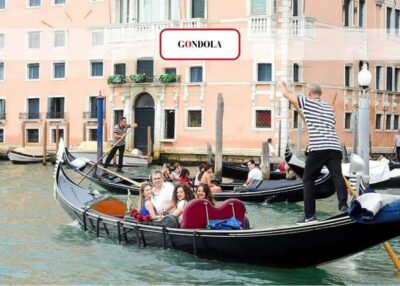
Grand Canal Gondola Experience with Live Commentary™
Read our review →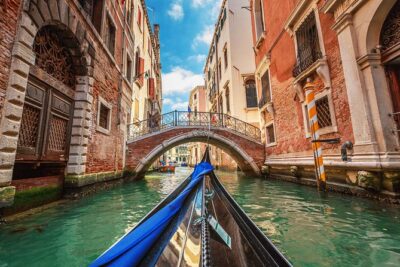
Venice’s Best: Basilica, Doge’s Palace, Gondola & History Gallery
Read our review →Browse the lists this tour appears in