
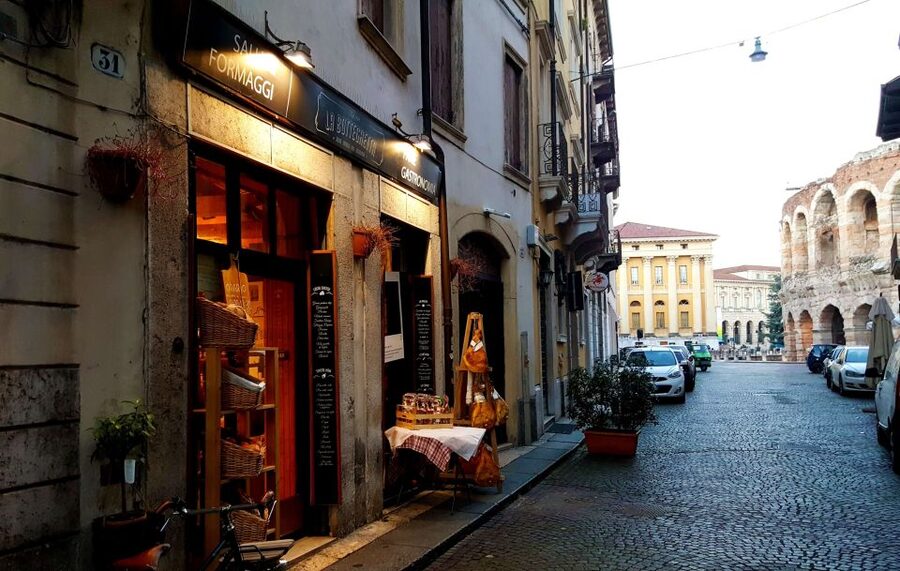
Reviewed · FOOD & DRINK
Verona centro: Olive Oil Tasting Experience
Verona’s La Bottega di Verona turns a pantry staple into a small food lesson. In one hour, Filipo guides you through three carefully chosen extra virgin olive oils, explaining how production methods, olive varieties, and regional conditions affect what you taste. You do not just pour oil on bread and call it lunch.
I like the small, focused format and the chance to compare oils side by side. I also like the food pairings: bread, cheese, salami, tomatoes, and vegetables help you understand how oil works at the table, not just in a tasting glass. The one drawback is the short running time. If you want a long tour of olive growing or a full meal, this is not it.
In This Review
- Key points at a glance
- What happens inside La Bottega di Verona
- Three oils, three ways to taste Italy
- How to taste extra virgin olive oil
- Bread, cheese, salami, and the best pairings
- Production methods and regional character
- A personal guide makes the difference
- Is $53 a fair price for one hour?
- Why the one-hour length works, and where it does not
- Who should book this Verona tasting?
- Booking flexibility and useful planning notes
- Should you book it?
- FAQ
- Where does the olive oil tasting take place?
- How long does the experience last?
- How many olive oils will I taste?
- What food is included?
- Is wine included?
- Which languages are available?
- Should I report food intolerances?
- Can I cancel the booking?
Key points at a glance
- Three oils chosen from around 500 types: The comparison gives you a useful way to spot differences in aroma, flavor, and finish.
- Filipo leads the tasting: He explains regional olive oil and shows you how to taste it properly.
- Food is part of the lesson: Bread, cheese, salami, tomatoes, and vegetables show how each oil pairs with food.
- A family-run Verona shop: La Bottega di Verona puts the tasting in a working food shop rather than a formal lecture room.
- Only one hour long: It fits neatly into a day of sightseeing, though the pace is brisk.
- Wine is available on request: Still or sparkling water is included, and you can ask for a glass of wine.
What happens inside La Bottega di Verona
The experience begins at the historic shop La Bottega di Verona, where your guide meets you. The setting matters. You are not being sent out to an olive grove or a large factory, but you are placed in a food shop that focuses on products from the area.
That makes the tasting easy to fit into a Verona visit. You can spend the morning with the city’s Roman arena and old streets, then give your palate a quieter hour with one of Italy’s most basic ingredients. The meeting point is central Verona, in the Veneto region, though the exact starting time depends on availability when you book.
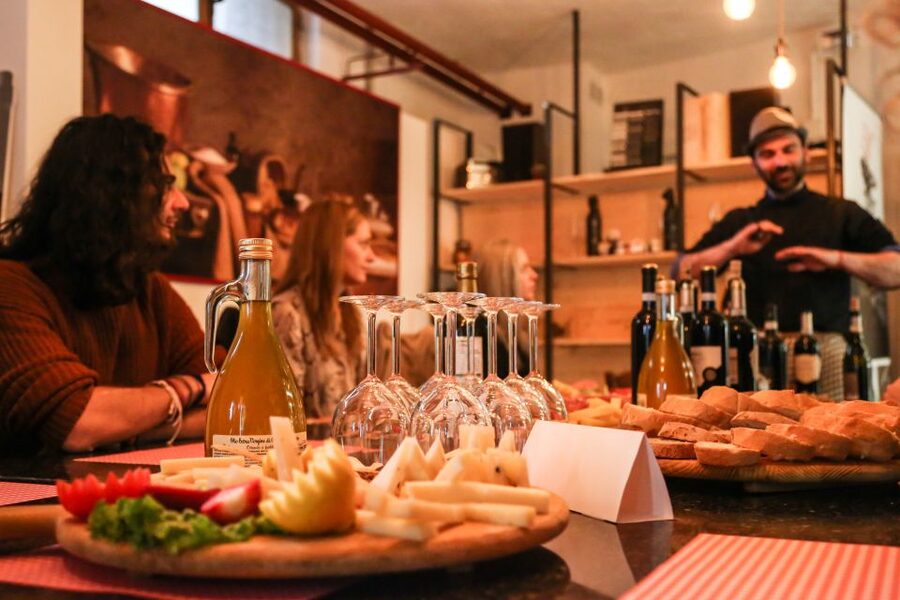
Filipo is the host named in the strongest personal feedback, and he is described as patient, friendly, and generous with his explanations. One especially useful detail is that he does not rush questions. You can ask about where an oil comes from, how it was made, or why one bottle tastes sharper than another.
The shop is family-run, and that gives the session a personal feel. You are likely to get a direct introduction to the products rather than a polished speech that sounds the same every afternoon. Still, keep your expectations sensible: this is a one-hour tasting, not a full tour of the business.
More Food Tours in Verona
- From Verona: Valpolicella and Amarone Wine Tasting Tour
★ 4.9 · 560 reviews - Verona: Wine Tasting with Snacks and Panoramic Views
★ 4.8 · 494 reviews - Verona walking tour:food, wine, legends, lunch/dinner & cable car
★ 5.0 · 386 reviews
Three oils, three ways to taste Italy
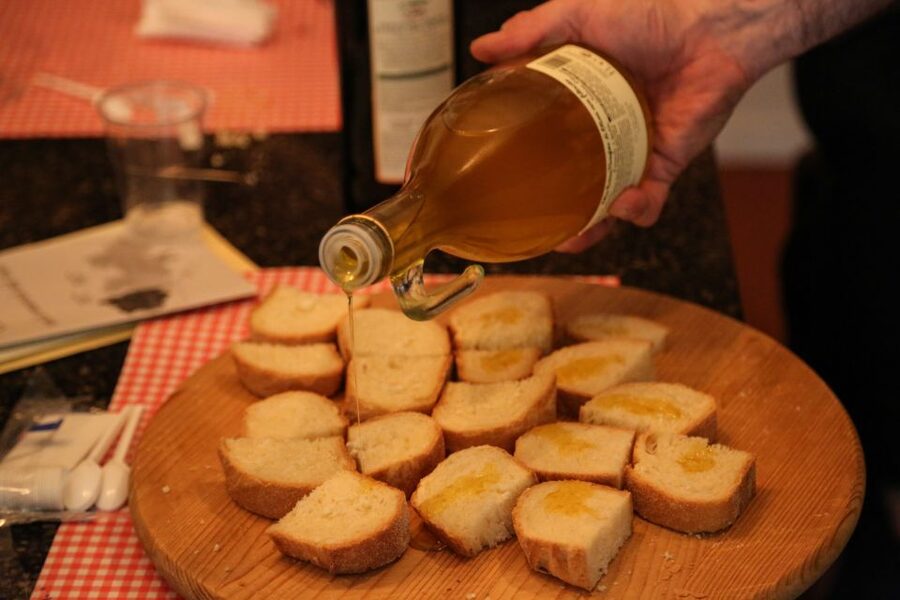
The central idea is comparison. The guides have selected the best oils from about 500 different types, giving you a chance to notice differences that are easy to miss when you use only one bottle at home.
You will taste three oils. The information provided for the experience does not name the exact brands, olive varieties, harvest dates, or regions represented, so do not book this expecting a fixed list of bottles. The selection may depend on what the shop wants to present that day.
That flexibility can be useful. You get an introduction shaped around the products available at the shop, rather than a tasting that treats every group exactly the same. One account described tasting four oils, even though the standard inclusion is three, so the precise number may occasionally vary. I would plan on three and treat anything more as a bonus.
The point is not to decide which oil is simply the best. Good extra virgin olive oil can be grassy, fruity, bitter, or peppery. Those traits can be pleasant or unpleasant depending on what you are eating and what you like.
A mild oil may work well with delicate food. A stronger, peppery oil can hold its own against cheese, tomatoes, or salami. Filipo’s job is to help you notice these differences, so you leave with a more useful skill than a single favorite bottle.
How to taste extra virgin olive oil
Most people taste olive oil by dipping bread into it. That is enjoyable, but it can hide small differences. This experience explains how to taste the oil more carefully, then brings bread and other food back into the picture.
You will learn about the oil’s smell, flavor, and finish. You might notice fruitiness first, followed by bitterness or a peppery feeling in the throat. Those sensations are not automatically signs of poor quality. They can be part of a good oil, especially when they are balanced.
The production story helps make sense of your palate. You learn how the olives are handled and how oil is produced, along with common and less common uses. The session also covers the history of olive oil, a useful bit of context for a product that has been central to Italian cooking for generations.
The practical lesson is simple: stop treating olive oil as a background liquid. Taste it on its own, then taste it with food. That is how you begin to understand why two bottles with the same basic label can behave so differently at the table.
Bread, cheese, salami, and the best pairings
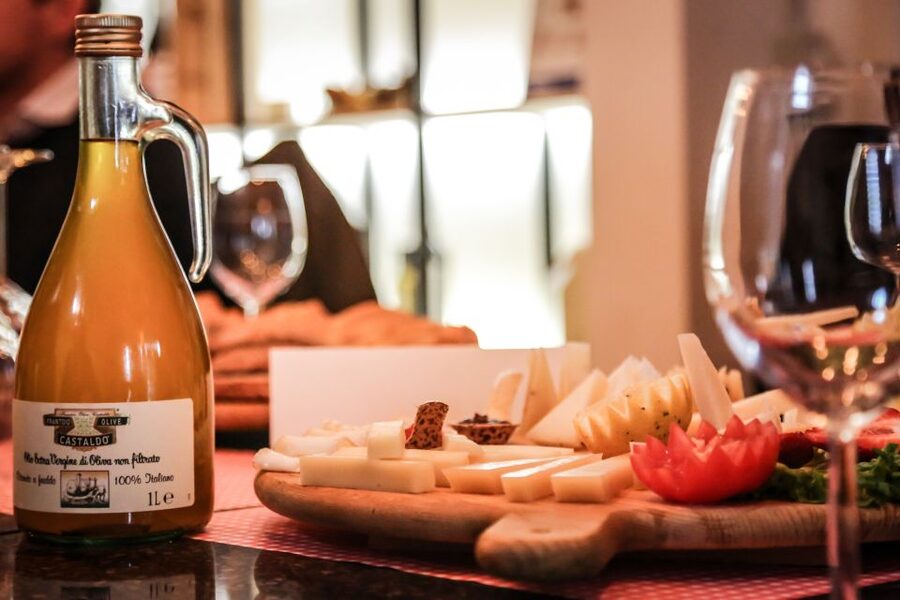
The included food makes this more than a technical tasting. You receive different combinations with bread and cheese, along with a plate of salami, cheese, and bread. Additional foods described during the tasting include tomatoes, aubergines, and zucchini.
These pairings give you a clear reason to pay attention. A delicate oil may disappear beside salami but seem just right with bread. Another may add enough pepper and flavor to make a tomato taste fuller. You are learning through eating, which is usually the sensible Italian approach.
The portions are described as a plate and tasting accompaniments, not as a full lunch. If you have skipped breakfast, do not count on this experience to replace a meal. It is best treated as a generous snack with a lesson attached.
I especially like the use of ordinary foods. You do not need an expert palate to understand bread, cheese, tomatoes, or cured meat. The tasting stays connected to the way you will actually use olive oil after returning home.
If you have food intolerances, tell the provider in advance. The experience includes several food products, so this is not a detail to leave until you sit down.
A different sort of day out around Verona:
- Verona: Hop-on Hop-off Tour 24 or 48-Hour Ticket
★ 4.4 · 2,010 reviews - Verona: History and Hidden Gems Guided Walking Tour
★ 5.0 · 1,379 reviews - Verona: Priority Access Arena Guided Tour
★ 4.6 · 1,152 reviews - Verona: Juliet’s House Fast-Track Entry Ticket & Audio Guide
★ 4.2 · 1,121 reviews
Production methods and regional character
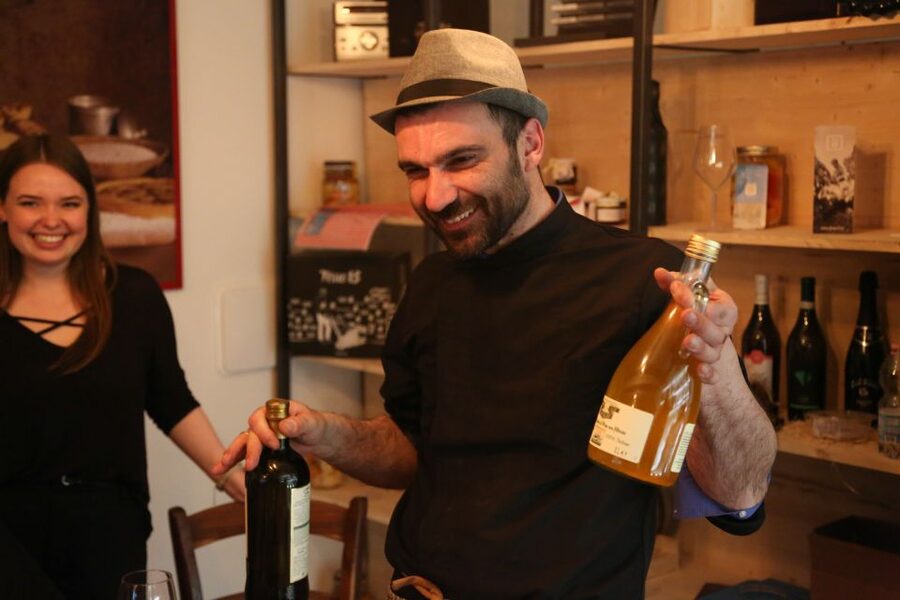
A major part of the session looks at production methods and the origins of the oils. The available information does not promise a visit to an olive farm or a pressing facility, so you should expect explanation rather than a field trip.
That is still worthwhile in Verona. The Veneto is not usually the first Italian region people name when discussing olive oil, and the tasting gives you a chance to learn about the area’s own products. One of the useful points covered is the difference between regional oils and oils from other parts of Italy.
You will hear how olive varieties and production choices shape the finished product. Exact technical details may depend on Filipo and the oils being presented, but the aim is clear: help you recognize quality and understand the choices behind the bottle.
This is where the experience earns its price. A supermarket shelf offers many labels but little help. Here, you can ask why an oil tastes a certain way and connect the answer to the way it was made.
A personal guide makes the difference
The most praised part of this experience is the host. Filipo is described as warm, professional, patient, and deeply involved in the products. That matters in a tasting because a cold or rushed guide can turn food into a test.
You can expect guidance in English or Italian. Russian is also listed among the guide languages in the activity details, while the additional information specifically lists English and Italian. If Russian support is important to you, confirm it when booking.
The tone appears informal enough for questions. You are not expected to know terms for olive oil before you arrive. Filipo shows you what to notice and explains the regional details without requiring a specialist vocabulary.
The shop’s family-run character adds another layer. You get a direct connection to the people selling the food, and the enthusiasm seems tied to the products themselves rather than to a large tourism operation. That does not guarantee a private tasting or a particular group size, since no group limit is provided, but it does suggest a personal style.
Is $53 a fair price for one hour?
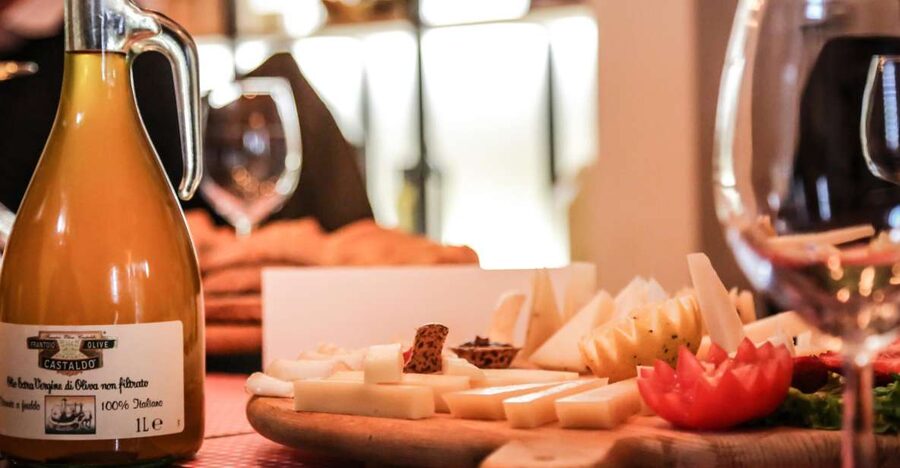
At $53 per person, this is not a cheap snack. You are paying for the guide’s instruction, three oil tastings, food pairings, water, and the chance to ask questions in a specialist food shop.
The value depends on your interest. If you already buy and compare premium olive oils, the lesson may help you make better choices and avoid paying for attractive packaging alone. If olive oil is simply something you pour into a pan, you may find the price harder to justify.
The food helps. Bread, cheese, salami, and the other pairings make the hour feel like a tasting session rather than a lecture. A glass of wine is available on request, but it is not the main reason to book and should not be assumed as part of the standard service.
I would compare this price with a food tour before deciding. A broad food tour gives you more dishes and more city context. This tasting gives you a closer look at one ingredient and a skill you can use every day. For cooks, food lovers, and people looking for a compact Verona activity, that focus can be worth the cost.
Why the one-hour length works, and where it does not
One hour is a useful length for a short city break. It will not take over your day, and you can fit it between major sights, shopping, or an evening meal.
The same limit keeps the experience from becoming a full course in olive oil. You will receive an introduction to history, production, tasting, and uses, but each subject must move along. If you want detailed information about farming, pressing technology, storage, or certification, you will need to ask focused questions.
I suggest arriving ready to taste and listen. With only an hour, the best use of time is to compare the oils, ask about the differences, and try the pairings. You do not need to prepare, but you will get more from the session if you pay attention to how each oil changes with different foods.
The activity is also a good choice for mixed groups. Someone who loves Italian cooking can focus on production, while a less serious food fan can simply enjoy the bread, cheese, and salami.
Who should book this Verona tasting?
I would choose this experience for:
- Food-focused visitors: You want a closer look at a familiar Italian ingredient.
- Home cooks: You would like to choose and use better olive oil after your trip.
- Short-stay visitors: You need an activity that lasts only one hour.
- Couples and small groups: You prefer a relaxed shop setting and conversation with the host.
- People interested in local products: You want to learn about oils connected to the Veneto and Italian food traditions.
I would think twice if you need a full meal, a farm visit, or a set list of famous producers. Those details are not promised. The same goes for anyone with serious dietary restrictions. Food intolerances should be reported ahead of time, and you should confirm what can be accommodated.
The language setup is straightforward for English and Italian speakers. If you need Russian, check that the option is available for your date because the activity information is not entirely consistent on the language list.
Booking flexibility and useful planning notes
The experience costs $53 per person and lasts one hour. You can cancel up to 24 hours before the start for a full refund, and the reserve-now, pay-later option lets you hold a place without paying immediately.
Starting times are not fixed in the details provided, so check availability for your date. Meet your guide at La Bottega di Verona, the historic shop named as the meeting point.
Still or sparkling water is included. Wine can be requested, but the tasting is built around olive oil and food, not wine service. Tell the provider about food intolerances before the activity, especially since the standard spread includes dairy, bread, and cured meat.
Should you book it?
Book this if you want a friendly, compact food experience that teaches you something practical. The strongest reasons are Filipo’s personal approach, the side-by-side tasting of three oils, and the chance to test them with normal Italian foods instead of tasting them in isolation.
Skip it if you are searching for a full meal, a countryside excursion, or a detailed technical course. At $53, the focus needs to matter to you.
For most food-minded visitors spending time in Verona, I think the format works. You leave with a better sense of what extra virgin olive oil can taste like, how production affects it, and which bottle might deserve space on your own table.
FAQ
Where does the olive oil tasting take place?
The meeting point is the historic shop La Bottega di Verona in central Verona.
How long does the experience last?
The tasting lasts one hour.
How many olive oils will I taste?
The standard experience includes a tasting of three different types of olive oil. One account described four oils, so the exact number may sometimes vary.
What food is included?
The experience includes bread, cheese, salami, and different combinations of bread and cheese. Tomatoes, aubergines, and zucchini were also included in one tasting.
Is wine included?
A glass of wine is available upon request. Still or sparkling water is included.
Which languages are available?
English and Italian are listed as available languages. Russian is also listed in the guide information, so confirm availability if you specifically need Russian guidance.
Should I report food intolerances?
Yes. You should inform the provider of any food intolerances before the experience.
Can I cancel the booking?
You can cancel up to 24 hours in advance for a full refund. A reserve-now, pay-later option is also available.
Just added around Verona
- 3 Hour Shared Walking and Aperitivo Tour of Verona★ 5.0 · 3 reviews
- Verona: Blindfolded Wine Tasting★ 5.0 · 3 reviews
- Excursion in Verona.★ 4.5 · 3 reviews
- Verona Airport (VRN) Arrival Transfer (Airport to Verona Hotels or Address)★ 4.0 · 3 reviews
- Photo Shoot in Verona: Capture Your Love Story in Pictures★ 5.0 · 3 reviews
- Incredible Verona – Family Walking Tour★ 5.0 · 3 reviews
- From Verona: discover Lake Garda and Sirmione private tour★ 5.0 · 3 reviews
- Madonna di Campiglio and Dolomites Self-Guided Tour★ 5.0 · 3 reviews
Food & Drink, compared.
Eat Like a Local: Venice 3-Hour Small-Group Food Tasting Tour
Read our review →
Street Food Tour with a Local Guide and Tastings
Read our review →
Venice Like a Local: Food, Wine & Spritz Tour with Traghetto Ride
Read our review →
Venice Bacaro Food Tour: Eat and Drink like a Venetian
Read our review →
Eat, Drink and Repeat: Wine and Food Tasting Tour in Venice
Read our review →
Food Tasting Tour with Cicchetti Dishes and Wine
Read our review →
Sunset Walking Tour with Food and Wine Tastings
Read our review →
Venice Street Food Tour with Local Guide with Local Food Market Visit
Read our review →Browse the lists this tour appears in