
Reviewed · DOGE'S PALACE TOURS
Doge’s Palace & St. Mark’s Basilica with Terrace Access Tour
Venice reveals its grandest story inside two buildings: St. Mark’s Basilica, where gold mosaics and a terrace overlooking the lagoon set the stage, and the Doge’s Palace, where government, justice, and prison life unfolded under one ornate roof. This three-hour tour connects both sights with an English, Italian, Spanish, French, or German-speaking guide.
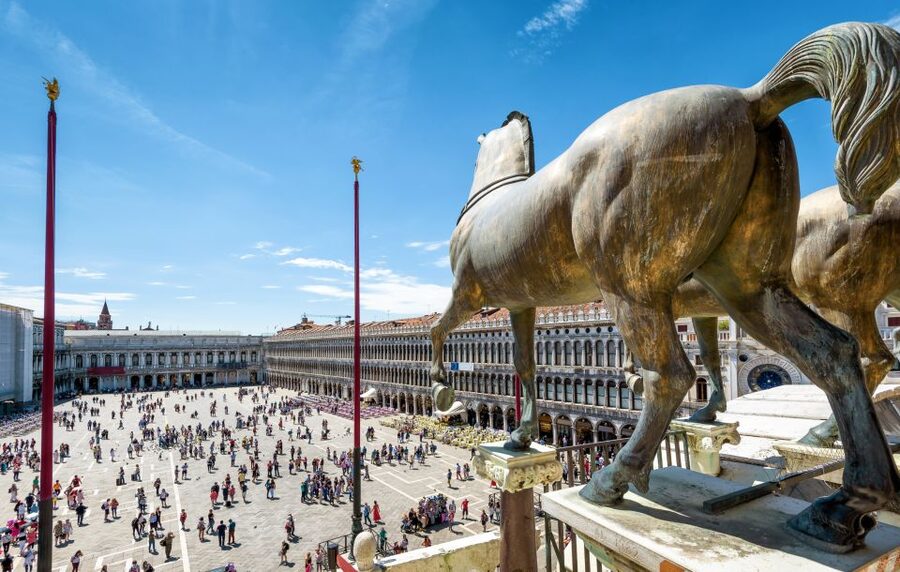
I like the terrace access, which brings you close to the famous bronze horses and gives you a rare look over St. Mark’s Square and the lagoon. I also like the guide-led route through the palace, especially the Bridge of Sighs and the New Prisons, because the stories make the stone and paintings easier to understand. The main caution is the pace and the stairs. The basilica terrace, palace, and prison route all involve steps, and some are steep or narrow.
In This Review
- Key points to know before booking
- Why these two buildings explain Venice
- St. Mark’s Basilica and its hard-won views
- If St. Mark’s closes without warning
- Entering Doge’s Palace through Venice’s seat of power
- Crossing the Bridge of Sighs
- Guides who bring the history to life
- Three hours is efficient, but not leisurely
- Shared group or private tour?
- What to bring and what to wear
- Is $123.48 a fair price?
- Who should book this Venice tour?
- FAQ
- How long is the tour?
- What languages are available?
- Does the tour include St. Mark’s Basilica terrace access?
- What happens if St. Mark’s Basilica is closed?
- Does the tour include priority entry to Doge’s Palace?
- Can I stay inside Doge’s Palace after the tour?
- Do I need to bring identification?
- Can I bring a backpack or large bag?
- Is the tour suitable for wheelchair users?
Key points to know before booking
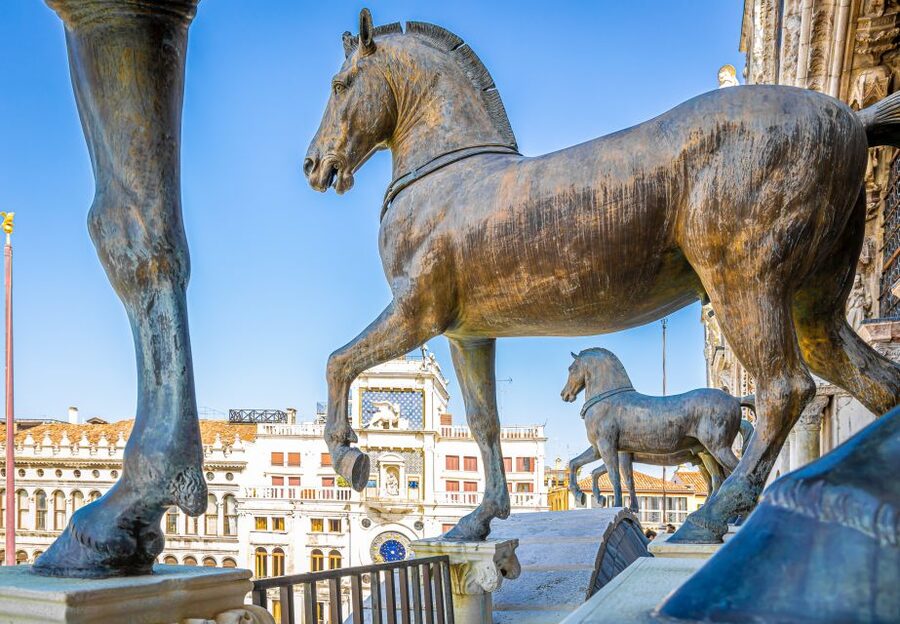
- See the bronze horses up close: The first-floor terrace at St. Mark’s Basilica offers views across the lagoon and St. Mark’s Square.
- Follow Venice’s power trail: The palace route includes the Great Council chamber, courtrooms, Tintoretto frescoes, the Giants’ Staircase, and the Bridge of Sighs.
- Get priority palace entry: The tour includes priority access, though a line can still form at busy times.
- Choose your tour style: Private and small shared group options are available, with language choices varying by option.
- Expect serious stair climbing: The basilica terrace and palace route are not suitable for wheelchair users and may be hard on bad knees or hips.
- Keep extra time afterward: You can continue exploring Doge’s Palace at your own pace once the guided portion ends.
Why these two buildings explain Venice
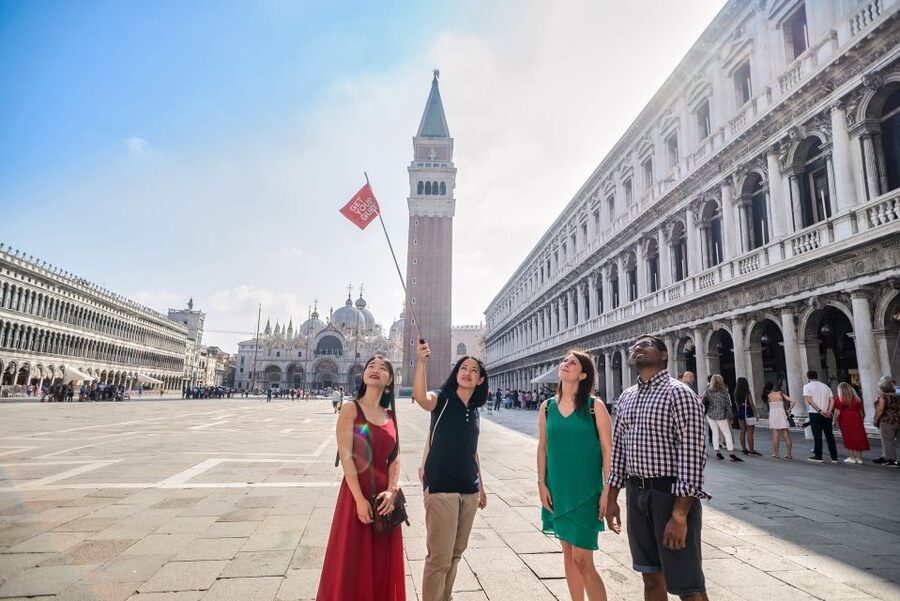
At $123.48 per person, this is not a bargain-basement sightseeing walk. It is a focused, three-hour introduction to Venice’s two most important landmarks, with admission and a live guide included.
I see the value in the pairing. St. Mark’s Basilica shows you the city’s faith, wealth, and links with the eastern Mediterranean. Doge’s Palace shows you how that wealth was governed, defended, and judged. Visiting both in one morning or afternoon gives you a useful framework for the rest of your time in Venice.
Your guide begins around St. Mark’s Square, explaining how Venice developed on a lagoon in the 5th century. That background matters. Without it, the basilica can seem like a dazzling collection of marble, mosaics, and domes. With it, you begin to understand why a city built on water became a major Mediterranean power.
The tour is available as a private experience or a shared small-group outing. A private tour should give you more room for questions and a little more control over the pace. The shared option costs less than a private booking in many cases, but your experience depends more on group size and the guide assigned that day.
More ways to see St Mark's Basilica:
- Venice: Doge’s Palace, St Mark’s Basilica, and Pala d’Oro
★ 4.4 · 6,235 reviews - Legendary Venice: Doge’s Palace, St Mark’s & VIP Terrace Access
★ 4.5 · 5,033 reviews - Venice: Doge’s Palace and St. Mark’s Basilica Tour
★ 4.5 · 3,734 reviews
St. Mark’s Basilica and its hard-won views
The basilica is the first major stop. Your guide starts with the square, then takes you inside the cathedral when it is open to visitors.
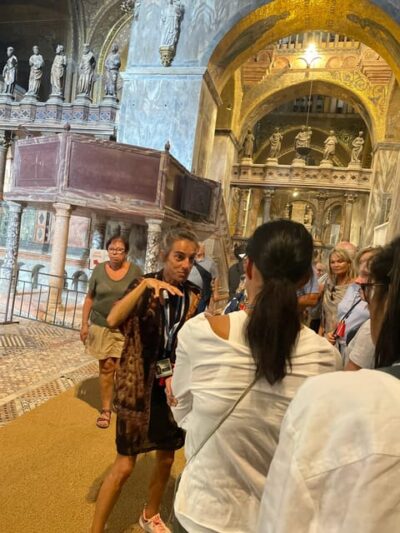
The interior is famous for its shimmering mosaics and elaborate decoration, but the terrace adds something many standard basilica visits miss. From the first floor, you can look over St. Mark’s Square and toward the lagoon. You also get close to the bronze horses, which have had a remarkable journey.
Your guide explains how Napoleon took the horses to Paris and how they later returned to Venice. That small story captures Venice well: art, conquest, trade, and political theater all meet in one object.
The terrace is also the part of the tour that requires the most physical care. The stairs to the museum and terrace are steep and can be uneven. If you have bad knees, hip trouble, balance concerns, or limited mobility, this is not a minor detail. The experience is not suitable for wheelchair users.
Dress with the basilica in mind. Shoulders and knees must be covered because this is a holy place. Large bags and backpacks are not permitted inside, so arrive with only what you need. You also need to bring a passport or ID card. Visitors over 13 are specifically asked to show identification at Doge’s Palace.
If St. Mark’s closes without warning
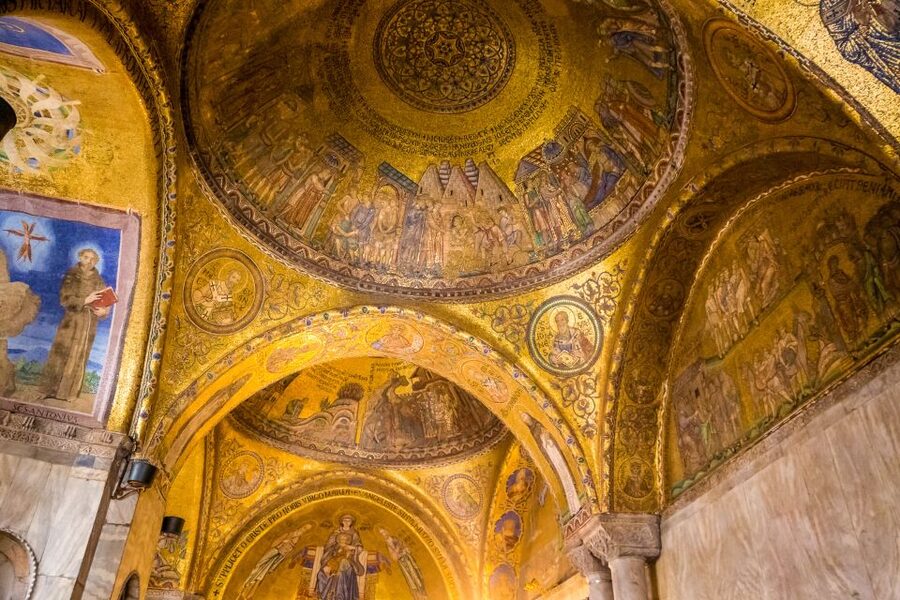
St. Mark’s Basilica can close to visitors at short notice. This is an important condition, since the decision is outside the tour operator’s control.
If the basilica is closed, the replacement is either the 15th-century Church of San Zaccaria and its flooded crypt or the Correr Museum, depending on availability. San Zaccaria gives you a different kind of religious and architectural experience, while the Correr Museum focuses on Venetian art and history.
Neither replacement gives you the basilica terrace or the bronze horses. Still, both keep the tour centered on Venice’s past rather than simply canceling half the experience. I would treat the basilica visit as a strong possibility, not an absolute guarantee, when deciding how much to pay.
Entering Doge’s Palace through Venice’s seat of power
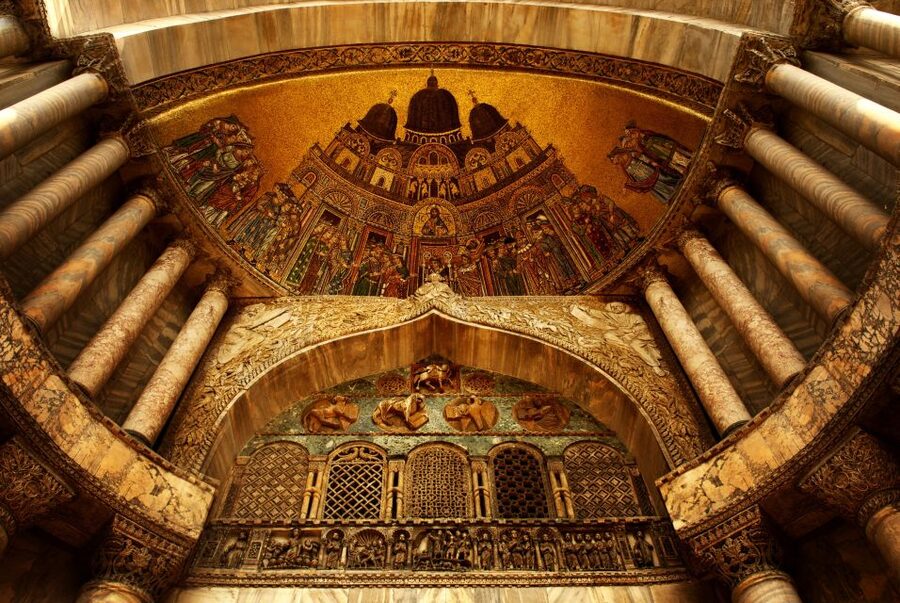
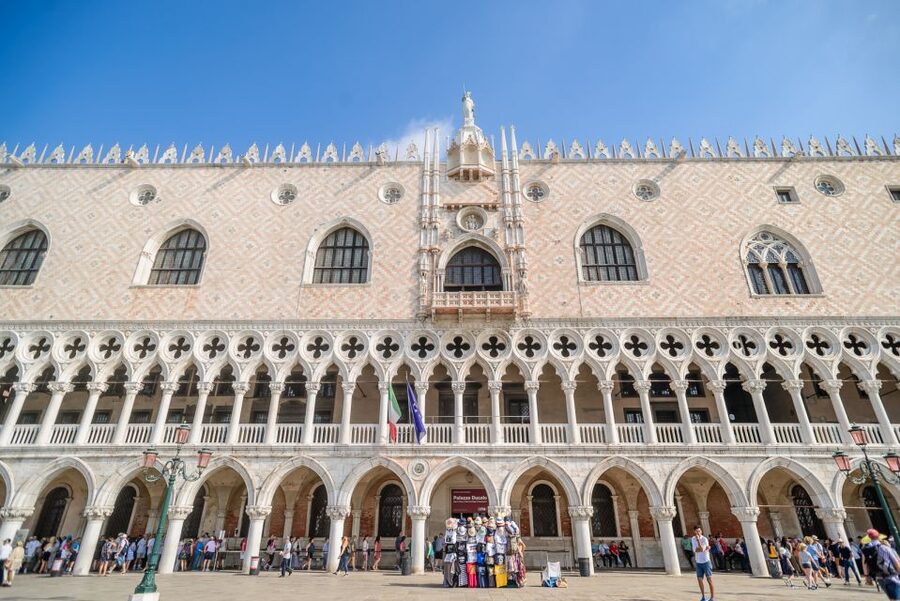
After the basilica portion, the tour moves to Doge’s Palace. The building was once the residence of the leader of the Republic of Venice, but it was also a working center of government and justice.
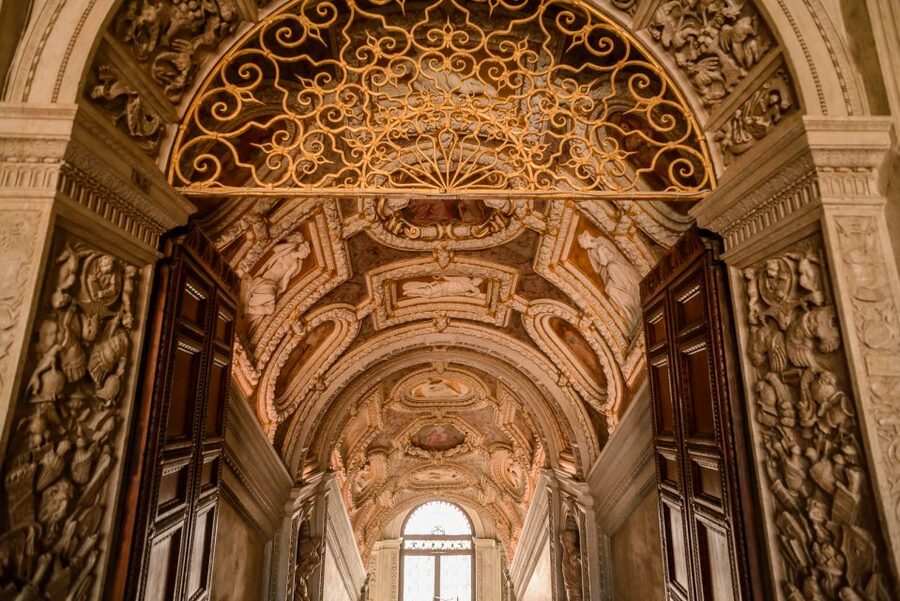
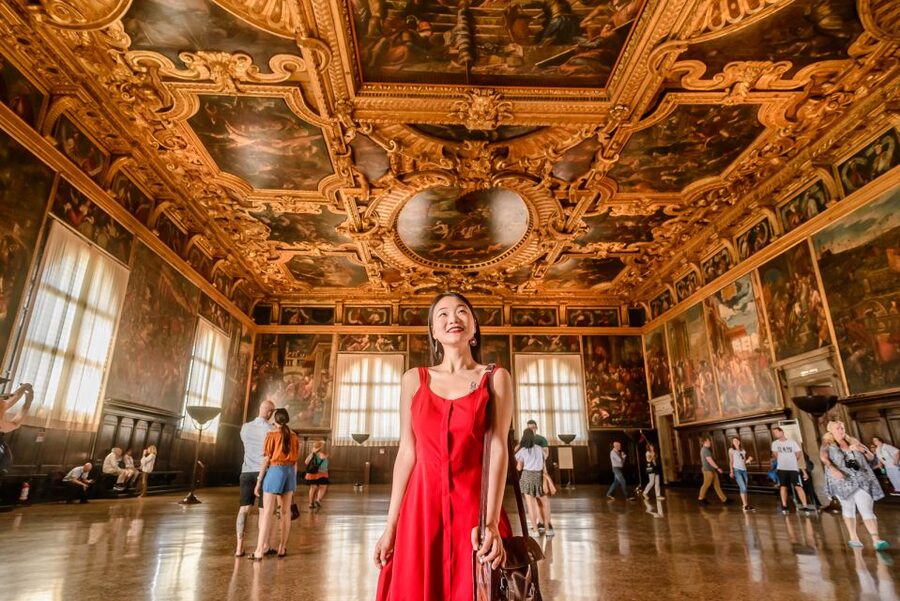
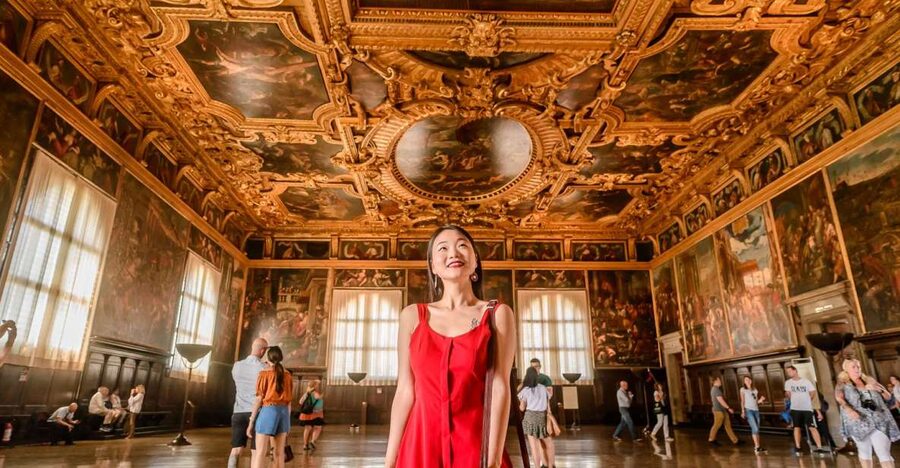
You’ll see the Chamber of the Great Council, courtrooms, and grand stairways. The scale can feel overwhelming, which is exactly where a guide helps. Instead of walking through a series of magnificent rooms without a thread, you get explanations of how the Venetian republic operated and why these spaces were designed to impress.
The Giants’ Staircase is one of the palace highlights. Its grand scale reflects the authority of the state. Tintoretto’s frescoes add another layer, showing how art supported political power in the palace’s most important rooms.
The priority entrance is useful, particularly when St. Mark’s Square is crowded. It does not always mean you walk straight through with no delay. One experience included a long wait at the palace entrance, leaving less time for the interior before the scheduled tour ended. That is worth keeping in mind during busy periods.
Once the guided portion finishes, you are welcome to remain inside Doge’s Palace and continue at your own pace. This is a real benefit. Three hours is enough for the main route, but not enough to study every room, painting, and corridor carefully.
More Doge's Palace visits:
- Venice: Doge’s Palace Reserved Entry Ticket
★ 4.6 · 42,716 reviews - Venice: St. Mark’s Basilica & Doge’s Palace Tour with Ticket
★ 4.7 · 3,375 reviews - Venice: St Mark’s Basilica, Doge Palace, & Bell Tower Option
★ 4.5 · 2,633 reviews - Venice: Doge’s Palace, Bridge of Sighs & Prisons Guided Tour
★ 4.3 · 2,549 reviews
Crossing the Bridge of Sighs
The Bridge of Sighs links Doge’s Palace with the New Prisons. It is one of Venice’s most photographed spots, but the guided explanation gives it more weight than a quick picture from the canal.
Your guide explains why the bridge was built in the 17th century and how it functioned as part of the justice system. The name refers to the sighs of prisoners who supposedly caught their final view of Venice through the small windows as they were led to prison.
The route through the New Prisons includes a steep, very narrow staircase down toward ground level. This is another point where mobility matters. The stairs are not just a small inconvenience, especially for anyone with knee or hip problems.
You may also encounter two tall flights of stairs within the palace route. The experience is manageable for someone comfortable with stairs, but it is not a flat museum visit. Wear stable shoes and do not assume that elegant Venetian buildings come with easy access.
Guides who bring the history to life
The strongest part of this experience is the guide. The tour’s high rating reflects how much the quality of the person leading it can shape the day.
Federica is praised for combining clear explanations with gentle humor. Several people found her easy to follow and engaging without turning the tour into a lecture. Elena is also singled out for detailed storytelling, warmth, and flexibility. Francesca, described as an archaeologist, is praised for her strong command of the subject and for keeping a comfortable pace.
Other guides named in the feedback include Matteo, Luigina, Chiara, Lucia, Mirko, Donatella, Helena, and Geosepina. Matteo is noted for adjusting the route around crowd levels and group interests. Chiara’s teaching style is described as especially clear, while Mirko is praised for his personality and stories.
Of course, you cannot choose a particular guide unless the booking option says so. The useful point is that the tour has a record of strong guiding across several different leaders. Expect history, architecture, anecdotes, and answers to questions, rather than a simple escort from door to door.
The listening equipment also matters in a crowded monument. You need to hear the guide while standing in large rooms or moving through busy corridors. Check-in includes organizing groups and distributing earpieces, so arrive early enough to get oriented.
Three hours is efficient, but not leisurely
Three hours sounds generous until you place two major monuments inside that window. The basilica and palace both reward slow looking, yet the tour has a fixed route and a scheduled end.
The guide keeps the group moving, which helps you avoid wasting time in queues and searching for the next room. It can also feel brisk. One useful criticism is that there may not be enough time between the basilica and palace sections for a bathroom stop, since a line can consume the available break.
I would not schedule another major activity immediately afterward. Allow a little breathing room, especially if you want to stay inside Doge’s Palace after the guide leaves. The palace extension is valuable because you can revisit details that went by quickly during the group route.
The tour ends back at the meeting point. The exact meeting point can vary by booking option, so read the confirmation carefully. One person had trouble because the map location appeared differently when entered into Google Maps. The written meeting description proved more useful than the map pin, and leaving extra time to find the location is wise.
Shared group or private tour?
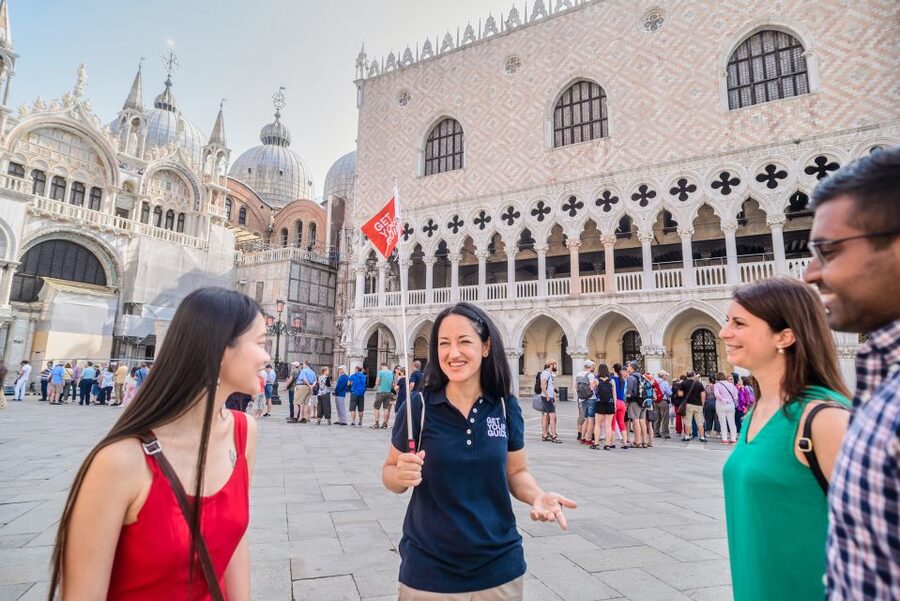
The shared small-group option is the sensible choice if you want expert explanations without paying for a fully private visit. It is also a good fit for solo visitors, couples, and families who appreciate structure.
A private tour is better if you want to ask many questions, move at your own pace, or shape the emphasis around art, political history, architecture, or family interests. The exact languages offered can differ between private and shared choices, so check the language before paying.
Families can enjoy this tour, especially when the guide uses stories and humor to keep younger members involved. The buildings are visually powerful, but a three-hour history tour can test children’s patience. A lively guide makes a difference.
This is less suitable if you dislike scheduled sightseeing, want long stretches of quiet observation, or have difficulty with stairs. It is also not a good match for anyone hoping to carry a large daypack inside the basilica.
What to bring and what to wear
Bring your passport or ID card. Doge’s Palace asks visitors over 13 to show identification, so do not leave this requirement to chance.
Wear clothing that covers your shoulders and knees for St. Mark’s Basilica. Large bags and backpacks are not allowed inside, and luggage is not permitted on the tour.
Comfortable shoes matter more than stylish ones here. You will walk through major public rooms, cross the Bridge of Sighs, and manage steep or narrow stairways. If stairs are difficult for you, ask before booking rather than discovering the problem halfway through the route.
The activity offers free cancellation up to 24 hours before the start time, and you can reserve now and pay later. Those terms help if your Venice schedule is still shifting, but they do not change the need to check the meeting point and language option carefully.
Is $123.48 a fair price?
The price makes sense if you place a high value on time, context, and terrace access. You receive a three-hour guided visit, entry to the basilica’s first floor and terrace, priority entry for Doge’s Palace, and a guide in one of several languages.
The value is weaker if you mainly want to enter the buildings and wander alone. You are paying for interpretation and organization, not just admission. That can be worthwhile in Venice, where the political and religious details are easy to miss.
The basilica closure policy is the main financial uncertainty. If it closes, you receive entry to San Zaccaria and its crypt or the Correr Museum instead, but not the planned basilica terrace. I would book this tour for the combination of the two monuments and the guide, while treating the terrace as an important bonus rather than the only reason to go.
Who should book this Venice tour?
Book it if you want a clear first look at Venice’s major symbols and prefer a guide to explain what you are seeing. It suits first-time visitors, history fans, families with older children, and anyone who wants to avoid spending the day sorting out palace entrances and routes.
Choose the private option if you value questions and a flexible pace. Choose the shared option if you want strong historical guidance at a lower cost.
Skip it if you need step-free access, cannot cover your shoulders and knees, or prefer to spend several unhurried hours inside each building. Also think twice if the terrace is the main goal, since St. Mark’s Basilica can close with little notice.
For most physically mobile first-time visitors, I would book it. The terrace, bronze horses, Great Council chamber, Tintoretto paintings, Bridge of Sighs, and New Prisons make a strong three-hour introduction to Venice. Just arrive early, bring identification, leave the large bag behind, and save time afterward to explore Doge’s Palace more slowly.
FAQ
How long is the tour?
The tour lasts three hours. Starting times vary, so check availability when booking.
What languages are available?
Guided tours are offered in English, Spanish, Italian, French, and German. Language choices can vary between private and shared group options.
Does the tour include St. Mark’s Basilica terrace access?
Yes. The tour includes a ticket for first-floor and terrace access at St. Mark’s Basilica, when the basilica is open to visitors.
What happens if St. Mark’s Basilica is closed?
You will visit the 15th-century Church of San Zaccaria and its crypt or the Correr Museum, depending on availability.
Does the tour include priority entry to Doge’s Palace?
Yes. Priority entrance to Doge’s Palace is included, although a wait can still occur at busy times.
Can I stay inside Doge’s Palace after the tour?
Yes. You may continue exploring Doge’s Palace at your leisure after the guided portion ends.
Do I need to bring identification?
Yes. Bring a passport or ID card. Doge’s Palace asks visitors over 13 to show identification.
Can I bring a backpack or large bag?
No. Luggage, large bags, and backpacks are not allowed inside St. Mark’s Basilica. Travel with only essential small items.
Is the tour suitable for wheelchair users?
No. The tour is not suitable for wheelchair users. The stairs to the basilica terrace can be steep and uneven, and the palace and prison route also includes significant stairways.
Just added around Venice
- Exclusive Private Venice Jewish Ghetto Tour★ 5.0 · 41 reviews
- The Secret Corners of Burano★ 5.0 · 41 reviews
- Verona: Private 2-Hour Walking Tour★ 4.9 · 41 reviews
- St Mark’s Basilica & Doge’s Palace Skip the Line – Semi-Private★ 5.0 · 42 reviews
- Venice: 3-Course Dining Experience at Local Home★ 4.8 · 41 reviews
- Wine Tasting in Venice★ 4.6 · 42 reviews
- Venice Skip lines at Doge’s & St. Mark’s with Exclusive Sky Walk★ 4.5 · 42 reviews
- Venice Saint Mark’s Basilica afternoon guided tour★ 4.5 · 42 reviews
Doge's Palace Tours, compared.
Doge’s Palace, St Mark’s Basilica, and Pala d’Oro
Read our review →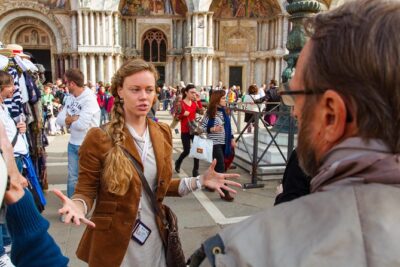
Legendary Venice: Doge’s Palace, St Mark’s & VIP Terrace Access
Read our review →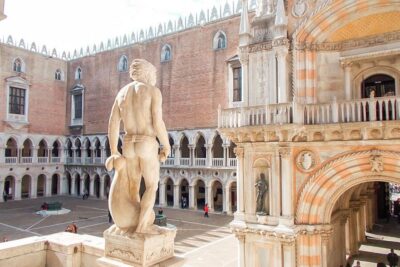
St. Mark’s Basilica & Doge’s Palace Tour with Ticket
Read our review →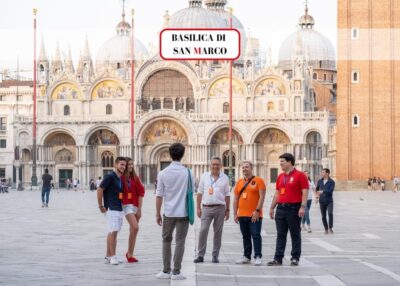
St Mark’s Basilica, Doge Palace, & Bell Tower Option
Read our review →
Doge’s Palace, Bridge of Sighs & Prisons Guided Tour
Read our review →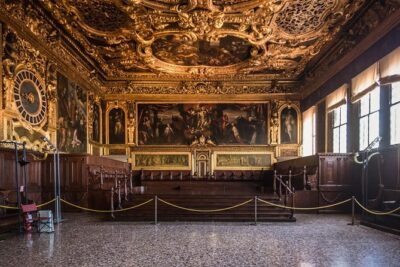
Venice’s Best: Basilica, Doge’s Palace, Gondola & History Gallery
Read our review →Browse the lists this tour appears in