
Reviewed · DOGE'S PALACE TOURS
Venice: Doge’s Palace Reserved Entry Ticket
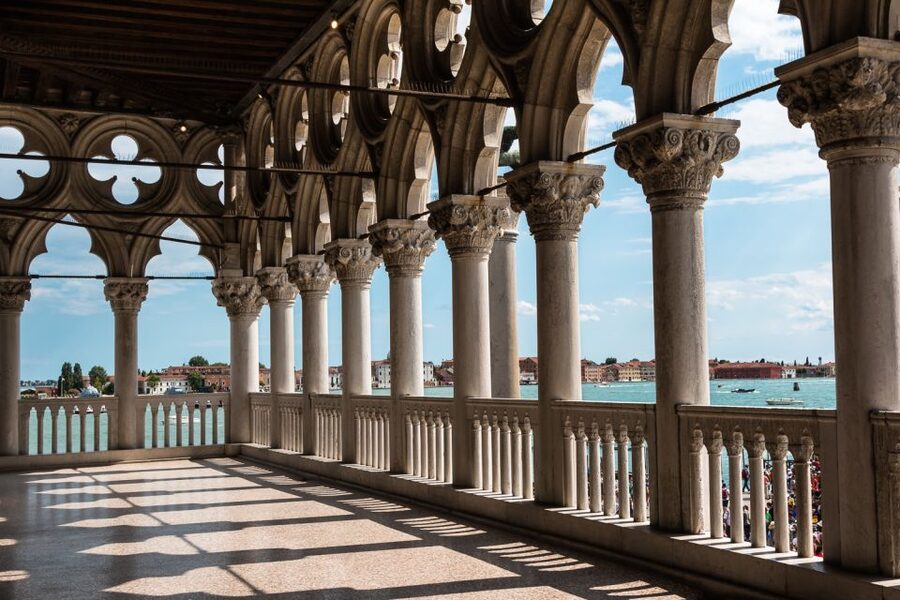
Doge’s Palace is where Venice’s political power worked for nearly 1,000 years, and its rooms still make that old republic feel surprisingly close. You move from glittering halls and immense paintings to the prison route and the Bridge of Sighs, seeing both the glory and the machinery of Venetian government.
I like the simple digital entry and the freedom to set your own pace. I also like that the $41 ticket includes three Piazza San Marco museums, not just the palace. The main catch is that this is an entry ticket, not a guided tour, and many people run out of time before reaching the other museums.
In This Review
- Key points to know
- What your $41 ticket actually gives you
- Getting inside Doge’s Palace
- The Gothic exterior and the palace courtyard
- The gold staircase and ceremonial rooms
- The Great Council Chamber
- Paintings, armory, and the prison route
- Self-guided touring, written information, and audio options
- The three museums on Piazza San Marco
- How much time should you allow?
- Who will get the most from this ticket?
- Should you book Doge’s Palace reserved entry?
- FAQ
- How much does the Doge’s Palace reserved entry ticket cost?
- How long is the ticket valid?
- Does the ticket include a guided tour?
- What sights are included besides Doge’s Palace?
- Can I visit the Bridge of Sighs with this ticket?
- What are the opening hours of the Piazza San Marco museums?
- Can children under six enter for free?
Key points to know
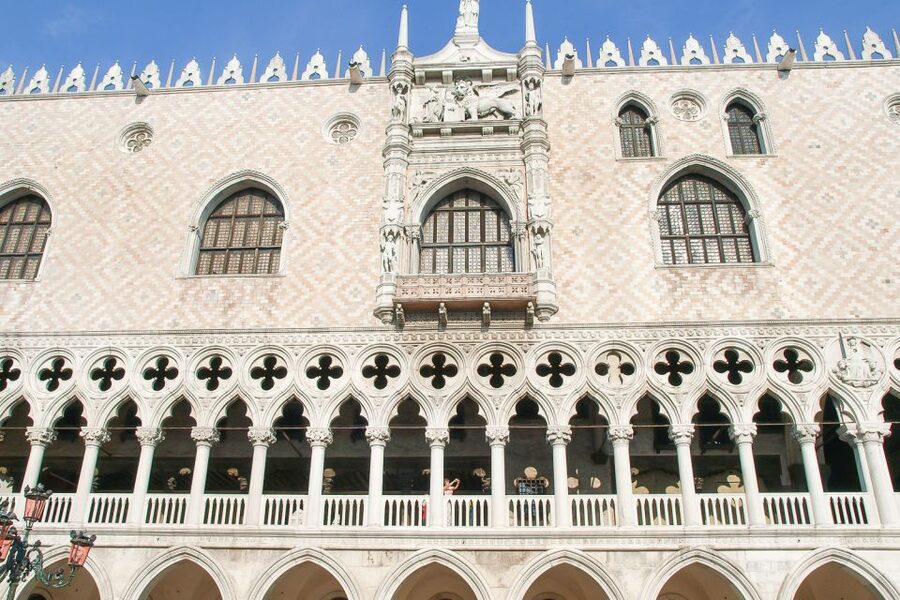
- The palace is the main event: Plan several hours for the grand halls, armory, prison area, art, and Bridge of Sighs.
- Reserved entry saves time: You use a separate reserved-entry line, though the amount of waiting depends on the day and time.
- There is no personal guide: The visit is self-guided, with written information available throughout the palace.
- The Great Council Chamber is the visual high point: Its scale, ceiling, and paintings show Venice at its most powerful.
- The ticket includes three more museums: Museo Correr, the National Archaeological Museum, and the Marciana Library rooms are valid for the same day.
- Steps are part of the visit: You should expect plenty of stairs and limited seating in some areas.
What your $41 ticket actually gives you
At $41 per person, this is not the cheapest way to enter Doge’s Palace. The tradeoff is convenience. If palace tickets are sold out through the official museum website, this reserved option can provide a practical backup, though you may pay more than the direct price.
Your ticket covers Doge’s Palace, Museo Correr, the National Archaeological Museum, and the Marciana Library rooms. That package looks generous on paper, but I would treat the palace as the core experience and the Piazza San Marco museums as useful extras.
The ticket is valid for one day, not for repeated visits over several days. You need to fit the palace and the other museums into the same operating window, so check the start time attached to your option before booking.
This ticket does not include a guide. It also does not automatically provide an audio tour. You will tour the building independently, using the information panels and written material along the route. That suits me when I want to stop for photographs or linger over a painting, but you may prefer a guided visit if Venetian politics and art need more explanation.
More Doge's Palace visits:
- Doge’s Palace & St. Mark’s Basilica with Terrace Access Tour
★ 4.7 · 10,697 reviews - Venice: Doge’s Palace, St Mark’s Basilica, and Pala d’Oro
★ 4.4 · 6,235 reviews - Legendary Venice: Doge’s Palace, St Mark’s & VIP Terrace Access
★ 4.5 · 5,033 reviews
Getting inside Doge’s Palace
The palace sits beside St. Mark’s Basilica on the edge of Piazza San Marco. Your meeting point can vary by booking option, so read the voucher carefully rather than assuming every ticket uses exactly the same entrance procedure.
At the entrance, you show the digital ticket for scanning. Several people found the process quick, with some getting inside in less than 10 minutes. At quieter times, there may be little or no queue. At other times, a reserved ticket may still involve a short wait, and the separate line does not mean instant entry.
That distinction matters. The ticket helps you avoid the main ticket queue, but security and crowd flow still affect your arrival. Keep the voucher open on your phone, and arrive with enough battery to display it. One practical complaint involved a phone running low after a morning of sightseeing, which made digital tour material harder to use.
The palace can be especially pleasant later in the day. One afternoon arrival around 4:30 PM found the entrance quiet, while an option with a wider noon to 6 PM entry window worked well for someone who wanted a flexible schedule. This is not a guarantee of light crowds, but it suggests that a late visit can be worth considering when your day allows it.
The Gothic exterior and the palace courtyard
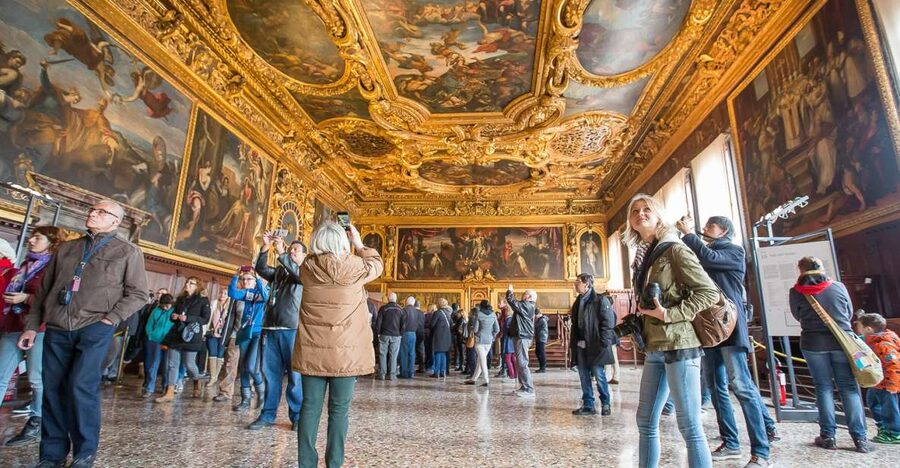
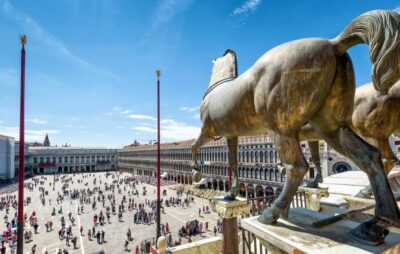
Before heading upstairs, take a moment to look at the building from the square and the waterfront. Doge’s Palace has a striking Venetian Gothic design, with pale stone, open arcades, and a heavy upper block that seems to float above the columns.
The building grew over time. Its original foundations date from the 14th and 15th centuries, followed by Renaissance work and later Mannerist additions. You are not looking at one perfectly planned palace. You are looking at a political building that changed as Venice’s government, wealth, and ambitions changed.
The courtyard gives you a different view of that power. From here, the palace feels less like a single grand residence and more like a working government complex. The combination of arches, stairways, sculpture, and stonework gives you useful context before the lavish interiors begin.
The gold staircase and ceremonial rooms
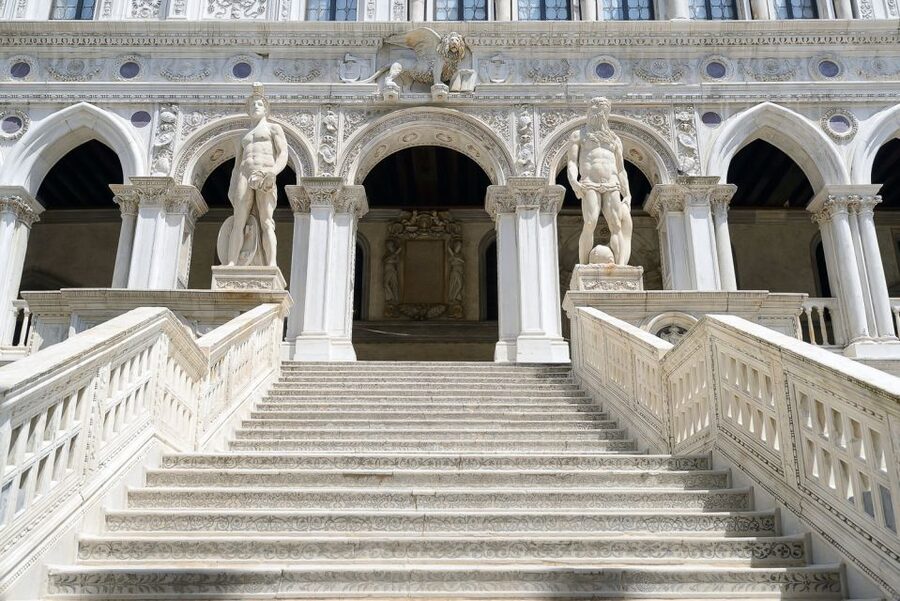
The Scala d’Oro, or gold staircase, is one of the first major visual moments inside. Its decoration was designed to impress visitors moving toward the government rooms, and it still does that job well.
The staircase is not simply a pretty entrance. It tells you how Venice presented authority. A visitor did not walk into a plain office building. The route itself announced wealth, order, and rank.
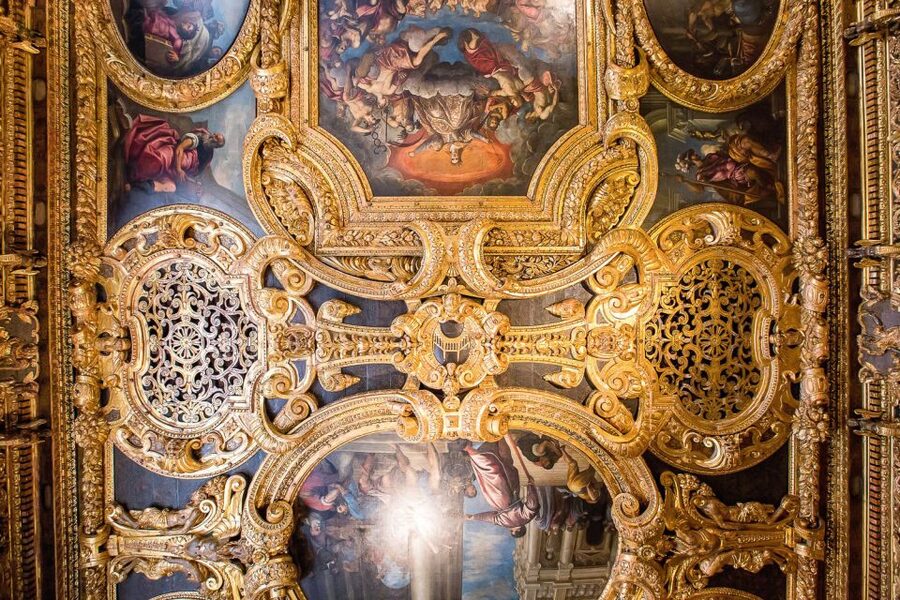
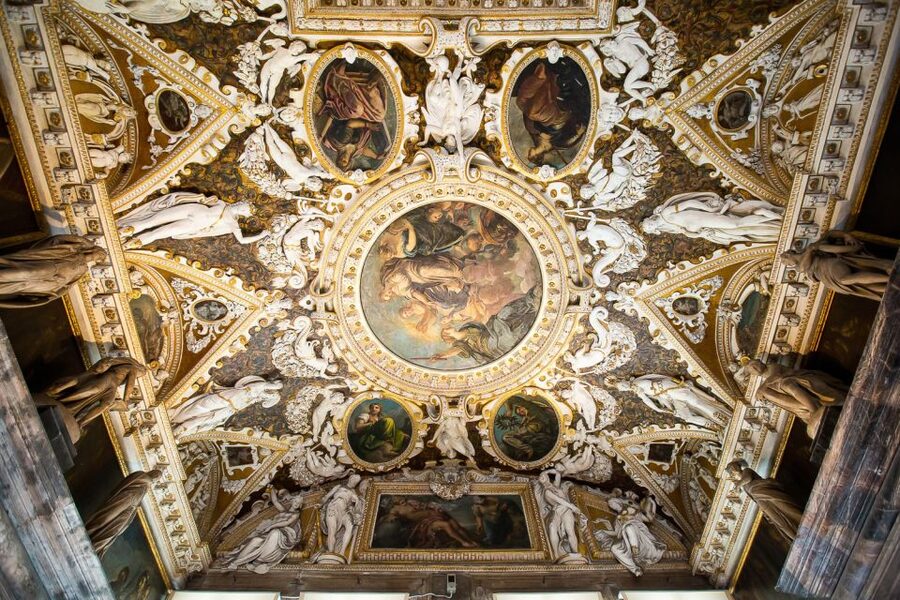
From there, the visit moves through a sequence of chambers filled with painted ceilings, ornate plasterwork, carved details, and formal decoration. The rooms vary enough to keep the visit from becoming one long parade of identical gilded surfaces. Some spaces explain administration and ceremony, while others focus on art and display.
You will find information panels in many rooms, including notes about how different spaces were used. I recommend reading a few before moving on, since the building makes more sense when you know which rooms served political, ceremonial, or judicial roles.
The size of the palace can be overwhelming. It is easy to spend too long in the first beautiful rooms and then rush the later sections. If you have only one day in Venice, decide in advance that the Great Council Chamber, the Bridge of Sighs, the prison route, and the armory are your priorities.
A few more Venice days to weigh up
- Venice: Grand Canal Gondola Ride with App Commentary
★ 4.1 · 18,908 reviews - Boat Trip: Glimpse of Murano, Torcello & Burano Islands
★ 4.3 · 15,699 reviews - Venice: Grand Canal by Gondola with Live Commentary
★ 4.1 · 13,681 reviews - Venice: La Fenice Opera House Entry Ticket with Audio Guide
★ 4.6 · 11,742 reviews
The Great Council Chamber
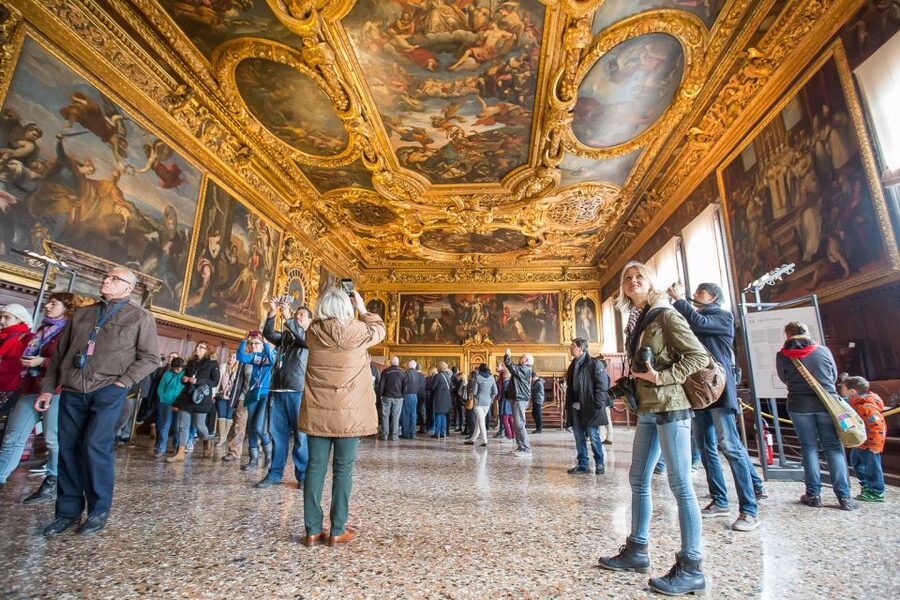
The Chamber of the Great Council is the palace’s huge political heart. It was built for one of the largest governing bodies in Europe, and its scale is difficult to understand until you are standing inside it.
Look upward before concentrating on individual paintings. The ceiling and walls turn government into theater, presenting Venice as wealthy, stable, and favored by history. The room was not decorated only to be beautiful. It helped create a public image of Venetian power.
The chamber is also a useful place to pause and consider the unusual nature of the Venetian republic. This was not a royal palace centered on one king. It was the seat of a complex ruling system led by the doge and shaped by councils, officials, and established families.
The room may be busy, but the crowd usually moves through it rather than stopping in one solid mass. Give yourself time to find a clear view, then step aside and look at the ceiling, the walls, and the overall proportions.
Paintings, armory, and the prison route
Art lovers will find plenty to hold their attention, but the palace is not only a picture gallery. The rooms, objects, corridors, and political setting work together.
The armory is a strong stop for anyone interested in weapons and military history. Displays of armor and arms add a practical side to the grand political story. After seeing so much painted glory, it helps to encounter the tools of force that supported the republic’s authority.
The prison area changes the mood. You leave the ceremonial rooms and move toward narrower spaces connected with confinement and justice. The contrast is one of the most effective parts of the visit. Venice’s leaders governed in rooms covered with ornament, while prisoners experienced a much harsher side of the same system.
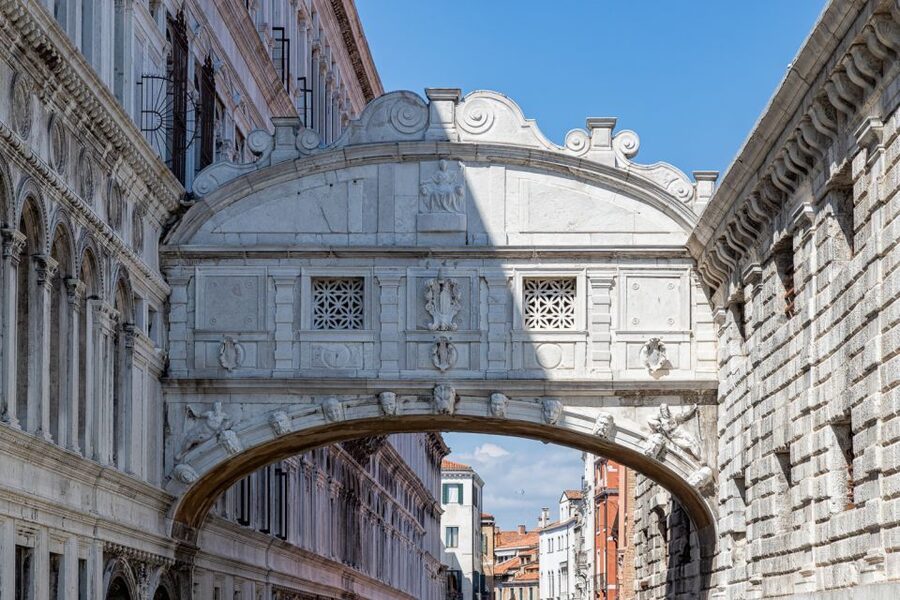
The route takes you through the old prison and across the Bridge of Sighs. The bridge is famous for the view prisoners supposedly had as they were moved from the palace courts toward their cells. Its name gives the passage a dramatic emotional charge, but the physical experience is also memorable: you are moving through a tight, enclosed route after spending time in vast halls.
The bridge can be crowded, especially as people approach it from the palace side. You may not get a long, quiet moment there. Still, it is worth slowing down enough to look through the small windows and notice how sharply the atmosphere differs from the rooms you have just left.
Some sections involve many stairs. If you have mobility concerns, plan on a demanding visit and do not expect seating at every point. The palace is rewarding, but it is not a flat, effortless museum.
Self-guided touring, written information, and audio options
The independent format is both a strength and a limitation. You can pause whenever you like, take photographs where permitted, and spend ten minutes with a ceiling that a group tour might pass quickly.
Written information is available in the rooms, and many people found it sufficient for a satisfying visit. If you enjoy reading short explanations and building your own route, you may not need anything more.
An audio guide is not part of the basic ticket. Some booking options may offer one at an additional cost, but the supplied information does not establish that every option includes it. Check exactly what you are buying before assuming your phone ticket comes with spoken commentary.
The digital tour material has also drawn mixed practical reactions. It can be useful, but the app experience may not be especially easy to navigate, and it depends on your phone battery. I would save the ticket before arriving and bring a portable charger if you expect to use a digital guide.
A self-guided visit works best when you do a little preparation. Read a short introduction to the Venetian republic, identify the Great Council Chamber and Bridge of Sighs, and decide how much time you want for the armory and museums. That small effort will keep the palace from becoming a blur of beautiful rooms.
The three museums on Piazza San Marco
The extra admissions are valuable, but you need to use them. Museo Correr occupies a building originally designed as a residence for Napoleon and later used as the Venetian residence of the King of Italy. Its setting on St. Mark’s Square makes it an easy second stop after the palace.
The Museo Correr gives you another way to understand Venice, with collections and displays connected to the city’s art, civic life, and changing rulers. It is less about one dramatic route and more about adding background after the palace visit.
The National Archaeological Museum provides another change of subject. It is a good option if you want ancient sculpture and objects after several hours of Venetian painting and architecture.
The ticket also includes the rooms of the Marciana Library. The library is important not only for its books but also for the setting and decoration associated with one of Venice’s major cultural institutions.
All three Piazza San Marco museums are listed as open from 10 AM to 5 PM, with last entry at 4 PM. That schedule creates a real planning issue. If you enter Doge’s Palace late, you may have little or no time for the other admissions.
I would start early if seeing all four sites matters to you. If your Venice schedule is tight, visit the palace first and treat the other museums as bonuses rather than promises. Several people who loved the palace still did not reach the additional museums because the main building took longer than expected.
How much time should you allow?
The ticket itself is valid for one day, but Doge’s Palace deserves several hours. The building is large, the route includes many rooms, and the artwork and written information invite a slower pace.
If you want only the main highlights, you can focus on the gold staircase, Great Council Chamber, major decorated halls, armory, prison area, and Bridge of Sighs. If you like history and art, allow more time because the smaller rooms and information panels reward patience.
To see the palace plus Museo Correr, the National Archaeological Museum, and the Marciana Library rooms, you need a carefully arranged day. The museums close at 5 PM, with last entry at 4 PM, so do not leave them until the final hour.
I would not book this package solely because it includes four names on one ticket. Book it if you want Doge’s Palace and expect to have enough time to add at least one or two of the Piazza San Marco museums.
Who will get the most from this ticket?
This experience suits you if you want flexibility, dislike following a group, and are comfortable learning from signs and your own preparation. It is especially good for people who care about architecture, painting, Venetian government, prisons, or military objects.
Families with older children may find the contrast between the grand rooms, weapons, stairs, and prison route more engaging than a conventional art museum. Very young children may tire before the palace route ends.
This is also a sensible choice for a short Venice visit because the palace is one of the city’s major sights and the additional museums are nearby. The wider entry window offered by some options can help you fit it around a full day of sightseeing.
You should think twice if you want a personal historian, a carefully explained route, or a guaranteed short wait at every stage. You may prefer a guided or audio-supported option, if available, even though it costs more.
Free entry is available for children under six and for disabled visitors and their carers. In those cases, you must collect the free ticket from the ticket office on arrival, rather than relying only on the paid digital reservation.
Should you book Doge’s Palace reserved entry?
I would book this ticket if the official site is sold out, if you want the convenience of reserved access, or if you value the freedom to explore without a group. The palace itself is one of Venice’s strongest sights, and the armory, prison route, Great Council Chamber, and Bridge of Sighs create a visit with real variety.
I would skip this exact option if you need a guide or if you are buying it only for the extra museums but have one crowded day in Venice. At $41, the value depends on how much of the package you use.
For most first visits, the best plan is simple: reserve a time that fits your day, allow several hours for the palace, save your ticket on your phone, and aim for the Piazza San Marco museums before their 4 PM last entry. That gives you the convenience you are paying for without rushing through Venice’s most impressive interior.
FAQ
How much does the Doge’s Palace reserved entry ticket cost?
The listed price is $41 per person.
How long is the ticket valid?
The ticket is valid for one day.
Does the ticket include a guided tour?
No. The ticket provides entry, but it does not include a guided tour.
What sights are included besides Doge’s Palace?
The ticket also includes Museo Correr, the National Archaeological Museum, and the rooms of the Marciana Library.
Can I visit the Bridge of Sighs with this ticket?
Yes. The palace route includes access to the Bridge of Sighs and the old prison area.
What are the opening hours of the Piazza San Marco museums?
Museo Correr, the National Archaeological Museum, and the Marciana Library rooms are open from 10 AM to 5 PM, with last entry at 4 PM.
Can children under six enter for free?
Yes. Children under six can enter free, but you must collect their free ticket from the ticket office on arrival. Free entry is also available for disabled visitors and their carers.
Just added around Venice
- Exclusive Private Venice Jewish Ghetto Tour★ 5.0 · 41 reviews
- The Secret Corners of Burano★ 5.0 · 41 reviews
- Verona: Private 2-Hour Walking Tour★ 4.9 · 41 reviews
- St Mark’s Basilica & Doge’s Palace Skip the Line – Semi-Private★ 5.0 · 42 reviews
- Venice: 3-Course Dining Experience at Local Home★ 4.8 · 41 reviews
- Wine Tasting in Venice★ 4.6 · 42 reviews
- Venice Skip lines at Doge’s & St. Mark’s with Exclusive Sky Walk★ 4.5 · 42 reviews
- Venice Saint Mark’s Basilica afternoon guided tour★ 4.5 · 42 reviews
Doge's Palace Tours, compared.
Doge’s Palace & St. Mark’s Basilica with Terrace Access Tour
Read our review →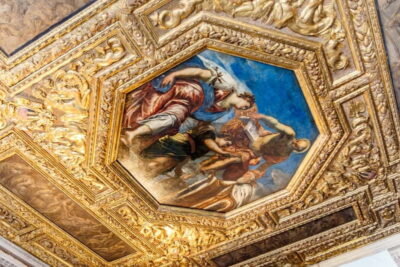
Doge’s Palace, St Mark’s Basilica, and Pala d’Oro
Read our review →
Legendary Venice: Doge’s Palace, St Mark’s & VIP Terrace Access
Read our review →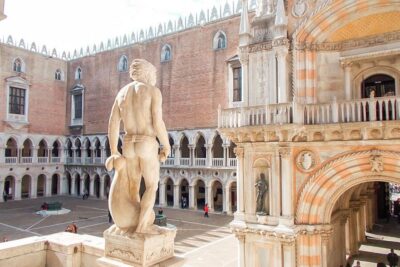
St. Mark’s Basilica & Doge’s Palace Tour with Ticket
Read our review →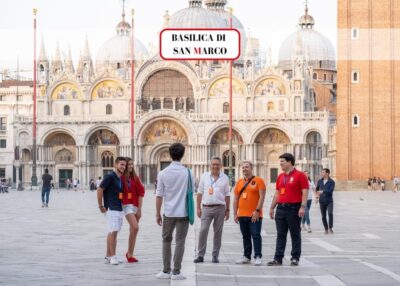
St Mark’s Basilica, Doge Palace, & Bell Tower Option
Read our review →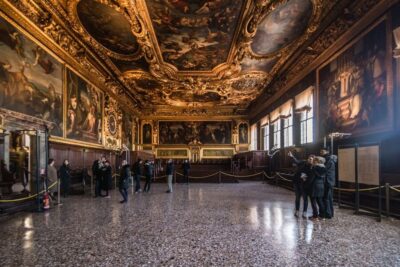
Doge’s Palace, Bridge of Sighs & Prisons Guided Tour
Read our review →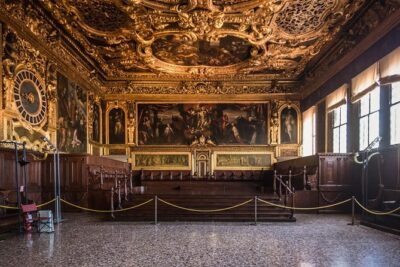
Venice’s Best: Basilica, Doge’s Palace, Gondola & History Gallery
Read our review →Browse the lists this tour appears in