
Reviewed · COOKING CLASSES
Padova Cooking Experience
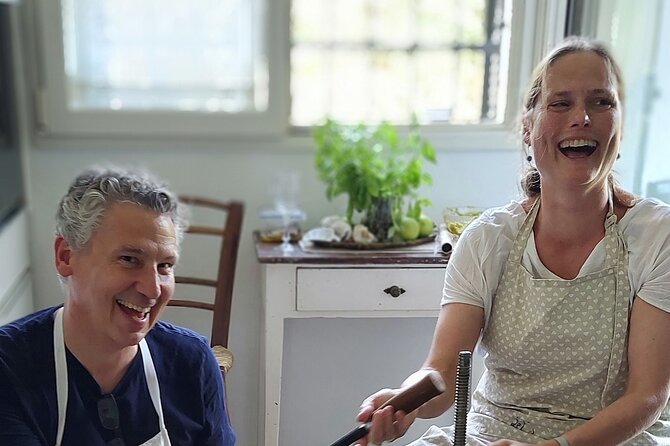
Padova’s best food lesson begins under an old palace, not in a restaurant. With Catia Gambelli, you’ll visit Sotto il Salon, the covered market beneath the medieval Palazzo della Ragione, then head to her home to make Bigoli, a thick Venetian pasta pressed through an ancient-style tool called a Bigolaro. I like the market-to-kitchen flow, and I like that the recipes come from Catia’s family rather than a generic Italian cooking script.
The private format should make the class feel personal and easy to follow. The main consideration is the price, $138.82 per person, which is a serious spend for four hours. You’re paying for a guided market visit, hands-on cooking, a meal, and local company, but it may not suit a budget traveler who only wants a quick pasta lesson.
In This Review
- Key points to know before booking
- From Padova’s market to Catia’s kitchen
- Sotto il Salon beneath the Palazzo della Ragione
- Making Bigoli with a Bigolaro
- Seasonal ravioli and the rhythm of handwork
- Cicchetti before the sweet finish
- Tiramisù, a dessert tied to the region
- What the $138.82 price buys you
- Who will enjoy this cooking experience most
- Timing, meeting details, and small practical points
- Should you book Catia’s Padova cooking class?
- FAQ
- Where does the Padova cooking experience take place?
- What time does the experience start?
- How long does the experience last?
- Who hosts the cooking class?
- Is the activity private?
- What pasta will you make?
- Is tiramisù included?
- Can I cancel for a full refund?
Key points to know before booking
- Bigoli made with a traditional hand press: You’ll work with a regional pasta shape and use a Bigolaro, a press associated with Venetian cooking since the 1600s.
- Sotto il Salon is part of the lesson: The market sits beneath Padova’s Palazzo della Ragione, giving the food class a strong sense of place.
- A private experience with Catia Gambelli: Only your group participates, so the pace can be more personal than a large class.
- Several classic dishes in one morning: The cooking includes Bigoli, seasonal ravioli, cicchetti, and tiramisù.
- A market visit before cooking: You’ll see fruit, vegetables, spices, and local products before handling ingredients in the kitchen.
- Four hours from 10:00 a.m.: The experience begins at Via Tre Ponti, 49/3516, 35143 Padova, and returns to the same meeting point.
From Padova’s market to Catia’s kitchen
The shape of this experience is simple and sensible: first see the food, then cook it. At 10:00 a.m., you meet Catia at Via Tre Ponti, 49/3516, 35143 Padova PD, Italy. From there, the activity combines a walk through central Padova with a cooking class at her home.
That order matters. A cooking lesson can feel detached when ingredients appear from nowhere on a counter. Here, you first encounter the market stalls and local products, then move into the kitchen with a better idea of the food culture behind the recipes.
Catia introduces the market and explains its past as you look through the stalls. The focus is on fruits, vegetables, spices, and typical local products. You should expect a guided look rather than a formal shopping trip with a detailed list of ingredients to buy. The supplied details do not promise a set tasting menu at the market, so think of this part as food orientation before the cooking begins.
The activity ends back at the meeting point. The total duration is about four hours, so you’ll want to protect most of the morning and early afternoon. Since this is a private activity, only your group takes part. That is useful if you want to ask questions, work at your own speed, or plan the experience around a family group or small celebration.
More cooking classes in Veneto:
- Venice: Pasta and Tiramisu Cooking Class with Wine
★ 4.9 · 1,010 reviews - Pasta and Tiramisu Cooking Class with Wine in Venice
★ 5.0 · 945 reviews - Verona: Pasta and Tiramisu Cooking Class with Fine Wine
★ 4.8 · 633 reviews
Sotto il Salon beneath the Palazzo della Ragione
Sotto il Salon means under the great hall. It occupies the ground floor of the Palazzo della Ragione, Padova’s medieval Justice Palace. The covered market is described as one of the oldest in Europe, and its setting gives the visit more weight than a quick stop at a modern food hall.
The building helps explain why this market matters. You are not only looking at produce. You are standing beneath a major civic building in the heart of Padova, in a place where the city’s daily food trade has a long connection with its public life.
You’ll see stores selling typical local products, along with open-air stalls carrying fruits and vegetables. Spices are also part of the market scene. Catia’s role is important here because she supplies the local background and points out what makes the market part of Padova’s food culture.
I like this portion because it gives you useful context without asking you to spend an entire morning on a museum tour. The market is part of the cooking story, not a separate attraction bolted onto it.
There is one practical limit. The description does not specify exactly how long you remain at each stall or which ingredients you select. If you want a detailed market-shopping lesson with prices, vendors, and a fixed shopping list, you may find the information less exact than expected. If you mainly want to connect Padova’s food traditions with the dishes you’ll prepare, the visit should fit well.
Making Bigoli with a Bigolaro
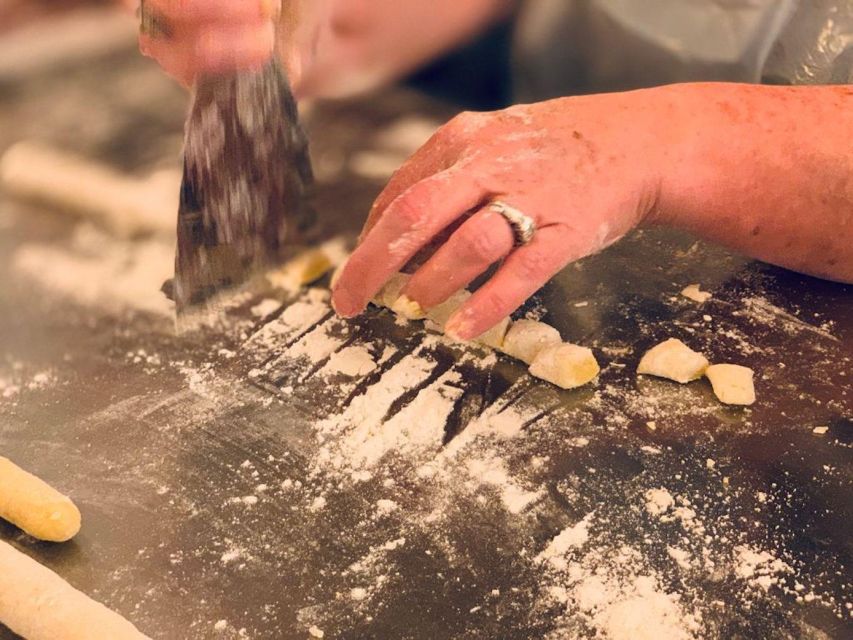
The centerpiece is Bigoli, a regional pasta from the Veneto. Bigoli is thicker and more substantial than many familiar pasta shapes, and here you make it from scratch rather than simply boiling dried noodles.
The special tool is the Bigolaro, a hand press. The experience explains that this type of press was invented in the 1600s. That small piece of equipment gives the lesson a strong link to older household cooking methods. Instead of learning only a recipe, you get to handle a tool tied to the pasta’s identity.
This is the sort of detail I value in a cooking class. Anyone can demonstrate pasta dough, but a regional shape made with a traditional press makes the lesson specific to Veneto. The Bigolaro also gives the class a practical focus: you can see how the dough becomes the finished pasta through pressure and shaping.
Catia teaches the process at her home, where you make the pasta from scratch. The information provided does not give the exact dough ingredients, cooking sauce, or recipe quantities, so you should not expect a full printed technical manual based on the description alone. The value is in learning by doing, watching Catia’s method, and understanding where Bigoli fits in Venetian food.
If you have limited kitchen experience, the private format should help. You are not trying to keep up with a large room full of cooks. If you already make pasta regularly, the Bigolaro and the regional method are the parts most likely to add something new.
Seasonal ravioli and the rhythm of handwork
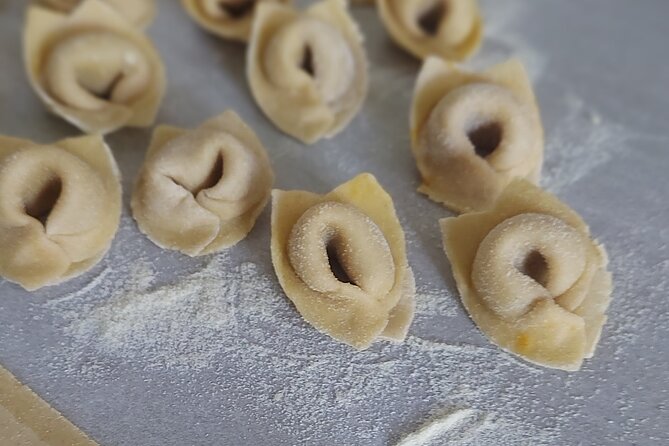
The class also includes ravioli with a seasonal filling. This brings a different type of pasta work into the morning. Bigoli is shaped with a press, while ravioli asks you to work with filled pasta, edges, and portioning.
The seasonal filling is an important detail. It means the ravioli is connected to what is available at the time of the class, rather than locked to one filling all year. That can make the dish feel more local, though it also means you may not know the exact filling before booking.
You should expect a hands-on lesson rather than a demonstration where Catia does everything. The class is built around making fresh pasta from scratch, and the private setting gives you room to take part. Catia is described as an enthusiastic and skillful host, and one account specifically praises her as a kind, friendly teacher. Those qualities matter in a kitchen class, where clear instruction and a relaxed manner can be more useful than technical showmanship.
The supplied details do not state how many ravioli you make, how the filling changes by season, or whether the recipes are provided afterward. Keep those questions in mind if you want to recreate the dishes at home. Still, making both Bigoli and ravioli in one session gives you two different pasta techniques instead of repeating one basic dough exercise.
A different sort of day out around Veneto:
- Wine Tour whit wine tasting
★ 5.0 · 33 reviews - Verona: Walking Tour of Historical Center
★ 4.8 · 20 reviews - Padua City 2.5-Hour Walking Tour
★ 4.7 · 18 reviews - Wine and Food Experience in the Austrian Fort in Pastrengo
★ 4.5 · 16 reviews
Cicchetti before the sweet finish
Cicchetti are Venetian appetizers, and they are included as part of the meal. Their presence broadens the class beyond pasta. You get a small taste of the snack culture associated with Venice and the wider Veneto region before moving toward the main dishes and dessert.
The details do not list the exact cicchetti ingredients or preparation steps. That makes it difficult to judge how extensive this part will be. It may be a small welcome course rather than a long separate workshop, so you should see it as part of the meal rather than the main focus of the class.
Even so, cicchetti help make the experience feel regional. The class is not simply pasta plus a standard dessert. It introduces a small Venetian appetizer, then moves through fresh pasta and ends with tiramisù.
One account describes the visit as a three-course meal. That fits the overall structure, although the exact serving order and menu may depend on the day’s preparation. If you are planning a full lunch afterward, remember that the class includes food prepared during the activity.
Tiramisù, a dessert tied to the region
The final dish is tiramisù, described as a well-known dessert invented in Catia’s region. The lesson presents it as part of Veneto’s food identity, not merely an easy dessert added to fill out the menu.
Including tiramisù is practical for home cooks. It is a familiar Italian dessert, and the class gives you a chance to see how Catia prepares it in her own kitchen. The description does not state the precise ingredients, resting time, or whether the tiramisù is served immediately, so you should avoid expecting a detailed pastry course.
What you do get is a complete cooking arc. You begin with the market, prepare a local pasta shape, make filled pasta, include cicchetti, and finish with a dessert. That variety helps justify the four-hour length. It also makes the activity suitable for people who want a food experience rather than a narrow lesson focused only on dough.
What the $138.82 price buys you
At $138.82 per person, this is not a cheap way to eat lunch in Padova. You can find a less expensive meal elsewhere, and a short cooking demonstration may cost less. The question is what you want from the morning.
Here, the price covers roughly four hours, a private experience, a market visit, instruction from Catia, several dishes, and the chance to eat what you prepare. The private format is especially relevant. A couple, family, or small group does not share the class with strangers, and that can make the cost easier to accept if you value personal attention.
The market visit also adds value. You are not simply dropped into a kitchen to follow a recipe without context. Catia connects the ingredients and dishes to Padova, its market, and her family cooking.
I would consider this a better value for someone who wants local contact and active participation than for someone focused on the lowest price. It also works well as a special event. A hen party was organized around Catia’s Bigoli class, and the group found her welcoming and an excellent cooking teacher. That makes the experience worth considering for a small celebration, though the standard start time and four-hour duration still apply unless confirmed otherwise.
The exact food portions, drink inclusions, recipe handouts, and dietary arrangements are not stated. Ask about those points before booking if they affect your budget or meal plans.
Who will enjoy this cooking experience most
I would choose this for people who want a home-based class with a strong regional identity. It suits anyone curious about Veneto, fresh pasta, old kitchen tools, and the connection between a city market and a family table.
It should also work well for families, couples, and small groups. Since only your group participates, you can share the experience without being placed in a large class. The private format may also help if one person cooks more slowly or if you want to spend time talking with Catia.
Food lovers who already know standard Italian pasta may find the Bigolaro especially appealing. It gives the lesson a clear point of difference. Beginners, meanwhile, get several approachable dishes and a host who is described as responsive and skillful.
I would be more cautious if you want a tightly timed professional cooking school, advanced culinary techniques, or a fully specified menu before arrival. The focus is on family recipes and local hospitality, not a formal chef certification course.
Timing, meeting details, and small practical points
The start time is 10:00 a.m., and the activity lasts about four hours. It begins and ends at Via Tre Ponti, 49/3516, 35143 Padova PD, Italy. Check the address carefully before setting out, since the market and home kitchen are separate parts of the experience.
A mobile ticket is provided, and confirmation is received at booking. The activity is near public transportation, though no specific bus or tram route is supplied. Service animals are allowed.
Cancellation is flexible up to a point. You receive a full refund if you cancel at least 24 hours before the local start time. Cancellations or changes made within 24 hours are not accepted for a refund.
The experience is private, but the maximum group size is not stated. If you are booking for a larger party, confirm the group limit before paying.
Should you book Catia’s Padova cooking class?
Book it if you want to connect Padova’s market life with food you can make by hand. The strongest reasons are the visit to Sotto il Salon, the old Bigolaro press, Catia’s family recipes, and the chance to prepare both Bigoli and ravioli before finishing with tiramisù.
Skip it if $138.82 feels too high for a four-hour activity, or if you mainly want a quick pasta lesson with a fixed menu and detailed recipe materials. The class is best understood as a private cultural food experience with cooking at its center.
For me, the deciding factor would be the Bigolaro. That traditional press gives the morning a distinctly Venetian character. Add the market setting and Catia’s personal hosting, and this is a good pick for anyone who wants to leave Padova with more than a restaurant memory.
FAQ
Where does the Padova cooking experience take place?
The experience begins and ends at Via Tre Ponti, 49/3516, 35143 Padova PD, Italy. It includes a visit to Padova’s Sotto il Salon market and cooking at Catia’s home.
What time does the experience start?
The start time is 10:00 a.m.
How long does the experience last?
It lasts approximately four hours.
Who hosts the cooking class?
The host is Catia Gambelli.
Is the activity private?
Yes. Only your group participates in this private activity.
What pasta will you make?
You will make fresh Bigoli from scratch with a hand press called a Bigolaro. You will also make ravioli with a seasonal filling.
Is tiramisù included?
Yes. Tiramisù is included as the dessert you prepare during the experience.
Can I cancel for a full refund?
Yes, if you cancel at least 24 hours before the experience start time. Cancellations or changes made less than 24 hours before the start are not refunded.
Just added around Veneto
- Birra Follina, Brewery tour and tasting of 3 ITA beers★ 5.0 · 3 reviews
- Vineyard tour with tasting of 4 wines on Garda Hills★ 5.0 · 4 reviews
- Wine-Tasting Dinner★ 5.0 · 4 reviews
- Canyoning in the Dolomites (Lake Santa Croce, Val Maggiore)★ 5.0 · 4 reviews
- Valpolicella: Amarone Experience with Cantina Visit★ 4.4 · 4 reviews
- Guided Tour and Wine Tasting in the Sandro De Bruno Winery★ 5.0 · 5 reviews
- Winelover’s Tasting★ 5.0 · 5 reviews
- Tasting of Organic Mountain Wines with Vineyard and Cellar Tour★ 5.0 · 5 reviews
Cooking Classes, compared.
Pasta and Tiramisu Cooking Class with Wine in Venice
Read our review →Pasta and Tiramisu Cooking Class with Fine Wine
Read our review →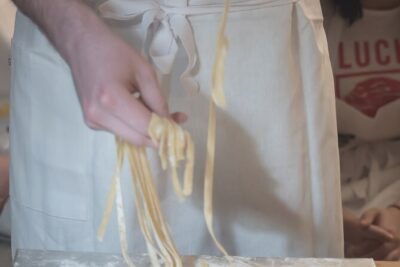
Market Tour and Cooking Class with a Local Venetian Chef
Read our review →
Hands-on Fresh Pasta and Tiramisù Cooking Class
Read our review →
Italian Cooking Class with Pasta, Risotto and Tiramisù
Read our review →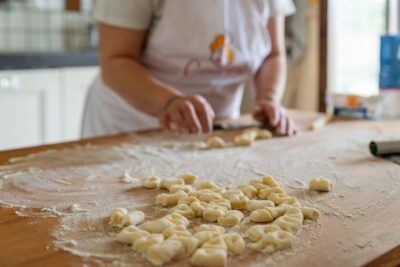
Pasta and Tiramisu Cooking Class at a Local’s Home
Read our review →Browse the lists this tour appears in