
Reviewed · HISTORICAL TOURS
Verona: Walking Tour of Historical Center
Verona’s appeal comes into focus on foot. In just 2.5 hours, this walk links the Roman Arena, medieval squares, Renaissance traces, and the Shakespeare connection into one clear story. You start at Piazza Bra, then move through the historic center with a guide who can shape the route around your interests.
I like the broad sweep of the tour, which gives you a useful map of Verona rather than parking you at one famous sight. I also like the chance to see Juliet’s House from outside while still spending most of the walk on the real city, including Piazza delle Erbe, the Duomo, and the Scaliger tombs.
The main consideration is price: at $181.26 per person, this is a costly walking tour, especially since entrance fees, meals, and transport are not included. It makes the most sense if you want a private-feeling, guide-led introduction and plan to make good use of the historical context afterward.
In This Review
- Key points to know before you book
- Starting beside Verona’s Roman Arena
- Reading Verona’s history in the street plan
- Sant’Anastasia and Verona’s church tradition
- Piazza delle Erbe, the city’s historic meeting place
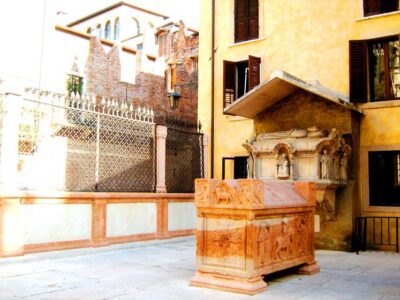
- Piazza dei Signori and the Scaliger tombs
- The Duomo and the quieter corners of the center
- Juliet’s House, with the right expectations
- What $181.26 buys you
- Timing, pace, and practical planning
- Who should book this Verona walk
- Should you book it?
- FAQ
- Where does the Verona walking tour begin?
- Where does the tour end?
- How long does the walking tour last?
- What time does the tour start?
- Which languages are available?
- Is entrance to the Roman Arena included?
- Can I enter Juliet’s House during the tour?
- Are meals and transportation included?
Key points to know before you book
- Start at Piazza Bra: Meet beside the statue of Vittorio Emanuele II, a convenient point near the Roman Arena.
- See Juliet’s House from outside: The Shakespeare connection is included, but no interior visit is promised.
- Cover three periods of history: The route introduces Roman, medieval, and Renaissance Verona.
- Visit major central sights: Expect Sant’Anastasia, Piazza delle Erbe, Piazza dei Signori, the Scaliger tombs, and the Duomo.
- Choose your language: Tours are offered in English, Italian, or German.
- Plan for added costs: Transportation, meals, and entrance fees are not part of the tour price.
Starting beside Verona’s Roman Arena
The walk begins at the Statue of Vittorio Emanuele II in Piazza Bra, with departures at either 10:00 or 15:00. This is a useful place to start because Piazza Bra introduces you to Verona’s Roman identity before the route turns into the older lanes of the center.
The Arena is one of the city’s defining sights, and the guide uses it as a starting point for Verona’s long story. You can expect an explanation of the Roman period and the role of the amphitheater, though the activity does not include admission inside. If entering the Arena is high on your list, you will need to arrange that separately and budget for the ticket.
I like this opening because it gives you a sense of scale. Verona is not just a pretty collection of old streets. It was shaped by Roman planning, later medieval power, and Renaissance culture. Starting in Piazza Bra helps you understand that before the smaller details begin.
The meeting point is easy to identify, but arrive with enough time to find the statue and settle in. The walk ends back at the same meeting point, so you will not need to work out a new route at the end of the afternoon.
More history tours in Veneto:
- Venice’s Best: Basilica, Doge’s Palace, Gondola & History Gallery
★ 4.5 · 2,478 reviews - Venice: City Center Historical Guided Walking Tour
★ 4.2 · 1,873 reviews - Verona: History and Hidden Gems Guided Walking Tour
★ 5.0 · 1,379 reviews
Reading Verona’s history in the street plan
One of the strongest features of this tour is its structure. Rather than treating each monument as a separate photo stop, the guide begins with the city’s layout and then moves through Roman, medieval, and Renaissance history.
That approach is valuable if Verona is new to you. A guide can point out how the city changed while keeping the main route manageable. You are not simply collecting names. You are learning why the historic center looks the way it does and how the different eras sit beside one another.
The description allows the route to be tailored to specific interests. That gives you room to ask for more attention to Roman remains, religious buildings, Shakespeare’s Verona, or the city’s ruling families. The exact balance depends on your guide and the interests you bring, so arrive ready to say what matters most to you.
The tour is listed with English, Italian, and German-speaking guides. David is identified as one guide, and he is described as friendly and experienced, with a strong grasp of the city. You cannot request him with certainty from the information provided, but his presence suggests the operator has guides who can make the history personal rather than mechanical.
Sant’Anastasia and Verona’s church tradition
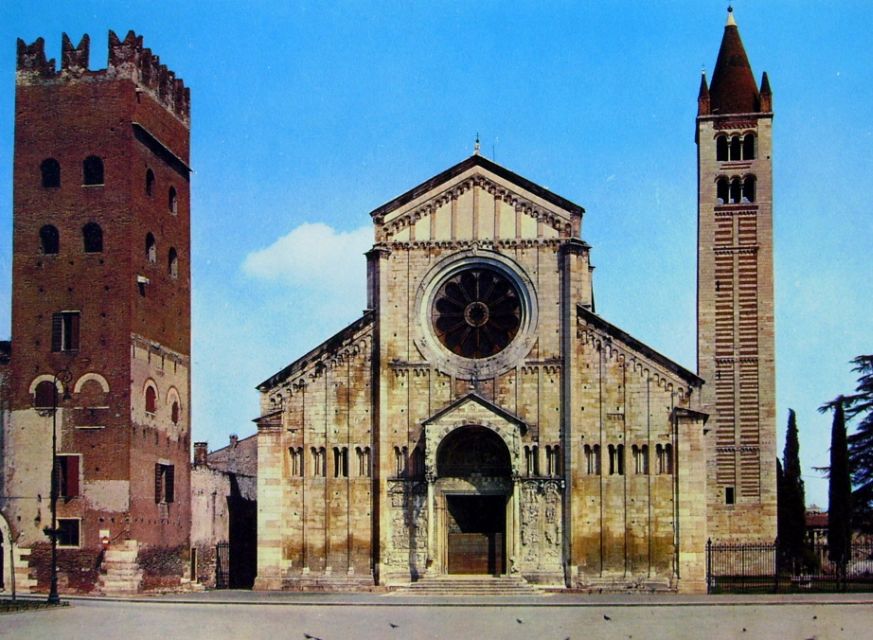
The route passes the Church of Sant’Anastasia, one of Verona’s important religious landmarks. Even if you do not enter, the exterior gives the walk a change of pace after the public squares and Roman material.
The church is tied to Verona’s religious identity, and its inclusion helps show that the city’s story is not only about arenas, rulers, and romance. You see how faith shaped the center and how major churches helped define the city’s public life.
Entrance fees are not included, so do not assume the guided walk comes with access to the interior. The useful point here is the wider setting. The guide can explain why Sant’Anastasia matters and place it within the route, while you can decide later if you want to return and go inside on your own.
This is one reason I prefer taking a city walk early in a Verona visit. You can mark the buildings that deserve a second look, rather than trying to decide everything from a map or a quick photograph.
Piazza delle Erbe, the city’s historic meeting place
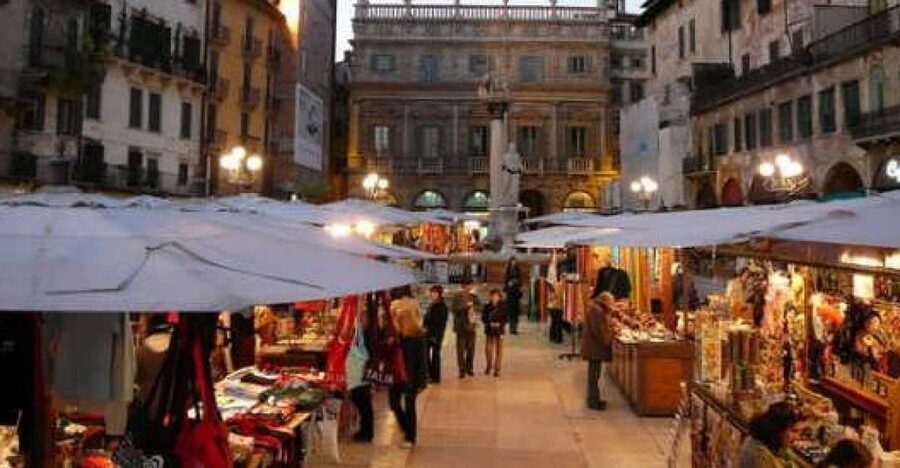
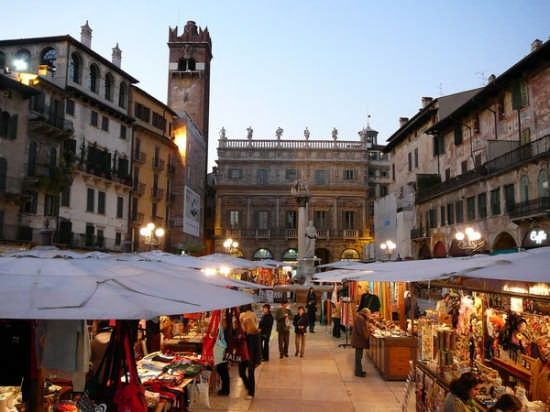
Piazza delle Erbe is one of the walk’s essential stops. It brings together the energy of daily city life and the layers of Verona’s past, making it a good place for the guide to explain how the historic center functions.
You will have time to look at the surrounding buildings, listen to the story of the square, and understand its place in the old city. The square is also a useful orientation point. After visiting it, the nearby lanes and connecting spaces make more sense.
I like that this tour includes both famous sights and smaller corners. Verona is easy to reduce to Juliet and the Arena, but Piazza delle Erbe helps correct that narrow view. It shows the city as a living center with a long public history, not just a stage set for a love story.
The route may feel more crowded at certain times, especially during the midday period, but the two departure choices give you some control. A 10:00 start leaves the rest of the day open. A 15:00 start may suit you better if you prefer a later morning and an afternoon introduction.
More walking tours in Veneto:
- Padua City 2.5-Hour Walking Tour
★ 4.7 · 18 reviews - Venice Walking Tour and Gondola Ride
★ 3.5 · 3,630 reviews - Venice: Rialto Bridge & Offbeat Unusual Venice Walking Tour
★ 4.2 · 3,538 reviews - Private 3 hrs Venice Tour: St Mark’s, Walking tour & Boat tour
★ 4.0 · 3,372 reviews
Piazza dei Signori and the Scaliger tombs
From Piazza delle Erbe, the walk continues to Piazza dei Signori and the Tombs of the Scaligeri. These stops shift the focus toward Verona’s medieval rulers and the political power that shaped the city.
Piazza dei Signori has a more formal character than Piazza delle Erbe. It gives you a chance to see how the center was organized around authority as well as commerce. The nearby Scaliger tombs add a striking reminder that Verona’s ruling family wanted its influence displayed in public, even after death.
These details matter because they explain the city’s medieval personality. A guide can connect the square, the tombs, and the surrounding buildings in a way that is difficult to grasp from a quick walk alone.
The tour does not promise an entrance to a separate monument or museum at this point. Think of this section as an outdoor history lesson, with the buildings and streets serving as the evidence.
The Duomo and the quieter corners of the center
The Duomo is another major stop. Its inclusion keeps the route balanced, pairing Verona’s civic spaces with one of its most important religious buildings.
You should expect the guide to explain the cathedral’s place in the city and point out its architectural and historical value. As with the other sights, admission is not included. If you want to explore inside, treat that as a separate visit after the walking tour.
The route also includes charming, less obvious corners of the historic center. The supplied details do not name every lane or stop, so I would not expect a fixed list of minor sights. Instead, the guide’s value lies in showing you how the central streets connect and helping you notice details you might otherwise pass without a second thought.
That flexibility is useful, but it also means your experience can depend on the guide’s choices and the questions you ask. If you have read about a particular building or period, bring it up. The tour is designed to respond to interests rather than follow only a rigid monument checklist.
Juliet’s House, with the right expectations
Shakespeare’s Romeo and Juliet gives Verona an extra layer of fame. The tour passes Juliet’s House, but the visit is from outside.
That distinction matters. You will learn about the site and see the famous exterior, but there is no included interior admission. If you are booking mainly for access to the house, this experience may not meet your needs. If you want the Shakespeare story as one part of a larger city walk, it fits much better.
I like the way this stop is placed within a wider route. Verona has far more to offer than its literary romance, and the tour gives you Roman, religious, civic, and medieval sights as well. Juliet becomes a chapter in the city’s story, not the whole book.
The stop is also a good moment to keep your expectations grounded. The attraction is closely tied to popular culture, while the rest of the tour deals with actual urban history and preserved streets. The contrast makes the route more interesting.
What $181.26 buys you
At $181.26 per person, this is not a budget orientation walk. The price covers a 2.5-hour guided tour with a personal English, Italian, or German-speaking guide. It does not cover transport, food, or entrance tickets.
The value depends on how much you want interpretation. If you are happy to read a guidebook and walk between sights on your own, the cost will seem high. Verona’s center is compact enough to explore independently, and the major locations are connected by public streets.
I see stronger value for someone who wants the city explained in a single sitting. A well-planned route can save you from wandering without context, and the guide can adjust the emphasis to your interests. The tour also gives you a framework for deciding which buildings deserve a return visit.
The 4.8 rating from 20 reviews, along with the specific praise for David’s friendly and experienced approach, supports the idea that the human guide is the main reason to book. Still, the sample is small, and the price means you should compare this walk with other private or small-group options before committing.
Timing, pace, and practical planning
The duration is 2.5 hours, long enough for a serious introduction without taking the whole day. You will be walking through the historic center, so comfortable shoes are a sensible choice even though the activity does not set out a formal dress or equipment list.
The 10:00 and 15:00 departures give you a simple choice. Pick the morning if you want to use the tour as your first look at Verona and then return to favorite sites. Pick the afternoon if you prefer a slower start or want a guided walk after seeing another part of the city.
There is no transportation included. That is not a major issue for a central walking tour, but you must reach Piazza Bra yourself. The activity returns there, which is helpful for continuing your plans afterward.
You can cancel up to 24 hours in advance for a full refund, and you can reserve now while paying later. Those terms reduce some of the risk if your route through northern Italy is still changing.
Who should book this Verona walk
I would choose this tour if you want a broad first look at Verona, prefer listening to a guide rather than reading plaques, and enjoy seeing how Roman, medieval, and Renaissance layers fit together.
It suits first-time visitors, couples interested in the Romeo and Juliet connection, and anyone who wants to identify the city’s major churches and squares before exploring alone. The language choice is also useful if you prefer English, Italian, or German.
I would hesitate if you mainly want to enter the Arena or Juliet’s House, since neither admission is included. I would also think twice if $181.26 is beyond your sightseeing budget, because the tour does not bundle tickets, meals, or transport into that price.
Should you book it?
Book this walk if the guide’s explanation is the main attraction for you. The route covers a lot in 2.5 hours, from Piazza Bra and the Roman Arena to Sant’Anastasia, Piazza delle Erbe, Piazza dei Signori, the Scaliger tombs, the Duomo, and Juliet’s House.
Skip it if you want a low-cost self-guided stroll or guaranteed interior visits. For a first Verona visit, though, the route offers a useful city primer, and the reported experience with David points to the friendly, experienced guiding that makes this format worthwhile.
FAQ
Where does the Verona walking tour begin?
It begins at the Statue of Vittorio Emanuele II in Piazza Bra, 37121 Verona, Italy.
Where does the tour end?
The activity ends back at the meeting point in Piazza Bra.
How long does the walking tour last?
The tour lasts 2.5 hours.
What time does the tour start?
The walking tour starts at either 10:00 or 15:00. You should check availability for the exact departure options.
Which languages are available?
Live guiding is available in English, Italian, and German.
Is entrance to the Roman Arena included?
No. Entrance fees are not included in the tour price.
Can I enter Juliet’s House during the tour?
The activity includes seeing Juliet’s House from outside. Interior admission is not included.
Are meals and transportation included?
No. Transportation, meals, entrance fees, and anything not expressly listed as included are separate.
Just added around Veneto
- Birra Follina, Brewery tour and tasting of 3 ITA beers★ 5.0 · 3 reviews
- Padova Cooking Experience★ 5.0 · 3 reviews
- Vineyard tour with tasting of 4 wines on Garda Hills★ 5.0 · 4 reviews
- Wine-Tasting Dinner★ 5.0 · 4 reviews
- Canyoning in the Dolomites (Lake Santa Croce, Val Maggiore)★ 5.0 · 4 reviews
- Valpolicella: Amarone Experience with Cantina Visit★ 4.4 · 4 reviews
- Guided Tour and Wine Tasting in the Sandro De Bruno Winery★ 5.0 · 5 reviews
- Winelover’s Tasting★ 5.0 · 5 reviews
Historical Tours, compared.
Venice’s Best: Basilica, Doge’s Palace, Gondola & History Gallery
Read our review →
Bell Tower & St Mark’s Square History Gallery Ticket
Read our review →
Basilica, Doge’s Palace, History Gallery & Bell Tower Option
Read our review →
St. Mark’s Cathedral Priority Guided Tour & History Gallery
Read our review →
Browse the lists this tour appears in