
Reviewed · CITY TOURS
Padua City 2.5-Hour Walking Tour
Padua’s greatest treasure is a painted room: the Scrovegni Chapel, where Giotto’s frescoes turn biblical scenes into human drama. This tour gives that masterpiece a useful setting by leading you through the market squares, grand churches, university buildings, and arcades that make Padua feel like a real working city rather than a museum set.
I like the morning market stop at Piazza delle Erbe, where fruit and vegetables bring ordinary Padua to life. I also like the chance to visit both Saint Anthony’s Basilica and Prato della Valle, two very different landmarks that show the city’s religious and civic sides. The main drawback is the price, $203.91 per person, which is a lot for 2.5 hours, especially if your Scrovegni Chapel time is not available.
In This Review
- Key points at a glance
- Starting at Prato della Valle
- Piazza delle Erbe and Padua’s daily life
- The old university, Caffe Pedrocchi, and the city center
- Saint Anthony’s Basilica and Padua’s spiritual center
- Giotto’s Scrovegni Chapel
- What the 2.5-hour format really gives you
- The guides and the personal touch
- Is $203.91 per person fair?
- Who should book this Padua walking tour?
- Practical details before you reserve
- Should you book it?
- FAQ
- How long does the Padua City Walking Tour last?
- What are the available starting times?
- Where does the tour begin?
- Where does the tour end?
- Is the Scrovegni Chapel included?
- Do I need to purchase Scrovegni Chapel tickets far in advance?
- What languages are available?
- Is the tour wheelchair accessible?
Key points at a glance
- Giotto’s Scrovegni Chapel: See one of Italy’s most important fresco cycles, subject to advance ticket availability.
- Piazza delle Erbe market: Browse seasonal fruit and vegetables in one of Padua’s central public squares.
- Saint Anthony’s Basilica: Visit Padua’s spiritual center, a church with several architectural styles.
- Prato della Valle: Walk around the city’s largest square, with a Saturday market.
- Personal guide: Tours are offered in English or Italian, with guides including Rachel and Nicoletta on past visits.
- Simple schedule: Choose a 10 a.m. to 12:30 p.m. tour or an afternoon option from 2 p.m. to 4:30 p.m.
Starting at Prato della Valle
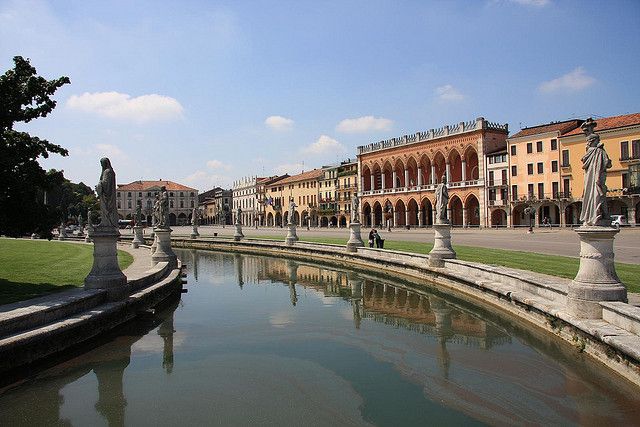
The tour begins at the tram stop in Prato della Valle, which is a sensible meeting place because you start beside one of Padua’s grandest public spaces. You do not begin with a long transfer or a bus ride. From the first minute, you are on foot and looking at one of the city’s defining sights.
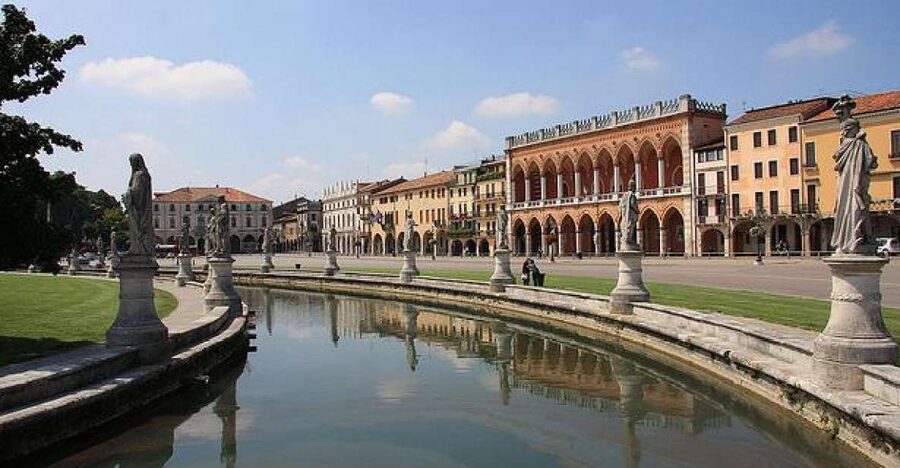
Prato della Valle is enormous by Italian piazza standards. Its broad central island is surrounded by a canal and a ring of statues. On Saturdays, the square hosts a market, giving you a more active view of the space than you would get on a quiet weekday.
The square works well as an introduction to Padua because it shows how the city uses public space. This is not just a postcard stop. It is a place for shopping, walking, meeting friends, and local events. Give yourself a moment to take in its size before the group moves on.
The tour is available from Monday through Saturday throughout the year. If you want the Saturday market at Prato della Valle, choose that day. If you prefer a quieter look at the statues and canal, another day may suit you better.
More walking tours in Veneto:
- Verona: Walking Tour of Historical Center
★ 4.8 · 20 reviews - Venice Walking Tour and Gondola Ride
★ 3.5 · 3,630 reviews - Venice: Rialto Bridge & Offbeat Unusual Venice Walking Tour
★ 4.2 · 3,538 reviews
Piazza delle Erbe and Padua’s daily life
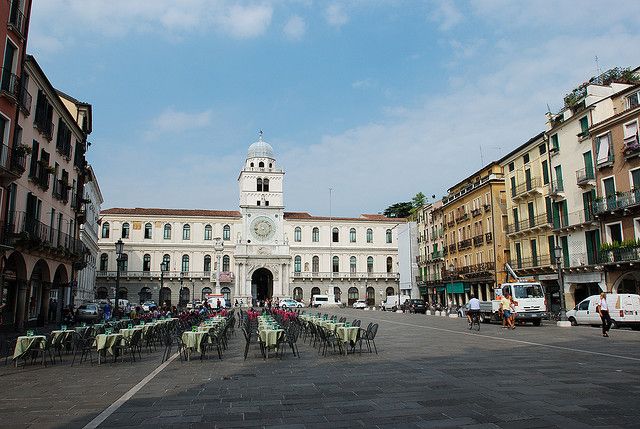
Piazza delle Erbe is one of the most appealing stops for anyone who wants more than a parade of monuments. Its market sells fresh fruit and vegetables, with the offerings changing through the seasons. You get a direct look at the food culture of the city, not just another church façade.
I always find market squares useful for getting your bearings. They show how a city functions, and a good guide can explain what you are seeing without turning the stop into a lecture. Here, you can look at the produce, watch the movement around the stalls, and connect Padua’s grand buildings with its everyday routines.
The square also helps explain why a walking tour is useful. Padua’s central sights are linked by public spaces, and the changes from market square to historic building can be easy to miss if you rush from one address to the next.
The tour is especially well suited to your first day in Padua. You will learn the shape of the center, see several major landmarks, and finish with a better sense of where to return for lunch or another walk.
The old university, Caffe Pedrocchi, and the city center
The route passes the ancient university and Caffe Pedrocchi, two places that give Padua a strong cultural identity. The university is one of the city’s major historic institutions, while Caffe Pedrocchi is a famous meeting place with an important place in local public life.
The exact amount of time spent inside each location is not specified, so think of these as guided exterior or route stops unless your guide tells you otherwise. You will still benefit from seeing how they fit into Padua’s central streets and squares.
Caffe Pedrocchi is a good reminder that cafés in Italy can be more than places for a quick espresso. They can be social, political, and cultural landmarks. The ancient university adds another layer, linking the city to centuries of study and intellectual life.
A personal guide can make these stops more useful than a quick look at a map. Rachel, one of the guides associated with this experience, is praised for discussing local art, culture, food, and history. Nicoletta is also noted for answering questions and adapting the visit to what people wanted to see.
Those details matter because Padua has plenty of sights that are easy to pass without context. If you enjoy asking questions, tell your guide what interests you. The experience can then lean more toward art, food, architecture, or the city’s past.
Saint Anthony’s Basilica and Padua’s spiritual center
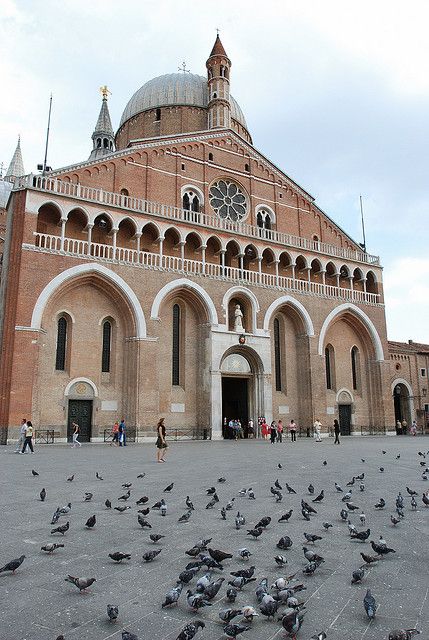
The Basilica of Saint Anthony is one of the tour’s major stops. It dates to the early 1200s and is described as the spiritual center of Padua. Its design brings together several architectural styles, making it a rewarding building for anyone who enjoys seeing how churches change over time.
Do not expect a single, tidy style here. The mixture is part of the appeal. Different periods and influences are visible in the basilica’s form, which gives your guide plenty to point out as you approach and enter.
The church is also important because it remains a religious center, not merely a historic monument. Keep that in mind during the visit. Dress and behave respectfully, and be prepared for the atmosphere to be quieter than the market squares outside.
The stop adds balance to the tour. Piazza delle Erbe shows the practical side of the city, while Saint Anthony’s Basilica shows its religious importance. Prato della Valle provides a huge civic setting, and the Scrovegni Chapel brings the focus to painting.
Because entrance tickets are included, you do not have to handle a separate admission during the tour. The supplied information does not specify how much time you spend inside the basilica, so the guide’s pace and the day’s conditions will shape the visit.
A few more Veneto days to weigh up
- Venice: City Center Historical Guided Walking Tour
★ 4.2 · 1,873 reviews - Venice: Walking Guided Tour of the City Must-See Sites
★ 4.7 · 1,095 reviews - Venice: Shared Gondola Ride through the Lagoon City
★ 3.9 · 937 reviews - Venice: St. Mark’s City Pass with Doge’s Palace Entry
★ 4.1 · 742 reviews
Giotto’s Scrovegni Chapel
The Scrovegni Chapel is the artistic prize of the tour. It is home to a fresco cycle by Giotto, often regarded as his greatest masterpiece. You enter a compact space filled with painted scenes, where the power comes from the full cycle rather than from one isolated image.
This is the stop that requires the most planning. Tickets must be purchased well in advance, and they are non-refundable. The tour includes entrance tickets, but availability for your chosen date is not guaranteed. If tickets are unavailable, the chapel visit is replaced with a similar visit.
That condition is important when you compare this tour with other Padua walks. If seeing Giotto is your main reason for booking, confirm availability before you commit to the plan. Do not treat the replacement visit as an equal substitute until you know what it will be.
The chapel also makes the tour’s short length a little more understandable. You are not spending a full day at every site. Instead, you get a guided introduction to several major places, with the chance to see one of Italy’s key works of art.
The order described for the tour places the Scrovegni Chapel toward the end. That can work well. You first learn about Padua’s streets and public spaces, then finish with a focused artistic visit. If you are visiting the chapel independently on another day, the rest of the walking route still gives you a solid introduction to the city.
What the 2.5-hour format really gives you
Two and a half hours is enough for a useful overview, not a complete study of Padua. You will cover several important areas, but you should not expect long, unhurried visits at every stop.
The compact schedule is a good fit if Padua is a day trip from Venice or part of a larger Veneto itinerary. You can choose the morning departure from 10 a.m. to 12:30 p.m., leaving the afternoon open, or the 2 p.m. to 4:30 p.m. departure if you want to explore on your own first.
The walking format also keeps the visit efficient. Transportation is not included because the activity begins and ends at the same meeting point. You need to reach the tram stop at Prato della Valle yourself, but there is no time spent loading into a vehicle or crossing town by road.
You should still plan for ordinary walking-tour demands: comfortable shoes, attention to the weather, and enough flexibility to move between public squares and monuments. The activity is wheelchair accessible, but the supplied information does not give details about surfaces, rest stops, or access inside each site. If you use a wheelchair, confirm those points before booking.
The guides and the personal touch
The guide can make a major difference on a tour that covers art, religion, architecture, food, and local life in one short visit. Rachel is praised for bringing strong knowledge of local art, culture, food, and history, and for offering restaurant suggestions in Padua and Venice. A recommendation from her led one couple to what they considered the best meal of their trip.
Nicoletta is described as flexible and willing to answer questions. That is useful in Padua, where you may arrive with one priority but find yourself more interested in another once the walk begins.
You should not book on the assumption that a particular guide will lead your departure unless the provider confirms it. Still, the names Rachel and Nicoletta give you a sense of the personal style associated with the experience. This is not presented as an audio-guide route. You have a live English or Italian-speaking guide who can respond to you.
The strongest reason to choose a guide is not simply getting from one sight to the next. It is having someone connect the market, the university, the basilica, the square, and the chapel into one understandable picture of Padua.
Is $203.91 per person fair?
At $203.91 per person, this is an expensive short tour. The price includes the entrance tickets and a personal guide, but not transportation or anything else not expressly listed.
The value depends heavily on the Scrovegni Chapel ticket and on how much you want personal explanation. If the chapel is available and your guide gives you the art and city context you are looking for, the cost may be worthwhile for a first visit or a tightly scheduled day trip.
If you mainly want to see the piazzas from the outside, you can cover much of the route on your own for far less. Padua is walkable, and the markets and public squares do not require a tour ticket. The paid value is the guide’s interpretation, the included admissions, and the convenience of joining a planned route.
I would compare the price with the cost of arranging the chapel visit separately, then ask how important the guide’s help is to you. For a solo visitor or couple who wants questions answered and restaurant advice, the personal format may feel useful. For a large family or budget-focused group, the per-person cost deserves closer thought.
Who should book this Padua walking tour?
I would recommend it to a first-time visitor who wants the main sights organized into one short visit. It suits you especially well if you are coming from Venice, have limited time, and want both the famous monuments and a glimpse of daily life.
It is also a good choice for art lovers who want to see Giotto’s Scrovegni Chapel but would rather not handle the whole visit alone. The tour adds Padua’s market squares and Saint Anthony’s Basilica, so the chapel is not treated as an isolated appointment.
Food-focused visitors may appreciate the Piazza delle Erbe stop and the chance to ask the guide for restaurant advice. Rachel’s recommendations in particular have been useful for people looking for meals in Padua and Venice.
I would hesitate if you want a slow, detailed visit inside every monument, or if $203.91 feels high for a 2.5-hour walk. I would also avoid booking without checking chapel ticket availability if Giotto is the central reason you are coming.
Practical details before you reserve
The tour runs Monday through Saturday, all year. You can choose 10 a.m. to 12:30 p.m. or 2 p.m. to 4:30 p.m., depending on availability.
English and Italian tours are offered. Entrance tickets and a personal guide are included. Transportation, meals, and other items not specifically listed are not included.
The activity begins and ends at the tram stop in Prato della Valle. You should arrange your own way to the meeting point and keep the return location in mind when planning another appointment.
You can cancel up to 24 hours before the activity for a full refund. A reserve-now, pay-later option is also available. The Scrovegni Chapel tickets are non-refundable and must be obtained well ahead of your visit, so check the chapel condition carefully before finalizing your plans.
Should you book it?
Book this tour if you want a guided first look at Padua that combines Giotto, Saint Anthony’s Basilica, the central markets, and the city’s grandest square in one morning or afternoon. The route offers more than a list of famous addresses, especially when the guide adds food, art, and local suggestions.
Skip it if you are comfortable exploring independently and mainly want a low-cost walk through the piazzas. At this price, the Scrovegni Chapel ticket and the quality of the guide are central to the decision. Confirm that the chapel is available for your date, then book if personal context and a well-planned route are worth paying for.
FAQ
How long does the Padua City Walking Tour last?
The tour lasts 2.5 hours.
What are the available starting times?
The listed options are 10 a.m. to 12:30 p.m. and 2 p.m. to 4:30 p.m. Starting times depend on availability.
Where does the tour begin?
The tour begins at the tram stop in Prato della Valle.
Where does the tour end?
The activity ends back at the meeting point in Prato della Valle.
Is the Scrovegni Chapel included?
The tour includes a visit to the Scrovegni Chapel when tickets are available for your date. If tickets are not available, the chapel visit is replaced with a similar visit.
Do I need to purchase Scrovegni Chapel tickets far in advance?
Yes. The tickets must be purchased well in advance, and they are non-refundable.
What languages are available?
The live guide speaks English or Italian.
Is the tour wheelchair accessible?
Yes, the activity is listed as wheelchair accessible. The available information does not specify access details for each individual site.
Just added around Veneto
- Birra Follina, Brewery tour and tasting of 3 ITA beers★ 5.0 · 3 reviews
- Padova Cooking Experience★ 5.0 · 3 reviews
- Vineyard tour with tasting of 4 wines on Garda Hills★ 5.0 · 4 reviews
- Wine-Tasting Dinner★ 5.0 · 4 reviews
- Canyoning in the Dolomites (Lake Santa Croce, Val Maggiore)★ 5.0 · 4 reviews
- Valpolicella: Amarone Experience with Cantina Visit★ 4.4 · 4 reviews
- Guided Tour and Wine Tasting in the Sandro De Bruno Winery★ 5.0 · 5 reviews
- Winelover’s Tasting★ 5.0 · 5 reviews
City Tours, compared.
Walking Guided Tour of the City Must-See Sites
Read our review →

Verona e-bike tour: city center and panoramic views
Read our review →
City Walking Tour with Cable Car & Wine Aperitif
Read our review →
Winter Pass Top Attractions & City Walking Tour
Read our review →
Browse the lists this tour appears in