
Reviewed · WALKING TOURS
Padua: guided walking tour with an art historian
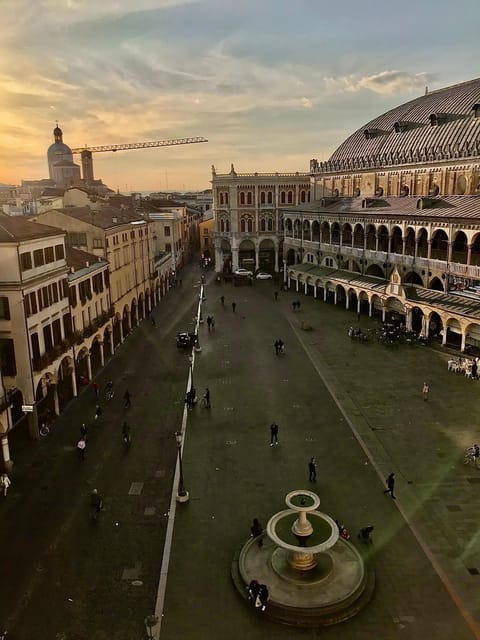
Padua’s best sights are spread across its center, and this two-hour art-focused walk links them with a clear purpose. You begin at broad Prato della Valle, enter Saint Anthony’s Basilica, pause at the Tomb of Saint Anthony, then finish among the grand civic buildings near Piazza delle Erbe.
I like the mix of major art and local streets, and I like having an art historian explain what you are seeing rather than simply naming buildings. The tour also keeps transport out of the picture, which makes sense in a compact city center. The main drawback is that the Palazzo della Ragione ticket costs an extra 8 euros, and special religious events can prevent entry to the basilica or palace.
In This Review
- Key points at a glance
- Why this Padua walk works well
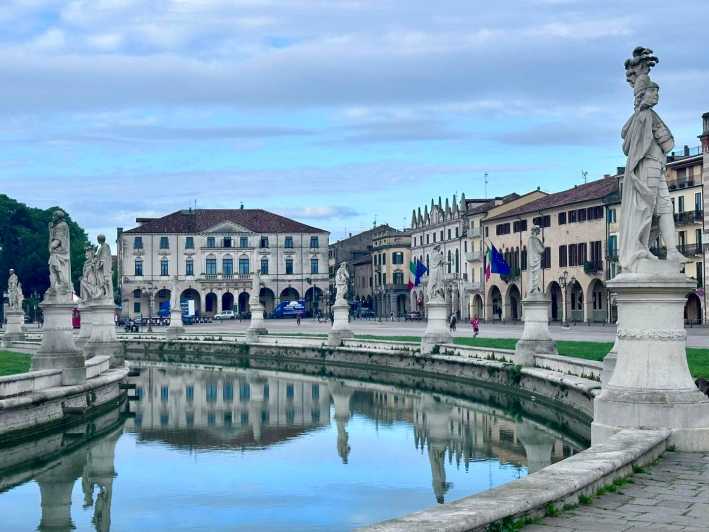
- Meeting at Prato della Valle
- Saint Anthony’s Basilica and its medieval frescoes
- The Tomb of Saint Anthony and the sixteenth-century chapel
- Palazzo della Ragione and the enormous Salone
- The University courtyard and the end of the walk
- What the 40 dollar price includes
- The guide makes the difference
- Who should choose this tour
- My booking advice
- FAQ
- How long does the Padua walking tour last?
- What language is the tour conducted in?
- Where does the tour start?
- Is the entrance to Palazzo della Ragione included?
- Is Saint Anthony’s Basilica included?
- Can I visit the Tomb of Saint Anthony?
- Does the tour visit Padua University?
- What clothing is required?
- Is the tour wheelchair accessible?
- Can I cancel the booking?
Key points at a glance
- Start at Prato della Valle: Meet near Eurospar and the large bus parking area, then use Padua’s famous oval square to get your bearings.
- Saint Anthony’s Basilica: See medieval frescoes linked to Padua’s UNESCO World Heritage recognition, along with the saint’s tomb and a sixteenth-century chapel.
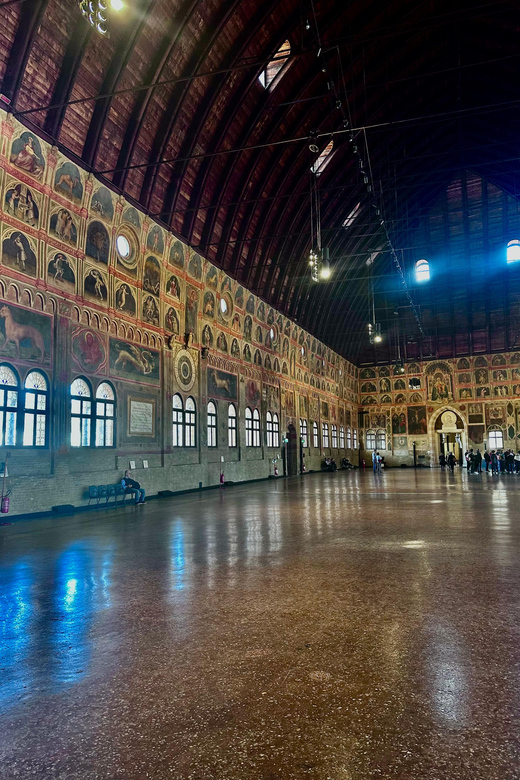
- Palazzo della Ragione: Enter the huge Salone, described as the world’s largest hanging room, with the 8 euro admission paid separately.
- Historic university courtyard: End near one of the world’s oldest universities, founded in 1222, with a cloister covered in coats of arms.
- English-speaking art historian: The guide leads the full walk and focuses on the principal works of art. Valerie is one guide named in the available tour feedback.
- Practical format: The tour lasts two hours, is wheelchair accessible, allows cancellation up to 24 hours before departure, and requires modest clothing for the religious sites.
Why this Padua walk works well
Padua can feel scattered if you visit it without a plan. The city has a famous pilgrimage church, medieval civic architecture, an ancient university, and several important fresco cycles. This walk gives those pieces a sensible order.
You start in Prato della Valle, head to Saint Anthony’s Basilica, then move into the historic center. That sequence works because it begins with open space and a broad introduction before shifting to interiors packed with art and detail.
I especially like the fact that the guide is an art historian. In Padua, that matters. The city’s most important sights are not just pretty buildings. They contain frescoes, tomb sculpture, religious images, coats of arms, and architectural details that can be easy to miss without explanation.
The tour is conducted in English. It is designed as a walking experience rather than a sightseeing trip by vehicle, so you should be comfortable covering the route on foot. The stated duration is two hours, with roughly 30 minutes at Prato della Valle, 30 minutes inside the basilica, 10 minutes at the Tomb of Antenor, and 30 minutes at Palazzo della Ragione, plus walking time between stops.
More Walking Tours in Padua
- Padua: Private City Walking Tour & Scrovegni’s Chapel Visit
★ 4.7 · 124 reviews - Padua Walking Tour with the Scrovegni Chapel
★ 4.5 · 96 reviews - Padova Walking Tour with Audio and Written Guide by a Local
★ 4.5 · 61 reviews
Meeting at Prato della Valle
Your guide meets you at Prato della Valle, close to the Eurospar supermarket and the large bus parking area. This is a practical meeting point because the square is easy to recognize, although you should allow a little time to find the exact spot near the supermarket and parking area.
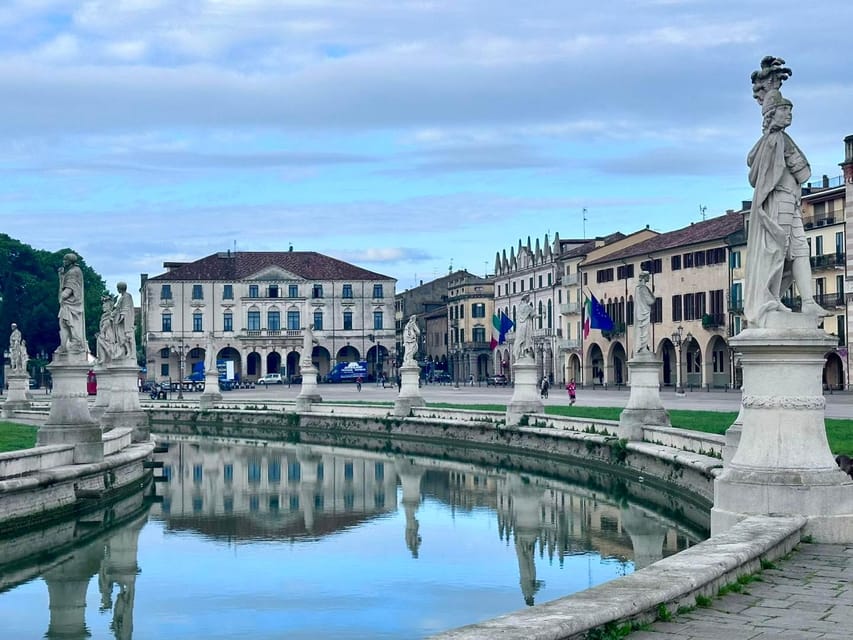
Prato della Valle is one of Padua’s defining public spaces. Its broad oval shape, water, bridges, and surrounding statues give the tour a spacious opening. You will spend about 30 minutes here, with the guide introducing Padua before the walk moves toward Saint Anthony’s Basilica.
I like starting here instead of meeting immediately outside a church. The square gives you a sense of Padua as a city, not just as a list of monuments. You can take in the scale of the place, listen to the introduction, and settle into the walking pace before the more concentrated art stops begin.
The square is also useful if you are new to Padua. You get your bearings quickly, then follow the guide toward the basilica. The first walk is listed at about 10 minutes.
Saint Anthony’s Basilica and its medieval frescoes
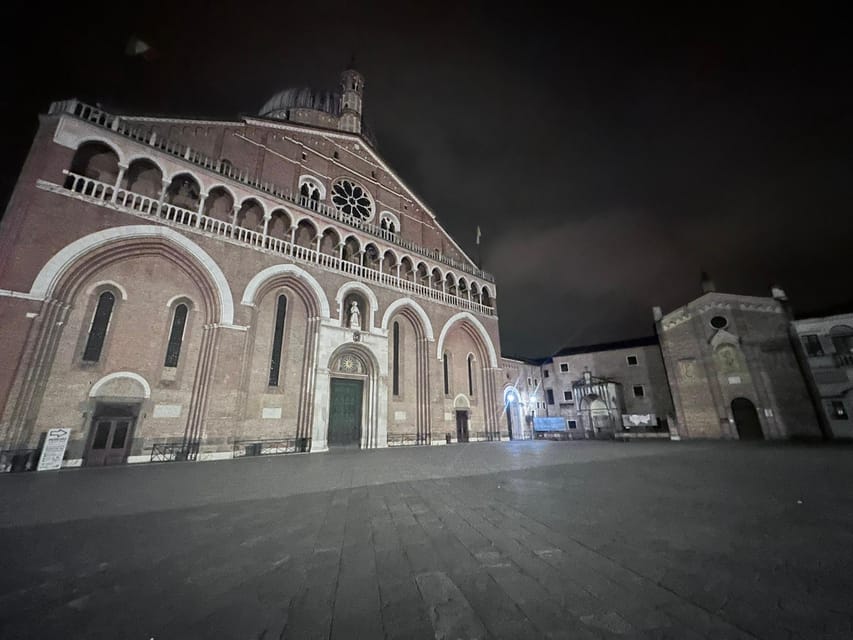
Saint Anthony’s Basilica is the artistic heart of the tour. You receive a guided visit inside the church and have about 30 minutes for sightseeing. The focus is on the medieval frescoes connected with Padua’s UNESCO World Heritage recognition.
The information provided for this experience does not identify every artist or fresco cycle you will see, so you should expect the guide to select the main works rather than provide a room-by-room museum lecture. That is a good fit for a short walking tour. You get context and visual guidance without spending the entire two hours in one building.
The basilica also contains the Tomb of Saint Anthony and an important chapel filled with sixteenth-century masterpieces. This gives the visit a second layer. You are not only looking at medieval wall painting. You are also seeing a major devotional site and later artistic work connected with the saint.
Religious buildings can be difficult to read on your own. A guide can point out the difference between a fresco cycle, a chapel, a tomb, and a devotional image, then explain how they fit together. I would pay close attention to those transitions, since they show how the basilica developed over time.
Dress carefully. Shorts, short skirts, and sleeveless shirts are not allowed. This is not a minor detail. If the basilica is a priority, wear clothing that covers your shoulders and knees from the start. Special festivities, events, or liturgies can also restrict entry, so the visit cannot be guaranteed on every departure.
The Tomb of Saint Anthony and the sixteenth-century chapel
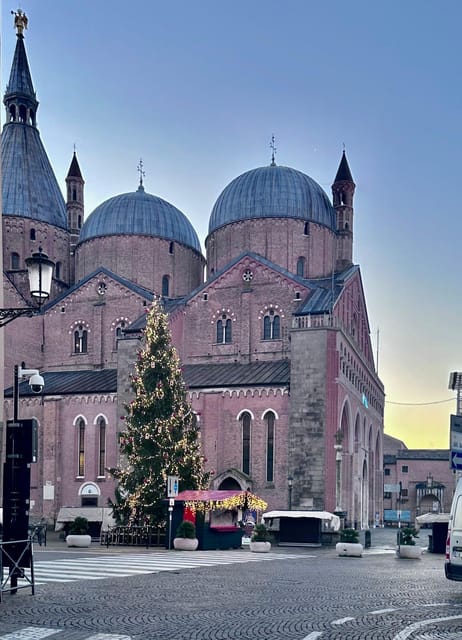
The Tomb of Saint Anthony receives a separate stop of about 10 minutes. The tour description calls attention to its chapel and its sixteenth-century masterpieces, so this is more than a quick photo pause.
You should expect a focused explanation rather than a long independent visit. Ten minutes is enough for the guide to help you notice the tomb, the surrounding artistic details, and the devotional importance of the site. It is not enough for a leisurely study of every work, especially if the basilica is crowded or access is affected by a service.
This is one place where the art historian format earns its keep. A tomb can look like a single object until someone explains the sculptural program and the reason pilgrims come to it. You will get more from the stop if you listen for how art, worship, and the identity of Saint Anthony connect.
After the tomb, the route continues on foot. The listed walking segments are about 12 minutes from the basilica area and another five minutes before Palazzo della Ragione. The walk gives you a change of pace after the church interiors.
A different sort of day out around Padua:
- Padua to Venice Boat Cruise of the Brenta Riviera
★ 4.5 · 418 reviews - Tasting Prosecco with appetizers
★ 5.0 · 217 reviews - Full-Day Padua to Venice Burchiello Brenta Riviera Boat Cruise
★ 4.5 · 198 reviews - Prosecco tasting, appetizers and tour of the cellar and vineyards
★ 5.0 · 178 reviews
Palazzo della Ragione and the enormous Salone
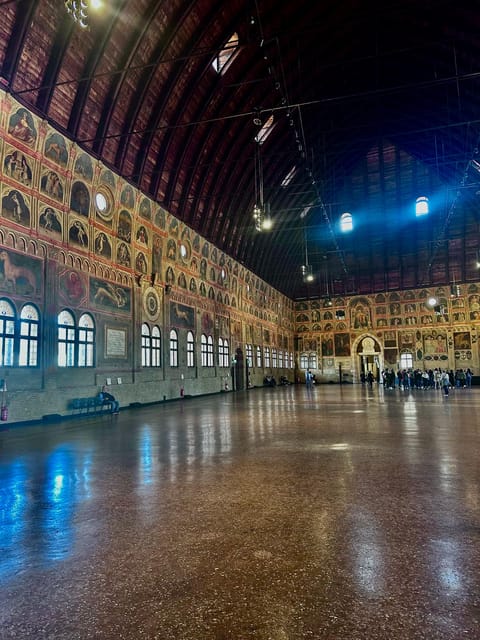
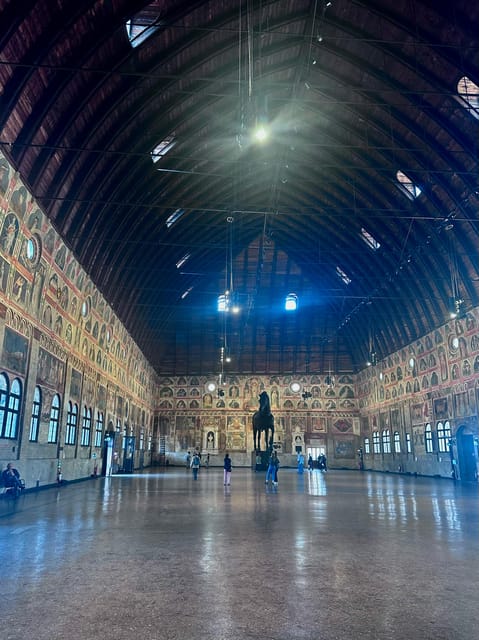
Palazzo della Ragione is the tour’s great civic counterpoint to Saint Anthony’s religious art. The building is part of Padua’s UNESCO World Heritage setting, and the visit centers on the Salone, its vast main room.
The Salone is described as the largest hanging room in the world. That claim refers to its huge interior hall and unusual suspended construction. Even without knowing every architectural detail, you will notice the shift in mood. The basilica is devotional and richly layered. Palazzo della Ragione feels civic, public, and built for the business of a medieval city.
The visit lasts about 30 minutes. The guide’s role is especially useful here because a massive room can be hard to understand at a glance. Look up, take in the ceiling and scale, and let the explanation give the space a human purpose.
The entrance fee is not included. You pay 8 euros per person directly at the palace, and there can sometimes be a short line. That makes the real cost of the experience about 48 dollars or euros equivalent depending on the booking currency and exchange rate, assuming the advertised 40 dollar tour price and the 8 euro palace ticket.
That is still a reasonable price for a two-hour private-feeling cultural introduction, though the value depends on your interests. If you mainly want street views and a quick look at Padua, the extra palace admission may feel less attractive. If you care about art, architecture, and the UNESCO sites, the additional fee is modest compared with the time saved by having the building explained.
As with the basilica, access can be affected by special events. I would keep your schedule flexible if entering the palace is essential.
The University courtyard and the end of the walk
The route description places the end of the walk at Piazza delle Erbe, while the experience information also says the activity ends back at the meeting point. Because those details do not fully match, you should confirm the exact finish location when you book or meet the guide.
The itinerary also includes the ancient University of Padua courtyard. The university was founded in 1222 and is one of the oldest in the world. The feature highlighted here is an old cloister covered with coats of arms.
Those coats of arms recall students who came from different parts of the world over the centuries. That small detail gives the university courtyard real character. You are not simply looking at an old academic building. You are seeing a record of the people who passed through it.
The courtyard makes a fitting close to an art historian’s tour. Prato della Valle introduces the city’s public life. Saint Anthony’s Basilica shows its religious art. Palazzo della Ragione presents its civic power. The university adds the intellectual side of Padua.
The available route details name Piazza delle Erbe as the final point, but the description of the overall activity refers to the meeting point as the end. Treat Piazza delle Erbe as part of the final city-center section, and ask the guide where the walk will actually finish.
What the 40 dollar price includes
The advertised price is 40 dollars per person. It includes the walking tour with an art historian, the guided visit to Saint Anthony’s Basilica and Palazzo della Ragione, and a city-center route focused on major works of art.
The Palazzo della Ragione entrance is separate at 8 euros. That is the one clearly stated extra cost. The basilica entry is described as part of the guided visit, although special festivities, events, or liturgies can prevent access.
For the money, you are paying for interpretation and route planning more than transportation. The guide links several important sites that could otherwise feel disconnected. You also avoid spending time deciding which streets and buildings deserve attention.
The tour is most valuable for a first visit to Padua, especially if you want the city’s art explained in English. It is less useful if you already know the basilica and Palazzo della Ragione well or prefer to explore entirely at your own pace.
The booking terms are flexible. You can reserve now and pay later, and cancellation is free up to 24 hours before the tour for a full refund. Starting times vary, so you need to check availability for the date you want.
The guide makes the difference
The guide is described as a licensed local guide in Padua and an art historian. That combination is well suited to the route. You want someone who can explain both the city’s layout and the visual details inside its major monuments.
Valerie is named in the available feedback. She is described as professional and passionate, with the tour valued for the amount learned and the enjoyment of the full walk. Those are the strongest signals about the experience. The rating is 5 out of 5 from three reviews, so the response is highly positive, but the sample is small.
I would not book this expecting a theatrical performance or a long academic seminar. The format is compact and practical. You move between several sights, receive explanations at each one, and finish with a stronger sense of how Padua’s art and institutions fit together.
If Valerie is the guide assigned to your departure, you can expect a personal art-history approach based on the comments provided. Guide assignments can vary, so do not assume she will lead every date.
Who should choose this tour
I would recommend this walk to you if you want:
- A first look at Padua’s central sights in two hours
- An English-speaking guide with an art-history focus
- Guided entry to Saint Anthony’s Basilica
- A clear introduction to the UNESCO-connected frescoes
- A visit inside Palazzo della Ragione
- A short route that combines religious, civic, and university history
It also suits you if you are visiting Padua as a day trip and want a structured introduction before exploring alone. The route covers enough ground to help you decide which site deserves a longer return visit.
You should think twice if you dislike fixed schedules, have difficulty walking between stops, or want a long, detailed visit inside each building. Two hours passes quickly once you include the square, walking time, basilica, tomb, palace, and university area.
The activity is wheelchair accessible, which is useful to know when comparing walking tours. Still, because the experience moves through historic buildings and streets, you should confirm any specific access needs before departure.
My booking advice
Book this tour if Padua is new to you and you want art to guide your visit. The strongest features are the art historian, the basilica’s frescoes and tomb chapel, the huge Salone in Palazzo della Ragione, and the university courtyard with its coats of arms.
Before paying, add the 8 euro Palazzo della Ragione ticket to your budget and check the dress rules. If a religious festival or special event is taking place, either the basilica or palace may be closed to the tour.
I would choose this experience for a compact, informed introduction rather than a slow museum day. It gives you the city’s main artistic themes, keeps the route manageable, and leaves you free to explore more of Padua afterward.
FAQ
How long does the Padua walking tour last?
The tour lasts two hours. The available schedule shows time at Prato della Valle, Saint Anthony’s Basilica, the Tomb of Antenor, and Palazzo della Ragione, along with walking between stops.
What language is the tour conducted in?
The tour is conducted in English with a live tour guide.
Where does the tour start?
The meeting point is in Prato della Valle, close to the Eurospar supermarket and the large bus parking area. The listed address is Prato della Valle, 71.
Is the entrance to Palazzo della Ragione included?
No. The Palazzo della Ragione ticket costs 8 euros per person and can be bought directly at the palace. There may sometimes be a short line.
Is Saint Anthony’s Basilica included?
Yes. The experience includes a guided visit of Saint Anthony’s Basilica, subject to restrictions caused by special festivities, events, or liturgies.
Can I visit the Tomb of Saint Anthony?
Yes. The route includes a sightseeing stop at the Tomb of Saint Anthony and its chapel, with sixteenth-century masterpieces.
Does the tour visit Padua University?
Yes. The route includes the university courtyard and its old cloister covered with coats of arms connected with students from around the world.
What clothing is required?
Shorts, short skirts, and sleeveless shirts are not allowed. Wear clothing that covers your shoulders and knees, especially because the tour enters a basilica.
Is the tour wheelchair accessible?
Yes. The activity is listed as wheelchair accessible.
Can I cancel the booking?
You can cancel up to 24 hours in advance for a full refund. The reserve-now, pay-later option lets you hold a place without paying immediately.
Just added around Padua
- Padua City Sightseeing Walking Tour of Must-See-Sites with Local Guide★ 5.0 · 3 reviews
- Padua: Private Pasta-Making Class at a Local’s Home★ 5.0 · 3 reviews
- Tour to the Walled City of Monselice DA Abano and Montegrotto Terme★ 4.5 · 3 reviews
- E-bike rental – Road bike – Mountain bike★ 5.0 · 3 reviews
- CSTRents – Padova Segway PT Authorized Tour★ 3.5 · 3 reviews
- DA Venezia : Experience Padua like a local★ 5.0 · 4 reviews
- Street Food Walk in Padova★ 5.0 · 4 reviews
- From Padua: Tour to the walled town of Monselice★ 5.0 · 4 reviews
Walking Tours, compared.
Rialto Bridge & Offbeat Unusual Venice Walking Tour
Read our review →
Private 3 hrs Venice Tour: St Mark’s, Walking tour & Boat tour
Read our review →
Walking Guided Tour of the City Must-See Sites
Read our review →
Private Best of Venice Walking Tour with St Mark’s Basilica
Read our review →
Venice Sightseeing Small Group Walking Tour with a Local Guide
Read our review →Browse the lists this tour appears in