
Reviewed · WALKING TOURS
Verona: Private 2-Hour Walking Tour
Verona’s best feature is how much of its past fits into a short walk. In two hours, you move from the first-century Roman Arena to medieval palaces, a fortress on the Adige, lively market squares, and the famous balcony linked to Romeo and Juliet.
I like the private format, which gives your group a more personal guide and avoids being folded into a large crowd. I also like the route through Piazza Erbe and Piazza dei Signori, where Verona feels like a lived-in Italian city rather than a string of isolated monuments. The main drawback is that monument admissions are not included, and two hours leaves little time for anything beyond the outside views.
In This Review
- Key points
- Starting beneath Verona’s Roman Arena
- Along the Adige to Castelvecchio
- Passing through Porta Borsari
- Piazza Erbe and the daily rhythm of Verona
- Piazza dei Signori and the Scaliger Tombs
- Romeo, Juliet, and the famous balcony
- What a private group changes
- The pace, walking conditions, and planning details
- How this tour compares with exploring alone
- Who will get the most from this Verona walk
- Should you book this private Verona tour?
- FAQ
- How long is the Verona private walking tour?
- What language is the guide’s tour conducted in?
- Where does the tour start?
- Where does the tour end?
- Is the tour private?
- Are monument admissions included?
- Can I cancel for a full refund?
- What should I bring and avoid bringing?
Key points
- The Roman Arena begins the story: See Verona’s huge first-century amphitheater on Piazza Brà, still used today.
- The route links several eras: Roman walls, medieval fortifications, Gothic tombs, and Shakespearean romance all appear in one compact walk.
- Private means personal: Your group can include up to 15 people, with a private guide rather than a shared tour.
- The tour is German-language: Confirm that this suits everyone in your group before booking.
- The famous sights are viewed from outside: Admission to the Arena, Castelvecchio, and other monuments is not included.
- The route needs comfortable footwear: Large bags are not allowed, and the activity is marked as unsuitable for people with mobility impairments despite also being listed as wheelchair accessible.
Starting beneath Verona’s Roman Arena
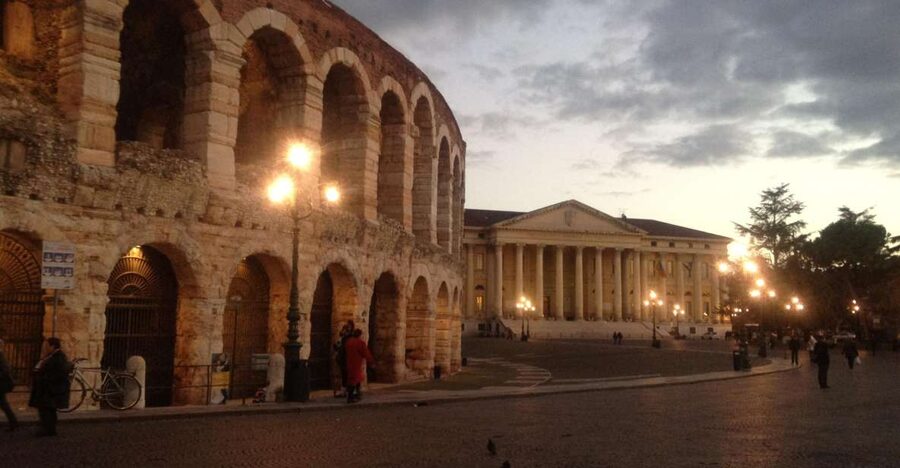
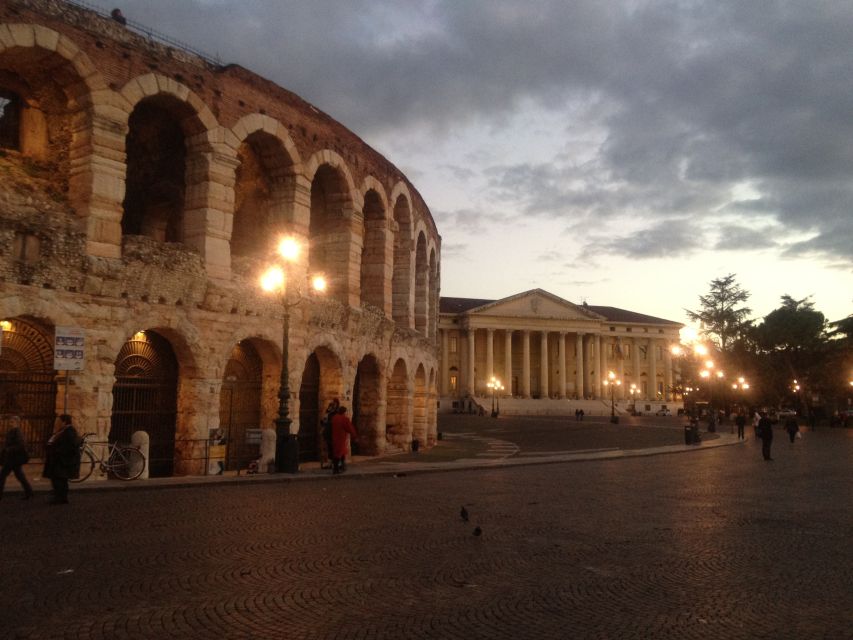
Meet your guide by the statue of King Vittorio Emanuele II on horseback in Piazza Brà. This is a practical starting point because the square puts you directly beside Verona’s most imposing landmark, the Arena.
Built in the first century AD, the amphitheater is one of the best-preserved Roman arenas in Italy. Its curved outer walls give you a quick sense of the scale of Roman public entertainment, even if you do not enter. The Arena is also still in use, which makes it more than an archaeological shell.
I like beginning here because the monument gives you an instant frame for Verona. You are not starting with a minor church or an obscure lane. You are looking at a building that has shaped the city’s identity for nearly two thousand years.
The tour does not include admission, so expect to view the Arena from the outside. If entering the amphitheater is important to you, plan that separately and do not assume the two-hour walk includes time inside.
More Walking Tours in Verona
- Verona: History and Hidden Gems Guided Walking Tour
★ 5.0 · 1,379 reviews - Verona: Small Group Guided Walking Tour with Arena Tickets
★ 4.9 · 848 reviews - Verona Highlights Walking Tour in Small-group
★ 5.0 · 493 reviews
Along the Adige to Castelvecchio
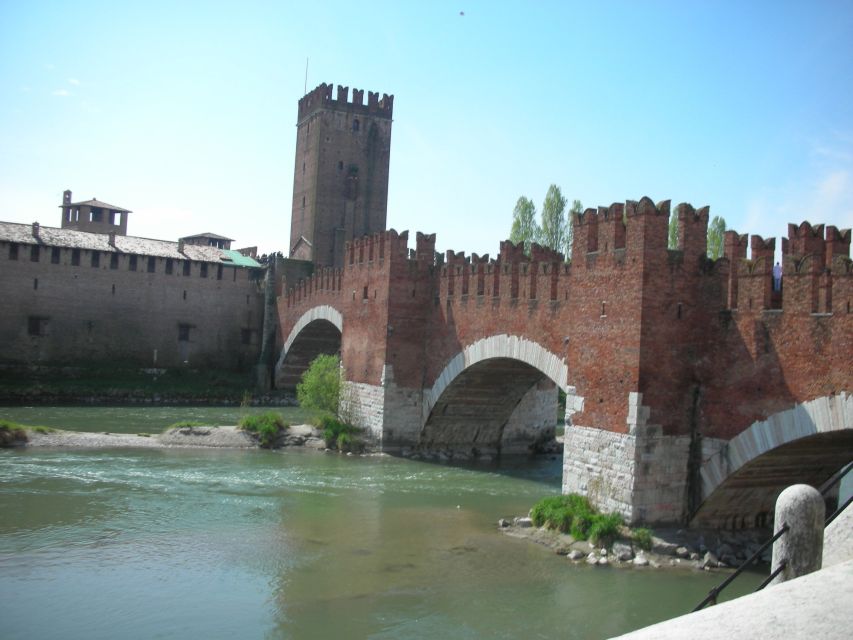
From Piazza Brà, the route heads toward the River Adige and Castelvecchio. This fortress reflects Verona’s medieval power, when the Scaliger family ruled the city and controlled much of its political life.
Nearby, the historic Ponte Scaligero carries the same family name. The bridge was built as part of Castelvecchio’s defensive system and is one of the city’s most memorable medieval structures. Its strong brick form and repeated arches make a useful contrast with the pale stone and open curves of the Roman Arena.
This part of the walk helps you see Verona as more than the city of Romeo and Juliet. The fortress and bridge point to military rule, family power, and the need to control movement across the river.
Since the tour is only two hours, the guide’s treatment of Castelvecchio and the bridge will necessarily be brief. The route gives you an exterior introduction, not a museum visit or a detailed examination of the fortress.
Passing through Porta Borsari
The walk continues through Porta Borsari, a third-century arch that once formed part of Verona’s Roman walls. This is one of those sights that can be easy to miss if you are walking on your own with your eyes fixed on shops and cafés.
The arch shows how Roman Verona was organized and protected. It also makes the city’s age feel practical rather than abstract. You are passing through an actual gateway that once marked entry into the Roman settlement.
This stop works well in a guided walk because the remains are integrated into the modern street. You do not need a long visit. A short explanation can turn an ordinary passage into a clear piece of the city’s past.
The route then follows the Corso toward the central squares. This section is part sightseeing walk, part city orientation. You get a sense of how the old center connects its main landmarks without needing local transport.
Piazza Erbe and the daily rhythm of Verona
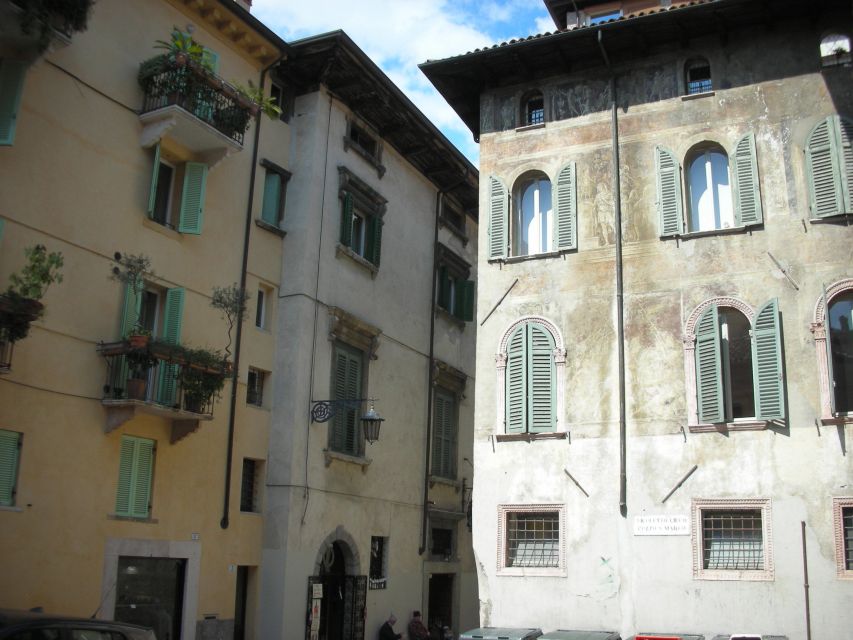
Piazza Erbe occupies the heart of the former Roman city. Today it is one of Verona’s most active public spaces, lined with historic buildings, cafés, and the movement of daily city life.
I especially like this part of the itinerary because it gives you more than a famous photo stop. Piazza Erbe lets you watch Verona function. The square is not only preserved history. It is also a place to pause, look around, and understand how the old center is used now.
The tour describes Verona’s local lifestyle through Piazza Erbe, but remember that the experience remains a walking tour rather than a food tour. No tastings or meal stops are included in the price.
A private guide can make this square easier to read. Verona’s buildings belong to different periods, and a quick explanation can help you notice the layers instead of seeing only an attractive plaza.
A different sort of day out around Verona:
- Verona: Hop-on Hop-off Tour 24 or 48-Hour Ticket
★ 4.4 · 2,010 reviews - Verona: Priority Access Arena Guided Tour
★ 4.6 · 1,152 reviews - Verona: Juliet’s House Fast-Track Entry Ticket & Audio Guide
★ 4.2 · 1,121 reviews - Verona: Arena di Verona Opera Ticket
★ 4.6 · 721 reviews
Piazza dei Signori and the Scaliger Tombs
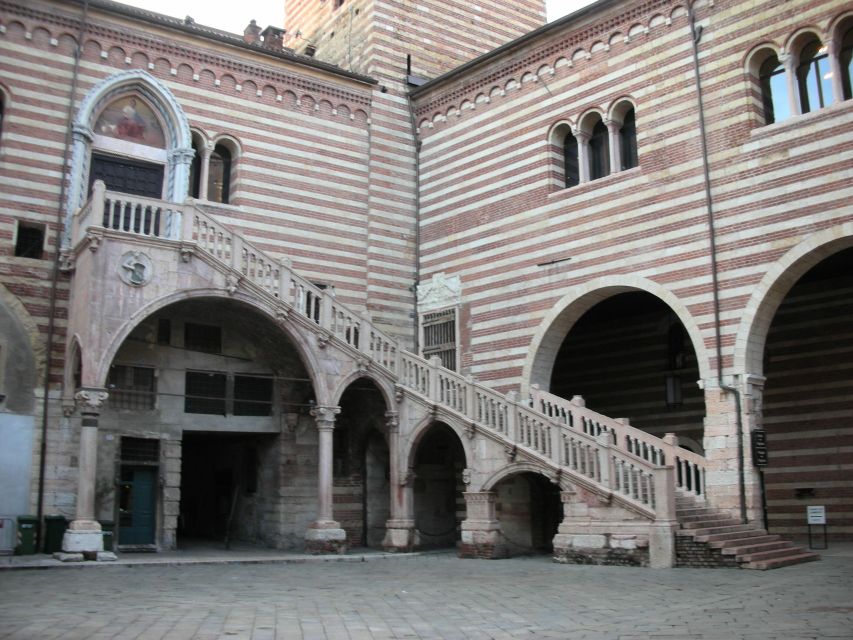
From Piazza Erbe, the route continues to Piazza dei Signori. The square has a more formal feel, with the historic Café Dante and the medieval palaces associated with the Scaliger family.
The Scaliger Tombs nearby commemorate the family that ruled Verona from the thirteenth through the late fourteenth century. These Gothic monuments are a sharp change from the Roman Arena and a reminder that Verona’s medieval rulers wanted their power remembered in stone.
This is one of the tour’s most useful history stops. The Arena shows the city’s Roman beginnings, while Piazza dei Signori explains a later period when Verona was shaped by powerful local rulers.
The route also promises some less conventional streets rather than only the main tourist corridors. That does not mean you will leave the old center or enter places closed to the public. It means the walk includes narrower passages that connect the better-known squares.
Romeo, Juliet, and the famous balcony
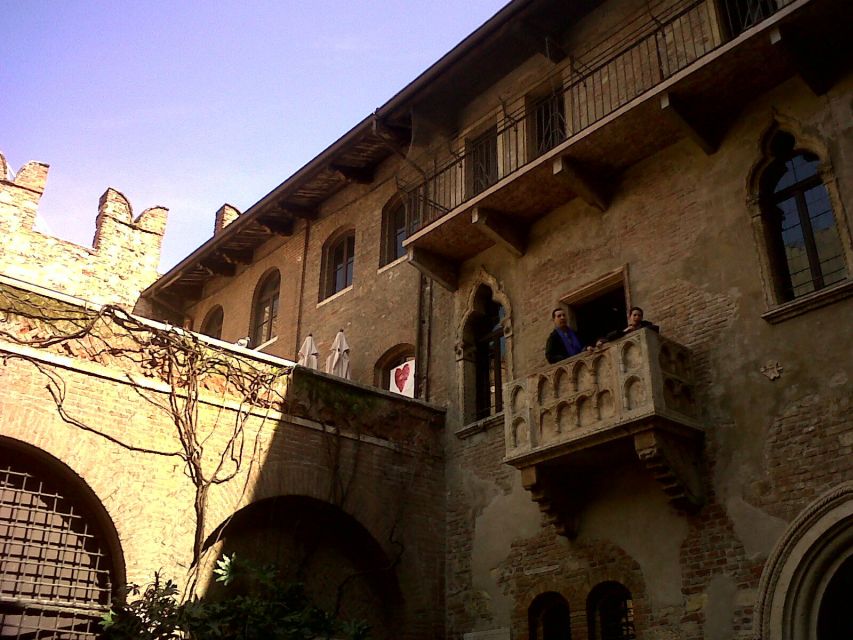
The final major stop leads through a narrow alley to the house associated with Juliet. You can stand in front of the balcony where Romeo is said to have declared his love for her.
This is the most openly romantic moment of the tour, and it is also the place where expectations matter most. Verona’s connection with Romeo and Juliet comes from Shakespeare’s tale, not from a verified historical romance. The appeal is literary and theatrical, but that does not make the scene unimportant.
I like that the balcony appears after the Roman and medieval sights. You first see Verona as a real city with ancient walls, ruling families, bridges, and public squares. Then you reach the story that made the city famous around the world.
The house and balcony are presented from the outside as part of this walking route. Admission is not included, and the tour does not promise an interior visit.
The lane can be crowded at popular times, though no exact crowd conditions are provided. A private guide may help your group move through the stop efficiently, but two hours still leaves only a short window for photographs and discussion.
What a private group changes
The price is $335.32 for a group of up to 15 people. At the full group size, that works out to about $22.36 per person. For a couple or a small family, the per-person cost is much higher, so the value depends heavily on how many people share the booking.
The private setup is the main reason to consider the price. You are paying for a guide reserved for your group, not just for access to a standard route. A private guide can keep the walk at a suitable pace, focus on the sights your group cares about, and make the two hours feel more direct.
The activity is listed with a live guide in German. That is a major practical point. If everyone in your group is comfortable in German, the language can make the explanations more natural. If not, this is not the right version of the tour.
The provider is Veronatours. No guide’s personal name is supplied, so you should not book expecting a particular guide.
The pace, walking conditions, and planning details
Two hours is enough for a well-organized overview of central Verona. It is not enough for long interior visits, extended shopping, or a leisurely stop at every square.
Wear comfortable shoes. The route includes old-city streets, narrow lanes, and several outdoor sights. Large bags and luggage are not allowed, so this is better scheduled after you have checked in or stored your bags elsewhere.
Sleeveless shirts are listed as not allowed. Bring a passport or ID card, and bring a face mask or protective covering as requested in the activity information.
The meeting point is clear: the statue of King Vittorio Emanuele II on horseback in Piazza Brà. The tour ends back at that same meeting point, which makes it easier to plan the rest of your time in Verona.
The activity is offered as wheelchair accessible, but the same information also says it is not suitable for people with mobility impairments. That contradiction deserves a direct check with Veronatours before you pay. Ask about the exact street surfaces, narrow passages, and any steps on the route.
Cancellation is flexible up to 24 hours before the start for a full refund, and you can reserve now and pay later. Those terms help if your Verona schedule is still changing, but they do not solve the language or mobility questions.
How this tour compares with exploring alone
You can see many of these sights without a guide. Piazza Brà, Porta Borsari, Piazza Erbe, Piazza dei Signori, and Juliet’s house are all central landmarks. A self-guided walk may cost less and lets you spend as long as you like at each stop.
The private tour earns its keep through structure and context. Verona’s center is compact, but its history is not simple. A guide can connect the Roman gateway, the medieval fortress, the Scaliger family, and the Shakespeare story into one readable route.
I would choose this tour if I had only a short stay, wanted a clear introduction, or was traveling with a larger private group. I would hesitate if I wanted to enter several monuments, needed a slower pace, or preferred English or another language.
The high rating of 4.9 from 41 reviews, along with specific praise for the German-speaking guide as a very good guide, points to a strong experience for the audience it serves. Still, the rating should not distract you from the basic limits: the tour is short, outdoor-focused, and German-language only.
Who will get the most from this Verona walk
This tour suits you best if:
- You want a private introduction to Verona’s central sights.
- You enjoy history presented through streets, squares, and exteriors.
- Romeo and Juliet are part of your reason for visiting.
- You are traveling with enough people to share the group price.
- You are comfortable walking for two hours in old-city streets.
- German is the right language for your group.
It is less suitable if you want a full museum experience. It is also a poor match if you are carrying luggage, need a slow route, or want a tour in English.
Families and mixed-age groups may appreciate the short length, but the activity information does not give a precise pace or step count. If mobility is a concern, ask before booking rather than relying on the wheelchair-accessible label alone.
Should you book this private Verona tour?
Book it if you want a focused, private walk that connects Verona’s Roman Arena, medieval center, Scaliger monuments, and Juliet’s balcony in two hours. The best value comes with a larger group, especially near the maximum of 15 people.
Skip it if you want admission to the Arena or other monuments included, need a language other than German, or prefer to explore at your own pace. Before booking, confirm the mobility arrangements and remember that the famous interiors are not part of the package.
For the right group, this is a practical way to get your bearings fast, learn why Verona looks the way it does, and leave with both the city’s real medieval story and its most famous fictional romance.
FAQ
How long is the Verona private walking tour?
The tour lasts two hours.
What language is the guide’s tour conducted in?
The live tour guide speaks German.
Where does the tour start?
Meet the guide by the statue of King Vittorio Emanuele II on horseback in Piazza Brà, Verona.
Where does the tour end?
The tour ends back at the meeting point in Piazza Brà.
Is the tour private?
Yes. It is a private group activity for up to 15 people.
Are monument admissions included?
No. Admissions to monuments are not included.
Can I cancel for a full refund?
Yes. You can cancel up to 24 hours in advance for a full refund.
What should I bring and avoid bringing?
Bring a passport or ID card, comfortable shoes, and a face mask or protective covering. Luggage and large bags are not allowed, and sleeveless shirts are not permitted.
More 2-Hour Experiences in Verona
- Hidden and fascinating Verona – 2 hour private walking tour
★ 5.0 · 77 reviews - Private Venice Canal Cruise: 2-Hour Grand Canal and Secret Canals
★ 4.5 · 139 reviews - 2 Hour Venice Canal Kayak Tour – Premium experience by day
★ 5.0 · 117 reviews - Trieste: 2-Hour Private Walking Tour
★ 4.8 · 87 reviews
Just added around Verona
- Valpolicella Lunch or Dinner Wine & Food tasting with Amarone★ 5.0 · 43 reviews
- The 10 Tastings of Verona With Locals: Private Food Tour★ 4.5 · 45 reviews
- Arena di Verona Opera Ticket Package★ 4.0 · 46 reviews
- Unique Wine tasting in Verona, with Amarone docg★ 5.0 · 46 reviews
- Verona: the Arena at the Gladiators’ time★ 5.0 · 48 reviews
- Verona: Juliet’s House Fast-Track Entry Ticket & Audio Guide★ 3.5 · 52 reviews
- Valpolicella Wine Experience at Montresor winery★ 5.0 · 54 reviews
- Verona: City Highlights Private Tour★ 4.8 · 56 reviews
Walking Tours, compared.
Rialto Bridge & Offbeat Unusual Venice Walking Tour
Read our review →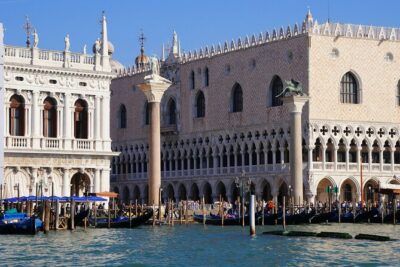
Private 3 hrs Venice Tour: St Mark’s, Walking tour & Boat tour
Read our review →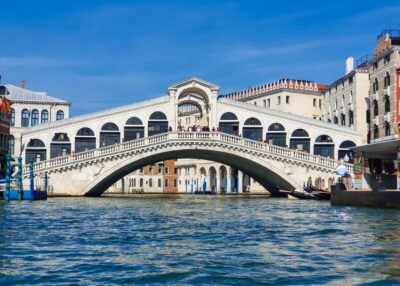
Walking Guided Tour of the City Must-See Sites
Read our review →
Private Best of Venice Walking Tour with St Mark’s Basilica
Read our review →
Venice Sightseeing Small Group Walking Tour with a Local Guide
Read our review →Browse the lists this tour appears in