
Reviewed · MURANO GLASS TOURS
Ellegi Murano Glass: The Art of Tradition
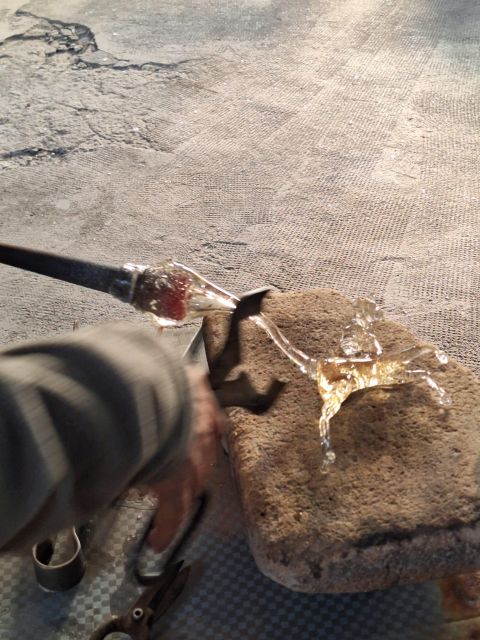
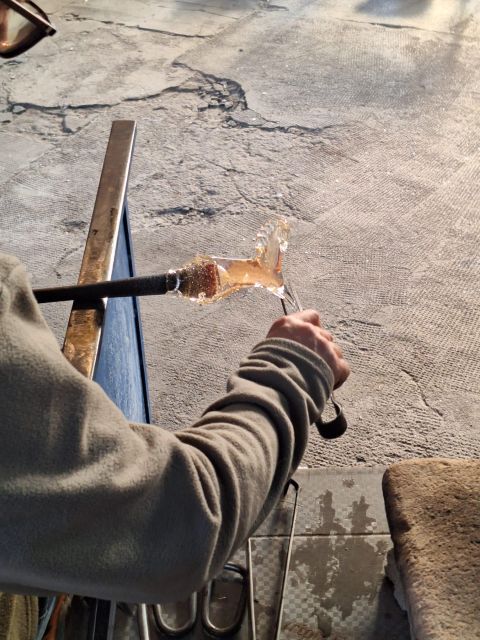
Murano glass is best understood beside a working furnace, where a craftsman turns a glowing lump into a plate or a horse in front of you. At Ellegi Murano Glass, you see hot glass shaped by hand, not simply finished pieces behind a shop window.
I like the tiny price, just $5, and the easy location near the Faro boat stop. I also like that the demonstration explains both blowing and molding, with guides available in Italian, English, Spanish, and French. The main caution is that the presentation can feel rushed or hard to hear when the room is busy.
In This Review
- Key points to know before you go
- Why a short furnace demonstration belongs on a Murano day
- Finding Ellegi near the Faro boat stop
- Inside the courtyard and showroom
- What happens at the furnace
- The practical problem of sound and crowding
- Is 15 minutes enough?
- How the $5 price compares with the experience
- Access, children, and pets
- How to fit Ellegi into a Murano route
- Who will enjoy this most
- Should you book Ellegi Murano Glass?
- FAQ
- How long does the Ellegi Murano Glass experience last?
- How much does the experience cost?
- Where do I meet for the demonstration?
- What languages are available?
- Is the factory wheelchair accessible?
- Can I bring my pet?
Key points to know before you go
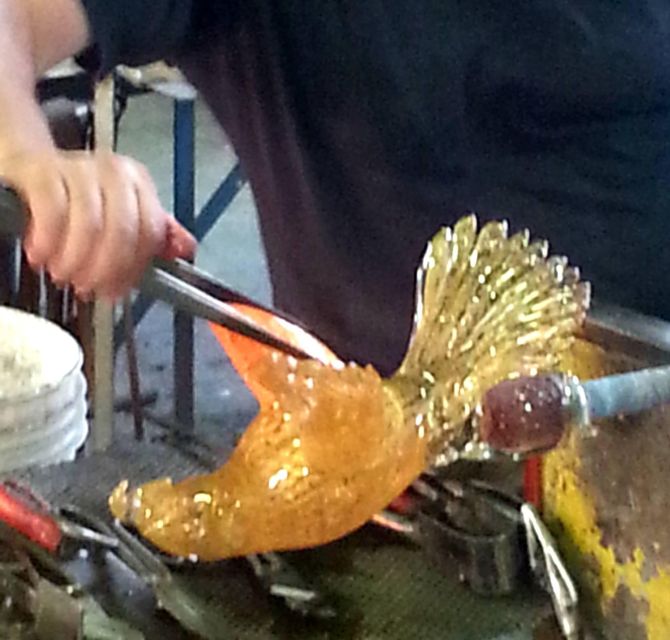
- Watch a horse take shape: The demonstration may include a glass horse, along with other artistic pieces such as a plate.
- Allow 15 to 20 minutes: The advertised duration is 15 minutes, while the factory describes the experience as lasting about 20.
- Find it near Faro: The factory is a short walk from Murano’s main Faro boat stop and close to the Glass Museum and Basilica of Santa Maria e San Donato.
- Expect a real furnace: Glass is extracted at high heat and shaped before you, using blowing and molding techniques.
- Browse after the demonstration: Your visit includes the original showroom, where the factory’s handmade products are available to buy.
- Good for families: Children up to age 15 enter free, pets are welcome, and the site has step-free access.
Why a short furnace demonstration belongs on a Murano day
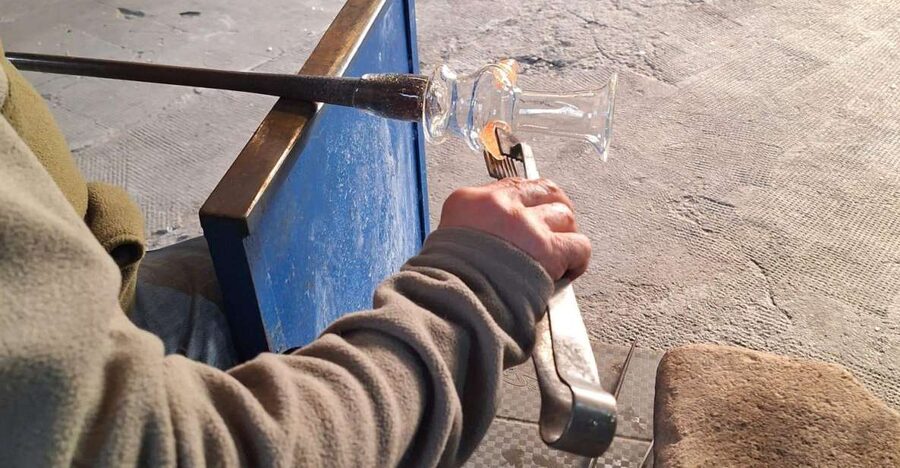
Murano is famous for glass, but it is easy to spend your time looking at finished objects without understanding how they came to be. Ellegi gives you the missing link: a live look at the heat, tools, timing, and hand movements behind the art.
The factory describes its tradition as passing through the family for about 600 years. That claim gives the visit useful context, although the actual demonstration is brief. You are not signing up for a long workshop or a full history lesson. You are watching a skilled artisan work, then getting a closer look at the finished results in the showroom.
That distinction matters. If you want an in-depth museum visit, the nearby Glass Museum will give you more time and background. If you want to see the process itself, this quick stop adds something the museum cannot.
I particularly like the price. At $5 per person, it is one of the easier Murano activities to add without reshaping your budget. Children up to age 15 are free, which makes it practical for a family that wants a short cultural stop rather than an expensive organized outing.
More Murano glass visits:
- Boat Trip: Glimpse of Murano, Torcello & Burano Islands
★ 4.3 · 15,699 reviews - Venice: Burano, Torcello & Murano Boat Tour w/Glassblowing
★ 4.4 · 10,245 reviews - Venice: Murano and Burano Boat Tour with Glass Factory Visit
★ 4.2 · 9,527 reviews
Finding Ellegi near the Faro boat stop
The factory is in a useful part of Murano. From the main Faro boat stop, you only need to walk a few steps, and the site is also close to the Glass Museum and the Basilica of Santa Maria e San Donato.
Look for the sign with the factory name above the entrance. The meeting point is inside the internal courtyard, so do not stop at the first exterior doorway and assume you have arrived. Walk in and find the courtyard before the demonstration begins.
This location makes Ellegi easy to combine with other Murano sights. You could begin at the factory, continue to the Glass Museum, and then visit the basilica. Or you could arrive at Faro, attend the glass demonstration, browse the showroom, and keep walking through the island’s main sights.
A private taxi is another option. The factory has its own private boat pier, which may help if you are arriving by private water taxi. The supplied information does not specify transfer times or taxi prices, so you will need to arrange those details separately.
Inside the courtyard and showroom
The visit begins at the factory rather than at a separate city meeting point. That keeps the experience simple. You do not need to cross Venice looking for a guide, and the factory, demonstration area, and shop are all in the same general place.
The showroom is included in the $5 visit. It displays the factory’s own handmade products, giving you a chance to connect the furnace demonstration with actual pieces. You might see the sort of plate, sculpture, or animal figure that makes the hot glass work easier to understand once you have watched it being formed.
The shop is also the part of the experience that can affect your spending. The demonstration itself is inexpensive, but the handmade glass in the showroom is a separate purchase. I would treat the shop as an optional ending, not as part of the cost of admission.
Take your time looking at the pieces, even if the live demonstration was short. A finished object can reveal details that are hard to notice while the glass is glowing and the artisan is working quickly.
What happens at the furnace
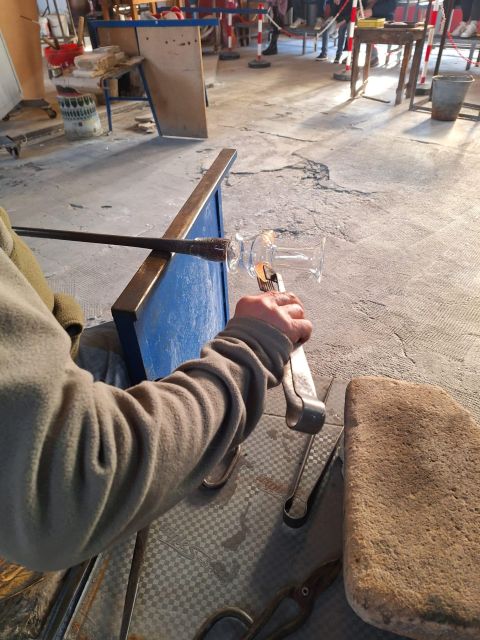
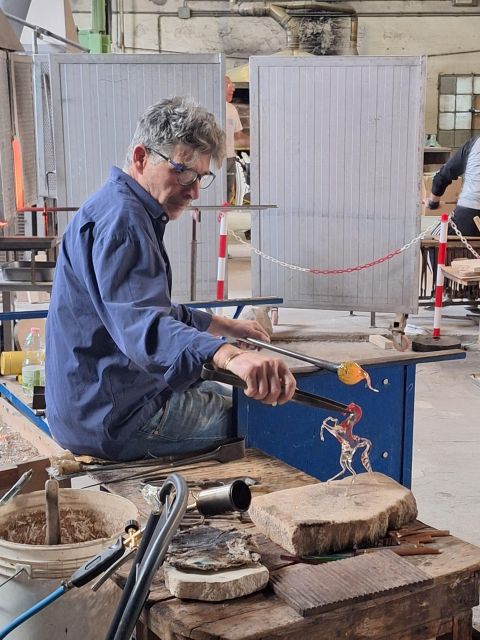
The central event is the glass-processing demonstration. The artisan takes glass from the furnace at very high heat, then shapes it in front of the audience.
You see two main methods: blowing and molding. The guide explains how each technique works in the language requested for the visit. That comparison is helpful because it shows that Murano glass is not made by one single method. The artisan’s control changes according to the shape being created and the tools being used.
The process moves quickly. Hot glass cannot sit around while the audience studies it, so the demonstration has a brisk rhythm. The artisan may create a plate and a horse, and the horse is especially useful for younger children because its form becomes recognizable as the work progresses.
The appeal is visual and immediate. You watch a material that looks almost liquid become a solid object. The furnace, glowing glass, tools, and hand movements create the magical atmosphere promised by the factory, but the real value is seeing how much control is required in a few short minutes.
A speaker explains the techniques, though the quality of the explanation can vary with the conditions. One visitor found the guide’s explanations excellent, while another found the presentation not very informative. That difference may reflect the language used, the size of the group, or how close you are standing to the speaker.
A few more Venice days to weigh up
- Venice: Doge’s Palace Reserved Entry Ticket
★ 4.6 · 42,716 reviews - Venice: Grand Canal Gondola Ride with App Commentary
★ 4.1 · 18,908 reviews - Venice: Grand Canal by Gondola with Live Commentary
★ 4.1 · 13,681 reviews - Venice: La Fenice Opera House Entry Ticket with Audio Guide
★ 4.6 · 11,742 reviews
The practical problem of sound and crowding
The main weakness is organization. The experience is short, and a busy session can feel like mass handling rather than a calm craft demonstration. You may not be able to see every movement clearly, especially if you are behind a group.
Sound can also be an issue. One account describes difficulty hearing, while another describes frequent interruptions during the artisan’s work. A business discussion taking place beside the demonstration can break the spell and make the presentation feel less polished.
I would arrive ready to stand close and pay attention. If you are traveling with children, position them where they can see the furnace and the artisan’s hands. The supplied information does not promise a private demonstration or a fixed group size, so you should not expect an intimate workshop.
The language point deserves care. Italian, English, Spanish, and French are listed as available languages, but one Spanish-speaking visitor found that Spanish support was not provided as expected. If Spanish is important to you, confirm the language when booking or on arrival rather than assuming it will automatically be used.
There was also one serious operational problem when the demonstration area was being renovated. The factory itself was open, but the show was closed without clear notice, and the visitor had difficulty getting an answer about a refund. This appears to have been a specific disruption rather than the normal visit, but it is worth checking on the day if the demonstration is the main reason for your trip.
Is 15 minutes enough?
For $5, yes, if you see the visit as a short add-on. The factory gives you the essential experience: furnace, hot glass, two techniques, explanation, and showroom.
The time is not enough for a long technical lesson. You will not receive a broad account of Murano’s glassmaking history, nor will you make your own piece. This is a demonstration, not a class.
The timing information is slightly inconsistent. The booking details list a 15-minute duration, while the factory describes the experience as lasting about 20 minutes. I would plan for a short 15 to 20 minute stop, with a little extra time for entering the courtyard and browsing the shop.
That makes Ellegi useful between ferry connections or before another Murano sight. It is not a good choice if you need an exact, tightly timed schedule and cannot allow a few extra minutes.
How the $5 price compares with the experience
The value is strongest when you want a simple introduction to Murano glass. You pay little, see a genuine working furnace, and get access to a showroom of handmade products.
The value is weaker if you are expecting a polished stage production. The short format, possible crowding, uneven sound, and occasional interruptions mean that you are paying for access to a working factory demonstration, not a carefully produced theatrical show.
That tradeoff is fair for many visitors. Murano’s glassmaking is a living craft, and a working space may have practical business activity happening around it. Still, you should know what you are buying. The artisan’s skill is the star, while the presentation around that skill may be basic.
I would not make Ellegi the only reason to visit Murano. I would add it to a day that already includes the island’s other sights. At this price, the risk is small, and the furnace demonstration can give more meaning to the glass objects you see afterward.
Access, children, and pets
The factory says there are no architectural barriers, making access smooth for wheelchair users and others who need step-free entry. That is a useful advantage in Venice, where bridges and uneven routes can complicate even short walks.
Children up to age 15 are free. The short duration also suits families, especially if younger children may lose interest during a longer cultural visit. A glass horse taking shape can be easier for them to follow than a display of historical objects.
Pets are welcome as well. Since this is a working furnace area, you should still keep your pet close and follow staff instructions. The supplied information confirms that pets are accepted, but it does not describe any special pet area or handling arrangements.
Automatic vending machines at the entrance sell drinks and snacks for an additional cost. Those machines are not included in the admission price, so plan to buy refreshments separately if needed.
How to fit Ellegi into a Murano route
The easiest plan is to use Faro as your arrival point. Walk to Ellegi, find the internal courtyard, attend the demonstration, and then browse the showroom.
Afterward, continue toward the Glass Museum. Seeing the finished historic and artistic pieces after watching molten glass being shaped gives the museum visit a practical connection. You can then walk to the Basilica of Santa Maria e San Donato, one of the island’s important sights.
You do not need to spend a full morning at the factory. The demonstration is too short for that. Instead, use it as a focused stop between larger visits, especially if you are already exploring Murano by vaporetto.
If the factory is crowded, the experience may be less satisfying from the back. Arriving before the scheduled start may improve your position, although the available information does not promise a particular viewing arrangement. Keep your schedule flexible enough to handle a short wait or a slower exit through the showroom.
Who will enjoy this most
I would recommend Ellegi to you if you want to see glass being made rather than only shop for it. It is especially suitable for families, first-time visitors to Murano, and anyone with a tight budget.
It also works well for visitors who want a brief stop with several language options. The guides can explain the process in Italian, English, Spanish, or French, though Spanish availability should be confirmed because it has not always matched expectations.
I would be more cautious if you want detailed technical instruction, a quiet setting, or a long guided visit. You may find the short presentation too thin, and a crowded room can make it hard to hear or see.
The factory is also not ideal for someone who wants a guaranteed polished performance. The occasional lack of organization is the price of a small, active business rather than a major attraction with a large visitor operation.
Should you book Ellegi Murano Glass?
Book it if you are already going to Murano and want a low-cost look at the craft behind the island’s famous glass. The $5 admission, free entry for children up to 15, accessible entrance, nearby location, and included showroom make it an easy addition.
Go with modest expectations. The furnace work can be impressive, especially when a plate or horse takes shape, but the explanation may be brief and the sound or crowding may get in the way. Confirm your preferred language and check that the demonstration is running if your schedule allows.
For a quick, authentic glimpse of hot glass being shaped by hand, I think it is worth the stop. For a full lesson in Murano’s art, pair it with the Glass Museum rather than relying on this short factory visit alone.
FAQ
How long does the Ellegi Murano Glass experience last?
The listed duration is 15 minutes. The factory describes the demonstration as lasting about 20 minutes, so plan for a short 15 to 20 minute visit, plus time to browse the showroom.
How much does the experience cost?
The price is $5 per person. Children up to age 15 are free.
Where do I meet for the demonstration?
Meet in the internal courtyard of the Ellegi Murano Glass factory. A sign with the factory name is above the entrance.
What languages are available?
Live explanations are listed in Italian, English, Spanish, and French. Spanish language availability should be confirmed because it has not always been provided as expected.
Is the factory wheelchair accessible?
Yes. The factory states that it has no architectural barriers and provides smooth access for wheelchair users.
Can I bring my pet?
Yes. Pets are welcome at the factory.
Just added around Venice
- Padua: Private Pasta-Making Class at a Local’s Home★ 5.0 · 3 reviews
- Padua City Sightseeing Walking Tour of Must-See-Sites with Local Guide★ 5.0 · 3 reviews
- Gondola Ride and St Mark’s Basilica★ 4.5 · 3 reviews
- Venice: Market Tour and Meal at a Local’s Home★ 4.3 · 3 reviews
- VIRTUAL MUSEUM: Creature di Gomma – Venice Vintage Toys★ 4.7 · 3 reviews
- 3 Hour Shared Walking and Aperitivo Tour of Verona★ 5.0 · 3 reviews
- Venice: The Best of Dolomites 3Cime and Refuges with Drone★ 5.0 · 3 reviews
- Verona: Blindfolded Wine Tasting★ 5.0 · 3 reviews
Murano Glass Tours, compared.
Boat Trip: Glimpse of Murano, Torcello & Burano Islands
Read our review →
Burano, Torcello & Murano Boat Tour w/Glassblowing
Read our review →
Murano and Burano Boat Tour with Glass Factory Visit
Read our review →
Murano, Burano and Torcello Half-Day Sightseeing Tour
Read our review →
Murano & Burano Islands Guided Small-Group Tour by Private Boat
Read our review →
Murano & Burano Panoramic Boat Tour w/ Glassblowing
Read our review →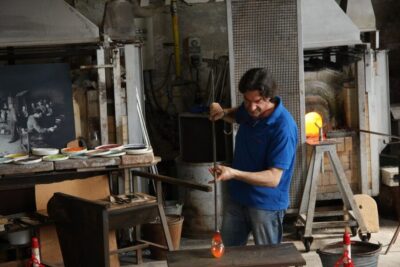
Murano, Burano, Torcello, and Glass Factory Tour
Read our review →
Venice Islands: Murano Glass & Burano Colors Guided Visit
Read our review →Browse the lists this tour appears in