
Reviewed · DOGE'S PALACE TOURS
Full Venice Walking Tour: Doge’s Palace and St. Mark’s
Venice reveals its best secrets between the big sights. This tour pairs the grand rooms of Doge’s Palace and the gold mosaics of St. Mark’s Basilica with narrow calli, neighborhood squares, and the everyday places where Venetians still meet.
I like the strong mix of art and city life, and I like that the guide adds context about how Venice worked as a maritime power. The main caution is organization: a wrong map link, a late start, or a guide who speaks too softly can take the shine off a long walking tour.
In This Review
- Key points at a glance
- Why this tour works beyond Piazza San Marco
- Starting in Piazza San Marco
- Campo Santa Maria Formosa and the city behind the postcard
- Teatro Malibran and Le Mercerie
- Entering Doge’s Palace
- St. Mark’s Basilica and the Pala d’Oro
- The guide makes or breaks the long walk
- Is the $142.74 price fair?
- What to bring and what to leave behind
- Who should book this Venice walk?
- My booking advice
- FAQ
- How long does the Full Venice Walking Tour last?
- Where does the tour begin?
- Where does the tour end?
- Are Doge’s Palace and St. Mark’s Basilica tickets included?
- Does skip-the-line access remove all waiting?
- What languages are available?
- Can I bring a large backpack or luggage?
- What clothing should I wear for St. Mark’s Basilica?
Key points at a glance
- Four to four and a half hours on foot: This is a substantial half-day outing, not a quick highlights stroll.
- Two major interiors included: Skip-the-line access covers Doge’s Palace and St. Mark’s Basilica, with security checks still required.
- A quieter side of Venice: Campo Santa Maria Formosa and the surrounding calli offer a break from Piazza San Marco.
- Art with useful context: You’ll see palace masterpieces, Byzantine mosaics, marble inlays, the Treasury, and the jeweled Pala d’Oro.
- English or Spanish guide: Cynthia has been singled out for clear, passionate explanations and practical advice.
- Come prepared: Wear proper clothing for the basilica, carry ID, use comfortable shoes, and leave large bags behind.
Why this tour works beyond Piazza San Marco
Many first visits to Venice stay inside the small area around St. Mark’s Square. That is understandable. The square gathers the city’s most famous sights, but it can also feel crowded and hurried.
This outing gives you a wider picture. You begin at Piazza San Marco, then move through streets and small squares before returning to the grand monuments. I like that order. You first get a sense of Venice as a living city, then see the places where the Venetian government and church displayed their power.
The walking route is also useful for orientation. You’ll hear the names of places such as Le Mercerie, Campo Santa Maria Formosa, and the area around the Teatro Malibran. Later, these names can help you find your way around central Venice.
The pace lasts four to four and a half hours, so plan it as a half-day commitment. You will spend much of that time standing or walking on uneven city paving. Comfortable shoes matter more here than stylish ones.
More Walking Tours in Venice
- Venice Walking Tour and Gondola Ride
★ 3.5 · 3,630 reviews - Venice: Rialto Bridge & Offbeat Unusual Venice Walking Tour
★ 4.2 · 3,538 reviews - Private 3 hrs Venice Tour: St Mark’s, Walking tour & Boat tour
★ 4.0 · 3,372 reviews
Starting in Piazza San Marco
The tour starts at Piazza San Marco, though the exact meeting point can change with the option you book. Check the final instructions carefully. One practical warning is especially important: make sure the map link takes you to the correct place, and allow time to find the guide.
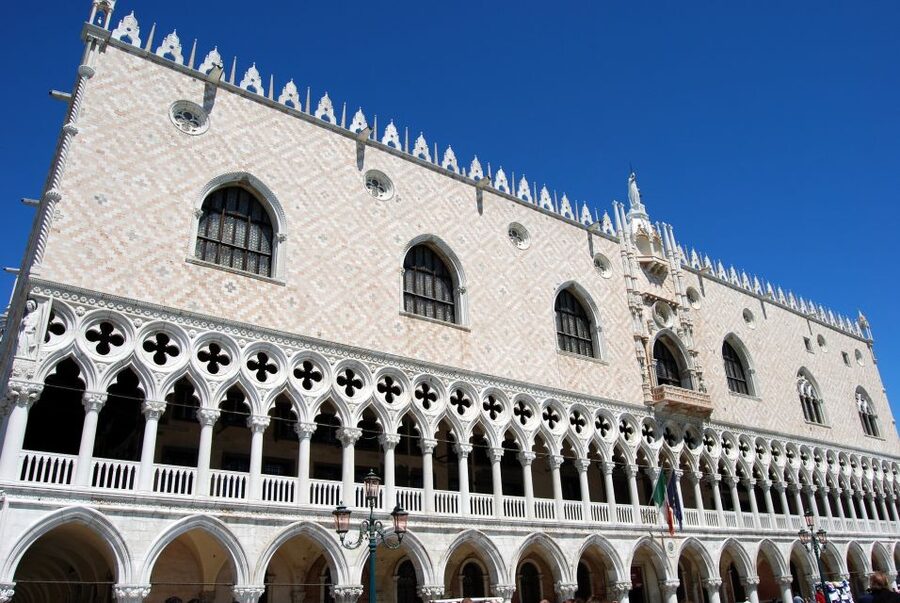
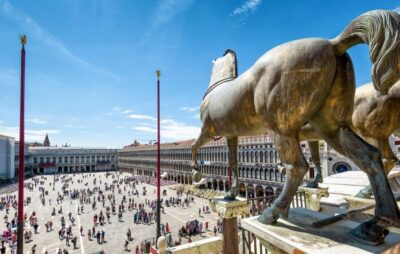
The opening section explains Venice and the Venetian Empire through the monuments around the square. You’ll see the Doge’s Palace, St. Mark’s Clock Tower, and the Procuratie, the long arcaded buildings that frame the piazza.
These first views are external. That matters if you are expecting an interior visit to the clock tower or Procuratie. The main indoor access later is to Doge’s Palace and St. Mark’s Basilica.
Piazza San Marco is a powerful place to begin because Venice’s political and religious identities meet here. The palace represented the doge and the republic. The basilica represented Saint Mark and the city’s close connection to the eastern Mediterranean. A good guide can make those connections easier to grasp than a display label can.
The square may also be the busiest part of the walk. On bank holidays and special dates, the group can be large. If you prefer quiet streets and plenty of room around you, expect the opening and closing sections to feel more crowded than the middle of the route.
Campo Santa Maria Formosa and the city behind the postcard
From San Marco, the route heads toward Campo Santa Maria Formosa. A campo is one of Venice’s squares, and these spaces have long served as useful social centers. They are less formal than Piazza San Marco and give you a better sense of how local neighborhoods are arranged.
Here you’ll admire the church of SS. Giovanni e Paolo, known for its large Pantheon. The stop offers a useful change of scale. Instead of looking at the official face of Venice, you are seeing a church and square that belong to the city’s broader network of neighborhoods.
The route continues to the Scuola Grande di San Marco, also called the Great School of Charity. Its members included Captains of Fortune and some major Italian explorers of the 15th century. The building helps explain how charity, social standing, civic duty, and trade were tied together in Venetian life.
I particularly like this section for anyone who wants more than a checklist of famous buildings. You are still seeing important architecture, but you are also learning how people gathered, organized themselves, and displayed status.
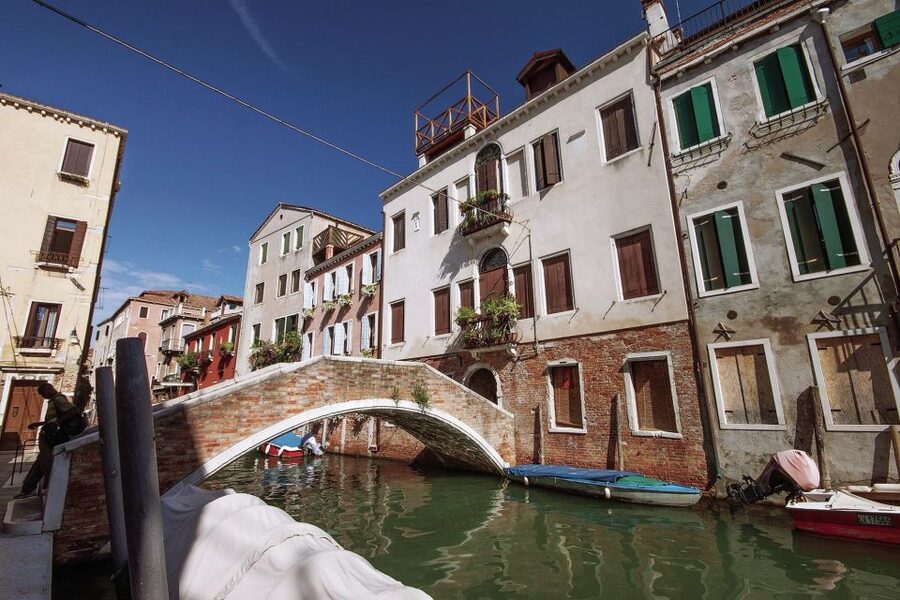
The small alleys are called calli. You’ll walk through some of these narrow passages while the guide points out details and shares facts about the Serenissima, the historic name for the Venetian republic. The route description does not promise private access or a completely empty neighborhood, so think of this as a guided look at Venice’s quieter corners, not a secret route far from other people.
Teatro Malibran and Le Mercerie
The walk returns toward San Marco through the area of the Teatro Malibran. The theater was once described as the biggest, most beautiful, and richest theater in the city. Even if you are not a theater enthusiast, the stop adds another layer to Venice’s public life.
The route then follows Le Mercerie, the main shopping street leading toward Piazza San Marco. Today, you’ll find boutiques from top designers. In earlier centuries, this was the pulsing center of commercial life in the city.
That contrast is worth noticing. Venice has changed from a trading republic into one of Europe’s great cultural destinations, but the old commercial spine remains visible. The street also shows why Venice can feel both historic and modern within a few steps.
This part of the tour may be less rewarding if you mainly want long interior visits. You are walking through the city and viewing the buildings from outside. For me, that is a fair trade because the palace and basilica provide the major indoor visits later.
More ways to see St Mark's Basilica:
- Doge’s Palace & St. Mark’s Basilica with Terrace Access Tour
★ 4.7 · 10,697 reviews - Venice: Doge’s Palace, St Mark’s Basilica, and Pala d’Oro
★ 4.4 · 6,235 reviews - Legendary Venice: Doge’s Palace, St Mark’s & VIP Terrace Access
★ 4.5 · 5,033 reviews - Venice: Doge’s Palace and St. Mark’s Basilica Tour
★ 4.5 · 3,734 reviews
Entering Doge’s Palace
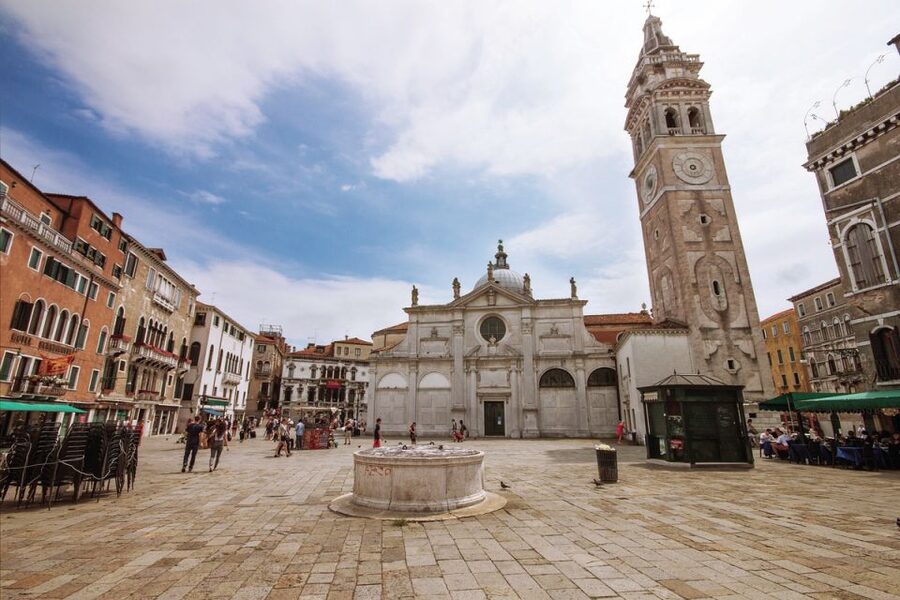
Doge’s Palace is the tour’s first major interior. Skip-the-line access is included, but it does not mean you walk straight through the door. Security checks are required, and lines can still form. Keep that expectation in mind, especially during busy dates.
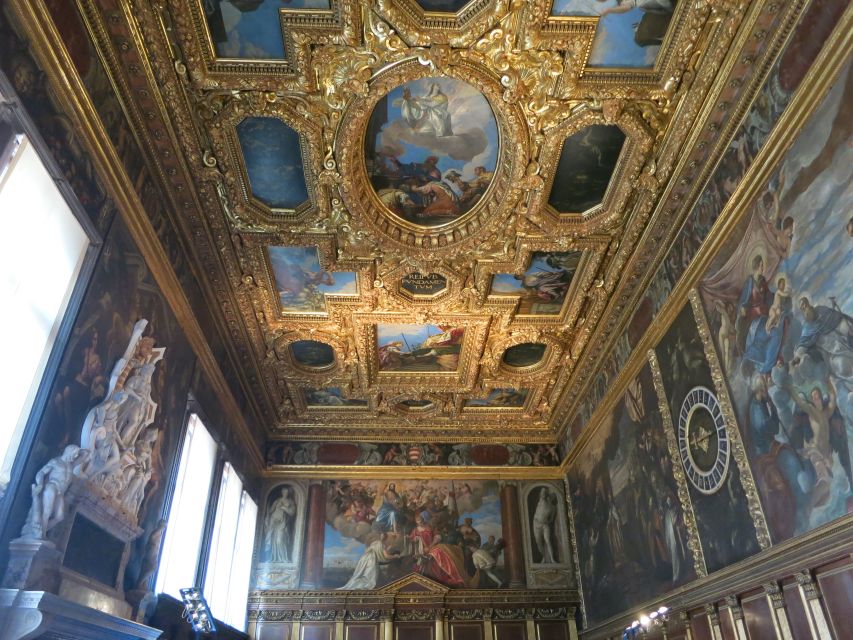
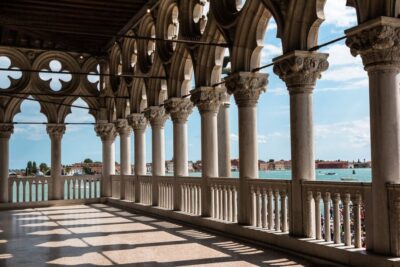
The palace was the seat of Venetian political power for centuries. Its rooms contain hundreds of artworks, and the building works best when you understand what those rooms were for. This was not simply a residence. It was part of the machinery of government, law, diplomacy, and public ceremony.
The guide helps give the rooms a story. Rather than seeing a series of grand halls, you can connect the artwork to the republic that commissioned it and to the officials who used these spaces.
The palace is also where the value of a guided visit becomes clearest. There is a great deal to look at, and a short label cannot explain every symbol, room, or political reference. A strong guide can help you focus on what deserves your attention.
Group management matters here. After security controls or visits to changing rooms, you need the guide to keep everyone together. One guide on this tour was reported to have moved ahead without waiting for the full group. That is a practical weakness, particularly in a large historic building where it is easy to lose sight of people.
The audio equipment can also affect your comfort. You may receive a radio, but a cord for wearing it around your neck may not be provided. Carrying it in your hand for several hours can become tiresome. Ask early how the device should be worn or held.
St. Mark’s Basilica and the Pala d’Oro
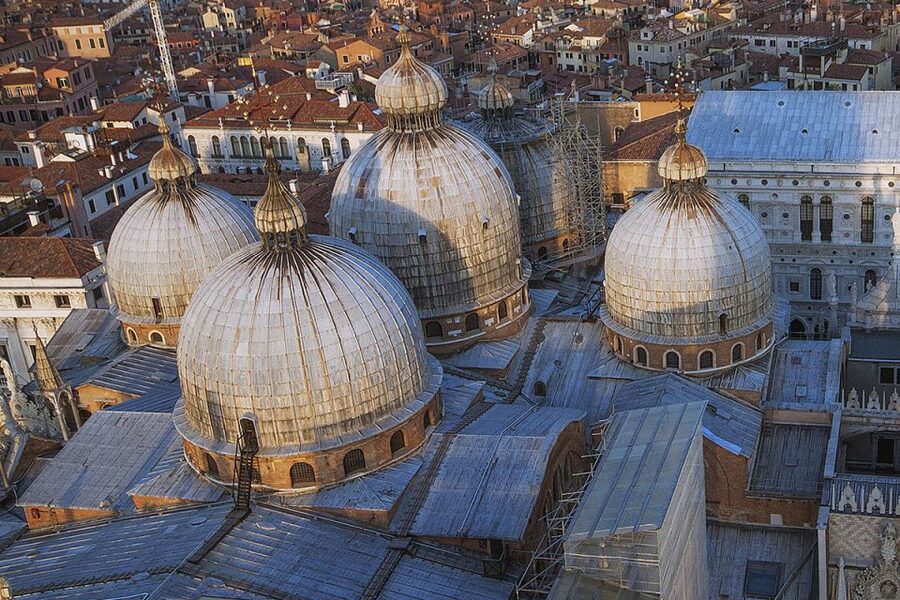
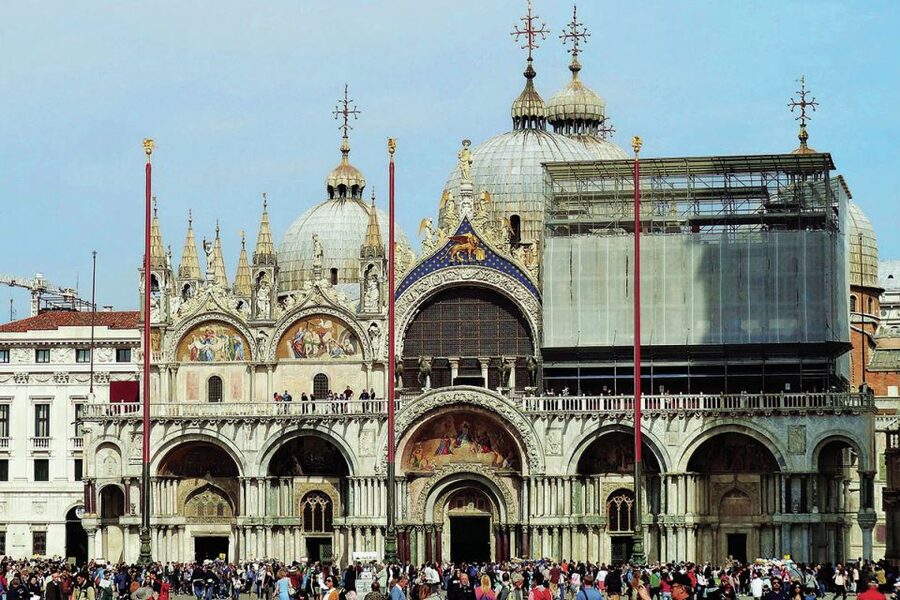
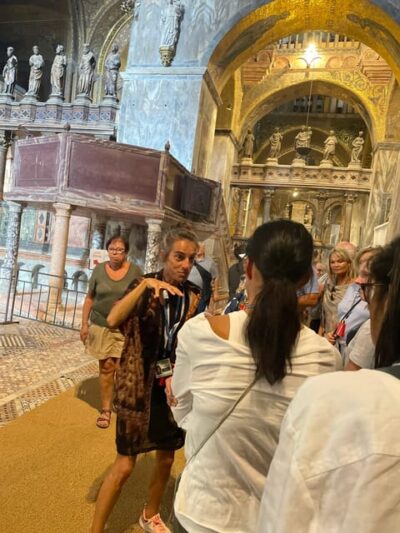
The second major interior is St. Mark’s Basilica, one of Venice’s defining buildings. Its Byzantine design reflects the city’s long contact with the eastern Mediterranean. Inside, gold mosaics catch the light, while marble inlays add pattern and depth underfoot and across the walls.
The guide explains Saint Mark and how his remains came to rest in Venice. That story is central to the basilica’s identity and to the city’s claim to religious importance.
You’ll also visit the Treasury and see the Pala d’Oro, a splendid piece of religious art set with thousands of gems and precious stones. This is a highlight for anyone interested in the meeting of faith, politics, craftsmanship, and wealth.
The basilica is not a casual stop. Security checks are part of entry, and large backpacks or bags are not allowed inside. Wear clothing that covers your knees and shoulders. If you arrive dressed for a hot beach day, you may not be admitted.
St. Mark’s can be visually overwhelming. Gold mosaics, colored stone, and glittering objects compete for your attention. I find the guide most useful here when the explanation stays focused and clear. One past guide was difficult to understand because he mumbled, despite appearing well informed. If you cannot hear, move closer and speak up early rather than waiting until the group has moved on.
The guide makes or breaks the long walk
A live guide is included in English or Spanish. The best part of this format is the chance to ask questions and get practical comments about moving through Venice. Cynthia, in particular, has been praised for her strong command of the city and history, along with advice that made the walk easier to manage.
That combination matters. Venice is not only a collection of monuments. It is a city built on water, with unusual streets, changing tides, bridges, and a layout that can confuse first-time visitors. Practical guidance can help you understand the place as well as admire it.
Still, guide quality can vary. A guide who speaks too quietly or in a flat tone will make a four-hour walk feel longer. The tour has a high overall rating of 4.6 from 32 reviews, but the lower scores point to real issues: unclear meeting information, a late start without an apology, uneven group control, and hard-to-hear commentary.
You should also expect a shared-group experience rather than a private tour. On holidays and special dates, the group may be large. That can mean less time for individual questions and more effort hearing the guide in open squares.
Is the $142.74 price fair?
At $142.74 per person, this is not a budget walking tour. The price includes the guide, Doge’s Palace admission, and skip-the-line access to Doge’s Palace and St. Mark’s Basilica. It does not include transport, food, or drinks.
The value depends on how you use the guide. If you want context for the palace, basilica, Venetian government, and neighborhood route, the cost can make sense. You are covering two of Venice’s most important paid sights while also getting a guided walk through several areas.
If you already plan to visit both interiors on your own and prefer reading at your own speed, the price may feel high. You will also be paying for a long walking route, which may not suit you if your main goal is a short visit to the basilica.
I see the strongest value for a first visit, especially if you have limited time and want the big sights connected to the city around them. For a repeat visit focused on photography, shopping, or slow wandering, a shorter plan may fit better.
What to bring and what to leave behind
Wear comfortable shoes. The tour lasts up to four and a half hours, and much of it takes place on foot through narrow streets and squares.
Bring a passport or ID card. It is listed as necessary for the activity, so do not assume another item will be accepted.
Leave luggage and large bags behind. Large backpacks are not permitted inside St. Mark’s Basilica, and security procedures can slow entry. Carry only what you need for the walk and the required identification.
Dress with the basilica in mind. Bare knees and shoulders are not appropriate for entry. A light layer that gives you proper coverage is a simple solution.
This tour is not suitable for wheelchair users. Venice’s narrow calli, bridges, and historic buildings can make movement difficult, and the activity is specifically marked as unsuitable.
Who should book this Venice walk?
I would recommend it to a first-time visitor who wants a guided introduction rather than two isolated museum visits. You’ll see the city’s political center, religious center, shopping route, neighborhood squares, and narrow lanes in one organized outing.
It also suits anyone who likes art but wants help placing it in context. The palace and basilica offer plenty to see, and the guide can help you sort important details from visual overload.
It is less suitable if you dislike group tours, need a slow pace, have difficulty standing for long periods, or want guaranteed silence and individual attention. It is also a poor fit if you are unwilling to follow basilica clothing rules or travel with a large bag.
Give yourself extra time at the meeting point. Since the starting location can vary and one map link has been incorrect, check the instructions carefully before leaving. A late start can also affect the rest of your day.
My booking advice
Book this tour if you want a full half-day that connects Venice’s grandest monuments with its smaller streets and squares. The strongest version of the experience is led by a clear guide such as Cynthia, who can add both historical background and useful city advice.
I would hesitate if you have only a passing interest in palace interiors, dislike fixed group schedules, or are visiting on a very crowded holiday. The entry benefits are real, but skip-the-line access still includes security checks, and the tour’s quality depends heavily on the guide’s voice and organization.
The best plan is to book it early in your Venice stay, when the orientation can help you understand the city for the days ahead. Keep your bag small, dress for the basilica, wear good shoes, and confirm the meeting point before you go.
FAQ
How long does the Full Venice Walking Tour last?
The tour lasts approximately 4 to 4.5 hours. Starting times vary, so check availability for the date you want.
Where does the tour begin?
It begins at Piazza San Marco, but the exact meeting point may vary depending on the option booked. Check your booking instructions carefully.
Where does the tour end?
The activity ends back at the meeting point.
Are Doge’s Palace and St. Mark’s Basilica tickets included?
Admission to Doge’s Palace is included, along with skip-the-line access to Doge’s Palace and St. Mark’s Basilica.
Does skip-the-line access remove all waiting?
No. Security checks are required for everyone, so lines may still occur at Doge’s Palace even with skip-the-line access.
What languages are available?
The live tour guide is available in English or Spanish.
Can I bring a large backpack or luggage?
No. Luggage and large bags are not permitted, and large backpacks are not allowed inside St. Mark’s Basilica.
What clothing should I wear for St. Mark’s Basilica?
You should wear clothing that covers your knees and shoulders. Comfortable shoes are also recommended for the long walking route.
More Doge's Palace Visits
- Venice: Doge’s Palace Reserved Entry Ticket
★ 4.6 · 42,716 reviews - Venice: St. Mark’s Basilica & Doge’s Palace Tour with Ticket
★ 4.7 · 3,375 reviews - Venice: St Mark’s Basilica, Doge Palace, & Bell Tower Option
★ 4.5 · 2,633 reviews - Venice: Doge’s Palace, Bridge of Sighs & Prisons Guided Tour
★ 4.3 · 2,549 reviews
Just added around Venice
- Padua: Private Pasta-Making Class at a Local’s Home★ 5.0 · 3 reviews
- Padua City Sightseeing Walking Tour of Must-See-Sites with Local Guide★ 5.0 · 3 reviews
- Gondola Ride and St Mark’s Basilica★ 4.5 · 3 reviews
- Venice: Market Tour and Meal at a Local’s Home★ 4.3 · 3 reviews
- VIRTUAL MUSEUM: Creature di Gomma – Venice Vintage Toys★ 4.7 · 3 reviews
- 3 Hour Shared Walking and Aperitivo Tour of Verona★ 5.0 · 3 reviews
- Venice: The Best of Dolomites 3Cime and Refuges with Drone★ 5.0 · 3 reviews
- Verona: Blindfolded Wine Tasting★ 5.0 · 3 reviews
Doge's Palace Tours, compared.
Doge’s Palace & St. Mark’s Basilica with Terrace Access Tour
Read our review →
Doge’s Palace, St Mark’s Basilica, and Pala d’Oro
Read our review →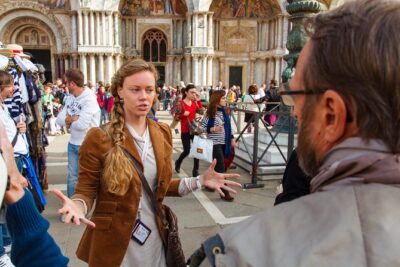
Legendary Venice: Doge’s Palace, St Mark’s & VIP Terrace Access
Read our review →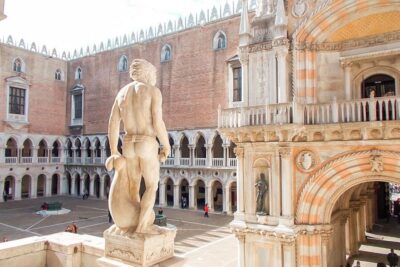
St. Mark’s Basilica & Doge’s Palace Tour with Ticket
Read our review →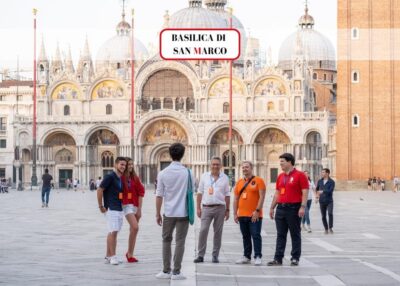
St Mark’s Basilica, Doge Palace, & Bell Tower Option
Read our review →
Doge’s Palace, Bridge of Sighs & Prisons Guided Tour
Read our review →Browse the lists this tour appears in