
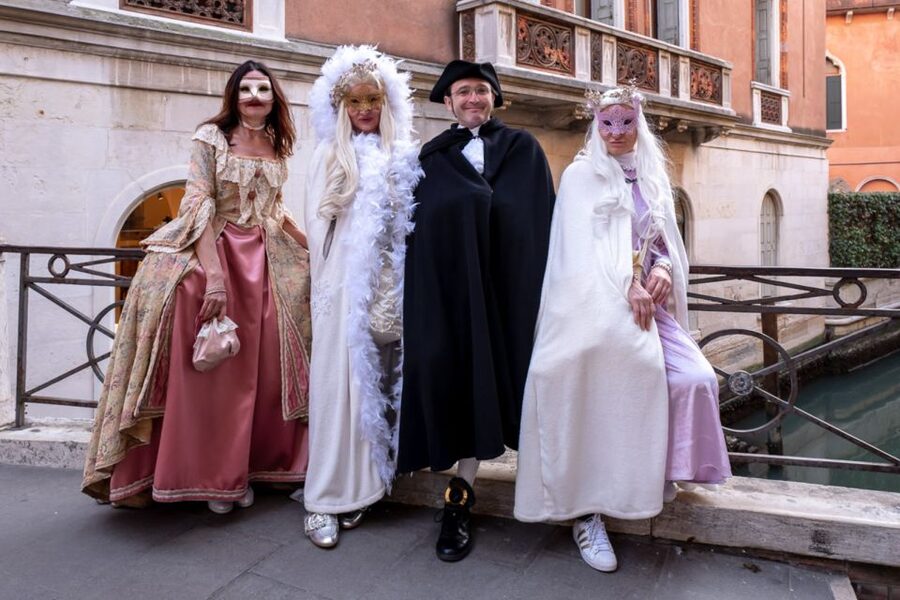
Reviewed · VENICE CARNIVAL
Secrets of Venice Carnival and Life of Casanova Tour
Venice’s Carnival becomes much more interesting when you follow Casanova’s own streets rather than simply admire masked figures in St. Mark’s Square. This two-hour walk links his home, the poet Giorgio Baffo’s house, the old Ridotto casino, and the narrow alleys of San Samuele. I especially like the guide’s focus on how masks worked as social camouflage, and the finish with a hot cappuccino and seasonal frittella.
I also like the chance to see Venice away from the main routes, with stories about courtesans, aristocrats, Freemasonry, and the private palace balls that shaped Carnival life. The main caution is practical: large groups, rain, umbrellas, and city noise can make the guide hard to hear, and you will spend much of the tour standing.
In This Review
- Key points to know before booking
- Casanova’s Venice begins at La Fenice
- Masks were more than pretty Carnival costumes
- San Samuele puts Casanova in context
- Palazzo Contarini del Bovolo brings in the city’s theatrical side
- Campo Santo Stefano shows Venice beyond the postcard route
- The Ridotto reveals the gambling side of Casanova
- The café finish is small but well judged
- How much value do you get for $88?
- Group size, weather, and hearing the guide
- Who will enjoy the Casanova and Carnival route?
- Should you book this Venice Carnival tour?
- FAQ
- Where does the Secrets of Venice Carnival and Life of Casanova Tour begin?
- How long does the tour last?
- What is included in the price?
- Is the tour available in English?
- Is the tour suitable for wheelchair users?
- Can I wear a Carnival costume or bring a mask?
Key points to know before booking
- Casanova’s neighborhood: Walk through San Samuele, where Casanova grew up and where Giorgio Baffo introduced him to adult society.
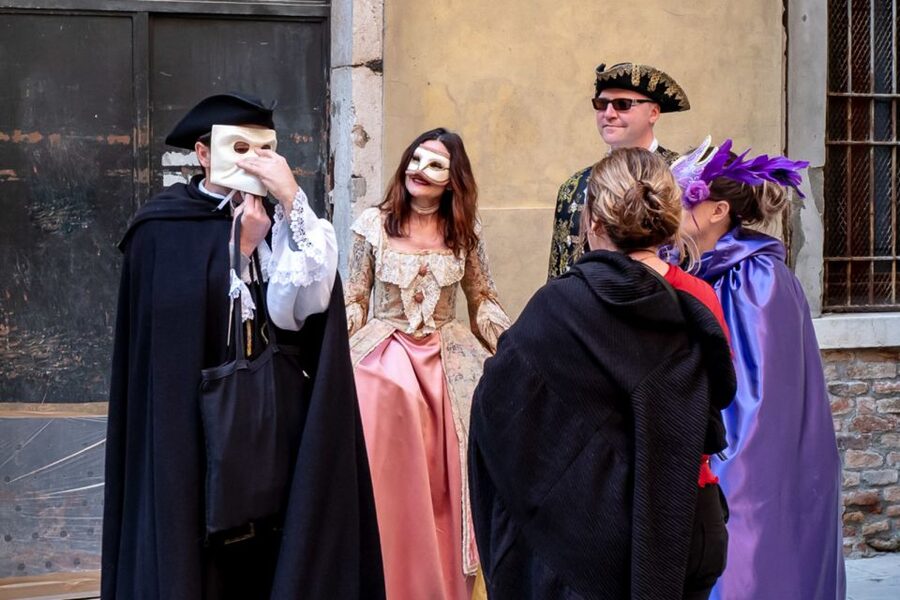
- Carnival behind the mask: Learn why masks allowed Venetians to hide identity and how traditional masks are made.
- Three atmospheric stops: The route begins at La Fenice, passes Palazzo Contarini del Bovolo and Campo Santo Stefano, and ends near St. Mark’s Square.
- A sweet finish: Your ticket includes a hot cappuccino and a Venetian frittella, a Carnival cake made only during the Carnival season.
- Guide makes a difference: Guides have included Sergio, known as The Swiss, Dennis, and Lorenzo. The guide leads in English and wears Carnival costume.
- Plan for walking and standing: The tour is not suitable for wheelchair users. Oversize luggage is not allowed.
Casanova’s Venice begins at La Fenice
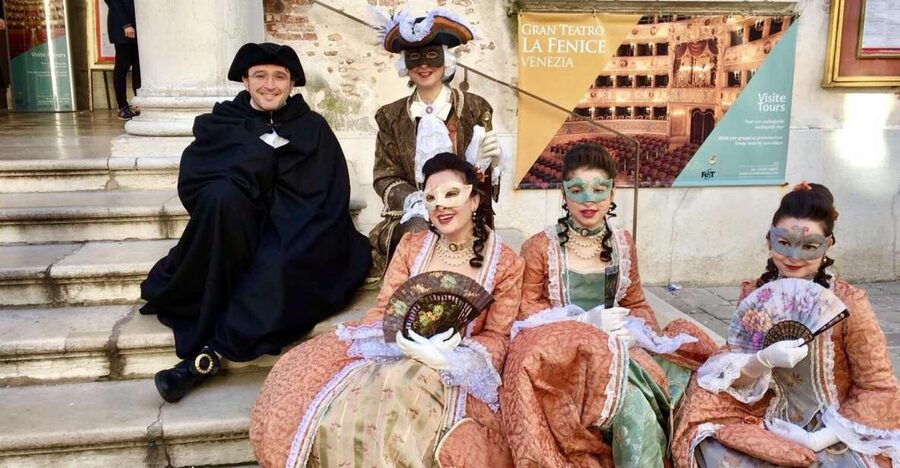
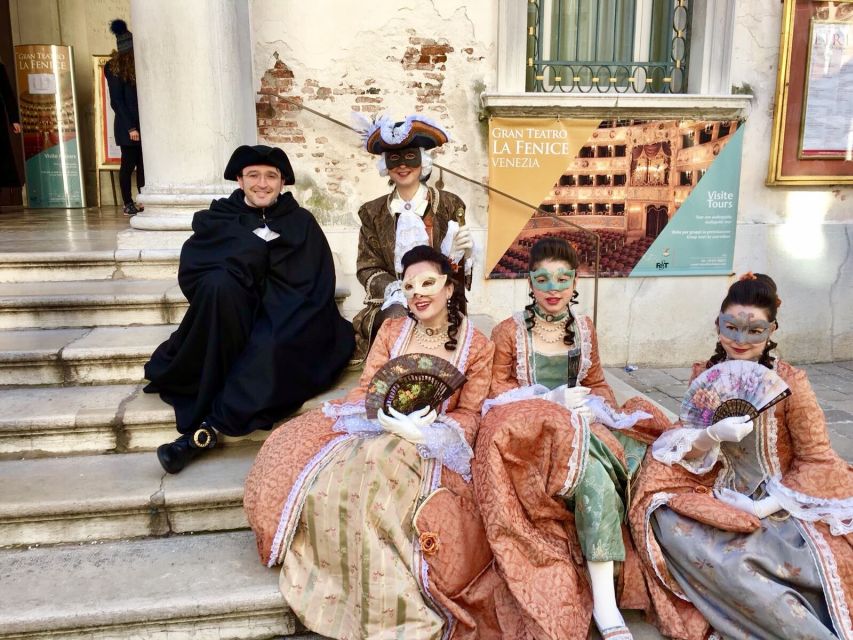
Meet your guide in Campo della Fenice, directly in front of Teatro La Fenice. This is a dramatic starting point for a tour about performance, disguise, and social theater. La Fenice is one of Venice’s grand opera houses, but you are not taking an opera-house tour here. Instead, the theater provides an easy landmark and a fitting backdrop for a walk into the city’s less polished stories.
Arrive a little early. Venice’s lanes can turn a short walk into a slow search, especially near St. Mark’s Square. From the square, pass beneath the arches near the Correr Museum, follow the Salizada San Moisè, cross the bridge by Hotel Bauer, and continue along Calle Larga XXII Marzo. Turn right at Calle della Vesta, cross the small bridge, and look for the well in Campo della Fenice. Your guide carries a sign with the tour name.
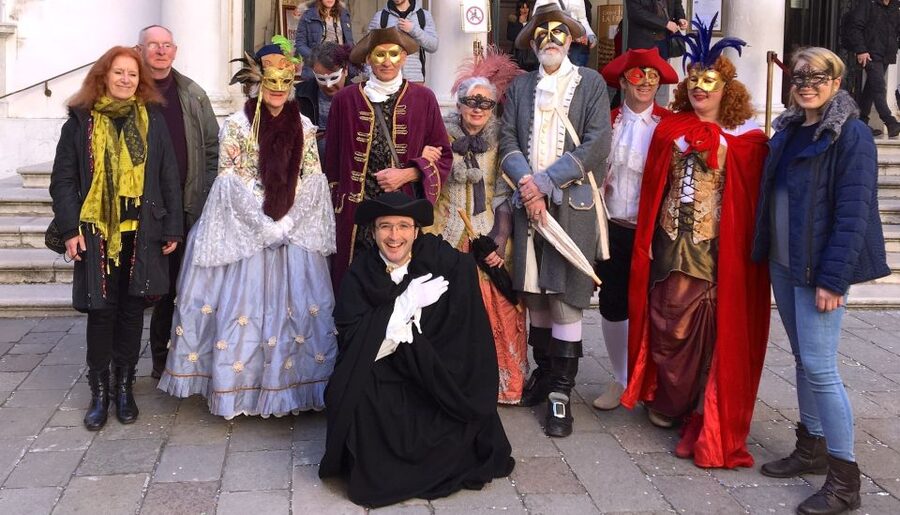
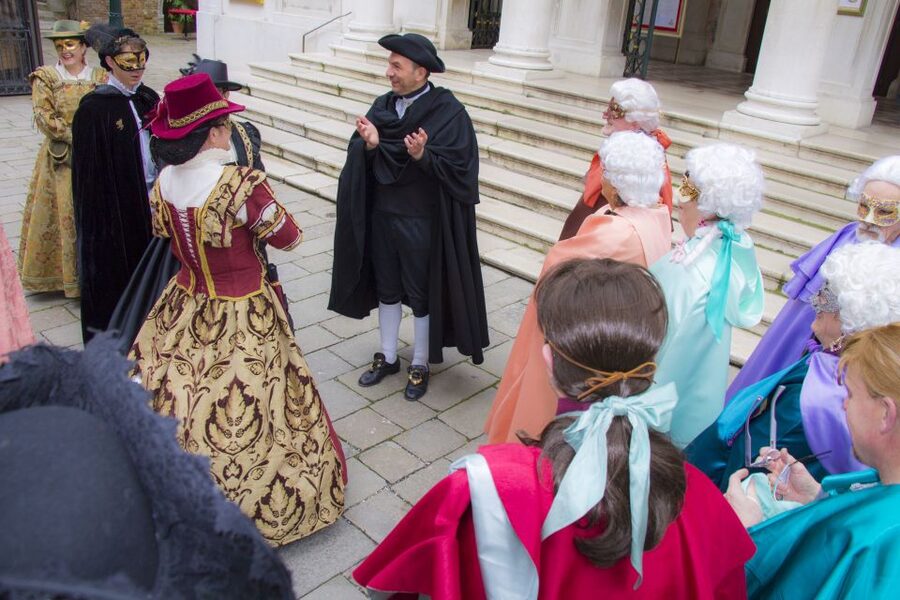
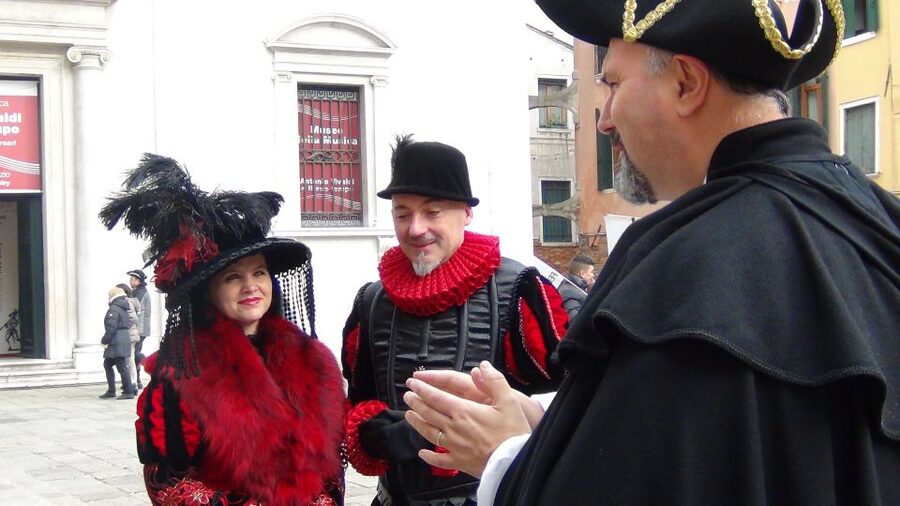
The guide is dressed in a traditional Venetian Carnival costume, which helps you spot the meeting point and sets the tone at once. Guides have included Sergio, sometimes called The Swiss, as well as Dennis and Lorenzo. The exact guide is not guaranteed, but the strongest part of the experience depends on having someone who can tell a lively story while keeping a group together in Venice’s tight streets.
The walk is advertised as two hours, with about 1.5 hours devoted to the guided route and time afterward for the café stop. This is not a rushed checklist of sights. You stop, listen, and look closely at buildings and lanes that are easy to pass without noticing.
More Carnival experiences in Venice:
- Venice: Carnival Mask Workshop
★ 4.5 · 1,925 reviews - Venetian Carnival Mask Making Class in Venice, Italy
★ 4.5 · 525 reviews - Venice: Carnival Mask Decoration Class at Casanova Prisons
★ 4.5 · 154 reviews
Masks were more than pretty Carnival costumes
The first major theme is the social role of the Venetian mask. Today, Carnival masks are mainly decorative. In Casanova’s Venice, they could hide a person’s identity and loosen the usual rules of public behavior.
That matters because the mask was not only part of a costume. It changed how people could move through society. A person could attend gatherings, meet a lover, gamble, or conduct business with less concern about being recognized. Your guide explains the traditions behind the masks and describes how traditional examples are made.
You also hear about the elaborate costumes associated with Carnival. The tour draws attention to elegant 17th-century styles and to the luxurious clothing worn at Grand Balls in private palaces. These balls were not ordinary parties. They reflected the wealth and social rank of the Venetian aristocracy, while the mask allowed a measure of freedom inside a strict social order.
Do not expect a costume workshop or a visit to a mask maker. The value here is the explanation. You learn to look at the mask as a tool of social life, not just as a souvenir.
If you own a Carnival costume, cape, or mask, you are welcome to wear it. The experience encourages this, and it makes for better photographs. You do not need a costume to join, though. The guide’s outfit supplies plenty of visual color.
San Samuele puts Casanova in context
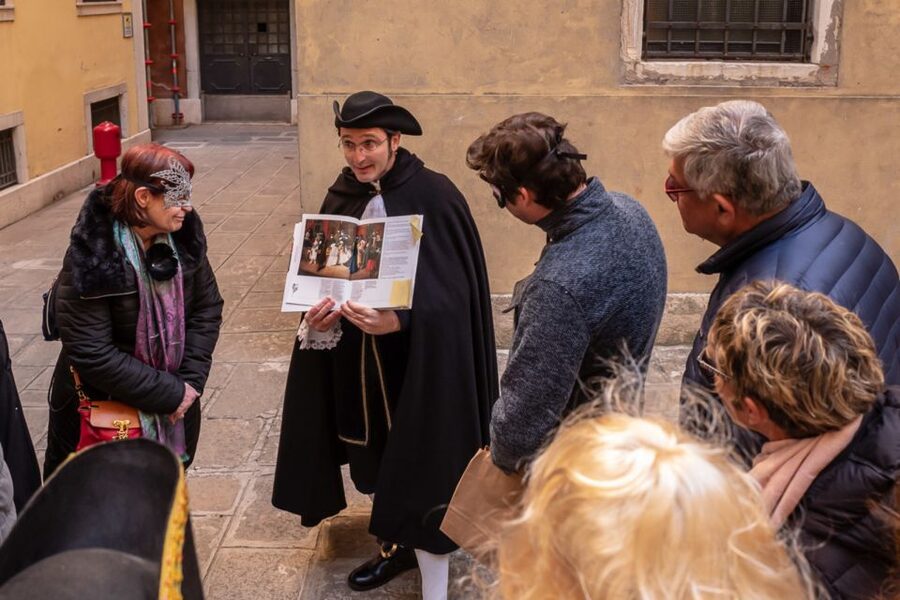
Casanova is often reduced to a single label: great lover. This walk gives you a broader portrait. He was an adventurer, a Freemason, a man who moved among aristocrats, and also a servant of the establishment. Those contradictions are what make his story useful for understanding 18th-century Venice.
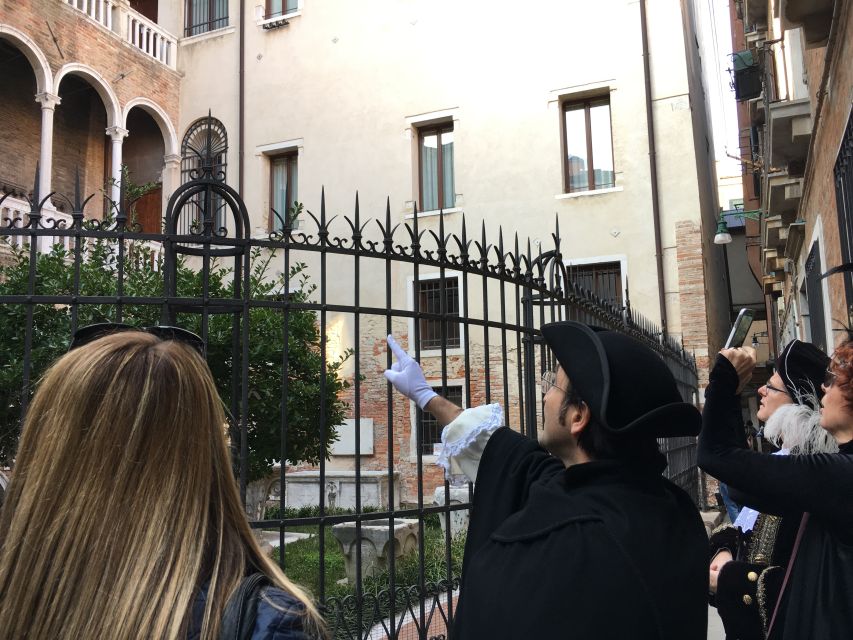
He was born in Venice and grew up around San Samuele. The route takes you through the narrow calle, or lanes, connected with his early life. You pass the house associated with Casanova and the home of the poet Giorgio Baffo.
Baffo’s role gives the walk a more personal edge. He introduced the young Casanova to worldly pleasures, so the story is not only about famous buildings. It is also about the people who shaped Casanova before he became the celebrated adventurer of later years.
This section works best if you enjoy biography with a slightly mischievous tone. The guide discusses desire, pleasure, courtesans, and entertainment without treating Venice as a museum display. The subject matter is adult in tone, though the supplied details do not indicate a specific age restriction.
The small lanes are a major reason to choose this walk. You get a look at parts of Venice that can disappear behind the crowds around the Rialto Bridge and St. Mark’s Basilica. Still, do not expect complete solitude. Venice is compact, and a larger group can fill a narrow passage quickly.
Palazzo Contarini del Bovolo brings in the city’s theatrical side
Palazzo Contarini del Bovolo is one of the route’s notable architectural stops. Its name refers to the distinctive spiral staircase, and it is one of those Venetian buildings that rewards a slower look.
Here, the tour’s Carnival theme and Casanova theme come together. Venice often presents itself through carefully staged views, grand façades, dramatic costumes, and sudden turns into quiet lanes. The palace helps explain why the city suited a man who lived through performance, disguise, and social reinvention.
The stop is guided rather than a separate admission visit. The tour information describes the walking route and guided stops, but it does not promise entry into every building. You should expect to hear the story and view the exterior or surrounding setting, not assume that an interior visit is included.
This is also where group size can affect the experience. One direct comment noted that some stops felt too long because the group had to remain standing. If you prefer constant movement, the pauses may test your patience. If you enjoy architectural details and stories told in place, the time gives you a chance to take in the setting.
More quiet corners of Venice:
- Tour of The Real Hidden Venice
★ 5.0 · 2,006 reviews - Verona: History and Hidden Gems Guided Walking Tour
★ 5.0 · 1,379 reviews - Verona: Classic and Hidden Gems Bike Tour
★ 4.9 · 577 reviews - Secret Venice & Gondola Tour
★ 4.3 · 458 reviews
Campo Santo Stefano shows Venice beyond the postcard route
Campo Santo Stefano is another important stop. Large Venetian squares like this one help you understand how the city’s narrow lanes open into social spaces. The guide uses the square to connect everyday city life with the grander world of aristocrats, Carnival gatherings, and public display.
The route is not designed as a full introduction to every major sight in Venice. Instead, it gives you a focused view of the city through Casanova and Carnival. That focus is its strength. You are less likely to hear a long general lecture about every church and canal, and more likely to hear why masks, lovers, gamblers, poets, and noble families mattered in this particular corner of Venice.
You may also hear about the courtesans who helped make Venice’s social life so animated. This adds an important layer to the story. Casanova was not operating alone in an empty city. He belonged to a world of performers, writers, aristocrats, gamblers, and women whose social and economic roles did not fit neatly into respectable public life.
The guide’s personality matters here. Sergio was praised for handling a fairly large group while keeping the facts and stories moving. Other guides, including Dennis and Lorenzo, have also been singled out for warmth, humor, and enthusiasm. That suggests a tour built around storytelling rather than a dry recitation of dates.
The Ridotto reveals the gambling side of Casanova
The Ridotto was Venice’s first casino, and it gives the tour a welcome change of pace. Casanova used it to meet Venetian aristocrats, so the building is tied to the city’s social machinery as much as to gambling.
The Ridotto helps explain why Venice was such a useful setting for Casanova. A casino brought different ranks of society into the same orbit. Money, flirtation, reputation, and chance could all meet under one roof, with masks helping people manage what others knew about them.
You will not be spending the evening gambling, of course. The point is to understand the setting and the people Casanova encountered there. The guide uses the Ridotto to connect Casanova’s private appetites with his ability to move among powerful people.
This is one of the tour’s better details because it avoids presenting Casanova as only a romantic figure. He was also a social operator. His life involved money, status, political connections, secret affiliations, and calculated self-presentation.
The café finish is small but well judged
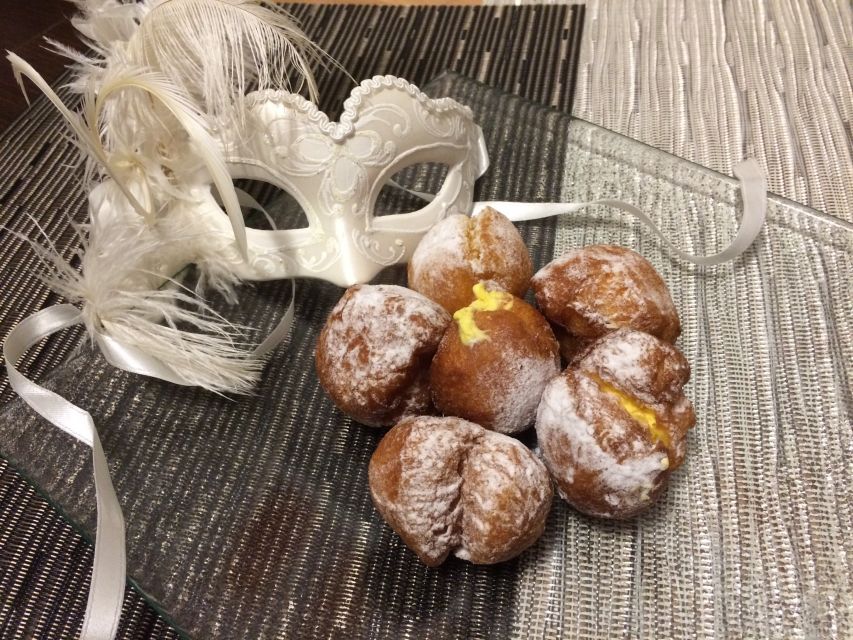
The walk ends at Le Café Venezia, approximately 10 minutes from St. Mark’s Square. Your included refreshment is a hot cappuccino and a frittella, the traditional Venetian Carnival cake.
A frittella is a seasonal treat, made during the Carnival period. That timing matters. You are not simply receiving a standard café snack that could be served any month of the year. The pastry connects the final stop to the festival the tour has been explaining.
The café also gives you a chance to sit down after the walking portion. Several comments praised the drink and pastry, and one guide was happy to stay and chat with the group after the tour ended. That extra conversation is not something I would count on as a formal part of the booking, but it fits the friendly style of the experience.
The finish is especially useful on a cold Carnival day. Venice can be damp, and standing in a costume or under an umbrella is less charming after an hour or two. A hot drink makes the ending feel practical, not tacked on.
Extra food and drinks are not included. The package covers the cappuccino and frittella only.
How much value do you get for $88?
At $88 per person, this is not the cheapest way to spend two hours in Venice. You are paying for a themed, English-language walking tour with a live guide, a costumed presentation, and a café refreshment.
The value depends on what you want from Venice. If you are mainly looking for famous monuments and interior visits, the price may feel high because the tour does not include hotel pickup, major museum entry, or a meal. If you want context for Carnival and a guided look at Casanova’s neighborhood, the focused subject gives the price a clearer purpose.
I see the strongest value in the combination of access and interpretation. You can walk through these streets on your own, but you may not know which house connects to Casanova, why the Ridotto mattered, or how the mask shaped Venetian behavior. The guide turns ordinary-looking lanes into places with a story.
The included cappuccino and frittella add a modest benefit rather than transforming the deal. I would book this for the storytelling, the route, and the Carnival setting. Think of the café stop as a pleasant extra.
Free cancellation up to 24 hours before the start gives you some flexibility, and you can reserve now and pay later. Check the available starting times before booking, since the experience lasts about two hours and the seasonal frittella is tied to Carnival.
Group size, weather, and hearing the guide
This tour is easiest to enjoy in dry weather and with a group small enough for everyone to hear. One direct account described a large group where rain and the sound of umbrellas made the guide difficult to understand, even for people with normal hearing.
That is a real consideration in Venice. Narrow streets amplify footsteps and conversation, while a crowd can spread around a corner before everyone has seen the same detail. One person also noted that another participant wandered away, which shows why you should stay close to the guide at every turn.
There is no mention of a voice amplification system. If you have hearing difficulties, ask about this before booking or position yourself near the guide. Keep the group’s pace, especially in busy streets and at bridges.
The walking itself is not described as strenuous, but there is regular standing at stops. Seniors or anyone who tires easily should take that seriously. The route is not suitable for wheelchair users, and oversize luggage is not allowed.
Who will enjoy the Casanova and Carnival route?
I would recommend this experience to you if you enjoy:
- Biography told on location, especially stories about Casanova’s complicated public and private life.
- Venice’s smaller lanes and less obvious corners.
- Carnival traditions, historic masks, and elaborate costume.
- A guide with humor and energy rather than a formal lecture.
- Adult themes involving romance, courtesans, gambling, and social maneuvering.
- A short tour that fits between other activities.
It suits first-time visitors who want something beyond the standard St. Mark’s route, but it can also work on a return visit when you want a different angle on the city. The focus is narrow enough to feel distinct from a general Venice orientation.
I would hesitate if you dislike standing, need guaranteed quiet, use a wheelchair, or want a tour with extensive interior access. You should also think twice if you are visiting outside Carnival season and the seasonal pastry is a major reason for booking. The mask and Casanova stories remain, but the frittella is specifically tied to the Carnival period.
Should you book this Venice Carnival tour?
Book it if you want Venice presented as a city of disguise, appetite, gambling, poetry, and social theater. The route from La Fenice through San Samuele, Palazzo Contarini del Bovolo, Campo Santo Stefano, and the old Ridotto area gives you a clear theme and a welcome look at streets you might otherwise pass without thought.
The best reason to go is the guide. Sergio, Dennis, and Lorenzo have all led tours praised for humor, warmth, and strong storytelling, but the assigned guide can vary. The main weakness is the same feature that makes Venice intimate: crowded lanes make it harder to hear when the group is large or the weather is poor.
For a Carnival visit, I think the experience makes a good two-hour addition to your schedule. Wear a cape or mask if you like, arrive without bulky luggage, stay close to the guide, and choose a dry time if possible. If those conditions suit you, the cappuccino and frittella will be a fitting end to a lively look at Casanova’s Venice.
FAQ
Where does the Secrets of Venice Carnival and Life of Casanova Tour begin?
The meeting point is Campo della Fenice, in front of Teatro La Fenice opera house. Look for the English-speaking guide holding a sign with the tour name.
How long does the tour last?
The activity lasts about two hours. The guided walking portion is described as approximately 1.5 hours, followed by the café stop.
What is included in the price?
The price includes an English-speaking guide dressed in Carnival costume, a hot cappuccino, and a Venetian frittella at a local café.
Is the tour available in English?
Yes. The live guide leads the tour in English.
Is the tour suitable for wheelchair users?
No. The experience is listed as unsuitable for wheelchair users.
Can I wear a Carnival costume or bring a mask?
Yes. You are welcome to come in a Carnival costume, cape, or mask, and the activity information notes that this is fun and useful for photographs. Oversize luggage is not allowed.
Just added around Venice
- Exclusive Private Venice Jewish Ghetto Tour★ 5.0 · 41 reviews
- The Secret Corners of Burano★ 5.0 · 41 reviews
- Verona: Private 2-Hour Walking Tour★ 4.9 · 41 reviews
- St Mark’s Basilica & Doge’s Palace Skip the Line – Semi-Private★ 5.0 · 42 reviews
- Venice: 3-Course Dining Experience at Local Home★ 4.8 · 41 reviews
- Wine Tasting in Venice★ 4.6 · 42 reviews
- Venice Skip lines at Doge’s & St. Mark’s with Exclusive Sky Walk★ 4.5 · 42 reviews
- Venice Saint Mark’s Basilica afternoon guided tour★ 4.5 · 42 reviews
Venice Carnival, compared.
Venetian Carnival Mask Making Class in Venice, Italy
Read our review →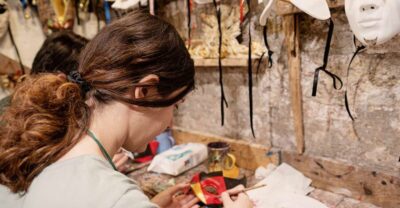
Carnival Mask Decoration Class at Casanova Prisons
Read our review →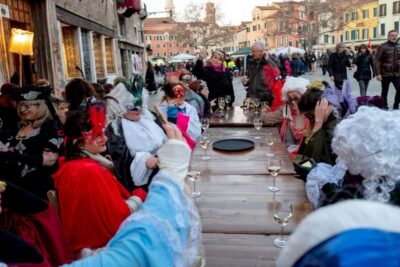
Browse the lists this tour appears in