
Reviewed · HIDDEN GEMS WALKING TOURS
Tour of The Real Hidden Venice
Venice reveals its best secrets when you leave the route between St. Mark’s Square and Rialto. This two-hour walk starts near Santa Lucia station, crosses into Cannaregio, visits the Jewish Quarter and Madonna dell’Orto, then reaches Rialto by way of quiet canals, old bridges, and a working gondola yard.
I like the small maximum group of 15, which gives you a fair chance to ask questions. I also like the local angle: guides such as Nico, Sebastiano, Giovanni, and others have connected the city’s past with practical matters such as water, transport, food, and daily life.
The main consideration is pace and logistics. You will walk for two hours over bridges, and some stops involve standing while the guide talks. The meeting point is not at your hotel, and the start near Hotel Antiche Figure can take time to reach from other parts of Venice.
In This Review
- Key points to know before booking
- Why this walk shows a different Venice
- Starting at Campo San Geremia
- Crossing into the Jewish Quarter
- Cannaregio canals and everyday city life
- Madonna dell’Orto and Tintoretto
- The Camel House and a gondola workshop
- Ponte Chiodo and the older shape of Venice
- Arriving at Rialto Bridge
- San Giacomo, the market, and what comes next
- Guide style and group size
- Is $47.16 a fair price?
- Who should book this walk?
- My verdict on The Real Hidden Venice
- FAQ
- Where does The Real Hidden Venice tour start?
- Where does the tour end?
- How long does the tour last?
- Is the tour offered in English?
- How large is the group?
- Is hotel pickup included?
- Is admission to Madonna dell’Orto included?
- What happens if the weather is poor?
Key points to know before booking
- Start near Santa Lucia station: Meet in front of Hotel Antiche Figure in Santa Croce, not at a hotel of your choice.
- Quiet Cannaregio route: Expect calmer canals and residential corners before the tour reaches Rialto.
- Jewish Quarter history: The walk explains the origin of the word ghetto and the area’s place in Venetian history.
- Tintoretto and old bridges: You see Madonna dell’Orto, Ponte Chiodo, and the unusual Palazzo Mastelli del Cammello.
- Rialto finish: The tour ends at Rialto Bridge and the market, a useful spot for continuing your day.
- English, small-group format: The group is limited to 15 people, with a private option available.
Why this walk shows a different Venice
Many first visits to Venice follow a narrow path: Santa Lucia station, Rialto Bridge, St. Mark’s Square, and back again. Those places matter, but the city can feel like a crowded stage when you see only its headline sights.
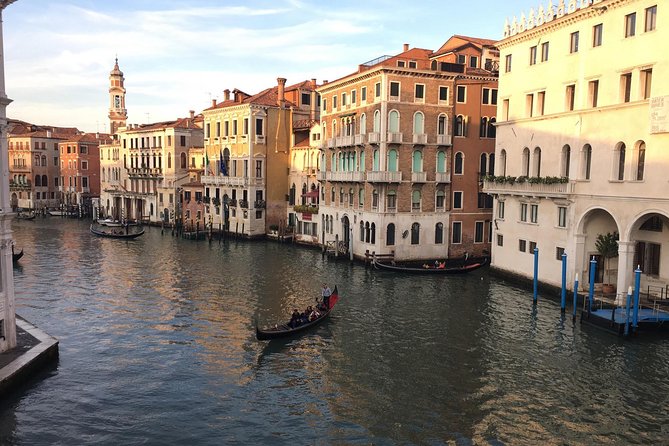
This walk takes you into Cannaregio, one of the city’s quieter districts. You still reach Rialto, but you approach it through back streets, small campos, and canals where the city feels more like a place to live than a monument to visit.
That change of route matters. You see bridges without grand views, streets without souvenir stalls, and buildings whose stories are easy to miss when you are hurrying toward a famous church. Your guide fills in the local details, including how Venice functions, how residents move around, and how old traditions connect with life today.
The tour has a useful shape for a first day. It begins with orientation, moves through lesser-known areas, and finishes at one of Venice’s main landmarks. By the end, you have a better sense of how the six historic districts fit together and where to go next.
More quiet corners of Venice:
- Verona: History and Hidden Gems Guided Walking Tour
★ 5.0 · 1,379 reviews - Verona: Classic and Hidden Gems Bike Tour
★ 4.9 · 577 reviews - Secret Venice & Gondola Tour
★ 4.3 · 458 reviews
Starting at Campo San Geremia
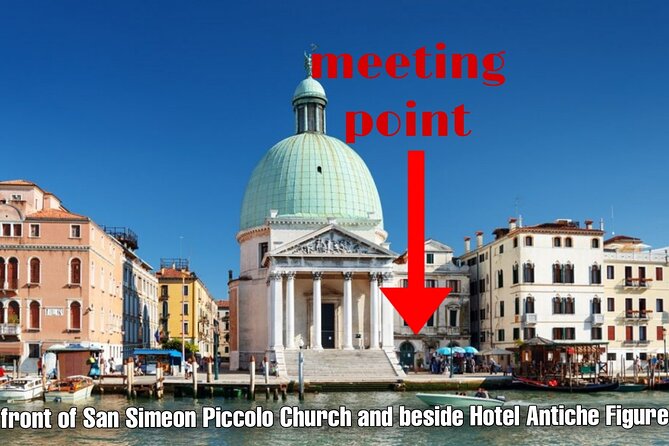
The meeting point is in front of Hotel Antiche Figure at Fondamenta San Simeon Piccolo, close to the Santa Lucia train station area. You should check the route before setting out, especially if you are arriving from a cruise ship, St. Mark’s Square, or a hotel on the far side of the city.
The first stop is Campo San Geremia, where the guide tells the unusual and comic story behind the square. This is a short introduction, only about five minutes, but it gives the tour its tone. Venice is not presented as a collection of dates and grand palaces. It is presented through odd details, local anecdotes, and the habits of people who have lived here.
The square also gives you a useful starting point for orientation. You are close to the station, but the route quickly leaves the main flow of foot traffic. Expect to begin with a short talk before the walking gets fully underway.
Crossing into the Jewish Quarter
From Cannaregio, you cross quiet footbridges into the Jewish Quarter, known in Italian as the Ghetto Ebraico. The guide explains why the word ghetto came from Venice and discusses the area’s history from the 1400s.
This is one of the most important sections of the walk, but it can also be the most talk-heavy. The stop lasts about 15 minutes, and the group may remain in one place while the guide explains the background. If you have just arrived after a long train ride or an early connection, you may prefer more movement.
Still, the setting makes the history easier to grasp. You are not hearing about the quarter from a distant museum room. You are standing among the canals and bridges of the district itself. Ask questions here if you have them, because the small group format works best when you take part.
The area also provides a quieter view of Venice. You get a chance to look around instead of simply following a guide’s flag through a crowd.
Cannaregio canals and everyday city life
The longest stretch of the walk is through Cannaregio, with about 30 minutes devoted to the district’s canals and quieter corners. This is where the experience earns its title.
You pass along canals that are more peaceful than those around Rialto and St. Mark’s. The focus is not only on buildings. Guides talk about the way Venice operates, including water supply, transport, and daily routines. That practical information can make the city easier to understand for the rest of your stay.
I find this kind of explanation more useful than a list of palace dates. You learn why canals matter, how movement works in a city without roads, and what it means to maintain an old island city in the present day.
The route is also good for photographs. You might find cleaner canal views and more breathing room than in the city center. Do not expect every stop to be a grand reveal. Some appeal comes from simply walking through a part of Venice you might otherwise skip.
A few more Venice days to weigh up
- Venice: Doge’s Palace Reserved Entry Ticket
★ 4.6 · 42,716 reviews - Venice: Grand Canal Gondola Ride with App Commentary
★ 4.1 · 18,908 reviews - Boat Trip: Glimpse of Murano, Torcello & Burano Islands
★ 4.3 · 15,699 reviews - Venice: Grand Canal by Gondola with Live Commentary
★ 4.1 · 13,681 reviews
Madonna dell’Orto and Tintoretto
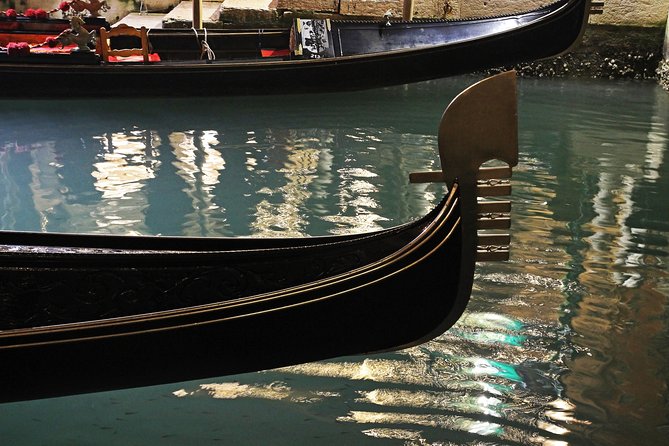
The tour pauses at the Church of the Madonna dell’Orto, known for its Tintoretto paintings. The church stop is listed at about five minutes, so this is an introduction rather than a long art visit.
You should check the entry arrangement when booking. An admission ticket is not included, even though the church is part of the route. The guide points out the original floor of Venice in front of the church, another reminder that the city’s foundations and surfaces are part of its story.
This stop suits you if you want art placed in its neighborhood context. Tintoretto is not treated as an isolated name in a gallery. You see the church connected to the streets and canals around it.
If you want a detailed examination of the paintings, allow separate time to return on your own. Five minutes gives you an introduction, not a full church tour.
The Camel House and a gondola workshop
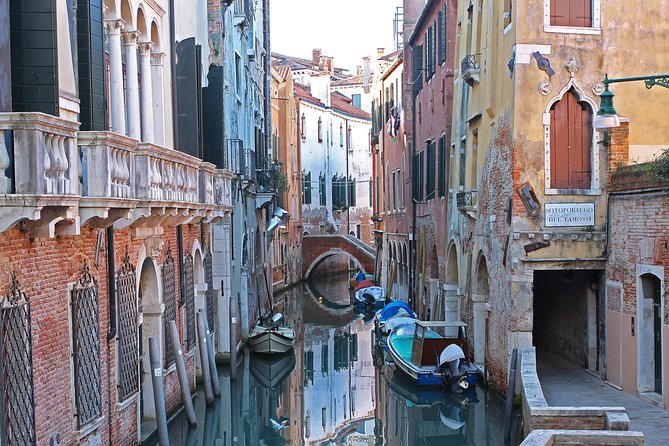
Next comes Palazzo Mastelli del Cammello, often called the Camel House because of the camel on its facade. The stop lasts about five minutes and centers on the legend of this old palace.
This is exactly the kind of detail that can make a walking tour worthwhile. You might pass the building alone and notice its unusual decoration without knowing why it is there. A short explanation turns a curious facade into a story.
The walk then reaches Squero dei Muti, an old gondola factory. The tour does not promise entry into the workshop, so think of this as a look at a traditional working place from the route. Even a brief view helps explain that gondolas are not simply decorative props for visitors. They are carefully made and maintained boats tied to Venice’s identity.
The stop is short, about five minutes. Its value comes from fitting a working craft into the wider story of the city rather than treating Venice as an open-air museum.
Ponte Chiodo and the older shape of Venice
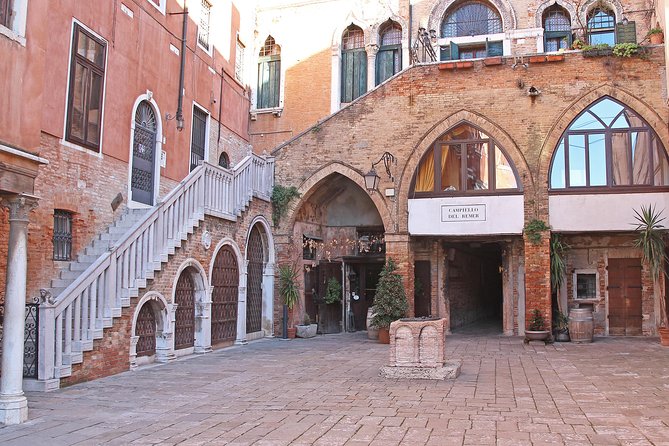
Ponte Chiodo is described as an original bridge of the Venetian Republic. It is another brief stop, but it gives the guide a chance to show you how bridges have changed.
Venice’s bridges are easy to take for granted because there are so many of them. A guide can point out why one is unusual and help you notice construction details that would otherwise blend into the background.
This part of the route is best for curious walkers who enjoy small discoveries. If you want constant major sights, the five-minute bridge stop may feel modest. If you like learning why an ordinary-looking corner matters, it adds character to the walk.
The tour does involve repeated bridges and uneven walking surfaces. Wear shoes that are comfortable for stone paving and steps. The required fitness level is moderate, but the route is still more active than a sightseeing bus or a single museum visit.
Arriving at Rialto Bridge
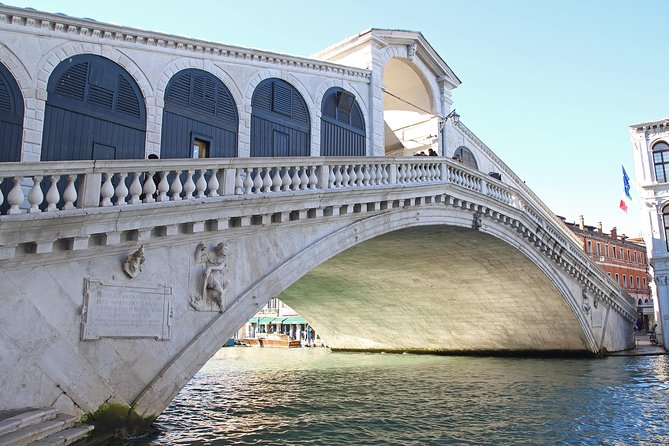
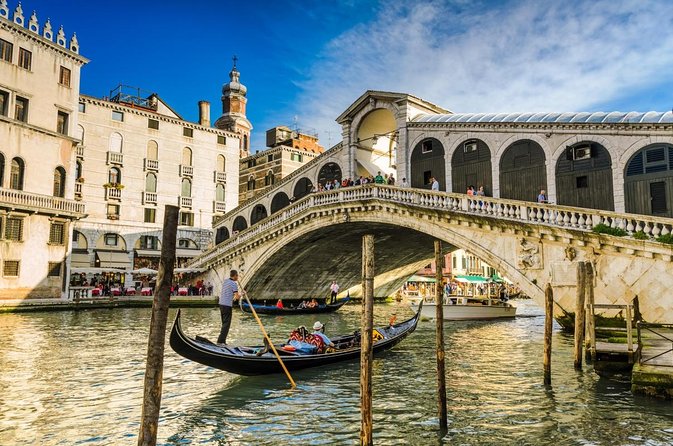
The final major stop is Ponte di Rialto, Venice’s famous bridge over the Grand Canal. By approaching from Cannaregio, you reach the landmark with a stronger sense of contrast. You have just spent much of the tour among quieter canals, and suddenly the city’s best-known crossing comes into view.
The guide covers the bridge’s history, stories, legends, and traditions. The stop lasts about 15 minutes, enough for an explanation and a look at the Grand Canal, but not a long pause for photography.
This is a smart ending. You get the quieter side first, then finish at a landmark that is easy to recognize and easy to use as a base for the rest of your day. You can continue toward the market, San Polo, or other central sights without needing to return to the starting point.
The bridge can be crowded, so your experience here will feel less secluded than the earlier sections. That is part of the point. The tour does not pretend that all of Venice is quiet. It shows you both the less-visited city and the famous center.
San Giacomo, the market, and what comes next
After Rialto Bridge, the route continues toward Campo San Giacomo di Rialto and the Mercato di Rialto. The campo is linked with the earliest lived island of Venice, while the market recalls Rialto’s role as the old trade center of the Venetian Republic.
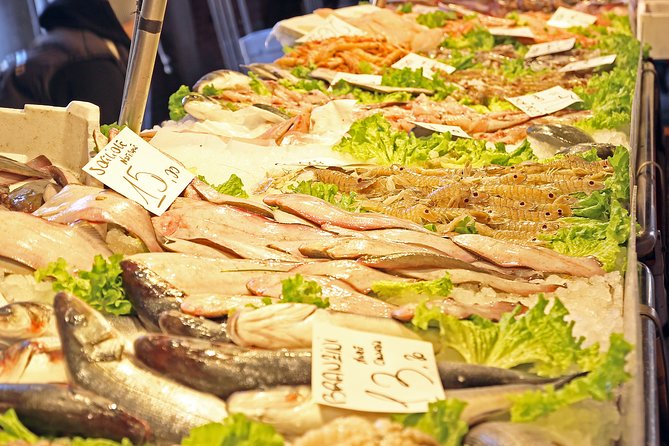
The market stop is listed at about 15 minutes. Depending on the time and market activity, you may see the area as a working food and trade district rather than simply a photo stop. The tour does not include food, so plan a separate meal if you want to eat nearby.
Ending here gives you practical choices. Your guide can point you toward food, drinks, public transport, or the next part of your sightseeing day. Several guides, including Nico, Sebastiano, Michelle, and Georgia in different departures, have been especially useful with restaurant and transport suggestions.
You also receive a city map, one per person. It is a small inclusion, but handy after the tour when you are trying to retrace the route or plan your next walk.
Guide style and group size
The English-speaking guide is central to the experience. This is not an audio tour, and the value depends on how well the guide tells stories, handles questions, and connects history to modern Venice.
The guides associated with this experience have included Nico, Sebastiano, Giovanni, Matteo, Georgia, Michelle, Thomas, and Nick. Their styles can differ, but the strongest departures use humor, personal connections, and practical advice. One guide has even linked the route to his own school years, giving the walk a distinctly local feel.
The group maximum is 15 people. That is small enough for questions and more personal conversation, though it is not the same as having a private guide. A few people have found that standing sections made the guide hard to hear, even with a smaller group, so position yourself near the guide and speak up if needed.
The private option costs more, but it may be worth considering if you want to set the pace, ask many questions, or travel with family members who need more flexibility. The shared tour is the better value for most visitors who want a solid introduction without paying private-tour rates.
Is $47.16 a fair price?
At $47.16 per person, this is not the cheapest way to walk around Venice. You can cross bridges and visit public squares for free. The price pays for the guide’s explanations, route planning, local context, map, and the time saved finding these places yourself.
I consider it fair if you are new to Venice and want more than a standard route between major sights. The tour covers a lot in two hours: Cannaregio, the Jewish Quarter, a Tintoretto church, unusual architecture, a gondola workshop, old bridges, Rialto, and the market.
The value is less clear if you already know Cannaregio well or prefer to explore at your own pace. It is also not an art-focused tour, a food tour, or a full interior sightseeing program. You are paying for context and orientation, not admission to a series of attractions.
Group discounts may improve the price for families or larger parties. The private option is likely to suit you only if personal attention matters more than keeping the cost down.
Who should book this walk?
I would choose this tour for a first or second day in Venice. It gives you a feel for the city beyond the main postcard route and leaves you at Rialto with useful ideas for the rest of your stay.
It is also a good fit if you enjoy local stories, architecture, city history, and practical advice about food and transport. Families can take part, but children must be accompanied by an adult, and the two-hour walk may be tiring for anyone who dislikes bridges or standing.
You should think carefully if you have mobility concerns. The tour requires moderate physical fitness, includes footbridges, and starts in the Santa Croce area. A visitor arriving from St. Mark’s Square or a cruise transfer point may face a long walk to the meeting point, so allow plenty of time and check the route before booking.
The tour operates in English and requires suitable weather. If poor weather cancels it, you are offered another date or a full refund. You can cancel for a full refund up to 24 hours before the start time, but changes or cancellations inside that window are not accepted.
My verdict on The Real Hidden Venice
Book it if you want Venice explained through quiet neighborhoods, local stories, and useful orientation rather than only through grand monuments. The strongest reason to go is the route itself: you reach Rialto by first seeing the city’s quieter northern side.
I would not book it as your only Venice sightseeing experience. You will not get extended time inside Madonna dell’Orto, and the tour does not replace the Doge’s Palace, St. Mark’s Basilica, or a proper market visit.
But as a two-hour introduction, it makes good sense. You see places you may not find on your own, hear about the Jewish Quarter and Venetian daily life, and finish in a convenient central location. For many visitors, that mix makes the $47.16 cost worthwhile.
FAQ
Where does The Real Hidden Venice tour start?
It starts in front of Hotel Antiche Figure at Santa Croce, 687 Fondamenta San Simeon Piccolo, near the Venice Santa Lucia Train Station area.
Where does the tour end?
The walk ends near Rialto Bridge, with stops continuing toward Campo San Giacomo di Rialto and the Mercato di Rialto.
How long does the tour last?
The walking tour lasts approximately two hours.
Is the tour offered in English?
Yes. The tour is offered in English.
How large is the group?
The shared tour has a maximum of 15 participants. A private group option is also available.
Is hotel pickup included?
No. Pickup and drop-off at your hotel are not included. The listed meeting point is in front of Hotel Antiche Figure.
Is admission to Madonna dell’Orto included?
No. Admission to the church is not included in the tour price.
What happens if the weather is poor?
If the experience is canceled because of poor weather, you are offered a different date or a full refund.
Just added around Venice
- Exclusive Private Venice Jewish Ghetto Tour★ 5.0 · 41 reviews
- The Secret Corners of Burano★ 5.0 · 41 reviews
- Verona: Private 2-Hour Walking Tour★ 4.9 · 41 reviews
- St Mark’s Basilica & Doge’s Palace Skip the Line – Semi-Private★ 5.0 · 42 reviews
- Venice: 3-Course Dining Experience at Local Home★ 4.8 · 41 reviews
- Wine Tasting in Venice★ 4.6 · 42 reviews
- Venice Skip lines at Doge’s & St. Mark’s with Exclusive Sky Walk★ 4.5 · 42 reviews
- Venice Saint Mark’s Basilica afternoon guided tour★ 4.5 · 42 reviews
Hidden Gems Walking Tours, compared.
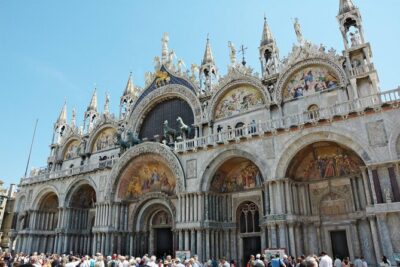
Venice 3,5 hrs tour: Doge’s Palace, St Mark’s and Hidden Gems
Read our review →
Local Secrets of Venice Tapas & Wine Walking Tour
Read our review →
Private Secret Venice Tour; Rialto Market, San Polo & Food and Wine tasting
Read our review →
Browse the lists this tour appears in