
Reviewed · JEWISH GHETTO TOURS
Small Group Tour Historical and Charming Venice Jewish Ghetto
Venice’s Jewish Ghetto is one of the city’s most rewarding neighborhoods for slowing down. This small-group walk with Lucia, a Venetian art historian, follows the canals and squares of Cannaregio while explaining how Jewish communities lived under Venetian rule, how the word ghetto began, and how the Nazi deportations scarred the city.
I like the small maximum of 10 people, which gives you room to ask questions and keep up with the guide. I also like the gentle finish at Fondamenta dei Ormesini, where you may stop for wine, gelato, or coffee depending on the time, season, and age of the group. The main limitation is clear: you see the synagogues from outside and do not enter the museum or interiors.
In This Review
- Key points at a glance
- Why the Jewish Ghetto changes your view of Venice
- Campo San Geremia and a garden with an unexpected story
- Fondamenta Cannaregio and the old entrances
- Calle Ghetto Vecchio and the Venetian meaning of ghetto
- The Jewish Ghetto and the rules of daily life
- Campo di Ghetto Nuovo and the synagogues seen from outside
- Ending at Fondamenta dei Ormesini
- What Lucia adds to the experience
- Is $53.88 a fair price?
- Who should book this Cannaregio walk?
- Should you book the Jewish Ghetto tour?
- FAQ
- How long does the Jewish Ghetto tour last?
- Where does the tour begin?
- Where does the tour end?
- How many people can join the tour?
- Are the synagogues or museum included?
- Is the tour suitable for children?
- What happens if the tour is canceled or I need to cancel?
Key points at a glance
- A two-hour walk through Cannaregio: The route links Campo San Geremia, the old ghetto entrances, Campo di Ghetto Nuovo, and the waterside Fondamenta dei Ormesini.
- Lucia leads with history and humor: She explains Venetian customs, local words, legends, and the Jewish community’s long experience in Venice.
- The word ghetto began here: The walk explains the Venetian origin of the term and its connection to the old neighborhood.
- Small-group setting: The maximum is 10 people, a useful size for narrow lanes and direct conversation.
- A serious look at World War II: The tour addresses Nazi deportation and the lasting mark it left on Venice.
- Outdoor history only: Synagogues and landmarks are viewed from the street, with no museum or synagogue entry included.
Why the Jewish Ghetto changes your view of Venice
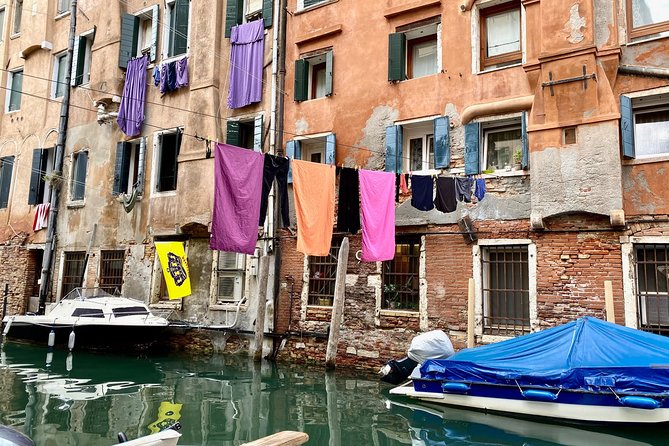
Many first-time visitors see Venice as a sequence of grand churches, palaces, and crowded viewpoints. Cannaregio offers another story. Here, Venice becomes a city of rules, borders, trade, faith, memory, and ordinary daily life.
The Jewish Ghetto was not simply a neighborhood with a distinctive religious identity. Under the Serenissima Republic, Jewish residents were required to live in a defined area and follow strict rules. The walk helps you understand how that system shaped the streets, entrances, buildings, and daily routines you see today.
The word ghetto itself is tied to Venice. Lucia explains the local Venetian connection and adds a little language along the way, even inviting you to try Venetian words. That small touch gives the walk a sense of place that a standard date-filled history lecture can miss.
I especially value the way this tour links the past to the physical setting. You are not only hearing about the Jewish community. You are walking beside the canals and through the former entrances and exits of the ghetto, where the geography helps make the restrictions easier to understand.
More History Tours in Venice
- Venice’s Best: Basilica, Doge’s Palace, Gondola & History Gallery
★ 4.5 · 2,478 reviews - Venice: City Center Historical Guided Walking Tour
★ 4.2 · 1,873 reviews - Venice: Bell Tower & St Mark’s Square History Gallery Ticket
★ 4.3 · 910 reviews
Campo San Geremia and a garden with an unexpected story
The walk begins at Campo San Geremia, where the opening stop lasts about 15 minutes. Rather than rushing directly toward the main ghetto squares, Lucia starts with a hidden garden and the unexpected story of a Venetian family.
That is a smart beginning. It gives you a personal, local entry point before the tour turns toward larger questions of religion and government. You get a reminder that Venice is built from family stories as much as famous landmarks.
The garden also sets the tone for the walk. This is not a checklist of monuments. You are looking for details that can be easy to miss, including symbols, small architectural clues, and corners that do not usually appear on a first-day route through Venice.
If children are joining you, tell Lucia in advance. She has special material for younger participants and has used games during tours. That can make a serious subject easier for families to approach without turning the history into a lesson aimed only at adults.
Fondamenta Cannaregio and the old entrances
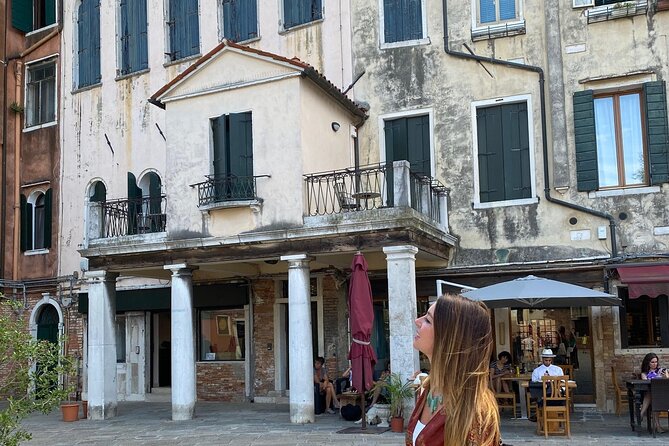
At Fondamenta Cannaregio, the group pauses for about 15 minutes beside one of the few genuine Venetian canals. From here, Lucia begins to explain life in the 16th century and points out one of the entrances or exits connected with the old ghetto.
This stop matters because Venice’s water routes were practical lines of movement, not just pretty scenery. Looking at the canal while discussing who could enter, leave, work, or live in the area gives the neighborhood a stronger physical meaning.
You should expect a walking tour rather than a formal site visit. There is no admission fee at the stops, and the experience depends on Lucia’s explanations and your ability to notice what she points out. Wear shoes suited to two hours on foot and be ready for the usual uneven surfaces of Venice.
The meeting point is Campo San Geremia, and the tour ends at Fondamenta dei Ormesini. Since the route is not a round trip, plan your next stop from the northern Cannaregio area rather than assuming you will finish near the starting point.
Calle Ghetto Vecchio and the Venetian meaning of ghetto
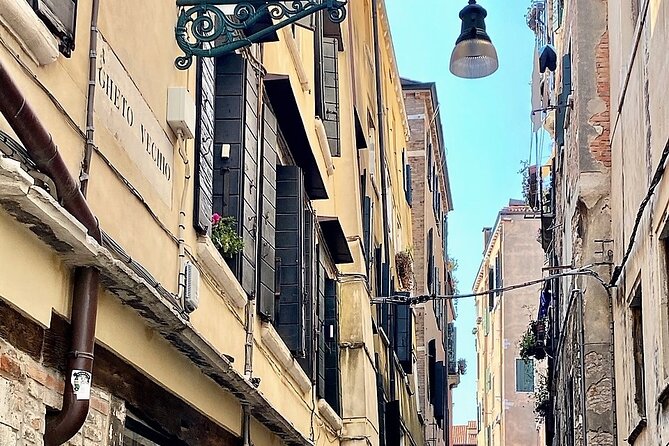
The stop at Calle Ghetto Vecchio lasts around 10 minutes, but it carries one of the most important ideas of the tour. Lucia explains the history behind the word ghetto and its Venetian roots.
This is the point where a familiar modern word gains a specific local setting. You begin to see that the term did not appear as an abstract label. It came from a Venetian place, and its meaning is tied to the city’s approach to controlling communities within its territory.
Lucia also brings in the Venetian language. Her invitations to speak a little Venetian add humor and keep the walk from becoming too solemn too early. The tone is one of the tour’s strengths: serious when the subject demands it, but warm and conversational when a local phrase or legend can help you remember the point.
If you want a guide who simply lists dates, this may not be your ideal walk. Lucia’s approach mixes facts with stories, games, customs, and local color. For me, that makes the information easier to hold onto, but people who prefer a strictly academic presentation may want a museum visit as well.
More Jewish Ghetto walks in Venice:
- Venice: Guided Tour of the Jewish Ghetto and Synagogue Visit
★ 4.4 · 610 reviews - Venice: Jewish Ghetto Walking Tour with Synagogue Visits
★ 4.7 · 379 reviews - Venice: Cicchetti, Spritz, and Wine Tour in Ghetto Ebraico
★ 4.9 · 315 reviews - Venice: Jewish Ghetto & Cannaregio Area Food Tour: Pasta Wine Gelato and More!
★ 4.5 · 274 reviews
The Jewish Ghetto and the rules of daily life
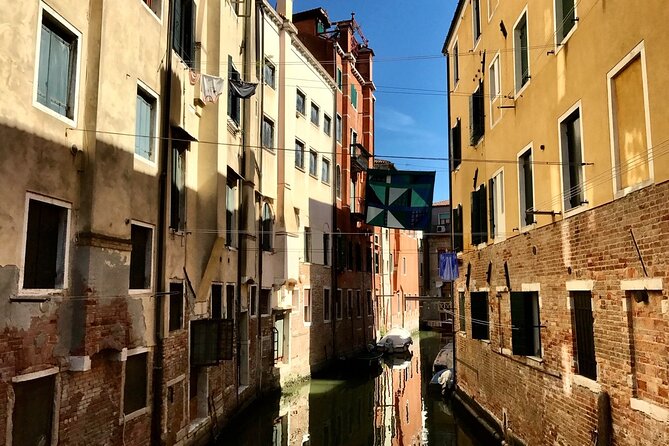
The central section in the Ghetto Ebraico takes about 20 minutes. Here Lucia leads you through an unusual route around the first Jewish ghetto and explains why the Venetian Republic required Jewish residents to live under strict regulations.
You learn how the community lived for centuries within those limits. The value of this section is not only the historical information, but also the chance to connect it with the compact streets and water-bound setting around you.
Lucia points out places and symbols that you might pass without recognizing. She helps you identify the former synagogues and explains how the buildings fit into the neighborhood. Because the tour stays outside, you should think of this as an introduction to the area rather than a replacement for an interior synagogue visit.
The outdoor format has both benefits and limits. You keep moving, see the neighborhood as part of present-day Venice, and avoid spending the whole time in one building. At the same time, you will not see the interiors, furnishings, or museum displays that would add another layer to the story.
The tour also addresses the Nazi deportation of Venice’s Jewish community. This part is likely to be the most painful section of the walk, but it is essential. Lucia explains how World War II and the Holocaust left a lasting mark on the city, placing Cannaregio within a much larger European tragedy.
That balance is important. The tour does not treat the ghetto as a picturesque old quarter only. It acknowledges the beauty of the setting while also facing the violence and loss connected with it.
Campo di Ghetto Nuovo and the synagogues seen from outside
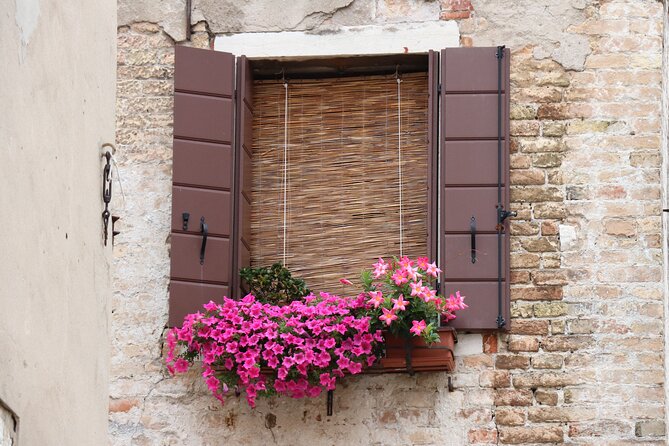
Campo di Ghetto Nuovo is the longest stop, at about 30 minutes. This is where Lucia points out details that many people miss and explains the separate stories and legends connected with the synagogues.
You will see the synagogues from the outside. Lucia helps you recognize them and understand why their differences matter. Since admission is not part of this walk, you should arrange a separate visit if you want to enter a synagogue or museum.
The square also brings the tour closer to the literary and commercial world of Venice. Lucia adds a Merchant of Venice atmosphere and asks about the city’s most famous Venetian man. This is a lively way to connect the neighborhood with Venice’s long-standing image as a center of trade, money, and cultural exchange.
Still, keep the tone in mind. This is not a theatrical show, and the subject is not treated as a costume drama. The references help you picture the period, but the stronger focus remains the real community, its religious life, and the restrictions imposed upon it.
This section is likely to be the highlight for anyone who enjoys architecture and small clues. You may notice inscriptions, shapes, entrances, and details that have little meaning until someone explains them. That is where a local guide earns the fee.
Ending at Fondamenta dei Ormesini
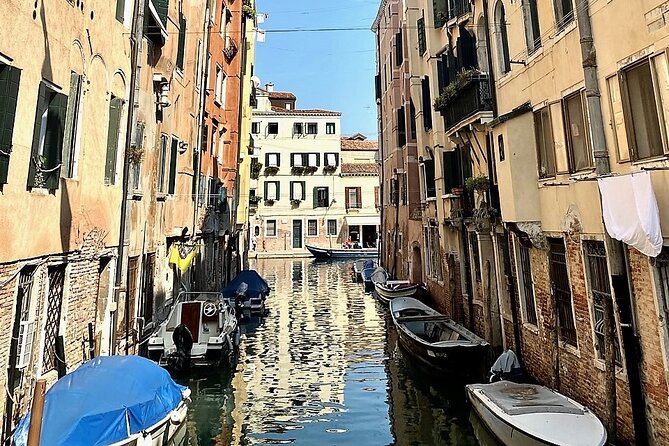
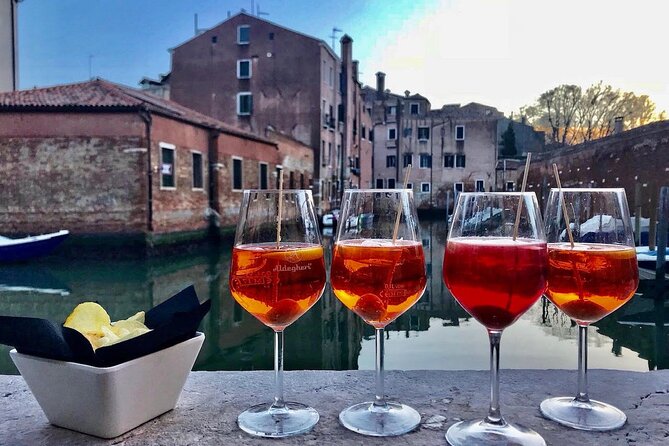
The final stop takes about 15 minutes at Fondamenta dei Ormesini. This waterfront stretch is described as a favorite local meeting place for eating, drinking, and relaxing.
Depending on the time, season, and age of the group, Lucia may finish with a glass of wine at a bacaro, gelato, or coffee in Cannaregio. Treat this as a possible closing custom rather than a guaranteed included tasting. The tour information lists the guide service as included, but does not list food or drinks as a separate inclusion.
I like this ending because it lets the history settle into ordinary Venetian life. You finish beside the water, in a part of Cannaregio associated with locals meeting and unwinding, rather than being deposited at another major monument.
It also gives you a useful place to continue your afternoon. The tour is short enough to fit before or after other plans, and the final location offers a change of pace from the packed center of Venice.
What Lucia adds to the experience
The guide makes a large difference on a walk like this. Lucia is described as witty, welcoming, and highly informed about Italian history and Venice’s Jewish community. She explains culture and customs in an entertaining way, but she also handles the wartime material with care.
Her style includes games for children and small surprises. She has also offered practical Venice tips and made herself available after a tour for additional information. That suggests a guide who sees the walk as part of your wider visit, not just a two-hour appointment.
I would choose this experience for the personal contact. A group of up to 10 is small enough for questions, and Lucia can adjust her explanations more easily than a guide managing a large crowd. The downside is that the experience may feel dependent on the guide’s storytelling style. If Lucia’s warm, conversational approach suits you, the tour should feel engaging. If you prefer to explore alone with an audio guide, you may want more independence.
Is $53.88 a fair price?
At $53.88 per person, this is not the cheapest way to walk around Cannaregio. You can enter the neighborhood on your own for free, and the main squares and canals do not charge admission.
The value comes from interpretation. In two hours, you get the origin of the word ghetto, the history of Venetian restrictions, exterior synagogue identification, stories about local families and legends, and an account of Nazi deportation. You also receive a practical introduction to lesser-known corners that would be easy to miss alone.
The price is easier to justify if you want context rather than just directions. It is less compelling if you already plan to visit the Jewish Museum and synagogues independently, since those interiors are not part of this walk.
The maximum group size of 10 helps. You are paying for a more direct exchange with Lucia, not a large procession that pauses only long enough for everyone to gather. With the possible drink, gelato, or coffee at the end, the experience can also become a pleasant social introduction to Cannaregio, but you should not count that refreshment as part of the advertised price.
Who should book this Cannaregio walk?
I would recommend it to people who want a quieter side of Venice and enjoy history tied to real streets. It suits first-time visitors who want a strong sense of place, as well as repeat visitors who have already seen St. Mark’s Square and the Rialto area.
Families may find it a good fit if they tell Lucia that children are coming. Her special material and games can help younger participants stay involved, while adults receive a serious account of Jewish life and wartime history.
It also suits anyone interested in Jewish heritage, religious history, local language, and the way governments shape urban neighborhoods. The walk is especially useful early in your Venice stay because Lucia’s local tips may help with the rest of your visit.
You should think twice if you need step-free access or a fully indoor activity, since the experience is an outdoor walk through Venice. Service animals are allowed, most people can participate, and the route is near public transportation, but the supplied details do not promise a fully accessible route over every surface.
The tour requires good weather and a minimum number of participants. You can cancel for a full refund up to 24 hours before the start time. If poor weather or low enrollment cancels the experience, you are offered another date or a full refund.
Day visitors should also check Venice’s access-fee rules. On certain dates, people staying outside Venice may need to pay a €5 fee, with exemptions and applicable dates listed by the city.
Should you book the Jewish Ghetto tour?
Book it if you want Venice to be more than canals and grand façades. Lucia’s personal storytelling, the small group, and the serious look at Jewish life and Nazi deportation give Cannaregio unusual weight.
Do not book it expecting synagogue interiors or a museum visit. Instead, use the walk as a thoughtful outdoor introduction, then visit those sites separately if you want more detailed religious and architectural context.
For most people who value local stories, quiet lanes, and a guide who can connect language, legend, architecture, and difficult history, $53.88 is a fair price. The two-hour length keeps it manageable, and the finish at Fondamenta dei Ormesini gives you a natural place to continue exploring.
FAQ
How long does the Jewish Ghetto tour last?
The tour lasts approximately two hours.
Where does the tour begin?
The meeting point is Campo San Geremia, 30121 Venezia VE, Italy.
Where does the tour end?
The walk ends at Fondamenta dei Ormesini, 30121 Venezia VE, Italy.
How many people can join the tour?
The maximum group size is 10 people.
Are the synagogues or museum included?
No. The tour views the synagogues from outside and does not include entry to the museum or synagogue interiors.
Is the tour suitable for children?
Most people can participate, and Lucia has special material for children. You should let her know in advance if children will join.
What happens if the tour is canceled or I need to cancel?
You can cancel at least 24 hours before the start time for a full refund. Poor weather or failure to reach the minimum number of participants may lead to another date or a full refund. Changes or cancellations made less than 24 hours before the start time are not accepted for a refund.
More Historical Tours in Venice
- Verona: History and Hidden Gems Guided Walking Tour
★ 5.0 · 1,379 reviews - Basilica, Doge’s Palace, History Gallery & Bell Tower Option
★ 5.0 · 586 reviews - Venice: Natural History Museum Entry Ticket
★ 4.7 · 312 reviews - St. Mark’s Cathedral Priority Guided Tour & History Gallery
★ 3.5 · 148 reviews
Just added around Venice
- Padua: Private Pasta-Making Class at a Local’s Home★ 5.0 · 3 reviews
- Padua City Sightseeing Walking Tour of Must-See-Sites with Local Guide★ 5.0 · 3 reviews
- Gondola Ride and St Mark’s Basilica★ 4.5 · 3 reviews
- Venice: Market Tour and Meal at a Local’s Home★ 4.3 · 3 reviews
- VIRTUAL MUSEUM: Creature di Gomma – Venice Vintage Toys★ 4.7 · 3 reviews
- 3 Hour Shared Walking and Aperitivo Tour of Verona★ 5.0 · 3 reviews
- Venice: The Best of Dolomites 3Cime and Refuges with Drone★ 5.0 · 3 reviews
- Verona: Blindfolded Wine Tasting★ 5.0 · 3 reviews
Jewish Ghetto Tours, compared.
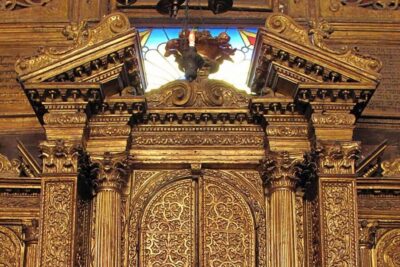
Guided Tour of the Jewish Ghetto and Synagogue Visit
Read our review →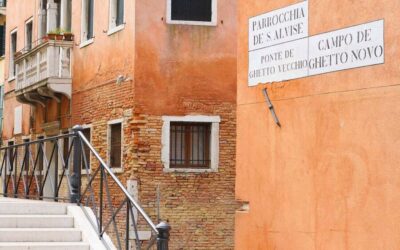
Jewish Ghetto Walking Tour with Synagogue Visits
Read our review →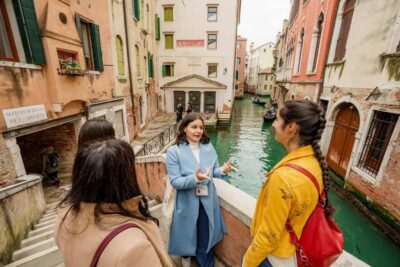
Cicchetti, Spritz, and Wine Tour in Ghetto Ebraico
Read our review →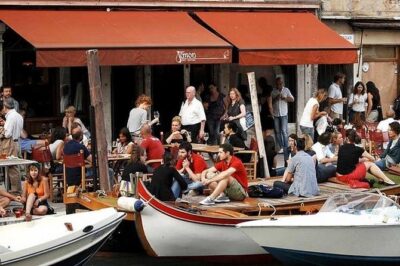
Jewish Ghetto & Cannaregio Area Food Tour: Pasta Wine Gelato and More!
Read our review →
Jewish Ghetto Walking Tour with Synagogues Visit
Read our review →
Small-Group Walking Tour of the Jewish Ghetto in Venice
Read our review →
Jewish Ghetto and Cannaregio Food and Wine Tour
Read our review →
Browse the lists this tour appears in