
Reviewed · DOGE'S PALACE TOURS
Venice: Doge’s Palace & Bridge of Sighs Small Group Tour
Venice’s most dramatic story is told inside Doge’s Palace, where dazzling state rooms lead to dark prison cells by way of the Bridge of Sighs. I like the sharp contrast between the palace’s gold, marble, and giant paintings and the grim world on the other side of the canal. I also like the small group size, capped at 10, since a guide such as Ilaria or Luigina can explain details without shouting across a crowd.
The two-hour format keeps the visit focused, and your ticket also covers the Correr Museum, Archaeological Museum, and Biblioteca Nazionale Marciana. The main drawback is that those museums are not guided, and bags, backpacks, and luggage are forbidden inside the palace. You must also pass through security, even with a skip-the-ticket-line admission.
In This Review
- Key points to know before you book
- Why Doge’s Palace is more than a pretty Venetian building
- Starting between the two columns
- The courtyard and the Gothic exterior
- The Golden Staircase and the palace apartments
- The Grand Council Chamber and Tintoretto’s Paradiso
- The Armoury and the darker side of Venetian rule
- Crossing the Bridge of Sighs
- Inside the New Prisons
- What the small group adds
- Is $72.50 a fair price?
- Practical points that can make or break the visit
- Who should book this Doge’s Palace tour?
- Should you book it?
- FAQ
- How long does the Doge’s Palace tour last?
- What language is the tour offered in?
- Where do I meet the guide?
- How early should I arrive?
- Does the tour include the Bridge of Sighs and the prisons?
- Which museums are included with the ticket?
- Can I bring a backpack or large bag?
- Is the tour suitable for wheelchair users?
Key points to know before you book
- The Bridge of Sighs leads directly to the old prisons: You cross the enclosed bridge and follow the route once used by prisoners.
- The Golden Staircase sets the tone: Lavish decoration, statues of Hercules and Atlas, and a striking ceiling greet you inside.
- Tintoretto’s Paradiso is a major highlight: The huge painting fills the wall of the Grand Council Chamber.
- The group stays small: A maximum of 10 people makes it easier to hear the English-speaking guide and ask questions.
- Your museum ticket lasts beyond the tour: You can visit the Correr Museum, Archaeological Museum, and Biblioteca Nazionale Marciana afterward.
- Plan around the bag rule: Large bags, backpacks, sacks, and luggage are not allowed inside Doge’s Palace.
Why Doge’s Palace is more than a pretty Venetian building
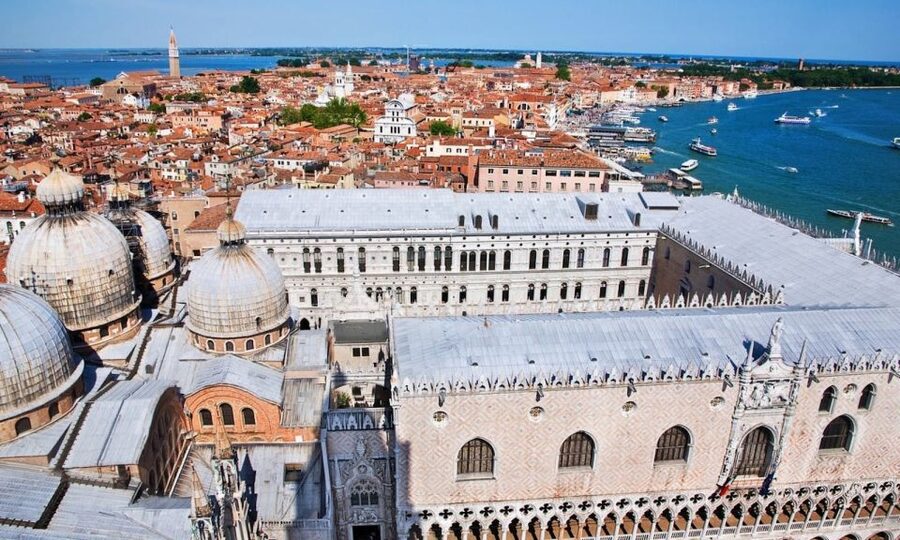
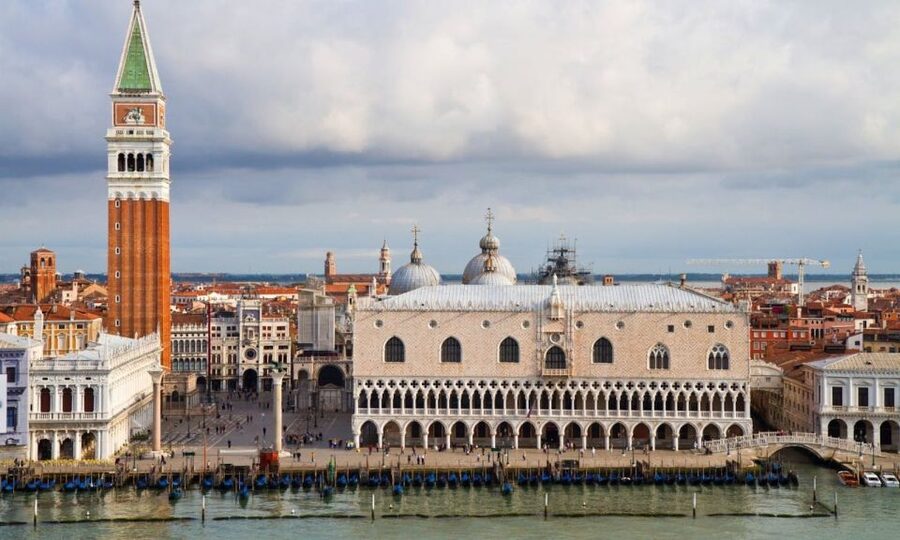
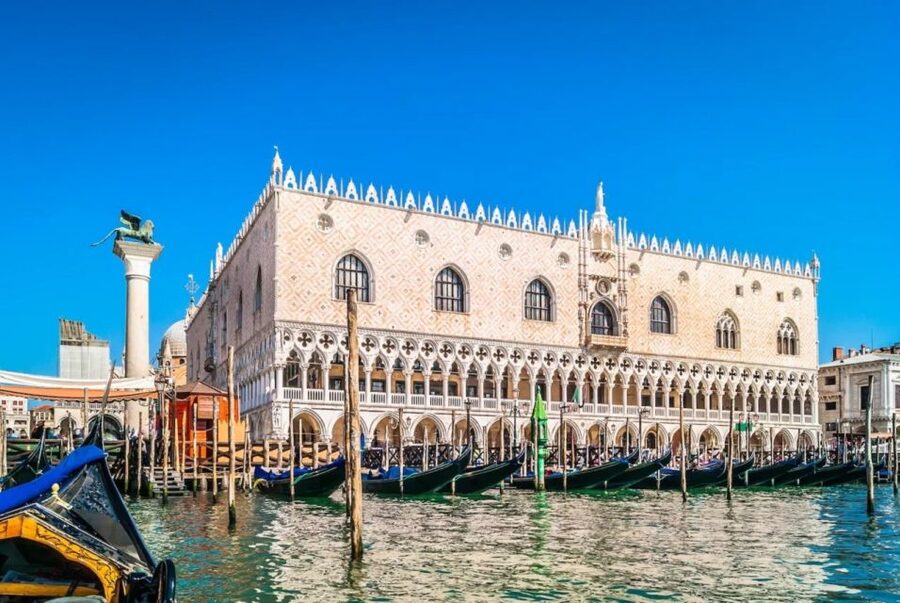
From the outside, Doge’s Palace can look like a grand Gothic shell beside St Mark’s Basilica. Inside, it explains how Venice worked. This was the seat of the doge and the center of the Venetian Republic, so the rooms were built to display authority, wealth, and order.
That political purpose matters. You are not simply walking through a former royal residence filled with expensive decoration. You are seeing the rooms where Venice’s ruling system presented itself to visiting ambassadors, officials, and citizens.
I like this tour because the guide connects the artwork to the government that paid for it. You hear about the doge’s role, the machinery of Venetian politics, and the small details that made the palace function as a place of administration and judgment.
One detail worth watching for is the mouth of truth. These carved stone boxes, often shaped like lion heads, accepted complaint letters. The oldest one inside the palace dates to 1618. It is an easy feature to miss if you rush from one famous painting to the next, but it gives the building a more human scale. Behind all the grand halls were systems for reporting problems and accusing people of wrongdoing.
More Doge's Palace visits:
- Venice: Doge’s Palace Reserved Entry Ticket
★ 4.6 · 42,716 reviews - Doge’s Palace & St. Mark’s Basilica with Terrace Access Tour
★ 4.7 · 10,697 reviews - Venice: Doge’s Palace, St Mark’s Basilica, and Pala d’Oro
★ 4.4 · 6,235 reviews
Starting between the two columns
The meeting point is at the two large columns in the square, the Colonne di San Marco and San Todaro. Look for the guide holding a TUI sign, and arrive at least 10 minutes early.
This is the spot where Venice’s central square opens toward the water, so it can feel confusing if you are trying to orient yourself at the last minute. Give yourself time to find the columns, especially if you are arriving through the busy area around St Mark’s Square.
The tour ends back at the same meeting point. That is useful if you want to continue toward another sight, return to your hotel, or use the included museum admission after the palace visit.
The tour is offered in English. The listed duration is two hours, with starting times dependent on the date you choose. Since Doge’s Palace can become tiring when every room receives a long explanation, this length gives you a brisk but useful introduction rather than an entire morning indoors.
The courtyard and the Gothic exterior
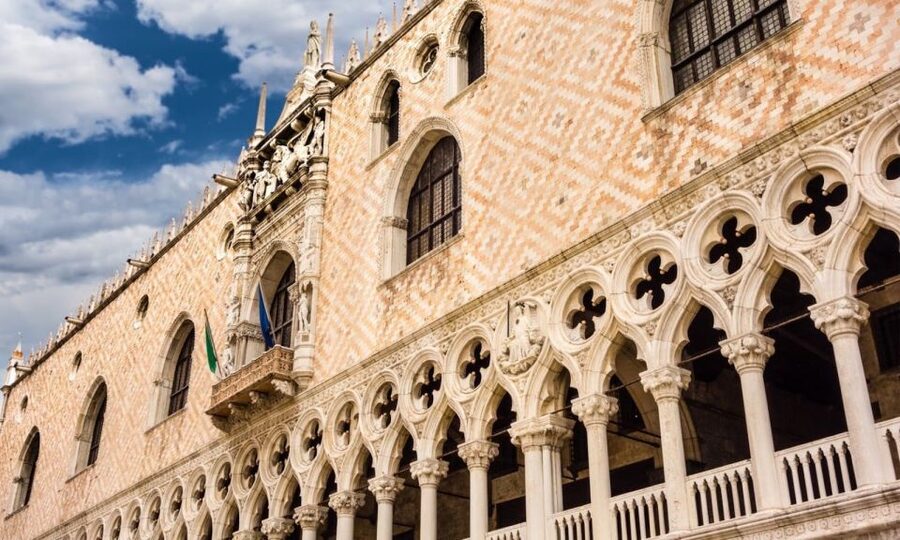
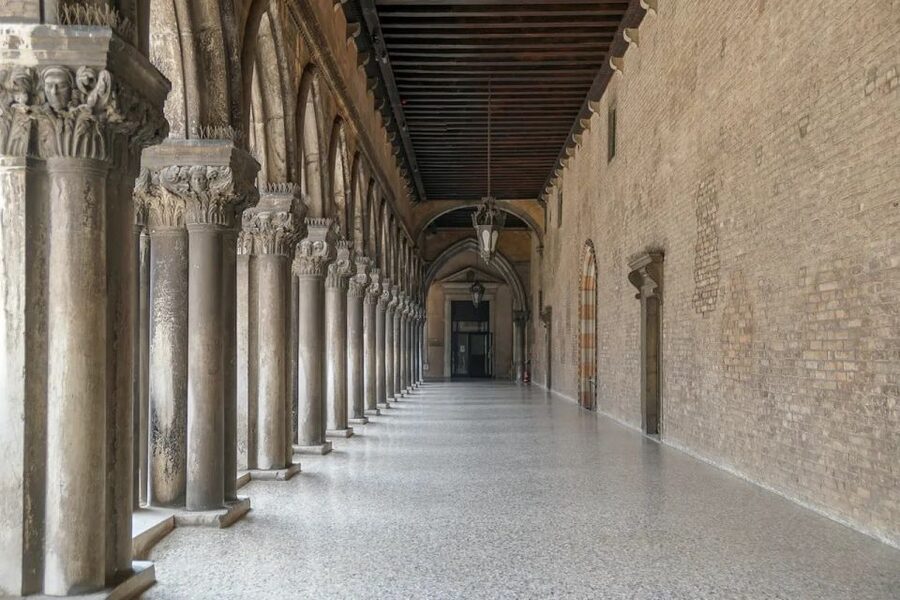
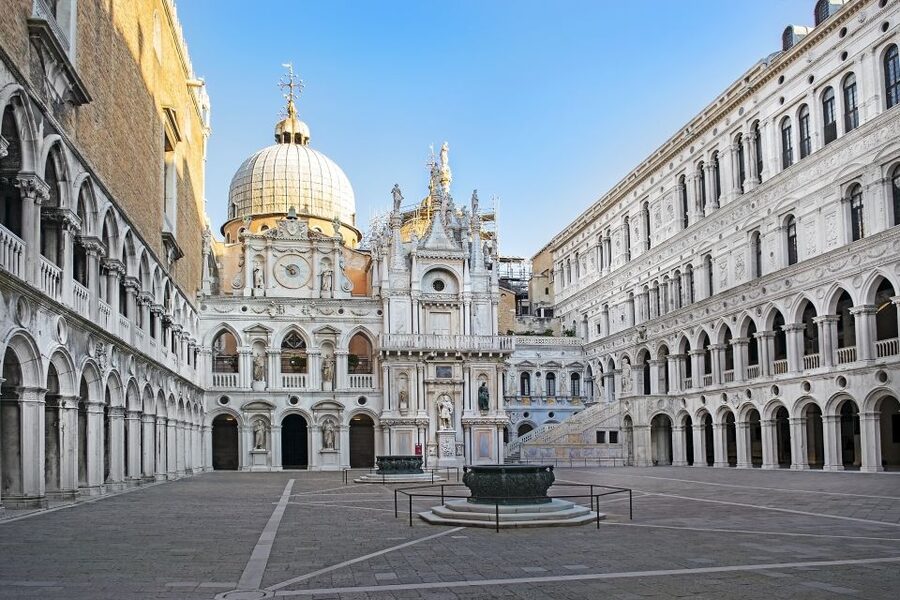
The visit begins with the palace itself. Before the interior decoration takes over, take a moment in the courtyard to look up and around. The Gothic exterior, arches, columns, and views toward the surrounding buildings establish the palace’s public face.
Your guide uses this opening to explain the setting and the doge’s position in Venetian government. That context helps later, when the palace’s huge council rooms and ceremonial staircases might otherwise blur into a parade of gold and marble.
The courtyard is also a sensible place to get your bearings. The building is large, and the route moves from open architectural spaces into richly decorated rooms, then across the Bridge of Sighs and into the prisons. The change in mood is part of the experience.
The Golden Staircase and the palace apartments
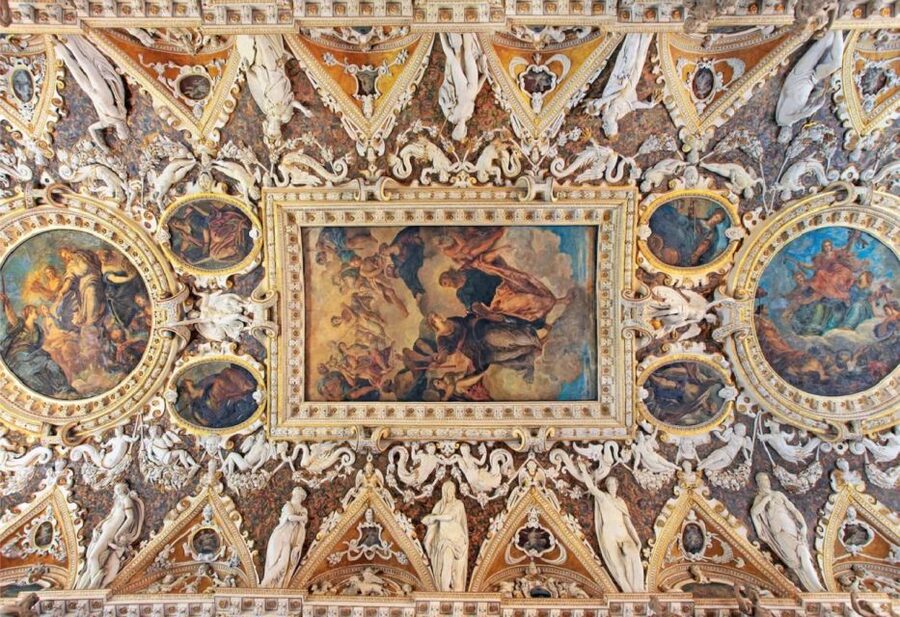
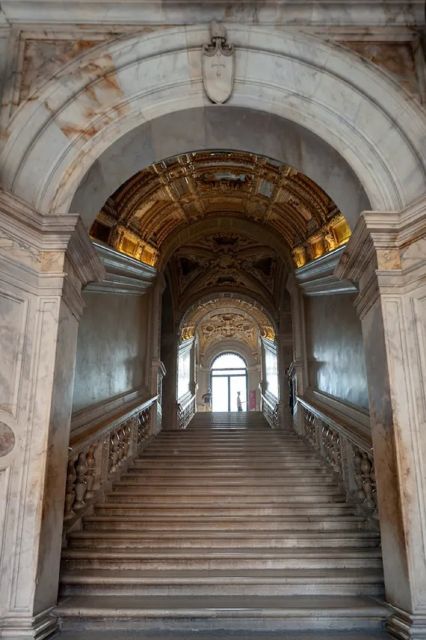
Inside, the Golden Staircase provides the first great visual jolt. Its decoration was designed to impress, and it still does. Look for the statues of Hercules and Atlas, then tilt your head upward to take in the ceiling.
The staircase was not merely a grand way to move between floors. It helped turn arrival into ceremony. A powerful visitor did not slip quietly into a plain office. The route announced the importance of the palace and the government behind it.
The Doge’s Apartments follow the same idea, though they offer a different feel. These rooms were tied to the doge’s position, but the doge was not an absolute king. The guide’s explanation of that political system is useful here because the decoration can easily suggest a monarchy that did not quite exist.
I would pay attention to the difference between private-looking rooms and public rooms. Venice used architecture to separate personal authority from the larger machinery of the republic. You get a better sense of that balance when the guide explains what the doge could do, and what he could not do alone.
More Bridge of Sighs walks:
- Venice: Doge’s Palace, Bridge of Sighs & Prisons Guided Tour
★ 4.3 · 2,549 reviews - Venice: Gondola Tour under the Bridge of Sighs & Audio Guide
★ 3.9 · 617 reviews - Venice: Doge’s Palace, Bridge of Sighs, Prisons, Correr & Audioguides
★ 4.1 · 345 reviews - Doge’s Palace, Bridge of Sighs & Prison Skip-the-Line Tour
★ 4.9 · 236 reviews
The Grand Council Chamber and Tintoretto’s Paradiso
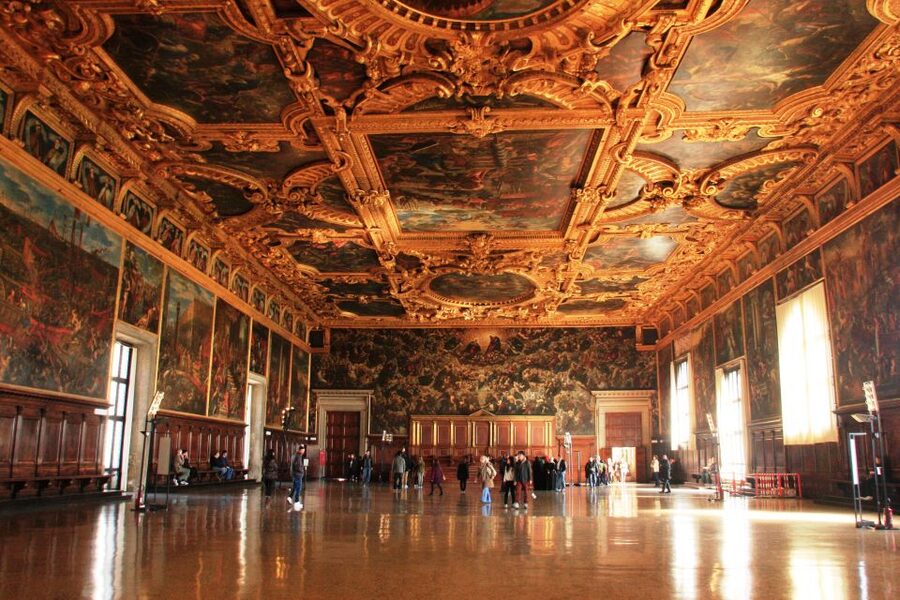
The Grand Council Chamber is the visual and political center of the visit. This vast room was connected to the governing body of the Venetian Republic, and its scale makes the state feel almost theatrical.
The major artwork here is Tintoretto’s Paradiso. The painting is enormous, so do not expect to understand it from a quick glance near the doorway. Stand back when you can, then look again at the crowded composition and the way it occupies the wall.
This is one place where a live guide earns the admission price. Without some explanation, you may simply register a huge religious painting in a huge room. With context, the room becomes a statement about power, civic identity, and Venice’s place in the Christian world.
Photography may be tempting, but the more useful habit is to pause before reaching for your phone. The painting and the chamber are built to be seen together. The room gives the artwork scale, while the artwork helps explain the room’s ceremonial purpose.
The Armoury and the darker side of Venetian rule
The Armoury changes the tone. After the polished surfaces and formal chambers, weapons bring you closer to the practical side of government. Venice was a trading republic, but it also needed courts, guards, prisons, and force.
This stop helps prevent the palace from becoming only an art tour. You see that the building was part government offices, part ceremonial stage, and part enforcement center. The guide’s commentary can connect the objects to the people who passed through the palace as officials, prisoners, and visitors.
The palace has a sinister side that becomes clearer as the route continues. The same institution that commissioned grand paintings also controlled the judicial system and held people in prison. That tension is one of the reasons I find this tour more satisfying than a simple architecture walk.
Crossing the Bridge of Sighs
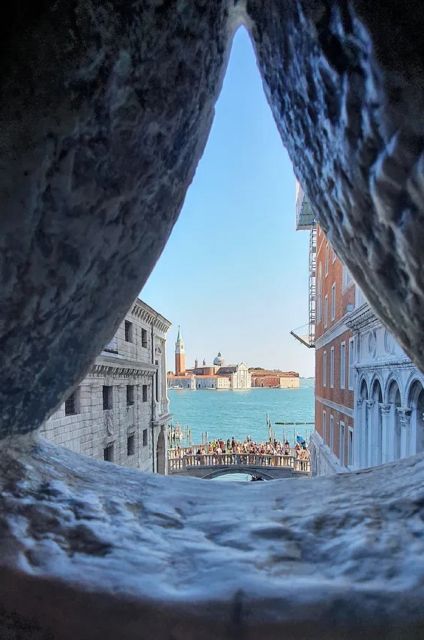
The Bridge of Sighs is short, enclosed, and memorable. Its name refers to the sigh prisoners supposedly gave as they caught a final glimpse of Venice through the small windows before entering the cells.
The image is dramatic, but the bridge also has a practical purpose. It links Doge’s Palace with the New Prisons, allowing prisoners to move between judgment and confinement without returning to the public streets.
As you cross, look through the stone openings rather than treating the bridge as a quick photo stop. The view is restricted, and that is the point. You are being shown Venice from a prisoner’s route, not from an open waterfront promenade.
The passage is one of the strongest parts of the tour because it changes your physical experience of the building. You leave bright ceremonial rooms and move through a narrow connection toward a much harsher setting. The contrast needs no dramatic speech.
Inside the New Prisons
The prison cells give the tour its human weight. You follow the route into the New Prisons and learn about prison life, security, and the people held there.
The rooms are far less polished than the palace chambers. Their gloom makes the earlier luxury feel more deliberate, and it reminds you that the republic’s order depended on punishment as well as pageantry.
The most famous escape linked to these prisons is Casanova’s. The story says he made a hole in the ceiling of his cell and escaped, later free to tell the tale. It is a good story, but the wider point is more interesting: even a prison regarded as highly secure could be challenged by a determined inmate.
You should expect walking through historic cells rather than a recreated prison performance. The appeal is the setting and the guide’s explanation, not interactive entertainment. If you prefer art, architecture, and political history, the prison section adds welcome variety. If enclosed spaces make you uncomfortable, keep that in mind before booking.
What the small group adds
A group of up to 10 people is a useful middle ground. You receive a live guided visit without the scale of a large tour where the guide’s voice can disappear into the room.
The small format also helps with questions. If you want to ask about the doge, Tintoretto, the complaint boxes, or Casanova’s escape, you have a better chance of getting a direct answer.
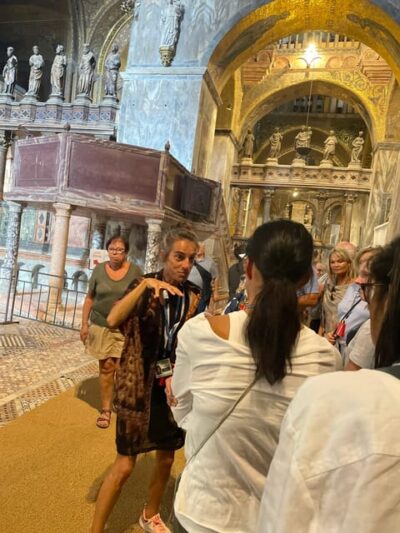
The quality of the visit depends partly on the individual guide. Ilaria is described as friendly and especially good at bringing palace details to life. She has guided visitors through the history of the building, including its political system and prison story. Luigina has a lively approach that combines art, architecture, history, and historical gossip, while responding to requests as they arise.
That range is useful because Doge’s Palace can be read in several ways. You can focus on the paintings, the government, the building itself, or the prison route. A good guide adjusts the emphasis instead of delivering a dry list of dates.
The tour is also suitable for a group that wants a measured pace. Ilaria was praised for being attentive to the needs of an aging group. Still, the activity is not suitable for wheelchair users or people with mobility impairments, so do not assume the small group makes the route physically easy.
Is $72.50 a fair price?
At $72.50 per person, this is not the cheapest way to enter Doge’s Palace. You are paying for a reserved admission, a two-hour English-speaking guide, a small group, and entry to the St Mark’s Square museums.
The value improves if you want the palace explained rather than simply visited. The Golden Staircase, Grand Council Chamber, Bridge of Sighs, and prisons contain enough visual material to occupy you, but the political connections are not always obvious on your own. The guide gives the rooms a clear order and keeps the focus on the most important parts.
The additional museum admission is a real benefit, though only if you plan to use it. You can visit the Correr Museum, Archaeological Museum, and Biblioteca Nazionale Marciana after the guided tour. Those visits are self-guided, so treat them as extra access rather than three more guided attractions.
The price is less attractive if you only want a quick photograph on the Bridge of Sighs or prefer to move through museums at your own pace. In that case, a basic admission may suit you better, if available for your date. For a first visit to Venice, though, the combination of guided palace access and museum entry gives the fee a reasonable purpose.
Practical points that can make or break the visit
The skip-the-line benefit applies to the ticket purchasing counter. It does not mean you bypass security. Everyone must pass through the newly imposed security checks, so arrive early and avoid carrying anything you do not need.
No luggage, large bags, backpacks, sacks, or bags are allowed inside Doge’s Palace. The safest plan is to arrive with only essential small items, since the restrictions are part of the entry process rather than a minor suggestion.
The tour starts and ends between the two columns in the square. You need to locate the guide before the start time, and the local partner can be reached at +39 392 954 7992 if you have trouble finding the meeting point.
Cancellation is flexible up to 24 hours before the tour for a full refund. You can also reserve now and pay later, which helps if your Venice schedule is still shifting.
Who should book this Doge’s Palace tour?
I would choose this tour if you want the key rooms explained in a clear two-hour route. It suits first-time visitors who want a strong introduction to Venetian government, art, architecture, and prison life without spending half a day inside the palace.
It is also a good choice for people who like stories with a darker edge. The Bridge of Sighs and Casanova’s escape prevent the visit from becoming only a procession through ceremonial rooms.
Families and mixed-interest groups may appreciate the variety. One person can focus on Tintoretto, another on the Gothic building, and another on the prison cells. The guide helps connect those interests.
I would hesitate if you need a wheelchair-accessible route, carry substantial luggage, or want to explore every museum with a guide. The tour is in English only, and the extra St Mark’s Square museums are yours to explore independently.
Should you book it?
Book this Doge’s Palace and Bridge of Sighs tour if you value clear explanations, a small group, and a compact route through Venice’s most important state building. The best parts are the contrast between the Golden Staircase and the prisons, the close look at Tintoretto’s Paradiso, and the walk across the enclosed bridge.
Skip it if you prefer complete independence or only want the exterior and a quick bridge view. For most first-time visitors who want the palace to make sense, $72.50 is a fair price, especially if you use the included museum admission afterward.
FAQ
How long does the Doge’s Palace tour last?
The guided experience lasts two hours. Starting times vary, so you need to check availability for your chosen date.
What language is the tour offered in?
The tour is offered in English with a live guide.
Where do I meet the guide?
Meet between the two large columns in the square, the Colonne di San Marco and San Todaro. The guide will hold a TUI sign.
How early should I arrive?
You should arrive at least 10 minutes before the scheduled start time.
Does the tour include the Bridge of Sighs and the prisons?
Yes. The guided visit includes Doge’s Palace, the Bridge of Sighs, and the New Prisons.
Which museums are included with the ticket?
Your ticket also includes entry to the Correr Museum, Archaeological Museum, and Biblioteca Nazionale Marciana in St Mark’s Square. These museums are not part of the guided visit.
Can I bring a backpack or large bag?
No. Luggage, large bags, backpacks, sacks, and bags are not allowed inside Doge’s Palace. Security checks are required for everyone.
Is the tour suitable for wheelchair users?
No. The activity is listed as unsuitable for wheelchair users and people with mobility impairments.
Just added around Venice
- Padua: Private Pasta-Making Class at a Local’s Home★ 5.0 · 3 reviews
- Padua City Sightseeing Walking Tour of Must-See-Sites with Local Guide★ 5.0 · 3 reviews
- Gondola Ride and St Mark’s Basilica★ 4.5 · 3 reviews
- Venice: Market Tour and Meal at a Local’s Home★ 4.3 · 3 reviews
- VIRTUAL MUSEUM: Creature di Gomma – Venice Vintage Toys★ 4.7 · 3 reviews
- 3 Hour Shared Walking and Aperitivo Tour of Verona★ 5.0 · 3 reviews
- Venice: The Best of Dolomites 3Cime and Refuges with Drone★ 5.0 · 3 reviews
- Verona: Blindfolded Wine Tasting★ 5.0 · 3 reviews
Doge's Palace Tours, compared.

Doge’s Palace & St. Mark’s Basilica with Terrace Access Tour
Read our review →
Doge’s Palace, St Mark’s Basilica, and Pala d’Oro
Read our review →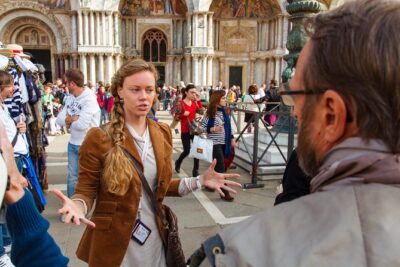
Legendary Venice: Doge’s Palace, St Mark’s & VIP Terrace Access
Read our review →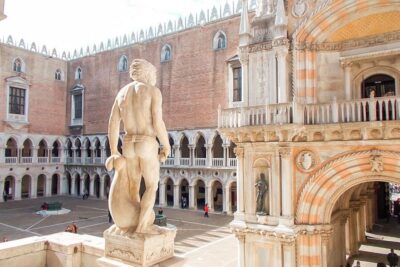
St. Mark’s Basilica & Doge’s Palace Tour with Ticket
Read our review →
St Mark’s Basilica, Doge Palace, & Bell Tower Option
Read our review →
Doge’s Palace, Bridge of Sighs & Prisons Guided Tour
Read our review →Browse the lists this tour appears in