
Reviewed · OPERA AND VIVALDI CONCERTS
Venice: Vivaldi’s Four Seasons Live Classical Music Concert
Vivaldi’s Four Seasons sounds different in Venice, where the composer was born. This 75-minute performance by I Musici Veneziani turns familiar music into a close-up event, with string players conjuring birds, storms, icy winds, crackling fires, and spring rain. The period costumes help set the clock back 300 years.
I like the intimate concert hall and the chance to watch the lead violinist work through some very demanding passages. I also like the short length: you get a full evening of music without giving up the whole night. The main drawbacks are practical ones: some chairs are hard, the hall involves stairs, and the most affordable seats may leave you far from the performers.
In This Review
- Key points to know before booking
- Why Vivaldi’s Four Seasons works so well in Venice
- Entering the concert hall after 8 pm
- The opening half: familiar music with a live edge
- The second half and the star of the evening
- Costumes and the theater of Baroque music
- Sound, sightlines, and seating choices
- Is $41 a fair price?
- Timing your Venice evening
- Who will enjoy this concert most?
- Should you book I Musici Veneziani?
- FAQ
- How long is the Vivaldi concert?
- What music is performed?
- Who performs the concert?
- Are the musicians in period costume?
- When can I present my voucher?
- Is food or drink allowed?
- Is the concert accessible to people with impaired mobility?
Key points to know before booking
- Vivaldi in his home city: Hear the Venetian composer’s best-known work in Venice, where Antonio Vivaldi was born.
- A strong lead violin performance: The solo violinist is the focus, with especially powerful playing in Summer and Winter.
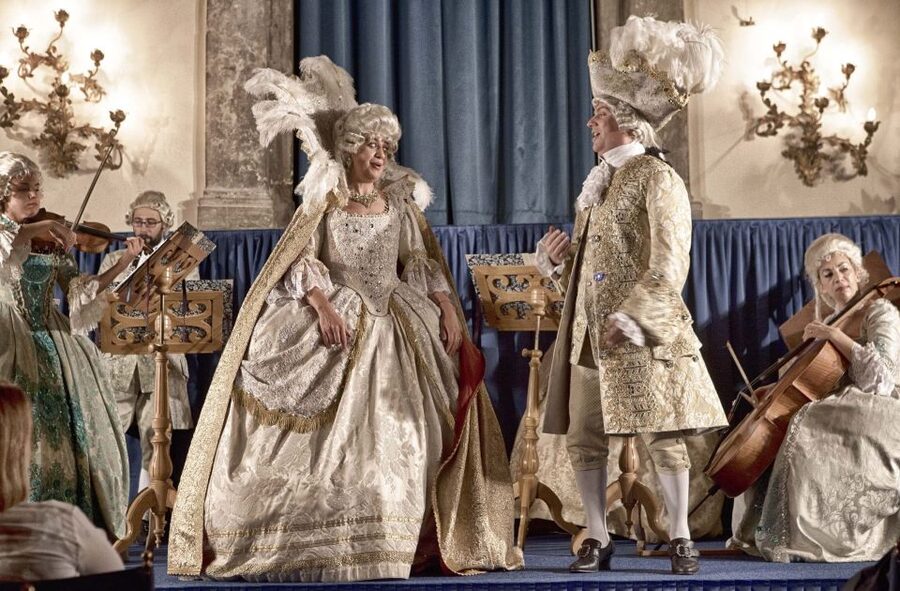
- Period costumes add theater: The musicians dress in Baroque-style clothing, turning a standard concert into a more visual evening.
- Seventy-five minutes is the sweet spot: The program feels substantial but remains manageable for children and first-time classical concertgoers.
- Arrive early for better seats: The ticket office accepts vouchers from 8 pm, while several performances have begun around 8:30 pm. Check your confirmed start time.
- Plan for stairs and limited facilities: The performance space may require two flights of stairs, and the building has very few toilets.
Why Vivaldi’s Four Seasons works so well in Venice
You do not need a classical music background to follow The Four Seasons. Vivaldi wrote four violin concertos around 1716, each linked to a season and its sounds. You can hear the idea at once: birds answer one another, a storm gathers, a summer heat wave turns restless, and winter brings sharp, shivering notes.
That directness is the secret of the piece. Vivaldi does not ask you to decode an abstract musical puzzle. The music paints pictures. A rushing creek, a barking dog, a violent thunderstorm, a crackling fire, and frozen footsteps are all suggested by the orchestra.
The music was innovative when it was written because instruments were used to imitate the natural world so clearly. Today, parts of the work are familiar from films, advertisements, and countless classical playlists. Hearing the whole cycle live restores some of its surprise. You can watch the violinist attack a fast passage rather than simply hearing a polished recording in the background.
The Venetian setting adds a useful bit of context. Vivaldi was not only a Baroque composer. He was a gifted violinist and teacher, and the solo part reflects that knowledge. The lead player must combine speed, control, and expression, especially in the sections that represent summer storms and winter cold.
More opera and Vivaldi evenings in Venice:
- Venice: La Fenice Opera House Entry Ticket with Audio Guide
★ 4.6 · 11,742 reviews - Venice: Vivaldi’s Four Seasons Concert & Music Museum Visit
★ 4.8 · 2,065 reviews - Venice: Vivaldi Four Seasons Concert at Vivaldi Church
★ 4.8 · 1,864 reviews
Entering the concert hall after 8 pm
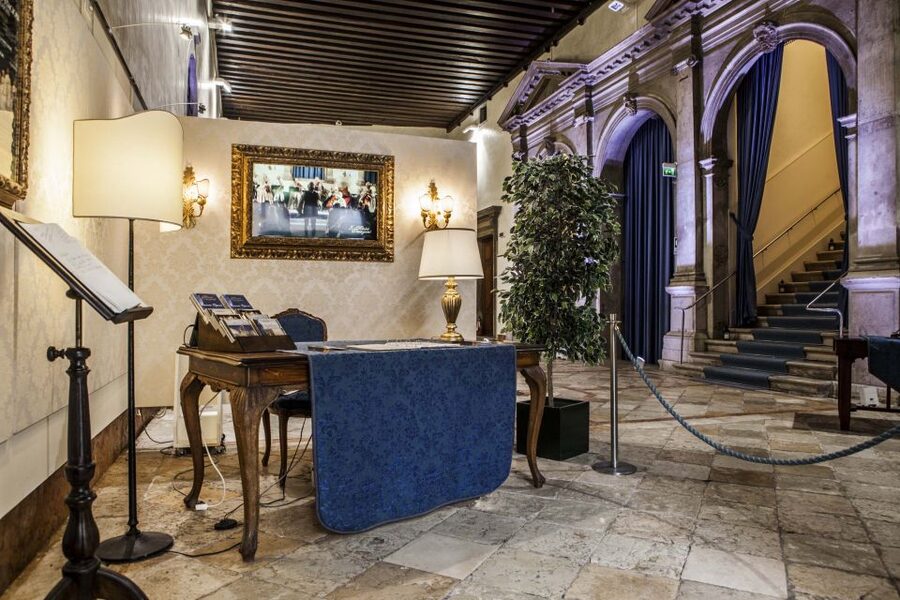
The evening begins at the ticket office, where you can present your voucher from 8 pm. That time is best treated as the arrival window, not necessarily the exact moment when music begins. The confirmed start time can vary, and several performances have started at about 8:30 pm.
I would arrive as close to 8 pm as possible. That gives you time to find the entrance, handle seating, and settle before the first notes. It also matters if you want a better view. Late arrivals may be placed toward the back, and the seating area can fill quickly.
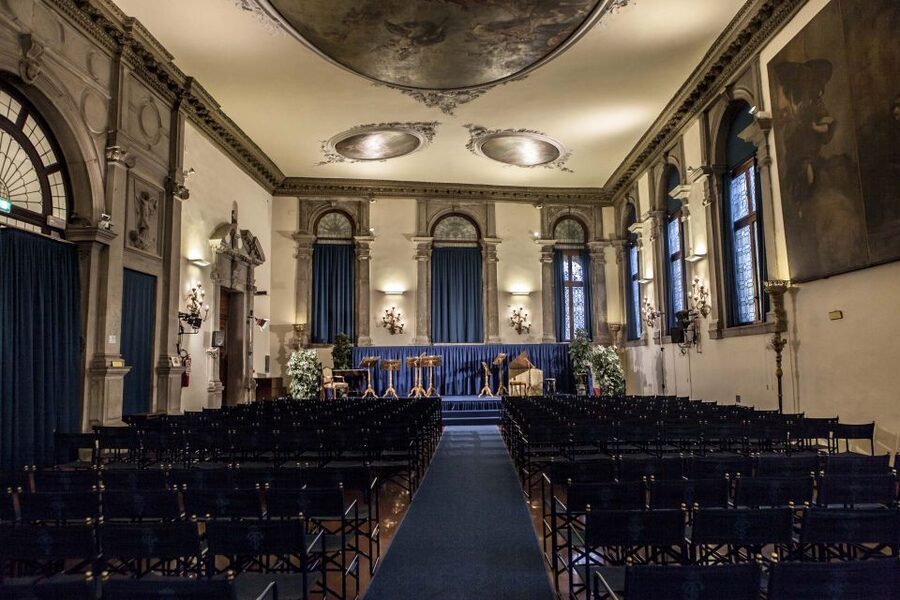
The venue is described as historic, attractive, and easy to reach by water bus. Inside, the hall is intimate rather than grand. That is good news for sound. You are close enough to see the musicians’ hands and facial expressions, though the exact view depends heavily on your row.
Some seats sit quite far back, and the numbering can be less intuitive than expected. A ticket described as rows 13 to 22, for example, may feel much farther from the stage than the wording suggests. If seeing the musicians matters to you, a front-row or VIP option may be worth considering, provided the price difference fits your budget.
The opening half: familiar music with a live edge
The program takes you through all four concertos, generally in the order of Spring, Summer, Autumn, and Winter. Each section has its own mood, and the change from one season to the next keeps the 75-minute program moving.
Spring begins with the most recognizable material. It is light, quick, and full of musical birdsong. Live strings give the opening a lift that recordings often smooth out. The contrast between the full group and the solo violin helps you understand how Vivaldi builds the scene.
Summer is where the performance often becomes more physically demanding. The music moves from heat and stillness toward agitation, then into a storm. Watch the lead violinist here. Rapid bowing and tight rhythm make this one of the hardest parts of the program, and it is also where the concert can feel most dramatic.
Autumn brings a warmer, more relaxed character. Its dance-like rhythms suggest celebration and harvest, followed by quieter passages. The change of pace gives the players room to show phrasing and musical color rather than sheer speed.
The concert may also include a soprano or opera singer for a short vocal section. The supplied performance details do not define a separate opera program, so you should book this primarily for Vivaldi’s instrumental work. Still, the vocal appearance can add a theatrical touch, and it has been a memorable part of some evenings.
The second half and the star of the evening
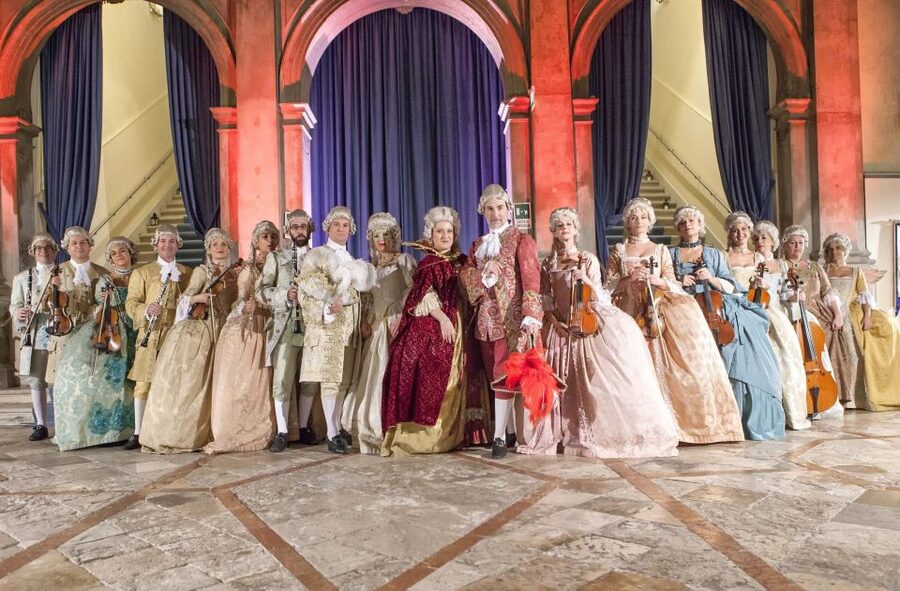
The second half usually contains the most intense playing, especially in Winter. This concerto moves between icy restraint and sudden bursts of energy. You can hear shivering figures, hard winds, and the warmth of a fire suggested through the strings.
The lead violinist is the person to watch. The solo part is often played without a music stand directly in front of the performer, which makes the concentration and stamina easy to appreciate. The violinist’s role is not simply to play the melody. It is a physical conversation with the orchestra, with the solo line stepping forward and then folding back into the group.
The cello also gets welcome attention. It supplies weight beneath the violin and gives the faster movements a firm foundation. The other string players are not decoration around a star soloist. Their timing and balance make the famous passages work.
Some audience members found the second half more enjoyable than the first because the playing becomes more passionate and forceful. Your response may depend on your taste, but Winter is often the natural peak of the evening.
A few more Venice days to weigh up
- Venice: Interpreti Veneziani Concert at Church of San Vidal
★ 4.8 · 3,256 reviews - Venice: The Three Tenors Concert Ticket
★ 4.8 · 1,183 reviews - I Musici Veneziani Concert: Vivaldi Four Seasons
★ 4.5 · 945 reviews - Interpreti Veneziani Ensemble Baroque Concert in Venice Ticket
★ 4.5 · 403 reviews
Costumes and the theater of Baroque music
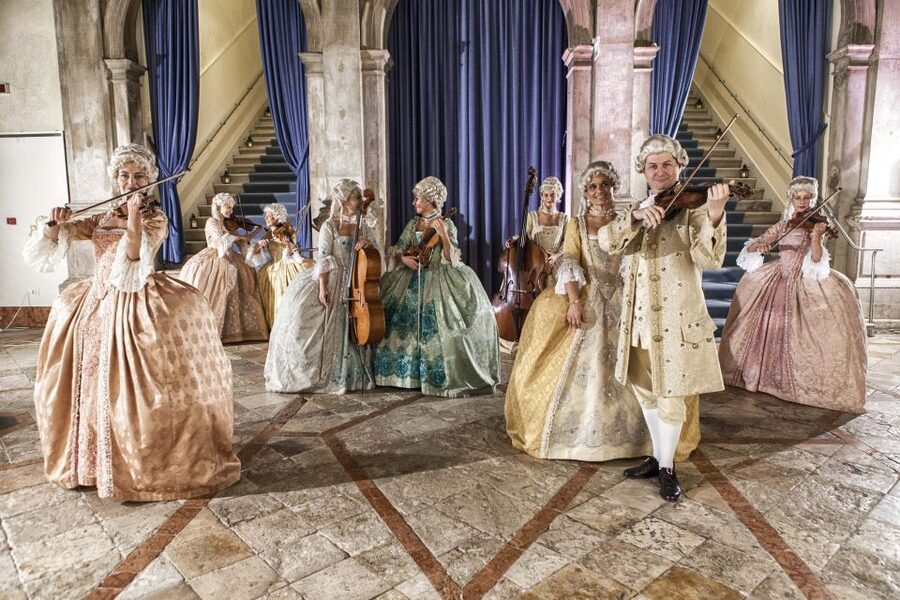
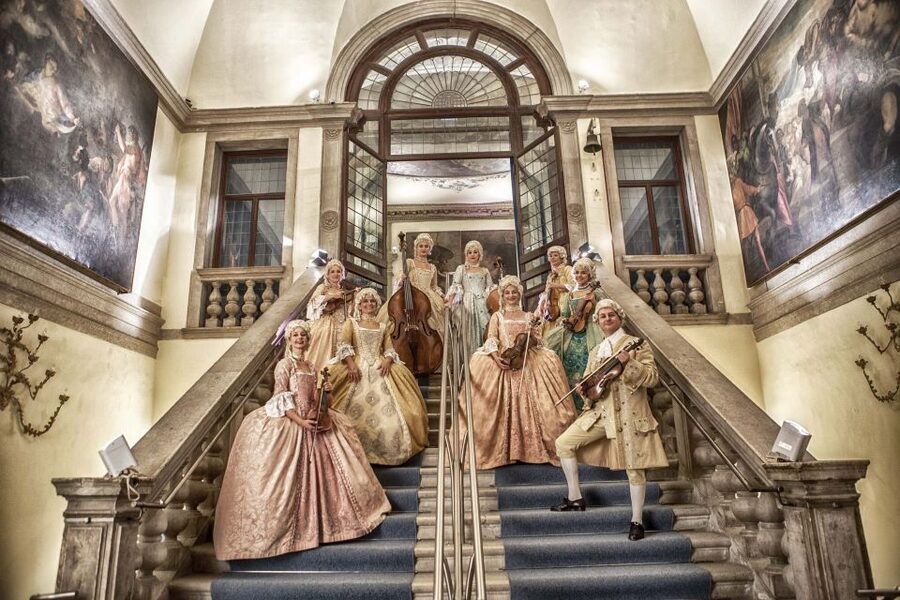
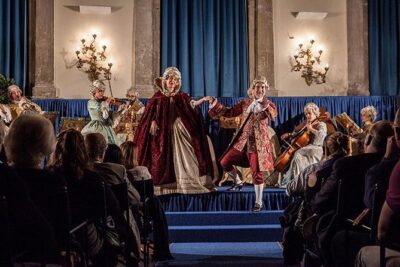
The musicians perform in period-style costumes, and staff may also dress to fit the setting. This does not change the notes, but it changes the way the evening feels.
A standard recital asks you to focus only on sound. Here, the visual setting helps you imagine the world in which Vivaldi worked. The costumes give the concert a touch of theater without turning it into a full staged production.
That distinction matters. You are not attending an opera, and the main event is still a string concert. If you want elaborate scenery, drama, and a large orchestra, this will feel modest. If you enjoy a little ceremony and historical flavor around your music, the costumes are a real bonus.
The soprano’s appearance, when included, adds more stage presence. Keep your expectations clear: the core program remains The Four Seasons, with the musical impact coming from the violinists, cello, and ensemble.
Sound, sightlines, and seating choices
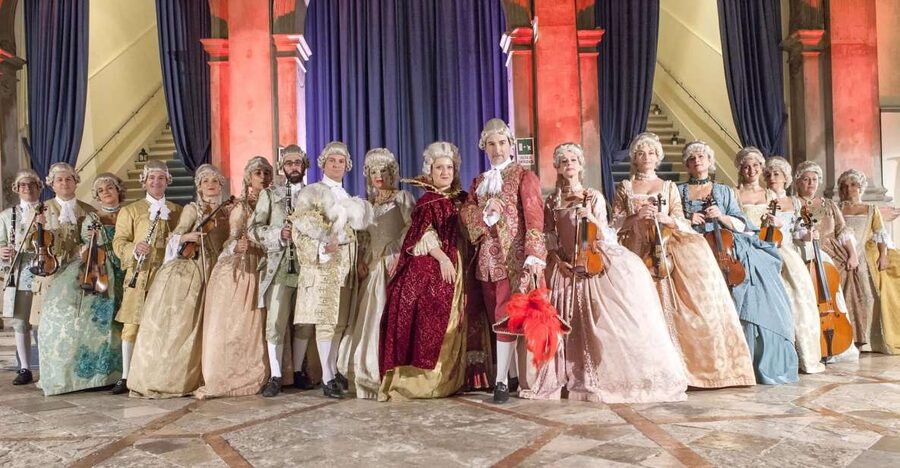
The hall’s intimate size helps the acoustics. The music carries clearly even from the rear, and a seat at the back can still provide a satisfying listening experience. The tradeoff is visual. You may not see the soloist’s bowing as well, and other people’s heads can affect the view.
Front seats offer the best chance to watch the technique. They may not always give the perfect angle, though. The lead violinist can face away from part of the audience while playing, so being in the first rows does not guarantee a full view of the performer’s hands.
The chairs are one of the weaker points. Several audience members found them uncomfortable, particularly during a full 75-minute program. That is not a long concert by classical standards, but hard seating can still bother you, especially if you have spent the day walking Venice’s bridges.
If comfort is important, arrive early and ask about the seating arrangement if staff can help. If price matters more than sightlines, rear seats still offer good sound. The right choice depends on whether you want to study the performers or simply listen.
Is $41 a fair price?
At $41 per person, this concert sits in a reasonable range for an evening attraction in central Venice. The price includes the live classical concert ticket, and the performance lasts 75 minutes. You are paying for skilled musicians, a historic indoor setting, and the convenience of a fixed evening activity.
The value is strongest if you already enjoy classical music or want an easy cultural event after sightseeing. You do not need to commit to a full opera night, formal dinner, or several hours in a theater. The length works well for families, older children, and people fitting music between dinner and an evening walk.
The value is less clear if you expect premium theater seating or a large symphony orchestra. This is a small ensemble in a compact venue. Seats may be close together, some are uncomfortable, and inexpensive tickets can put you toward the rear.
A VIP or front-seat ticket may make sense for serious music fans and anyone who wants to see the violin work. It is not essential for hearing the performance. I would choose the basic ticket if your priority is the music and the Venetian setting, then arrive early rather than assuming a cheap seat will provide a good view.
Timing your Venice evening
The concert is a useful evening choice because it has a clear start and finish. The stated duration is 75 minutes, though the exact start time should be checked when you book. Some performances have begun at 8:30 pm and finished around 10 pm.
That timing leaves room for a late meal afterward. You can also schedule it on your first evening in Venice, when a focused concert may be easier than a long guided walk after a day of arrival hassles. One practical warning: if you are catching a train back to Trieste or another late connection, confirm the end time and allow plenty of time to reach the station or water bus.
Do not bring food or drinks into the performance. There may be a short pause or a natural break in the program, but you should not count on refreshments being available inside. Use the toilet before taking your seat. The building has very limited facilities, with only one or two toilets reported for each gender, so queues can form.
Who will enjoy this concert most?
I would recommend this experience to:
- First-time classical concertgoers who want a famous piece in an approachable format
- Couples looking for a quiet cultural evening
- Families with older children who can sit still for 75 minutes
- Vivaldi fans who want to hear the solo violin live
- Visitors interested in Baroque costumes and Venetian atmosphere
- Anyone seeking an indoor plan in the evening
It is especially good for older children. The nature scenes give them something concrete to listen for, and the costumes make the event easier to follow than a formal recital with no visual context.
You may want to skip it if you dislike string music, need highly comfortable seating, or have difficulty climbing stairs. People with impaired mobility should contact the organizer ahead of time so access arrangements can be discussed. The performance space may be reached by two flights of stairs.
Concert etiquette can be relaxed in a tourist setting, and clapping may occur between movements. If you want a very formal classical experience, the audience atmosphere may feel casual. Silence your phone, avoid conversation, and wait for a clear break before applauding.
Should you book I Musici Veneziani?
Book it if you want to hear one of classical music’s most recognizable works in the composer’s home city, with a strong violin soloist and a little Baroque theater around the music. The combination of excellent musicianship, intimate acoustics, and period costumes makes this more memorable than simply pressing play on The Four Seasons.
Choose your seat with care. Arrive at the ticket office from 8 pm, confirm the actual concert time, and allow for stairs and limited toilets. At $41, it is a sound buy for an atmospheric 75-minute evening, especially if you value live music more than luxury seating.
FAQ
How long is the Vivaldi concert?
The concert lasts 75 minutes.
What music is performed?
The main work is Antonio Vivaldi’s The Four Seasons, a set of four violin concertos representing spring, summer, autumn, and winter.
Who performs the concert?
The performance is by the professional musicians of I Musici Veneziani orchestra.
Are the musicians in period costume?
Yes. The musicians perform in period-accurate Baroque-style costumes, and the staff may also dress to match the setting.
When can I present my voucher?
You can present your voucher at the ticket office from 8 pm. Check your booking for the exact concert starting time, as performances may begin later than the ticket-office opening time.
Is food or drink allowed?
No. Food and drinks are not allowed during the activity.
Is the concert accessible to people with impaired mobility?
People with impaired mobility should contact the organizer in advance so the team can discuss access support. The performance space may involve two flights of stairs.
Just added around Venice
- Exclusive Private Venice Jewish Ghetto Tour★ 5.0 · 41 reviews
- The Secret Corners of Burano★ 5.0 · 41 reviews
- Verona: Private 2-Hour Walking Tour★ 4.9 · 41 reviews
- St Mark’s Basilica & Doge’s Palace Skip the Line – Semi-Private★ 5.0 · 42 reviews
- Venice: 3-Course Dining Experience at Local Home★ 4.8 · 41 reviews
- Wine Tasting in Venice★ 4.6 · 42 reviews
- Venice Skip lines at Doge’s & St. Mark’s with Exclusive Sky Walk★ 4.5 · 42 reviews
- Venice Saint Mark’s Basilica afternoon guided tour★ 4.5 · 42 reviews
Opera and Vivaldi Concerts, compared.
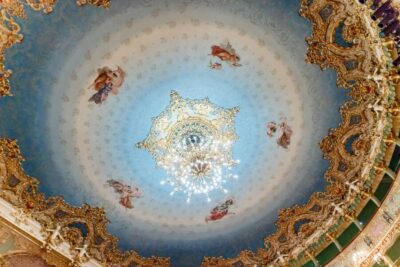
La Fenice Opera House Entry Ticket with Audio Guide
Read our review →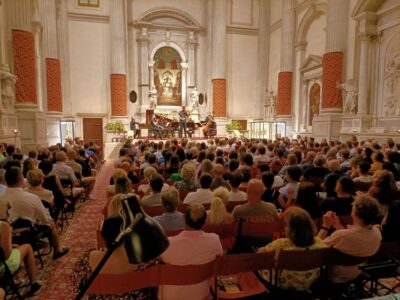
Vivaldi’s Four Seasons Concert & Music Museum Visit
Read our review →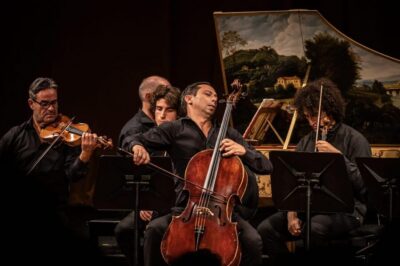
Vivaldi Four Seasons Concert at Vivaldi Church
Read our review →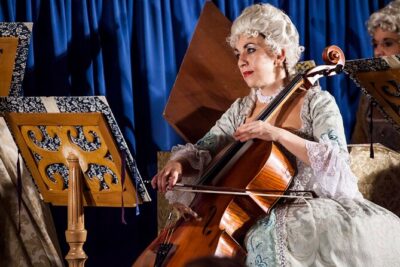
I Musici Veneziani Concert: Vivaldi Four Seasons
Read our review →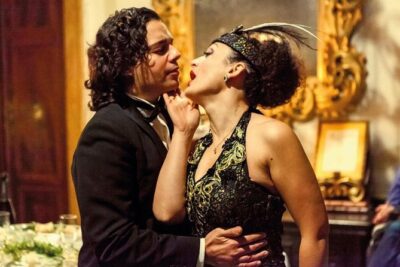
Musica a Palazzo ‘Traveling Opera’ Performance in Venice
Read our review →
I Musici Veneziani Vivaldi’s Four Seasons and Tenor arias
Read our review →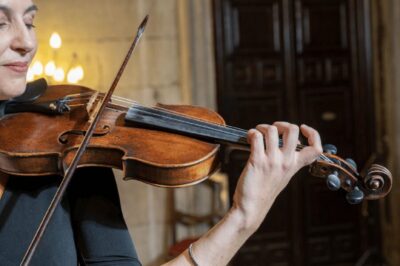
Opera Concert at Casanova Prisons in St. Mark Square
Read our review →Browse the lists this tour appears in