
Reviewed · VERONA TOURS
Verona: the Arena at the Gladiators’ time
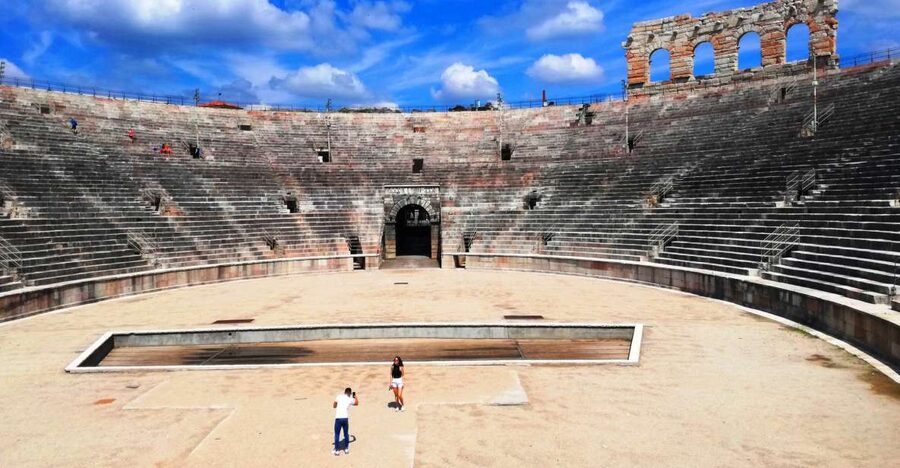
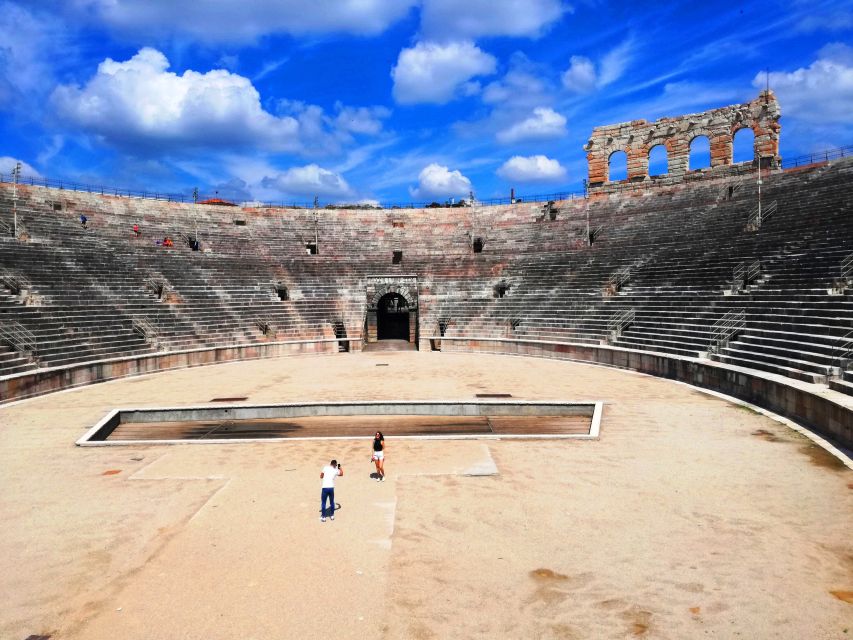
Verona’s Arena is more than a grand oval of pink stone. In one focused hour, guide Fabio Massimo Rapanà shows how this Roman amphitheater moved people from the city square through outer gates, corridors, and vomitoria to their seats. You also follow the route a gladiator would have taken into the arena.
I like the private group format, which keeps the tour flexible for a family or a small party of up to eight. I also like the way the tour begins outside, where the Arena’s size and relationship to Verona make sense before you enter its passageways. The main point to consider is that your admission ticket is not included in the $159 group price, so you need to budget for it separately.
In This Review
- Key points to know before you book
- Starting beneath Verona’s town hall
- Reading the Arena’s missing outer ring
- Entering through gates, corridors, and vomitoria
- Taking the gladiator’s route into the arena
- The final stop in the Arena’s quietest corner
- What the private format is worth at $159
- Who will enjoy this one-hour visit
- Languages, timing, and practical planning
- Should you book Fabio’s Arena tour?
- FAQ
- Where does the Arena tour meet?
- How long does the experience last?
- Is Arena admission included in the $159 price?
- How much is the Arena entrance ticket?
- Can I stay inside the Arena after the guided tour?
- What languages are available?
- Is this a private tour?
- Is the tour suitable for wheelchair users?
Key points to know before you book
- Fabio Massimo Rapanà leads the tour: A certified local guide who can conduct the experience in Italian, German, English, or Spanish.
- The route covers inside and outside: You first study the amphitheater from Piazza Bra, then examine its wing and internal corridors.
- Roman crowd control is part of the story: You see how gates connected with the vomitoria, the passageways that moved spectators into the seating area.
- Gladiators and wild animals get equal attention: The tour points out areas linked with fighters and spaces used to house beasts.
- Arena entry costs extra: Adult admission is listed at €12, with reduced or free entry for several categories.
- The tour lasts about one hour: After the guided portion, you can remain inside the Arena for as long as you wish.
Starting beneath Verona’s town hall
Meet your guide in front of Palazzo Barbieri, Verona’s town hall, beneath the Italian flag. This is an easy spot to identify in Piazza Bra, the broad square in front of the Arena, and the meeting point is shaded by the town hall.
The opening minutes are useful because Fabio does not rush you straight through the ticket entrance. He first places the building in its city setting. From the southern side of the square, you move toward the northern end, near the Bra Gardens, where the Arena’s full outline becomes easier to read.
That outside view does real work. You can begin to understand the original scale of the amphitheater, how it related to the town around it, and how many access points were needed to handle a large crowd. Verona’s famous landmark can look simple from a distance, but its outer shell contains a carefully planned system of gates, stairs, corridors, and seating routes.
I like this start because it gives you a mental plan before you enter. Without it, the inside can feel like a maze of stone arches. With it, the routes have a purpose.
The first outdoor section includes a short photo stop, about five minutes. This is not a long architectural lecture in the square. It is a compact introduction, best suited to you if you want clear orientation rather than a drawn-out city walk.
A few more Verona days to weigh up
- Verona: Hop-on Hop-off Tour 24 or 48-Hour Ticket
★ 4.4 · 2,010 reviews - Verona: History and Hidden Gems Guided Walking Tour
★ 5.0 · 1,379 reviews - Verona: Priority Access Arena Guided Tour
★ 4.6 · 1,152 reviews
Reading the Arena’s missing outer ring
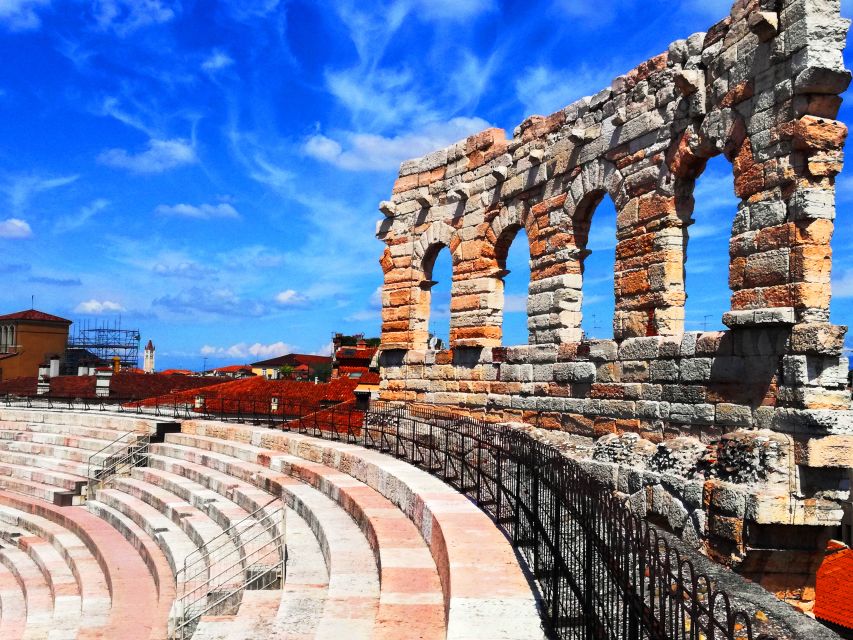
The next short walk takes about two minutes and brings you toward the Arena’s surviving wing. This section offers a closer look at one of the building’s most recognizable features.
The wing is an important visual clue. It helps you think about the Arena not simply as a circular theater, but as a large Roman structure whose outer form has changed over time. Fabio points out details that are easy to miss when you are focused only on taking a picture from the center of Piazza Bra.
The tour is especially good for readers who like buildings explained through what they can actually see. You are not asked to remember a long list of dates before the object comes into view. Instead, the shape, entrances, and surviving stonework provide the starting point.
A second brief photo stop follows, again lasting about five minutes. These pauses keep the pace comfortable and give you time to take in the exterior before the indoor visit.
The outside portion is short, so do not book this expecting a broad tour of Verona or a full discussion of every period in the city’s past. The subject stays firmly on the Arena and its use.
Entering through gates, corridors, and vomitoria
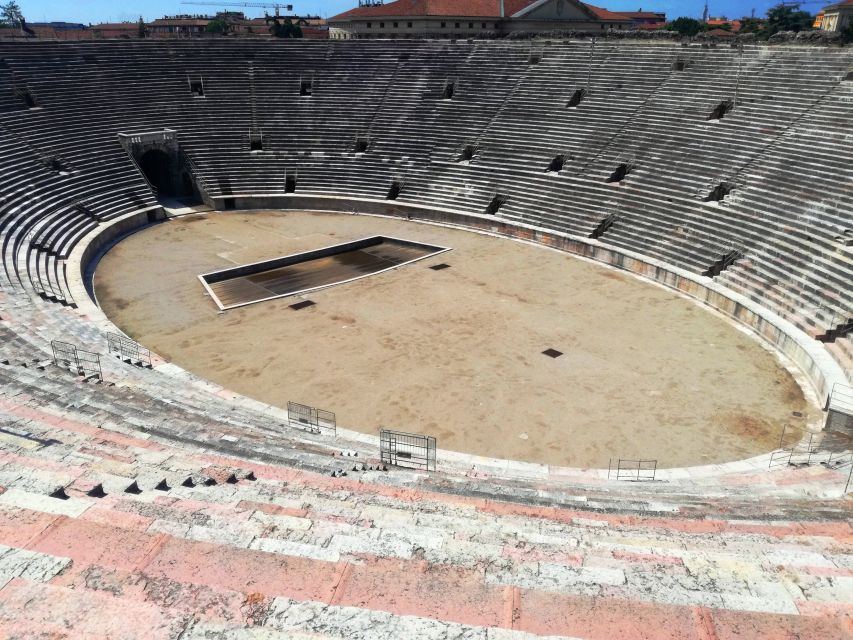
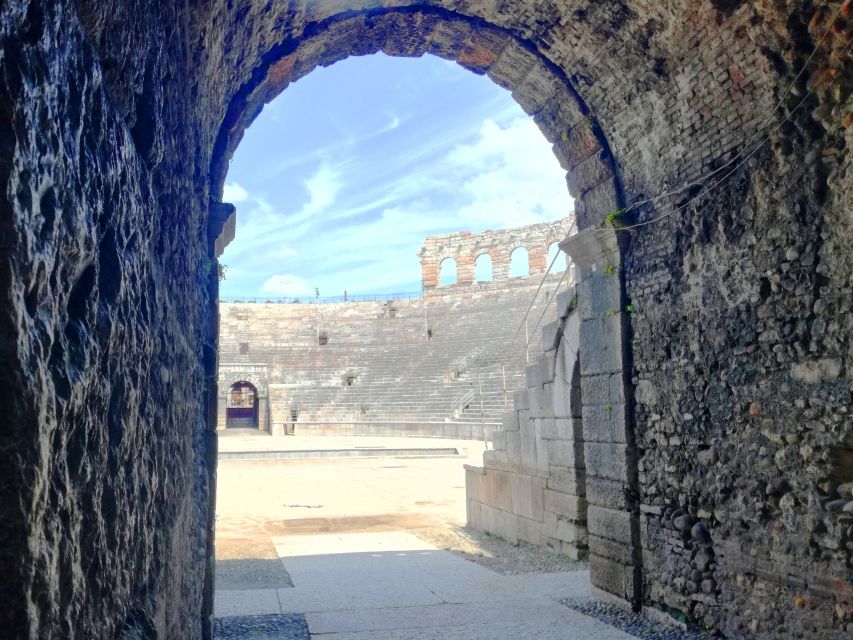
The main visit inside the Arena lasts about 45 minutes. This is where the tour becomes most useful.
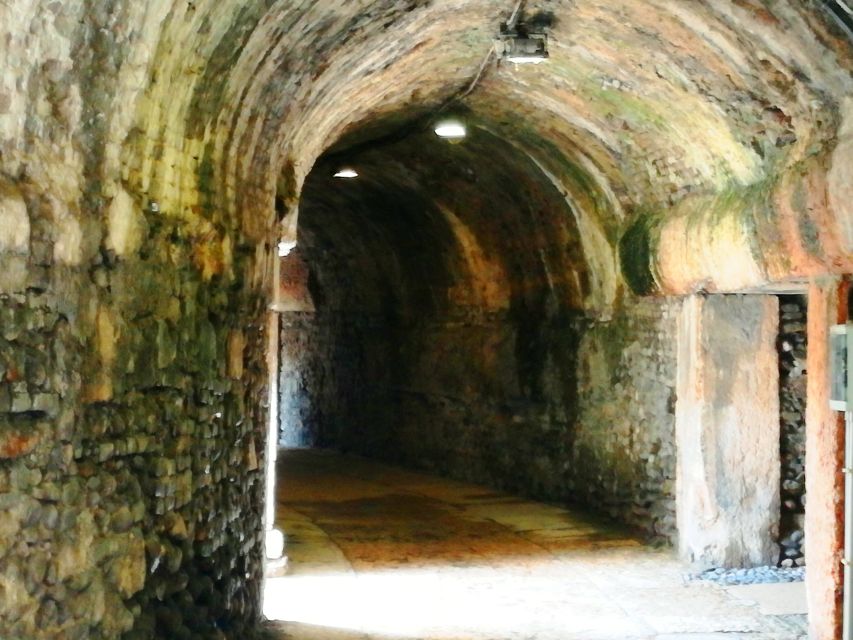
Fabio leads you along the corridors and under the archways, explaining how the external gates connected with the internal vomitoria. The word can sound odd today, but in Roman amphitheater design it refers to passageways that moved crowds toward their seating areas. The point is not just vocabulary. These routes reveal the practical engineering behind a venue built for mass gatherings.
I like this part because it changes the way you look at the Arena. You are no longer seeing a pile of old arches. You are following a system designed to direct people, separate movement through the building, and connect the public areas with the central arena.
The tour also takes you toward the sections associated with gladiators and the spaces used for wild animals. The information is presented through anecdotes as well as physical evidence found locally. That combination matters. A story about a fighter can catch your attention, but the surviving corridors and chambers give the story a physical anchor.
The experience does not depend on theatrical costumes or a staged show. Fabio’s strength is the telling of the Arena’s story, supported by what you can see around you. One family of four adults and six children found that the children stayed involved, and Fabio answered their questions. When one question required more research, he later sent them the answer. That suggests a guide willing to follow up instead of brushing aside a difficult detail.
Taking the gladiator’s route into the arena
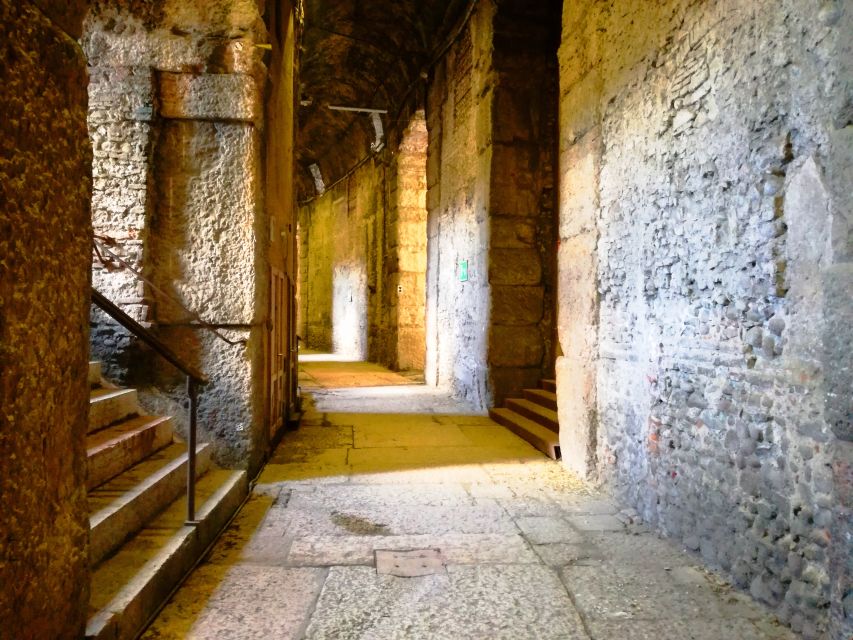
One of the tour’s best moments is the chance to enter the arena as a gladiator would have done. The experience is not presented as a full role-playing performance, but the route gives you a physical sense of the building’s design.
You can then take a seat on the stone steps, as spectators still do. From there, you get a different view of the central space and the surrounding structure. Sitting matters. It lets you consider the distance between the arena floor and the audience, and it turns the building from a monument into a place designed for watching action.
The tour also explains anecdotes tied to gladiator games. The details help you picture the work of the fighters, the handling of animals, and the movement of the crowd. Since the guided visit is only one hour, the discussion cannot cover every aspect of Roman entertainment, social life, and politics. Instead, it offers a concentrated look at how this particular building worked during the age of gladiators.
I would choose this tour if you want the Arena explained as a functioning Roman venue. If you mainly want time for photographs, you may prefer to enter on your own and set your own pace.
A different sort of day out around Verona:
- Verona: Juliet’s House Fast-Track Entry Ticket & Audio Guide
★ 4.2 · 1,121 reviews - Verona: Small Group Guided Walking Tour with Arena Tickets
★ 4.9 · 848 reviews - Verona: Arena di Verona Opera Ticket
★ 4.6 · 721 reviews - Verona: Pasta and Tiramisu Cooking Class with Fine Wine
★ 4.8 · 633 reviews
The final stop in the Arena’s quietest corner
The guided portion finishes in what is described as the most hidden and evocative part of the amphitheater. The exact details of this final area are not specified in advance, but it provides a quieter ending away from the main flow of the visit.
Once the tour ends, your free time begins. You can remain inside the Arena for as long as you wish. This is a valuable feature because the official guided portion is compact, while your own time afterward lets you revisit the stone steps, corridors, or views that caught your attention.
The arrangement also gives you a clean division between explanation and exploration. Fabio supplies the structure and stories, then you can linger without having to keep up with the group.
The activity ends back at the meeting point area, but the main value at the finish is the extra time inside the amphitheater rather than a final transfer elsewhere.
What the private format is worth at $159
The price is $159 per group of up to eight people. That figure covers the private guided tour, not the Arena entrance ticket.
For a full group, the price works out to less than $20 per person before admission. For two people, the per-person cost is much higher. The private format makes the most financial sense for a family, two couples, or a small group that wants its own guide and the ability to ask questions.
Arena admission is listed separately at €12 for adults. The listed reduced price is €9 for people over 65, €3 for European Union citizens aged 18 to 25, and free for minors and Verona Card holders. The information also lists €1 entry on the first Sunday of the month from November through March.
The ticket information has a small wrinkle: the tour details say you can skip the ticket line, but admission still must be purchased separately, online or on the spot. Fabio can help you with that process. I would clarify the current ticket rules when booking, especially if someone in your group qualifies for free or reduced entry.
The value here is not in saving money on admission. It is in getting a focused explanation of a complicated building without joining a large shared group. You are paying for access to a guide’s attention, a clear route, and stories connected to the physical remains.
Who will enjoy this one-hour visit
This tour suits you if you like history best when it is tied to a place you can walk through. Families may find the gladiator stories and animal quarters more engaging than a standard architectural tour, and the private group means children can ask questions without holding up a large party.
It also works well for a first visit to Verona. The route is short and focused, so you can fit it into a busy day of sightseeing. A previous Arena tour is not required, and the outdoor introduction gives you the basic orientation you need.
The experience is also a good match for anyone who wants a guide who can respond to questions. Fabio’s follow-up on an unanswered question is a small but meaningful detail. It shows attention beyond the scheduled hour.
I would be more cautious if you need step-free access. The activity is not suitable for wheelchair users, and the Arena’s corridors, arches, seating areas, and stone steps can be difficult for anyone with limited mobility.
You should also think about the group size. A private group can include up to eight people, which is ideal for a family or friend group. If you are alone or traveling as a couple, the $159 group rate may feel steep unless personal attention is a priority.
Languages, timing, and practical planning
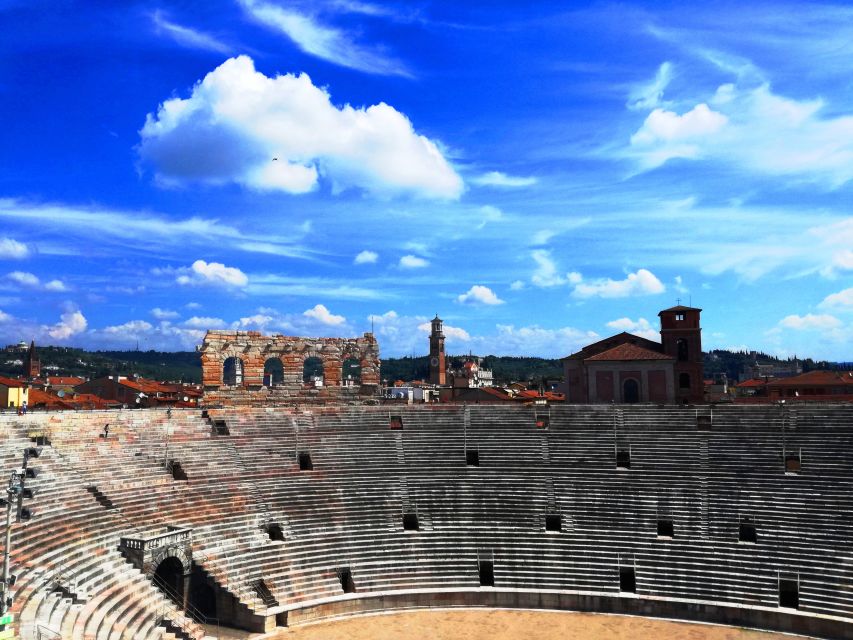
The tour is available in English, Italian, German, and Spanish. When you select a time, check the actual starting options for your date, since the duration is one hour and the available start times vary.
The meeting point is in Piazza Bra, in front of the town hall and under the Italian flag. Arrive with enough time to find Palazzo Barbieri and identify the guide before the walk begins. The square is large, so relying on a last-second arrival could create needless stress.
Wear shoes suitable for walking over uneven stone surfaces. The provided information does not specify weather arrangements or seating conditions, so you should be prepared for an outdoor opening followed by movement through an ancient structure.
The tour includes the guided visit inside and outside the Arena. It does not include entrance tickets, meals, transport, or a separate Verona city tour. If you want broader city orientation, pair this with a walking tour on another part of your visit. Fabio’s city tour and Arena tour are described as covering different information, and doing the wider walk first can help you get your bearings before focusing on the amphitheater.
Free cancellation is available up to 24 hours before the start for a full refund. You can also reserve now and pay later, which helps if you are still arranging a Verona itinerary.
Should you book Fabio’s Arena tour?
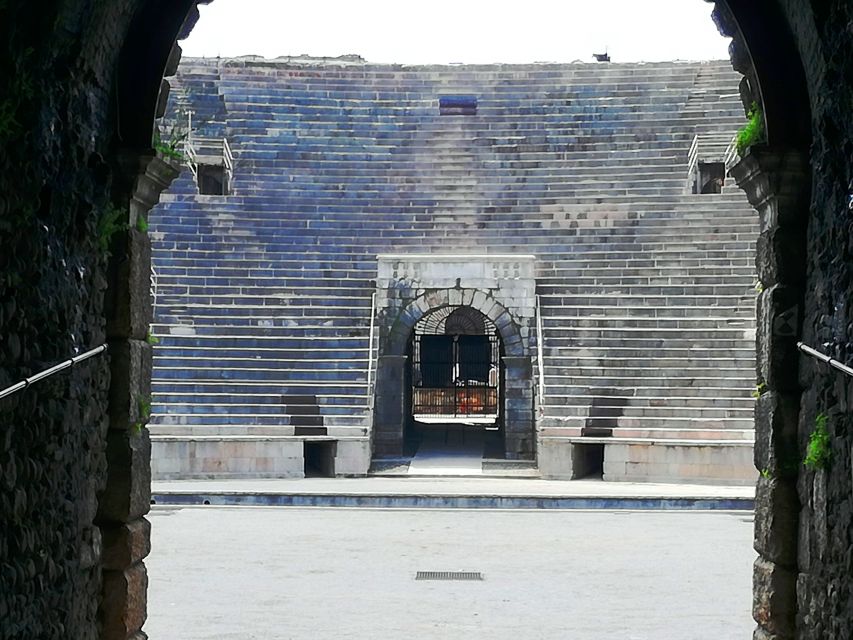
Book it if you want the Arena explained through its working parts: the outer shape, gates, crowd routes, gladiator areas, animal quarters, arena entrance, and spectator steps. Fabio’s approach is especially useful for families and small private groups that want to ask questions and hear more than a quick set of facts.
Think twice if you want a long, theatrical performance, a broad tour of Verona, or a low-cost entry-only visit. The guided hour is concentrated, and admission costs extra. For a group of up to eight, though, the price is fair for a private guide and a well-organized route through one of Italy’s most important Roman buildings.
My practical choice would be to book this early in your Verona stay, especially if you want a clear introduction to the city’s main monument. Come ready to walk, bring your questions, and keep time afterward to explore the Arena at your own pace.
FAQ
Where does the Arena tour meet?
Meet your guide in front of Palazzo Barbieri, Verona’s town hall, beneath the Italian flag.
How long does the experience last?
The guided activity lasts one hour. The itinerary includes about 45 minutes inside the Arena, along with short outdoor walking and photo stops.
Is Arena admission included in the $159 price?
No. The $159 price covers the guided tour for a private group of up to eight, but entrance tickets must be purchased separately.
How much is the Arena entrance ticket?
The listed prices are €12 for adults, €9 for people over 65, €3 for European Union citizens aged 18 to 25, and free for minors and Verona Card holders. Entry is listed as €1 on the first Sunday of the month from November through March.
Can I stay inside the Arena after the guided tour?
Yes. After the guided portion ends, your free time begins, and you may remain inside the amphitheater for as long as you wish.
What languages are available?
The tour can be conducted in Italian, German, English, or Spanish.
Is this a private tour?
Yes. The activity is arranged for a private group of up to eight people.
Is the tour suitable for wheelchair users?
No. The activity is not suitable for wheelchair users.
Just added around Verona
- Verona: Private 2-Hour Walking Tour★ 4.9 · 41 reviews
- Valpolicella Lunch or Dinner Wine & Food tasting with Amarone★ 5.0 · 43 reviews
- The 10 Tastings of Verona With Locals: Private Food Tour★ 4.5 · 45 reviews
- Arena di Verona Opera Ticket Package★ 4.0 · 46 reviews
- Unique Wine tasting in Verona, with Amarone docg★ 5.0 · 46 reviews
- Verona: Juliet’s House Fast-Track Entry Ticket & Audio Guide★ 3.5 · 52 reviews
- Valpolicella Wine Experience at Montresor winery★ 5.0 · 54 reviews
- Verona: City Highlights Private Tour★ 4.8 · 56 reviews
Verona Tours, compared.
Juliet’s House Fast-Track Entry Ticket & Audio Guide
Read our review →
Small Group Guided Walking Tour with Arena Tickets
Read our review →
Pasta and Tiramisu Cooking Class with Fine Wine
Read our review →
Browse the lists this tour appears in