Reviewed · VENICE TOURS
Biennale Architettura 2025 Intelligens Naturale Artificiale
Venice’s Biennale Architettura is less about admiring pretty buildings and more about asking hard questions: How should we build in a changing climate? What can technology do for nature? What happens when communities, machines, and designers share the work? This private tour gives those questions a useful framework, with two hours at either Giardini or Arsenale and a guide who can connect difficult ideas to what you are seeing. I especially like the private format and the chance to adjust the tour to your interests. I also like that the guide can explain the national pavilions instead of leaving you to decode them alone.
The main catch is simple: your admission ticket is not included, and two hours covers only one of the two main venues. If you want both Giardini and Arsenale, plan on adding another two hours and buying the proper entry access. That makes this a focused introduction rather than a complete Biennale day.
In This Review
- Key points at a glance
- What the 2025 Biennale is really asking
- Choosing between Giardini and Arsenale
- Starting at the Giardini entrance or Arsenale gate
- How the guided walk changes the experience
- A closer look at the 110-minute Biennale visit
- What $162 means in practical value
- Accessibility, languages, and group size
- Who will get the most from this tour
- Should you book the Biennale Architettura 2025 tour?
- FAQ
- How long does the Biennale Architettura tour last?
- Does the tour visit both Giardini and Arsenale?
- Is the Biennale admission ticket included?
- Where does the tour begin and end?
- What languages are available?
- Is this a private tour?
- Is the tour wheelchair accessible?
- Can I cancel or pay later?
Key points at a glance
- Choose one major venue: Spend two hours at Giardini or Arsenale, with the second site available as an additional tour.
- Private attention: Your group receives a licensed guide rather than joining a large standard walk.
- A guide who explains the ideas: Valerio Coppo is available for tours and speaks very good German, according to the experience details.
- Four language options: Tours can be conducted in English, German, Italian, or Spanish.
- Architecture beyond buildings: Expect exhibits about nature, technology, sustainability, inclusion, and shared intelligence.
- Practical flexibility: You can reserve now and pay later, with free cancellation up to 24 hours before the tour.
What the 2025 Biennale is really asking
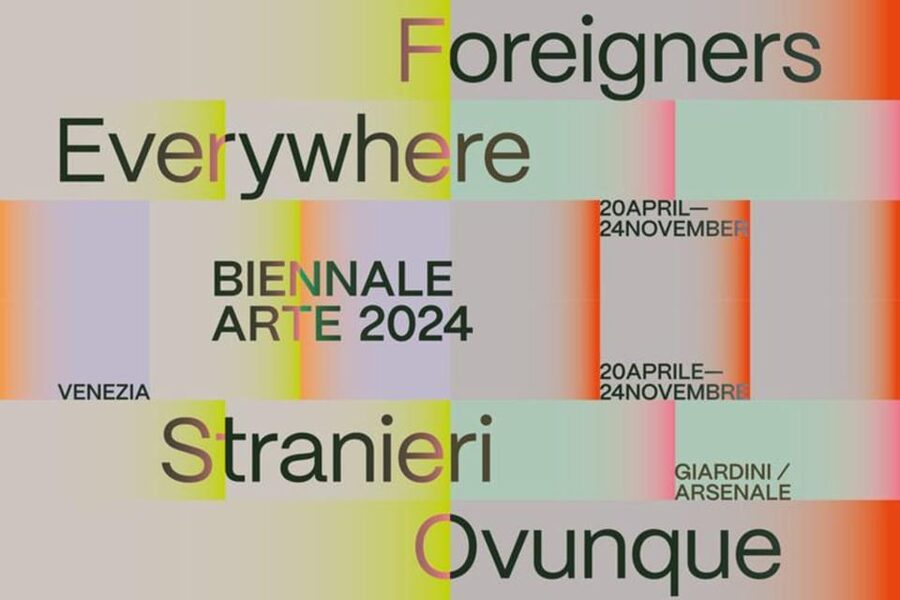
The 2025 exhibition uses the theme Intelligens. Naturale. Artificiale. Collettiva. The title points toward three kinds of intelligence: natural, artificial, and collective. In plain terms, the exhibition asks you to consider how plants, animals, machines, people, and communities might shape the places we build.
That makes this tour a good match for anyone who wants more than a quick procession through striking rooms. Architecture Biennales can be hard to read without help. A wall of diagrams, a strange installation, or a room filled with unfamiliar materials may look impressive but say little to you at first. A guide can supply the missing link between the object and the idea behind it.
I like the subject because it reaches beyond professional architecture. You do not need to know technical drawing or urban planning to think about climate, access, materials, public space, and technology. The guide’s job is to make those topics readable without flattening them into a school lecture.
The experience also places current architecture in a larger conversation about the future. The focus on sustainability and inclusion is not decorative. It asks who benefits from design, who gets left out, and how buildings and public spaces can respond to environmental pressure. You may not agree with every proposal, but the tour gives you a better way to judge what you see.
A few more Venice days to weigh up
- Venice: Doge’s Palace Reserved Entry Ticket
★ 4.6 · 42,716 reviews - Venice: Grand Canal Gondola Ride with App Commentary
★ 4.1 · 18,908 reviews - Boat Trip: Glimpse of Murano, Torcello & Burano Islands
★ 4.3 · 15,699 reviews
Choosing between Giardini and Arsenale
The biggest decision comes before the tour begins: Giardini or Arsenale. The two venues offer different settings and different ways to encounter the Biennale, so do not treat the choice as a minor detail.
Giardini is the traditional starting point for many Biennale visits. It contains national pavilions, each presenting a country’s own architectural viewpoint. That arrangement gives the tour a strong international character. You move from one national presentation to another, seeing how different teams respond to a shared global theme.
The appeal of Giardini is the variety. One pavilion may focus on materials or construction, while another may center on community, climate, or social change. The guide can help you compare those approaches instead of treating every pavilion as an isolated stop. This is particularly useful if you have limited time and want a clear route through the site.
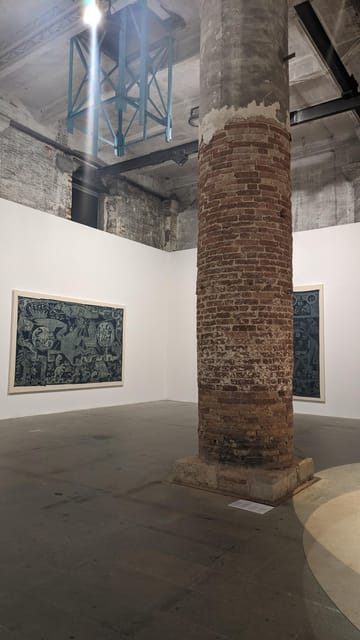
Arsenale offers a different type of visit. The venue’s large exhibition spaces are suited to monumental installations and broad presentation areas. The tour can show you how architects and designers work at a larger scale, sometimes beyond the normal boundaries of building design.
I would choose Giardini if national perspectives interest you most. Choose Arsenale if you prefer a concentrated exhibition setting with large-scale projects and installations. The activity details allow for a private visit to either venue, but they do not promise a fixed list of pavilions. Your guide can shape the route around your interests and the day’s practical conditions.
If you have enough time and the Biennale matters to you, adding the second venue is worthwhile. The extra visit takes another two hours and can happen on the same day or on a later day. The first tour alone is enough for a useful introduction, but it will not give you the full scope of both sites.
Starting at the Giardini entrance or Arsenale gate
The meeting point is the main entrance at the venue you selected. At Giardini, the listed starting location is Giardini della Biennale. At Arsenale, you meet at the Arsenale entrance.
The first stop is a visitor center visit of about 10 minutes. This gives you a chance to get oriented before the main walk. It is a small part of the schedule, but it matters because Biennale grounds can feel confusing when you are trying to find pavilions, exhibition halls, and meeting points on your own.
After that, about 110 minutes are reserved for the guided Biennale visit and walking. The timing suggests a steady tour rather than a long, leisurely stop at every exhibit. You will see a selection of projects and installations, listen to explanations, and move through the venue with a clear purpose.
Tell the guide what interests you before setting off. The tour can be adjusted to your preferences, so architecture, design, sustainability, technology, and national pavilions can receive different levels of attention. A private group makes that conversation easier than it would be on a large public tour.
The tour ends back at the original meeting point. That is useful for planning the rest of your day, especially if you have a restaurant reservation, a separate museum visit, or a water transport connection afterward. Still, allow yourself a little breathing room rather than scheduling something immediately after the advertised end time.
How the guided walk changes the experience
The strongest reason to book this tour is the guide. The Biennale presents ideas through objects and installations, but the meaning is not always obvious. A strong explanation can turn a puzzling room into a discussion about social needs, material choices, ecological limits, or new technology.
Valerio Coppo leads the experience, and the supplied information specifically notes his very good German, friendly manner, and strong command of the subject. That is valuable if you want a German-language tour in particular. Tours can also be conducted in English, Italian, or Spanish.
The best part of a private tour is not simply having a guide to yourself. It is the ability to stop and ask the question that occurs to you. You can request more context about a pavilion, ask why an installation matters, or spend less time on a project that does not interest you.
I also appreciate that the tour promises history about the exhibition and its pavilions. Contemporary work can seem disconnected from Venice, but some background helps you understand why the Biennale carries such weight in the architecture world. The guide can place the current exhibition within the broader story of the event and its international format.
Do keep your expectations reasonable. A two-hour walk cannot explain every pavilion or installation at either venue. The guide provides a focused route and interpretation, not a complete scholarly survey. If you want to examine every room closely, you will need extra independent time after the tour.
A different sort of day out around Venice:
- Venice: Grand Canal by Gondola with Live Commentary
★ 4.1 · 13,681 reviews - Venice: La Fenice Opera House Entry Ticket with Audio Guide
★ 4.6 · 11,742 reviews - Doge’s Palace & St. Mark’s Basilica with Terrace Access Tour
★ 4.7 · 10,697 reviews - Venice: Burano, Torcello & Murano Boat Tour w/Glassblowing
★ 4.4 · 10,245 reviews
A closer look at the 110-minute Biennale visit
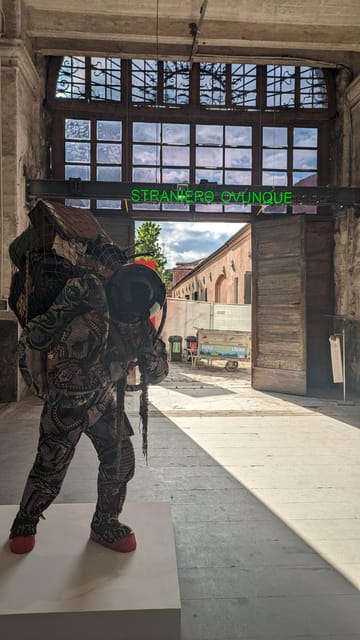
The main portion of the activity lasts around 110 minutes. You can expect to walk through exhibition spaces and stop at selected works while the guide explains how they relate to Intelligens. Naturale. Artificiale. Collettiva.
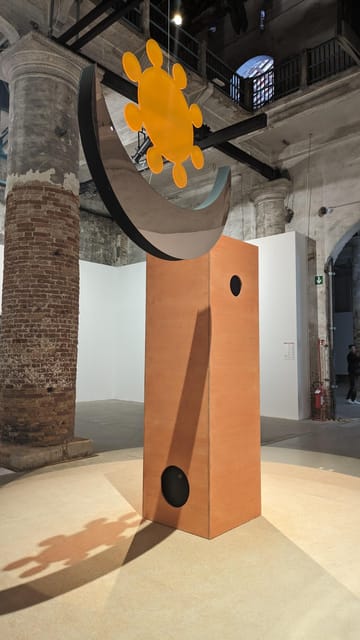
The exhibits may challenge your usual idea of architecture. The focus is not limited to finished buildings. You might find work dealing with public life, ecological systems, digital tools, shared decision-making, or new ways of using space. The supplied information describes monumental installations that reach beyond normal artistic practice, so this is not only a tour for people who want to compare façades and floor plans.
The guide’s interpretation is especially useful when an installation seems abstract. Ask what problem the designer is addressing. Ask who the intended audience is. Ask how the idea might affect ordinary life. Those questions can make the exhibition more concrete and help you decide which projects deserve a second look.
Sustainability receives particular attention. That does not mean every exhibit offers a practical solution. Some proposals may be speculative, symbolic, or deliberately provocative. The value lies in seeing several different approaches side by side and discussing their limits.
Inclusion is another central concern. Architecture shapes access to public life, and the Biennale’s theme invites you to think about who can use a space and who cannot. A good guide can point out those questions even when an exhibit does not spell them out.
The tour also explores the relationship between technology and nature. Rather than presenting artificial intelligence as a simple cure for environmental problems, the exhibition asks how natural and artificial systems might work together. That makes the visit timely, but it also means you should expect ideas and questions rather than a tidy set of answers.
What $162 means in practical value
The price is $162 per person. That is a considerable fee for two hours, particularly because the Biennale admission ticket is separate. You should count the ticket cost when comparing this experience with a self-guided visit.
The fee makes more sense for a private group than for one person booking alone. If several people share the experience, you are paying for focused guide time, a selected route, and the ability to shape the discussion. A private tour also gives you a better chance to ask questions without feeling that you are holding up a large group.
For an architecture enthusiast, design student, or visitor with limited time, the guidance may provide strong value. You can get a quicker grasp of the exhibition’s main ideas and avoid wandering without context. The German-language option may be especially useful, given the positive comments about Valerio Coppo’s communication and subject knowledge.
For a casual visitor who enjoys simply looking at installations, the added cost may be harder to justify. You could buy admission and explore independently, then spend as long as you like with the works that catch your eye. The tradeoff is that you may miss the connections between projects and the broader meaning of the exhibition.
I would consider this tour good value if you care about understanding the work, not just photographing it. I would be more cautious if your priority is a low-cost visit or a full day at both venues. In that case, compare the private tour fee with the value of buying admission and allowing yourself several hours to explore at your own pace.
The reserve-now, pay-later option helps with planning. You can hold the booking without paying immediately, and cancellation is free up to 24 hours in advance. Those terms are useful when your Venice schedule is still moving, but they do not reduce the separate admission cost.
Accessibility, languages, and group size
The experience is offered as a private group tour, although a small-group tour may be planned on selected days. Confirm the arrangement when booking if having a fully private guide is important to you.
The tour is listed as wheelchair accessible, and a wheelchair-accessible private tour can be arranged on request. If you have a disability or other special need, contact the provider in advance so the route can be prepared properly. Do not wait until arrival to raise an access concern.
Language choice is broad for an international exhibition. English, German, Italian, and Spanish are available. If you want a specific language, select it during booking or confirm it ahead of time.
The meeting and ending point are the same. That makes the activity easy to combine with nearby plans, but you should still account for the walking involved inside the venue. The advertised duration is two hours, with the visitor center taking about 10 minutes and the main tour taking about 110 minutes.
Who will get the most from this tour
I would recommend this experience to:
- Architecture and design enthusiasts who want interpretation, not just entry.
- First-time Biennale visitors who find the exhibition format confusing.
- Visitors with only two hours for one venue.
- Private groups with different interests that want a flexible route.
- German-speaking visitors who value Valerio Coppo’s language ability.
- Curious museumgoers who enjoy questions about sustainability, technology, and public life.
I would be less likely to recommend it to someone who wants to see both Giardini and Arsenale in one short visit. The tour covers one venue only, and adding the second requires another two hours. I would also think twice if you prefer complete freedom to linger at every installation without a guide setting the pace.
Should you book the Biennale Architettura 2025 tour?
Book it if you want the Biennale to make sense quickly. The private format, flexible focus, and licensed guide are the main benefits, and the strongest praise goes to Valerio Coppo’s clear German and strong command of the subject. You are paying for interpretation and time saved, not simply for access.
Before booking, decide which venue suits you better and add the separate admission ticket to your budget. If both Giardini and Arsenale are essential, plan a second two-hour session. For the right visitor, this is a thoughtful way to approach one of Venice’s most demanding cultural events. For a budget-minded visitor who enjoys self-guided exploration, admission alone may be the better choice.
FAQ
How long does the Biennale Architettura tour last?
The tour lasts two hours. About 10 minutes are set aside for the visitor center, followed by approximately 110 minutes of guided walking and exhibition viewing.
Does the tour visit both Giardini and Arsenale?
No. The two-hour tour visits either Giardini or Arsenale. A second venue can be arranged with an additional two-hour tour on the same day or a later day.
Is the Biennale admission ticket included?
No. Admission to the Biennale is not included. You can buy the ticket online or on-site.
Where does the tour begin and end?
The tour begins at the main entrance of the selected venue, either Giardini or Arsenale. It ends back at the same meeting point.
What languages are available?
The tour can be conducted in English, German, Italian, or Spanish.
Is this a private tour?
It is offered as a private group tour. On selected days, a small-group tour may be planned, so confirm the arrangement if privacy is essential.
Is the tour wheelchair accessible?
Yes. A wheelchair-accessible private tour can be arranged upon request. You should provide details about special access needs in advance.
Can I cancel or pay later?
You can cancel up to 24 hours before the tour for a full refund. The reserve-now, pay-later option lets you book without paying immediately.
Just added around Venice
- Padua: Private Pasta-Making Class at a Local’s Home★ 5.0 · 3 reviews
- Padua City Sightseeing Walking Tour of Must-See-Sites with Local Guide★ 5.0 · 3 reviews
- Gondola Ride and St Mark’s Basilica★ 4.5 · 3 reviews
- Venice: Market Tour and Meal at a Local’s Home★ 4.3 · 3 reviews
- VIRTUAL MUSEUM: Creature di Gomma – Venice Vintage Toys★ 4.7 · 3 reviews
- Venice: The Best of Dolomites 3Cime and Refuges with Drone★ 5.0 · 3 reviews
- Verona: Blindfolded Wine Tasting★ 5.0 · 3 reviews
- 3 Hour Shared Walking and Aperitivo Tour of Verona★ 5.0 · 3 reviews
Venice Tours, compared.

Grand Canal Gondola Ride with App Commentary
Read our review →
Boat Trip: Glimpse of Murano, Torcello & Burano Islands
Read our review →
La Fenice Opera House Entry Ticket with Audio Guide
Read our review →
Doge’s Palace & St. Mark’s Basilica with Terrace Access Tour
Read our review →
Burano, Torcello & Murano Boat Tour w/Glassblowing
Read our review →