
Reviewed · MUSEUMS
Da Vinci Interactive Museum Venice Scuola di San Rocco
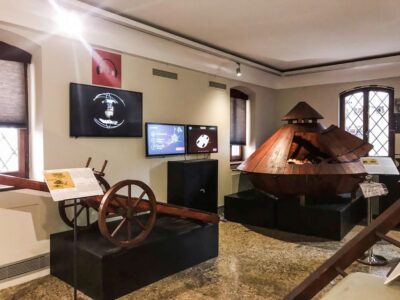
Leonardo da Vinci’s ideas come to life here through working replicas you can turn, pull, test, and study. The compact museum near Scuola Grande di San Rocco presents his designs as practical objects, not just drawings behind glass.
I like the hands-on machines and the clear displays in six languages. I also like the backlit copies of major paintings, which make it easier to study details in works such as the Mona Lisa and The Last Supper. The main drawback is size: you may finish in 20 minutes, though a careful visit can last about an hour.
In This Review
- Key points
- What this small Venice museum actually offers
- Why the interactive machines matter
- The four sections: earth, water, air, and fire
- Leonardo’s anatomy and art on the lower level
- Films, panels, and language support
- How long you should allow
- Price and value at $10.21
- Opening hours and simple planning tips
- Who will enjoy this most
- What makes the experience worthwhile
- Should you book the Leonardo da Vinci Museum?
- FAQ
- Where is the Da Vinci Interactive Museum in Venice?
- What are the museum’s opening hours?
- How long does a visit take?
- Is a professional guide included?
- Are the paintings original?
- Can I cancel my ticket?
Key points
- Four sections: Machines are arranged around earth, water, air, and fire.
- Hands-on exhibits: You can operate many replicas and work through simple puzzles.
- Art and science together: Anatomy studies sit beside high-resolution, backlit copies of famous paintings.
- Family appeal: Children often get the most from the movable machines, but adults can learn plenty about Leonardo’s range.
- Compact visit: Plan on 45 minutes, with extra time if you read every panel or use the audio guide.
- Useful location tip: Search for the museum at Campo San Rocco so you do not confuse it with another Leonardo museum in Venice.
What this small Venice museum actually offers
This is not a grand art museum filled with original Leonardo paintings. It is an educational exhibition built around replicas, diagrams, multimedia material, and interactive devices.
That distinction matters. If you are hoping to stand before original Renaissance masterpieces, this is the wrong place. If you want to understand how Leonardo thought, and to see his ideas made into objects you can handle, the museum makes more sense.
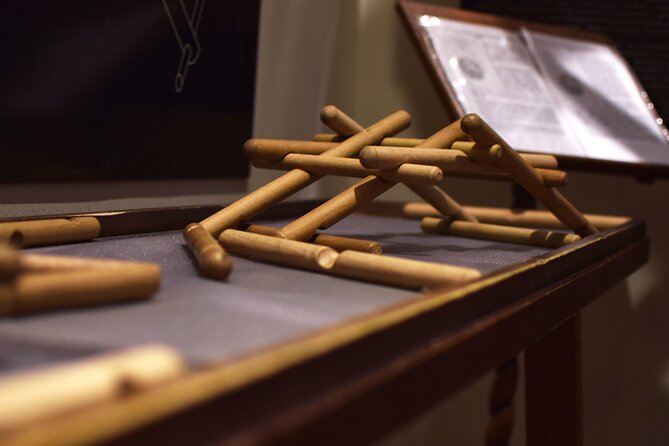
The exhibits are based on Leonardo’s designs. The machines follow his original proportions where possible, with changes made when needed for construction or safe use. You can examine devices linked to flight, water movement, mechanical power, and other areas of his study.
The exhibition is arranged into four broad sections: earth, water, air, and fire. This layout gives the visit a simple rhythm. You move from one field of curiosity to another rather than facing a crowded room of unrelated inventions.
I find this approach useful because Leonardo did not separate art, anatomy, engineering, and nature the way modern museums often do. His notebooks moved freely from the motion of water to the structure of the human body. This museum tries to show that wide-ranging mind in a form that is easy to follow.
More museums in Venice:
- Venice: Leonardo Da Vinci Museum Entrance Ticket
★ 4.5 · 3,560 reviews - Venice’s Best: Basilica, Doge’s Palace, Gondola & History Gallery
★ 4.5 · 2,478 reviews - Venice: Vivaldi’s Four Seasons Concert & Music Museum Visit
★ 4.8 · 2,065 reviews
Why the interactive machines matter
The best part of the experience is the chance to operate selected replicas. You may turn a handle, move a component, test a mechanism, or work through a puzzle based on one of Leonardo’s ideas.
These are not arcade-style attractions. The interaction is simple and physical. That is exactly why it works. A drawing of a gear system can seem abstract, but moving a model helps you see how force travels through it.
Children can use the machines as a first introduction to engineering. Adults may find themselves spending longer than expected on a device that looks obvious at first. Several visitors have described the museum as particularly good for families, and I understand why: the exhibits reward curiosity rather than quiet memorization.
The hands-on element also helps you see the limits of Leonardo’s designs. Some ideas were imaginative studies rather than finished inventions. A replica lets you ask practical questions. Would it move? Where would the power come from? What part would need better materials?
That said, do not expect every exhibit to be fully interactive. Some sections rely more on drawings, text, films, and display panels. The balance between operating machines and reading information is one reason some visitors find the museum engaging while others find it too modest.
The four sections: earth, water, air, and fire
The four-part organization gives you a useful way to read the collection.
The earth section presents ideas connected with land, mechanics, and physical movement. Here, the value comes from seeing how Leonardo studied basic forces and tried to apply them to machines.
The water section explores his interest in currents, movement, and hydraulic ideas. Leonardo spent much of his life observing nature, and water offered a constant subject for both scientific study and engineering plans.
The air section is likely to attract the most attention from children. Leonardo’s flying machines are among his best-known ideas, and the replicas give you a direct way to consider the shapes and moving parts behind them.
The fire section brings together another group of mechanical and technical ideas. The categories are broad, but they help break up the visit and keep the material from feeling like one long wall of diagrams.
The museum does not promise that Leonardo’s inventions became working modern machines. Instead, it shows the designs as evidence of his method: observe the world, sketch a possibility, test the idea, and revise it.
Leonardo’s anatomy and art on the lower level
The museum is not only about machines. You will also see studies of anatomy and displays about Leonardo’s paintings.
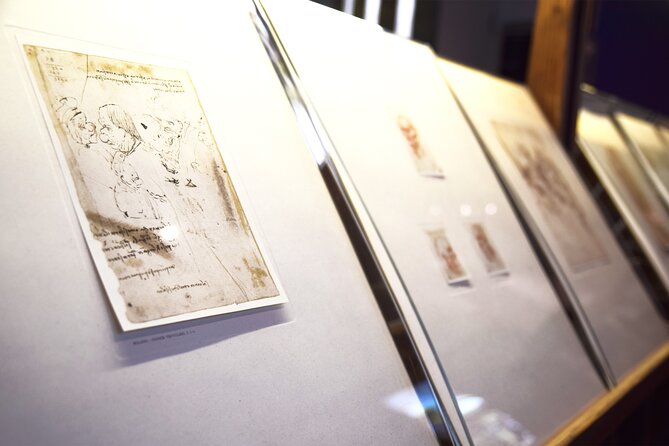
The anatomy material shows how closely Leonardo examined the human body. His artistic skill depended on observation, but his studies went beyond what a painter needed for a portrait. The drawings reveal an effort to understand structure, movement, and proportion.
The art displays use high-resolution copies rather than original paintings. They are backlit, which gives the images a crisp, bright presentation and helps you inspect details. The Mona Lisa and The Last Supper are included, but the display also makes the wider point that Leonardo was more than a painter.
This area can feel less lively than the machine room. One practical comment is that the upper level, with replicas and building equipment, tends to be more engaging for hands-on learners, while the lower level depends more on reading and looking.
If art is your main reason for visiting, keep your expectations in check. You will not find original Leonardo works here, and this is not the main art-focused Leonardo museum in Venice. The copies are useful for learning, but they are still copies.
A few more Venice days to weigh up
- Venice: Doge’s Palace Reserved Entry Ticket
★ 4.6 · 42,716 reviews - Venice: Grand Canal Gondola Ride with App Commentary
★ 4.1 · 18,908 reviews - Boat Trip: Glimpse of Murano, Torcello & Burano Islands
★ 4.3 · 15,699 reviews - Venice: Grand Canal by Gondola with Live Commentary
★ 4.1 · 13,681 reviews
Films, panels, and language support
Multimedia displays give you a short overview of Leonardo’s life and work. A brief film helps place the inventions and paintings in a simple timeline.
Do not plan on a long documentary. The film is an introduction, not the main event. The machines and visual panels carry most of the visit.
Descriptions are available in Italian, English, French, German, Spanish, and Russian. That makes the museum easier to use without a guide. If you prefer listening to reading, free audio guides are available on request at the entrance. They may not be offered automatically when you show a mobile ticket, so ask for one before you begin.
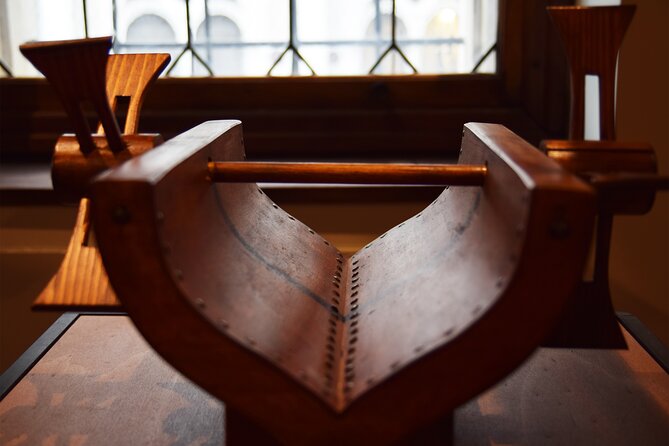
The written material is especially useful for connecting each replica to Leonardo’s original drawings. Without those explanations, some mechanisms can look like random wooden devices. With them, you can see the problem Leonardo was trying to solve.
There is no professional guide included with admission. You visit independently, at your own pace. That works well if your group wants to linger at different machines, though anyone seeking a detailed personal explanation should not expect a guided tour.
How long you should allow
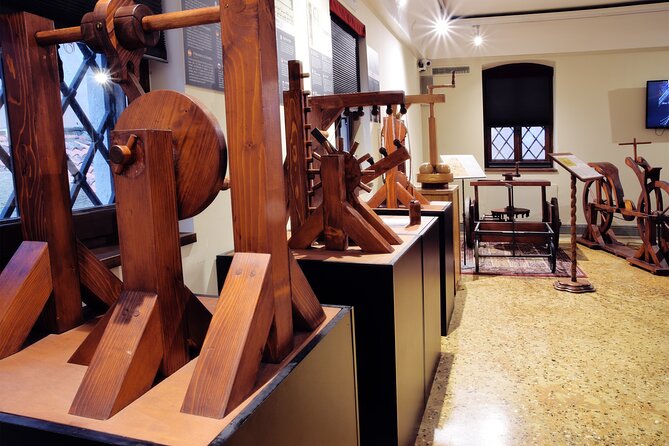
The advertised visit takes about 45 minutes, and that is a sensible planning figure. If you move quickly, you may see the main displays in 20 minutes. If you read the panels, watch the film, request the audio guide, and test the machines, an hour or more is reasonable.
The museum is small and occupies two floors with steps. Its size is both a strength and a weakness.
A short visit fits neatly into a day of sightseeing around San Polo and nearby churches. You can stop in without sacrificing half a day to a single museum. The compact format also suits children who may lose patience in a large gallery.
On the other hand, the museum can feel underwhelming if you arrive expecting a major institution. There are not endless rooms, vast galleries, or a large collection of original art. You get a focused exhibition that packs a lot of material into limited space.
I would allow at least 45 minutes, even if you think you only want a quick look. The interactive devices are the part most likely to slow you down.
Price and value at $10.21
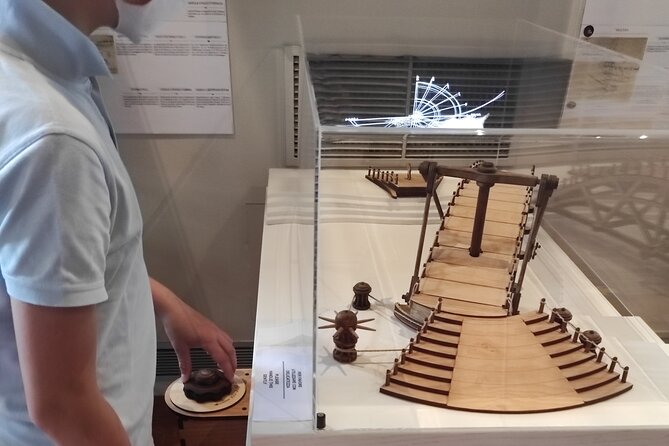
At about $10.21 per person, the ticket is priced as an inexpensive add-on rather than a major museum investment. That helps make the short length easier to accept.
The value depends on your purpose. For a family looking for a hands-on break from churches and paintings, the ticket offers a low-cost activity with educational content. For an adult already well read on Leonardo, the machines may still be interesting, but the visit may not justify a long detour.
The price also makes it a reasonable choice for a short stop when the weather is poor or when younger members of your group need something they can touch and operate. You are paying for an accessible presentation of ideas, not for original masterpieces.
Some visitors consider the cost fair because the museum is small but well organized. Others feel that the copies and short duration reduce the value. I would make the decision based on your expectations, not on the ticket price alone.
If you are comparing this with another Leonardo museum in Venice, check the location carefully before booking. There is another museum roughly eight minutes away on foot, and the two can easily be confused. This experience is at Campo San Rocco, beside the area associated with Scuola Grande di San Rocco.
Opening hours and simple planning tips
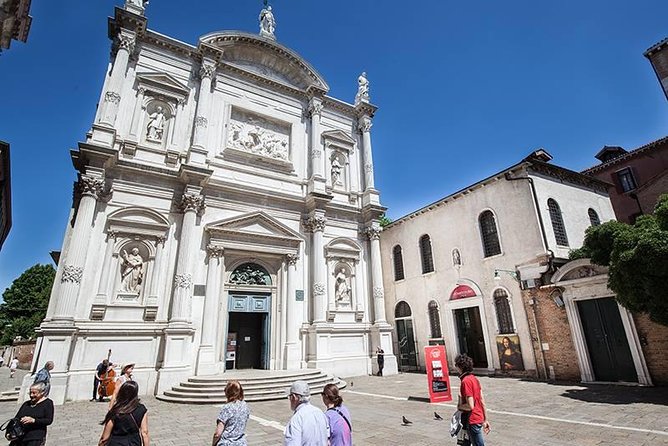
The museum is open daily from 10:30 a.m. to 4:30 p.m. The last entrance is at 4 p.m., so do not arrive at the closing time and expect a full visit.
A mobile ticket is provided, and confirmation is received when you book. Since the museum is often booked about 19 days ahead, reserving in advance can make sense if it is important to your schedule, though the exhibition may not always require advance purchase.
Food, drinks, and chewing gum are not allowed in the exhibit areas. Service animals are allowed, and the museum is near public transportation. Most people can take part, but remember that the exhibition includes steps between its two floors.
On certain dates, people visiting Venice for the day may need to pay a separate €5 city access fee. This is not part of the museum ticket. Check the official Venice access fee site before your visit to see if your date applies and if an exemption covers you.
Free cancellation is available if you cancel at least 24 hours before the experience start time. Changes or cancellations made later are not refunded.
Who will enjoy this most
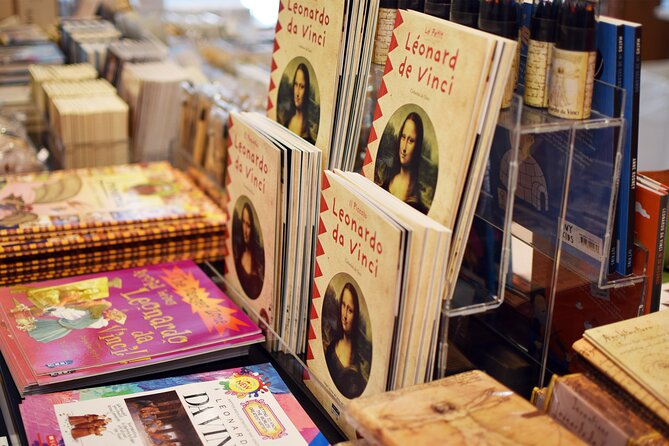
I would recommend this museum most strongly to families with school-age children, curious adults, and anyone interested in the practical side of Leonardo’s work.
It is a good match for you if:
- You like pressing buttons, moving parts, and testing simple mechanisms.
- You want an introduction to Leonardo beyond the Mona Lisa.
- You need a short indoor activity near San Rocco.
- You enjoy connecting drawings with real physical models.
- You are visiting with children who may prefer experiments to formal galleries.
It is less suitable if you want original paintings, a large collection, or a long guided explanation. Art specialists may find the backlit copies helpful but limited. Visitors expecting a large, theatrical exhibition may leave disappointed.
The museum is also a good fit for mixed-age groups. A child can operate a machine while an adult reads about the design. Then you can switch roles. That shared activity gives the visit more value than simply walking past display cases.
What makes the experience worthwhile
The strongest feature is the connection between Leonardo’s sketches and the physical world. You do not just hear that he imagined flying machines or mechanical systems. You can see a replica and consider how it works.
The museum also helps correct a narrow view of Leonardo as only the painter of two famous works. His studies of anatomy, water, motion, machines, and natural forces show a much broader curiosity.
The backlit painting copies have a clear purpose. They are not substitutes for seeing originals in Florence, Milan, or Paris, but they let the museum explain his painting technique and attention to detail within the same visit as the inventions.
The setting near Scuola Grande di San Rocco adds another useful stop to your day. The two experiences are different. The Scuola offers an impressive historic and artistic setting, while the Leonardo exhibition gives you models and experiments. Together, they make a stronger afternoon than either one alone.
Should you book the Leonardo da Vinci Museum?
Book it if you want a short, affordable, hands-on museum and your group enjoys machines, puzzles, and the practical side of science. Families are likely to get the most from it, but adults who are curious about Leonardo’s engineering and anatomy can find plenty to study.
Skip it if you are looking for original Leonardo art, a large museum, or a fully guided experience. You may finish quickly, and some displays are more instructional than exciting.
My advice is simple: treat this as a focused 45-minute stop, not a grand museum day. Request the free audio guide, search carefully for Campo San Rocco, and pair the visit with Scuola Grande di San Rocco nearby. With the right expectations, the modest price buys a pleasant and useful look into the inventor’s working mind.
FAQ
Where is the Da Vinci Interactive Museum in Venice?
The museum is located at Campo San Rocco in Venice, near Scuola Grande di San Rocco.
What are the museum’s opening hours?
It is open Monday through Sunday from 10:30 a.m. to 4:30 p.m. The last entrance is at 4 p.m.
How long does a visit take?
The expected duration is about 45 minutes. A quick visit may take around 20 minutes, while reading the displays and trying the machines can extend the visit to an hour or more.
Is a professional guide included?
No. Admission does not include a professional guide. Free audio guides are available at the entrance upon request.
Are the paintings original?
No. The museum displays high-resolution, backlit copies of major Leonardo paintings, along with anatomy studies and replicas of his machine designs.
Can I cancel my ticket?
Yes. You can cancel for a full refund if you do so at least 24 hours before the experience start time. Cancellations or changes made less than 24 hours in advance are not refunded.
Just added around Venice
- Exclusive Private Venice Jewish Ghetto Tour★ 5.0 · 41 reviews
- The Secret Corners of Burano★ 5.0 · 41 reviews
- Verona: Private 2-Hour Walking Tour★ 4.9 · 41 reviews
- Venice: 3-Course Dining Experience at Local Home★ 4.8 · 41 reviews
- Wine Tasting in Venice★ 4.6 · 42 reviews
- St Mark’s Basilica & Doge’s Palace Skip the Line – Semi-Private★ 5.0 · 42 reviews
- Venice Skip lines at Doge’s & St. Mark’s with Exclusive Sky Walk★ 4.5 · 42 reviews
- Venice Saint Mark’s Basilica afternoon guided tour★ 4.5 · 42 reviews
Museums, compared.
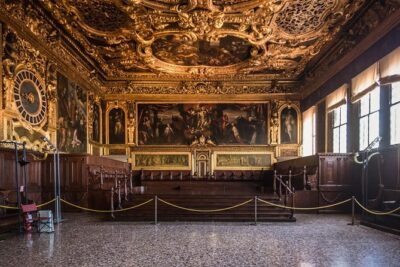
Venice’s Best: Basilica, Doge’s Palace, Gondola & History Gallery
Read our review →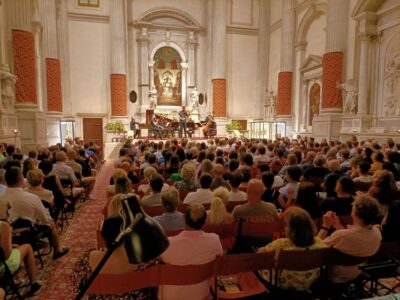
Vivaldi’s Four Seasons Concert & Music Museum Visit
Read our review →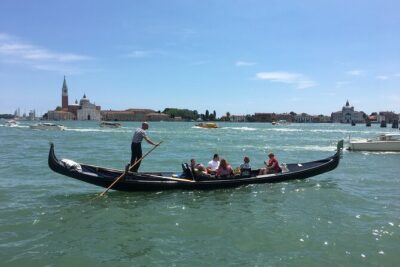
Charming Gondola Ride on the Grand Canal & Gondola Gallery™
Read our review →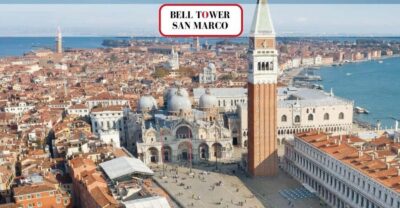
Bell Tower & St Mark’s Square History Gallery Ticket
Read our review →
Venice Museum Pass & Doge’s Palace Entrance Ticket
Read our review →
Basilica, Doge’s Palace, History Gallery & Bell Tower Option
Read our review →
Browse the lists this tour appears in