
Reviewed · DOGE'S PALACE TOURS
Doge’s Palace Guided Tour
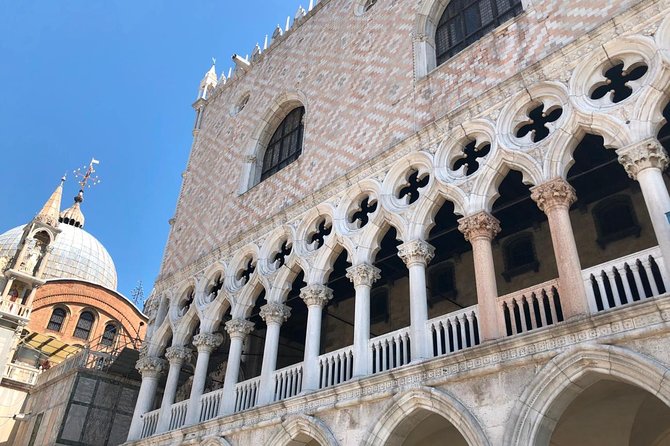
Doge’s Palace is Venice’s great civic theater, and this tour puts you inside its gilded halls without making you wait in the long public queue. In about an hour, you’ll move from the Opera Museum and Lodge Atrium to the Golden Staircase, grand government rooms, the Bridge of Sighs, and the old prison cells linked with Casanova.
I especially like the skip-the-line entry, which matters at busy times, and the way a good guide ties the paintings to Venice’s old political system instead of treating the palace as a string of pretty rooms. Guides named Monica, Mirco, Henrico, Anatola, and Francesca have all been praised for clear, lively explanations.
The main caution is time. One hour passes quickly in a palace this large, and some tours feel rushed near the end. Headsets can also be troublesome, and the meeting point near St. Mark’s Square can be confusing if you arrive late.
In This Review
- Key points at a glance
- What you are really paying for at $86.74
- Meeting near St. Mark’s Square
- Starting inside Palazzo Ducale
- Reading the palace paintings
- Crossing the Bridge of Sighs
- The optional Correr Museum visit
- How the one-hour pace feels
- When to book and which departure to choose
- Who will get the most from this tour
- Should you book the Doge’s Palace tour?
- FAQ
- How long does the Doge’s Palace guided tour last?
- What is included in the price?
- Is the Bridge of Sighs included?
- Can I see Casanova’s prison cell?
- Is the tour offered in English?
- Where does the tour meet?
- Where does the activity end?
- How early should I arrive?
- Is hotel pickup provided?
- Can I cancel for a refund?
Key points at a glance
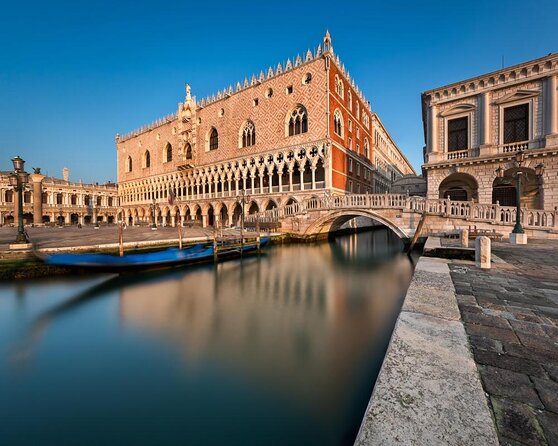
- A fast route into Venice’s most famous palace: Skip the main ticket queue and begin with a guide.
- The Golden Staircase and grand halls: See the rooms where Venice’s elected doges governed the Republic.
- Paintings by Titian, Tintoretto, and Veronese: The art is part of the building’s political message, not simple decoration.
- Bridge of Sighs and prison cells: The advertised route includes Venice’s famous passage from palace to prison.
- Correr Museum option: Add a look at Venetian history after the palace visit.
- A short, focused visit: Plan on about one hour with the guide, or closer to two hours if you use the Correr Museum option.
What you are really paying for at $86.74
At $86.74 per person, this is not a bargain admission ticket. You are paying for a reserved palace entry, an English-speaking guide, and help making sense of a place that can otherwise feel like a maze of grand rooms and complicated Venetian titles.
The value depends heavily on your guide and on how well the group moves through the palace. A strong guide can explain why the Doge’s residence was also a courtroom, government office, ceremonial stage, and prison entrance. That context gives the paintings and marble rooms a purpose.
Skip-the-line access is another part of the calculation. Doge’s Palace sits beside St. Mark’s Basilica, so the square can be packed, especially during the middle of the day. Avoiding a long wait may be worth a premium if your Venice schedule is tight.
Still, you should not book this expecting a private tour. It is a group activity, and the stated maximum is unusually high at 999 people, though the actual English group may be much smaller. Some English departures have had only a handful of participants, while others have involved the normal crowd and the usual delay of keeping everyone together.
More Doge's Palace visits:
- Venice: Doge’s Palace Reserved Entry Ticket
★ 4.6 · 42,716 reviews - Doge’s Palace & St. Mark’s Basilica with Terrace Access Tour
★ 4.7 · 10,697 reviews - Venice: Doge’s Palace, St Mark’s Basilica, and Pala d’Oro
★ 4.4 · 6,235 reviews
Meeting near St. Mark’s Square
The meeting point is on Calle larga de l’Ascension, 30124 Venezia, near St. Mark’s Square. This is central, but central Venice is not always simple. The square is broad, busy, and crossed by people heading in several directions, so give yourself extra time rather than aiming to arrive exactly 15 minutes early.
A representative checks your mobile voucher at the departure point and gives you instructions. Look for the guide or the small flag used by the group. Several people have found the meeting area easy once they located the representative, but the first few minutes can feel chaotic at a crowded intersection.
You need to arrive at least 15 minutes before departure. If you are late, do not count on a phone call or a second chance. A missed departure receives no refund, and this matters in Venice, where a water bus ride or a wrong turn across the square can cost more time than you expect.
There is no hotel pickup or drop-off. You make your own way to the square, and the tour ends back at the meeting point. Public transportation is nearby, but the details of your route depend on where you are staying.
Starting inside Palazzo Ducale
The guided visit begins at Palazzo Ducale, better known in English as Doge’s Palace. The palace was the working center of the Venetian Republic, where the doge lived and where officials made decisions that shaped Venice’s trade, law, and foreign policy.
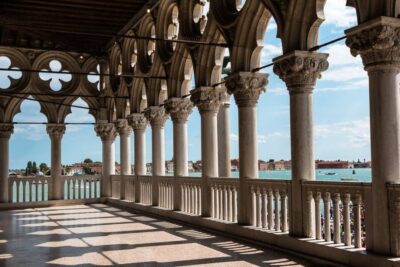
The first hour is meant to give you a broad tour rather than a slow inspection of every room. The route includes the Opera Museum, the Lodge Atrium, the Golden Staircase, and the Institutional Chambers. These names can sound dry on paper, but each area helps explain how Venice mixed ceremony with government.
The Opera Museum focuses on the building itself and its design. The Lodge Atrium gives you an early taste of the palace’s scale and decoration. Then comes the Scala d’Oro, or Golden Staircase, the ceremonial route used to reach the government rooms. Its bright decoration was designed to impress before an official even entered the main chambers.
The Institutional Chambers are the heart of the visit. Here, your guide should explain the structure of the old republic and the role of the doge. You will see rooms decorated on a scale that seems excessive until you understand that Venice was displaying its power to its own officials, foreign visitors, and citizens.
Reading the palace paintings
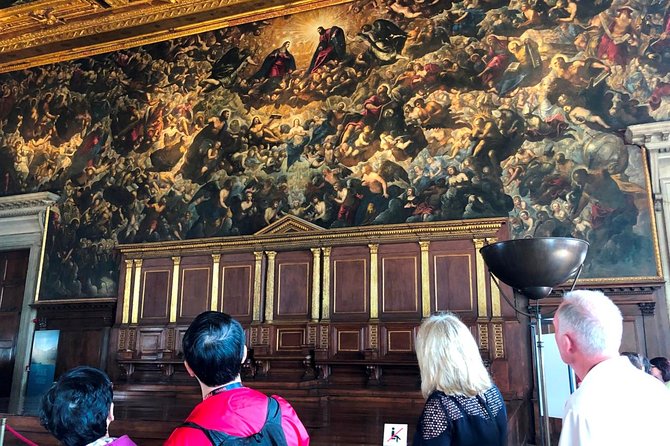
The art is one of the strongest reasons to take the guided tour. Doge’s Palace contains major works associated with Titian, Tintoretto, and Veronese, and the paintings are woven into the palace’s public message.
Tintoretto’s dramatic compositions can be difficult to take in at a glance. A guide can point out the figures, symbols, and political themes that might blur together when you are looking up at a ceiling or across a huge wall. Veronese’s work brings another kind of grandeur, with carefully arranged scenes and lavish color.
Titian’s role in Venetian art also helps place the palace in its wider setting. Venice was a wealthy maritime power with strong ties to trade, religion, and the wider Mediterranean world. The art reflects that confidence, but it also serves a purpose: these rooms were meant to make the Republic look stable, prosperous, and favored by heaven.
This is where guides such as Monica and Mirco have received particular praise. Mirco has been noted for connecting politics, culture, and art with humor, while Monica has been praised for explaining the building and its paintings in a way that adds meaning rather than simply naming artists.
A few more Venice days to weigh up
- Venice: Grand Canal Gondola Ride with App Commentary
★ 4.1 · 18,908 reviews - Boat Trip: Glimpse of Murano, Torcello & Burano Islands
★ 4.3 · 15,699 reviews - Venice: Grand Canal by Gondola with Live Commentary
★ 4.1 · 13,681 reviews - Venice: La Fenice Opera House Entry Ticket with Audio Guide
★ 4.6 · 11,742 reviews
Crossing the Bridge of Sighs
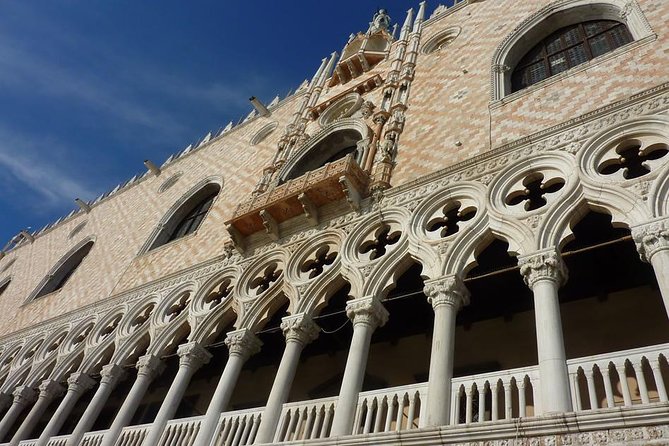
The Bridge of Sighs is the palace’s most famous small feature. It links the palace to the former prison across the canal, allowing prisoners to be moved from the courts to their cells.
The passage is enclosed and narrow, with small stone windows. You will not get the wide Venetian view suggested by photographs taken from outside, but the confined route is part of the point. The bridge represents the movement from public justice to private punishment.
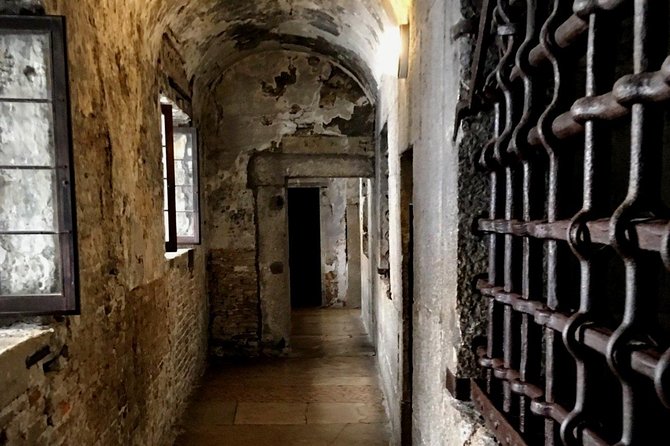
The advertised highlights include crossing the bridge and seeing typical prison cells, including the area associated with Casanova. These spaces are less polished than the grand halls and can feel stark after all the gold, marble, and painted ceilings.
Here is an important practical warning: clarify the exact route with the representative before departure. One account describes a guide ending the visit after the main palace rooms and saying that the Bridge of Sighs and cells required separate tickets. That does not match the advertised experience, which includes them, but it shows why you should confirm what your departure covers before you set off.
The prison section is not a long forensic tour of torture devices. You will use your imagination more than you might expect, and some of the rooms are plain. For many people, the contrast between the ceremonial palace and the cramped cells is still one of the most memorable parts.
If you are claustrophobic, the Bridge of Sighs may be uncomfortable. The palace also includes a fair number of stairs and steps. The route can be hard for older visitors or anyone with limited mobility, so consider that before paying for a brisk, group-paced visit.
The optional Correr Museum visit
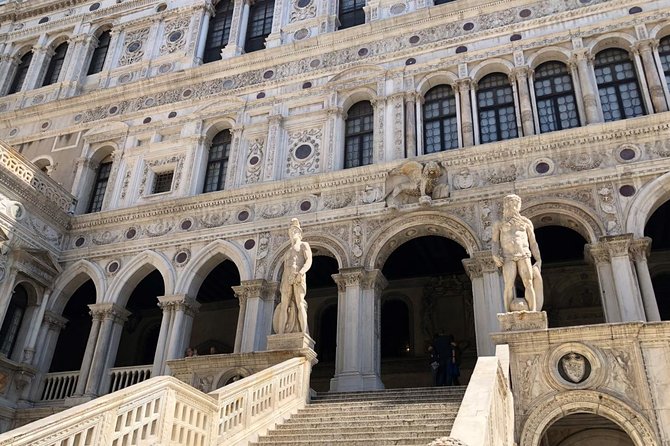
The tour also includes an optional visit to the Correr Museum, described as a Venetian history museum. It occupies part of the buildings around St. Mark’s Square and offers a useful follow-up to the palace.
The Correr option is valuable if you want more background on Venice rather than only the headline sights. After seeing where the Republic governed, you can use the museum to build a broader picture of Venetian life and identity.
The timing is the main question. The palace guide itself lasts about one hour, while the Correr visit is listed at roughly another hour. If your schedule is tight, you may prefer to use the extra time for the Basilica, the square, or a walk through nearby streets. If you have room, the museum can make the palace feel less isolated from the rest of Venetian history.
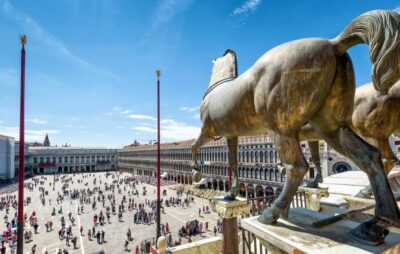
The nearby monuments are part of the setting, even when they are not formal guided stops. St. Mark’s Square is Venice’s only piazza, while other open spaces are generally called campi. The square has long served as the city’s civic and religious center, surrounded by arcaded public buildings, St. Mark’s Basilica, and the Campanile.
St. Mark’s Basilica is often called the Golden Basilica because of its mosaics and valuable decoration. The Campanile rises beside the square and was rebuilt after its collapse in 1902. You should not assume that this palace tour includes admission to the Basilica or a climb of the bell tower. The provided inclusions specify Doge’s Palace and the optional Correr Museum, not separate entry to those monuments.
How the one-hour pace feels
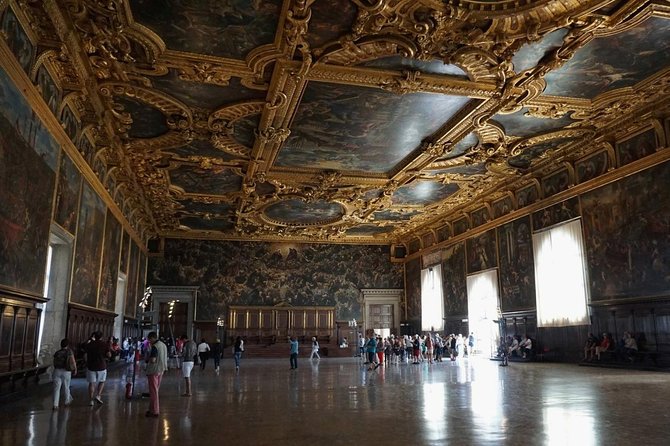
The short format is both the strength and weakness of this experience. You get a clear introduction without giving up half a day, but you will not have unlimited time to study every painting or return to a favorite room.
Several tours have been described as well paced, with enough time to explore after the guide’s main explanations. Other visits have started late or lost time while the group dealt with headsets and lockers. A few people felt the final rooms were rushed, with beautiful religious paintings passed too quickly.
I would treat the guided hour as an orientation. Pay attention to the guide’s main points, take a few photographs where allowed, and note the rooms you want to revisit. If the rules and timing permit, you may be able to continue looking around after the guided portion, but do not build your entire plan around having unlimited extra time.
The audio equipment can help in a group. A guide speaking to six or twenty people is easier to hear through a headset than across a vast hall. But equipment problems have occurred, including a headset that failed for nearly the entire visit. Bring patience, and tell the guide quickly if you cannot hear. Do not stand silently at the back and hope the problem fixes itself.
When to book and which departure to choose
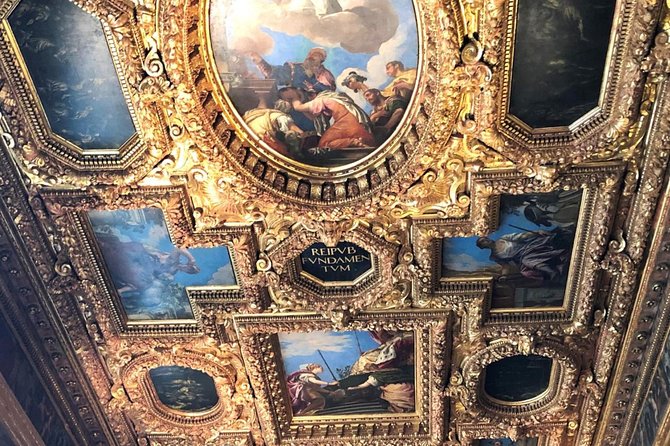
This experience is booked about 30 days ahead on average, so advance planning is sensible during a busy Venice visit. The tour is offered in English, and confirmation arrives when you book.
If you can choose among departure times, a later visit may be calmer. One well-received tour took place later in the day when the palace was less crowded. That said, late departures leave less room to recover if you get lost or arrive by water bus later than planned.
Give yourself a buffer before the meeting time. St. Mark’s Square is close on a map, but Venice’s bridges, crowds, and water transportation can turn a short route into a slow one. The no-show rule is strict: missing the group means losing the payment.
Free cancellation is available up to 24 hours before the start time. Changes or cancellations inside that 24-hour window are not accepted for a refund. Day visitors from outside Venice may also face a €5 access fee on certain dates, with exemptions and current dates handled through the official Venice access-fee website.
Who will get the most from this tour
This tour suits you if you want the major rooms explained by an English-speaking guide and prefer a short visit to a long, self-guided wander. It is especially useful on a first visit, when the palace’s government offices, ceremonial spaces, courtrooms, and prison route can otherwise blur together.
Families may like the Bridge of Sighs and cells, particularly if children are more interested in prisoners and escape stories than in ceiling paintings. Just confirm that those sections are part of your departure, since one reported experience did not include them despite the advertised highlights.
Art lovers should appreciate the chance to have Titian, Tintoretto, and Veronese placed in context. If you want time for close study, though, choose a longer palace visit or plan to continue exploring after the guide finishes.
This is less suitable if you dislike group pacing, have difficulty with stairs, or need a quiet, slow look at every room. It is also not ideal if you are counting on a fully guided visit to St. Mark’s Basilica and the Campanile, since those are described as nearby sights rather than confirmed inclusions.
Should you book the Doge’s Palace tour?
I would book it if saving queue time matters and you want the palace’s art and government story explained in plain English. The best guides make the hour worthwhile, and names such as Monica, Mirco, Henrico, and Anatola have been associated with lively, clear tours.
At $86.74, I would book only when the schedule and skip-the-line access justify the cost. Before you leave the meeting point, confirm that your group’s route includes the Bridge of Sighs and prison cells, check your headset, and ask how much time remains for the Correr Museum.
If you want a quick, structured introduction to Venice’s grandest government building, this is a sensible choice. If you want a leisurely museum visit, guaranteed working equipment, or a full tour of every nearby St. Mark’s monument, choose a longer or more specific arrangement.
FAQ
How long does the Doge’s Palace guided tour last?
The guided visit inside Doge’s Palace lasts about one hour. The overall activity is listed as approximately one to two hours, depending on whether you use the optional Correr Museum visit.
What is included in the price?
The price includes an English-speaking guide, skip-the-line admission to Doge’s Palace, and a ticket for the optional visit to the Correr Museum.
Is the Bridge of Sighs included?
The advertised experience includes a walk across the Bridge of Sighs and access to typical prison cells. Confirm the route with the representative before departure because one reported tour did not include those sections.
Can I see Casanova’s prison cell?
The tour highlights typical prison cells connected with Casanova. The information does not promise a specific cell identified as his, so ask your guide what the route includes.
Is the tour offered in English?
Yes. English is one of the stated tour languages, and the tour uses audio equipment to help you hear the guide.
Where does the tour meet?
The meeting point is Calle larga de l’Ascension, 30124 Venezia VE, Italy, near St. Mark’s Square.
Where does the activity end?
The activity ends back at the meeting point.
How early should I arrive?
Arrive at least 15 minutes before the departure time shown on your voucher. The meeting area can be busy, and late arrivals may miss the group.
Is hotel pickup provided?
No. Hotel pickup and drop-off are not included, so you must make your own way to the meeting point.
Can I cancel for a refund?
You can cancel up to 24 hours before the local start time for a full refund. Cancellations or changes made less than 24 hours before the start time are not accepted for a refund.
Just added around Venice
- Exclusive Private Venice Jewish Ghetto Tour★ 5.0 · 41 reviews
- The Secret Corners of Burano★ 5.0 · 41 reviews
- Verona: Private 2-Hour Walking Tour★ 4.9 · 41 reviews
- St Mark’s Basilica & Doge’s Palace Skip the Line – Semi-Private★ 5.0 · 42 reviews
- Venice: 3-Course Dining Experience at Local Home★ 4.8 · 41 reviews
- Wine Tasting in Venice★ 4.6 · 42 reviews
- Venice Skip lines at Doge’s & St. Mark’s with Exclusive Sky Walk★ 4.5 · 42 reviews
- Venice Saint Mark’s Basilica afternoon guided tour★ 4.5 · 42 reviews
Doge's Palace Tours, compared.
Doge’s Palace & St. Mark’s Basilica with Terrace Access Tour
Read our review →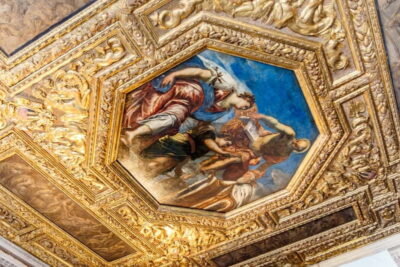
Doge’s Palace, St Mark’s Basilica, and Pala d’Oro
Read our review →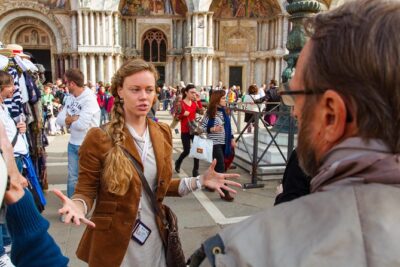
Legendary Venice: Doge’s Palace, St Mark’s & VIP Terrace Access
Read our review →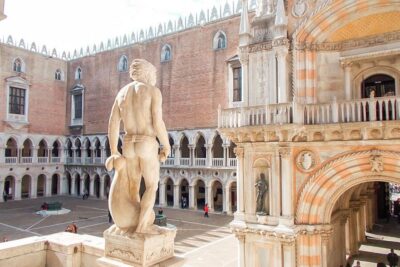
St. Mark’s Basilica & Doge’s Palace Tour with Ticket
Read our review →
St Mark’s Basilica, Doge Palace, & Bell Tower Option
Read our review →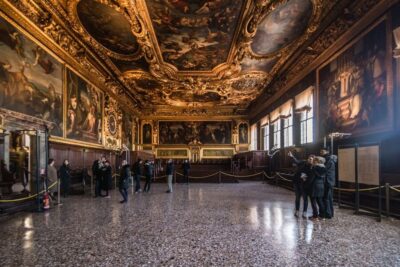
Doge’s Palace, Bridge of Sighs & Prisons Guided Tour
Read our review →Browse the lists this tour appears in