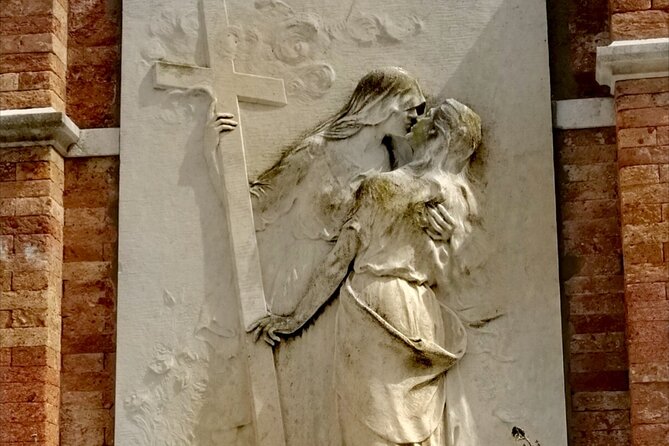
Reviewed · VENICE TOURS
Gay Life in Venice from the Middle Ages to Present Days
Venice’s LGBTQ past is written into places most sightseers pass without a second glance: a church arcade watched by police, a market square used for public warnings, and the shadowy porticos around Ponte delle Tette. This tour brings those overlooked stories into the open, linking medieval law, gender identity, art, literature, sex work, and modern pop culture.
I like the small-group format, which lets guide Valerio Coppo explain difficult subjects without turning the walk into a lecture. I also like the mix of famous and obscure figures, from Casanova and Madonna to Rolandina Roncaglia, an early documented trans person in Italy.
The main consideration is timing. The advertised experience lasts about two hours, yet the route lists 19 stops, many assigned 15 minutes each. Expect a brisk, selective walk rather than a full treatment of every location, and confirm the final route and group size before booking.
In This Review
- Key points to know before you book
- What this Venice LGBTQ history tour is really about
- Starting at Campo San Giacomo dell’Orio
- Fondamenta del Megio and the danger of being called too kind
- Santa Maria Mater Domini and watched arcades
- Ponte delle Tette and the city’s regulated sex trade
- San Cassiano and the story of Rolandina Roncaglia
- Campo San Cassiano, opera, and Casanova’s reports
- Rialto, a porter, and a British gay pioneer
- Ruga dei Oresi and the risk of mere suspicion
- Ca’ Zenobio, Veronese, and Madonna
- The Campanile, Piazzetta San Marco, and public execution
- Harry’s Bar and the more recent past
- Lesbian, bisexual, and gay literary connections
- San Martino di Castello and the final link to older Venice
- Is $92.63 a fair price?
- Who will get the most from this walk?
- Should you book Gay Life in Venice?
- FAQ
- How long does Gay Life in Venice from the Middle Ages to Present Days last?
- What language is the tour offered in?
- Where does the tour start and end?
- How many people can join the tour?
- What does the price include?
- Can I cancel for a refund?
Key points to know before you book
- Rolandina Roncaglia’s story: Hear about a 14th-century person who lived for years as a woman before being discovered and executed.
- Venice’s former cruising sites: Learn how authorities watched church arcades, pharmacies, and public spaces linked to same-sex encounters.
- Literary and artistic connections: Visit places tied to Italian, British, German, and American figures whose lives included same-sex or bisexual relationships.
- A striking look at punishment: See former execution sites and the location of the cheba, an iron cage used to expose condemned men.
- Pop culture meets old Venice: The route includes Palazzo Ca’ Zenobio, used for Madonna’s Like a Virgin video, and Harry’s Bar.
- A compact walk with a route question: The advertised cap varies between eight and ten people, and the 19-stop outline seems longer than two hours.
What this Venice LGBTQ history tour is really about
This is not a tour of gay bars or present-day nightlife. It is a historical walk through Venice’s changing ideas about sexuality, gender, public morality, and private life.
That distinction matters. Some stops deal with affection and artistic freedom, but others concern surveillance, prostitution, imprisonment, torture, and execution. The experience asks you to look at Venice not only as a beautiful city of palaces and canals, but also as a place where authorities tried to control how people dressed, met, loved, and identified themselves.
Valerio Coppo leads the walk in English, and the route is designed for a small group. His approach, based on the available descriptions of the experience, combines documented events with stories about writers, artists, performers, and local customs. He also guides a glass-focused tour of Murano, so you may be able to pair this walk with another experience from the same guide.
The tone appears warm and conversational rather than formal. The guide invites you to think about the material, not simply memorize dates. That works especially well here, since Venetian LGBTQ history includes gaps, rumors, coded behavior, and stories preserved through court records, diaries, literature, and local tradition.
Other Venice days people book alongside this one:
- Venice: Doge’s Palace Reserved Entry Ticket
★ 4.6 · 42,716 reviews - Venice: Grand Canal Gondola Ride with App Commentary
★ 4.1 · 18,908 reviews - Boat Trip: Glimpse of Murano, Torcello & Burano Islands
★ 4.3 · 15,699 reviews
Starting at Campo San Giacomo dell’Orio
The tour begins at Campo San Giacomo dell’Orio, a pleasant square in the Santa Croce area. The first story concerns an Italian poet who came out in the early 1970s and later died by suicide. His writing was among the first Italian poetry to explore homosexuality openly.
Beginning with a modern literary figure gives the walk an immediate human focus. You are not starting with an abstract legal code. You are starting with a person whose work helped make same-sex desire visible in Italian culture.
This stop also sets the tone for the rest of the experience. The tour moves between personal stories and public institutions, showing how private lives were shaped by law, religion, social judgment, and artistic expression.
Fondamenta del Megio and the danger of being called too kind
At Fondamenta del Megio, you hear about a Venetian historian who lived during the 15th and 16th centuries and wrote the Diarii, a major chronicle intended to record the life of Venice.
The intriguing detail is a description of his character. He was said to be extremely kind, but in this setting, kindness was not necessarily praise. The story points toward the coded language used around men suspected of sexual behavior considered unacceptable by Venetian authorities.
This is one of the tour’s useful habits: it treats language as evidence. A word that sounds harmless now could once carry a social warning. You will likely get more from this stop if you pay attention to how reputation was built and how accusations could hide behind polite descriptions.
Santa Maria Mater Domini and watched arcades
At Chiesa Santa Maria Mater Domini, the focus shifts to surveillance. In 1488, public authorities watched the church’s arcades to stop men suspected of sodomy from using the area to meet and cruise.
The site helps explain how same-sex encounters often took place in public spaces that were not openly designated for that purpose. Arcades, bridges, markets, churches, and narrow lanes offered shelter, traffic, and chances to meet. They were also vulnerable to police observation.
You will not be entering the church as part of the stated itinerary. The value is in seeing the setting and understanding how the architecture of Venice shaped social behavior.
A few more Venice days to weigh up
- Venice: Grand Canal by Gondola with Live Commentary
★ 4.1 · 13,681 reviews - Venice: La Fenice Opera House Entry Ticket with Audio Guide
★ 4.6 · 11,742 reviews - Doge’s Palace & St. Mark’s Basilica with Terrace Access Tour
★ 4.7 · 10,697 reviews - Venice: Burano, Torcello & Murano Boat Tour w/Glassblowing
★ 4.4 · 10,245 reviews
Ponte delle Tette and the city’s regulated sex trade
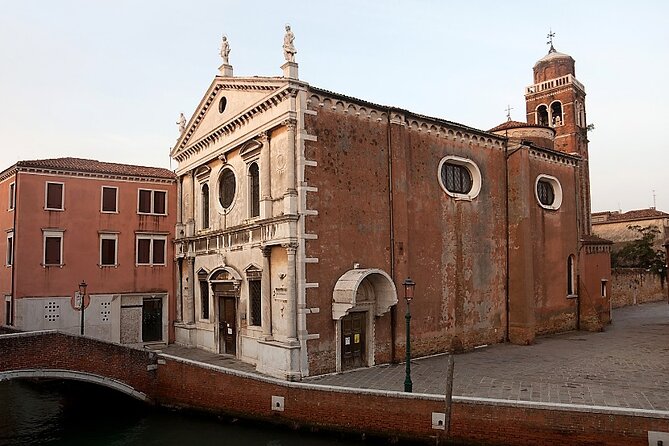
Ponte delle Tette offers one of the route’s most vivid stories. In the 15th century, this area was Venice’s best-known red-light district. Under the porticos near the bridge, prostitutes were encouraged by authorities to display themselves in an effort to reduce male same-sex activity.
That policy reveals a harsh and practical side of Venetian government. Authorities were not simply enforcing a moral rule in the same way against everyone. They were trying to direct sexual behavior into channels they considered easier to monitor.
The area was also associated with the gnaghe, men who dressed as women, covered their faces with cat masks, and made catlike calls while proposing encounters to passers-by. It is a striking example of gender performance, disguise, public theater, and survival overlapping in one place.
This stop may be especially interesting if you want more than a simple account of famous men. It brings ordinary working people into the story, including prostitutes and gender-nonconforming figures. The subject matter is frank, so it may not suit anyone looking for a light sightseeing walk.
San Cassiano and the story of Rolandina Roncaglia
Near Chiesa di San Cassiano, you hear about Rolandina Roncaglia, described as the first trans person known in Italy. Born Rolandino, she lived as a woman for seven years in a nearby house.
She sold eggs at the local market and later worked as a prostitute. After being discovered in 1355, she suffered a terrible death. The tour does not treat her story as a colorful curiosity. It shows how a person could build a life through work, disguise, and community, yet remain exposed to severe punishment if authorities intervened.
This is likely one of the most emotionally difficult moments of the walk. It also gives the experience historical weight. LGBTQ life in Venice was not only about glamorous writers, famous painters, or secret meetings in elegant palaces. It also involved people whose names survived because the legal system recorded their prosecution.
Campo San Cassiano, opera, and Casanova’s reports
The nearby Campo San Cassiano once held a theater regarded as the world’s first public opera house. The square was also connected with same-sex encounters.
Giacomo Casanova wrote about the area in connection with his work as a spy for the state inquisitors during the 18th century. That link gives you an unusual view of Casanova. He is often presented as a legendary lover, but here he appears as someone gathering information for state authorities.
This stop connects entertainment, surveillance, and sexuality. Public theaters drew a wide mix of people, and the surrounding streets offered places to meet. It also reminds you that Venice’s culture of spectacle could create room for behavior that officials wanted to control.
Rialto, a porter, and a British gay pioneer
At Calle dell’Ogio, the route points to a short canal-side stretch where a famous writer and pioneer of the British gay movement met a handsome 19-year-old porter.
The story is brief but telling. Venice attracted writers and artists who came seeking beauty, romance, escape, or a setting where they could live differently for a while. Encounters were not limited to aristocratic salons or grand hotels. They could happen beside the Grand Canal between people from sharply different social worlds.
The tour then moves toward Campo San Giacomo di Rialto. This square once held a statue used as a platform for official proclamations. Authorities announced bans relating to sodomy here, and an officer read the names of those sentenced to death from the block at the end of a staircase.
Because the square sat close to the Rialto market, large numbers of people could hear these announcements. The location made punishment public in the fullest sense. You can stand in a normal city square and picture how law, spectacle, and fear once worked together.
Ruga dei Oresi and the risk of mere suspicion
At Ruga dei Oresi, you hear about a pharmacy suspected of being a meeting place for sodomites. Simply approaching it could reportedly bring a death sentence.
This is a powerful point in the walk because it shows the difference between proven conduct and suspicion. In a city where accusations could be attached to a location, an acquaintance, or a pattern of behavior, private life had little safety.
I would pay close attention here to the guide’s explanation of what is documented and what belongs to local tradition. Stories from this period can carry layers of rumor. A good historical guide should help you separate firm evidence from later storytelling, and Valerio’s style appears to encourage that kind of discussion.
Ca’ Zenobio, Veronese, and Madonna
Palazzo Ca’ Zenobio changes the mood. The late Baroque palace is known for its architecture and interior decoration, and since 1993 it has served as a research center for Armenian studies.
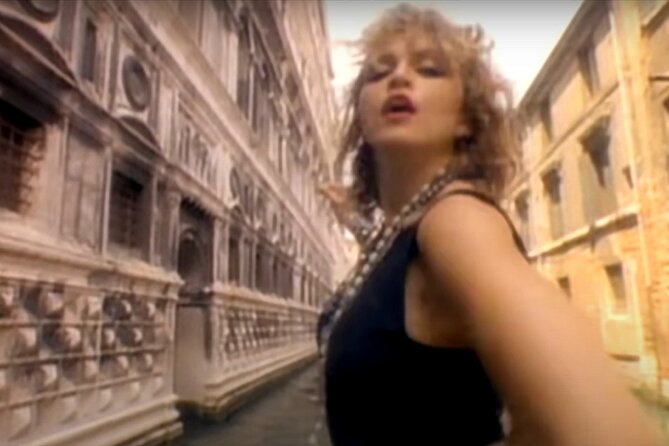
Its most unexpected connection is modern: the palace was the main indoor location for Madonna’s Like a Virgin video in the 1980s. That pop-culture link gives the route a jolt of recognition after several stops centered on punishment and secrecy.
At Chiesa di San Sebastiano, the subject is Paolo Veronese, one of Venice’s leading painters. The church contains a major cycle of his work, and Veronese is buried there.
The tour also explains why San Sebastiano is regarded as a patron saint of the worldwide LGBT community. This makes the church stop more than an art visit. It asks you to consider how saints, symbols, and cultural figures are adopted by communities over time.
The stated itinerary does not clearly say that you enter every church or palace. Treat these places as exterior stops unless the guide confirms interior access.
The Campanile, Piazzetta San Marco, and public execution
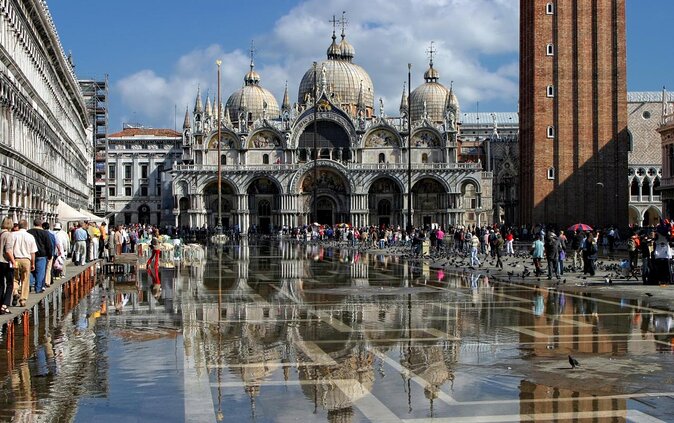
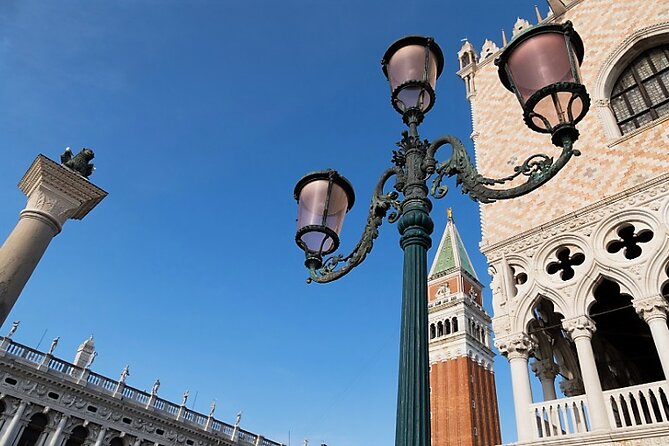
Outside the Campanile di San Marco, you see the location of the cheba, an iron cage dating from the 15th century. In the 16th century, it was used to expose priests convicted of sodomy to bad weather and the taunts of the crowd.
The image is hard to forget. Punishment was not only physical. It was also designed to humiliate, warn, and entertain the public.
Between the two columns in Piazzetta San Marco, executions took place until the middle of the 17th century. Casanova also confirmed the use of this area for executions.
These stops are among the strongest reasons to take the tour with a guide rather than simply read a plaque. The landmarks remain beautiful, but their civic use was grim. You get a sharper understanding of how public space functioned in the Venetian Republic.
Harry’s Bar and the more recent past
Harry’s Bar offers a move into 20th-century social life. Although the founder denied the story, the bar is associated with gay visitors gathering there up to the 1970s.
This is a useful reminder that LGBTQ history did not end with the fall of medieval laws. Social spaces continued to carry reputations, rumors, and unofficial networks. The story also shows why the guide may present some material with caution. Not every famous anecdote is equally well documented.
The route then visits a palace on Riva degli Schiavoni where a love story unfolded between a Venetian rower and a famous German writer. It is another example of Venice as a meeting place between local working people and international cultural figures.
Lesbian, bisexual, and gay literary connections
At Calle del Dose da Ponte, the tour points out a hotel where a famous American lesbian painter lived. Her relationships included men and women, and her life adds a female perspective to a route that otherwise includes many male stories.
At Palazzo Ca’ Dario, you hear about a series of unfortunate events involving some owners, many of whom were gay. The palace is famous for those misfortunes, but the LGBTQ connection is secondary rather than the main reason for its fame.
Palazzo Mocenigo brings in a British poet whose complex emotional and sexual life included bisexual relationships. These literary stops help widen the definition of LGBTQ history. The subject is not only criminal law or nightlife. It also includes the way artists and writers formed relationships, shaped identities, and used Venice as a setting for their lives.
San Martino di Castello and the final link to older Venice
At Chiesa Parrocchiale di San Martino di Castello, you hear about a porch that no longer exists. A law from 1450 listed it as one of the places where men suspected of nighttime sodomy cruised.
The missing porch is important. Venice changes constantly, and many places connected to queer history have vanished, been rebuilt, or lost their original use. A walking tour can still make those absent spaces visible through maps, laws, and storytelling.
The published end point is Ponte di Rialto, although the order of the 19 stops includes sites in several parts of Venice. The route may be condensed, adjusted, or described more broadly than the actual two-hour walk. Ask for the day’s sequence if you want to plan another activity immediately afterward.
Is $92.63 a fair price?
At $92.63 per person, this is not a bargain-priced orientation walk. The value depends on how much you want a specialist subject rather than a general tour of Venice.
You are paying for a focused theme, a guide-led interpretation, and access to stories that are hard to assemble on your own. The tour covers law, gender identity, literature, art, public punishment, nightlife, and pop culture. If you care about LGBTQ history, the price can make sense because the subject is specific and the guide’s role is central.
The value is weaker if you mainly want interiors, formal museum visits, or a slow architectural walk. Admission tickets are not listed for the stops, and the tour appears to work mainly from public streets, squares, church exteriors, and palace exteriors.
There are group discounts, mobile tickets, and free cancellation up to 24 hours before the start time. The experience requires a minimum number of participants, so a cancellation for that reason brings a choice of another date or a full refund.
Who will get the most from this walk?
I would choose this tour if you want to see Venice through social history rather than only through grand architecture. It suits LGBTQ visitors, allies, students of European history, and anyone curious about how public rules shape private lives.
It is also a good fit if you dislike large groups. The tour is described as capped at eight people in its main presentation, while the additional information gives a maximum of ten. Either way, it should be smaller than a standard city walk, but confirm the actual number before paying.
You should be comfortable with explicit discussion of sex work, same-sex relationships, executions, and anti-gay punishment. One account wished for more sensational or intimate stories, so you should not book this expecting a scandal-filled nightlife tour. The strongest material is historical and human, not titillating.
The walk is offered in English. One account describes Valerio guiding in Spanish, but Spanish is not listed as a standard language, so ask before booking if that matters to you.
The meeting point is Campo San Giacomo dell’Orio, and the stated end point is Ponte di Rialto. The tour is near public transportation, service animals are allowed, and most people can participate. If you are visiting Venice for the day on a date covered by the city access rule, you may need to pay the separate €5 entry fee, unless you qualify for an exemption.
Should you book Gay Life in Venice?
Book it if you want a thoughtful, place-based LGBTQ history walk and you are happy to trade museum interiors for streets, squares, and stories. Valerio Coppo’s warm, flexible style is a strong match for a tour that depends on explanation and conversation.
Do not book it if you want a long, leisurely route or a tightly timed architectural tour. The 19-stop outline does not fit neatly into two hours, and some subjects deserve more time than the schedule appears to allow.
For the right audience, this is a memorable way to read Venice differently. You will see execution sites, former meeting places, artistic homes, and public squares with new questions in mind. That is the real payoff: not a checklist of landmarks, but a better sense of the people who lived in the city’s margins and helped shape its culture.
FAQ
How long does Gay Life in Venice from the Middle Ages to Present Days last?
The experience lasts approximately two hours.
What language is the tour offered in?
The tour is offered in English. Spanish is described in one account of the experience, but it is not listed as a standard tour language.
Where does the tour start and end?
The meeting point is Campo San Giacomo dell’Orio. The stated end point is Ponte di Rialto.
How many people can join the tour?
The experience is presented as capped at eight people for an intimate group, while the additional information lists a maximum of ten. Confirm the exact group limit when booking.
What does the price include?
The price is $92.63 per person and includes the tour leader and nature and interpretive guide. The listed stops do not have admission charges.
Can I cancel for a refund?
You can cancel at least 24 hours before the local start time for a full refund. Cancellations or changes made less than 24 hours before the start time are not accepted for a refund.
Just added around Venice
- Padua: Private Pasta-Making Class at a Local’s Home★ 5.0 · 3 reviews
- Padua City Sightseeing Walking Tour of Must-See-Sites with Local Guide★ 5.0 · 3 reviews
- Gondola Ride and St Mark’s Basilica★ 4.5 · 3 reviews
- Venice: Market Tour and Meal at a Local’s Home★ 4.3 · 3 reviews
- VIRTUAL MUSEUM: Creature di Gomma – Venice Vintage Toys★ 4.7 · 3 reviews
- 3 Hour Shared Walking and Aperitivo Tour of Verona★ 5.0 · 3 reviews
- Venice: The Best of Dolomites 3Cime and Refuges with Drone★ 5.0 · 3 reviews
- Verona: Blindfolded Wine Tasting★ 5.0 · 3 reviews
Venice Tours, compared.
Grand Canal Gondola Ride with App Commentary
Read our review →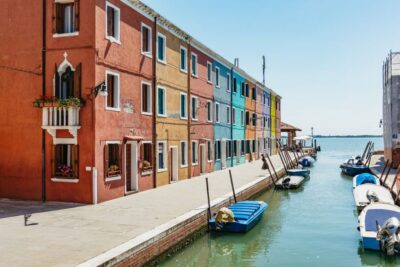
Boat Trip: Glimpse of Murano, Torcello & Burano Islands
Read our review →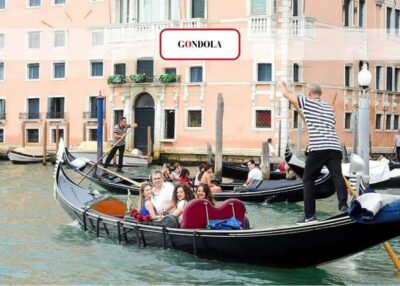
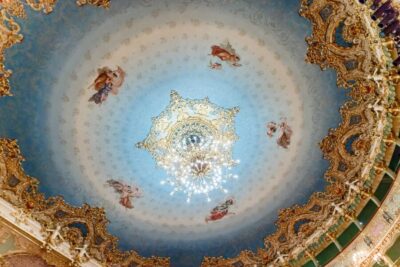
La Fenice Opera House Entry Ticket with Audio Guide
Read our review →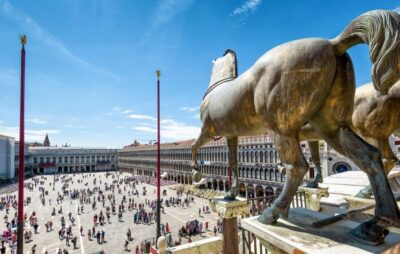
Doge’s Palace & St. Mark’s Basilica with Terrace Access Tour
Read our review →
Burano, Torcello & Murano Boat Tour w/Glassblowing
Read our review →