Reviewed · TOURS
Giudecca Island Discovery Tour
Giudecca is where Venice drops its polished mask. Across the canal from the grand palaces, you find old factories, working neighborhoods, quiet courtyards, churches, artists’ workshops, and views back toward the famous city. This two-hour walk, led by Valerio Coppo or another guide from deTourist Venice, gives you a useful look at the island most first-time visitors only see from a vaporetto window.
I like the small group limit of 10, which makes it easier to ask questions and hear the guide in narrow lanes. I also like the way the walk connects Giudecca’s past as an aristocratic exile colony and industrial district with its present-day art scene. The main drawback is price: at $163.64 per person, this is a costly two-hour walk, especially since you must also buy the water bus ticket to reach the island.
In This Review
- Key points to know before you book
- Why Giudecca makes a good change from central Venice
- Starting at Zattere and sorting out Giudecca’s name
- Fondamenta Sant’Eufemia and a church with an old story
- Molino Stucky, from flour mill to five-star hotel
- Fondamenta de le Convertite and the island’s working side
- The former monastery at Santissimi Cosma e Damiano
- Teatro Junghans and the conversion of a factory district
- Palladio’s Redentore and Venice’s annual promise
- Villa Heriot and a quieter view across the lagoon
- Casa dei Tre Oci and the final view toward San Marco
- What the $163.64 price really buys you
- Who will get the most from this walk
- Small details that can improve the experience
- Should you book the Giudecca Island Discovery Tour?
- FAQ
- How long is the Giudecca Island Discovery Tour?
- Where does the tour begin?
- Where does the tour end?
- Is the water bus ticket included?
- How many people can join the tour?
- Is the tour available as a mobile ticket?
- Who leads the tour?
- Can I bring a service animal?
- Can most people participate?
- What is the cancellation policy?
Key points to know before you book
- Giudecca’s name has a surprising origin: The tour presents the Venetian word zudega, meaning the judged, rather than the usual connection to Jewish residents.
- The route shows several lives of one island: Aristocratic retreat, industrial center, religious refuge, working neighborhood, and artists’ quarter.
- The old Molino Stucky mill became a luxury hotel: You see how a huge flour and pasta factory was given a new purpose.
- The walk includes places most short Venice visits miss: A prison market, converted monastery, former factory, Art Nouveau villa, and contemporary theater all appear on the route.
- The finale is especially scenic: From the area around Casa dei Tre Oci, you look toward San Marco and Punta della Salute.
- Budget for the vaporetto: Transportation to Giudecca is not included and is bought on board.
Why Giudecca makes a good change from central Venice
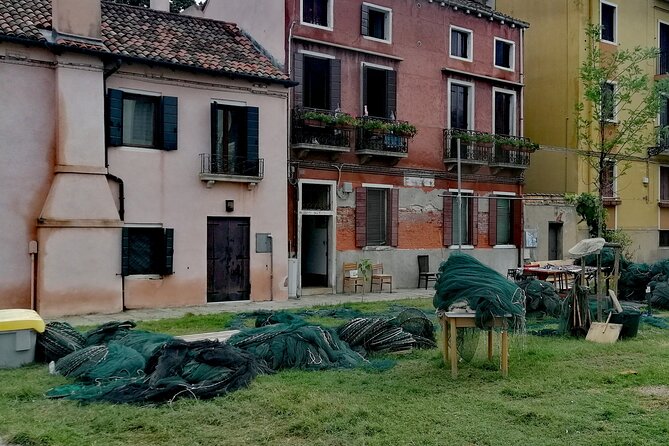
Venice can feel like a stage set, especially around St. Mark’s Square, the Rialto Bridge, and the main shopping lanes. Giudecca offers a different rhythm. It is still unmistakably Venetian, but the focus shifts from famous monuments to local streets, former workplaces, modest homes, religious buildings, and large structures that have found new uses.
I see the value of this walk in the connections. You are not simply checking off nine stops. You are watching one island change over many centuries. The guide explains why aristocratic families were sent here, why industry took hold, and why artists later moved into abandoned spaces when central Venice became too expensive.
The experience is also a practical choice for anyone who has already seen the main sights. If you have visited Venice several times, Giudecca may give you a fresh way to understand the city. If this is your first visit, it works best as a quieter companion to the major sights rather than a replacement for them.
The route is limited to about two hours, with the listed stops planned at roughly 15 minutes each. Since there are nine points and walking between them, the timing is likely to feel brisk. You should expect an interpretive walk with short visits and explanations, not long interior tours or extended time at each site.
A few more Venice days to weigh up
- Venice: Doge’s Palace Reserved Entry Ticket
★ 4.6 · 42,716 reviews - Venice: Grand Canal Gondola Ride with App Commentary
★ 4.1 · 18,908 reviews - Boat Trip: Glimpse of Murano, Torcello & Burano Islands
★ 4.3 · 15,699 reviews
Starting at Zattere and sorting out Giudecca’s name
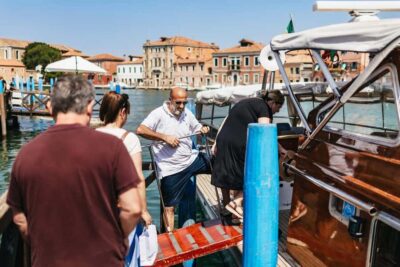
The tour begins at Zattere, on Venice’s southern waterfront. From here, you take in the island across the canal before heading over by water bus. The vaporetto ride is not included, so plan to purchase that ticket on board before the walk begins.
The first historical discussion concerns the name Giudecca. The common explanation connects it with Jewish residents, since Giudei is the Italian word for Jews. This tour presents a different Venetian origin: zudega, meaning the judged. In this telling, rebel aristocratic families were banished to the island during the ninth century.
That story gives you an immediate sense of Giudecca as a place apart. It was not simply a pretty island across the water. It served as a destination for people who had been pushed out of the political center. Centuries later, another group of outsiders arrived for a different reason: artists seeking large studios and lofts that they could no longer afford in central Venice.
This opening is useful because it gives the rest of the walk a clear theme. Giudecca has repeatedly offered space to people and activities that did not fit easily into central Venice.
Fondamenta Sant’Eufemia and a church with an old story
At Fondamenta Sant’Eufemia, you visit a church associated with Saint Euphemia, a Byzantine Christian martyr. The building is linked to AD 890, while its simple Veneto-Byzantine form is dated to the 14th century.
The story of Euphemia is dramatic. She was thrown to hungry lions, but after biting off her hand, the animals refused to eat the rest of her body. The tale reflects the kind of vivid religious storytelling that shaped Venetian churches and public life for centuries.
The building itself is more restrained than the legend. Its simple form gives the stop a useful contrast with Venice’s grand marble churches. You get a brief look at an old religious foundation without spending the better part of your day inside a major monument.
Keep your expectations realistic here. The church visit is a short stop, and the experience centers on the guide’s explanation rather than a long architectural study. That works well if you enjoy context and local stories, but less so if you want extended time for detailed photography or quiet contemplation.
Molino Stucky, from flour mill to five-star hotel
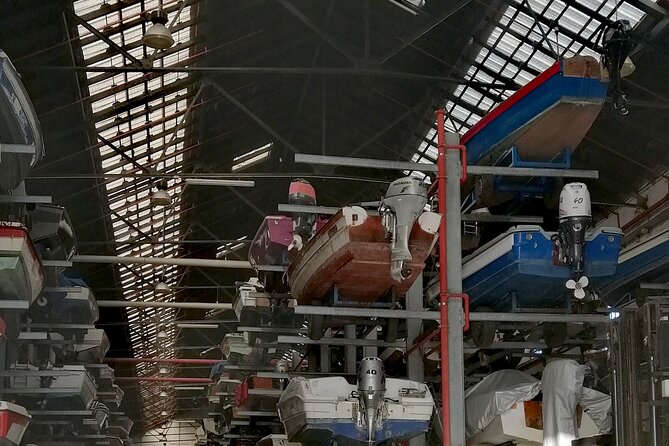
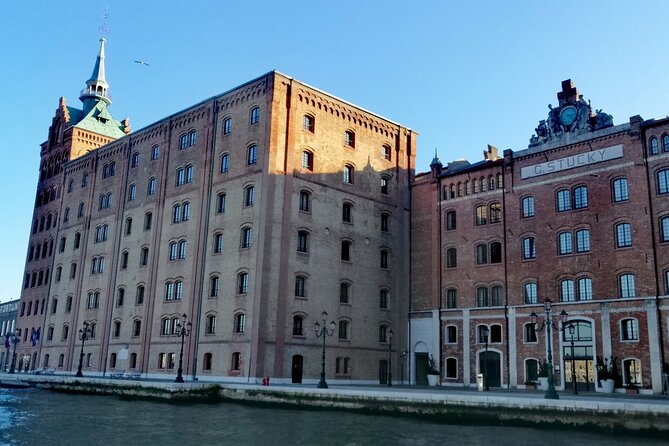
The massive Molino Stucky building is one of Giudecca’s most striking changes of use. Its Neo-Gothic exterior once housed a flour mill supplied by boats crossing the lagoon. The complex later operated as a pasta factory and now contains the Hilton Molino Stucky Venice, a luxury five-star hotel.
This is one of the tour’s strongest visual lessons. Venice is often presented as a city of palaces and churches, but its survival also depended on food production, shipping, storage, and manufacturing. The mill’s position beside the water made practical sense. Boats could bring in supplies, and the finished products could move across the lagoon.
Today, the building’s hotel use gives it a very different role. The structure is no longer a factory serving ordinary households, but its scale still hints at the industrial work that once took place there. You can see how an enormous abandoned property attracted investment and found a new place in modern Venice.
I like this stop because it makes redevelopment easy to understand. It also offers an important caution: not every old building on Giudecca has become a public cultural center. Some are now private or commercial spaces. The tour can explain the transformation, but you may not have access to every interior.
A different sort of day out around Venice:
- Venice: Grand Canal by Gondola with Live Commentary
★ 4.1 · 13,681 reviews - Venice: La Fenice Opera House Entry Ticket with Audio Guide
★ 4.6 · 11,742 reviews - Doge’s Palace & St. Mark’s Basilica with Terrace Access Tour
★ 4.7 · 10,697 reviews - Venice: Burano, Torcello & Murano Boat Tour w/Glassblowing
★ 4.4 · 10,245 reviews
Fondamenta de le Convertite and the island’s working side
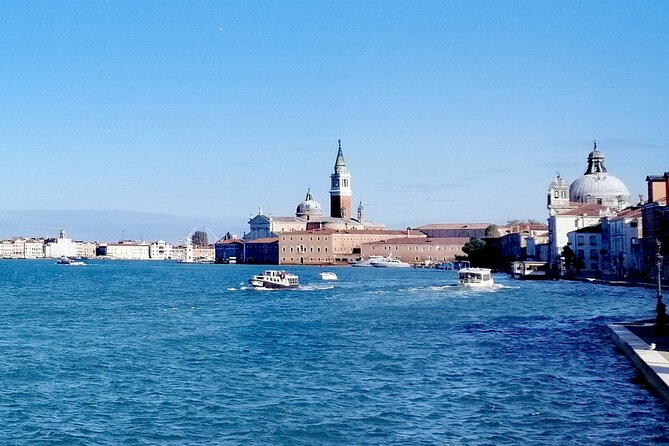
The route then turns toward a less familiar part of Giudecca at Fondamenta de le Convertite. Here, you pass an organic prison market beside a women’s correctional facility.
This is a very different sight from the usual Venetian itinerary. It shows an island with institutions, work, and daily routines rather than only churches and postcard views. The market’s connection with the prison adds another layer to the tour’s focus on people living outside the city center’s tourist circuit.
You should expect the area to be presented from the public path. This is not a prison tour, and the route does not promise entry into the correctional facility. The value lies in seeing how such places form part of the island’s social fabric.
This stop may appeal most to people who want an honest look at how Venice functions. It is less suited to anyone seeking only beauty, grand interiors, or classic photo stops. That contrast is part of the point.
The former monastery at Santissimi Cosma e Damiano
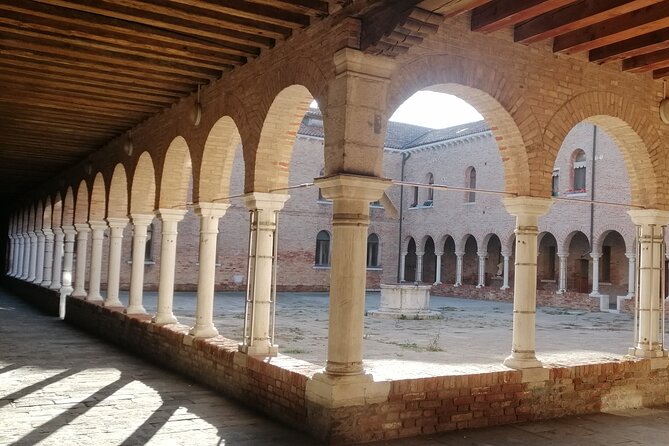
At Artisti Artigiani del Chiostro, the tour enters a former monastery, the ex-convent of Santissimi Cosma e Damiano. The old religious complex now serves as a center promoting local artists and artisans.
This is where Giudecca’s artistic present becomes clear. Rather than seeing only abandoned industrial buildings from the outside, you get a chance to enter a former monastic setting now linked with creative work. The change from convent to arts center is not a random modern addition. It fits the island’s long pattern of adapting old spaces to new needs.
The setting should be interesting for anyone who likes architecture with a visible second life. You see how a cloistered religious complex can support making, displaying, and promoting local work.
The amount of time here is limited, so do not expect a full gallery visit or a chance to study every workshop in detail. Still, this is one of the stops that gives the walk a sense of purpose. Giudecca is not only preserving old buildings. It is using some of them for current cultural work.
Teatro Junghans and the conversion of a factory district
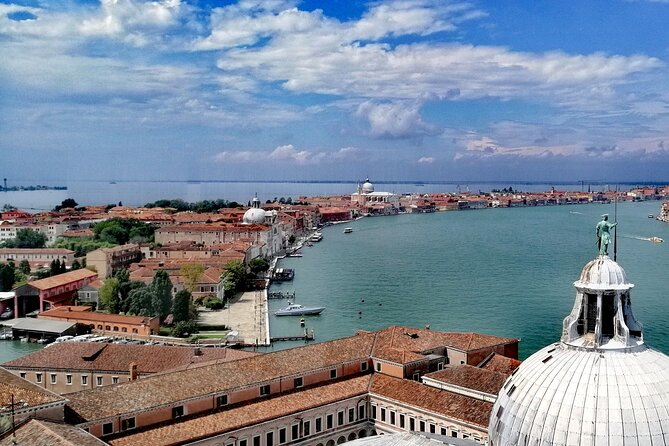
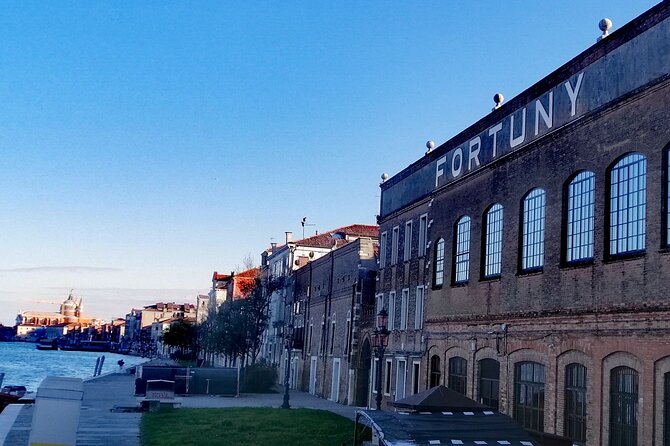
Teatro Junghans shows another kind of reuse. A former factory that made eyeglasses has become a modern residential neighborhood and contemporary theater facing the southern lagoon.
The factory’s original purpose is easy to miss if you walk past without an explanation. The theater and housing now suggest a newer residential quarter, but the industrial past remains part of the place’s identity.
This stop helps you see why Giudecca can feel more varied than central Venice. The island contains religious complexes, old manufacturing sites, new housing, correctional facilities, art centers, and hotels within a relatively compact area.
The theater’s lagoon-facing position also adds visual interest. You are not simply walking through a former factory zone. You are seeing how the southern edge of the island has been reshaped for modern life while retaining links to its working past.
Palladio’s Redentore and Venice’s annual promise
The Chiesa del Santissimo Redentore is the route’s major architectural highlight. Andrea Palladio designed the church to celebrate Venice’s deliverance from the plague.
The building carries more than architectural importance. Since 1578, Venetians have marked the city’s survival each July with a pilgrimage across the canal. A temporary pontoon bridge connects the Zattere area to the church, and people cross it to give thanks.
That tradition tells you something essential about Venice. In a tidal city exposed to disease, flooding, and changing water levels, survival has never felt completely secure. The Redentore is both a Palladian church and a place tied to a continuing civic ritual.
The tour’s short visit lets you appreciate the church in its setting and understand why it matters. If you want a long interior visit focused on Palladio’s design details, you may want to return independently. The group walk gives you the story and the setting, then keeps moving.
For me, this is the point where the tour’s themes come together: religion, public memory, water, and the city’s habit of turning crisis into ceremony.
Villa Heriot and a quieter view across the lagoon
Villa Heriot takes you off the most obvious path. The Art Nouveau villa offers views over the southern lagoon and a change from Giudecca’s factories and churches.
The villa is a reminder that the island was also associated with private retreats and attractive waterfront homes. Its architecture and position give you a different picture of Giudecca, one connected with leisure and cultivated surroundings rather than industry alone.
The views are a major reason to value this stop. Venice’s central skyline often dominates photographs, but the southern lagoon gives you more open space and a sense of the city’s island setting.
The walk may be affected by weather here. One useful practical point is that Giudecca can feel windy and cool in exposed areas, while shaded sections may be chilly even when central Venice feels warm. Bring a light layer, especially outside the hottest months.
Casa dei Tre Oci and the final view toward San Marco
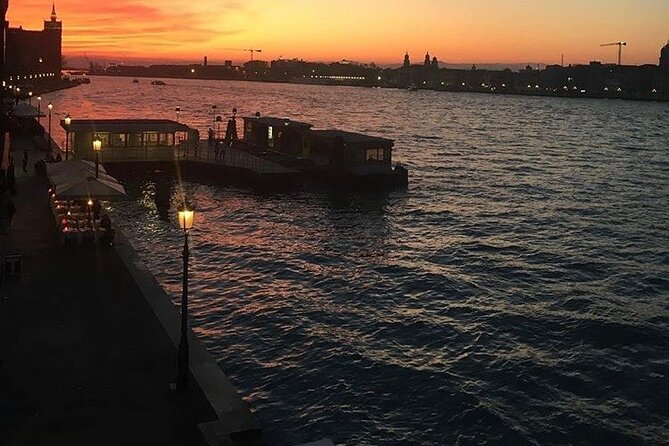
The tour ends near Casa dei Tre Oci, a palace with a distinctive Neo-Gothic brick facade and three unusual arched windows. From this part of the island, you get scenic views toward San Marco and Punta della Salute.
It is a fitting finish. You begin by looking across from Zattere and end with a broader view back toward Venice’s best-known landmarks. After walking through workshops, former factories, churches, and local institutions, you see the famous skyline from a less familiar angle.
The final section is ideal for photographs, but it also gives the walk a clear sense of place. Giudecca is close to central Venice, yet the water keeps it separate enough to develop its own character.
The tour ends at the Zitelle water bus stop on Fondamenta Zitelle. That makes it easy to continue by vaporetto, but you should plan your next move before the walk ends if you have a timed reservation elsewhere.
What the $163.64 price really buys you
At $163.64 per person, this is not a cheap add-on. For two hours, the cost is high compared with a basic self-guided walk or a standard group tour in Venice.
The price makes more sense if you place a high value on interpretation and access to places you might not find on your own. Giudecca’s appeal is not built around a single famous ticketed monument. Its interest comes from connecting scattered sights and explaining what you are seeing.
The small maximum group of 10 also matters. A small party gives you a better chance to ask about restaurants, local life, architecture, or other places in Venice. The tour has sometimes operated as a private experience when only a few people booked, though you should not assume that will happen on your date.
Group discounts are available, and the ticket is mobile. The water bus fare is extra, so include that in your total budget. Day visitors should also check Venice’s access-fee rules, since a €5 fee applies on certain dates to many people staying outside Venice, with exemptions and specific conditions listed by the city.
Free cancellation is available if you cancel at least 24 hours before the start time. Cancellations or changes inside that window are not refunded or accepted.
Who will get the most from this walk
I would choose this tour if you have already seen Venice’s major center or if you want your visit to include more than churches, bridges, and shopping streets. It is also a good fit for people who enjoy urban change, unusual local stories, and buildings with a second life.
Families can benefit from the variety. The route moves between dramatic martyr stories, factories, artists, theaters, and views, and the guide is expected to keep children involved. Still, the walk is most rewarding for children who can manage a two-hour sightseeing route with several short stops.
The experience is accessible to most people, and service animals are allowed. The supplied details do not specify the exact walking distance, so anyone with mobility concerns should ask the provider for current route information before booking.
I would not make this your only Venice tour if you have never seen St. Mark’s Basilica, the Doge’s Palace, or the Rialto area. Giudecca is a supplement, not a substitute for the city’s central masterpieces.
Small details that can improve the experience
Meet at Zattere, not at the final stop on Giudecca. Give yourself enough time to reach the waterfront and buy the vaporetto ticket on board.
Look for the guide at the agreed meeting point. The tour uses very small groups, and the guide is expected to arrive on time, but a clearly visible meeting sign is not guaranteed.
Wear comfortable shoes and bring water. The route combines waterfront paths, neighborhood streets, and several stops where you may pause outside. A light jacket is wise because wind can move across the lagoon, particularly in shaded or open areas.
Keep your schedule flexible after the tour. The walk ends at Zitelle rather than returning to Zattere, and the closing views may tempt you to stay around the waterfront before taking the water bus back.
Should you book the Giudecca Island Discovery Tour?
Book it if you want a quieter, more human side of Venice and are willing to pay for a guide to connect the pieces. Valerio Coppo receives especially strong praise for his humor, local knowledge, clear communication, and ability to involve families. Genny also leads some walks.
The tour’s best qualities are its small scale, unusual route, and strong sense of place. You will see an island shaped by exile, religion, industry, art, and water, then finish with one of the city’s finest less-familiar views.
Skip it if your time in Venice is extremely short, your budget is tight, or you mainly want long visits inside famous monuments. But if you have already covered the headline sights, this is a smart way to find a new Venice without going far at all.
FAQ
How long is the Giudecca Island Discovery Tour?
The tour lasts approximately two hours.
Where does the tour begin?
It begins at Zattere, Venice, in the Metropolitan City of Venice.
Where does the tour end?
The walk ends at the Zitelle water bus stop on Fondamenta Zitelle, 33.
Is the water bus ticket included?
No. The water bus ticket to Giudecca is not included and is purchased on board.
How many people can join the tour?
The tour has a maximum of 10 participants.
Is the tour available as a mobile ticket?
Yes. A mobile ticket is available, and confirmation is received when you book.
Who leads the tour?
The experience provider is deTourist Venice, led by Valerio Coppo. Valerio and Genny are named as guides for the walks.
Can I bring a service animal?
Yes. Service animals are allowed.
Can most people participate?
Yes. The activity information states that most people can participate. Specific walking-distance and mobility details are not provided.
What is the cancellation policy?
You can cancel for a full refund up to 24 hours before the experience start time. Cancellations or changes made less than 24 hours before the start are not accepted or refunded.
Just added around Venice
- Padua: Private Pasta-Making Class at a Local’s Home★ 5.0 · 3 reviews
- Padua City Sightseeing Walking Tour of Must-See-Sites with Local Guide★ 5.0 · 3 reviews
- Gondola Ride and St Mark’s Basilica★ 4.5 · 3 reviews
- Venice: Market Tour and Meal at a Local’s Home★ 4.3 · 3 reviews
- VIRTUAL MUSEUM: Creature di Gomma – Venice Vintage Toys★ 4.7 · 3 reviews
- 3 Hour Shared Walking and Aperitivo Tour of Verona★ 5.0 · 3 reviews
- Venice: The Best of Dolomites 3Cime and Refuges with Drone★ 5.0 · 3 reviews
- Verona: Blindfolded Wine Tasting★ 5.0 · 3 reviews
Tours, compared.
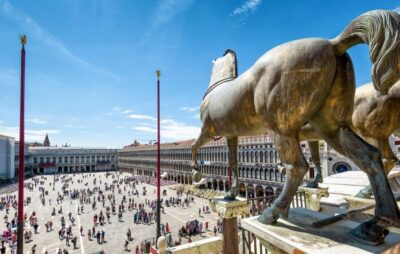
Doge’s Palace & St. Mark’s Basilica with Terrace Access Tour
Read our review →
Burano, Torcello & Murano Boat Tour w/Glassblowing
Read our review →
Murano and Burano Boat Tour with Glass Factory Visit
Read our review →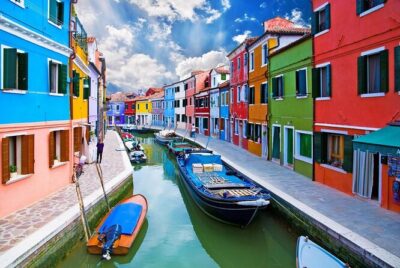
Murano, Burano and Torcello Half-Day Sightseeing Tour
Read our review →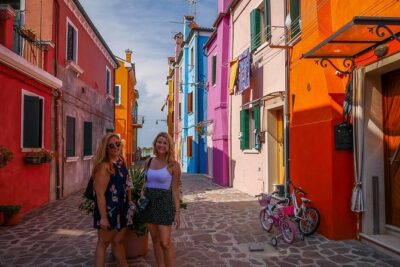
Murano & Burano Islands Guided Small-Group Tour by Private Boat
Read our review →
Murano & Burano Panoramic Boat Tour w/ Glassblowing
Read our review →
Murano, Burano, Torcello, and Glass Factory Tour
Read our review →