
Reviewed · VERONA TOURS
Museo Nicolis Verona
Museo Nicolis puts rare machines within arm’s reach, from an 1882 gas-powered motorcycle to Formula 1 racecars and a remarkable display of steering wheels. It is not just a car museum. The exhibits follow the human urge to travel faster, farther, and with more mechanical skill.
I like the freedom to explore at your own pace and the sheer range of objects beyond automobiles, especially the typewriters, cameras, jukeboxes, bicycles, and musical instruments. The price is also reasonable for about two hours of indoor sightseeing. The main consideration is simple: no guided tour is included, so you need to bring your own curiosity and read the displays at your own speed.
In This Review
- Key points to know before you go
- Why this museum is different from a standard car show
- Reaching the museum from Verona
- Your first look inside Museo Nicolis
- The automobile collection and the appeal of rare machines
- The 1882 motorcycle and the motorcycle collection
- Formula 1 cars and the 100 steering wheels
- Bicycles, airplanes, motors, and military objects
- Musical instruments, cameras, and typewriters
- How long to stay and how to use the two hours
- Is the $16.90 admission good value?
- Who should book this experience
- Booking, cancellation, and practical expectations
- Should you book Museo Nicolis?
- FAQ
- Where is Museo Nicolis located?
- How long does the museum visit take?
- How much does admission cost?
- Is a guided tour included?
- What can I see at Museo Nicolis?
- Is Formula 1 material on display?
- What is one of the rarest objects in the museum?
- Does the activity begin and end at the museum?
- Can children visit?
- Can I cancel for a full refund?
Key points to know before you go
- An 1882 gas-powered motorcycle is one of the rarest objects on display.
- Formula 1 cars and 100 steering wheels give the racecar section a strong visual pull.
- Eight themed collections, or 10 collections as described in the admission details, cover far more than cars.
- The visit lasts about two hours, making it a manageable stop near Verona.
- The museum is in Villafranca di Verona, at Viale Postumia 71, outside central Verona.
- Admission costs about $16.90 per person, with free cancellation up to 24 hours before the start time.
Why this museum is different from a standard car show
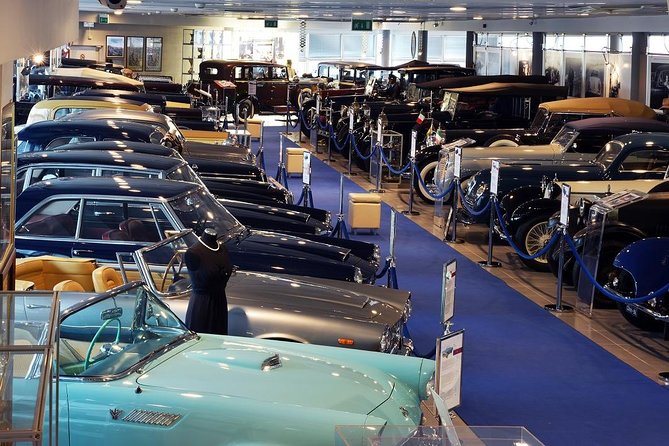
Many automobile museums focus on polished vehicles arranged in neat rows. Museo Nicolis takes a broader view. Its displays connect cars with the machines, tools, and habits that helped people cross distance in different eras.
That wider scope matters. You can look at a vintage car, then shift your attention to a motorcycle, bicycle, airplane, motor, camera, or typewriter. The museum gives you a chance to see transport as part of a larger story about invention and daily life.
The collection was founded in 2000 by Luciano Nicolis, a businessman with a strong interest in old cars and mechanics. His collecting reached beyond vehicles. The result is a museum filled with objects gathered from around the world, including items that are difficult to find today.
I would not treat this as a quick photo stop. The museum rewards close looking. A visitor interested in design may focus on bodywork and mechanical parts. Someone else may spend more time with old cameras, musical instruments, computers, or military objects. You can make the visit as narrow or as broad as you like.
A few more Verona days to weigh up
- Verona: Hop-on Hop-off Tour 24 or 48-Hour Ticket
★ 4.4 · 2,010 reviews - Verona: History and Hidden Gems Guided Walking Tour
★ 5.0 · 1,379 reviews - Verona: Priority Access Arena Guided Tour
★ 4.6 · 1,152 reviews
Reaching the museum from Verona
The museum is at Viale Postumia 71 in Villafranca di Verona, rather than in Verona’s historic center. That location is important when planning your day. If your schedule is built around the Arena, Piazza delle Erbe, and the old city, this is not a museum you simply pass on the way between central sights.
The listed meeting and return point is the museum itself. The activity begins and ends there, with no transport component described. You should plan your route to Villafranca separately and allow enough time to arrive before you want to start looking around.
That extra planning is the main practical cost of the visit. The ticket itself is modest, but the museum makes the most sense when you are already arranging time in or near Villafranca, or when cars and mechanical design are a real priority for you.
Your first look inside Museo Nicolis
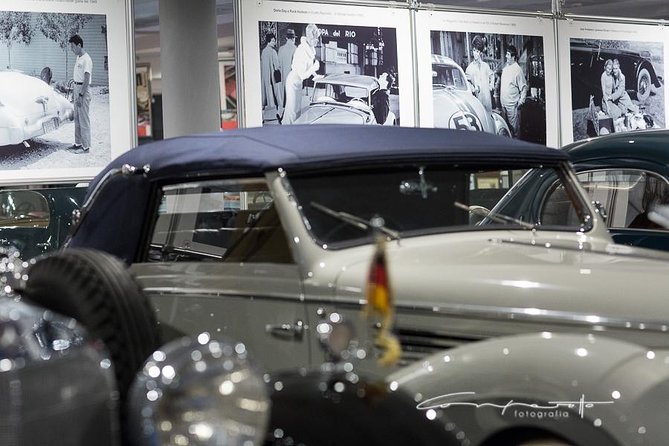
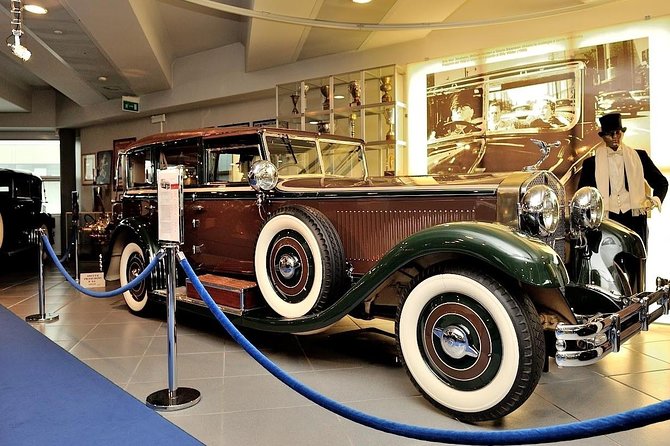
The opening section sets the tone with the museum’s central subject: the automobile. You can expect a display built around older vehicles and car-related objects, with the machines presented as both working inventions and examples of style.
The collection is useful for two kinds of visitors. If you already know the difference between car models and eras, you will have plenty of detail to inspect. If you are less familiar with old cars, the surrounding objects help make the subject easier to understand. You are not limited to identifying badges or comparing body shapes.
The museum’s larger idea is the challenge of distance. Every vehicle represents an attempt to move people or goods more efficiently. That theme gives the visit some structure, even without a guide leading you from room to room.
Because you explore independently, I suggest starting with the sections that matter most to you. Car fans can begin with the automobiles and racecars. Families or mixed-interest groups may prefer to move through several categories, using the changing displays to keep the visit lively.
The automobile collection and the appeal of rare machines
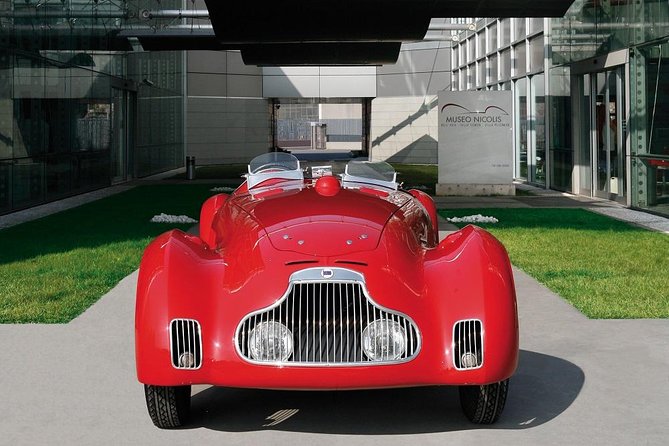
The automobile section is the main reason many people will come. The vehicles are described as precious and difficult-to-find examples, collected through Luciano Nicolis’s interest in cars and mechanics.
The value here is not only the number of vehicles. A rare car gives you a chance to look at details that modern driving tends to hide: body construction, cabin layout, wheels, controls, and the relationship between appearance and engineering. You can take your time with those details because the visit is self-guided.
I would allow more time than you might expect for the cars if you enjoy design. The museum is not simply a place to snap a picture and move on. Its objects are meant to be viewed from different angles, and the mechanical details are part of the attraction.
The possible drawback is that the information provided does not identify individual automobile makes, models, or years. If you want a highly technical explanation for every vehicle, the absence of a guide may leave you wanting more. The museum works best for independent exploration rather than a formal lecture.
A different sort of day out around Verona:
- Verona: Juliet’s House Fast-Track Entry Ticket & Audio Guide
★ 4.2 · 1,121 reviews - Verona: Small Group Guided Walking Tour with Arena Tickets
★ 4.9 · 848 reviews - Verona: Arena di Verona Opera Ticket
★ 4.6 · 721 reviews - Verona: Pasta and Tiramisu Cooking Class with Fine Wine
★ 4.8 · 633 reviews
The 1882 motorcycle and the motorcycle collection
One of the most important pieces is described as the first motorcycle to run on gas, dating from 1882. Even if motorcycles are not your main interest, this is the kind of object that changes the scale of the visit. You are looking at an early answer to a problem that later shaped modern transport.
The motorcycle collection also lets you compare two-wheeled travel with the automobiles nearby. Motorcycles had to solve many of the same problems as cars, but with less room, different balance demands, and a much smaller frame.
I like this section because it gives the museum a clear starting point in mechanical experimentation. You can see that transport progress did not arrive as one finished product. It came through many designs, trials, and compromises.
The supplied details do not explain the exact display order or provide a guide’s commentary. Plan to give the 1882 motorcycle a careful look, then use the surrounding collection to build your own comparisons.
Formula 1 cars and the 100 steering wheels
The racecar area gives the museum a faster, more dramatic side. Rare Formula 1 cars are displayed up close, allowing you to examine machines that are usually seen only on a track, in photographs, or behind a barrier at a major racing event.
The display of 100 F1 steering wheels for 100 cars is especially unusual. A steering wheel may look small compared with a complete racecar, but it carries a great deal of design information. Shape, controls, and layout show how much engineering is placed in the driver’s hands.
For a racing fan, this may be the strongest part of the museum. You can compare the steering wheels across different cars and think about how racing technology changed. For a general visitor, the display provides a quick way to understand that Formula 1 is not only about engines and speed. The controls themselves became increasingly specialized.
No guided racecar presentation is included. If you want technical explanations about specific teams, drivers, seasons, or engineering changes, you may need to supply that context yourself. Still, the close view of the cars and the unusual steering-wheel display give this section a strong reason to visit.
Bicycles, airplanes, motors, and military objects
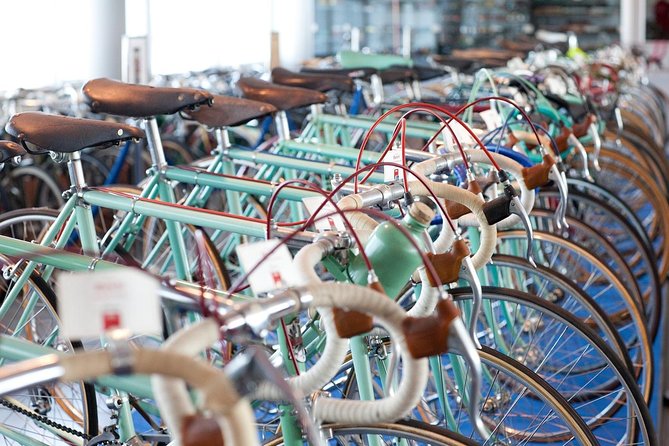
The museum’s transportation story continues with bicycles and airplanes. These categories broaden the meaning of mobility. A bicycle shows how simple human-powered design can solve short-distance travel, while an airplane represents the wish to cover much greater distances.
Motors and mechanical objects bring attention back to the machinery itself. You can focus less on the finished vehicle and more on the parts that make movement possible. That is useful if you enjoy engineering, even when you do not recognize every model.
Military objects add another layer to the collection. The supplied information does not list specific pieces, so I would not plan the visit around one particular military artifact. Instead, treat the category as part of the museum’s wider look at machines built for movement, work, and purpose.
These sections also help companions who are not committed car fans. You can move from a bicycle to an airplane, then to a motor or military object, without staying inside one narrow subject for the entire visit.
Musical instruments, cameras, and typewriters
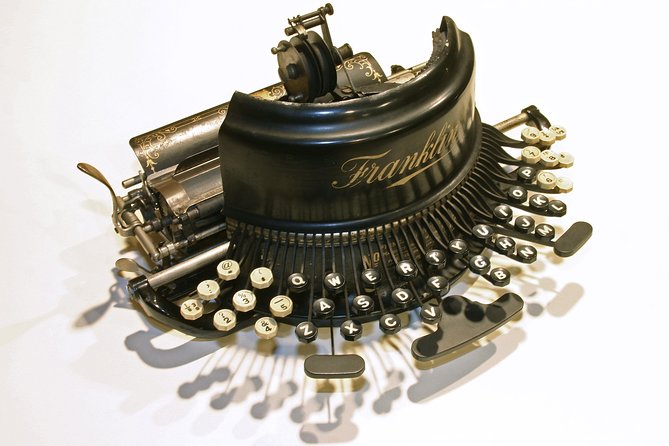
The non-vehicle collections are one of the museum’s most appealing surprises. Musical instruments, cameras, typewriters, and computers show how mechanical design shaped communication, entertainment, and everyday work.
The review information points specifically to cameras, jukeboxes, and musical instruments as objects that can keep you looking long after the first car display. These exhibits matter because they connect machines to ordinary life. A car may represent travel, but a camera records it, a typewriter describes it, and a musical instrument gives it a soundtrack.
The typewriter and computer section should interest anyone curious about how people handled information before smartphones and laptops. The details supplied do not specify which models are displayed, so I would avoid expecting a particular famous machine. The pleasure comes from seeing the variety within the category.
This is also where the museum becomes more accessible to a mixed group. One person can study engines while another examines cameras or old office machines. Since there is no scheduled guide, everyone can spend time where personal interest is strongest.
How long to stay and how to use the two hours
The visit takes about two hours. That is enough time for a solid look at the main categories, but your pace will depend heavily on your interest in cars and mechanical objects.
If you want a broad overview, move steadily through all the sections and save extra time for the 1882 motorcycle, Formula 1 cars, and steering wheels. If you are a serious collector or racing fan, two hours may feel short because individual vehicles and controls invite close inspection.
I would not rush through the first automobile displays just to reach the racecars. The museum’s appeal comes from the contrast between categories. Give yourself time to notice how a bicycle, motorcycle, automobile, airplane, and racecar approach the same basic problem of movement.
A self-guided visit also means you can pause without holding up a group. That flexibility is useful for families and private parties, especially when different people have different levels of interest.
Is the $16.90 admission good value?
At about $16.90 per person, the admission is fair for a two-hour museum visit with this range of material. The value is strongest if you enjoy cars, motorcycles, racing, design, or old technology. You are paying for access to a large private collection rather than a single narrow display.
The price also makes sense for a short visit near Verona. You do not need to commit an entire day, and the museum can add variety to a schedule focused on historic churches, Roman monuments, and city streets.
The calculation changes if you are not interested in machines. The museum includes musical instruments, cameras, typewriters, computers, and military objects, but its central identity remains mechanical and automotive. Someone seeking only traditional art or ancient Roman history should spend the money elsewhere.
A guided tour would likely add useful context, but it is not included. That keeps the entry price lower and gives you control, though it also means you will need to create your own route through the displays.
Who should book this experience
I would recommend Museo Nicolis most strongly to:
- Car and motorcycle enthusiasts who want to see rare vehicles at close range.
- Formula 1 fans interested in racecars and steering-wheel design.
- Families with different interests, since the collections cover transport, cameras, music, and office technology.
- Visitors who prefer self-guided museums and flexible timing.
- Anyone looking for an indoor attraction outside Verona’s main historic center.
I would be more cautious if you want a guided, story-led experience. There is no guide included, and the available details do not name a guide or promise a live explanation. You will need to enjoy looking, comparing, and forming your own questions.
Children must be accompanied by an adult. Most people can participate, and the activity is private, meaning only your own group takes part. Those details make it easier to keep the visit personal, but they do not turn it into a private guided tour.
Booking, cancellation, and practical expectations
Confirmation is provided at the time of booking. The museum is booked, on average, about 15 days ahead, so you should not assume that a last-minute spot will always be available.
Free cancellation is allowed up to 24 hours before the experience begins. Cancel at least 24 hours ahead for a full refund. Cancellations or changes made inside that 24-hour window are not accepted for a refund, and the cut-off follows local time.
The visit begins and ends at Viale Postumia 71, 37069 Villafranca di Verona VR, Italy. No transportation, guide, or other add-on is included in the stated experience, so check your route and plan to explore independently.
Should you book Museo Nicolis?
Book it if you like machines, design, racing, or unusual collections. The rare 1882 motorcycle, Formula 1 cars, 100 steering wheels, and broad mix of cameras, typewriters, musical instruments, and bicycles give you more variety than a standard automobile display.
Skip it if your Verona schedule is already crowded and you are only mildly interested in mechanical objects. The museum is outside the city center, and the lack of a guide means the visit depends on your own interest.
For the right person, the $16.90 price buys a focused two-hour stop with plenty to inspect. I would give it priority for car fans and curious families, while other visitors should choose it only if the wider story of machines and movement sounds appealing.
FAQ
Where is Museo Nicolis located?
Museo Nicolis is at Viale Postumia 71, 37069 Villafranca di Verona VR, Italy.
How long does the museum visit take?
The experience lasts approximately two hours.
How much does admission cost?
The listed price is about $16.90 per person.
Is a guided tour included?
No. A guided tour is not included, and you explore the museum at your own pace.
What can I see at Museo Nicolis?
The museum includes automobiles, motorcycles, bicycles, airplanes, musical instruments, cameras, typewriters and computers, motors, racecars, and military objects.
Is Formula 1 material on display?
Yes. You can see rare Formula 1 racecars and a display of 100 F1 steering wheels for 100 cars.
What is one of the rarest objects in the museum?
One of the rare pieces is the first motorcycle to run on gas, dating from 1882.
Does the activity begin and end at the museum?
Yes. The meeting point is Museo Nicolis, and the activity ends back at the same meeting point.
Can children visit?
Yes, but children must be accompanied by an adult.
Can I cancel for a full refund?
Yes. You can cancel at least 24 hours before the experience start time for a full refund. Changes or cancellations made less than 24 hours before the start time are not accepted for a refund.
Just added around Verona
- Verona: Private 2-Hour Walking Tour★ 4.9 · 41 reviews
- Valpolicella Lunch or Dinner Wine & Food tasting with Amarone★ 5.0 · 43 reviews
- The 10 Tastings of Verona With Locals: Private Food Tour★ 4.5 · 45 reviews
- Arena di Verona Opera Ticket Package★ 4.0 · 46 reviews
- Unique Wine tasting in Verona, with Amarone docg★ 5.0 · 46 reviews
- Verona: the Arena at the Gladiators’ time★ 5.0 · 48 reviews
- Verona: Juliet’s House Fast-Track Entry Ticket & Audio Guide★ 3.5 · 52 reviews
- Valpolicella Wine Experience at Montresor winery★ 5.0 · 54 reviews
Verona Tours, compared.
Juliet’s House Fast-Track Entry Ticket & Audio Guide
Read our review →
Small Group Guided Walking Tour with Arena Tickets
Read our review →
Pasta and Tiramisu Cooking Class with Fine Wine
Read our review →

Browse the lists this tour appears in