
Reviewed · WALKING TOURS
Padua: Highlights Private Walking Tour & Scrovegni Chapel
Padua’s biggest surprise is how much art and history fits into a city only about 30 minutes from Venice. This private walk links Giotto’s Scrovegni Chapel with the Basilica of Saint Anthony, then threads through old squares, market streets, and grand civic buildings.
I like the private format because you can ask questions freely and shape the walk around your interests. I also like the mix of sacred art, daily city life, and medieval architecture, especially the 800-year-old market under the Palazzo della Ragione. The main drawback is the price, $148.40 per person, which makes more sense when shared by a private group than for a solo visitor.
In This Review
- Key points to know
- Why Padua makes a better side trip than a quick stop
- Starting at Prato della Valle
- Inside the Basilica of Saint Anthony
- Donatello’s Gattamelata and the public face of Padua
- Walking through medieval Padua
- The market beneath Palazzo della Ragione
- Giotto’s Scrovegni Chapel and the birth of a new style
- Optional art beyond the standard route
- Guides, private format, and the real value
- Who should book this Padua walk?
- Final verdict: a strong choice with one timing warning
- FAQ
- How long does the Padua private walking tour last?
- What does the tour cost?
- Where does the tour begin?
- Where does the activity end?
- Is entry to the Scrovegni Chapel included?
- Does the tour include transportation?
- Which languages are available?
- Is the tour suitable for wheelchair users?
- What should I bring?
Key points to know
- Giotto’s Scrovegni Chapel: See one of Europe’s key early Renaissance monuments with a timed entry ticket and skip-the-line access.
- St. Anthony’s Basilica: Explore Donatello’s altar reliefs, medieval frescoes, the saint’s tomb, and the Cappella del Santo.
- Private local guide: English- and Italian-speaking guides such as Monica and Caterina can adapt the visit to your interests.
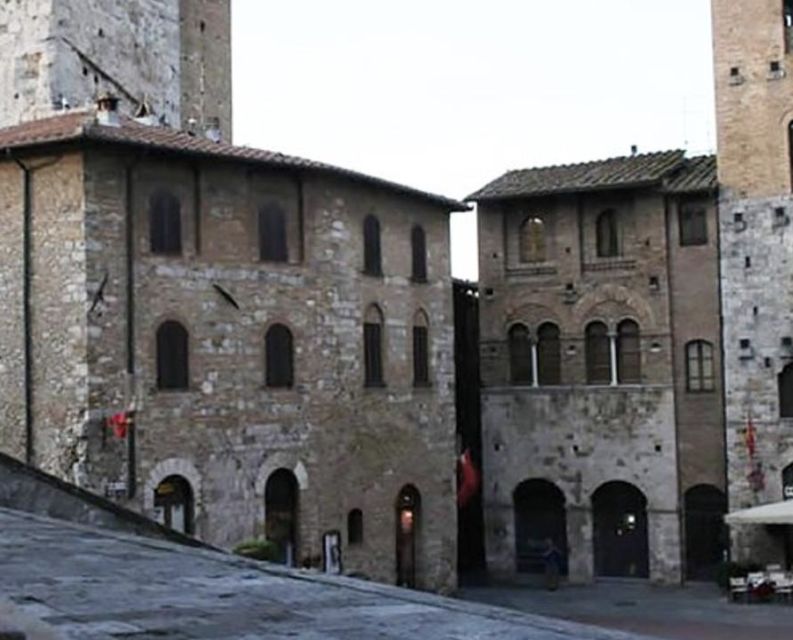
- Padua’s market squares: Walk through Piazza delle Erbe and Piazza della Frutta beside the medieval Palazzo della Ragione.
- Easy Venice side trip: Padua is close enough to Venice for a half-day outing, though you must plan your train and meeting time carefully.
- Walking demands: Expect uneven paving and steps, so comfortable shoes and water are essential.
Why Padua makes a better side trip than a quick stop
Venice gets the crowds, but Padua gives you a more grounded look at Veneto. The city has one of Europe’s oldest universities, an important pilgrimage church, grand public squares, and some of the most important painted art in Italy.
This tour works because it does not treat Padua as a single-monument stop. You see the religious heart of the city at Saint Anthony’s Basilica, its public life around the market squares, and its artistic high point at the Scrovegni Chapel.
The 3.5-hour length is useful. You get enough time for serious sightseeing without giving up an entire day in Venice. Still, the schedule is full. You will walk between different parts of the center, spend about an hour in the basilica, and spend another hour at the chapel. This is not a lazy coffee-and-wander outing.
The meeting point is in front of Farmacia Santa Giustina, northwest of Prato della Valle. Look for a Through Eternity sign or flag. Transportation to the meeting point is not included, so you need to arrange your own train, taxi, or walk through the city.
More Walking Tours in Padua
- Padua: Private City Walking Tour & Scrovegni’s Chapel Visit
★ 4.7 · 124 reviews - Padua Walking Tour with the Scrovegni Chapel
★ 4.5 · 96 reviews - Padova Walking Tour with Audio and Written Guide by a Local
★ 4.5 · 61 reviews
Starting at Prato della Valle
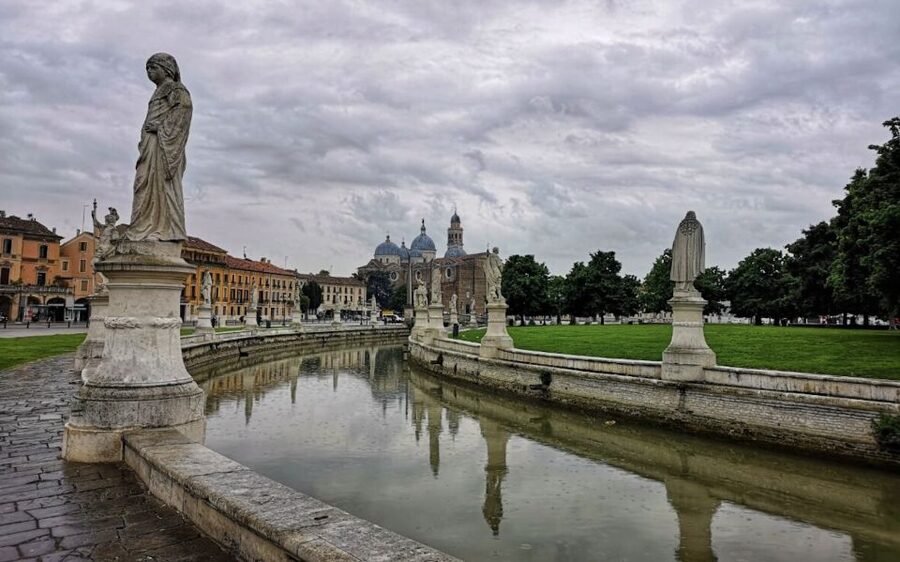
The tour begins near Prato della Valle, one of Padua’s grandest urban spaces. The guided portion here lasts about 15 minutes, enough to get your bearings and understand why this open oval is so important to the city.
Prato della Valle is not simply a park. Its broad layout, water, and rows of statues give Padua a dramatic opening scene. The short stop also helps place the rest of the tour in context. You begin in an expansive civic space, then move toward the intimate chapels, lanes, and market arcades of the center.
I like this start because it gives the tour room to breathe before the more detailed art stops. The practical issue is that 15 minutes passes quickly. If you want extensive time for photographs or a full circuit of the square, come early or return after the tour.
Inside the Basilica of Saint Anthony
The Basilica of Saint Anthony is the tour’s longest stop, with about an hour of guided time. It is also the place where the city’s religious life and artistic history meet most clearly.
Construction began in 1233, shortly after Anthony’s death, as a burial place for the revered saint. The building combines several architectural styles and influences, so it does not feel like a church built in one clean period. Its domes, chapels, sculpture, and devotional spaces create a crowded but fascinating visual experience.
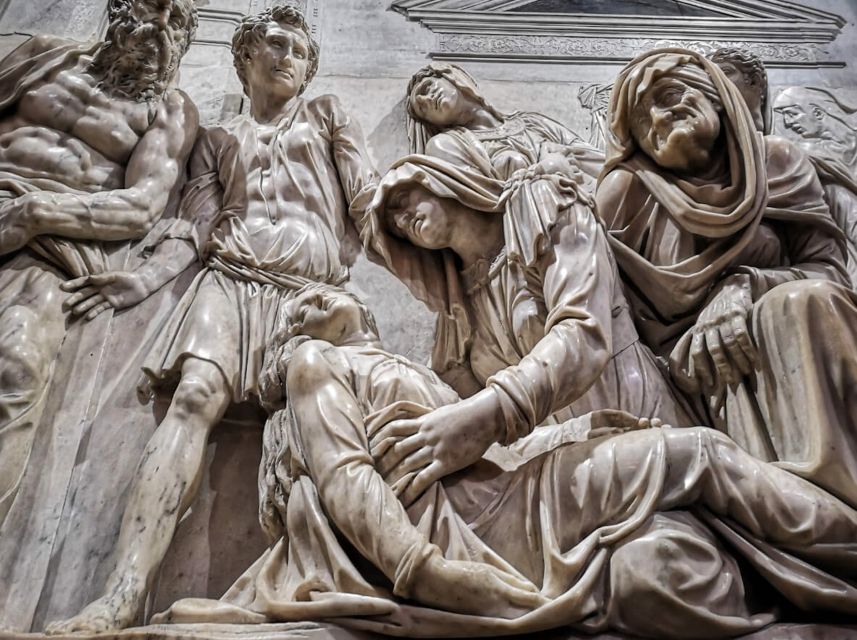
Inside, you can expect a maze of chapels and artworks. The tour highlights Donatello’s sculptural reliefs on the high altar, along with medieval frescoes by Altichieri da Zevio. These details matter because the basilica is not just a pilgrimage stop. It is also a compact survey of changing Italian art.
The Cappella del Santo is especially personal in character. Saint Anthony’s tomb is covered with requests for intercession from the faithful. You can also see Renaissance sculptures by the Lombardi brothers showing scenes from the saint’s life.
That combination is one of the strongest parts of the tour. You are not looking at art in a detached museum setting. You are seeing sculpture and painting inside a living place of worship, where devotion remains part of the building’s purpose.
As with any active basilica, the atmosphere can vary. Religious spaces may require respectful behavior, and the number of chapels means you will rely on your guide to point out what deserves your attention. Without guidance, it would be easy to look at the church as one large mass of decoration and miss the individual works.
Donatello’s Gattamelata and the public face of Padua
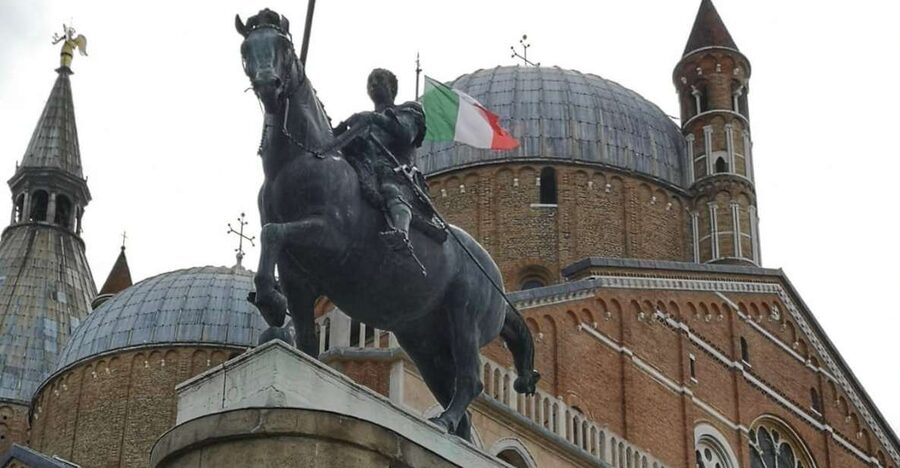
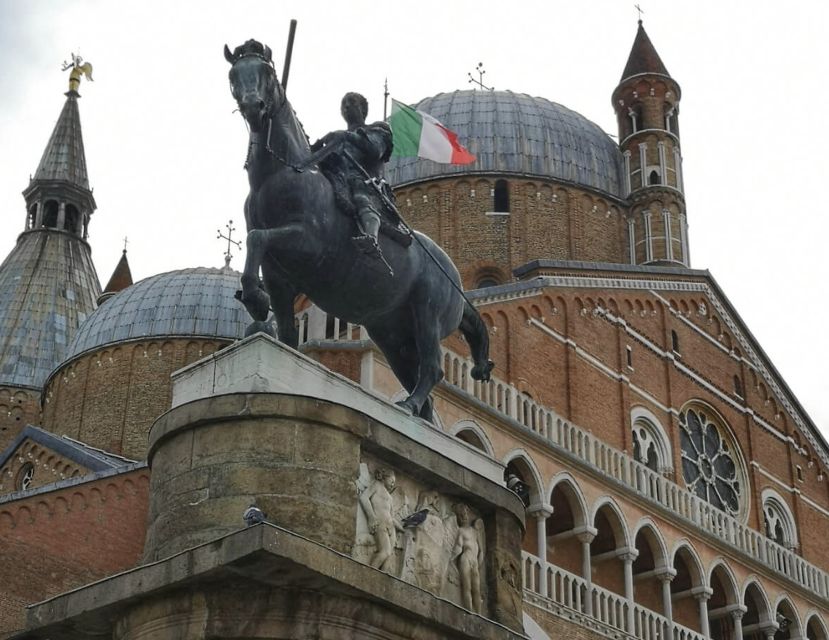
Near the basilica, the tour pauses for the equestrian statue of Gattamelata, with about 15 minutes of guided explanation. This is a short stop, but it adds an important outdoor counterpoint to the basilica’s interior art.
The statue gives you a chance to consider how Renaissance sculpture worked in public space. You are not only seeing a celebrated artwork. You are also seeing how Padua used monuments to honor power, military service, and civic identity.
The stop is well placed after the basilica. You move from Saint Anthony’s spiritual authority to a monument tied to the city’s public life. If sculpture interests you, ask your guide to explain the details of the work and its place beside the church.
A different sort of day out around Padua:
- Padua to Venice Boat Cruise of the Brenta Riviera
★ 4.5 · 418 reviews - Tasting Prosecco with appetizers
★ 5.0 · 217 reviews - Full-Day Padua to Venice Burchiello Brenta Riviera Boat Cruise
★ 4.5 · 198 reviews - Prosecco tasting, appetizers and tour of the cellar and vineyards
★ 5.0 · 178 reviews
Walking through medieval Padua
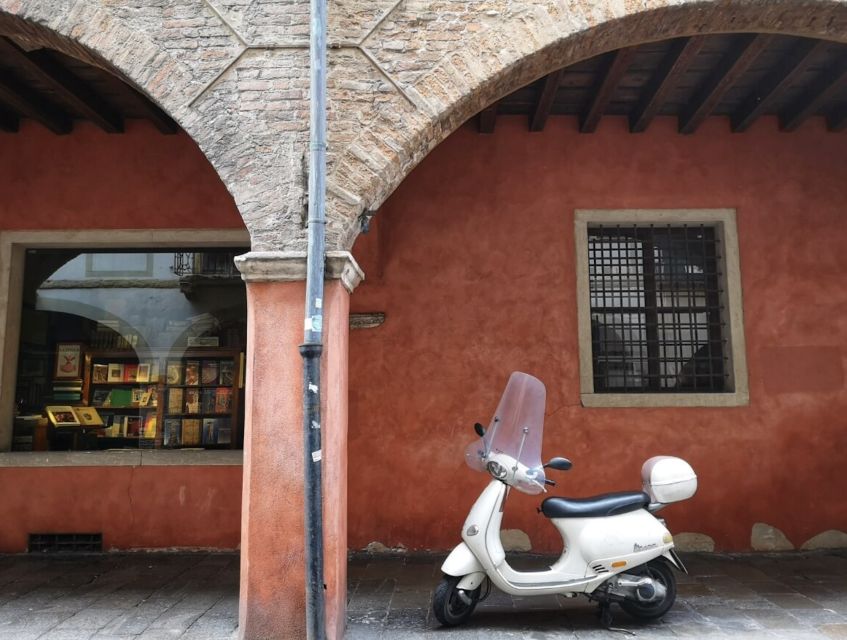
The central walking section lasts about an hour. This is where the tour shifts from major sights to the city’s texture: medieval streets, views along the way, old architecture, and the rhythm of Padua’s center.
The city is home to one of the world’s oldest universities, and that long academic life helps explain its cultural weight. The tour does not present Padua as a museum frozen in time. You walk through areas still used for shopping, meeting friends, worship, and everyday errands.
The pace should suit you if you enjoy learning while moving. You will not spend the entire tour inside buildings, so comfortable shoes matter. The route includes uneven walkways and steps. Anyone with mobility concerns should mention this while booking so the guide can plan the route as well as possible.
This section is also where a private guide can be most useful. You can stop to ask about a building, change the focus toward architecture, or spend more time on a subject that catches your eye. The tour is offered in English or Italian, and groups of six or more receive headsets.
The market beneath Palazzo della Ragione
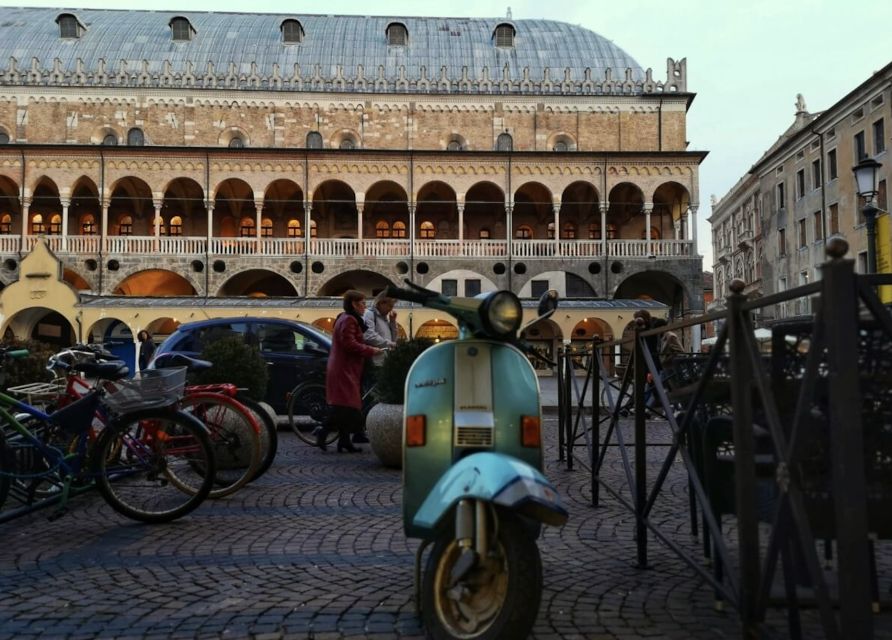
Piazza delle Erbe and Piazza della Frutta sit on either side of the Palazzo della Ragione. The covered market beneath the palace has operated continuously for about 800 years, making it one of the oldest covered markets in Europe.
This is one of my favorite parts of the route because it connects grand history with ordinary life. The basilica gives you relics, chapels, and masterworks. The market shows you the city buying, selling, eating, and meeting under medieval arches.
The two piazzas are also good places to pause and watch Padua’s daily routine. You may find the atmosphere more revealing than another formal monument. The tour includes a guided visit to Piazza delle Erbe, while the broader walk brings in the surrounding market area.
Do not expect a long food stop here. Food and drinks are not included, and the experience is designed as a walking tour rather than a market tasting. If you want to linger over a drink or shop for something to eat, you may need to do that before or after the scheduled route.
Giotto’s Scrovegni Chapel and the birth of a new style
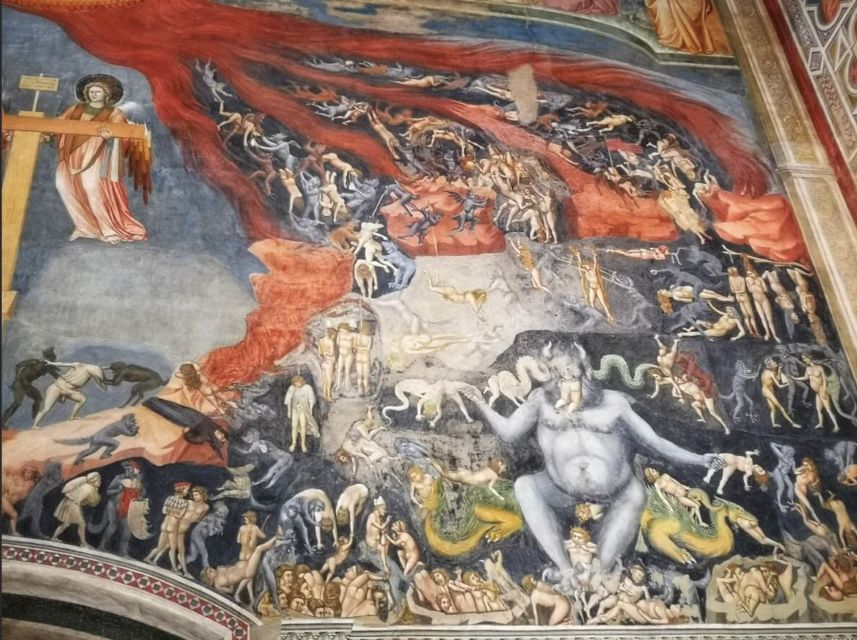
The Scrovegni Chapel is the artistic centerpiece. The visit takes about an hour and includes the entry ticket, with skip-the-line access through a separate entrance.
Giotto’s fresco cycle is famous because it helped move Italian painting toward a more direct, human way of showing sacred stories. You can expect scenes from the lives of Mary and Christ, along with expressive figures, strong storytelling, and a clearer sense of space than much earlier medieval painting.
The chapel is not a place to rush through. Even with a guide, you need time to look upward and follow the sequence of images. A private guide can help explain the story and point out details that might otherwise blur together.
Your ticket is tied to a scheduled entry. This is the most important timing issue on the tour. If you are arriving from Venice by train, leave a generous margin. A guest working with guide Caterina was advised to take a taxi directly to the chapel and arrived just in time for the ticketed slot. That is a useful warning: a delayed train or a slow walk across Padua can put the chapel visit at risk.
The order of the route also deserves attention. The stated itinerary begins near Prato della Valle and places the Scrovegni Chapel later in the walk. If your transport schedule is tight, contact the provider ahead of time. Guide Caterina has shown that the route can be handled with care when a visitor is coming from Venice, but you should not assume that every late arrival can be absorbed.
Optional art beyond the standard route
The tour can be customized if you have extra time in Padua. Two possible additions are the Ovetari Chapel in the Church of the Eremitani and the city’s Baptistery.
The Ovetari Chapel contains Mantegna’s frescoes of Saint Christopher and Saint James. Much of the chapel was destroyed by a World War II bomb, but the paintings have been carefully restored over many years. This makes the stop valuable for anyone interested in both Renaissance art and the difficult work of conservation.
The Baptistery offers a different kind of experience. Giusto da Menabuoi’s scenes of heaven present an unusual medieval view of the cosmos. The supplied tour description calls these paintings among the most unusual examples of medieval cosmology in the city.
These additions are not presented as guaranteed parts of the standard 3.5-hour route. You need extra time and should discuss them during booking. The private format is most useful here, since a fixed group schedule would give you less room to change direction.
Guides, private format, and the real value
The tour costs $148.40 per person. That is a serious price for a half-day walk, especially if you are traveling alone. The fee includes the guide, entry fees, and skip-the-line access, but not transportation, food, or drinks.
For a private group, the value depends on what you want from Padua. If you only need directions to the basilica and chapel, you can spend less by visiting independently. If you want the artworks explained, prefer a flexible pace, and want one person to connect the city’s major sights, the cost becomes easier to justify.
The strongest guide feedback concerns Monica and Caterina. Monica is described as an excellent local guide who knows the area well. Caterina handled a request to include Saint Anthony’s Basilica, kept in touch about a train arrival, gave practical transport advice, and communicated in excellent English.
That kind of help matters more than a polished script. Padua’s key sights are spread across the center, and the chapel’s timed entry leaves little room for error. A guide who can adapt the plan and answer questions can save you both time and stress.
The private setting also helps if your interests are specific. You can ask for more religious art, more Renaissance painting, more architecture, or more context about Padua’s university and public spaces. Just remember that the tour still has a set length, and adding extra sites may require additional time.
Who should book this Padua walk?
I would recommend this tour if you are staying in Venice and want a serious half-day outing without arranging every sight yourself. It is also a good fit if Giotto’s chapel is a priority and you want the Basilica of Saint Anthony explained rather than simply entered.
Art lovers will get the most from the route, especially those interested in Giotto, Donatello, Mantegna, medieval frescoes, and Renaissance sculpture. You should also like walking, since the experience moves through several parts of central Padua.
Families or private groups may appreciate the ability to ask questions and adjust the emphasis. The tour is wheelchair accessible, but the route includes steps and uneven walkways, so share mobility concerns during booking.
I would hesitate if you have only a short window between trains, dislike scheduled entry times, or are mainly looking for a cheap orientation walk. The chapel booking sets the rhythm, and the price is higher than a simple self-guided visit.
Final verdict: a strong choice with one timing warning
Book this tour if you want Padua’s major sights tied together by a local guide, especially if you care about the Scrovegni Chapel and Saint Anthony’s Basilica. The blend of Giotto’s painted stories, Donatello’s sculpture, the saint’s tomb, and the old market makes the route feel varied rather than repetitive.
The main caution is practical: arrive early and protect your chapel time. Arrange your own transport to Farmacia Santa Giustina, wear good shoes, bring water, and tell the provider about any mobility needs. With those details handled, this is a well-focused way to see why Padua deserves more than a quick stop on the way back to Venice.
FAQ
How long does the Padua private walking tour last?
The tour lasts 3.5 hours. Starting times vary, so check availability when booking.
What does the tour cost?
The listed price is $148.40 per person.
Where does the tour begin?
Your guide meets you in front of Farmacia Santa Giustina, northwest of Prato della Valle. Look for a Through Eternity sign or flag.
Where does the activity end?
The activity information says it ends back at the meeting point. The itinerary also lists the Basilica of Saint Anthony as the final stop, so confirm the exact end arrangement with the provider if your onward transport is time-sensitive.
Is entry to the Scrovegni Chapel included?
Yes. The entry ticket is included, along with skip-the-line access through a separate entrance.
Does the tour include transportation?
No. Transportation to and from the meeting and end points is not included.
Which languages are available?
The live tour is available in English and Italian.
Is the tour suitable for wheelchair users?
The activity is listed as wheelchair accessible. Because the route includes steps and uneven walkways, tell the provider about mobility concerns during booking.
What should I bring?
Bring comfortable walking shoes and a bottle of water. Food and drinks are not included.
Just added around Padua
- Padua: Private Pasta-Making Class at a Local’s Home★ 5.0 · 3 reviews
- Padua City Sightseeing Walking Tour of Must-See-Sites with Local Guide★ 5.0 · 3 reviews
- Tour to the Walled City of Monselice DA Abano and Montegrotto Terme★ 4.5 · 3 reviews
- E-bike rental – Road bike – Mountain bike★ 5.0 · 3 reviews
- CSTRents – Padova Segway PT Authorized Tour★ 3.5 · 3 reviews
- Padua: guided walking tour with an art historian★ 5.0 · 3 reviews
- DA Venezia : Experience Padua like a local★ 5.0 · 4 reviews
- Street Food Walk in Padova★ 5.0 · 4 reviews
Walking Tours, compared.
Rialto Bridge & Offbeat Unusual Venice Walking Tour
Read our review →
Private 3 hrs Venice Tour: St Mark’s, Walking tour & Boat tour
Read our review →
Walking Guided Tour of the City Must-See Sites
Read our review →
Private Best of Venice Walking Tour with St Mark’s Basilica
Read our review →
Venice Sightseeing Small Group Walking Tour with a Local Guide
Read our review →Browse the lists this tour appears in