Reviewed · VENICE TOURS
Prisons’ Palace: Maleficia, Inquistion torture tools
The most unsettling part of this Venice visit is not a grand painting or glittering church. It is the chance to enter the Prisons’ Palace and see how the Holy Office dealt with people accused of witchcraft, magic, and the occult. The Maleficia exhibition uses documents, reproductions, and justice instruments to tell that grim story.
I like the low $11 price and the easy one-hour length, which make this a practical add-on near St. Mark’s Square. I also like the mix of written evidence and physical objects, including a women’s cell, a pillory, a garrote, a head crusher, and an authentic whipping post. The main drawback is that the exhibition may feel small or less detailed than you expect from Venice’s long record of witchcraft trials.
In This Review
- Key points to know before you go
- Entering the Prisons’ Palace beside St. Mark’s Square
- What Maleficia tries to explain
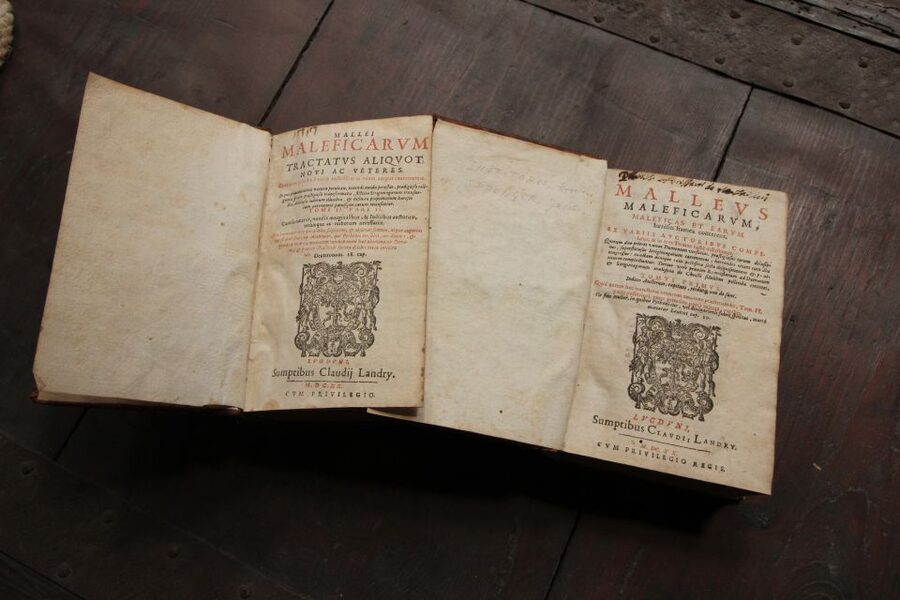
- The documents and the Maleficia book
- The instruments of justice and torture
- The cell for women accused of witchcraft
- Using the audio guide in four languages
- How the one-hour visit feels
- Is $11 good value in Venice?
- Who should book this experience
- Practical advice for planning your visit
- Should you book Maleficia?
- FAQ
- Where is the Maleficia exhibition located?
- How do I find the entrance?
- How long does the experience last?
- What are the opening hours?
- What languages are available for the audio guide?
- What is included in the ticket?
- Is the experience suitable for people with mobility impairments?
Key points to know before you go
- The Prisons’ Palace is beside Doge’s Palace: Cross the bridge on the right side of the Doge’s Palace entrance. Do not join the line at Doge’s Palace.
- Maleficia focuses on witchcraft persecution: You’ll see documents, reproductions, and instruments of justice connected with the Holy Office.
- The exhibition includes disturbing objects: A garrote, head crusher, pillory, whipping post, and a cell for women accused of witchcraft are part of the visit.
- The visit takes about one hour: That makes it easy to fit between major sights around St. Mark’s Square.
- Audio commentary is included: Choose English, French, Italian, or Spanish.
- Mobility is a concern: The experience is not recommended for people with mobility impairments.
Entering the Prisons’ Palace beside St. Mark’s Square
The first practical point is finding the right entrance. The Prisons’ Palace is close to St. Mark’s Square and beside Doge’s Palace, but it is not entered through the main Doge’s Palace doorway. From the Doge’s Palace entrance, cross the bridge on the right side to reach the prison building.
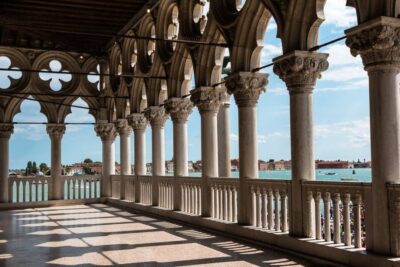
This setting gives the exhibition much of its force. You are not viewing a modern display in a distant museum. You are entering a historic prison complex linked to the justice system of the Serenissima Republic, Venice’s former republic. The building itself creates a serious mood before you reach the displays.
Allow about one hour for the visit. Opening hours are listed as 10:00 AM to 5:00 PM. Since no fixed starting time is required in the information provided, check availability when booking and allow enough time to locate the correct doorway near the Doge’s Palace.
The location works well for a short stop. You can place it alongside sightseeing around St. Mark’s Square, though you should not expect a full-day attraction. The exhibition is a focused historical visit, not a broad tour of the entire palace complex.
A few more Venice days to weigh up
- Venice: Doge’s Palace Reserved Entry Ticket
★ 4.6 · 42,716 reviews - Venice: Grand Canal Gondola Ride with App Commentary
★ 4.1 · 18,908 reviews - Boat Trip: Glimpse of Murano, Torcello & Burano Islands
★ 4.3 · 15,699 reviews
What Maleficia tries to explain
Maleficia examines the systems used by the Holy Office during centuries of witchcraft persecution. The exhibition brings together ancient documents, testimonies, reproductions, and instruments of justice to show how accusations of evil spells and magical arts could lead to interrogation, punishment, and death.
The subject is presented through the world of the Venetian republic, whose extraordinary story lasted for roughly a thousand years. The exhibition connects witchcraft trials with the wider workings of the Inquisition and with the legal machinery used to investigate suspected crimes.
That context matters. The displays are not simply a collection of frightening objects. Their purpose is to show how fear, religious belief, official authority, and punishment operated together in earlier centuries. You are encouraged to think about the people behind the accusations, not just stare at the tools.
The exhibition also points to famous figures linked with accusations of magic and the occult. Giacomo Casanova is included as one person who was accused of dabbling in these areas. His presence adds a familiar name to a subject that can otherwise feel remote, though the main focus remains the prosecution of witchcraft.
The documents and the Maleficia book
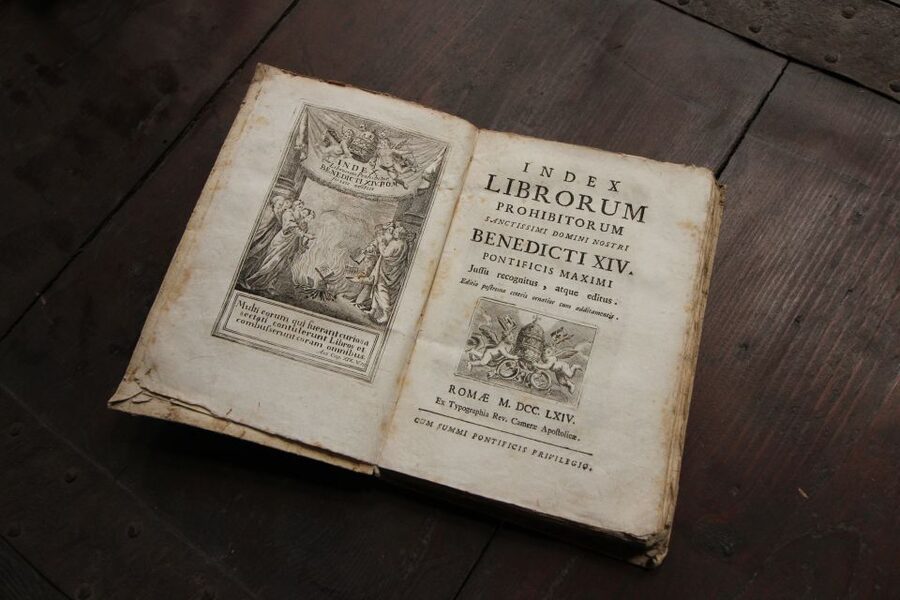
The written material is one of the more valuable parts of the experience. You can see ancient documents used by the Holy Office in the persecution of witchcraft, along with reproductions tied to the original Maleficia book.
These materials give the exhibition a legal and administrative side. Witchcraft persecution was not only a matter of rumor or mob fear. It could involve official records, formal accusations, judgments, and prescribed methods of punishment. The documents help you see how such cases entered the machinery of justice.
Expect some of the material to require patience. Ancient documents are not always easy to read, and the exhibition information says that an audio guide provides commentary in English, French, Italian, and Spanish. Use it to connect the objects with the events and ideas behind them.
The written evidence also keeps the display from becoming a simple shock collection. Instruments attract attention, but documents explain how officials used them and why people were condemned. For me, that combination is more useful than a room filled only with replicas of frightening devices.
The instruments of justice and torture
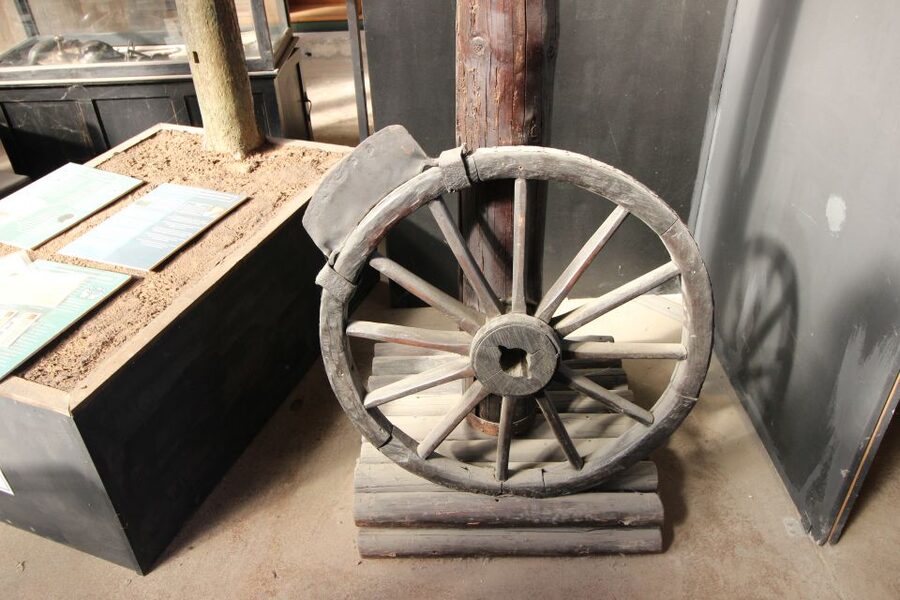
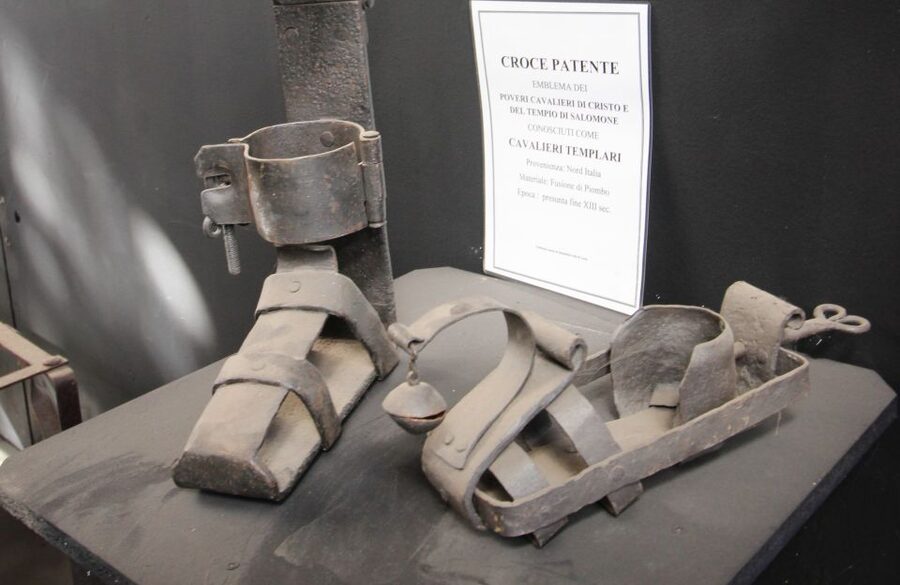
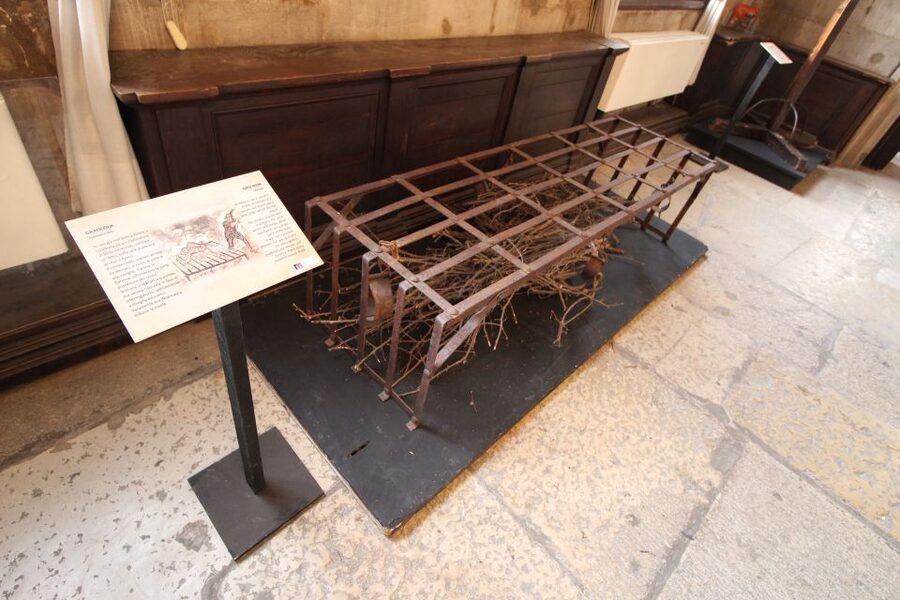
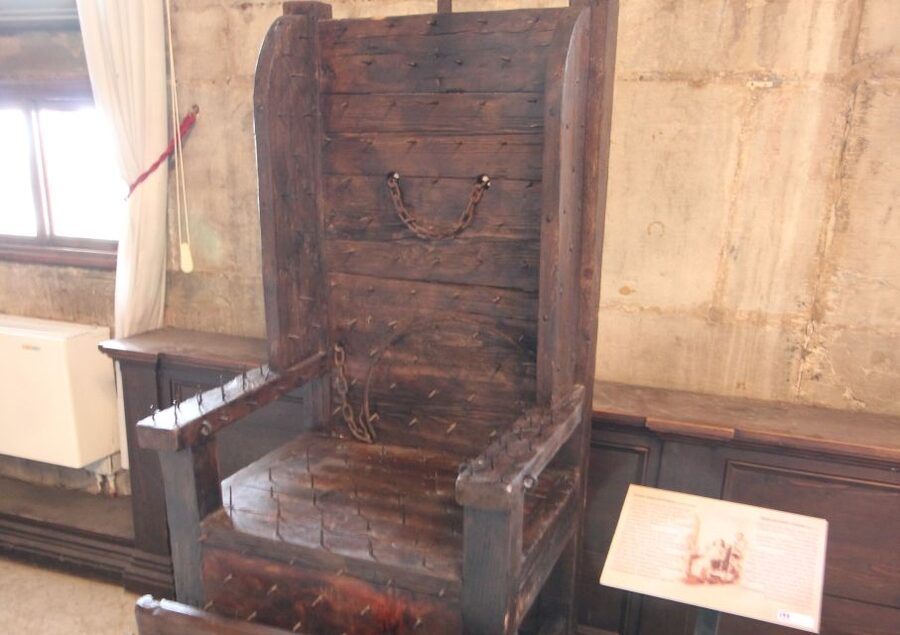
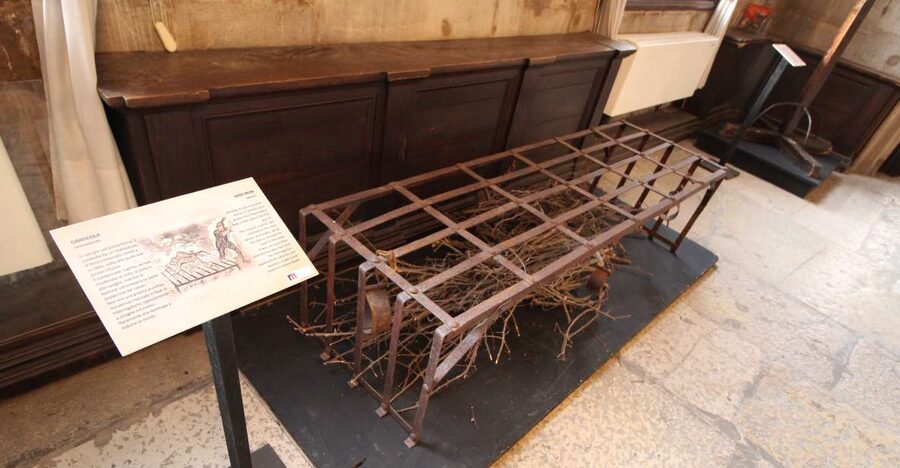
The physical objects are likely to be the part you remember most clearly. The exhibition includes instruments described as a garrote, a head crusher, and a pillory, as well as an authentic whipping post. Some items are reproductions, so you should not assume that every object is an original tool from the period.
The garrote is associated with strangulation, while the head crusher represents the brutal methods used in punishment and forced confession. The pillory exposed and shamed a condemned person in public. The whipping post points to physical punishment that was visible, humiliating, and painful.
The wording around these objects matters. They are presented as instruments of justice used by the Holy Office, but the exhibition also places them in the wider category of torture tools. That tension is part of the point. Authorities could describe harsh treatment as lawful justice, while the accused experienced pain, fear, and loss of dignity.
The displays can be disturbing. If you are sensitive to depictions of torture, keep the visit short and focus on the documents and historical explanation rather than lingering over every object. The exhibition is not described as suitable for limited mobility, and its subject matter may also be unsuitable for young children or anyone who dislikes grim historical displays. The supplied information specifically identifies mobility concerns, but it does not provide a separate age recommendation.
A different sort of day out around Venice:
- Venice: Grand Canal by Gondola with Live Commentary
★ 4.1 · 13,681 reviews - Venice: La Fenice Opera House Entry Ticket with Audio Guide
★ 4.6 · 11,742 reviews - Doge’s Palace & St. Mark’s Basilica with Terrace Access Tour
★ 4.7 · 10,697 reviews - Venice: Burano, Torcello & Murano Boat Tour w/Glassblowing
★ 4.4 · 10,245 reviews
The cell for women accused of witchcraft
A cell for women accused of witchcraft gives the exhibition a human scale. Instead of seeing only legal texts and punishment devices, you are reminded that real women were confined and condemned under these systems.
This is an important feature because the phrase witchcraft persecution can sound abstract. A cell makes imprisonment more immediate. It helps you picture the loss of freedom that came before a trial, punishment, or death sentence.
The description does not give the cell’s exact size, furnishings, or condition, so you should not expect a detailed reconstruction beyond what is displayed. Its value is mainly in the connection it creates between the official documents and the people affected by them.
The exhibition says that many women accused of evil spells and magical arts were condemned to death by the Tribunal of the Inquisition between the 15th and 18th centuries. That statement gives the display its moral weight. You are not looking at old curiosities in isolation. You are looking at objects connected with human suffering and irreversible decisions.
Using the audio guide in four languages
An audio guide is included with admission, with commentary available in English, French, Italian, and Spanish. That is useful here because the subject depends on context. Without explanation, a pillory or whipping post can become little more than a grim object. The commentary should help connect each item to the legal and religious setting of the time.
The supplied information also provides a link to the audio guide commentary. It is sensible to have your phone ready and check the instructions before or during the visit. The details do not identify individual guides, so this is a self-guided experience rather than a tour led by a named person.
A self-guided format gives you control over the pace. You can listen closely to the sections that interest you and move more quickly past the harsher displays. The tradeoff is that you cannot ask questions or request more detail from a live guide.
If you want a polished, story-led performance, this may feel limited. If you prefer to move independently and keep the visit to an hour, the audio format is a good match.
How the one-hour visit feels
A useful way to approach the visit is to give yourself time for three layers of the exhibition. Start with the building and the setting, then listen to the historical explanation, and finally examine the objects at your own pace.
The first part is atmospheric. Crossing into the Prisons’ Palace takes you away from the open space and ceremonial grandeur of St. Mark’s Square. The prison setting supports the subject, though the information does not promise a full tour of every part of the palace.
The second part is documentary. Ancient records and reproductions explain how the Holy Office addressed witchcraft and occult accusations. This is where the audio guide matters most. Take time to understand what the objects meant within the justice system.
The third part is visual and emotional. The cell, pillory, garrote, head crusher, and whipping post show the physical side of punishment. These displays are designed to make you reflect on torture and the suffering of people condemned in past eras.
The exact order of the displays is not provided, so I would not plan around a strict room-by-room route. Think of the experience as a compact exhibition with a clear theme rather than a guided procession through a long palace.
Is $11 good value in Venice?
At $11 per person, Maleficia is priced as an inexpensive specialty attraction by Venice standards. The value depends on what you want from the hour.
You get admission to the exhibition, access to the Prisons’ Palace setting, and audio commentary in four languages. For a visitor already near St. Mark’s Square, there is no separate transport cost built into the plan. The short duration also makes it easy to fit around larger sights.
The price is less compelling if you expect a major museum with a large collection, extensive original artifacts, or a long guided tour. The display includes reproductions as well as ancient documents and objects, and the experience lasts only about an hour. One Italian booking, rated two out of five, described the exhibition as capable of doing more because Venice has much more to tell on the subject. Another Italian booking, rated five out of five, found the visit up to expectations.
Those two reactions point to the sensible way to judge it. Book Maleficia for a focused, atmospheric look at witchcraft trials and punishment. Do not book it expecting the definitive account of Inquisition history in Venice.
Who should book this experience
I would recommend Maleficia to you if you enjoy dark history, legal history, and unusual museum displays. It is also a reasonable choice if you have already seen the main sights around St. Mark’s Square and want a one-hour stop with a very different mood.
The visit suits independent sightseers who like audio commentary and prefer to set their own pace. The four language choices make it accessible to many international visitors, though no live guide is named or provided in the details.
You should think twice if you dislike torture displays, want a broad art collection, or need a fully accessible attraction. The experience is specifically not recommended for people with mobility impairments. The information does not describe step-free access, seating, or restroom facilities, so do not assume those features are available.
Families should also consider the subject carefully. The material concerns torture, execution, imprisonment, and accusations of witchcraft. No age guidance is provided, so the decision depends on the child’s maturity and comfort with disturbing history.
Practical advice for planning your visit
Wear comfortable shoes for the approach through the St. Mark’s area, and leave time to find the prison entrance. The most common mistake would be heading to the Doge’s Palace entrance and assuming it is the same place.
Keep the booking details accessible and check the available starting times. The duration is listed as one hour, while opening hours run from 10:00 AM to 5:00 PM. The experience allows free cancellation up to 24 hours before the visit for a full refund, and you can reserve now and pay later, which helps if your Venice schedule is still shifting.
Because the visit is short, it pairs well with a longer day in the center of Venice. You could schedule it before or after other St. Mark’s Square sights, but leave enough margin for the location search and the audio commentary. The data does not specify group size or waiting conditions, so I would not count on a completely private or silent visit.
Most of all, set your expectations correctly. This is a concentrated exhibition about persecution and punishment. It is not a full Doge’s Palace tour, not a general Venice museum, and not a live theatrical presentation.
Should you book Maleficia?
Book it if you want a brief, inexpensive, unsettling history stop beside Venice’s most famous square. The combination of the Prisons’ Palace, witchcraft documents, a women’s cell, and punishment instruments gives the hour a clear purpose.
Skip it if you want a large collection, extensive original material, or a fuller account of Venice’s Inquisition. The mixed response in the supplied bookings makes sense: one Italian visitor felt the subject deserved more, while another found the visit fully met expectations.
My advice is simple. If $11 is within your sightseeing budget and the darker side of Venetian history interests you, Maleficia is worth adding to your day. Go for the setting and the focused theme, then use the audio guide to give the objects meaning. Just keep the visit in proportion: it is a compact historical exhibition, not one of Venice’s major all-day attractions.
FAQ
Where is the Maleficia exhibition located?
It is housed inside the Prisons’ Palace in Venice, close to St. Mark’s Square and beside Doge’s Palace.
How do I find the entrance?
Do not go to the main Doge’s Palace entrance. To reach the Prisons’ Palace, cross the bridge on the right side of the Doge’s Palace entrance.
How long does the experience last?
The visit lasts about one hour.
What are the opening hours?
The listed opening hours are from 10:00 AM to 5:00 PM.
What languages are available for the audio guide?
Audio commentary is available in English, French, Italian, and Spanish.
What is included in the ticket?
The ticket includes entrance to the Maleficia Museum and audio guide commentary.
Is the experience suitable for people with mobility impairments?
No. The experience is not recommended for people with limited mobility or mobility impairments.
Just added around Venice
- Exclusive Private Venice Jewish Ghetto Tour★ 5.0 · 41 reviews
- The Secret Corners of Burano★ 5.0 · 41 reviews
- Verona: Private 2-Hour Walking Tour★ 4.9 · 41 reviews
- St Mark’s Basilica & Doge’s Palace Skip the Line – Semi-Private★ 5.0 · 42 reviews
- Venice: 3-Course Dining Experience at Local Home★ 4.8 · 41 reviews
- Wine Tasting in Venice★ 4.6 · 42 reviews
- Venice Skip lines at Doge’s & St. Mark’s with Exclusive Sky Walk★ 4.5 · 42 reviews
- Venice Saint Mark’s Basilica afternoon guided tour★ 4.5 · 42 reviews
Venice Tours, compared.

Grand Canal Gondola Ride with App Commentary
Read our review →
Boat Trip: Glimpse of Murano, Torcello & Burano Islands
Read our review →
La Fenice Opera House Entry Ticket with Audio Guide
Read our review →
Doge’s Palace & St. Mark’s Basilica with Terrace Access Tour
Read our review →
Burano, Torcello & Murano Boat Tour w/Glassblowing
Read our review →