
Reviewed · CITY TOURS
Private Padua Top City Sights Guided Tour
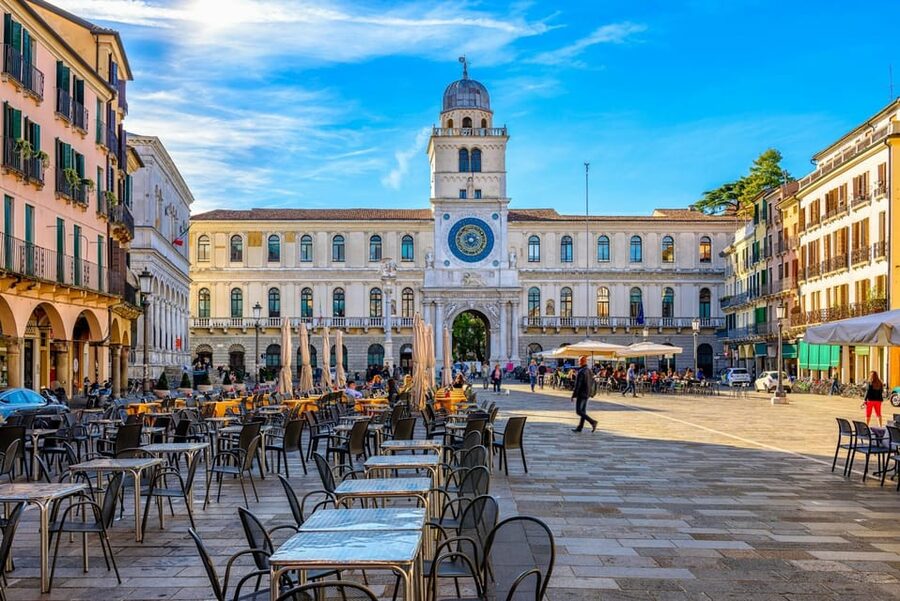
Padua’s appeal comes into focus on foot, especially when your guide connects its grand squares with the small stories tucked between them. This private two-hour walk links Prato della Valle, Saint Anthony’s Basilica, the medieval Palazzo della Ragione, Caffè Pedrocchi, and three central market squares.
I like the private format, which lets you ask questions and steer the conversation toward art, architecture, local customs, or Padua’s legends. I also like the chance to finish with practical local advice about coffee, Spritz, and places where Paduans spend time. The main limitation is simple: the tour passes by the major sights rather than including admission, so you will need a separate visit for interiors.
In This Review
- What makes this Padua walk worthwhile
- Starting at Prato della Valle
- Saint Anthony’s Basilica and the city’s spiritual center
- Palazzo della Ragione and medieval Padua
- Caffè Pedrocchi and a legendary coffee stop
- Piazza delle Erbe and Piazza della Frutta
- Piazza dei Signori and Padua’s public face
- What the private guide adds
- Is two hours enough for Padua?
- Price, cancellation, and practical value
- Who should book this Padua tour?
- Should you book it?
- FAQ
- How long does the Private Padua Top City Sights Guided Tour last?
- Where does the tour begin?
- Where does the tour end?
- Which languages are available?
- Are entrance fees included?
- Are food and drinks included?
- Can I cancel the tour?
What makes this Padua walk worthwhile
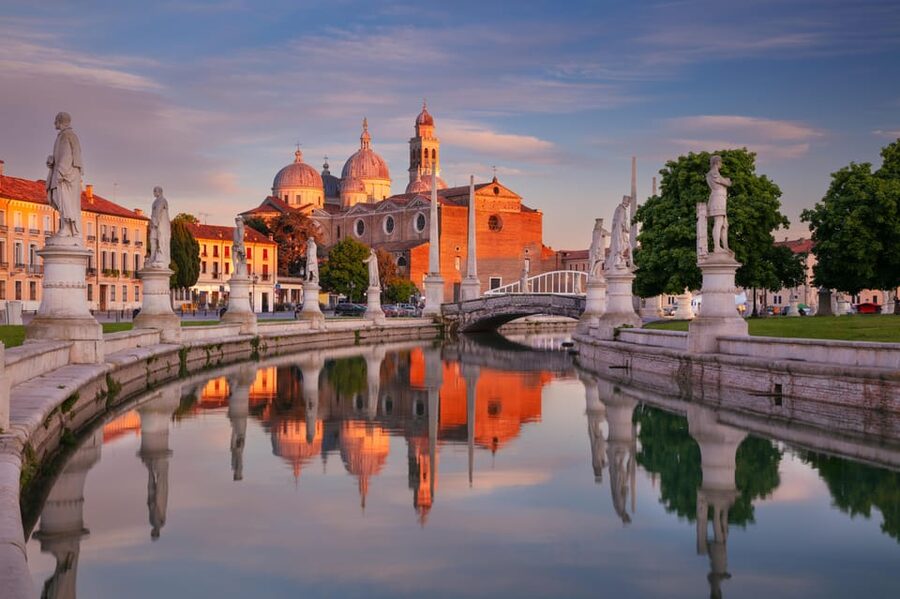
- A striking starting point: Begin beside the fountain at Prato della Valle, one of Europe’s largest public squares.
- A strong mix of sights: See Saint Anthony’s Basilica, Palazzo della Ragione, Caffè Pedrocchi, and three historic squares in two hours.
- A private guide: Ask questions freely and request more focus on art, legends, food, or local life.
- Five guide languages: Tours are offered in English, Spanish, French, German, and Italian.
- Local café culture: Learn where coffee and Spritz fit into everyday Paduan life.
- Useful guide style: Carla is noted for clear English, cultural detail, enthusiasm, and restaurant suggestions. Alessandra has been praised for her warm explanations of Padua’s key figures and places.
Starting at Prato della Valle
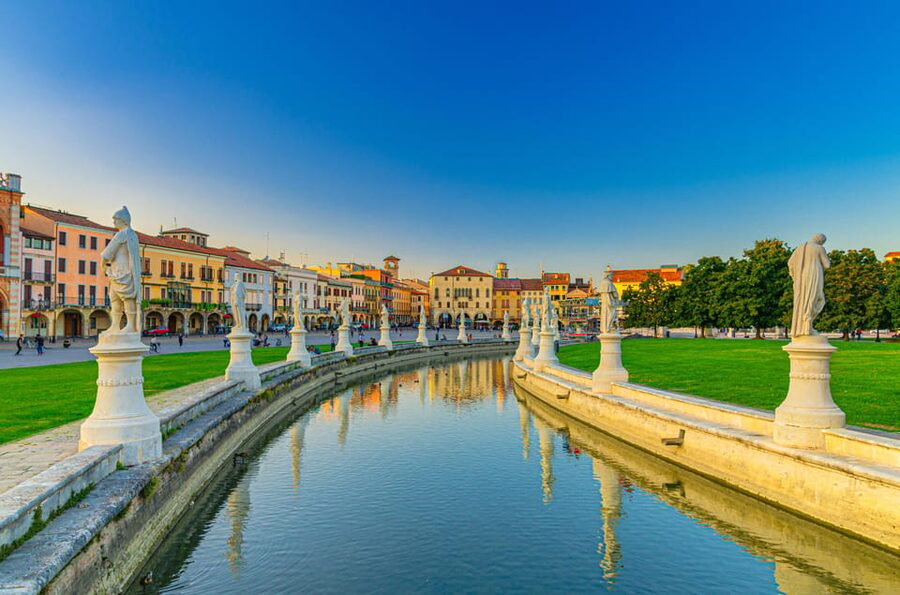
Your guide meets you next to the large fountain in the center of Prato della Valle, at Via Prato della Valle 112. This is a sensible meeting point because the square gives you a quick sense of Padua’s scale before you enter the older center.
Prato della Valle is not a standard town square. Its broad oval layout, water, statuary, and open views make it one of the city’s most memorable spaces. You will walk through or pass by rather than stop for a long formal visit, so arrive ready to look around before the tour begins.
I recommend getting there a little early. The meeting place is in the middle of a large square, and finding the fountain is easier when you are not rushing. Since the tour ends at the same point, you can also use Prato della Valle as a convenient place to continue exploring afterward.
The square is a good introduction to the tour’s style. You are not being taken from one ticketed attraction to another. Instead, you are reading Padua as an open-air city, where architecture, public space, religion, trade, and student life overlap.
A few more Padua days to weigh up
- Padua to Venice Boat Cruise of the Brenta Riviera
★ 4.5 · 418 reviews - Tasting Prosecco with appetizers
★ 5.0 · 217 reviews - Full-Day Padua to Venice Burchiello Brenta Riviera Boat Cruise
★ 4.5 · 198 reviews
Saint Anthony’s Basilica and the city’s spiritual center
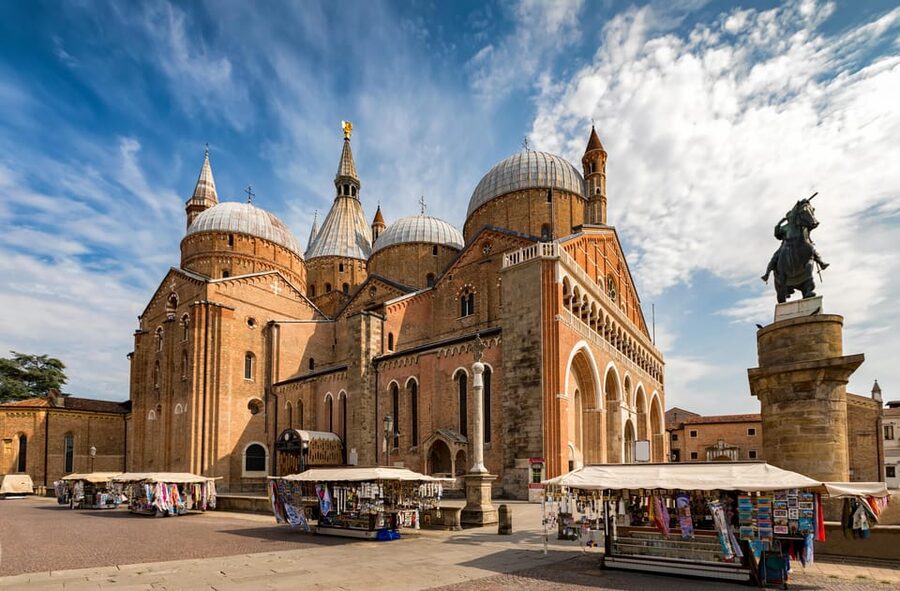
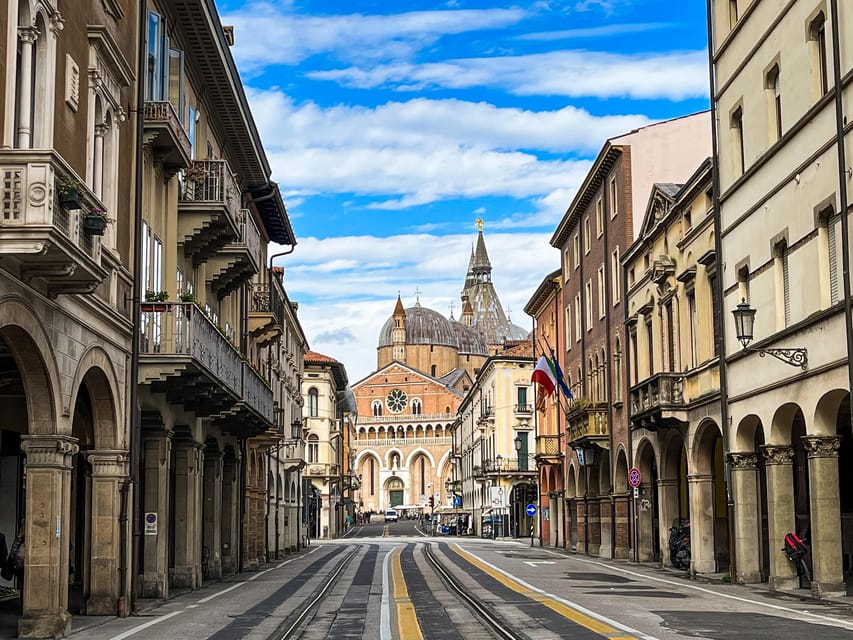
From Prato della Valle, the route passes by the Basilica of Saint Anthony. This is one of Padua’s major landmarks and an important pilgrimage site, known for its elaborate architecture and religious meaning.
The tour does not include entrance to the basilica. That distinction matters. You can see the exterior and hear the guide explain its role in Padua, but if you want to study the interior, chapels, artwork, or devotional details, plan a separate visit and check its entry arrangements independently.
For many people, this stop will be the emotional center of the walk. Saint Anthony’s name is woven into Padua’s identity, and the basilica gives your guide a natural way to explain the city’s religious traditions and the people who shaped it.
The private setup works well here. You can ask about the saint, the building, or the customs surrounding the site without worrying about holding up a large group. If religious art is not your main interest, ask your guide to connect the basilica to Padua’s streets, commerce, and daily life instead.
Palazzo della Ragione and medieval Padua
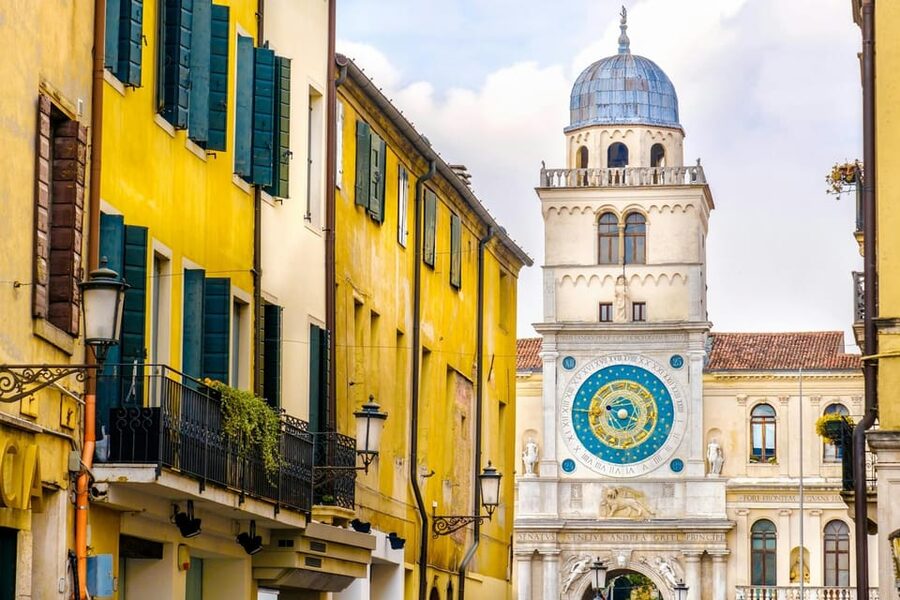
The route continues toward Palazzo della Ragione, the great medieval building that once served civic and legal purposes. Its name means Palace of Reason, and its presence helps explain how public authority operated in the city during the Middle Ages.
You will pass by the palace rather than receive included admission. Even from outside, its size and position tell you plenty. This is not a minor neighborhood building. It belongs to the public face of Padua, where law, trade, and municipal life met.
This stop also prepares you for the nearby squares. Padua’s center is best understood as a connected system rather than a collection of isolated monuments. The palace, markets, arcades, and cafés all relate to one another, and a guide can point out those links as you walk.
I would pay attention to the changes in atmosphere here. The tour moves from the broad openness of Prato della Valle and the solemn presence of the basilica into the tighter, more commercial heart of town. That change gives the two-hour route a useful rhythm.
Caffè Pedrocchi and a legendary coffee stop
Caffè Pedrocchi is one of Padua’s best-known meeting places and an important symbol of its café culture. The tour passes by the café and includes the story of the legend associated with it, making this more than a quick architectural glance.
The café is particularly interesting because it connects public life with local tradition. Padua is a university city, and cafés have long offered places for conversation, study, meetings, and observation. Your guide can help you see Caffè Pedrocchi as part of that social world rather than just another handsome façade.
Food and drinks are not included. You can choose to return later for coffee or a Spritz, but the tour itself does not promise a tasting or a reserved table. That keeps the price focused on the private guiding, though it also means you should budget separately if a café stop sounds appealing.
The guide’s storytelling matters here. One of the most useful comments in the feedback came from a guest who valued Carla’s ability to explain local history and culture in clear English, answer questions, and suggest restaurants. Those are practical strengths, especially if this is your first time in Padua and you want help beyond monuments.
A different sort of day out around Padua:
- Prosecco tasting, appetizers and tour of the cellar and vineyards
★ 5.0 · 178 reviews - Padua Hop-on Hop-off Tour: 24-Hour Ticket
★ 3.5 · 134 reviews - Padova: Baptistery of the Cathedral & Museum of the Diocese
★ 4.6 · 128 reviews - Padua: Private City Walking Tour & Scrovegni’s Chapel Visit
★ 4.7 · 124 reviews
Piazza delle Erbe and Piazza della Frutta
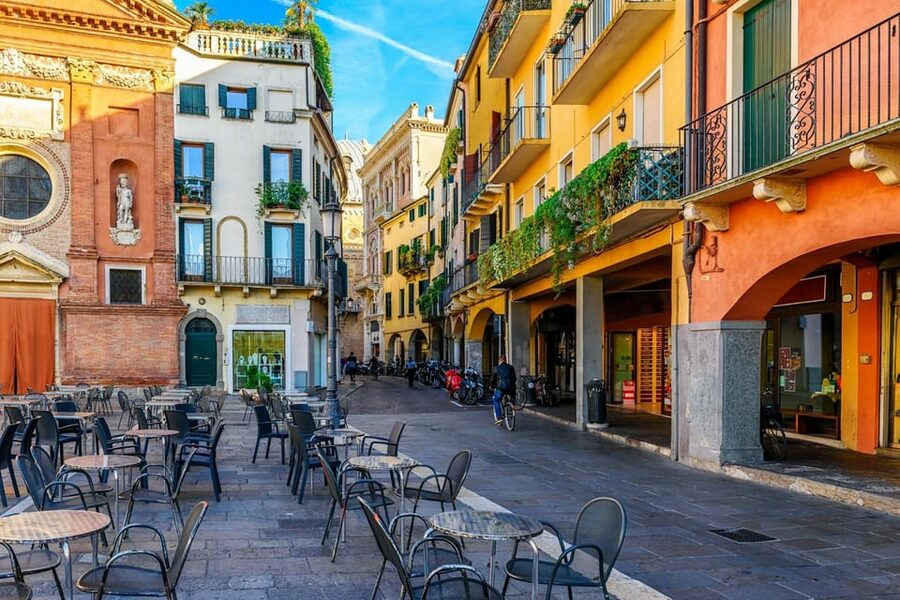
The walk then reaches Piazza delle Erbe and Piazza della Frutta, two central squares that show Padua at its most social and practical. Their names point to their market traditions, and their close relationship makes them easy to understand as a pair.
These are working public spaces, not just scenic backdrops. Markets, cafés, historic façades, and everyday movement have shaped them for centuries. Your guide can explain how the squares functioned as places of trade and how they still serve as gathering points.
This part of the tour is likely to feel less formal than the basilica or Palazzo della Ragione. That is a strength if you want to see how the city operates beyond its major monuments. Look up at the surrounding buildings, but also watch the edges of the squares, where cafés and small streets lead into the older center.
The private format gives you room to pause for photographs or ask about food and local habits. Since the whole tour lasts only two hours, the time at each square will be concise. If you prefer a long market visit or extensive photography, you may want to return on your own after the walk.
Piazza dei Signori and Padua’s public face
The final listed square is Piazza dei Signori, also called Signori Square. It adds another layer to the city center, with a more ceremonial public character than the market squares nearby.
Together, the three squares help you see how Padua organized civic life. Piazza delle Erbe and Piazza della Frutta suggest trade and daily errands, while Piazza dei Signori gives you a setting for public display and local identity.
This is where the tour’s broad themes come together. You have seen a pilgrimage center, a civic palace, a historic café, and public spaces shaped by commerce. The guide’s job is to connect those pieces so Padua feels like a living city rather than a checklist of stops.
The experience also includes lesser-known lanes and corners along the way. Exact side streets are not specified, which is normal for a guided walking route, but the description promises legends and local stories beyond the headline sights. Ask directly if you want more time in the quieter streets or more context about the university atmosphere.
What the private guide adds
A private tour is most valuable when you use the flexibility. You can ask your guide to spend more time on architecture, religious traditions, legends, café culture, or restaurant advice. The guide can also adjust the level of detail, which helps if your group includes both serious history fans and people who prefer a lighter introduction.
The available languages are English, Spanish, French, German, and Italian. Carla has received specific praise for her English, enthusiasm, ability to answer questions, and suggestions for local restaurants. Alessandra has been described as warm and effective when explaining Padua’s notable people and places.
Those details point to the kind of guiding you should expect: personal explanation rather than a recorded audio route. Still, guide assignments can vary, so Carla or Alessandra is not guaranteed unless confirmed at booking.
The tour is for a private group, but the exact maximum number is not provided. If you are booking for a larger family or group of friends, confirm the group size and meeting details before paying. The price is listed at $141.61 per person, so the value improves when several people can share the experience and benefit from a single private guide.
Is two hours enough for Padua?
Two hours is enough for an orientation, not a complete visit to every attraction. You will cover a lot of ground and see the outside of several major landmarks, but you will not have included entry time for museums or religious sites.
I see this as a good first activity if you have limited time in Padua. It gives you a map of the center, introduces the main public spaces, and helps you decide where to return. It is also useful at the beginning of a longer stay, since restaurant suggestions and café advice can shape the rest of your visit.
If you want detailed interior visits, this tour will feel too brief. You should treat the route as a guided overview and leave time afterward for Saint Anthony’s Basilica, Caffè Pedrocchi, or any other attraction that catches your attention.
The walk is outdoors and continues in rain. In exceptionally heavy rain, it may be cancelled with a full refund. Wear comfortable shoes and carry rain protection, but do not bring luggage or large bags. The experience is not suitable for wheelchair users, so check the route carefully if mobility is a concern.
Price, cancellation, and practical value
At $141.61 per person, this is not the cheapest way to see Padua. You are paying for a private guide, a flexible conversation, and a route that combines the city’s main sights with local stories. You are not paying for food, drinks, museum admissions, or a long stop inside the basilica.
The value depends heavily on your group. A couple or family that wants personal attention may find the cost reasonable, especially if the guide helps you make better use of limited time. A solo visitor comparing prices with a self-guided walk may find it harder to justify.
You can cancel up to 24 hours before the tour for a full refund, and you can reserve now while paying later. Those terms help if your Veneto plans are still shifting. The tour runs for two hours, with starting times based on availability.
Meet at the fountain in Prato della Valle, and expect to return there at the end. Since transportation is not part of the activity, plan your route to the square before the start time.
Who should book this Padua tour?
I would choose this walk if you want a clear introduction without joining a large group. It suits first-time visitors, couples, families, architecture fans, history fans, and anyone who wants a local guide to explain what they are seeing.
It is also a good match for people who enjoy asking questions. The strongest feedback focuses on clear English, cultural and historical detail, enthusiasm, and useful restaurant advice. Those are exactly the qualities that make a short private tour more than a fast walk between photo stops.
I would hesitate if you need wheelchair access, want included food and drinks, or expect to enter every major site. You should also reconsider if $141.61 per person is beyond your budget for a two-hour orientation.
Should you book it?
Book this private Padua tour if you want to understand the city’s layout and character quickly, with a guide who can respond to your interests. The route gives you a fine introduction to Prato della Valle, Saint Anthony’s Basilica, Palazzo della Ragione, Caffè Pedrocchi, and the central squares.
Just keep your expectations precise. This is a guided exterior walk, not an admissions package or a food tour. For a personal overview, local stories, and a useful starting point for further exploring, it offers good value for a group that wants more than a guidebook can provide.
FAQ
How long does the Private Padua Top City Sights Guided Tour last?
The tour lasts two hours. Starting times depend on availability when you book.
Where does the tour begin?
Your guide meets you next to the large fountain in the center of Prato della Valle, at Via Prato della Valle 112.
Where does the tour end?
The tour ends back at the meeting point in Prato della Valle.
Which languages are available?
The live guide is available in English, Spanish, French, German, and Italian.
Are entrance fees included?
No. The tour passes by the listed attractions, and entrance fees are not included if you decide to visit any of them afterward.
Are food and drinks included?
No. Coffee, Spritz, and other food or drinks are not included in the tour price.
Can I cancel the tour?
Yes. You can cancel up to 24 hours in advance for a full refund. In exceptionally heavy rain, the tour may also be cancelled with a full refund.
Just added around Padua
- Live Padua as a local★ 5.0 · 43 reviews
- Padova: Digital Guide made with a Local for your tour★ 4.1 · 53 reviews
- Best of Padova: Private Walking Tour with a Local★ 3.8 · 56 reviews
- Padua: Scrovegni Chapel Ticket and Audio Guide★ 3.9 · 61 reviews
- Padua: Jewish Heritage Museum and Synagogue Tour★ 4.9 · 109 reviews
- Padova: Baptistery of the Cathedral & Museum of the Diocese★ 4.6 · 128 reviews
- Padua Hop-on Hop-off Tour: 24-Hour Ticket★ 3.5 · 134 reviews
- Cesarine: Small group Pasta and Tiramisu class in Padua★ 4.5 · 13 reviews
City Tours, compared.
Walking Guided Tour of the City Must-See Sites
Read our review →

Verona e-bike tour: city center and panoramic views
Read our review →
City Walking Tour with Cable Car & Wine Aperitif
Read our review →
Winter Pass Top Attractions & City Walking Tour
Read our review →
Browse the lists this tour appears in