
Reviewed · MUSEUMS
Padova: Baptistery of the Cathedral & Museum of the Diocese
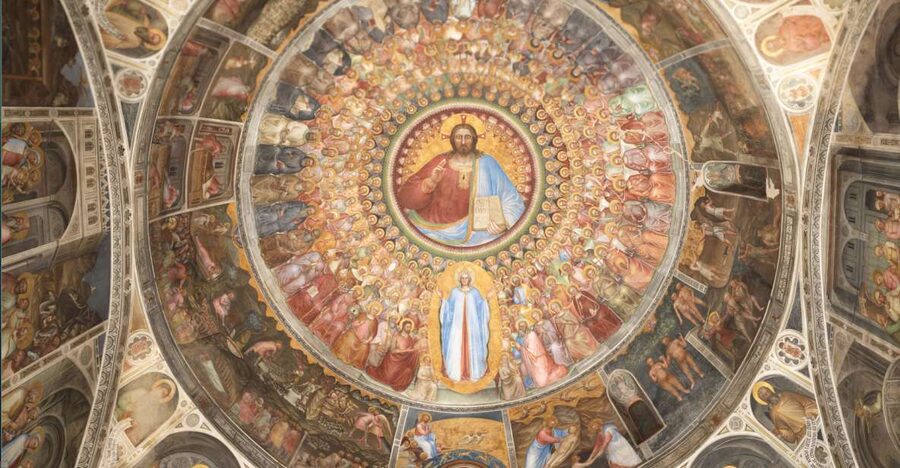
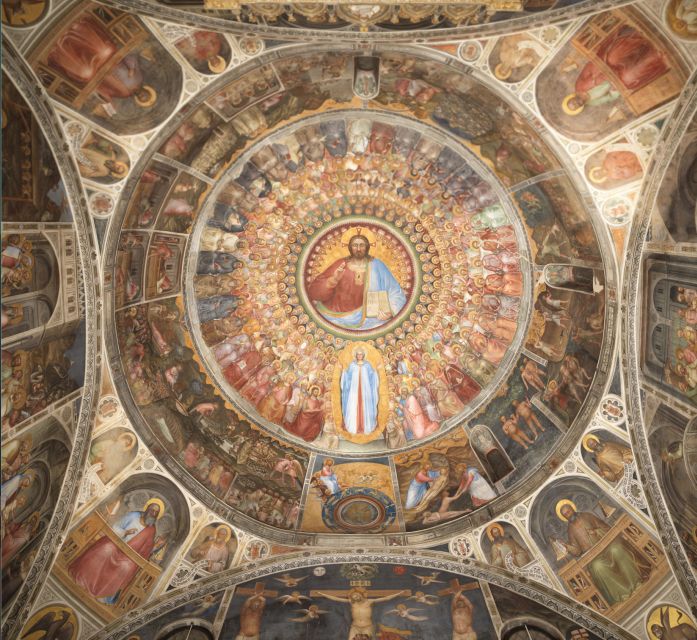
Padua’s Baptistery is a small building with a very big visual idea: the entire Christian story unfolds around you, from Genesis to Revelation and up into the Paradise painted across the dome. Giusto de’ Menabuoi’s Fourteenth-century frescoes are the reason to come. They turn a place of worship into a picture book on a monumental scale.
I like the audio tour because it gives the paintings a clear order and purpose, and I like that the ticket also reaches the Museum of the Diocese, including its grand Bishops’ Hall. The main caution is value. At $17 for about an hour, this makes the most sense if you care about medieval art, church interiors, or Padua’s UNESCO heritage sites.
In This Review
- Key points to know before you go
- Why Padua’s Baptistery deserves your time
- Reading the frescoes from Genesis to Revelation
- Giusto de’ Menabuoi and the Fourteenth-century setting
- What the Diocese Museum adds
- One hour well spent, if you keep moving
- Meeting at Piazza Duomo 12
- Practical rules inside the Baptistery
- Who will enjoy this experience most
- How the price compares with the experience
- Booking flexibility and accessibility
- Should you book the Padua Baptistery visit?
- FAQ
- Where does the visit begin?
- Do I need to exchange my voucher?
- How long does the experience last?
- What does the ticket include?
- Is an audio guide included?
- Which audio guide languages are available?
- Which languages are available for the host or greeter?
- Is the visit wheelchair accessible?
- Can I take photographs inside?
Key points to know before you go
- A complete Bible story in fresco: Follow scenes from the Book of Genesis through Revelation, ending with Paradise in the dome.
- Giusto de’ Menabuoi is the star: The painter created one of Italian Fourteenth-century art’s major surviving cycles.
- Two parts to the visit: Your ticket covers the Baptistery and the Museum of the Diocese in the Bishop’s palace.
- Audio support in five languages: Italian, English, French, Spanish, and German are available, with headsets supplied.
- Plan for one focused hour: This is a compact cultural visit, not a sprawling museum afternoon.
- Check your language at the desk: A Spanish-speaking visitor reported that the expected Spanish audio was not ready at the first available time.
Why Padua’s Baptistery deserves your time
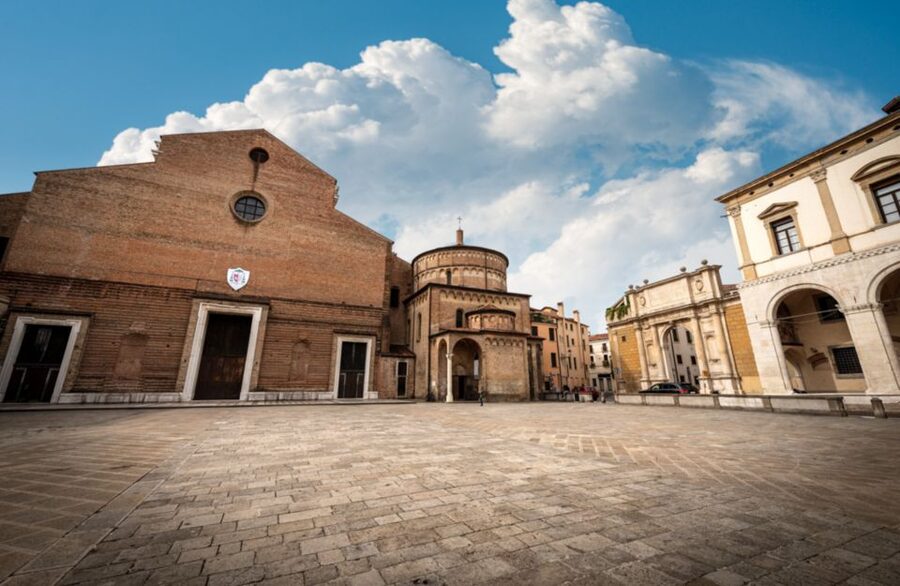
The Baptistery of the Cathedral is part of the monumental Piazza Duomo complex, along with Padua’s Cathedral and the Bishop’s palace. Together, these buildings connect the city’s religious life with more than a thousand years of Christian tradition.
The Baptistery itself is the main event. Its paintings were commissioned by Fina Buzzaccarini, wife of Francesco da Carrara, known as il Vecchio, who ruled Padua. That detail matters because this was not a modest parish decoration. The project carried the backing of Padua’s ruling family and was designed to make a powerful statement through art, faith, and patronage.
I would come here for the painting cycle rather than for the building’s size. The experience is concentrated. You are not crossing a huge complex or trying to pick your way through dozens of unrelated rooms. Instead, the audio narration helps you look at the walls and dome as parts of one connected story.
The Baptistery is also recognized as part of Padua’s UNESCO World Heritage heritage associated with the city’s Fourteenth-century art. That designation gives the visit useful context, but you do not need to be a specialist to appreciate the space. The scale of the images, the packed scenes, and the upward movement toward the dome communicate their force quickly.
More museums in Padua:
- Padua: Jewish Heritage Museum and Synagogue Tour
★ 4.9 · 109 reviews - Venice: Leonardo Da Vinci Museum Entrance Ticket
★ 4.5 · 3,560 reviews - Venice’s Best: Basilica, Doge’s Palace, Gondola & History Gallery
★ 4.5 · 2,478 reviews
Reading the frescoes from Genesis to Revelation
The audio tour guides you through the paintings in a narrative sequence. You begin with the story of Creation in Genesis, then follow the Christian account toward the New Testament and the final scenes of Revelation.
That arrangement gives you a way to look. Without guidance, a medieval fresco cycle can feel like a wall covered in separate episodes. With the narration, you can connect one scene to the next and understand that the decoration was planned as a full account of salvation.
Look up as often as you can. The dome is dominated by Paradise, which gives the whole room its grand finish. The upward focus is not just a pretty ceiling view. It completes the story that begins with Creation and moves toward the promised final state.
You should not expect a modern museum-style presentation with large labels beside every scene. The supplied headsets are important because they provide the interpretive thread. The audio guide is available in Italian, English, French, Spanish, and German, so you can choose the language that lets you spend less time translating and more time looking.
The audio format also keeps the visit flexible. You can pause your attention on a scene that catches your eye, then continue with the narration. Since the visit lasts about an hour, the structure helps you use the time well.
Giusto de’ Menabuoi and the Fourteenth-century setting
Giusto de’ Menabuoi’s work belongs to a period when painting was becoming a major tool for telling religious stories to a broad public. In the Baptistery, the scenes are not isolated devotional images. They form an ordered visual account that would have given worshippers a way to understand sacred history through pictures.
The paintings are especially valuable because they let you see how Padua expressed its religious and political identity in the Fourteenth century. Fina Buzzaccarini’s commission links the cycle to the city’s ruling household, while the building itself served a religious purpose. Art, power, and worship meet in the same rooms.
I find that useful context when judging the visit. You are not simply entering a decorated church and admiring colors. You are seeing a carefully planned program created for a specific place and community. The audio narration is there to help you read that program rather than merely glance at it.
The cycle’s range is another reason to take your time. Genesis gives you the beginning, Revelation brings the story toward its end, and Paradise dominates the dome above. The route through the images creates a sense of movement even though you are standing in one compact space.
What the Diocese Museum adds
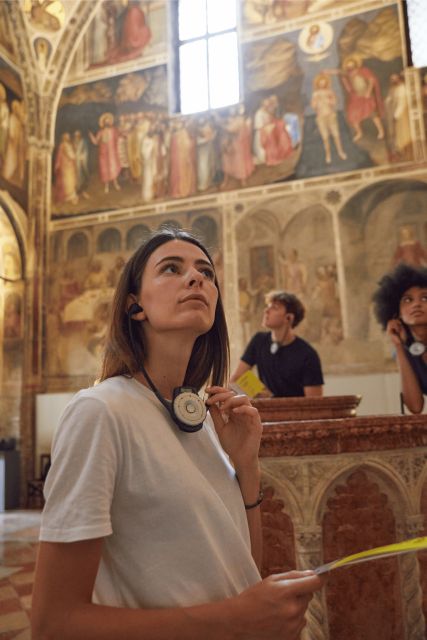
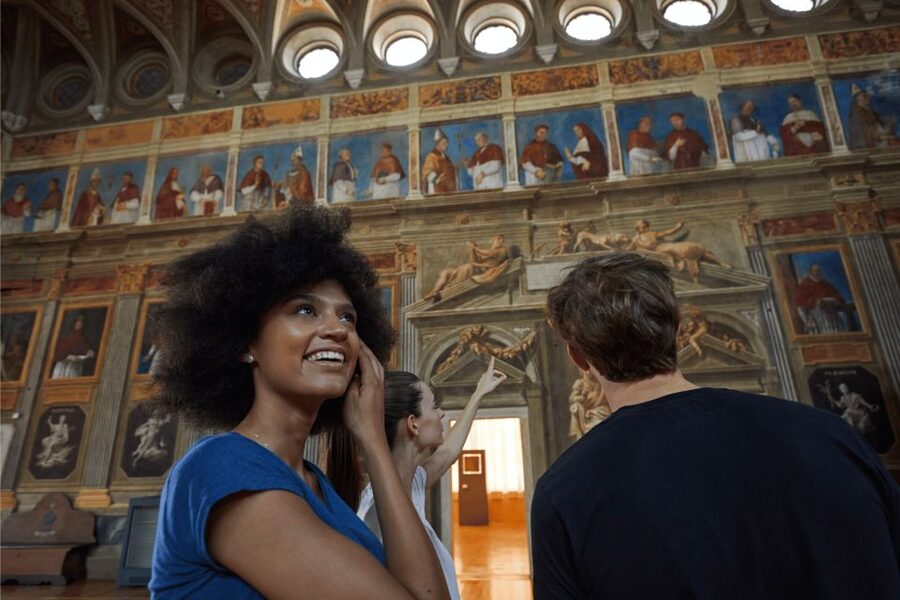
The ticket also includes the Museum of the Diocese inside the Bishop’s palace. Its most notable space is the Bishops’ Hall, which can be visited through an unusual guided tour.
This part of the experience broadens the visit beyond the Baptistery’s frescoes. The Baptistery shows a grand visual account of Christian belief, while the palace and museum connect that faith to the institutional life of the Diocese of Padua.
I would treat the museum as an important second chapter, not as a reason to skip the Baptistery. The frescoes are the strongest draw, but the Bishops’ Hall gives you a different kind of setting and helps explain the importance of the surrounding palace.
The supplied details do not give a longer room-by-room museum itinerary, so you should keep your expectations sensible. This is not presented as a full-day museum program. It is a compact addition that fits naturally into a visit to Piazza Duomo.
If you are comparing this ticket with other Padua sights, the combination is useful. You receive access to both an exceptional painted religious interior and a historic diocesan space rather than paying for only one room.
A few more Padua days to weigh up
- Padua to Venice Boat Cruise of the Brenta Riviera
★ 4.5 · 418 reviews - Tasting Prosecco with appetizers
★ 5.0 · 217 reviews - Full-Day Padua to Venice Burchiello Brenta Riviera Boat Cruise
★ 4.5 · 198 reviews - Prosecco tasting, appetizers and tour of the cellar and vineyards
★ 5.0 · 178 reviews
One hour well spent, if you keep moving
The stated duration is one hour. That is enough for a focused visit to the Baptistery and the Diocese Museum, but it does not leave much room for a slow, highly detailed study of every painted scene.
I would plan to listen closely during the main narrative and save a little time for looking without the audio. The narration gives you the framework, while your own quiet viewing lets you notice details that may not be covered in the same way.
The compact length is good news if you are building a full day in Padua. You can fit the visit into a schedule that also includes the Cathedral, Bishop’s palace, or other city sights. It is also suitable for anyone who wants a strong art experience without committing to several hours indoors.
The short format can feel limiting at $17. The price is not especially low for a one-hour activity, particularly if you are mainly interested in seeing the Baptistery and do not plan to spend time with the museum. The value improves if you use both parts of the ticket and listen to the full narration.
Meeting at Piazza Duomo 12
Your starting point is the ticket office at Piazza Duomo 12 in Padua. You must exchange your voucher at the ticket counter before the visit begins, so do not walk directly into the Baptistery expecting the booking voucher to function as the final admission.
This is a small but important planning point. Allow enough time to find the ticket office and complete the exchange before your chosen start time. The activity has scheduled starting times, and availability should be checked before booking.
Language deserves special attention. The host or greeter languages are Italian, English, French, Spanish, and German, and the audio guide is offered in those same five languages. However, one verified Spanish booking on December 31, 2025, encountered a problem: Spanish was not available at the expected time, and the visitor was asked to wait for a later session.
I would confirm your preferred language at the ticket desk before you begin. If the audio option you booked is not ready, ask what the next available session is and decide if the wait fits your schedule. This is particularly important because the narration is central to understanding the fresco cycle.
Practical rules inside the Baptistery
Cameras are allowed, but they must have a safety strap. If you want to take photos, bring a camera or device that meets that rule and avoid arriving with equipment that cannot be secured.
Animals are not permitted. The exception is an assistance dog for a person with a disability. This rule applies for safety reasons, so plan accordingly before you arrive.
The visit is wheelchair accessible, which makes the experience available to people with mobility needs. Since the information provided does not describe every doorway, route, or restroom, you may still want to confirm any specific access requirement with the provider before booking.
Kalatà s.r.l. operates the experience. Headsets are included, so you do not need to arrange your own audio equipment.
Who will enjoy this experience most
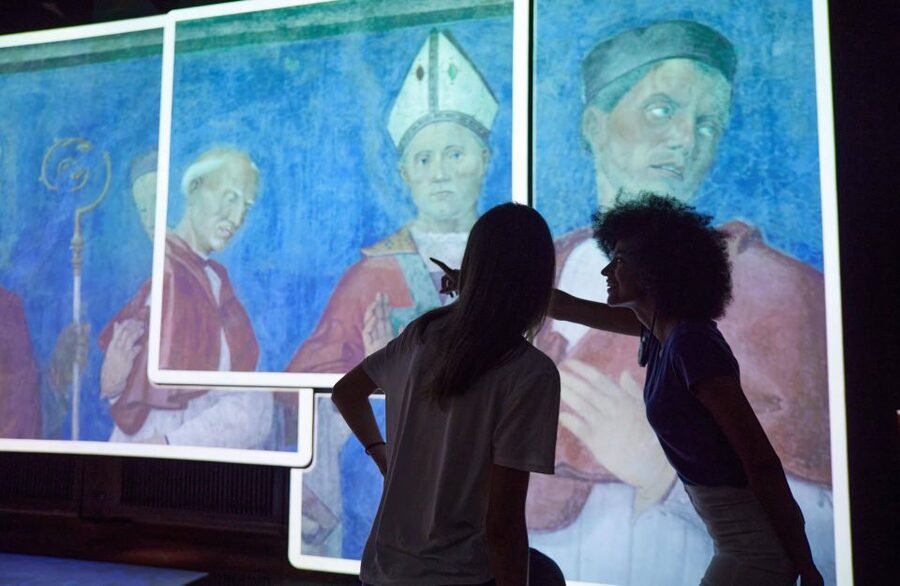
I would recommend the Baptistery visit to you if you enjoy religious art, medieval painting, or places where the building and its decoration were designed as one idea. It is also a strong choice if you want to see a UNESCO-recognized part of Padua’s Fourteenth-century art without joining a long tour.
The audio format suits independent visitors who like some explanation but do not want to follow a live group at every step. You can focus on the narration, look at the scenes in sequence, and use the fixed one-hour duration to keep your day organized.
Families with older children may also find the Genesis-to-Paradise story easier to follow than a museum with many unrelated objects. Younger children may have less patience for a quiet art visit, although the dramatic images and dome can provide plenty to point out.
Art specialists may want more time and more detailed commentary than this format provides. If you already know Giusto de’ Menabuoi’s work well, the ticket may feel expensive for a one-hour audio visit. The added museum access helps, but the experience remains compact.
How the price compares with the experience
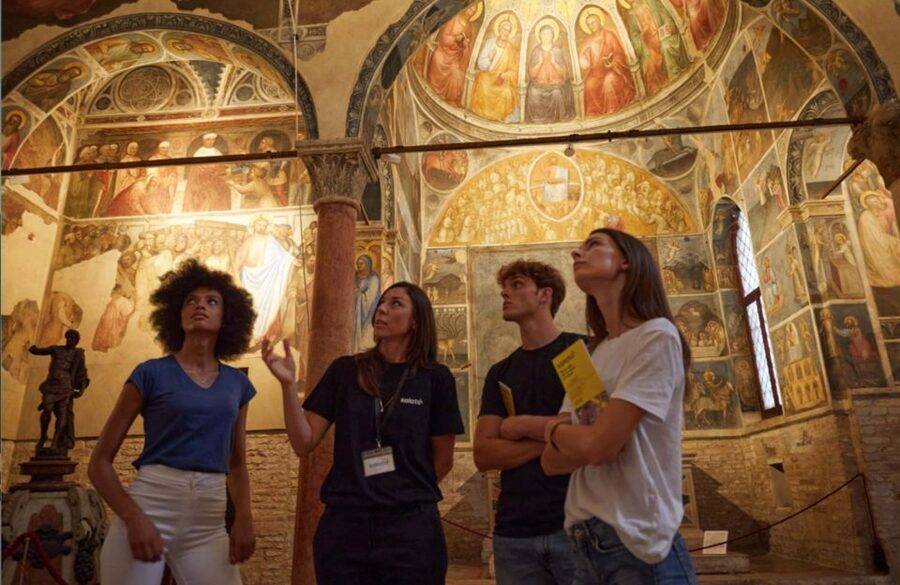
At $17 per person, this is a mid-range cultural admission for a one-hour visit. I would not call it a bargain if you judge the ticket only by minutes inside the building.
The case for the price rests on three things: the importance of the fresco cycle, the audio interpretation, and the added access to the Museum of the Diocese and Bishops’ Hall. You are paying for a concentrated art experience in an unusual religious setting, not for a large collection with hours of galleries.
The highest praise in the available feedback focuses on the Baptistery itself and the way the visit is organized. One Italian visitor described the Baptistery as a must-see marvel and praised the structure of the route, while the overall rating is 4.6 from 128 reviews. Those points support the idea that the core visit works well when the language arrangements are in place.
The negative experience also gives you a useful warning. A Spanish-speaking visitor found the price high for what was available after the expected audio language was missing. That does not cancel out the value of the art, but it shows why you should confirm the language and make full use of both included areas.
Booking flexibility and accessibility
You can cancel up to 24 hours in advance for a full refund. You can also reserve now and pay later, which is useful if your Padua schedule is still changing.
The activity is wheelchair accessible. The audio guide and host support are available in Italian, English, French, Spanish, and German, and headsets are included.
These details make the visit easy to fit into a city itinerary. Still, the one-hour length and scheduled start times mean you should avoid placing it too tightly between other reservations. The voucher exchange at Piazza Duomo 12 takes place before entry, so build that step into your timing.
Should you book the Padua Baptistery visit?
Book it if Giusto de’ Menabuoi’s frescoes are high on your Padua list, or if you want a focused look at the city’s Fourteenth-century religious art. The audio guide gives you a clear route through the story, and the Museum of the Diocese adds value beyond the Baptistery itself.
Think twice if you are looking for a cheap, casual church stop or if you have only a few minutes. At $17, the visit rewards attention, and its price makes more sense when you explore both included spaces.
My practical advice is simple: choose your audio language carefully, exchange your voucher at Piazza Duomo 12, and allow the full hour. For art-minded visitors, this is one of Padua’s most concentrated and memorable interiors. For everyone else, it is worth booking only if the UNESCO setting and the unusual fresco program genuinely interest you.
FAQ
Where does the visit begin?
The meeting point is the ticket office at Piazza Duomo 12 in Padua.
Do I need to exchange my voucher?
Yes. You must exchange your voucher at the ticket counter before the visit begins.
How long does the experience last?
The stated duration is one hour.
What does the ticket include?
The ticket includes the Baptistery of the Cathedral, the Museum of the Diocese, and access to the Bishops’ Hall through a guided tour.
Is an audio guide included?
Yes. Headsets are provided, and the audio guide is included.
Which audio guide languages are available?
The audio guide is available in Italian, English, French, Spanish, and German.
Which languages are available for the host or greeter?
The host or greeter may speak Italian, English, French, Spanish, or German.
Is the visit wheelchair accessible?
Yes. The activity is listed as wheelchair accessible.
Can I take photographs inside?
Yes, cameras are allowed if they are equipped with a safety strap. Animals are prohibited, except for assistance dogs for people with disabilities.
Just added around Padua
- Live Padua as a local★ 5.0 · 43 reviews
- Padova: Digital Guide made with a Local for your tour★ 4.1 · 53 reviews
- Best of Padova: Private Walking Tour with a Local★ 3.8 · 56 reviews
- Padua: Scrovegni Chapel Ticket and Audio Guide★ 3.9 · 61 reviews
- Padua: Jewish Heritage Museum and Synagogue Tour★ 4.9 · 109 reviews
- Padua Hop-on Hop-off Tour: 24-Hour Ticket★ 3.5 · 134 reviews
- Cesarine: Small group Pasta and Tiramisu class in Padua★ 4.5 · 13 reviews
- DA Padova: Wine tour in the Euganean Hills★ 5.0 · 15 reviews
Museums, compared.
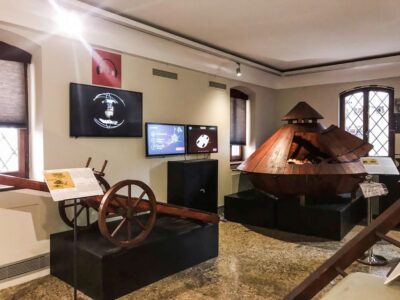
Venice’s Best: Basilica, Doge’s Palace, Gondola & History Gallery
Read our review →
Vivaldi’s Four Seasons Concert & Music Museum Visit
Read our review →
Charming Gondola Ride on the Grand Canal & Gondola Gallery™
Read our review →
Bell Tower & St Mark’s Square History Gallery Ticket
Read our review →
Venice Museum Pass & Doge’s Palace Entrance Ticket
Read our review →
Basilica, Doge’s Palace, History Gallery & Bell Tower Option
Read our review →
Browse the lists this tour appears in