
Reviewed · PROSECCO WINE TOURS
Prosecco’s Roots & the Karst Region from Trieste
Prosecco is not just a bottle on a restaurant menu. It is also a small place near Trieste, where the famous wine got its name. This six-hour trip connects that little Italian village with the rugged Karst country across the Slovenian border, ending among medieval walls, gardens, wine, ham, and cheese.
I like the small group size of up to 15 and the chance to see a quieter side of the Trieste region. I also like the mix of history and food, especially Štanjel and the Ferrari Garden, which give the day more substance than a simple winery visit.
The main caution is that the experience can vary. Some outings appear to include an Italian Prosecco stop, while others spend much of the day in Slovenia and finish at a Slovenian winery. Confirm the exact route and tasting arrangements before you go.
In This Review
- Key points to know before booking
- From Trieste to the village that gave Prosecco its name
- Crossing into the Karst country
- Štanjel and the Ferrari Garden
- Kobjeglava, Karst food, and the question of lunch
- What $155.22 buys you
- The guides can shape the whole day
- Who will enjoy this six-hour outing
- Should you book Prosecco’s Roots and the Karst Region?
- FAQ
- How long does the tour last?
- Where can I be picked up?
- Does the tour visit the village of Prosecco?
- Does the tour cross into Slovenia?
- What is the Ferrari Garden?
- Is food and wine included?
- What is the cancellation policy?
Key points to know before booking
- Prosecco has an actual village of origin: Visit Prosecco, now part of Trieste, and learn how the wine inherited its name.
- Štanjel is the visual high point: Medieval walls, a castle complex, St. Daniel’s Church, wide views, and the Ferrari Garden fill the longest stop.
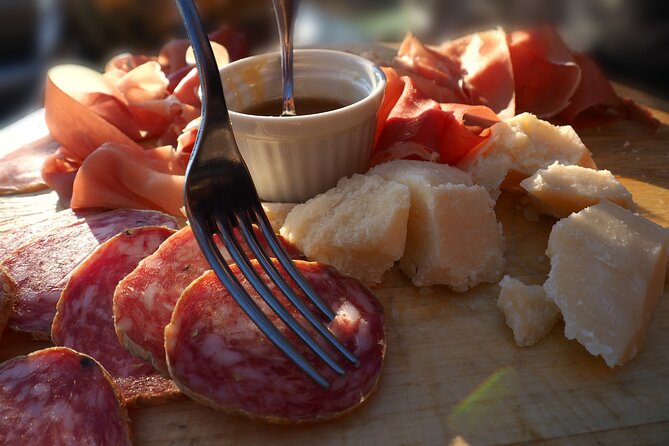
- Food is part of the experience: Expect local dry-cured ham, cheese, wine, and possibly a light meal at an agritourism winery.
- The border crossing adds variety: You move from northeastern Italy into Slovenia’s Karst region, where the villages and architecture have their own character.
- Guides make a real difference: Dean, Matthew, and Ernest received especially warm praise for their energy, flexibility, and local insight.
- Check the final wine stop: The biggest point of concern is the difference between a polished winery visit and a more basic bar or tasting room.
From Trieste to the village that gave Prosecco its name
The day begins with pickup at an agreed point in Trieste. That can include your hotel, cruise terminal, bus station, or train station, but you need to contact the operator after booking so the arrangements can be set. For cruise passengers, this is useful, since you are not left trying to find a distant meeting point with limited time in port.
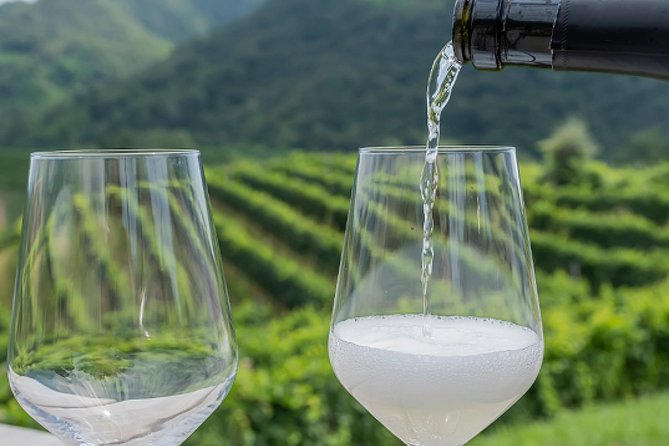
The trip then heads toward Prosecco, a small village that is now a suburb of Trieste. The name matters because the wine called Prosecco took its name from this place, even though the finest and most widely known versions are made in the Veneto and the Glera grape is grown across a broader area.
This is a good bit of wine geography to learn in person. You are not simply tasting a sparkling wine and hearing a sales pitch. You are seeing the modest place tied to its early identity and getting a sense of the border country where Italian and Slovenian influences meet.
The stop is scheduled for about an hour. You can expect an introduction to the local wine story and, depending on the day’s arrangements, a tasting. One account describes stopping for a glass of Prosecco in the village, while another describes a visit to a wine-tasting stop later in the day. Because the exact order and venue can differ, ask your guide where the main tasting will happen.
That question matters. One very negative account describes a basic community bar, a drink poured from a soda gun, and no visit to an Italian vineyard. That version is sharply at odds with the more positive outings, which included Prosecco, a winery, food, and countryside views. I would not ignore this inconsistency. Get the day’s planned tasting location confirmed before departure.
More Prosecco hill wine days:
- Trieste: 2.5-Hour Prosecco Origins Tour and Tastings
★ 4.9 · 193 reviews - Prosecco Origins Wine Experience
★ 5.0 · 79 reviews - Trieste: History of Prosecco and the Karst Region
★ 4.8 · 20 reviews
Crossing into the Karst country
The Karst region is the day’s broader subject. This is a rocky, highland area stretching across northeastern Italy and southwestern Slovenia. The scenery is more rugged and open than the coastal streets of Trieste, with small settlements, stone buildings, and roads through a quieter rural setting.
I like this part of the trip because it gives you a sense of place that is easy to miss if you stay in Trieste’s historic center. The drive itself is part of the experience. You are seeing how quickly the urban edge gives way to villages and open country, and how the border does not erase the shared character of the region.
The day is not designed as a strenuous outdoor excursion. Most visitors should be able to take part, and the experience is offered in English. Still, Štanjel sits on a hill, and the old village involves walking through historic streets and garden paths. If you have mobility concerns, ask about the walking conditions before booking.
One past outing also included the Santuario di Monte Grisa, high above Trieste, for a view across the area. That stop is not listed as a fixed part of every departure, so treat it as a possible extra rather than a promise. If it matters to you, ask whether it is included on your date.
Štanjel and the Ferrari Garden
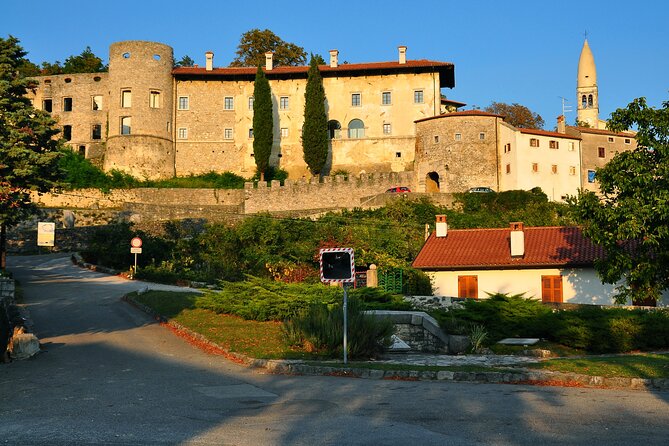
Štanjel is the strongest sightseeing stop of the day. The medieval village sits on a hill in the Karst region, with defensive walls, an old center, a castle complex, and the Church of St. Daniel. You get both architectural interest and broad views across the surrounding country.
The planned visit lasts about two hours, giving you enough time to walk through the village without racing from one sight to the next. The town’s name comes from Saint Daniel, and its buildings reflect several periods of change. It has not been frozen in one perfect medieval moment. Instead, its appearance developed over centuries while retaining the feel of a fortified Karst settlement.
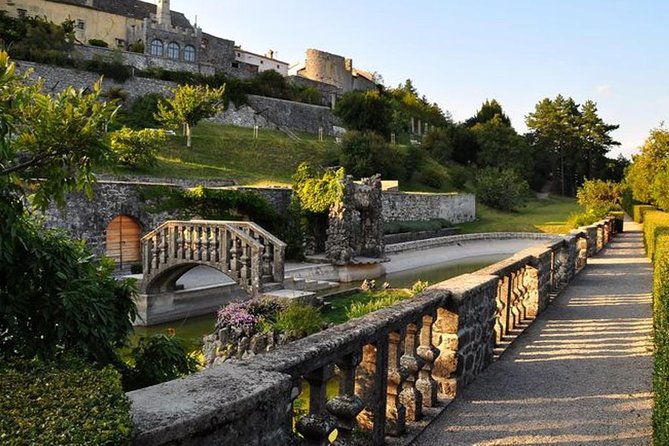
The Ferrari Garden is the special feature here. It was designed by architect and mayor Maks Fabiani, who worked to renew Štanjel’s public buildings while keeping the old village character. The park is noted as one of the most important examples of interwar garden design in Slovenia.
You do not need to be an architecture specialist to enjoy it. The appeal is in the combination of stone walls, planned gardens, views, and the sense that this was a real community shaped by practical needs as well as artistic ideas. It is a welcome change from a standard wine-country stop, where the main attraction is often the tasting room.
The village also carries the marks of both world wars, and Fabiani’s work helped preserve and reshape it during a difficult period. A good guide can make that story clear without turning the visit into a lecture. Dean, Matthew, and Ernest are the names associated with the most warmly praised departures, with Dean receiving particular credit for his enthusiasm and local knowledge, and Matthew for being personable and flexible.
Allow time for photographs, but do not spend the entire stop looking through your phone. The views are one of the reasons to come, and the old village is more enjoyable when you slow down and notice the stonework, walls, and changing levels.
Kobjeglava, Karst food, and the question of lunch
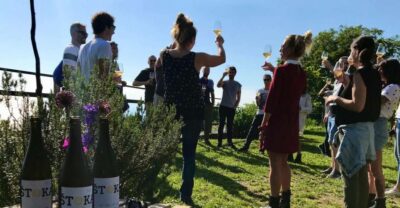
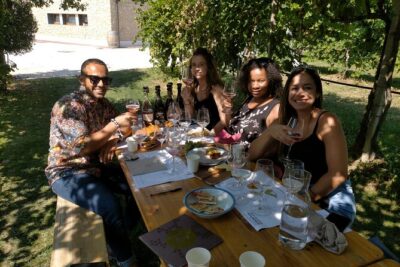
Kobjeglava adds a food-and-wine element to the day. The local specialties listed for the stop are dry-cured ham, cheese, and regional wine. In one especially well-regarded outing, the food was served at Vina Kobal, with generous portions of cured meats, several wine tastings, and a light lunch in an agritourism setting.
That kind of meal can be the most authentic part of the day. Karst food is simple and suited to the region: cured meat, cheese, and wine rather than a long formal restaurant meal. The point is to taste local products in the place where they are made and served, not to spend two hours over a complicated menu.
The food stop is scheduled for about an hour, so you should think of it as a tasting or light lunch rather than a guaranteed full meal. The details seem to vary. One account praised fresh meats, many tastings, and even a red sparkling wine. Another described the food as only a small serving and said requests for a more substantial meal were not accommodated.
If lunch is important to you, ask three practical questions before the vehicle leaves Trieste: Is food included in the price, is it a tasting or a full lunch, and where will it be served? Those answers will tell you far more about the value of the day than the word winery.
The red sparkling wine is an interesting possibility. It is not the familiar pale Prosecco style, and it gives the tasting some regional variety. Still, do not assume that every departure offers the same bottles. The experience provider may use different venues depending on the route and availability.
A few more Trieste days to weigh up
- Trieste Bus Tour with Audio Guide
★ 4.5 · 1,648 reviews - Trieste Bus Tour with Audio Guide
★ 4.0 · 214 reviews - Trieste: Miramare Castle & Museum Entry Ticket & Audio App
★ 4.2 · 213 reviews - Lake Bled and Ljubljana Tour from Trieste
★ 4.5 · 193 reviews
What $155.22 buys you
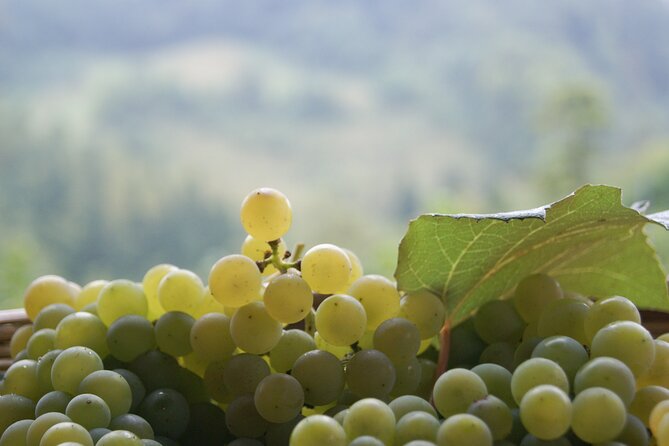
At $155.22 per person, this is not a cheap sightseeing shuttle. The price makes more sense if you value door-to-door transport, a guide, a small group, a cross-border route, and included food or tastings. A private car for six hours would cost more, while arranging the same combination of Trieste, Prosecco, Štanjel, and a Slovenian food stop on your own would require careful planning.
The value drops if your day includes only a quick drink at a basic bar and a long drive with limited sightseeing. That is why the route confirmation matters. The best version offers a well-rounded day: Prosecco’s name and origins, the Karst scenery, Štanjel’s historic center, the Ferrari Garden, and local food and wine.
A group discount may improve the price for families or friends traveling together. The maximum group size is 15, which is small enough to feel more personal than a large coach but not so small that you should expect a private tour. The guide can generally adjust the pace within reason, and Matthew was especially praised for flexibility on one departure.
The experience has a 4.5 rating from 11 submitted ratings, with 91 percent recommending it. That is encouraging, but the small sample and one severe complaint mean I would treat the score as a useful sign, not a guarantee. The guide and supplier seem to have a large effect on the quality of the day.
The guides can shape the whole day
The strongest praise centers on the guides. Dean is described as passionate, enthusiastic, and well informed, with his personal approach making the day memorable. Matthew is noted for his warmth, useful explanations, and willingness to adapt. Ernest is praised for making the trip pleasant and explaining the places along the route.
Those qualities matter here because the tour covers several subjects: wine origins, border history, architecture, garden design, food, and rural life. Without a good guide, it could feel like a series of disconnected stops. With a strong guide, the route becomes a story about one region divided by a modern border but linked by geography and culture.
Dana is also mentioned in connection with a different Piran outing, not as a confirmed guide for this experience. I would not book this tour expecting a particular person unless the operator confirms the guide by name.
There is one practical warning about communication. A customer had difficulty getting a meeting time and received a cancellation at the last minute. The tour can also be canceled if the minimum number of participants is not reached or if weather is poor. The provider offers a different date or a full refund in those cases, but a late change is still inconvenient, especially for cruise passengers.
Who will enjoy this six-hour outing
I would choose this trip if you have already seen Trieste’s main city sights and want a day that reaches beyond the usual tourist route. It suits you if you like scenery, small historic settlements, wine, and regional food more than a tightly packed list of major monuments.
It is also a good fit for cruise passengers who want pickup at the cruise terminal and a guided route without dealing with border transport. The six-hour length leaves room for a wider excursion while keeping the day manageable.
You may prefer another outing if you want a serious vineyard tour, a formal wine education, or a guaranteed full lunch. The material provided does not promise an Italian vineyard visit, and the experience can include Slovenia as the main wine and food setting.
This is not the best choice for someone who dislikes vehicle time. The attractions are spread across the Karst region, so part of the six hours will be spent traveling between Trieste, Prosecco, Štanjel, and Kobjeglava. That driving is worthwhile for many people, but it is not an urban walking tour.
Service animals are allowed, public transportation is nearby, and most participants can take part. The tour operates daily during the stated season, from 8:00 a.m. to 7:00 p.m., though your actual pickup time should be confirmed with the provider.
Should you book Prosecco’s Roots and the Karst Region?
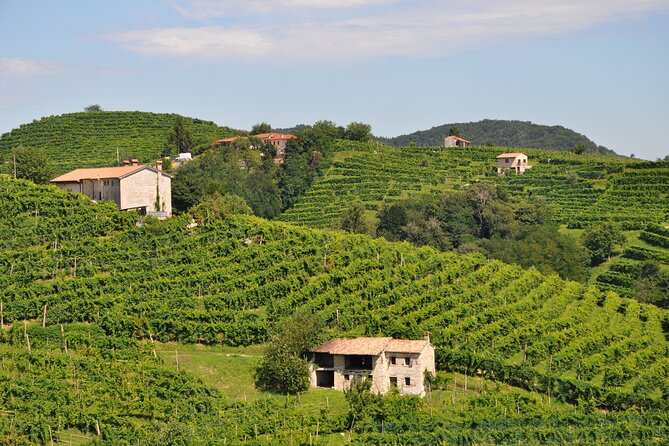
Book it if you want a broad regional day rather than a single attraction. The combination of Prosecco’s birthplace, Štanjel, the Ferrari Garden, and Karst food gives you a fuller picture of the area than a simple tasting trip.
I would book with two conditions. First, confirm the guide, pickup time, exact wine venues, and food arrangements. Second, make sure you are comfortable with a route that may spend substantial time in Slovenia and may not include an Italian winery.
The best version of this tour sounds excellent: a relaxed drive, striking views, a medieval hill town, a distinctive garden, and a generous tasting of local products. The mixed accounts show that the experience is not perfectly consistent, but the strongest outings earned their praise for good guiding, beautiful scenery, and food and wine with a view.
FAQ
How long does the tour last?
The experience lasts approximately six hours and ends back at the meeting point in Trieste.
Where can I be picked up?
Pickup can be arranged at an agreed location in Trieste, including a hotel, cruise terminal, bus station, or train station. You need to contact the provider after booking so the correct arrangements can be made.
Does the tour visit the village of Prosecco?
Yes. The route visits Prosecco, now a suburb of Trieste, where the famous wine got its name and where the Glera grape is grown.
Does the tour cross into Slovenia?
Yes. The route includes Štanjel and Kobjeglava in Slovenia’s Karst region.
What is the Ferrari Garden?
The Ferrari Garden is a park in Štanjel designed by architect and mayor Maks Fabiani. It forms part of the village’s historic sights and is known for its interwar garden design.
Is food and wine included?
The experience includes the opportunity to try Karst specialties such as dry-cured ham, cheese, and local wine. The exact tasting and meal arrangements can vary, so confirm whether your departure includes a light lunch or a tasting only.
What is the cancellation policy?
You can cancel at least 24 hours before the start time for a full refund. Changes or cancellations made less than 24 hours before departure are not accepted for a refund. Poor weather or failure to reach the minimum number of participants may also lead to a different date or a full refund.
Just added around Trieste
- Private Tour to Slovenia from Trieste★ 4.0 · 3 reviews
- Lipica Stud Farm & Skocjan Caves – Small Group Tour from Trieste★ 4.5 · 3 reviews
- Trieste: coffee dive! espresso tasting★ 5.0 · 3 reviews
- Trieste Exploration Game and City Tour on your Phone★ 5.0 · 3 reviews
- Trieste: Freemasons and Secret Societies Guided Tour★ 4.3 · 3 reviews
- Trieste: Private Pasta-Making Class at a Local’s Home★ 3.8 · 4 reviews
- Habsburg Trieste Private Guided Walking Tour★ 5.0 · 4 reviews
- Airport transfer from Trieste Airport to Koper★ 5.0 · 4 reviews
Prosecco Wine Tours, compared.
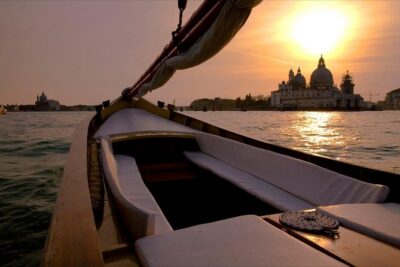
Venice Sunset Cruise by Typical Venetian Boat with Prosecco
Read our review →
A Sparkling Day in the Prosecco Hills from Venice
Read our review →
Private Prosecco , Hilltowns & Palladian Villa Tour from Venice
Read our review →
Exclusive Prosecco Wine Tour from Venice – Small Group
Read our review →Browse the lists this tour appears in