
Reviewed · HISTORICAL TOURS
Tour of Venice between Art, History, Legend and Secrets
Venice has plenty of grand sights, but this walk looks for the city’s quieter stories. You’ll move from the Rialto Bridge’s Devil legend to Marco Polo’s homes, then step inside old churches filled with serious Renaissance art before finishing in St. Mark’s Square. I like the unusual route and the way it links art, family history, politics, and local folklore.
I also like that this is a private tour, so your group gets the guide’s full attention rather than following a flag through a crowd. Guide Alessandro receives especially warm praise for his art historian’s eye and lively manner. The main concern is reliability: several bookings ended with a guide no-show, so confirm the meeting details and keep a record of your booking.
In This Review
- Key points at a glance
- A Venice walk built around stories, not just sights
- Rialto Bridge and the Devil’s bargain
- San Giovanni Crisostomo and the art inside
- Marco Polo’s first home and final Venetian address
- Campo Santa Maria Formosa and Venice’s political memory
- San Zulian and three generations of art
- St. Mark’s Square, the grand finish
- What $83 means for value
- The guide can make or break the experience
- Timing, walking, and practical planning
- Who should book this Venice experience?
- Should you book it?
- FAQ
- How long does the tour last?
- Where does the tour begin?
- Where does the tour end?
- Is the tour private?
- Is admission included?
- Can I cancel for a full refund?
Key points at a glance
- Rialto to St. Mark’s: A central Venice route that connects the commercial heart of the city with its grandest square.
- Marco Polo’s two homes: Learn about the explorer’s childhood home and the Corte del Milione house linked with the end of his life.
- Serious art in small churches: See works associated with Giovanni Bellini, Tullio Lombardo, Veronese, and Palma il Giovane.
- Private English tour: Your group participates alone, with mobile tickets and admission included.
- A tour that may run long: The listed time is about two hours, but one account describes a three-hour experience.
- Important booking caution: Multiple bookings reportedly suffered from a missing guide, despite several excellent accounts of Alessandro.
A Venice walk built around stories, not just sights
This experience takes a different line through Venice. You still get the famous images, especially Rialto Bridge and St. Mark’s Square, but much of the walk is devoted to places you could easily pass without understanding.
That is the appeal. Venice can feel like a stage set if you only move from one postcard view to the next. A guide who explains why a church was built, which artists worked inside, or how a local legend grew gives the streets more meaning.
The route begins in Campo San Bartolomeo, near Rialto, and ends at Piazza San Marco by the Clock Tower. Those meeting points are central and easy to place on a map, but you should arrive with the exact location saved on your phone. Venice is full of small lanes and similarly named squares, and a private appointment is less forgiving than a large group with a visible meeting flag.
The tour is offered in English. It is described as lasting about two hours, but allow extra time. One detailed account says the walk lasted three hours, which may be welcome if you enjoy extended explanations, but less convenient if you have a dinner booking, train, or timed museum entry afterward.
More History Tours in Venice
- Venice’s Best: Basilica, Doge’s Palace, Gondola & History Gallery
★ 4.5 · 2,478 reviews - Venice: City Center Historical Guided Walking Tour
★ 4.2 · 1,873 reviews - Venice: Bell Tower & St Mark’s Square History Gallery Ticket
★ 4.3 · 910 reviews
Rialto Bridge and the Devil’s bargain
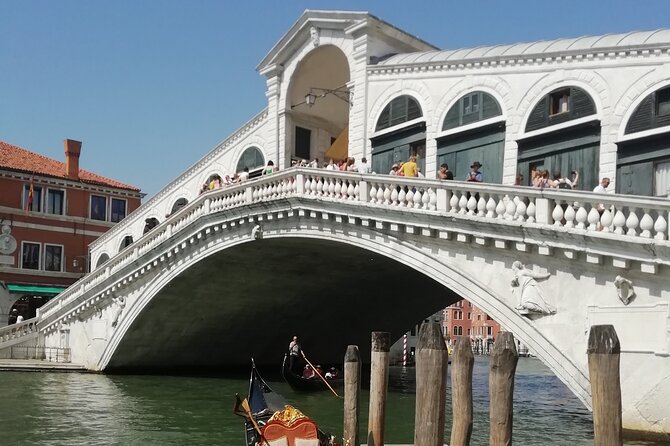
The first stop is Ponte di Rialto, one of Venice’s most recognizable bridges. You get about 20 minutes here, with admission included.
The bridge matters for more than its graceful shape. Rialto has long been tied to trade and movement across the Grand Canal, so it is a fitting place to begin a tour about Venice as a meeting point for merchants, artists, explorers, and political power. Your guide also introduces the local legend that the bridge was built with help from the Devil himself.
Treat that story as folklore, not engineering history, but do not dismiss it as a throwaway tale. Venice is a city where practical buildings often collect dramatic stories. A good guide can use the legend to show how Venetians explain difficult construction, risk, sacrifice, and ambition through memorable characters.
The stop is short, so you will not spend half the tour fighting for a bridge photograph. That is a plus. On the other hand, Rialto is one of Venice’s busiest places, and the tour details do not promise a quiet viewing area or a particular time of day. Keep your expectations realistic: this is an introduction and a story stop, not a private bridge-viewing session.
San Giovanni Crisostomo and the art inside
From Rialto, the walk goes to Chiesa di San Giovanni Crisostomo for about 30 minutes. The church was designed by Mauro Codussi and funded in part by Marco Polo’s family, giving it a direct link to the next part of the tour.
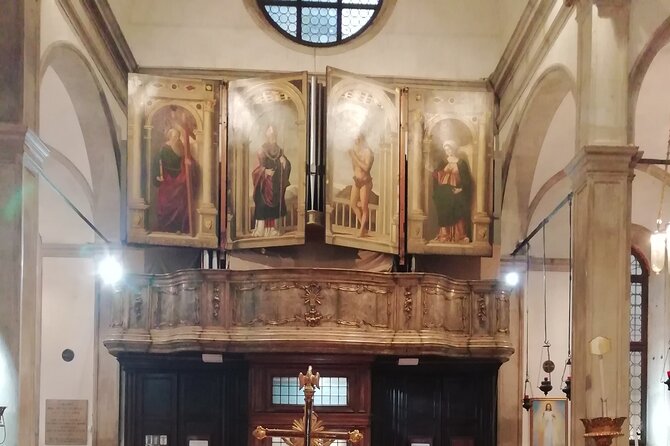
Inside, the focus turns to art. You are scheduled to see works by Giovanni Bellini and Tullio Lombardo, with particular attention to Lombardo. This is where the tour earns its place beyond a standard Venice highlights walk. Small churches can hold works that are easy to miss if you are moving quickly toward St. Mark’s Basilica or the Doge’s Palace.
I would pay close attention to how the guide explains the relationship between architecture and art. Codussi’s church is not simply a container for paintings and sculpture. The building, its patrons, and its decoration tell a connected story about money, devotion, status, and artistic taste.
The 30-minute stop is generous compared with the brief visits elsewhere. That gives you time to look rather than merely collect names. If you have studied art, this part may be the strongest reason to book. Alessandro is described as having an art historian’s perspective, and one account particularly values his knowledge beyond formal college study.
The details do not state whether photography is permitted inside or whether the church can ever close for religious services. Conditions can change, so listen to the guide’s instructions and do not assume that every listed artwork will be viewable from the same position.
Marco Polo’s first home and final Venetian address
The next 30-minute stop concerns Casa di Marco Polo. The tour presents this as the house where Marco Polo was born and lived until about age 12, before leaving with his father Niccolò and uncle Matteo for Katai.
The value here is not only the house itself. Marco Polo’s name is tied to distant places and a famous travel account, but this stop brings him back to Venice as a child. You get a more human starting point: a boy growing up in a merchant family before becoming one of the city’s best-known explorers.
The account of the tour then takes you to Corte del Milione, identified as Marco Polo’s second home and the place where he chose to end his life after returning. That creates a useful arc. You see the beginning of his life in Venice, hear about his departure, and then consider his final connection to the city.
You should listen carefully to the guide’s wording here. Historic homes in Venice can be altered, rebuilt, or identified through long traditions, and the experience description focuses on the historical association rather than promising a furnished museum interior. The strongest part may be the story told around the site, not a large house museum visit.
This is also a good section for anyone who wants more than dates and monuments. Marco Polo’s story connects Venice to trade routes, family networks, and the wider world. The tour does not send you across town to a distant museum, so you get that context while continuing toward St. Mark’s.
More quiet corners of Venice:
- Tour of The Real Hidden Venice
★ 5.0 · 2,006 reviews - Verona: History and Hidden Gems Guided Walking Tour
★ 5.0 · 1,379 reviews - Verona: Classic and Hidden Gems Bike Tour
★ 4.9 · 577 reviews - Secret Venice & Gondola Tour
★ 4.3 · 458 reviews
Campo Santa Maria Formosa and Venice’s political memory
Campo Santa Maria Formosa receives only about five minutes, making it a quick outdoor stop rather than a long visit. Even so, its subject is important. The campo is described as one of the largest squares in Venice and a major cultural center.
The guide also explains an episode connected with the War against Padua. That detail gives the square a political role. Venice was not only a city of paintings and canals. It was a powerful republic with rivalries, territorial disputes, and civic decisions that shaped daily life.
Five minutes is enough to point out the space and introduce the event, but not enough for a long historical lecture. If this is a subject you care about, you may want to ask a short follow-up question while the details are fresh. A private format helps here, since you are not competing with a large group for the guide’s attention.
This stop also provides a change of pace. After the church interior and Marco Polo’s personal story, you return to an open Venetian square and consider the city as a political community.
San Zulian and three generations of art
Chiesa di San Zulian, also called San Giuliano, gets about 15 minutes. The church is presented as unusual for its gold decoration and for the artists connected with it: Veronese, Giovanni Bellini, and Palma il Giovane.
The combination matters. Instead of seeing one famous work in isolation, you get a compact lesson in how Venetian churches accumulated art over time. Different masters, periods, and styles can share one sacred setting. The goldwork also helps you notice the visual effect of the interior, not just the names attached to individual pieces.
Fifteen minutes is a sensible amount of time for a focused church visit, though it will feel brief if you want to examine every detail. The tour works best when you let the guide direct your eye. Look for the features he considers important, then take a quiet moment to absorb the whole room.
For art-minded visitors, this church and San Giovanni Crisostomo are the core of the experience. For everyone else, they break up the outdoor walking and offer a chance to see Venice through its local parish churches rather than only through its monumental basilica.
St. Mark’s Square, the grand finish
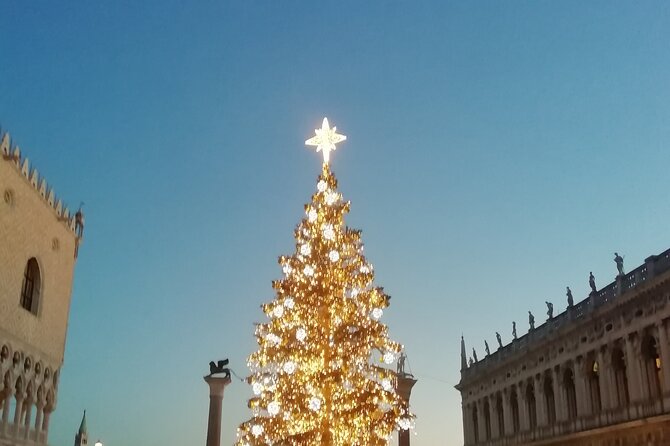
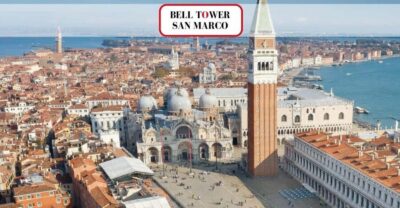
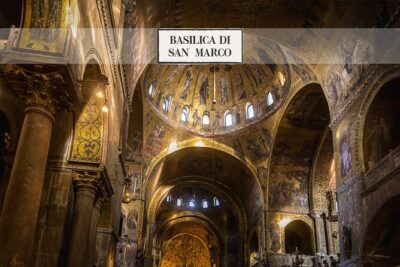
The final walk reaches Piazza San Marco and ends at the Clock Tower. You get views of St. Mark’s Basilica, the Campanile, the Doge’s Palace, and the Bridge of Sighs, with the tour concluding at the Prison Palace.
This is a short 10-minute finale, so think of it as an orientation and closing view, not an interior tour of the basilica or Doge’s Palace. No separate entry experience inside those major landmarks is described. You will see them from the square and hear how they fit into Venice’s civic and religious story.
The ending works well because the route has moved from commerce at Rialto to private homes, churches, political space, and finally the ceremonial center of the republic. The Bridge of Sighs and prison reference add a darker note to the final scene. Venice can be beautiful and severe at the same time, and this stop brings both sides together.
Because the tour ends in such a useful location, you can continue on your own afterward. The supplied details do not include onward arrangements, so plan your next stop separately. You may want to book the basilica or palace for another time rather than assuming this walking tour includes entry.
What $83 means for value
At $83 per person, this is not the cheapest way to see Venice’s main sights. The price makes more sense if you want a private English-speaking guide, focused art interpretation, and a route that includes Marco Polo’s homes and two churches.
The private format is the key value. If your group is interested in art, history, or local legends, you can ask questions and adjust the pace more easily than on a large shared walk. The price is harder to justify if you only want quick photographs of Rialto and St. Mark’s Square, since you can reach those places without a paid tour.
Admission is listed as included, and the activity is described as all inclusive, with nothing else listed as excluded. Still, do not read that as entry to every major landmark in the final square. The stop description says you can admire the basilica, bell tower, Doge’s Palace, and Bridge of Sighs, not that you will go inside each one.
I would compare this cost with your own interests. Art students, history fans, and repeat Venice visitors may get more from the less obvious stops. First-time visitors who want a broad overview may also like the route, but they should know that the tour spends more time on specialist church art than on the city’s biggest interiors.
The guide can make or break the experience
Alessandro is the guide name to look for. His strongest qualities are an art historian’s approach, enthusiasm, and an ability to connect lesser-known places with the wider story of Venice. The available feedback also describes him as welcoming and enjoyable company, which matters during a walking tour with several stops.
But the booking record has a serious weakness. Three separate accounts describe a guide who did not arrive, left the group waiting, or failed to identify the correct party. One group waited 45 minutes after arriving early. Another approached a different group and was told it was full, then waited more than half an hour without finding its guide.
That is not a minor delay. In Venice, a missed tour can consume a large part of your day, especially if you have limited time in the city. After booking, save the confirmation, meeting point, local contact details, and any messages. Arrive at Campo San Bartolomeo early and make sure the guide can identify your group before setting off.
The mixed experience means I would not book this as the only fixed activity on a tight schedule unless the operator confirms the appointment clearly. The same information also shows that, when the guide appears and the match is right, the experience can be excellent.
Timing, walking, and practical planning
The advertised duration is about two hours. Since one account reports three hours, plan for a range of two to three hours and avoid placing a timed reservation immediately afterward.
You will walk between several central Venice locations. The details do not provide a precise distance, step-free route, or seating plan. One account specifically notes that there is no place to sit down in Venice during the tour. Wear comfortable shoes, and do not count on regular rest stops.
The route includes church interiors, public squares, bridge views, and narrow city streets. Bring a charged phone for the mobile ticket and meeting information. The activity is offered in English, and most people can participate. Service animals are allowed, and the meeting area is near public transportation.
If you are visiting Venice for the day from outside the city, check the access-fee rule before you go. On certain dates, most day visitors must pay a €5 access fee, while exemptions may apply. The current dates and details are provided through cda.ve.it. This fee is separate from the tour price.
Cancellation is flexible only up to a point. You can cancel for a full refund at least 24 hours before the local start time. Changes or cancellations inside that 24-hour window are not accepted for a refund.
Who should book this Venice experience?
I would choose this tour if you want Venice explained through art and stories rather than reduced to a checklist. It suits a private group with interest in Bellini, Tullio Lombardo, Veronese, Venetian politics, and Marco Polo. It is also a good fit for someone who has already seen the obvious sights and wants a different route through the center.
Families can participate because most people can take part, but the amount of church art and historical explanation may suit older children and adults better than very young children. The lack of guaranteed seating and the possible three-hour duration are worth considering.
I would hesitate if you need a precise two-hour finish, if you want interior visits to St. Mark’s Basilica or the Doge’s Palace, or if a missed appointment would seriously disrupt your day. The no-show reports are the tour’s largest concern, and you should weigh them against the strong praise for Alessandro’s actual guiding.
Should you book it?
Book it if the route appeals to you and you value a private guide who can explain Venetian art in detail. The two churches, Marco Polo connections, and Rialto-to-St. Mark’s progression give the walk more substance than a basic highlights stroll.
Before booking, decide how much schedule risk you can accept. Confirm the appointment, keep the operator’s contact information close, and allow extra time beyond the stated two hours. If you do that and Alessandro leads your group, this can be a thoughtful, art-focused way to see central Venice. If you need guaranteed punctuality above all else, choose a tour with a stronger record for meeting arrangements.
FAQ
How long does the tour last?
The stated duration is approximately two hours. One account describes the experience lasting three hours, so allow extra time when planning the rest of your day.
Where does the tour begin?
The meeting point is Campo San Bartolomeo, 30124 Venezia VE, Italy.
Where does the tour end?
The tour ends in Piazza San Marco at the Clock Tower, near the address listed as Piazza S. Marco.
Is the tour private?
Yes. Only your group participates in the private activity.
Is admission included?
Yes. The experience is described as all inclusive, and admission tickets are listed as included at each stop. The details do not promise entry inside every major building viewed from St. Mark’s Square.
Can I cancel for a full refund?
Yes, if you cancel at least 24 hours before the experience start time. Cancellations or changes made less than 24 hours before the local start time are not accepted for a refund.
More Historical Tours in Venice
- Basilica, Doge’s Palace, History Gallery & Bell Tower Option
★ 5.0 · 586 reviews - Venice: Natural History Museum Entry Ticket
★ 4.7 · 312 reviews - St. Mark’s Cathedral Priority Guided Tour & History Gallery
★ 3.5 · 148 reviews - Lazise: Historical Center Wine Tasting Tour
★ 4.9 · 110 reviews
Just added around Venice
- Gondola Ride and St Mark’s Basilica★ 4.5 · 3 reviews
- Padua: Private Pasta-Making Class at a Local’s Home★ 5.0 · 3 reviews
- Padua City Sightseeing Walking Tour of Must-See-Sites with Local Guide★ 5.0 · 3 reviews
- Venice: Market Tour and Meal at a Local’s Home★ 4.3 · 3 reviews
- VIRTUAL MUSEUM: Creature di Gomma – Venice Vintage Toys★ 4.7 · 3 reviews
- 3 Hour Shared Walking and Aperitivo Tour of Verona★ 5.0 · 3 reviews
- Venice: The Best of Dolomites 3Cime and Refuges with Drone★ 5.0 · 3 reviews
- Verona: Blindfolded Wine Tasting★ 5.0 · 3 reviews
Historical Tours, compared.
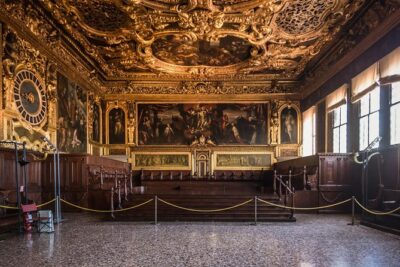
Venice’s Best: Basilica, Doge’s Palace, Gondola & History Gallery
Read our review →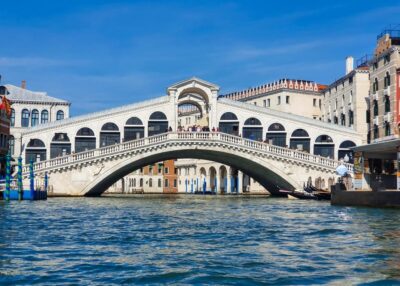
Bell Tower & St Mark’s Square History Gallery Ticket
Read our review →
Basilica, Doge’s Palace, History Gallery & Bell Tower Option
Read our review →
St. Mark’s Cathedral Priority Guided Tour & History Gallery
Read our review →
Browse the lists this tour appears in