

Reviewed · TRIESTE TOURS
Trieste: Private guided tour of Trieste
Trieste reveals its best stories on foot, and this private walk links Roman remains, Habsburg-era streets, grand churches, and literary landmarks in one compact route. Guide Lubos Dzuro brings in the city’s history, culture, architecture, and people rather than simply pointing at buildings.
I like the private format, which lets you ask questions and set a comfortable pace. I also like the route’s variety: you move from the sea at Molo Audace to ancient ruins, Orthodox and Catholic churches, neoclassical buildings, and James Joyce on the Red Bridge. The main consideration is time. Two and a half hours is enough for Trieste’s central sights, but not for every part of the city.
In This Review
- Key points to know before booking
- Why this walk gives you a useful first look at Trieste
- Molo Audace and the view across Piazza dell’Unità d’Italia
- San Silvestro and Santa Maria Maggiore: an early climb into old Trieste
- Roman traces at Arco di Riccardo and the Roman Theater
- The Grand Canal and Trieste’s planned 18th-century center
- Sant’Antonio Taumaturgo and San Spiridione
- James Joyce on the Red Bridge
- Piazza della Borsa closes the route with civic architecture
- What the private format is really worth
- Pace, languages, and practical fit
- Who should book this Trieste walk
- Should you book it?
- FAQ
- How long does the private Trieste tour last?
- Where does the tour usually begin?
- Can the guide meet me at my hotel?
- Where does the activity end?
- What languages are available?
- Is this a private tour?
- Is the tour wheelchair accessible?
- What landmarks are included?
- Can I cancel for a full refund?
Key points to know before booking
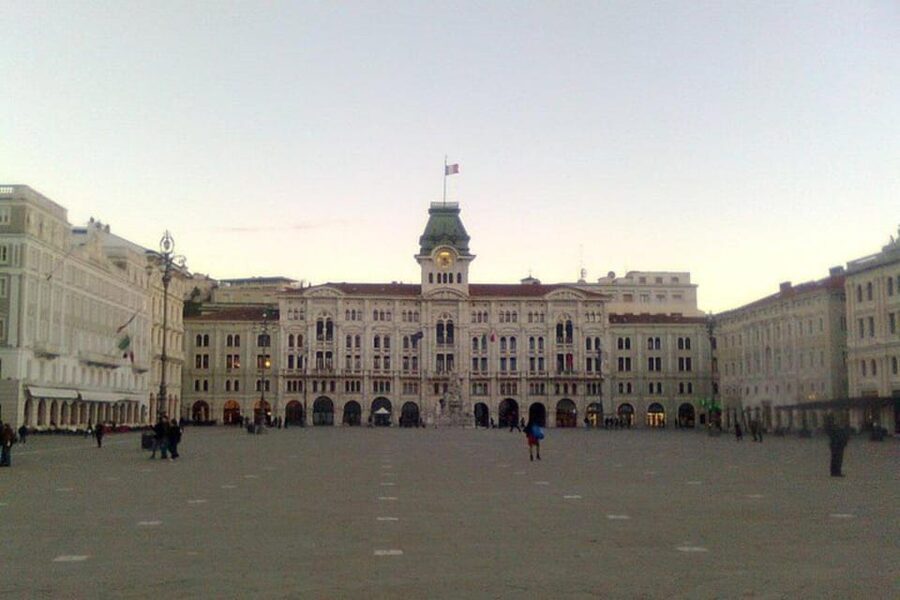
- Molo Audace starts the story with a wide view of Piazza dell’Unità d’Italia
- Roman Trieste appears at Arco di Riccardo and the Roman Theater
- The Grand Canal brings together neoclassical buildings and two striking churches
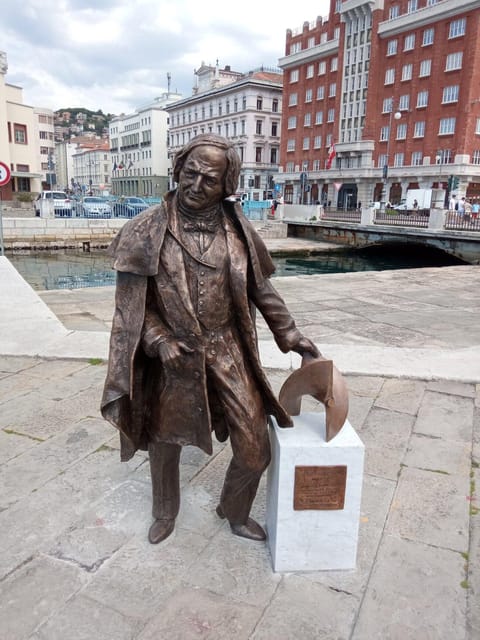
- James Joyce’s bronze statue adds a literary note near the end
- A private group of up to 10 makes the $192.58 price best for families or small groups
- English, Italian, German, and Slovak are available, with wheelchair access listed
Why this walk gives you a useful first look at Trieste
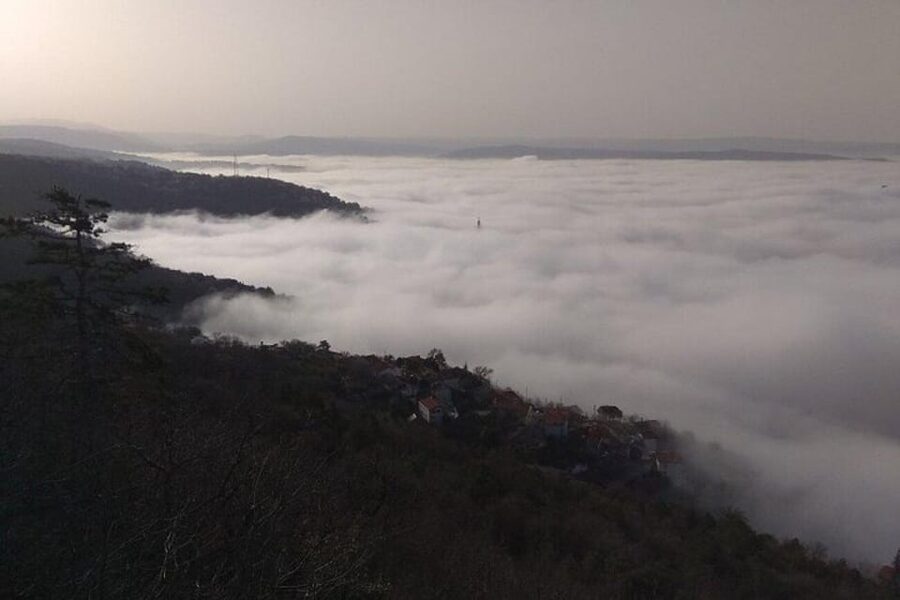
Trieste can feel hard to place at first. It is Italian, but its architecture and past also point toward the Habsburg world, the Adriatic, Central Europe, and the ancient Roman period. This tour helps you sort out those layers without requiring a full day of sightseeing.
The route is built around the historic center. You begin by the water, pass through old religious and civic landmarks, then reach Roman remains and the Grand Canal before finishing near Piazza della Borsa. That progression gives you a clear sense of how the city developed over time.
I especially like the way the walk connects buildings to people. The experience is not limited to dates and architectural labels. Lubos Dzuro is described as bringing in the city’s people, culture, and personal stories, which can make the streets easier to read after the tour ends.
The private setup matters here. With only your own group, you can ask why Trieste has Serbian Orthodox and Catholic churches so close together, or pause when a particular period catches your interest. A large group tour may cover the same streets, but it rarely leaves as much room for conversation.
A few more Trieste days to weigh up
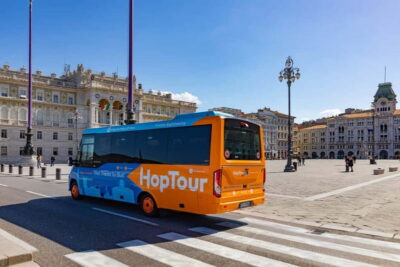
- Trieste Bus Tour with Audio Guide
★ 4.5 · 1,648 reviews - Trieste Bus Tour with Audio Guide
★ 4.0 · 214 reviews - Trieste: Miramare Castle & Museum Entry Ticket & Audio App
★ 4.2 · 213 reviews
Molo Audace and the view across Piazza dell’Unità d’Italia
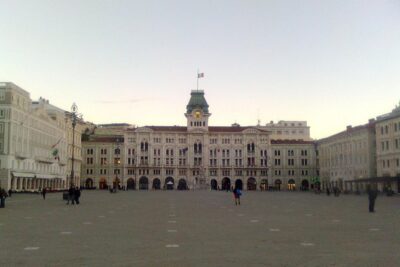
The usual meeting point is at the base of Molo Audace, the pier reaching into the harbor. From here, you get an open view toward Piazza dell’Unità d’Italia, one of the city’s defining public spaces.
This is a smart place to begin because it gives you orientation before the walking starts. You can see the relationship between the waterfront and the historic center, then look inland toward the buildings that shaped Trieste’s public life.
The tour can also begin at your hotel, or at another agreed location. That flexibility is useful if you are already staying in the center or want to avoid backtracking. If you prefer the standard route and the broadest opening view, Molo Audace is the more natural choice.
The meeting point is outdoors, so it is worth arriving ready for a walking tour rather than treating this as a quick photo stop. The full activity lasts about two and a half hours, and the opening view sets the scene for the rest of the walk.
San Silvestro and Santa Maria Maggiore: an early climb into old Trieste
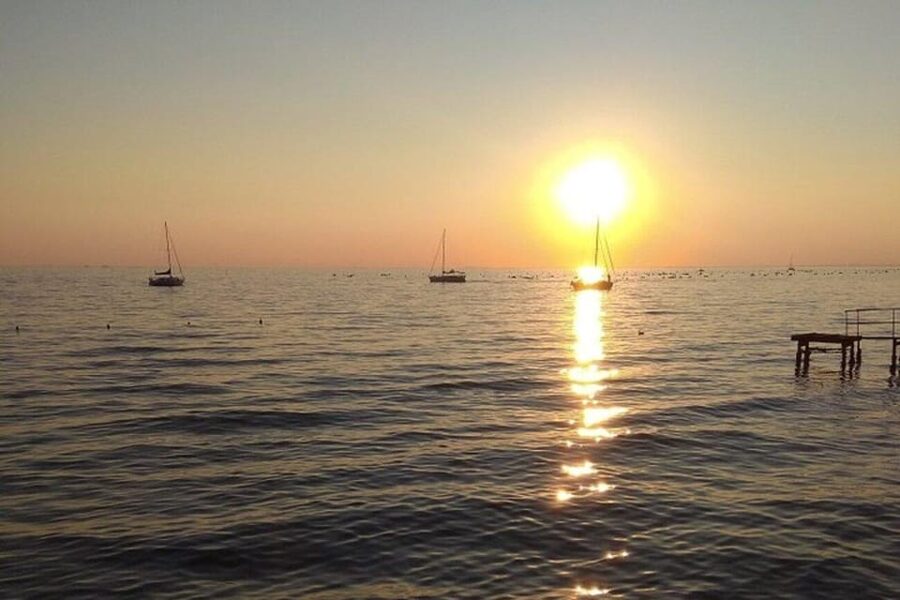
From the waterfront, the route heads toward the Romanesque church of San Silvestro and the Baroque church of Santa Maria Maggiore. The description notes that reaching them requires a little effort, so you should expect some uphill walking or uneven movement through the older part of town.
That small physical demand is part of the point. Trieste’s earlier streets do not follow the broad, planned pattern of the later Borgo Teresiano. Moving upward toward these churches helps you see a different side of the city, one tied to its older urban core.
The contrast between the two churches is useful. San Silvestro represents a Romanesque phase, while Santa Maria Maggiore reflects the more ornate Baroque period. You do not need to be an architecture expert to appreciate the change. The shapes, decorative approach, and sense of space give you visible clues about when and why the buildings were made.
This is also one of the places where a private guide earns his fee. The value is not just entering a church or standing outside it. It is having someone explain how religious buildings fit into Trieste’s changing civic and cultural life.
Roman traces at Arco di Riccardo and the Roman Theater
The tour then follows the city’s Roman story. Arco di Riccardo is presented as the only surviving gate of the ancient city walls, giving you a direct link to Trieste’s earliest urban form.
It is a compact landmark, but its importance is larger than its size. A surviving gate helps you picture where the ancient city began and how its boundaries once worked. This is the sort of stop that can be easy to miss when walking alone, especially when modern buildings press close around old remains.
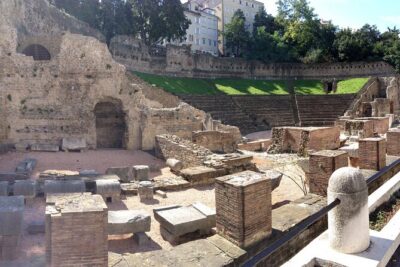
The Roman Theater adds another piece to the picture. Here, the city’s ancient past becomes less abstract. A theater points to public entertainment, organized civic life, and the presence of a Roman population large enough to support such a venue.
The Roman section is brief rather than an archaeological half-day. That is a strength if you want a general introduction, but a limitation if Roman history is your main reason for visiting Trieste. You will see important traces, not an exhaustive study of the ancient city.
A different sort of day out around Trieste:
- Lake Bled and Ljubljana Tour from Trieste
★ 4.5 · 193 reviews - Trieste: 2.5-Hour Prosecco Origins Tour and Tastings
★ 4.9 · 193 reviews - Trieste: Guided Foodie Walking Tour
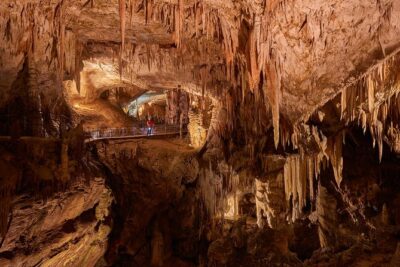
★ 4.9 · 142 reviews - Postojna Cave & Predjama Castle from Trieste
★ 4.5 · 122 reviews
The Grand Canal and Trieste’s planned 18th-century center
From the older city, you reach the Grand Canal in Borgo Teresiano. This is one of the most visually satisfying parts of the walk, with water running into the heart of the district and elegant neoclassical buildings lining the route.
The canal shows a later stage of Trieste’s growth. Its regular setting and grand buildings feel different from the tighter streets around the older churches. That change makes the city’s development easier to understand. Trieste was not built in one period, and the tour lets you see those layers in a short distance.
The canal is also a good place to slow down and look upward. The buildings carry much of the district’s character, and the guide can help you read the neoclassical details and explain how this part of town served the expanding city.
I like this stop because it brings architecture and daily urban life together. You are not looking at an isolated monument. You are walking through a district whose streets, waterway, and buildings were planned as a connected whole.
Sant’Antonio Taumaturgo and San Spiridione
Near the Grand Canal, you see Sant’Antonio Taumaturgo, described as the largest Catholic church in Trieste. Its scale gives the district a strong focal point and shows the importance of Catholic worship in the city.
You also see the Serbian Orthodox church of San Spiridione. This is one of the most revealing stops because it points to Trieste’s religious and cultural mix. The two churches help explain why the city cannot be understood through a single national or religious story.
For me, this pairing is one of the tour’s strongest features. It takes an idea that can sound vague, such as Trieste’s Central European character, and gives you two buildings to compare. Their proximity makes the city’s mixture visible rather than theoretical.
The information provided does not promise interior visits, so you should think of these as guided exterior stops unless Lubos confirms otherwise. Even from outside, their position along the canal makes them important pieces of the route.
James Joyce on the Red Bridge
The walk continues to the Red Bridge, where a bronze statue of James Joyce greets you. Joyce lived in Trieste, and his presence adds a literary thread to a tour otherwise focused on urban history, churches, and architecture.
The statue is more than a final photo opportunity. It reminds you that Trieste attracted writers and people from several cultural worlds. The city’s identity comes partly from these connections, not only from its monuments.
This stop can also help you remember the route. After Roman remains, churches, canals, and neoclassical buildings, Joyce gives the walk a human and literary ending. It is a small detail, but a memorable one.
If you are interested in Joyce, ask about his connection to Trieste during the walk. The tour includes personal anecdotes and stories, and the private format gives you a good chance to steer the conversation toward literature.
Piazza della Borsa closes the route with civic architecture
The usual finish is Piazza della Borsa, overlooked by the palace of the same name. The square brings together several periods of Italian architecture, including Baroque, Art Nouveau, and rationalist buildings.
That mix makes the ending feel like a visual recap of the whole tour. You have already moved from Roman Trieste through religious landmarks and the planned Borgo Teresiano. Here, different architectural styles sit within one civic setting.
The Neptune fountain adds another recognizable feature to the square. It helps break up the architectural discussion with a public work that belongs to the life of the city rather than to one religious or historical period.
Ending at Piazza della Borsa is practical, too. The route finishes in a central area rather than at an obscure edge of town. The activity ends back at the meeting point, so confirm the precise arrangement with the guide if you choose to begin at your hotel or another location.
What the private format is really worth
The price is $192.58 for a group of up to 10 people. For a full group, that works out to about $19.26 per person, which is a strong rate for a private, live-guided walk lasting two and a half hours.
For two people, the cost is about $96.29 each. That is a much larger spend than joining a group tour, so the value depends on how much you care about privacy, flexible questions, and a guide focused only on your party.
Families and small groups can make especially good use of the pricing. Ten people can share the total cost, while still avoiding the pace and noise of a large public group. Conference groups may also find the format useful, since the tour can give everyone a common introduction to the city.
The price includes the guided walking tour and the guide’s insights into local history, culture, architecture, and people. It does not list transport, meals, entry tickets, or hotel transfers as separate inclusions. Since this is a walking experience, you should plan to cover the route on foot.
Pace, languages, and practical fit
The walk lasts 2.5 hours, with starting times available according to the date you choose. That is enough time to see the central highlights in a comfortable way, but the schedule still requires steady movement between stops.
The tour is available in English, Italian, German, and Slovak. Language choice can affect how much you get from the stories, so select the language in which you are most comfortable asking questions and following historical explanations.
Wheelchair accessibility is listed, but the route includes a little effort to reach San Silvestro and Santa Maria Maggiore. If a member of your group uses a wheelchair, contact the guide before booking to confirm the exact path and any adjustments needed.
Cancellation is free up to 24 hours before the activity for a full refund. You can also reserve now and pay later, which helps if your schedule in Trieste is still changing.
Who should book this Trieste walk
I would choose this tour if you have only part of a day in Trieste and want the city’s main historic center explained by one person. It suits first-time visitors, families, couples, conference groups, and anyone who prefers asking questions instead of following a fixed public script.
It is also a good fit if you care about connections between periods. The route is not just Roman, Baroque, Habsburg-era, or literary. It moves among all of them, showing how Trieste developed over centuries.
You may want something else if you are looking for a deep visit to museums, a tour of Miramare Castle, or a longer exploration beyond the center. None of those are part of this experience. The focus is a compact walk through the most important central sights.
The strongest praise attached to Lubos Dzuro centers on his history and culture explanations, his patient answers, and his affection for Trieste. That combination matters. A city like this can seem complicated, but a guide who can explain both the facts and the feeling of the place makes the walk easier to remember.
Should you book it?
Book this private tour if you want a well-rounded introduction to central Trieste, especially when you can share the $192.58 cost with several people. The route covers an impressive range in 2.5 hours, from Molo Audace and Piazza dell’Unità d’Italia to Roman remains, churches, the Grand Canal, James Joyce, and Piazza della Borsa.
I would be more cautious if you are traveling alone or as a couple on a tight budget, since the private price is harder to justify for a very small party. Still, for a group that values personal attention and a guide who can connect architecture, history, and local life, this is a practical way to get your bearings fast.
FAQ
How long does the private Trieste tour last?
The walking tour lasts 2.5 hours.
Where does the tour usually begin?
It generally begins at the base of Molo Audace, with its view toward Piazza dell’Unità d’Italia.
Can the guide meet me at my hotel?
Yes. The guide can pick you up at your hotel, or you can arrange to meet at Molo Audace or another starting point.
Where does the activity end?
The activity ends back at the meeting point.
What languages are available?
The live tour guide is available in Italian, German, English, and Slovak.
Is this a private tour?
Yes. It is offered for a private group of up to 10 people.
Is the tour wheelchair accessible?
Wheelchair accessibility is listed for the activity. Because the route includes some effort to reach San Silvestro and Santa Maria Maggiore, confirm the practical route with the guide before booking.
What landmarks are included?
The route includes Molo Audace, Piazza dell’Unità d’Italia, San Silvestro, Santa Maria Maggiore, Arco di Riccardo, the Roman Theater, the Grand Canal, Sant’Antonio Taumaturgo, San Spiridione, James Joyce’s statue on the Red Bridge, and Piazza della Borsa.
Can I cancel for a full refund?
Yes. You can cancel up to 24 hours in advance for a full refund. You can also reserve now and pay later.
Just added around Trieste
- Trieste: digital audioguide made with a local for your tour★ 4.2 · 49 reviews
- Experience Slovenian Coast line with Wine Tasting from Trieste★ 5.0 · 50 reviews
- Trieste Private Walking Tour with a Local★ 4.5 · 52 reviews
- Transfer from Trieste to Venice Airport★ 5.0 · 53 reviews
- Miramare Castle and the park★ 5.0 · 55 reviews
- Piran & Panoramic Slovenian Coast from Trieste★ 5.0 · 76 reviews
- Prosecco Origins Wine Experience★ 5.0 · 79 reviews
- Private Trieste Sightseeing Tour★ 5.0 · 95 reviews
Trieste Tours, compared.
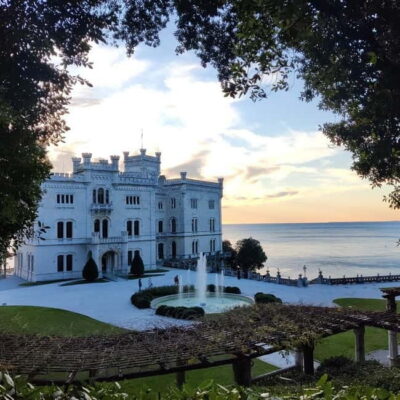
Miramare Castle & Museum Entry Ticket & Audio App
Read our review →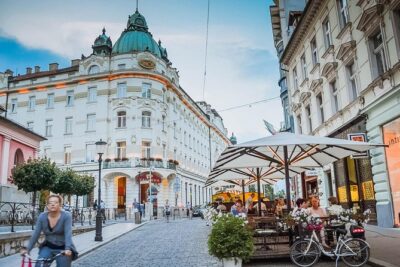


Browse the lists this tour appears in