
Reviewed · MUSEUMS
Venice: Entrance Ticket to the Naval Historical Museum
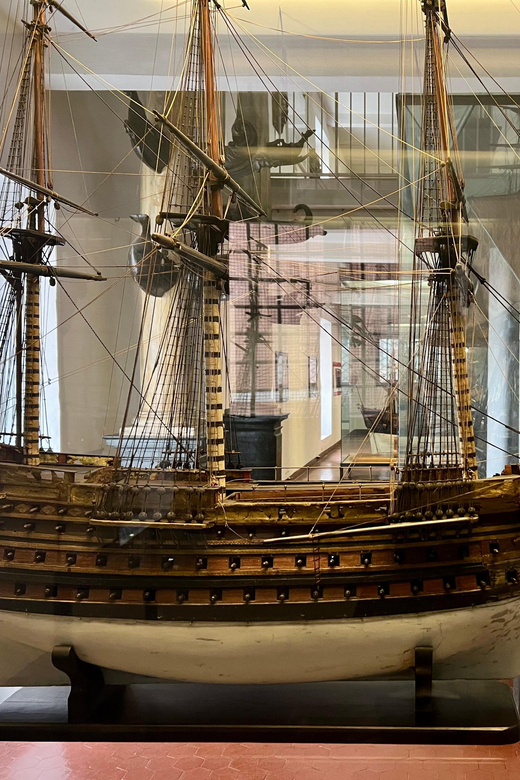
Venice’s Naval Historical Museum puts the city’s seafaring past in front of you with real boats, ship models, paintings, and naval documents. I like its excellent location near Piazza San Marco and the chance to see an unusual group of Chinese and Far Eastern boats in addition to Venetian and Italian Navy displays.
I also like the museum’s large five-floor layout, which gives the collection room to breathe instead of packing everything into one crowded gallery. The main drawback is simple: your $18 ticket covers entry only, with no guided tour, so you will need to take your time and make sense of the displays on your own.
In This Review
- Key points to know before visiting
- Why Venice’s naval story matters
- Entering the former Granary of the Serenissima
- The first galleries: boats and Venetian identity
- Ship models, paintings, and documents across five floors
- The Far Eastern boats are the surprise
- Modern Italian Navy models and the museum’s official role
- How the 90-minute visit works for a Venice itinerary
- Is $18 a fair price?
- Who should visit MUNAV?
- Booking flexibility and practical details
- Should you book the Naval Historical Museum?
- FAQ
- Where is the Naval Historical Museum of Venice?
- How long does the visit take?
- What does the ticket include?
- Does the ticket offer skip-the-line entry?
- How much does admission cost?
- Can I cancel the booking?
- Are small pets allowed?
Key points to know before visiting
- Five floors in a 15th-century granary: The museum occupies a former storehouse of the Venetian Republic, covering about 6,000 square meters.
- Five minutes from Piazza San Marco: You can add this visit to a walk through the center of Venice without arranging transport.
- Ancient boats to modern warships: Exhibits trace Venetian naval traditions through models, artifacts, paintings, and documents.
- A rare Far Eastern collection: Boats from China and other parts of the Far East add variety beyond the expected Venetian material.
- Entry without a guided tour: The ticket includes admission, while interpretation is left to you.
- A 90-minute visit: The suggested duration fits neatly into a busy Venice day, especially before or after the nearby Arsenal.
Why Venice’s naval story matters
Venice was built around water, but it is easy to spend a whole visit admiring canals without understanding how strongly ships shaped the city. The Naval Historical Museum helps correct that. Here, Venice is not just a pretty collection of islands. It is a former maritime power whose trade, defense, government, and identity depended on boats.
The museum is owned by the Italian Navy and managed by the Ministry of Defense. That gives the collection a clear connection to Italy’s armed forces, but the appeal is broader than military history. You will also find evidence of boatbuilding, navigation, seafaring culture, and the visual language Venice used to present its power.
I find that useful because many Venice sights focus on palaces, churches, and grand paintings. This museum gives you another way to read the city. Its boats and ship models show how Venice functioned, moved goods, protected its interests, and linked itself to distant places.
The collection reaches from early Venetian craft to models connected with the modern Italian Navy. That long time span is one of the museum’s best features. You are not looking at a single battle or a narrow set of weapons. You are following a changing naval tradition over centuries.
More History Tours in Venice
- Venice’s Best: Basilica, Doge’s Palace, Gondola & History Gallery
★ 4.5 · 2,478 reviews - Venice: City Center Historical Guided Walking Tour
★ 4.2 · 1,873 reviews - Venice: Bell Tower & St Mark’s Square History Gallery Ticket
★ 4.3 · 910 reviews
Entering the former Granary of the Serenissima
The museum occupies a 15th-century building that once served as the Granary of the Serenissima Republic. The setting is important. You are not entering a new gallery designed only to hold museum cases. You are walking into a building that was part of the old Venetian system of storage and administration.
The museum covers about 6,000 square meters across five floors. That is a substantial amount of space for Venice, where many collections occupy compact historic rooms. The larger layout lets the displays include full boats, sizable models, paintings, papers, and other objects without reducing everything to a quick wall display.
You should allow about 90 minutes for the visit. That is enough time for a purposeful walk through the main collection, but you may want longer if naval subjects interest you or if you read every document carefully. The museum can work as a focused stop or as a longer pause in a day built around the San Marco and Arsenal areas.
Because the museum is close to Piazza San Marco, it is easy to fit into your route. The walk takes about five minutes, so you do not need to devote a half-day to reaching it. Its position beside the Ancient Arsenal also gives your day a useful theme: the monuments of Venice’s power followed by the objects that explain how that power worked.
The first galleries: boats and Venetian identity
The early displays introduce Venice through its boats and naval traditions. The supplied information does not list every craft or gallery in order, so you should expect a broad presentation rather than a tightly scripted path with a named guide. Still, the basic idea is clear: the museum begins with the vessels and practices that made Venice a maritime city.
Ancient Venetian boats are especially valuable because they show the practical side of life on the lagoon. A palace can tell you how the ruling class wanted to be seen. A boat tells you how people actually moved, worked, traded, and defended the city.
Look closely at the difference between a working vessel and a ceremonial or military model. Even when the museum presents a model rather than a full-size boat, the shape, proportions, and rigging can reveal what the craft was designed to do. You might find yourself paying more attention to hull forms and decks than you expected. That is one reason this museum is useful for visitors who want more than another room of paintings.
The displays also help put Venice’s famous Arsenal into context. The Arsenal was not simply an attractive historic area. It was tied to the production and maintenance of the ships that supported the republic. Visiting the museum beside that site gives the objects a stronger sense of place.
Ship models, paintings, and documents across five floors
Ship models form a major part of the museum’s appeal. Models can seem less dramatic than full-size vessels, but they let you see the whole design at once. You can study a ship’s profile, deck arrangement, masts, and overall balance in a way that is difficult with a full boat viewed at close range.
The collection also includes paintings and documents. These add visual and written evidence to the physical objects. Paintings can show how ships appeared in battle scenes, ceremonies, ports, or official images. Documents can explain the administrative side of naval life, though you should not expect a guided explanation with your admission ticket.
This mix makes the museum suitable for different interests. I would recommend it to someone who enjoys engineering and design, but also to someone who wants a cultural view of Venice. You can focus on construction and naval technology, or you can read the objects as signs of trade, authority, and contact between societies.
The five-floor arrangement may feel extensive for a 90-minute visit. That is both a strength and a small challenge. You get a serious collection rather than a token display, but you may need to make choices. If you try to read every document and inspect every model closely, the visit can stretch beyond the suggested time.
A sensible approach is to keep moving at first. Get a sense of the full museum, then pause at the boats, models, and paintings that hold your attention. Since no guided tour is included, your visit works best when you set your own pace instead of expecting a fixed narrative.
More museums in Venice:
- Venice: Leonardo Da Vinci Museum Entrance Ticket
★ 4.5 · 3,560 reviews - Venice: Vivaldi’s Four Seasons Concert & Music Museum Visit
★ 4.8 · 2,065 reviews - Charming Gondola Ride on the Grand Canal & Gondola Gallery™
★ 4.0 · 1,313 reviews - Venice Museum Pass & Doge’s Palace Entrance Ticket
★ 3.9 · 769 reviews
The Far Eastern boats are the surprise
The collection from China and the Far East gives this museum a wider reach than its name might suggest. You come for Venice, the Italian Navy, and the Arsenal, but you also encounter boats from another maritime tradition.
That contrast matters. A collection focused only on Venetian vessels could leave you with a narrow picture of seafaring. Seeing boats from China and other parts of the Far East invites comparison. Shapes, construction methods, and visual details may differ from the Venetian examples, giving you another way to think about how societies solved similar problems on water.
The available information does not identify every vessel or explain the exact route by which these boats entered the collection. I would not book this visit expecting a complete history of Asian naval technology. Instead, treat the Far Eastern section as an unusual addition that broadens the museum’s scope.
For many people, this will be the museum’s most unexpected feature. It keeps the visit from feeling like a single-country display and gives you a chance to see maritime culture from more than one angle.
Modern Italian Navy models and the museum’s official role
The later material brings the story into the modern era with Italian Navy models. These displays connect Venice’s old maritime traditions with the naval forces of modern Italy.
That transition is worth noticing. Venice’s republic and today’s Italian state are not the same thing, yet both are represented through ships, naval organization, and control of the sea. The museum’s collection lets you follow that change without reducing the story to a simple rise-and-fall tale.
The museum is owned by the Italian Navy and managed by the Ministry of Defense. Its purpose includes preserving and presenting the values and culture of the Armed Forces. You should keep that institutional background in mind as you visit. The tone may feel more official than that of a small independent museum, and the presentation is likely to place emphasis on naval service as well as artistic or historical interest.
That does not make the museum worthwhile only for military enthusiasts. The objects still speak to Venice’s economy, technology, and identity. It simply means you should expect the collection to present naval heritage from an official Italian perspective.
How the 90-minute visit works for a Venice itinerary
The stated duration of 1.5 hours makes this an easy museum to add to a busy day. You can visit in the morning, pause here during an afternoon walk, or use it as a change of pace after the crowded center around San Marco.
The nearby location is a major practical advantage. From Piazza San Marco, the museum is about a five-minute walk. You avoid a long cross-city journey, and you can combine the visit with the Ancient Arsenal area.
The ticket provides skip-the-line access through a separate entrance. That matters in Venice, where time lost in queues can cut into the rest of your day. The separate entry does not turn the museum into a guided experience, but it helps you get inside with less waiting.
Starting times depend on availability, so check the schedule before you plan your route. The supplied details do not provide opening hours or a fixed entry time, and you should not assume that any hour will work without checking.
Small pets may enter the rooms and outdoor spaces if carried in a carrier or held in your arms for the entire visit. Guide dogs for visitors with visual impairments are exempt from this rule. This is a useful detail if you are arranging a day in Venice with a small pet, but the carrier requirement is strict enough that you should plan for it in advance.
Is $18 a fair price?
At $18 per person, this is not the cheapest short museum stop in Venice. The value depends on what you want from the visit.
I think the price is reasonable if you care about Venice as a maritime republic, enjoy ship models and boats, or want a museum with more substance than a quick display near San Marco. The five floors and 6,000-square-meter setting give you a full collection rather than a single-room attraction.
The price is less convincing if you want a guide to explain the exhibits or if your main interest is famous Venetian painting. The ticket includes entry only. No guided tour is part of the experience, so you should be comfortable reading, looking, and forming your own understanding.
The separate entrance and central location add practical value. You are paying not just for objects, but also for a museum that fits efficiently into a day near the city’s best-known sights. If you have limited time and want to stay close to San Marco, that convenience helps.
The museum has earned a 4.7 rating from 39 pieces of visitor feedback, with praise focused on its informative displays, broad appeal, and connection to Venetian history. That matches the strongest reason to go: it gives you a useful, direct explanation of a side of Venice that many sightseeing plans miss.
Who should visit MUNAV?
I would put this museum high on the list for anyone interested in ships, military history, engineering, trade, or the practical workings of Venice. Families may also find the boats and models easier to enjoy than a long sequence of formal paintings, especially because the visit lasts about 90 minutes rather than an entire day.
It also suits repeat visitors who have already seen the major San Marco sights. If you have visited the Doge’s Palace and want a different view of Venetian power, the Naval Historical Museum makes a good second look at the republic.
History-minded visitors should appreciate the range from old Venetian craft to modern Italian Navy models. The Chinese and Far Eastern boats add a welcome change of subject and help prevent the collection from feeling too narrowly local.
I would be more cautious about recommending it to someone who wants an active tour, personal storytelling, or a carefully led route. No guide is included, and the museum’s appeal rests on the collection itself. You need to bring your own curiosity.
Booking flexibility and practical details
The ticket allows free cancellation up to 24 hours before the visit for a full refund. You can also reserve now and pay later, which helps if you are building a Venice schedule before every detail is fixed.
The booking is for admission only. There is no guided tour, and the available information does not name a guide or promise a particular language service. Plan on an independent visit and check the available starting times before committing the rest of your day.
The experience provider is D’Uva. The museum itself is owned by the Italian Navy and managed by the Ministry of Defense, so the provider handles the visit arrangement while the institution controls the collection and setting.
Should you book the Naval Historical Museum?
Book it if you want to understand Venice through its boats, shipbuilding, naval power, and contact with other maritime cultures. The location near Piazza San Marco, skip-the-line entrance, five-floor collection, and 90-minute duration make it easy to fit into a central Venice itinerary.
I especially recommend it if you have already seen the famous palaces and churches, or if ship models and military history appeal to you. The Far Eastern boats are an added reason to go, since they give the collection a wider view than a purely Venetian museum.
Skip it if you have only a few hours in Venice and care mainly about major art and architecture, or if you strongly prefer guided visits. For everyone else, $18 buys a focused look at the working, strategic, and international side of the city. That is a useful part of Venice’s story, and one that many visitors never stop to see.
FAQ
Where is the Naval Historical Museum of Venice?
The museum is in Venice, Veneto, about a five-minute walk from Piazza San Marco and next to the Ancient Arsenal of Venice.
How long does the visit take?
The stated duration is 1.5 hours. You may need more time if you plan to study the ship models, paintings, documents, and artifacts in detail.
What does the ticket include?
The ticket includes entry to the Naval Historical Museum. A guided tour is not included.
Does the ticket offer skip-the-line entry?
Yes. Entry is provided through a separate entrance for skip-the-line access.
How much does admission cost?
The listed price is $18 per person.
Can I cancel the booking?
Yes. You can cancel up to 24 hours in advance for a full refund.
Are small pets allowed?
Small pets are allowed in the rooms and outdoor spaces if they remain in their carrier or are held in your arms for the entire visit. Guide dogs for visitors with visual impairments are exempt from this rule.
More Historical Tours in Venice
- Verona: History and Hidden Gems Guided Walking Tour
★ 5.0 · 1,379 reviews - Basilica, Doge’s Palace, History Gallery & Bell Tower Option
★ 5.0 · 586 reviews - Venice: Natural History Museum Entry Ticket
★ 4.7 · 312 reviews - St. Mark’s Cathedral Priority Guided Tour & History Gallery
★ 3.5 · 148 reviews
Just added around Venice
- Padua: Private Pasta-Making Class at a Local’s Home★ 5.0 · 3 reviews
- Padua City Sightseeing Walking Tour of Must-See-Sites with Local Guide★ 5.0 · 3 reviews
- Gondola Ride and St Mark’s Basilica★ 4.5 · 3 reviews
- VIRTUAL MUSEUM: Creature di Gomma – Venice Vintage Toys★ 4.7 · 3 reviews
- Venice: Market Tour and Meal at a Local’s Home★ 4.3 · 3 reviews
- 3 Hour Shared Walking and Aperitivo Tour of Verona★ 5.0 · 3 reviews
- Venice: The Best of Dolomites 3Cime and Refuges with Drone★ 5.0 · 3 reviews
- Verona: Blindfolded Wine Tasting★ 5.0 · 3 reviews
Museums, compared.

Venice’s Best: Basilica, Doge’s Palace, Gondola & History Gallery
Read our review →
Vivaldi’s Four Seasons Concert & Music Museum Visit
Read our review →
Charming Gondola Ride on the Grand Canal & Gondola Gallery™
Read our review →
Bell Tower & St Mark’s Square History Gallery Ticket
Read our review →
Venice Museum Pass & Doge’s Palace Entrance Ticket
Read our review →
Basilica, Doge’s Palace, History Gallery & Bell Tower Option
Read our review →
Browse the lists this tour appears in