Reviewed · TOURS
Venice Film Tour: Explore Iconic Movie Locations
Venice can feel familiar even on your first visit. A canal, church, or shadowy passage suddenly looks like a scene from Indiana Jones, James Bond, or The Talented Mr. Ripley. This private film walk, led by licensed guide Valerio Coppo, connects those screen locations with the real city around them.
I like two things right away. First, the tour uses movies as a clever way to reach places you might otherwise miss, including quiet campos and less obvious corners. Second, Valerio adds city history and film-making stories rather than simply pointing at a building and naming the movie.
The main limitation is time. At about two hours, the route covers many locations, so most stops are exterior views and quick explanations rather than long visits inside buildings. At $185.43 per person, the price makes the most sense for a private group of film fans who want a focused guide, not for someone seeking a low-cost general walk.
In This Review
- Key points at a glance
- A movie map of Venice, not just a list of landmarks
- Starting at Venice Santa Lucia railway station
- The Jewish Ghetto and Visconti’s Senso
- San Stae and the Grand Canal on film
- Rialto, The Tourist, and a fictional collapse
- Santa Maria dei Miracoli and Scuola Grande di San Marco
- Ca’ Rezzonico and the world of James Bond
- La Fenice and the rebuilt theater
- Scala Contarini del Bovolo and Campo Santa Maria Formosa
- San Barnaba, Indiana Jones, and classic Venice
- The Gritti Palace and Santa Maria della Salute
- Piscina Sant’Agnese and Hotel Danieli
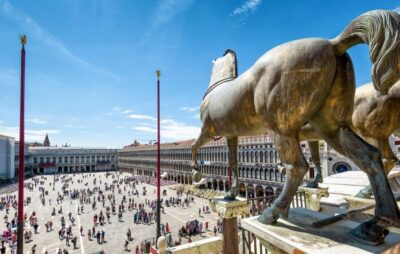
- Doge’s Palace and the grand finale at San Marco
- What $185.43 means for value
- Who should book this film walk?
- Should you book the Venice Film Tour?
- FAQ
- How long does the Venice Film Tour last?
- How much does the tour cost?
- Is the tour private?
- Is the tour offered in English?
- What is included in the price?
- Are admission tickets included?
- Can I cancel for a full refund?
- Could the tour be canceled because of weather?
Key points at a glance
- See real Venice locations from major films: The route includes settings from Indiana Jones and the Last Crusade, Moonraker, Casino Royale, Spider-Man: Far From Home, Othello, and The Talented Mr. Ripley.
- Follow a private route: Only your group participates, which lets you ask questions and shape the conversation around the movies you care about.
- Use film clips to match screen and street: The guide can show scenes on a tablet, making it easier to recognize a location as it looks today.
- Go beyond the main sights: The walk reaches the Jewish Ghetto, Santa Maria dei Miracoli, San Barnaba, and other corners away from the busiest landmarks.
- Expect a walking tour, not a cinema museum: Admission to the listed stops is free, but the tour does not include entry tickets or extended interior visits.
- Plan ahead for a popular date: It is booked about 56 days in advance on average, so early planning is sensible, especially for a private visit.
A movie map of Venice, not just a list of landmarks
The best idea here is simple: Venice already looks like a film set, and movies give you a new reason to notice its details. A stone bridge, a palace across the Grand Canal, or a small church beside a canal can carry a very different mood once you know how directors used it.
This is not a standard greatest-hits walk with a few movie titles added. The route moves through a wide spread of Venice, from the railway station and the Jewish Ghetto to Rialto, San Marco, Dorsoduro, and the Grand Canal. You get famous sights, but you also see places that can be easy to miss when you are focused on St. Mark’s Basilica and the Doge’s Palace.
The private format matters. You are not joining a large group with one fixed script. With Valerio, you can ask about a favorite film, request more background on Italian cinema, or spend more time on the locations that catch your interest. The guide’s past tours have also included general Venetian history and restaurant suggestions, which adds practical value beyond the movie theme.
Still, set your expectations correctly. The advertised route names many stops, but the experience lasts only around two hours. That means you should think of it as a brisk cinematic orientation. You will see locations and hear the stories behind them, but you will not have 15 minutes at every place, despite the individual timing notes attached to many stops.
A few more Venice days to weigh up
- Venice: Doge’s Palace Reserved Entry Ticket
★ 4.6 · 42,716 reviews - Venice: Grand Canal Gondola Ride with App Commentary
★ 4.1 · 18,908 reviews - Boat Trip: Glimpse of Murano, Torcello & Burano Islands
★ 4.3 · 15,699 reviews
Starting at Venice Santa Lucia railway station
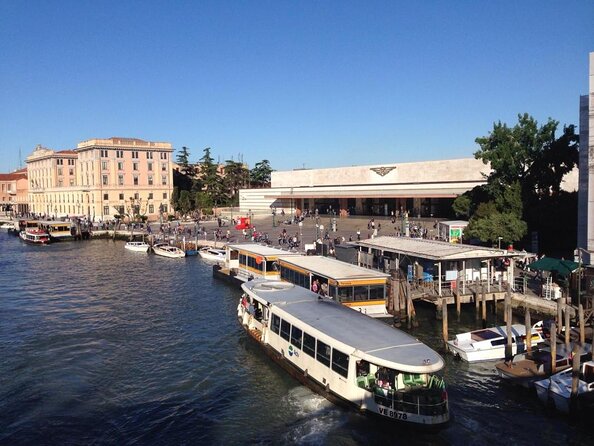
The railway station is a fitting opening point. For many people, it is their first view of Venice, and cinema has also used it as a doorway into the city.
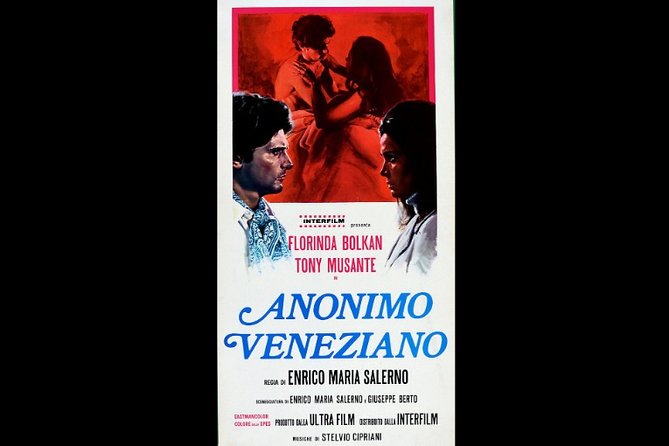
The station appears in connection with The Anonymous Venetian and The Tourist. It also features in Venice, the Moon and You, where Alberto Sordi plays one of the strangest gondoliers in screen history, trying to hook foreign visitors.
This stop helps establish the tour’s tone. You are not only looking at glossy Hollywood locations. The route includes Italian films, older productions, romantic dramas, thrillers, and television series. If you arrive by train, the meeting area is especially convenient. Pickup is offered, but the supplied details do not specify exactly where or under what conditions, so confirm that point when booking.
The Jewish Ghetto and Visconti’s Senso
In the Jewish Ghetto, Campo del Ghetto provides a quieter early stop. Luchino Visconti used this broad square at the beginning of Senso, his 1954 historical drama starring Alida Valli and Farley Granger.
The appeal here is not a famous stunt or a large set. It is the way a real Venetian square supplied atmosphere for a story of passion and political tension. You can look at the buildings, the proportions of the campo, and the surrounding lanes while hearing how the location worked on screen.
This is one of the places where the film theme adds something useful to ordinary sightseeing. The Ghetto is important in its own right, but a cinema connection gives you another way to read the space. It is also a welcome change from the heavily visited center.
San Stae and the Grand Canal on film
The Church of San Stae sits beside the Grand Canal, with a grand Baroque facade that makes an immediate visual impression. In Don’t Look Now, funeral boats moor in front of the church during the final scenes.
The stop is brief, but the setting does a lot of work. Water, stone, and the church facade create the uneasy mood that made Venice such an effective location for the film. You can also appreciate how directors use a church not only as a religious building, but as a frame for movement on the canal.
The Grand Canal itself is a much larger cinematic subject. In 1896, Alexandre Promio filmed from a gondola, creating what is described as the first moving view along the canal in cinema history. Since then, the waterway and its more than 170 buildings have appeared in films ranging from The Talented Mr. Ripley to The Merchant of Venice.
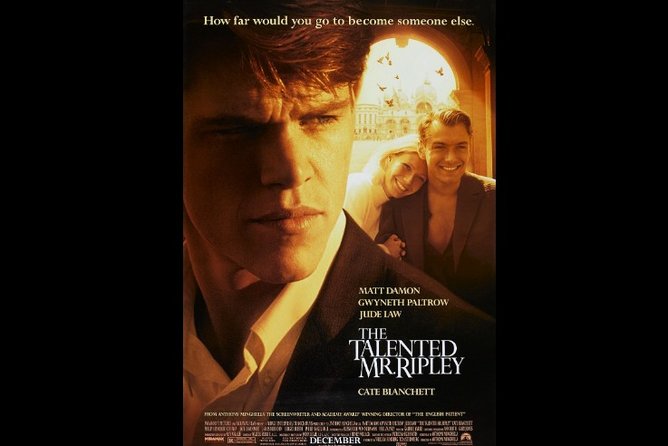
I like this part because it encourages you to look up and across the water. In The Talented Mr. Ripley, the character’s Venetian apartment was created by combining two buildings overlooking the canal. Film locations are not always one exact room or facade. Sometimes they are carefully assembled from several real places.
A different sort of day out around Venice:
- Venice: Grand Canal by Gondola with Live Commentary
★ 4.1 · 13,681 reviews - Venice: La Fenice Opera House Entry Ticket with Audio Guide
★ 4.6 · 11,742 reviews - Doge’s Palace & St. Mark’s Basilica with Terrace Access Tour
★ 4.7 · 10,697 reviews - Venice: Burano, Torcello & Murano Boat Tour w/Glassblowing
★ 4.4 · 10,245 reviews
Rialto, The Tourist, and a fictional collapse
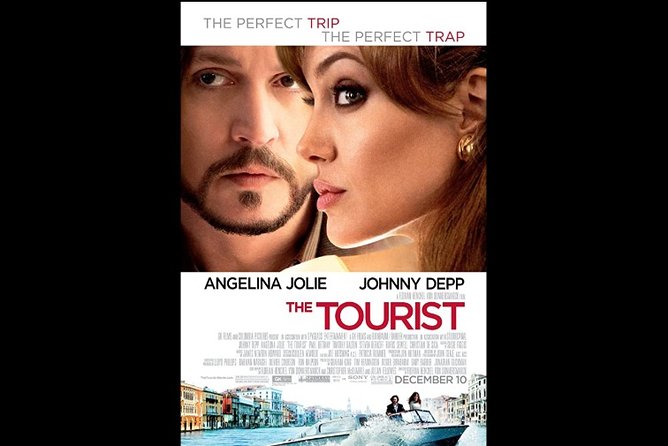
At the Rialto markets, the film connection becomes more playful. In The Tourist, Johnny Depp’s character leaps from a terrace onto a market stall. You can stand near the fish market and compare the real setting with the action sequence.
The scene is a good reminder that Venice on screen is often a mixture of genuine streets and movie invention. Across the canal is the palace location used for the fictional collapse in Casino Royale. The building did not actually fall, of course, but the effect shows how easily digital effects can turn a familiar Venetian facade into a disaster scene.
Rialto is usually busy, so this may be one of the more crowded sections of the walk. The private format helps because you can keep the pace suited to your group, but do not expect a quiet, empty market square.
Santa Maria dei Miracoli and Scuola Grande di San Marco
Santa Maria dei Miracoli is one of the most visually distinctive churches on the route. Its polychrome marble decoration makes it memorable even without a film connection. Orson Welles used it for the wedding of Othello and Desdemona in Othello.
A few steps behind the church is the campo linked with Bread and Tulips. The flower shop where Licia Maglietta’s character works was fictional, so you will not find the shop itself. That detail is worth knowing. The tour distinguishes between an actual filming location and a setting created for the story.
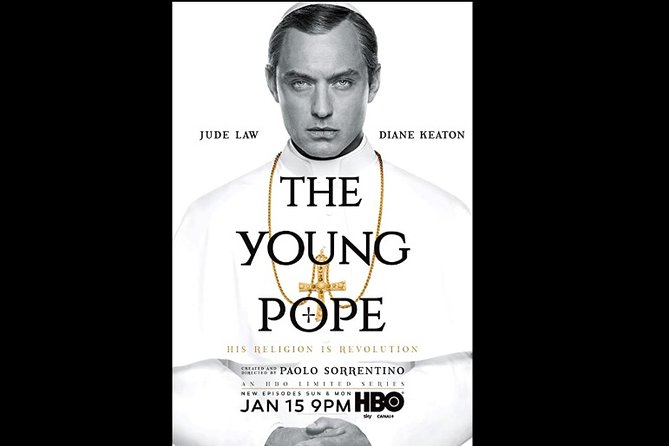
Next comes the Scuola Grande di San Marco, used in Paolo Sorrentino’s series The New Pope, starring Jude Law. The building’s elaborate facade gives the stop a different feel from the small church and open campo.
These locations show the range of the route. You move from a 1950s film to a modern television production, with Italian directors and international stars sharing the same city.
Ca’ Rezzonico and the world of James Bond
Ca’ Rezzonico is now a civic museum, but in Moonraker it serves as the fictional office of Hugo Drax. The building is a useful example of how a real Venetian palace can play a completely different role on screen.
The tour does not include admission to the museum, so you should not plan on walking inside as part of this experience. You will see the exterior and hear how the location was adapted for the film.
That distinction matters at this price. If you want museum interiors, palace rooms, or church visits, you may need separate tickets and extra time on another day. This tour is about recognizing places in context and learning how directors used them.
La Fenice and the rebuilt theater
Teatro La Fenice is among the most significant stops for film and architecture. Senso opens during a performance of Il Trovatore, showing the theater before its devastating 1996 fire.
The current building reopened in 2003 after reconstruction. Its name, meaning the phoenix, already referred to an earlier fire in 1836 and the theater’s return afterward. The connection between the name, the film sequence, and the building’s real history gives this stop more weight than a simple movie reference.
The film footage also preserves a view of La Fenice before the 1996 destruction. That makes the location valuable even if you are not familiar with Senso. The theater is a major Venetian sight in its own right, though this tour only includes the outside unless your booking arrangements say otherwise.
Scala Contarini del Bovolo and Campo Santa Maria Formosa
Scala Contarini del Bovolo is known for its unusual spiral staircase and is tied to a local legend about Desdemona’s house. In Welles’s Othello, the palace becomes Brabanzio’s home, though the story places it in Cyprus rather than Venice.
The stop works especially well for anyone interested in how directors reshape geography. Venice can represent another city, another country, or even a fictional place with only small changes in framing.
At Campo Santa Maria Formosa, the movie connection is more recent. Spider-Man: Far From Home uses the square for destruction and chaos, but the damage was fictional. You can now see the campo in its normal form, which is exactly the point. Special effects may wreck Venice on screen, but the real square remains a beautiful place to pause.
This could be the strongest section for families with a young Spider-Man fan. The story of seeing a familiar film location in real life can keep children interested during a walking route that also includes older movies they may not know.
San Barnaba, Indiana Jones, and classic Venice
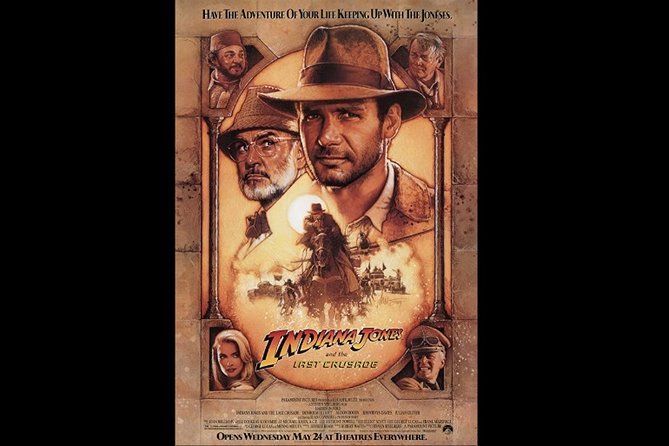
Campo San Barnaba brings together several films. In Indiana Jones and the Last Crusade, Indiana searches below the church for the famous X that, despite the line, does not really mark the place to dig.
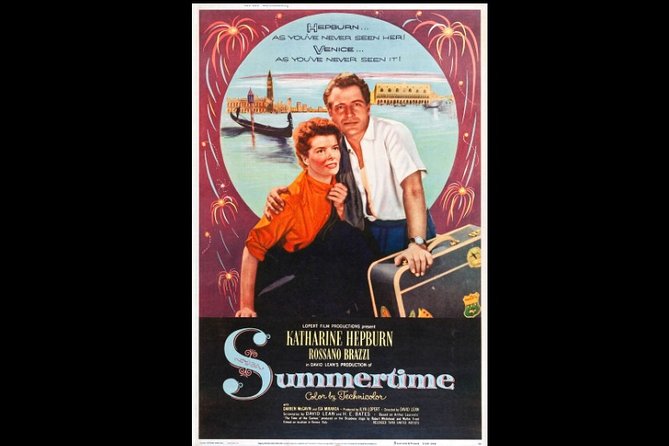
The church and canal also appear in Summertime, where Katharine Hepburn’s character wanders Venice with her camera and falls into the San Barnaba canal. The location was later used in the remake of The Italian Job.
This is the kind of stop that makes the tour feel like a city walk rather than a series of movie trivia points. You see how a church basement, a canal, and a small square can serve very different stories over several decades.
For parents, this may be one of the easiest films to use as a reference point. For classic cinema fans, Katharine Hepburn and the location work in Summertime offer a completely different picture of Venice from the action scenes in Indiana Jones.
The Gritti Palace and Santa Maria della Salute
The Gritti Palace began as a family palace and later served as a residence for Vatican ambassadors before becoming a luxury hotel. Its famous historical associations include John Ruskin, Ernest Hemingway, and Somerset Maugham.
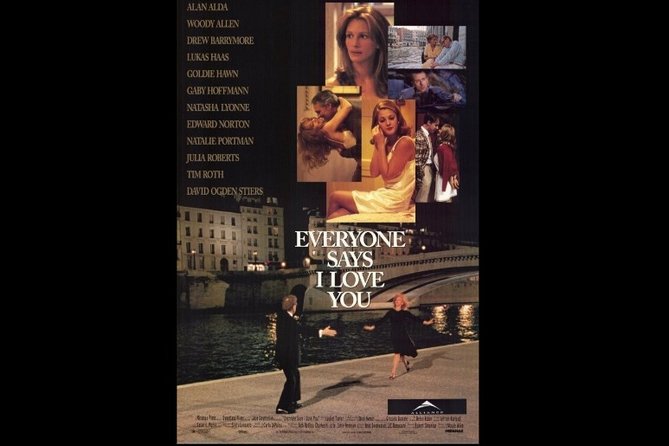
Woody Allen used the hotel for scenes in Everyone Says I Love You, starring Julia Roberts. You will see the building from outside rather than receive a hotel stay or interior visit. The location is still useful because it sits within the larger story of Venice as a city of palaces, hotels, writers, and cinema.
Across the water, the Basilica of Santa Maria della Salute provides another striking view. It appears behind Ripley during a conversation with Dickie’s father in The Talented Mr. Ripley. The scene itself takes place on a terrace at the Hotel Westin Europa and Regina.
The church also appears in Lara Croft: Tomb Raider. The film presents it as a meeting place for the Illuminati, although the room shown in the movie was actually the Painted Hall of the Old Royal Naval College in London. This is a particularly good example of the guide’s role: you learn not only where a scene was supposedly set, but what was real and what was constructed elsewhere.
Piscina Sant’Agnese and Hotel Danieli
Piscina Sant’Agnese connects two very different films. Woody Allen used it as a jogging location in Everyone Says I Love You, while Katharine Hepburn freshens up there during the hot Venetian days of Summertime.
The location may not be one of Venice’s major headline sights, but that is its charm. It gives you a chance to notice the ordinary scale of the city, where a small canal or pool can become important through a character’s actions.
Hotel Danieli brings the route back toward San Marco. The luxury hotel has hosted figures including Goethe, Wagner, and Balzac, and it also served as a setting in The Journey, starring Sophia Loren and Richard Burton. It appears in Moonraker as Holly Goodhead’s hotel and in the Italian comedy Viaggi di Nozze.
This is a five-minute stop in the listed route, so expect a quick exterior look and a compact story. The hotel is private and luxurious, not a sightseeing interior included with your tour.
Doge’s Palace and the grand finale at San Marco
The final stretch reaches Doge’s Palace and the area around St. Mark’s Square. Here, the film references become especially varied.
In Moonraker, James Bond travels in a gondola that turns into a hovercraft, surely one of the strangest vehicles ever to cross the square. Casino Royale gives Bond a hotel room with a view toward San Marco, while Othello uses the palace facade for a dramatic exchange between Brabanzio and Othello.
The finale of The Talented Mr. Ripley takes place at a cafe in the square. Sorrentino also filmed scenes here for The Young Pope, with Jude Law and Diane Keaton.
This is a crowded area, but the cinematic references help you look past the crowds and notice the angles directors chose. You can imagine how a cafe table, a palace wall, or the open square can shift from romantic backdrop to spy setting to place of danger.
What $185.43 means for value
The price is $185.43 per person. That is a serious amount for a two-hour walk, especially since entrance tickets are not included and the listed locations are generally viewed from outside.
The private format is the reason to consider it. If you have a small group, the cost may be easier to justify because the guide works only with you. You receive direct commentary, can ask questions throughout, and may get recommendations for local restaurants or additional places to explore.
I would not choose this tour if you are mainly looking for a cheap orientation to Venice. There are less expensive ways to see the major landmarks. I would choose it if your group shares a strong interest in cinema, if a child is excited about Spider-Man or Indiana Jones, or if you want a guide who can connect film history with Venetian streets.
The tour is offered in English, includes a licensed guide, and accepts mobile tickets. Group discounts are available, but the supplied details do not state the discount amount. It is booked around 56 days ahead on average, so I would not leave it until the last minute.
Pickup is offered, though the exact arrangement is not specified. The tour is near public transportation, and service animals are allowed. Day visitors from outside Venice may also need to pay the city’s €5 access fee on certain dates. Check the official access-fee site before you go, since exemptions and applicable dates can change.
Free cancellation is available until 24 hours before the start time. Cancellations made later are not refunded, and poor weather can lead to a new date or a full refund. Since this is an outdoor walking route, a weather check is sensible.
Who should book this film walk?
I would recommend it most strongly to:
- Fans of Italian cinema, James Bond, Indiana Jones, Spider-Man, or The Talented Mr. Ripley
- Families who want a film-based way to keep children interested in Venice
- Repeat visitors looking for corners beyond the usual San Marco route
- Small private groups that value questions and personal attention
- Visitors who enjoy architecture and city history as much as movie trivia
I would be more cautious if you want extended interior visits, a slow photography walk, or a broad introduction to every major Venetian sight. The route moves quickly, and its value comes from the guide’s connections between places rather than from admission to attractions.
Should you book the Venice Film Tour?
Book it if movies are one of the reasons Venice interests you. Valerio Coppo’s route gives you a fresh way to see the city, with real locations from old Italian films, modern Hollywood productions, television series, and films that used Venice as a stand-in for somewhere else.
The strongest feature is the mix of famous landmarks and quieter streets. Film clips shown on a tablet can make the connection clear, while the added stories about Venice keep the tour from feeling like a simple scavenger hunt.
At $185.43 per person, it is best treated as a specialized private experience. If your group is willing to pay for a focused guide and you want to see Venice through the camera’s eye, it should be a rewarding choice. If you only want the main sights or need the lowest possible price, spend the money on entry tickets and explore the city independently.
FAQ
How long does the Venice Film Tour last?
The tour lasts approximately two hours.
How much does the tour cost?
The listed price is $185.43 per person.
Is the tour private?
Yes. Only your group participates in the activity.
Is the tour offered in English?
Yes. The tour is offered in English.
What is included in the price?
A licensed tour guide is included. Tips or gratuities are not included.
Are admission tickets included?
The listed stops show free admission, but the experience is primarily an exterior walking tour. No separate attraction admission is included in the supplied details.
Can I cancel for a full refund?
Yes. You can cancel at least 24 hours before the start time for a full refund. Later cancellations and changes are not accepted for a refund.
Could the tour be canceled because of weather?
Yes. The experience requires good weather. If poor weather causes cancellation, you will be offered another date or a full refund.
Just added around Venice
- Padua City Sightseeing Walking Tour of Must-See-Sites with Local Guide★ 5.0 · 3 reviews
- Gondola Ride and St Mark’s Basilica★ 4.5 · 3 reviews
- Padua: Private Pasta-Making Class at a Local’s Home★ 5.0 · 3 reviews
- Venice: Market Tour and Meal at a Local’s Home★ 4.3 · 3 reviews
- VIRTUAL MUSEUM: Creature di Gomma – Venice Vintage Toys★ 4.7 · 3 reviews
- 3 Hour Shared Walking and Aperitivo Tour of Verona★ 5.0 · 3 reviews
- Venice: The Best of Dolomites 3Cime and Refuges with Drone★ 5.0 · 3 reviews
- Verona: Blindfolded Wine Tasting★ 5.0 · 3 reviews
Tours, compared.
Doge’s Palace & St. Mark’s Basilica with Terrace Access Tour
Read our review →
Burano, Torcello & Murano Boat Tour w/Glassblowing
Read our review →
Murano and Burano Boat Tour with Glass Factory Visit
Read our review →
Murano, Burano and Torcello Half-Day Sightseeing Tour
Read our review →
Murano & Burano Islands Guided Small-Group Tour by Private Boat
Read our review →
Murano & Burano Panoramic Boat Tour w/ Glassblowing
Read our review →
Murano, Burano, Torcello, and Glass Factory Tour
Read our review →