
Reviewed · HISTORICAL TOURS
Dark Historical Verona Walking Tour
Verona’s darker side is not about ghosts or cheap scares. It is about real cruelty: executions, family murders, wartime persecution, political betrayal, and the hard lives hidden behind handsome squares. This evening walk uses the Arena, Scala family tombs, and even a medieval punishment site to show you a Verona that most romantic city tours skip.
I like two things right away. The route gives you a strong first look at central Verona, moving from the Roman Arena to Juliet’s House in about 90 minutes. I also like the guides’ lively storytelling, especially Maria Pia’s ability to connect building styles, paving stones, local legends, and human drama. The main consideration is simple: dark means grim history, not a ghost tour, and the storytelling can feel theatrical if you prefer a quiet architecture-focused walk.
In This Review
- Key points to know before you book
- Verona after dark, with the romance turned inside out
- The Arena di Verona: Roman spectacle and public terror
- Verona’s synagogue and a family caught in wartime history
- Piazza delle Erbe and medieval punishment in public view
- Piazza dei Signori, Dante, and the politics of power
- The Arche Scaligere and a family destroyed from within
- Casa di Giulietta and the unhappy ending
- What the guides do best
- How much the $66.52 price gets you
- Timing, walking, and practical planning
- Who will enjoy this walk most
- Cancellation and booking details
- Should you book the Dark Historical Verona Walking Tour?
- FAQ
- How long is the Dark Historical Verona Walking Tour?
- Is the tour offered in English?
- Does the tour enter the Arena di Verona?
- Where does the tour start?
- Where does the tour end?
- Which places are visited?
- Is this a ghost tour?
- Who guides the tour?
- How many people can join the group?
- Is hotel pickup included?
- Can I cancel for a full refund?
Key points to know before you book
- True stories instead of ghost tales: The tour focuses on documented cruelty, war, political struggle, and family violence.
- Six central stops: You visit the Arena, Verona’s synagogue, Piazza delle Erbe, Piazza dei Signori, the Scala tombs, and Juliet’s House.
- A local guide shapes the experience: Maria Pia is the main name associated with the tour, while Frank and Alessandra have also led sessions.
- No Arena entry: You hear about the amphitheater from outside, so buy a separate ticket if entering matters to you.
- Small group size: The maximum is 15 people, with group discounts available.
- Best for an evening introduction: Several departure times make it easy to fit into a Verona stay, and the walk ends near Juliet’s House.
Verona after dark, with the romance turned inside out
Verona is often sold through Juliet, balconies, rose-colored stone, and gentle evening strolls. This tour keeps the romance, but it adds the hard facts underneath. You see how power worked in the Middle Ages, how public punishment shaped city life, and how Verona’s famous families could be as ruthless as any royal court.
The guide does not simply point at monuments and give dates. The aim is to make you notice details around you. That can include window shutters, iron balcony rails, roof spouts, earthquake reinforcements, sculptures, and fossils in the paving stone. One particularly memorable detail from the tour is the sight of Roman ruins inside a clothing shop, a reminder that Verona’s old layers do not always sit behind museum glass.
Maria Pia is the guide most often connected with this experience. Her approach is animated and personal, with plenty of room for questions. Past tours have also been led by Frank and Alessandra. You should not assume which guide you will receive, but the experience clearly depends a great deal on the person leading it.
That personal style is a strength for most people. It keeps a short walk moving and helps younger members of a family stay involved. A family group ranging from age nine to 78 enjoyed the tour, even in heavy rain. The tradeoff is that a dramatic guide may give you more story and less formal architectural analysis.
More History Tours in Verona
- Verona: History and Hidden Gems Guided Walking Tour
★ 5.0 · 1,379 reviews - Lazise: Historical Center Wine Tasting Tour
★ 4.9 · 110 reviews - Tour to discover the Unique History of Verona, the City of Art
★ 4.5 · 90 reviews
The Arena di Verona: Roman spectacle and public terror
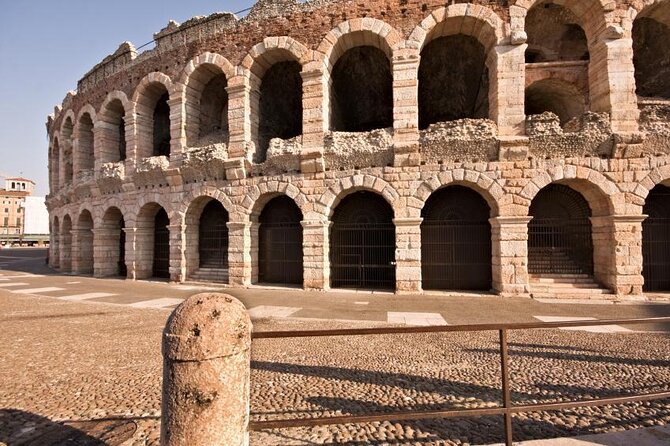
The walk begins at the Arena di Verona, one of the city’s unmistakable landmarks. You do not go inside. Instead, the guide explains the building’s Roman past and the many events tied to it.
The stories here are deliberately unsettling. You may hear about what happened in the Arena on the Ides of March in 54 AD, along with the horrific burning of 176 people, including children, on February 13, 1278. These are not vague legends added for effect. They are presented as episodes that help explain the building as a place of public spectacle and punishment, not only as a grand opera venue.
This opening stop works well because the Arena is familiar to almost everyone who comes to Verona. You may have photographed its arches before hearing how violence and entertainment once shared the same space. The guide’s job is to change the way you see the monument.
Allow about 15 minutes here. Since admission is not included and the tour does not enter, this is not a substitute for an Arena visit. It is better seen as a historical introduction that can help you decide if you want to return during daylight for a separate interior visit.
Verona’s synagogue and a family caught in wartime history
The next stop is the Sinagoga di Verona. This part of the walk shifts from ancient and medieval cruelty to the 20th century, asking what happened to the Jewish family who lived beside the synagogue during World War II.
The stop lasts about 15 minutes and offers a different view of Verona. That shift matters. A city can look calm, beautiful, and timeless while still carrying painful memories from the recent past. The synagogue section puts local lives at the center rather than treating wartime history as a distant chapter.
The walk does not appear to include entry into the synagogue. You should expect an outdoor explanation at or near the site. If you are most interested in religious architecture, interior details, or a longer account of Jewish life in Verona, this short stop may feel limited. If you want the city’s story to include its wartime moral failures and personal losses, it adds needed weight.
Piazza delle Erbe and medieval punishment in public view
Piazza delle Erbe is usually one of Verona’s prettiest gathering places. Here, the guide asks you to look beyond the lively square and picture medieval life, including its cruelties.
You learn about the pillory and the tower where an exposition cage was hung. These objects show how punishment was made public. Shame was not hidden in a prison corridor. It was displayed where people gathered, traded, and passed through the city.
This is one of the tour’s most useful habits: it makes you look at familiar places twice. Piazza delle Erbe is not only a pleasant square for photographs and a drink. It was also a stage for authority, fear, and social control.
The stop takes about 10 minutes. That is enough for a clear explanation, but not enough for an extended study of every building around the piazza. You will get more social history than a full architectural lecture.
More Walking Tours in Verona
- Verona: Small Group Guided Walking Tour with Arena Tickets
★ 4.9 · 848 reviews - Verona Highlights Walking Tour in Small-group
★ 5.0 · 493 reviews - Verona walking tour:food, wine, legends, lunch/dinner & cable car
★ 5.0 · 386 reviews - Verona All in one: Food Walking Tour, Lunch & Wine
★ 5.0 · 342 reviews
Piazza dei Signori, Dante, and the politics of power
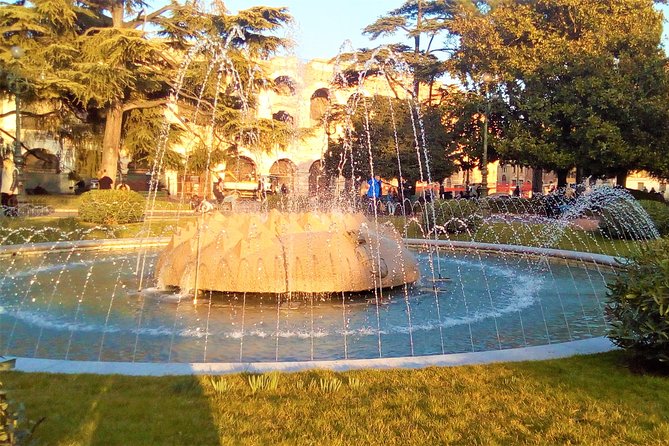
From Piazza delle Erbe, the route continues to Piazza dei Signori. Along the way, you pass the corner where Mastiff I of the Scala family, Verona’s ruler, was murdered in 1277.
That detail prepares you for the square’s wider story. The guide discusses the sad fate of orphans, Dante’s flight from Florence, and life under the Austro-Hungarian Empire. These subjects span different centuries, but they share a theme: ordinary lives shaped by rulers, wars, exile, and political decisions.
Dante’s connection gives the square a literary note, while the story of orphans brings the discussion back to people with little control over events. The later period under the Austro-Hungarian Empire shows that Verona’s difficult past did not end with the medieval rulers.
Expect about 10 minutes here. You will not receive a full political history of every regime that controlled Verona. Instead, you get selected stories that make the square feel inhabited by real lives rather than only statues and grand façades.
The Arche Scaligere and a family destroyed from within
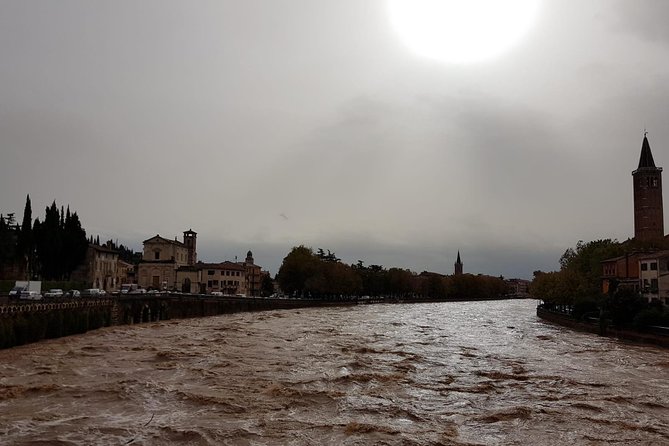
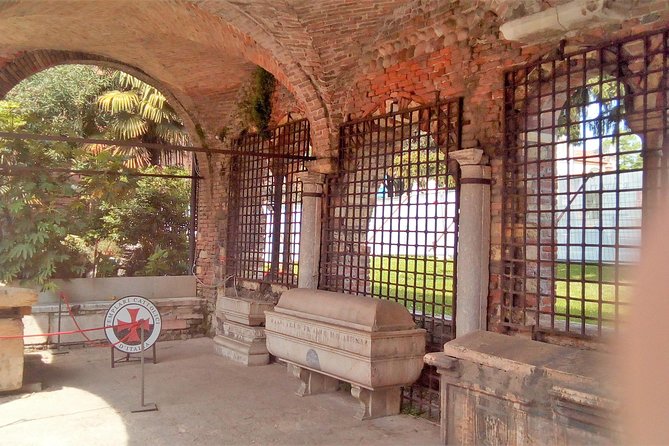
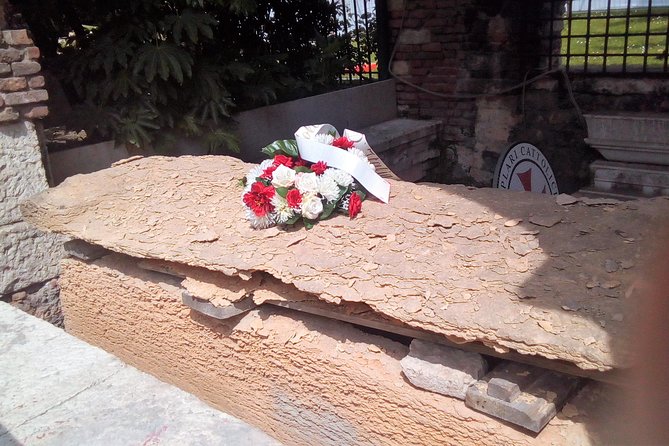
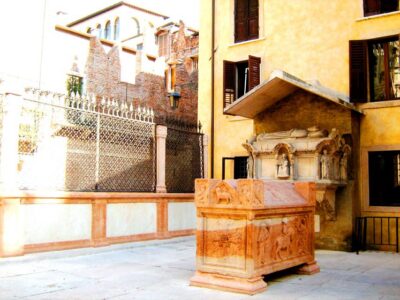
The Arche Scaligere, or Scala family tombs, provide the clearest link between Verona’s architecture and its power struggles. These ornate Gothic monuments honor the ruling family, but the guide uses them to discuss the plots that helped bring the family to its end.
You hear about hatred between brothers, murders, and attacks. The tombs are impressive, but the story behind them is not a simple tale of noble rulers. The Scala family’s rise and collapse involved suspicion, violence, and conflict within the household.
This stop is especially effective for anyone who likes political history told through people. A family tomb can seem remote when you only hear names and dates. Add sibling rivalry and assassination, and the monument becomes easier to remember.
The stop lasts about 10 minutes. The tour stays outside, so do not expect an interior visit or a detailed survey of each tomb. You will get the setting, the family drama, and the reason the monuments matter.
Casa di Giulietta and the unhappy ending
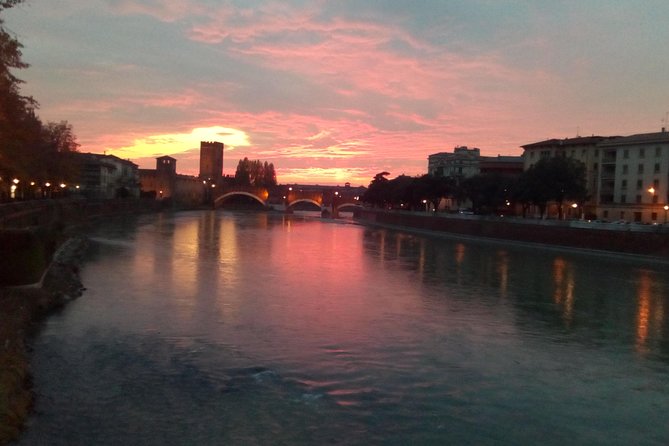
The final stop is Casa di Giulietta on Via Cappello. The tour ends here, fittingly, with the sad story of Romeo and Juliet.
The guide presents the two lovers not simply as a sweet romantic pair, but as figures tied to Verona’s family rivalries, politics, and public memory. One session connected the famous story to local events, political purposes, and family dynamics. That approach helps explain why Juliet’s story became so powerful in this particular city.
The stop takes about 10 minutes. You end at the house rather than beginning there, which gives the famous site a different meaning. By this point, you have heard about public punishment, murdered rulers, war, and family conflict. The doomed lovers feel less like an isolated fairy tale and more like the final romantic expression of a city shaped by feuding families.
The tour does not say that entry to Casa di Giulietta is included. The stated end point is the address of the house, so plan on an exterior visit unless you arrange admission separately.
What the guides do best
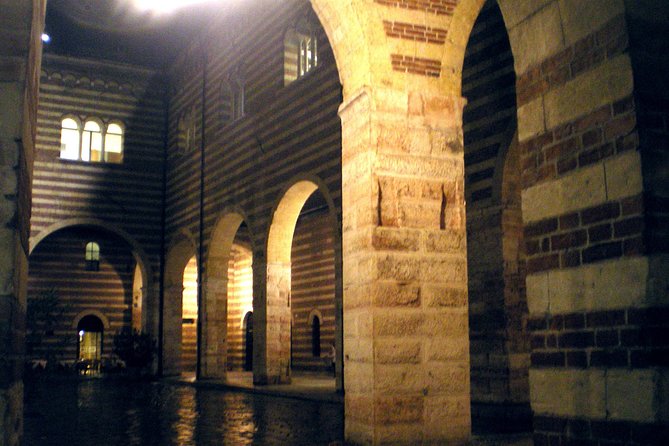
The strongest part of this experience is the guide’s delivery. Maria Pia is described as lively, warm, charismatic, and easy to understand. She uses humor and banter, but she also knows when a story needs a more serious tone.
Her most useful quality is the ability to link small details to large events. You may start by looking at a balcony rail or a stone in the pavement, then hear how construction methods reveal the period when a building was made. That gives you a practical way to read Verona after the walk ends.
Frank has also led the tour and kept a family engaged during a downpour. Alessandra has been praised for adjusting the stories to the interests of the group. Those examples suggest that the guide can make a difference, especially because the tour is short and story-led.
There is one fair warning. The presentation is not restrained. One person found the drama excessive and wanted more attention to architectural elements. If you book this, go in expecting storytelling first, with architecture and urban details woven into it.
How much the $66.52 price gets you
At $66.52 per person, this is not the cheapest way to walk around Verona. You are paying for a guided evening experience, not admission to a major monument. The Arena, synagogue, public squares, Scala tombs, and Juliet’s House are visited from outside, and the only stated inclusion is the local guide.
The value depends on what you want from Verona. If you would happily read plaques, follow a map, and research the city later, the price may feel high. If you want a well-shaped route and stories that connect places you might otherwise pass without understanding, the cost is easier to justify.
The maximum group size is 15. That is small enough for a guide to answer questions and keep the group together, though it is not a private walk. Group discounts may improve the value for families or larger parties.
The tour is also a useful first-night choice. It gives you a route through the central sights without asking you to plan the order yourself. Afterward, you know which places deserve a return visit in daylight.
Timing, walking, and practical planning
The experience lasts about 90 minutes and offers several departure times. Since it is presented as an evening walk, the atmosphere should suit you if you like seeing Verona after the day’s heat and crowds have eased. Exact departure times are not provided here, so check the available slot carefully when booking.
The start point is listed by the map code CXQV+F2 Verona, while the end is Casa di Giulietta at Via Cappello 23. Bring the meeting point details with you and arrive ready to walk. Hotel pickup and drop-off are not included.
The tour is near public transportation, service animals are allowed, and most people can take part. No special physical restrictions are stated, but this remains a walking experience through city streets. Comfortable shoes are a sensible choice, and an evening weather check is wise. One guide continued through heavy rain, but that does not mean every departure will feel comfortable in poor weather.
The group can include a wide range of ages. A nine-year-old stayed engaged with the stories, while adults and older family members also enjoyed the route. Still, the subject matter includes murder, executions, persecution, and suffering. Use your judgment with young children.
Who will enjoy this walk most
I would choose this tour if you want:
- A first orientation to central Verona with a strong human story
- Medieval politics and punishment rather than only romance
- A guide who tells stories with energy and humor
- A short evening activity that fits around dinner or other plans
- A way to notice architecture, paving stones, and small street details
- A group setting rather than a private, formal lecture
I would think twice if you want to enter the Arena, spend a long time inside monuments, or study architectural history in depth. I would also skip it if you are looking for paranormal tales. The darkness here comes from historical facts, not invented hauntings.
The tour has a 4.8 rating from 106 ratings, with 95 percent recommending it. Those figures point to a strong overall experience, but they do not erase the style issue. The guide’s dramatic approach is central to the tour, and that will suit some people more than others.
Cancellation and booking details
Confirmation is provided at booking. You can cancel for a full refund up to 24 hours before the start time. Cancellations or changes made less than 24 hours before the experience are not accepted for a refund, and the cut-off uses Verona’s local time.
The activity is offered in English. Group discounts are available, and mobile tickets make it practical to keep the booking on your phone.
Should you book the Dark Historical Verona Walking Tour?
Book it if you want Verona to feel like a lived-in city rather than a collection of romantic photo stops. The route is compact, the central locations are well chosen, and the best guides turn cruel history into stories you can remember.
I would especially recommend it for a first evening in Verona, for families with older children, and for anyone who enjoys local history delivered with personality. I would not book it as your main architectural tour or as an Arena interior visit.
The smartest expectation is this: you are signing up for a lively historical story walk through beautiful streets, with murder, war, punishment, politics, and Juliet at the end. If that mix sounds more appealing than a standard sightseeing circuit, the price is reasonable for the perspective you gain.
FAQ
How long is the Dark Historical Verona Walking Tour?
The tour lasts approximately 1 hour and 30 minutes.
Is the tour offered in English?
Yes. The experience is offered in English.
Does the tour enter the Arena di Verona?
No. The Arena is viewed from outside, and the guide explains its history and stories. Admission to the Arena is not part of this walk.
Where does the tour start?
The listed starting point is CXQV+F2 Verona, Verona, Italy.
Where does the tour end?
The walk ends at Casa di Giulietta, Via Cappello 23, 37121 Verona, Italy.
Which places are visited?
The route includes the Arena di Verona, Sinagoga di Verona, Piazza delle Erbe, Piazza dei Signori, the Arche Scaligere, and Casa di Giulietta.
Is this a ghost tour?
No. The tour focuses on cruel historical events, legends, politics, war, family conflict, and local stories. It is not described as a paranormal or ghost experience.
Who guides the tour?
The experience provider is Girolami Maria Pia. Guides named Maria Pia, Frank, and Alessandra have led sessions.
How many people can join the group?
The maximum group size is 15 people. Group discounts are available.
Is hotel pickup included?
No. Hotel pickup and drop-off are not included.
Can I cancel for a full refund?
Yes, if you cancel at least 24 hours before the experience start time. Cancellations or changes made less than 24 hours in advance are not accepted for a refund.
More Historical Tours in Verona
- Venice’s Best: Basilica, Doge’s Palace, Gondola & History Gallery
★ 4.5 · 2,478 reviews - Venice: City Center Historical Guided Walking Tour
★ 4.2 · 1,873 reviews - Venice: Bell Tower & St Mark’s Square History Gallery Ticket
★ 4.3 · 910 reviews - Basilica, Doge’s Palace, History Gallery & Bell Tower Option
★ 5.0 · 586 reviews
Just added around Verona
- Verona: Private 2-Hour Walking Tour★ 4.9 · 41 reviews
- Valpolicella Lunch or Dinner Wine & Food tasting with Amarone★ 5.0 · 43 reviews
- The 10 Tastings of Verona With Locals: Private Food Tour★ 4.5 · 45 reviews
- Arena di Verona Opera Ticket Package★ 4.0 · 46 reviews
- Unique Wine tasting in Verona, with Amarone docg★ 5.0 · 46 reviews
- Verona: the Arena at the Gladiators’ time★ 5.0 · 48 reviews
- Verona: Juliet’s House Fast-Track Entry Ticket & Audio Guide★ 3.5 · 52 reviews
- Valpolicella Wine Experience at Montresor winery★ 5.0 · 54 reviews
Historical Tours, compared.
Venice’s Best: Basilica, Doge’s Palace, Gondola & History Gallery
Read our review →
Bell Tower & St Mark’s Square History Gallery Ticket
Read our review →
Basilica, Doge’s Palace, History Gallery & Bell Tower Option
Read our review →
St. Mark’s Cathedral Priority Guided Tour & History Gallery
Read our review →
Browse the lists this tour appears in