

Reviewed · HISTORICAL TOURS
Verona Arena and Historic Highlights: A Guided Walking Tour
Verona’s Roman Arena still hosts opera and concerts, so this tour begins with a building that has never really retired. You’ll move from ancient gladiator shows to medieval power, Gothic tombs, lively market squares, and the Juliet legend in about two hours. I like the way the route links Verona’s major sights instead of treating them as isolated photo stops. I also like the private format, which gives your group a better chance to ask questions and set the pace. The main drawback is price: at $196.66 per person, this is a costly short walk, especially since admission is listed as free at each stop.
I’m also drawn to the guide-led storytelling. Frank is named as one guide who explains the Arena’s past and answers questions while handling different needs in the group. The route ends at Casa di Giulietta, so you finish near one of Verona’s best-known attractions rather than returning to the Arena. Keep in mind that the advertised stops allow about 15 to 17 minutes each, which means this is an overview, not a full museum visit.
In This Review
- Key points at a glance
- Starting beneath the Arena’s arches
- Castelvecchio and the medieval defense line
- Gothic power at the Scaliger Tombs
- Piazza dei Signori and Verona’s civic life
- Piazza delle Erbe, the old Roman forum
- Ending with Casa di Giulietta
- What the $196.66 price really buys you
- Timing, walking, and the best fit
- What the guide adds
- Weather and cancellation details
- Should you book the Verona Arena walking tour?
- FAQ
- Where does the tour start?
- Where does the tour finish?
- How long does the experience last?
- Is this a private tour?
- How much does the tour cost?
- Are group discounts available?
- Is a mobile ticket available?
- Is admission to the stops included?
- Can I cancel for a full refund?
- What happens if bad weather cancels the tour?
Key points at a glance
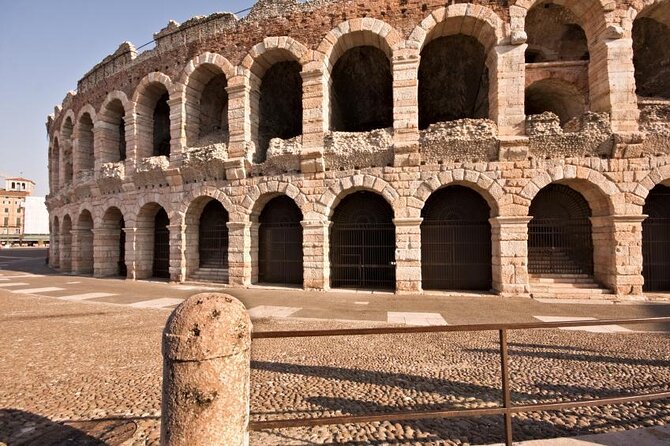
- Roman spectacle in a working arena: See the Verona Arena, an ancient amphitheater still used for opera and concerts.
- A private two-hour walk: Only your group takes part, making questions and pacing easier to manage.
- Medieval Verona in one route: Castelvecchio, the Scaliger Tombs, and Piazza dei Signori explain the city’s political and artistic past.
- The city’s old forum: Piazza delle Erbe brings together a market, cafés, and buildings from several periods.
- A Shakespearean finish: The walk ends at Casa di Giulietta on Via Cappello.
- Flexible booking terms: Free cancellation is available up to 24 hours before the scheduled start, with weather-related alternatives or refunds.
Starting beneath the Arena’s arches
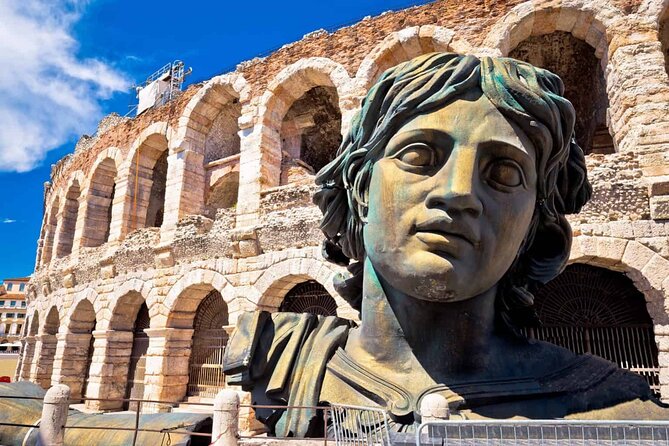
The meeting point is the Arena di Verona at P.za Brà, 1. This is an easy place to identify in the city center, and the Arena gives you an immediate sense of scale. Built as a Roman amphitheater, it once hosted gladiator shows. Today, its acoustics help it serve as a venue for opera and other concerts.
The short stop, listed at about 17 minutes, is best understood as an introduction. You can take in the oval form, the surviving stonework, and the striking fact that this ancient building remains part of modern Verona’s cultural life. The tour’s description lists admission as free, so the price appears to cover the private guided experience rather than a separate Arena entry ticket.
That distinction matters. If you want to sit through an opera, study the structure at length, or explore every accessible section, you may need more time and possibly separate arrangements. This walk gives you the story and the setting, then moves on.
I like this opening because it puts Verona’s past in practical terms. Gladiator contests were the mass entertainment of their day, and the Arena was built for spectacle. A guide can help you see it not just as an old monument, but as a place designed to hold a crowd and shape what that crowd saw and heard.
More History Tours in Verona
- Verona: History and Hidden Gems Guided Walking Tour
★ 5.0 · 1,379 reviews - Lazise: Historical Center Wine Tasting Tour
★ 4.9 · 110 reviews - Dark Historical Verona Walking Tour
★ 5.0 · 106 reviews
Castelvecchio and the medieval defense line
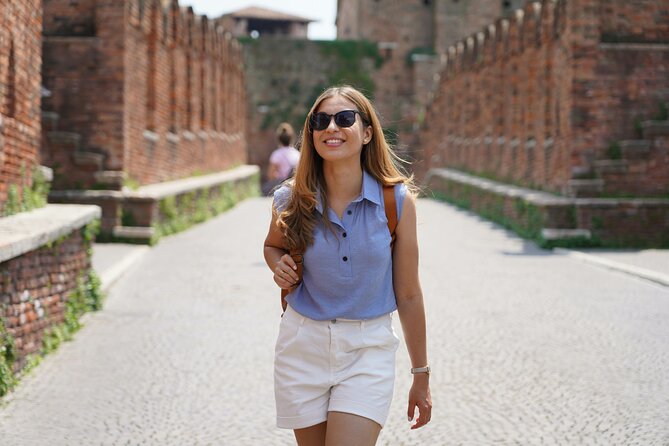
From the Arena, the route continues to Castelvecchio, or Old Castle. The castle once formed part of Verona’s defenses, with seven towers and water surrounding the structure. Even with only about 16 minutes here, you get a useful shift in mood: Rome gives way to the Middle Ages.
Castelvecchio also houses the Castelvecchio Museum. Its collections include medieval and Renaissance sculptures, paintings, jewelry, weapons, and armor. The short guided stop does not leave much room for a proper museum visit, so you should treat this part as an exterior look and a quick introduction to what lies inside.
That is one of the tour’s practical limitations. A visitor who wants to study the museum’s art will need a separate visit. Still, the castle is a strong stop for understanding Verona as a fortified city. Its walls and towers help explain why the city’s rulers cared so much about control of bridges, roads, and water.
The route’s inclusion of Castelvecchio adds variety. You are not spending two hours on squares and literary associations. You also see a real military structure, then connect it to the art and objects preserved inside.
Gothic power at the Scaliger Tombs
The Scaliger Tombs, also called the Scaliger Arcs, are among Verona’s clearest examples of Gothic funerary art. This group of five monuments honors the Scaliger family, the rulers who shaped medieval Verona.
The tombs are a sharp contrast to the Arena. The amphitheater speaks through size and public entertainment. These monuments speak through rank, symbolism, and display. Their elaborate Gothic forms show how a ruling family used burial places to make its authority visible even after death.
The scheduled stop is about 16 minutes. That is enough for a guide to explain who the Scaligers were and point out the artistic features, but it is not a long study session. If you care about Gothic sculpture, keep your own pace in mind and ask if there is time to look closely.
I find this stop especially useful because it gives the walking tour a political edge. Verona’s story is not only about Romeo and Juliet or Roman ruins. It is also about powerful families, public image, and the way rulers shaped the city around them.
Piazza dei Signori and Verona’s civic life

Piazza dei Signori offers another change in scale. This square became a political and administrative center during Venetian rule, with important palaces around it, including Palazzo della Ragione and Palazzo di Cansignorio.
The square works well on a guided walk because the surrounding buildings form a kind of open-air history lesson. Instead of reading a long account of Verona’s government, you can look at the palaces and understand how civic power was organized around a public space.
The stop lasts about 16 minutes. That is enough for orientation and context, but the square rewards extra time if you have it. I would pause to examine the different façades and watch how people use the space today. A place that once served official functions now feels more open and social, which is part of the pleasure of seeing an old center in daily use.
This is also a good moment to ask your guide about the changes from medieval rule to Venetian administration. The private format helps here. You are not limited to listening quietly in a large group, and a guide such as Frank can respond to questions about art, local history, and the Arena’s long life.
More Walking Tours in Verona
- Verona: Small Group Guided Walking Tour with Arena Tickets
★ 4.9 · 848 reviews - Verona Highlights Walking Tour in Small-group
★ 5.0 · 493 reviews - Verona walking tour:food, wine, legends, lunch/dinner & cable car
★ 5.0 · 386 reviews - Verona All in one: Food Walking Tour, Lunch & Wine
★ 5.0 · 342 reviews
Piazza delle Erbe, the old Roman forum
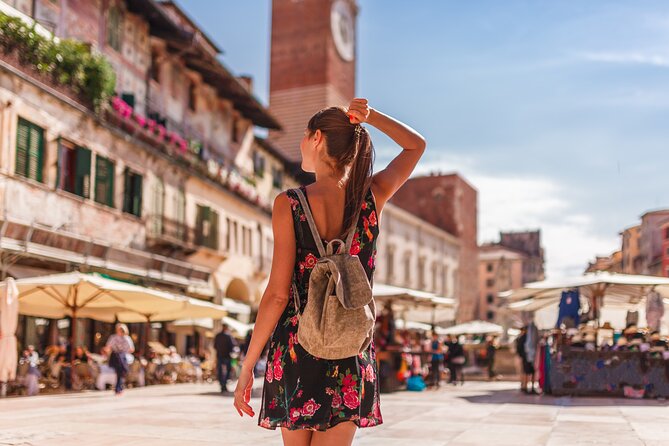
Piazza delle Erbe is the oldest square on the route and one of the most atmospheric. In Roman times, it served as the town forum and even hosted chariot races. Today, it is known for its fruit market, cafés, and buildings from different periods.
I like this stop because it shows how a public space can change jobs without losing its importance. Roman citizens gathered here for civic life and spectacle. Later generations used it as a market and meeting place. You can still feel that practical role as you move among stalls, cafés, and the surrounding architecture.
The square is listed for about 16 minutes, so you will have time to get your bearings and hear the main story. You may want to return later if you hope to browse the market or sit at a café. A guided explanation helps you read the square, but the everyday activity is best enjoyed without rushing.
This part of the route also brings the strongest contrast between ancient and modern Verona. The Arena is a preserved monument used for major performances. Piazza delle Erbe is a public place where ordinary city life continues. Together, they show why Verona feels like more than a collection of ruins.
Ending with Casa di Giulietta
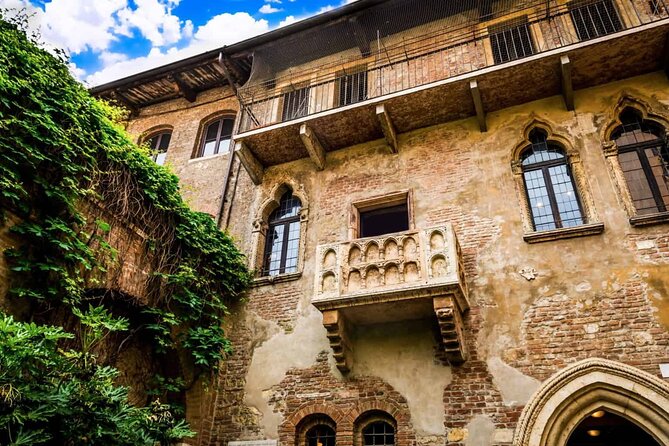
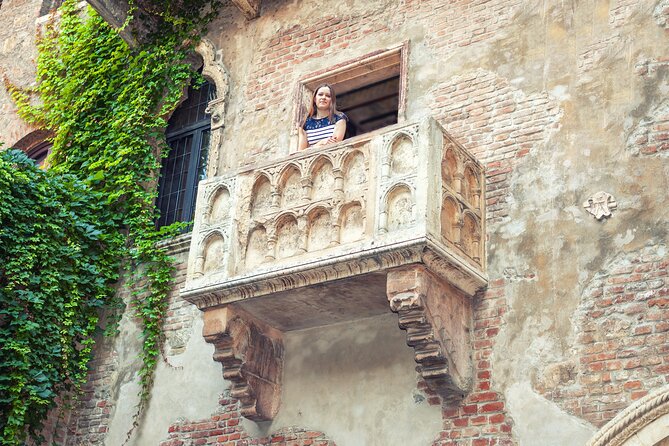
The final stop is Casa di Giulietta at Via Cappello, 23. The house is connected to the romantic legend behind Shakespeare’s Romeo and Juliet. The tour ends here, rather than returning to the Arena.
You should approach this stop with the right expectations. The attraction is tied to literary romance and local legend, not a proven record that Juliet lived there. The value comes from the story, the setting, and the way Shakespeare helped turn Verona into one of the world’s most famous romantic destinations.
The scheduled time is about 15 minutes. That makes sense for a final orientation, but it may feel brief if you want to linger. Since the tour ends at Juliet’s House, you can decide afterward if you want more time in the area, though the provided details do not specify separate entry arrangements or how long you may stay.
I like ending here because it follows a clear arc. You begin with Roman public spectacle, pass through medieval defense and Gothic rule, visit civic squares, and finish with the story that made Verona famous far beyond Italy. It is a neat conclusion, even if Shakespeare’s Verona is only one part of the city’s much larger story.
What the $196.66 price really buys you
At $196.66 per person, this is not a budget sightseeing walk. The duration is about two hours, and the listed stops total roughly 96 minutes. The remaining time is likely used for walking between sites and transitions, though the exact walking time is not provided.
The strongest case for the price is the private format. Only your group takes part, and a private guide can adjust explanations and answer questions in a way a large group often cannot. That matters if you want help with art, medieval politics, or the Arena rather than simply a list of dates and names.
The price is harder to justify if you mainly need directions or a quick overview. The route is compact, and admission is listed as free at the stops. You are paying for interpretation, organization, and personal attention, not a package of paid monument entries.
Group discounts are available, which may improve the value for a larger party. I would compare the per-person total with the needs of your group before booking. For a family or group that wants a private guide and a clear route, the cost may feel worthwhile. For one or two people on a tight budget, a shorter self-guided visit may make more sense.
Timing, walking, and the best fit
This is a walking experience lasting about two hours. The meeting point is near public transportation, and the route finishes in the city center at Juliet’s House. The tour details say most people can participate, but they do not give a precise accessibility assessment, walking distance, or information about stairs and uneven surfaces.
You should expect a steady sequence of historic stops rather than long breaks. Comfortable shoes are sensible, and you will get more from the tour if you arrive ready to keep moving. The short time at each sight favors people who want a broad introduction.
I would recommend it most to:
- First-time visitors with only a short window in Verona
- Couples interested in the city’s romantic reputation but also its Roman and medieval past
- Families or friends who prefer a private guide
- Art and history fans who want a useful framework before exploring alone
- People who enjoy asking questions rather than listening to a fixed lecture
I would be more cautious about booking if you want extended museum time, a detailed Arena visit, or a relaxed café-and-market outing. The route touches many major places, but it cannot give each one the attention it deserves in two hours.
What the guide adds
The quality of this experience depends heavily on the person leading it. Frank is specifically associated with the tour and is described as handling different group needs while answering questions about the Arena and its long past. That suggests the guide’s role is more than basic navigation.
A good guide can connect the sites. The Arena explains Roman public life. Castelvecchio shows defense and medieval power. The Scaliger Tombs reveal how rulers presented themselves. Piazza dei Signori shows administration, while Piazza delle Erbe brings the city’s public life into one place. Casa di Giulietta then adds the literary layer.
The most praised qualities are the guide’s friendly manner and strong grasp of art, history, and culture. Those strengths matter here because the route crosses several periods quickly. You want someone who can explain the change from Roman Verona to medieval Verona without making the walk feel like a rushed classroom.
If Frank is not the assigned guide on your date, the experience may vary. The provider is Opatrip.com Italy, and the tour is private, so you can use the booking contact to confirm guide details if that is important to you.
Weather and cancellation details
The experience requires good weather. If poor weather causes cancellation, you are offered a different date or a full refund. That is useful for a walking tour, since the route depends on moving through open squares and streets.
You can cancel for a full refund up to 24 hours before the start time. Changes or cancellations made less than 24 hours ahead are not accepted for a refund. The cut-off follows Verona’s local time, so check the scheduled start carefully if you are booking from another time zone.
Confirmation is provided when you book, and the ticket is mobile. Those details make the practical side fairly simple, but you should still keep the meeting point clear: the Arena at P.za Brà, 1.
Should you book the Verona Arena walking tour?
Book this tour if you want a private, well-organized introduction to Verona that connects the Arena with the city’s medieval rulers, public squares, and Shakespearean legend. The route is especially useful on a first visit, and the guide’s art and history focus adds value to places that can otherwise look like attractive but disconnected backdrops.
Think twice if $196.66 per person feels high for a two-hour walk or if your priority is spending serious time inside Castelvecchio Museum or the Arena. In that case, use this route as a starting point only, then plan separate visits.
My call: this is a good choice for a group that values personal guiding and wants to see Verona’s main historic centers in one compact outing. It is less convincing for budget-minded visitors who are happy to explore at their own pace.
FAQ
Where does the tour start?
The tour starts at Arena di Verona, P.za Brà, 1, 37121 Verona VR, Italy.
Where does the tour finish?
The tour ends at Casa di Giulietta, Via Cappello, 23, 37121 Verona VR, Italy.
How long does the experience last?
The walking tour lasts approximately two hours.
Is this a private tour?
Yes. Only your group participates in the activity.
How much does the tour cost?
The listed price is $196.66 per person.
Are group discounts available?
Yes. Group discounts are listed as a feature of the experience.
Is a mobile ticket available?
Yes. The experience offers a mobile ticket.
Is admission to the stops included?
Admission is listed as free for each stop in the tour details. The information does not specify separate entry arrangements for extended visits inside the Arena or Castelvecchio Museum.
Can I cancel for a full refund?
Yes. You can cancel at least 24 hours before the scheduled start time for a full refund.
What happens if bad weather cancels the tour?
If the experience is canceled because of poor weather, you are offered a different date or a full refund.
More Historical Tours in Verona
- Tour to discover the Unique History of Verona, the City of Art
★ 4.5 · 90 reviews - Verona by Moonlight: A Nighttime Path Through History and Romance
★ 4.0 · 10 reviews - Verona: Sightseeing and Heritage Tour
★ 4.0 · 8 reviews - Venice’s Best: Basilica, Doge’s Palace, Gondola & History Gallery
★ 4.5 · 2,478 reviews
Just added around Verona
- 3 Hour Shared Walking and Aperitivo Tour of Verona★ 5.0 · 3 reviews
- Verona: Blindfolded Wine Tasting★ 5.0 · 3 reviews
- Excursion in Verona.★ 4.5 · 3 reviews
- Verona Airport (VRN) Arrival Transfer (Airport to Verona Hotels or Address)★ 4.0 · 3 reviews
- Photo Shoot in Verona: Capture Your Love Story in Pictures★ 5.0 · 3 reviews
- Incredible Verona – Family Walking Tour★ 5.0 · 3 reviews
- From Verona: discover Lake Garda and Sirmione private tour★ 5.0 · 3 reviews
- Madonna di Campiglio and Dolomites Self-Guided Tour★ 5.0 · 3 reviews
Historical Tours, compared.
Venice’s Best: Basilica, Doge’s Palace, Gondola & History Gallery
Read our review →
Bell Tower & St Mark’s Square History Gallery Ticket
Read our review →
Basilica, Doge’s Palace, History Gallery & Bell Tower Option
Read our review →
St. Mark’s Cathedral Priority Guided Tour & History Gallery
Read our review →
Browse the lists this tour appears in