
Reviewed · WALKING TOURS
Padua Small-Group Walking Tour: Top Sights & Hidden Gems
Padua keeps some of its best stories just off the main route. This walk links the city’s handsome squares and churches with curious details such as an astrological masterpiece, a secret garden, and signs said to have been left by saints and demons. It is a good way to see the city as more than a stop between Venice and Verona.
I like the small-group format, which gives you a better chance to ask questions and hear the guide clearly. I also like the mix of major sights and odd local tales. Guide Julia has been praised for handling questions well, while another guide was noted for his friendly manner and clear love of Padua. The main consideration is pace: 2.5 hours covers a lot of ground, so stops are often brief, and entry inside major monuments is not part of the tour.
In This Review
- Key points to know before you book
- Why Padua rewards a walking tour
- From Piazza Cavour to Pedrocchi Café
- Padua’s market squares: Piazza della Frutta and Piazza delle Erbe
- Piazza dei Signori and the city’s public face
- Astrological signs, Masonic stories, and secret corners
- Piazza del Santo and Padua’s sacred center
- Prato della Valle: the grand final view
- What the 2.5-hour format really means
- Is $58 a fair price?
- Who should book this Padua walk?
- Should you book it?
- FAQ
- How long does the Padua walking tour last?
- Where does the tour meet?
- Where does the tour finish?
- Which languages are available?
- What is included in the price?
- What should I bring?
Key points to know before you book
- The route begins and ends in Piazza Cavour, making it easy to fit into a day of exploring central Padua.
- You’ll see the city’s great public squares, including Piazza della Frutta, Piazza delle Erbe, Piazza dei Signori, and Prato della Valle.
- The stories go beyond standard sightseeing, with astrology, Masonic history, secret spaces, and local legends.
- The tour is outdoors, so comfortable shoes and water matter.
- Guiding is available in English, Italian, and Spanish, with a licensed guide wearing the required identification badge.
- The $58 price buys context and orientation, not museum admission or a long stop inside any single building.
Why Padua rewards a walking tour
Padua is compact enough to explore on foot, but its story is not always obvious. Elegant arcades, market squares, old churches, university traditions, and layers of religious and civic history sit close together. Without some explanation, you may admire the façades and miss the small marks, symbols, and legends that give the center its personality.
This tour is built around that problem. You get the major sights, but the guide also points out details you could easily pass without noticing. The result should suit you if you want a first orientation with more character than a simple roll call of monuments.
The walk begins near the Cavour monument in Piazza Cavour. Look for the guide holding a Beescover flyer. The guide also wears an identification badge issued by the Italian Ministry of Tourism, a useful detail when several walking groups gather in the same square.
The group size is described as small, though no exact number is given. That means you should expect a more personal experience than a large coach excursion, but you should not assume private-tour attention.
More Walking Tours in Padua
- Padua: Private City Walking Tour & Scrovegni’s Chapel Visit
★ 4.7 · 124 reviews - Padua Walking Tour with the Scrovegni Chapel
★ 4.5 · 96 reviews - Padova Walking Tour with Audio and Written Guide by a Local
★ 4.5 · 61 reviews
From Piazza Cavour to Pedrocchi Café
Piazza Cavour is a practical starting point in the heart of Padua. It gives the guide a natural place to introduce the city and set up the story of its development from its foundation to the modern era.
The first listed stop is Pedrocchi Café, one of Padua’s best-known historic meeting places. You have about 10 minutes here for sightseeing and photographs. That is enough to take in the exterior and hear why the café matters, but not enough for a leisurely coffee break or a full interior visit.
I like this opening because it puts Padua’s public life in view right away. The café represents the city as a place of conversation, ideas, and civic activity, not just a collection of old buildings. If you want to sit down for coffee, save that for later or return after the walk.
From here, the route turns toward lesser-known corners. The exact names of every secret stop are not given in advance, so part of the appeal is discovery. You should expect short explanations rather than long visits.
Padua’s market squares: Piazza della Frutta and Piazza delle Erbe
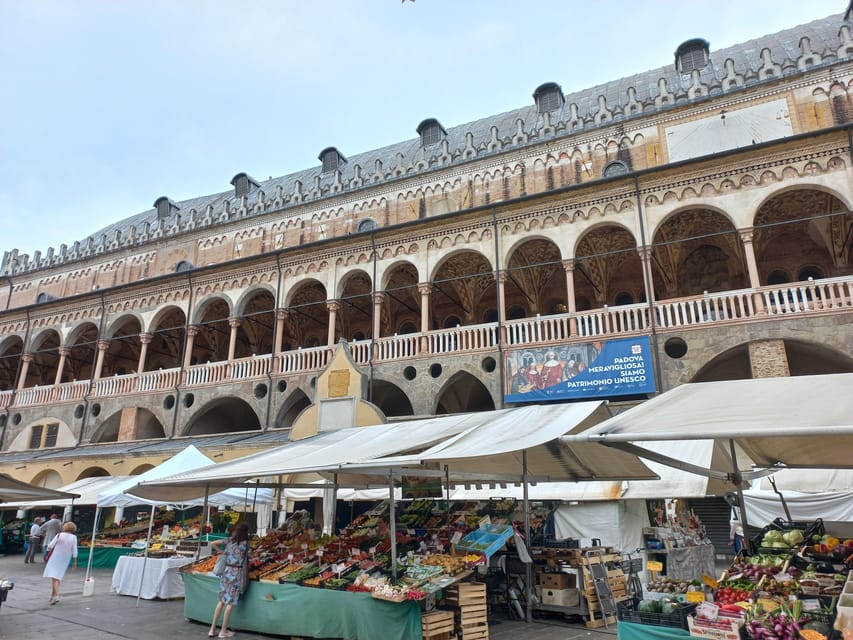
Piazza della Frutta and Piazza delle Erbe are among the most useful stops for understanding how Padua works. Both are tied to the city’s market life and offer colorful, open views framed by historic buildings.
You get about 10 minutes at each square for a visit and photographs. That timing lets the guide point out the layout, buildings, and overlooked details without turning the tour into a long architectural lecture.
The two squares are close enough to compare. One may feel more shaped by produce and market activity, while the other gives you another angle on Padua’s civic center. The important point is that these are not silent museum spaces. They connect the city’s past with everyday life.
Bring your camera, but keep it ready for smaller details rather than only grand views. The guide’s focus is on curiosities and stories, so you may find that an unusual sign, carving, or bit of local symbolism becomes more memorable than a formal façade.
The short stop can also be a limitation. If you want time to browse market stalls, shop, or take careful architectural photographs, you will need to return independently.
Piazza dei Signori and the city’s public face
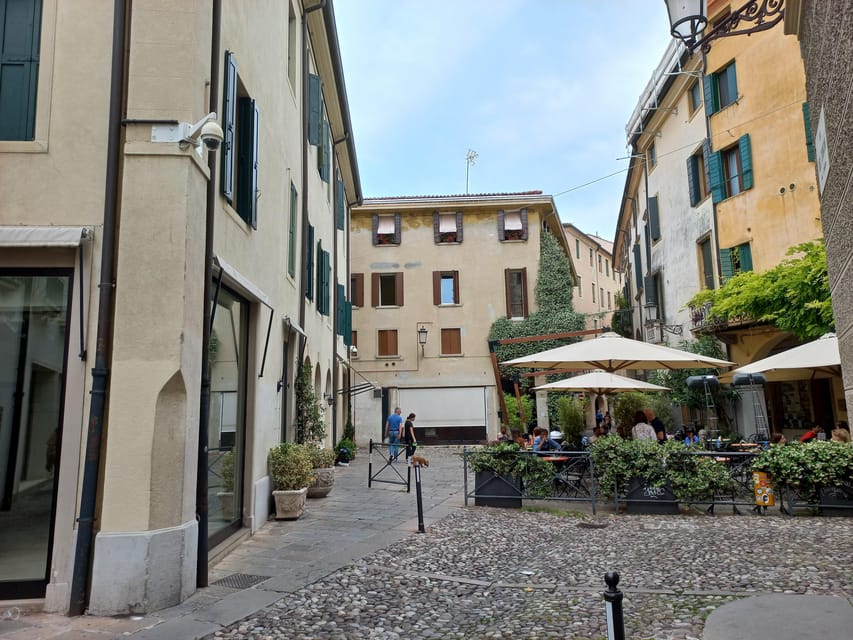
Piazza dei Signori, also called Signori Square, is another 10-minute visit. Its broad setting and monumental buildings show how Padua presented power and order in its public spaces.
Here, the guide helps connect architecture with events and people. That wider explanation matters because Padua’s center is not only pretty. Its squares were places where civic life unfolded, where authority was displayed, and where residents gathered.
The tour does not promise an indoor visit to a palace or museum. Think of this part as an outdoor introduction. You will see the setting, hear its place in the city’s story, and decide if you want to come back for a closer look.
This is also where the walk’s format makes sense. A guide can point your attention toward the details that tie one square to the next. On your own, you might photograph the buildings and move on without understanding how the spaces relate.
More quiet corners of Padua:
- Chioggia : Aquaculture Secrets Tours of the Lagoon
★ 5.0 · 22 reviews - Tour of The Real Hidden Venice
★ 5.0 · 2,006 reviews - Verona: History and Hidden Gems Guided Walking Tour
★ 5.0 · 1,379 reviews - Verona: Classic and Hidden Gems Bike Tour
★ 4.9 · 577 reviews
Astrological signs, Masonic stories, and secret corners
The most unusual part of the tour comes through its less obvious stops. The route includes an incredible astrological masterpiece and the largest Masonic temple in Europe, along with a secret garden and signs linked in local tradition to saints and demons.
The information does not specify the exact names or addresses of these places, so you should not expect a fixed checklist of famous attractions. Instead, you get a sequence of short discoveries woven into the walk.
That approach suits Padua. The city’s character is often found in details that do not make the usual postcard. A symbol above a doorway, a protected garden, or a strange mark on a building can open a door to a larger story about belief, science, power, and superstition.
I especially like that the tour includes both religious and secular curiosities. Padua is associated with churches and saints, but it also has a long intellectual and civic life. The astrology and Masonic references widen the picture.
The tradeoff is that some stops may be explained from outside or viewed briefly. The itinerary gives roughly 10 minutes to many locations, and several are simply described as secret stops. If you want a deep specialist study of astrology or Freemasonry, this is probably only an introduction.
Still, for a general visitor, this variety is valuable. It keeps the walk moving and gives you several leads for later exploration.
Piazza del Santo and Padua’s sacred center
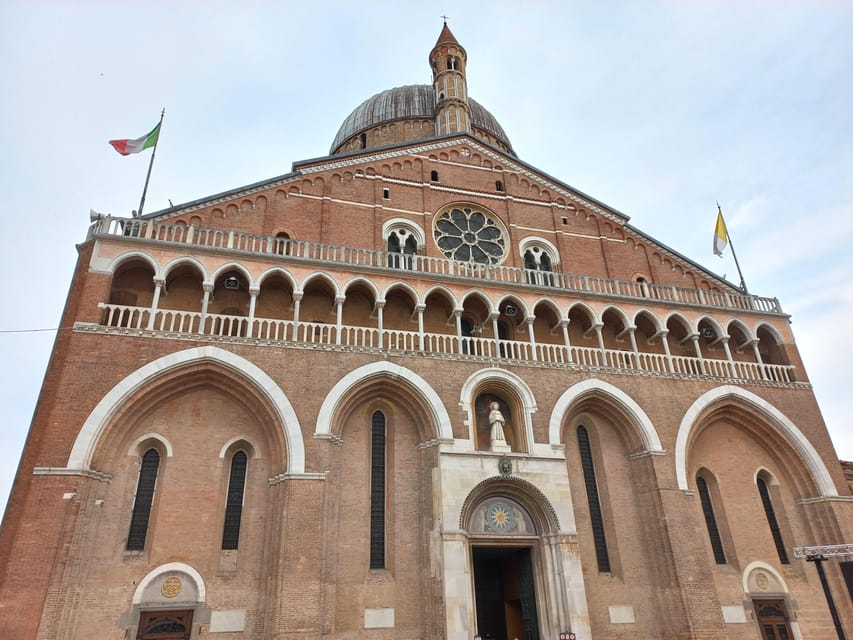
The route eventually reaches Piazza del Santo, a major gathering place associated with one of Padua’s most important religious sites. The stop includes sightseeing and photographs, with about 10 minutes allocated.
This is one of the points where the tour’s broad story comes together. Padua’s religious identity, artistic traditions, and public spaces meet here. The guide can place the square within the larger story of the city rather than treating it as an isolated church stop.
You should expect an exterior-focused visit. No admission or interior tour is included, and the experience is listed as an outdoor walking tour. If entering the basilica is important to you, plan separate time before or after the walk.
That is not a flaw, but it is worth knowing when you compare this tour with a church-focused experience. The value here comes from orientation, storytelling, and the connection between several parts of Padua.
Prato della Valle: the grand final view
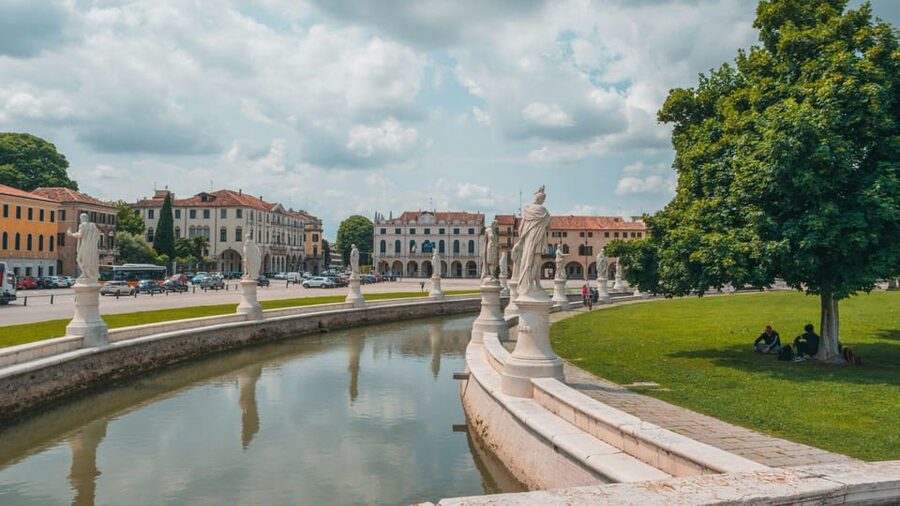
Prato della Valle receives the longest listed stop, about 20 minutes. That extra time is sensible. The square is one of Padua’s most striking open spaces, and it needs room for photographs and a proper look around.
The broad setting offers a change from the tighter lanes and smaller corners earlier in the route. It gives you one of the tour’s best chances to appreciate Padua at a larger scale, with monumental views and a strong sense of space.
I would save a little energy for this part. After several stops, it is easy to treat the final square as just another photo opportunity. Instead, listen for how the guide ties Padua’s growth, art, events, and culture together.
The walk then includes one last secret stop before returning to Piazza Cavour. Since the final location is not identified, you get another small surprise rather than a predictable final monument.
What the 2.5-hour format really means
The tour lasts 2.5 hours and includes many stops. Most are set at about 10 minutes, while Prato della Valle gets 20. That tells you what kind of experience this is: a moving overview with frequent stories, not a slow visit to two or three monuments.
I like this format for your first morning or afternoon in Padua. It helps you map the center, learn which squares deserve a return visit, and pick up the local details that make independent wandering more rewarding.
You should wear comfortable shoes and carry water. The route is entirely on foot, and the number of stops means you will spend the session moving between squares, churches, palaces, parks, and smaller corners.
The tour is offered in English, Italian, and Spanish. The guide is licensed, and the operator specializes in slow tourism. That does not mean the walk is slow in the literal sense. It means the emphasis is on seeing the city at street level rather than rushing between major attractions by vehicle.
The schedule depends on availability, so check the starting time before booking. Free cancellation is available up to 24 hours in advance, and you can reserve without paying immediately. Those terms are useful if you are arranging a Veneto trip around trains, weather, or changing plans.
Is $58 a fair price?
At $58 per person, this is not the cheapest way to walk around Padua. You can visit the squares on your own for nothing. The question is whether the guide’s interpretation gives you enough added value.
For me, the answer depends on how much you want from the city. If you are happy to read a guidebook and follow a map, the price may feel high for an outdoor route with no admissions included. If you want a local guide to connect the sights, explain the city’s history, and reveal details you would likely miss, the cost is easier to justify.
The tour includes a licensed guide and the full 2.5-hour walk. It does not include personal extras, tips, food, drinks, or entry fees. You should budget separately if you want to return to a church, museum, café, or other site after the tour.
The strongest value comes from the mix. A standard city walk might give you the famous squares. This one adds astrology, Masonic history, secret spaces, and local legends. That makes it more useful for curious first-time visitors than for someone who only wants a quick list of monuments.
Who should book this Padua walk?
I would choose this tour if you want:
- A first look at central Padua before exploring alone
- Stories about unusual details, symbols, and local beliefs
- A small-group setting with room for questions
- A walking route that mixes major squares with lesser-known corners
- Guiding in English, Italian, or Spanish
- A relaxed introduction rather than a museum-heavy program
It is also a good fit if you are staying nearby and want to understand the city’s layout early in your visit. The return to Piazza Cavour makes it easy to continue sightseeing afterward.
I would think twice if you dislike frequent stops, prefer long visits inside monuments, or want a specialist tour devoted to one subject. The route covers a lot, but the short timings mean you will hear an introduction rather than study each site in detail.
The human side of the guiding matters here. Julia is specifically noted for welcoming questions, and another guide was described as friendly, professional, and clearly fond of Padua. The consistent picture is of guides who explain the city with warmth rather than simply reciting dates.
Should you book it?
Book this Padua walking tour if you want the city’s famous squares plus the odd stories hiding around them. The strongest reason to choose it is the balance between orientation and curiosity: you see the main center, then learn to look closer.
At $58, it is best value for a first visit, especially if you appreciate a local guide and plan to explore more on your own afterward. Skip it if you want indoor admissions or a slow, detailed study of individual monuments. For most curious visitors with 2.5 hours to spare, it offers a useful and entertaining introduction to Padua.
FAQ
How long does the Padua walking tour last?
The tour lasts 2.5 hours.
Where does the tour meet?
Meet near the Cavour monument in Piazza Cavour, Padua. The guide will show a Beescover flyer.
Where does the tour finish?
The route returns to Piazza Cavour.
Which languages are available?
The live guide can conduct the tour in English, Italian, or Spanish.
What is included in the price?
The price includes a licensed tour guide and an outdoor walking tour. Personal extras and the guide’s tip are not included.
What should I bring?
Wear comfortable shoes and bring water.
Just added around Padua
- Padua City Sightseeing Walking Tour of Must-See-Sites with Local Guide★ 5.0 · 3 reviews
- Padua: Private Pasta-Making Class at a Local’s Home★ 5.0 · 3 reviews
- Tour to the Walled City of Monselice DA Abano and Montegrotto Terme★ 4.5 · 3 reviews
- E-bike rental – Road bike – Mountain bike★ 5.0 · 3 reviews
- CSTRents – Padova Segway PT Authorized Tour★ 3.5 · 3 reviews
- Padua: guided walking tour with an art historian★ 5.0 · 3 reviews
- DA Venezia : Experience Padua like a local★ 5.0 · 4 reviews
- Street Food Walk in Padova★ 5.0 · 4 reviews
Walking Tours, compared.
Rialto Bridge & Offbeat Unusual Venice Walking Tour
Read our review →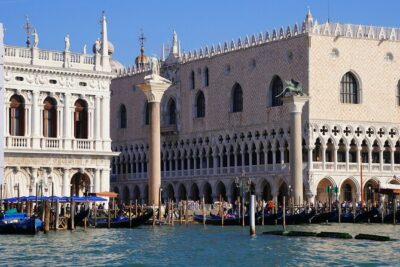
Private 3 hrs Venice Tour: St Mark’s, Walking tour & Boat tour
Read our review →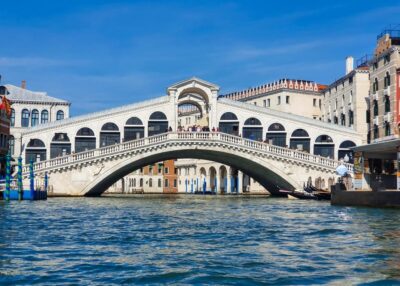
Walking Guided Tour of the City Must-See Sites
Read our review →
Private Best of Venice Walking Tour with St Mark’s Basilica
Read our review →
Venice Sightseeing Small Group Walking Tour with a Local Guide
Read our review →Browse the lists this tour appears in