
Reviewed · PADUA TOURS
Private Padua Highlights Tour including Scrovegni Chapel and St Antonio Basilic
The real prize here is Giotto’s Scrovegni Chapel, where a guide helps you read the famous frescoes instead of simply walking in, looking up, and moving on. The tour then connects that intimate art experience with St. Anthony’s grand basilica, Padua’s market squares, and its old university quarter.
I like the private format, since your guide can adjust the pace and answer the questions that matter to you. I also like the practical design: chapel tickets are included, pickup at Padua train station is offered, and the major sights fit into one four-hour walk. The main drawback is price. At $382.08 per person, it makes the most sense for a small group with limited time, not for a solo visitor looking for a cheap city stroll.
In This Review
- Key points to know before booking
- Why Giotto’s chapel makes this tour worth considering
- Starting at Prato della Valle
- St. Anthony’s Basilica and the city’s spiritual heart
- Inside the Scrovegni Chapel
- Piazza delle Erbe and the market side of Padua
- Palazzo della Ragione and two connected squares
- The University of Padua and the final ten minutes
- What the private format really adds
- Is $382.08 per person a fair price?
- Timing, meeting point, and cancellation details
- Who should book this Padua tour?
- Should you book it?
- FAQ
- How long does the Private Padua Highlights Tour last?
- What is the meeting point?
- Does the tour include Scrovegni Chapel admission?
- Is entry to St. Anthony’s Basilica included?
- Is this a group tour or a private tour?
- What language is the tour offered in?
- Is lunch included?
- Can I cancel for a full refund?
Key points to know before booking
- Giotto is the centerpiece: You get 90 minutes at the Scrovegni Chapel, with admission included and a guide to explain the fresco cycle.
- A genuinely private outing: Only your group participates, so the route and walking pace can be adjusted.
- The basilica adds a different mood: St. Anthony’s is a major pilgrimage church filled with religious art, sculpture, and devotional meaning.
- The train station pickup saves time: You can meet at Padua train station and begin without finding an unfamiliar street address.
- Several guides receive strong praise: Silvia, Carla, Rosanna, Caterina, and Cecilia are named as warm, clear, and well prepared.
- Dress for church entry: Wear pants or long shorts for St. Anthony’s Basilica, as bare legs may prevent entry.
Why Giotto’s chapel makes this tour worth considering
Padua is easy to overlook when you are moving between Venice and Florence. That is a mistake if early Italian painting interests you. The Scrovegni Chapel contains Giotto’s celebrated frescoes, a major step toward the more natural, human style that shaped later Italian art.
You have about 90 minutes at the chapel, which gives this visit more weight than a quick photo stop. The frescoes do not fully reveal their subtle colors, gestures, and expressions in photographs. A good guide can point out how the scenes are arranged, explain the stories, and show you where Giotto gives his figures emotional force.
The guide’s timing matters here. Chapel entry is controlled, and the walking route includes several stops before and after it. Silvia has been praised for keeping the group on schedule without making the visit feel hurried. Carla’s grasp of Giotto’s work has also been singled out as a major reason the tour feels worthwhile.
The chapel portion is best for anyone who wants context rather than a quick look. You do not need a degree in art history, but you should be willing to spend time looking closely. The payoff comes from seeing how much expression Giotto creates through posture, faces, and the arrangement of each scene.
A few more Padua days to weigh up
- Padua to Venice Boat Cruise of the Brenta Riviera
★ 4.5 · 418 reviews - Tasting Prosecco with appetizers
★ 5.0 · 217 reviews - Full-Day Padua to Venice Burchiello Brenta Riviera Boat Cruise
★ 4.5 · 198 reviews
Starting at Prato della Valle
The tour begins at Padua’s tram station, with pickup available at the train station. The stated meeting point is Tram Stazione35131 Padua, so confirm the exact place and time when you book. One past group got mixed up about the meeting place, though the tour itself went well once the guide and group connected.
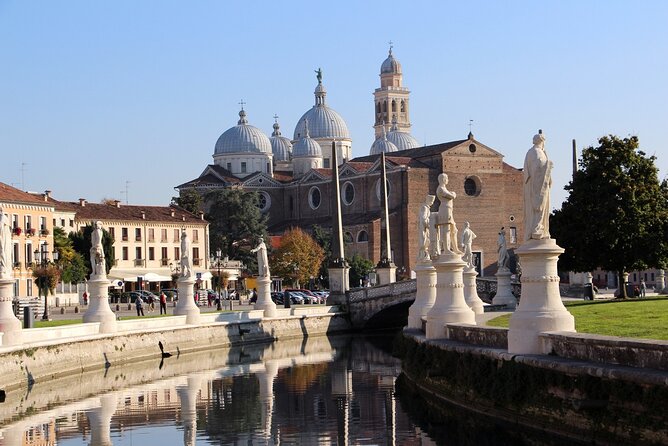
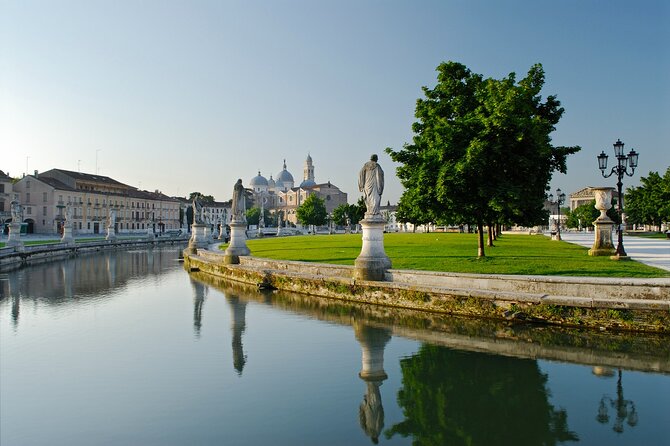
Prato della Valle is the first planned stop. At 20 minutes, this is an orientation visit rather than a long exploration. The square is one of Europe’s largest public squares, built around an elliptical island and lined with 78 statues representing notable figures connected with Padua.
This is a useful opening because it gives you a sense of Padua’s scale. You can take in the broad design, hear why the statues matter, and begin to understand the city as more than a day-trip stop. There is no admission charge, and you have time for photographs.
Do not expect a long historical lecture here. The stop is short, and the tour has a fixed chapel appointment to protect. Think of Prato della Valle as a clear first chapter before the more detailed visits begin.
St. Anthony’s Basilica and the city’s spiritual heart
St. Anthony’s Basilica is the religious center of Padua and the reason the city is often called the City of the Saint. The basilica draws pilgrims and art lovers throughout the year, with especially large celebrations around June 13, the saint’s feast day.
You receive an entrance visit as part of the tour. Allow about 40 minutes, though the exact time may depend on the chapel schedule and the pace of your group. The guide can explain the basilica’s religious importance and help you understand why it carries such emotional weight for local people.
This stop gives the tour a different character from the Scrovegni Chapel. Giotto’s work is intimate and pictorial. St. Anthony’s is a large working church, shaped by centuries of devotion and public worship. You are not simply looking at an art object. You are entering a place that still serves its original religious purpose.
Several guides have been praised for bringing the basilica’s story to life. Silvia, Rosanna, and others are described as patient and clear, especially when answering questions. One guide also arranged an unusual look at the back of the basilica’s altar, though you should treat that as a special possibility rather than a promised feature.
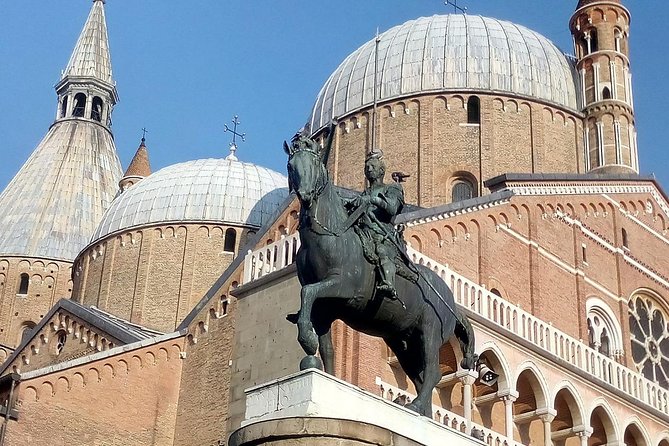
The basilica includes important work by Donatello, including bronze panels and the famous equestrian monument outside. If you care about sculpture, tell your guide early. The private format makes it easier to spend a little more time on the details that interest you most.
Dress with care. One direct tip from the tour experience is to wear pants or long shorts for entry. Church rules can be applied at the door, and inappropriate clothing could interrupt your visit.
Inside the Scrovegni Chapel
The Scrovegni Chapel is the tour’s most time-sensitive stop. Your admission ticket is included, but entry still depends on the assigned schedule. That is why meeting on time is not a minor detail. A late start can reduce the time available for the chapel or create stress for the entire group.
The planned visit lasts 90 minutes. That is generous by sightseeing standards, but the chapel itself is not a place where you need to rush from object to object. The best use of the time is to listen, look, and ask questions.
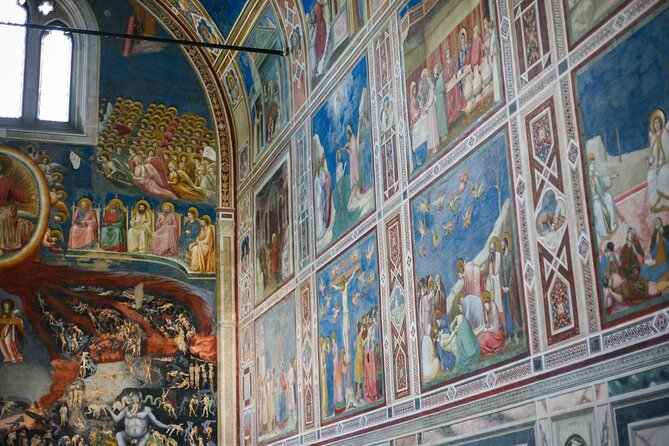
Giotto’s frescoes tell a sequence of religious stories across the walls. The artistic importance lies not only in the subject matter but in the way the figures appear to feel, react, and occupy space. A guide can show you the shift from stiff symbolic images toward scenes with more recognizable human emotion.
This is where the private tour earns part of its cost. You can ask why a scene is arranged in a particular way, request a closer explanation of one panel, or have the guide give you a concise overview if you prefer to spend more time looking silently. Carla has been praised for her treatment of Giotto, while Silvia has been described as offering a short but useful explanation inside the chapel.
The chapel visit has a few practical limits. You cannot treat it like a casual drop-in, and the day’s timing must be respected. Photography rules and access procedures may apply, so follow the instructions given on site. The tour information also states that a Covid-19 vaccination card or Green Pass is mandatory for entry to museums and churches. Because rules can change, check the current requirement before departure.
A different sort of day out around Padua:
- Prosecco tasting, appetizers and tour of the cellar and vineyards
★ 5.0 · 178 reviews - Padua Hop-on Hop-off Tour: 24-Hour Ticket
★ 3.5 · 134 reviews - Padova: Baptistery of the Cathedral & Museum of the Diocese
★ 4.6 · 128 reviews - Padua: Private City Walking Tour & Scrovegni’s Chapel Visit
★ 4.7 · 124 reviews
Piazza delle Erbe and the market side of Padua
After the major church and art visits, the walk moves into the city center. Piazza delle Erbe is a large central square known for its markets. The planned stop lasts about 40 minutes, giving you time to absorb the setting and ask how the square fits into daily life in Padua.
This is one of the tour’s most useful changes of pace. The Scrovegni Chapel asks you to focus closely. The basilica asks you to think about faith and public devotion. Piazza delle Erbe brings you back to ordinary city life, with commerce, meeting places, and the open feel of a central Italian square.
Your guide can also offer ideas for the rest of the day. Silvia recommended Caffè Pedrocchi and its specialty coffee to one group, a suggestion that earned particular praise. That kind of local recommendation is more useful than a long list of generic restaurants, especially if you have only one afternoon in Padua.
The tour does not include lunch, so this is a natural place to ask for a food or coffee suggestion. Do not assume the 40-minute stop includes a formal meal. If you want to sit down, tell the guide early so the schedule can be managed.
Palazzo della Ragione and two connected squares
Palazzo della Ragione is one of Padua’s most imposing civic buildings. It sits between Piazza delle Erbe and Piazza della Frutta, so the tour places you at the center of the city’s public and market life.
The building once housed the city courts. Today it hosts exhibitions and cultural events. The scheduled 40-minute stop is mainly an exterior and historical visit based on the information provided, so do not assume that an interior exhibition is included on your date.
This stop helps explain how Padua worked as a medieval city. Courts, markets, religious buildings, and university life all sit within a compact walking area. You can move through the streets and squares without spending the day on buses or taxis.
The route is appealing for first-time visitors because it links sights rather than treating them as isolated attractions. You learn where the markets were, where public decisions were made, and how the city center still uses these spaces. The private guide can also adjust the amount of detail. If architecture is your main interest, ask for more. If you are saving energy for the chapel, keep this portion lighter.
The University of Padua and the final ten minutes
The University of Padua is one of Italy’s oldest universities, and it gives the walk another layer. The planned stop lasts only 10 minutes, so this is a brief look rather than a full campus tour.
The information also mentions the university’s magnificent Botanical Garden. That garden is not listed as a separate timed visit, and admission is not included in the tour details. If you want to visit it, ask the guide whether it fits your schedule and confirm any separate ticket needs.
Even a short university stop matters because Padua is not only a religious and artistic center. Its academic identity remains part of the city’s character. The university helps explain the steady stream of students, scholars, and visitors that has shaped Padua over the centuries.
By this point, you have seen art, worship, civic buildings, markets, and academic life. The route is compact, but it gives you a broad picture of the city in four hours.
What the private format really adds
A private tour works best when you use it actively. Tell the guide if you care most about Giotto, Donatello, church art, local coffee, medieval streets, or modern Padua. The experience is designed for your group alone, so you are not tied to strangers’ questions or walking speed.
The guides named in the feedback include Silvia, Carla, Rosanna, Caterina, and Cecilia. The strongest common thread is not a particular scripted route. It is their ability to explain Padua clearly, answer questions, and adjust the pace. Silvia is described as personable and humorous, Rosanna as patient with walking speed, Carla as scholarly and thorough, and Caterina as enthusiastic and easy to talk with.
That flexibility is especially valuable for a four-hour visit from Venice or another nearby city. You can cover the core sights without spending your limited time figuring out tickets, maps, and route order. The train station pickup is another practical advantage if you arrive by rail.
Still, a private guide will not magically remove walking. The itinerary covers several central sights on foot, and you should be comfortable moving between them for much of the half-day. Most people can participate, and service animals are allowed. Near-public-transport access also makes the start and finish fairly practical.
Is $382.08 per person a fair price?
The price is high for a four-hour city tour. For two people, it is an especially serious expense. You are paying for a private guide, chapel admission, a basilica visit, and the convenience of having the route organized around a fixed chapel appointment.
The value improves when you have limited time. A self-guided visit may cost less, but you would need to arrange Scrovegni Chapel tickets, plan the walking order, watch the clock, and research the art and churches yourself. If you are visiting Padua only once, that planning time has real value.
The price also makes more sense for a small group that can divide the cost across several people. Group discounts are offered, though the exact amount is not provided. If you are traveling with family or friends, compare the total private-tour cost with several individual group tickets and a separate guide.
I would not book this simply to see Padua’s squares. You can visit those freely. I would book it for the combination of reserved Scrovegni Chapel access and focused interpretation, with St. Anthony’s Basilica added in the same half-day.
The perfect customer is someone who values time, art context, and a flexible guide more than the lowest possible price. If you enjoy wandering alone and reading brief signs, save your money. If Giotto is a major reason for visiting Padua, the guided format has a strong case.
Timing, meeting point, and cancellation details
The experience lasts about four hours and ends back at the meeting point. Pickup is offered at Padua train station, which is useful if you are making the city a stop between larger Italian destinations.
Confirmation is provided when you book. Because the meeting location has caused confusion for at least one group, read the pickup details carefully and confirm where the guide will meet you. The tour is offered in English.
Free cancellation is available up to 24 hours before the start time for a full refund. Changes or cancellations made less than 24 hours before the start are not accepted for a refund. The activity also requires good weather, so a weather cancellation results in a different date or a full refund.
Who should book this Padua tour?
I would choose this tour for:
- Couples or families with only half a day in Padua
- Small groups that can share the private-tour cost
- Art lovers who want Giotto explained in person
- Visitors arriving by train
- People who prefer a measured walking pace
- Anyone who wants local suggestions for the rest of the day
I would hesitate if you are watching every euro, dislike scheduled entries, or want a slow, unplanned afternoon. The itinerary is efficient, but the Scrovegni Chapel appointment sets the rhythm.
The overall rating is 5 from 16 reviews, with 100 percent recommending the experience. That is a small sample, so I would not treat it as proof that every guide or every day will be perfect. Still, the repeated praise for clear explanations, warmth, humor, and flexibility points to the tour’s strongest feature: the person leading it.
Should you book it?
Book this private Padua tour if you want the Scrovegni Chapel to be the center of a carefully arranged half-day, not just a quick stop between trains. The basilica, markets, civic buildings, and university make the visit feel like a real introduction to Padua rather than a single-artwork excursion.
At $382.08 per person, it is not a bargain. For two people, it is expensive. But if you have limited time, care about Giotto, and want a guide such as Silvia or Carla to connect the art with Padua’s religious and civic life, the convenience can justify the cost.
Wear suitable church clothing, arrive early at the confirmed meeting point, and tell your guide what interests you. Do that, and this tour gives you a focused, thoughtful way to see Padua without wasting the hours between arrival and departure.
FAQ
How long does the Private Padua Highlights Tour last?
The tour lasts approximately four hours.
What is the meeting point?
The listed start point is Tram Stazione35131 in Padua. Pickup is also offered at Padua train station, so confirm the exact meeting instructions when booking.
Does the tour include Scrovegni Chapel admission?
Yes. Admission tickets to the Scrovegni Chapel are included.
Is entry to St. Anthony’s Basilica included?
Yes. Entrance to Sant’Antonio Basilica is included in the tour.
Is this a group tour or a private tour?
It is a private activity. Only your group participates.
What language is the tour offered in?
The tour is offered in English.
Is lunch included?
No. Lunch is not included in the price.
Can I cancel for a full refund?
Yes, if you cancel at least 24 hours before the experience start time. Cancellations made less than 24 hours before the start are not refunded.
Just added around Padua
- Padua City Sightseeing Walking Tour of Must-See-Sites with Local Guide★ 5.0 · 3 reviews
- Padua: Private Pasta-Making Class at a Local’s Home★ 5.0 · 3 reviews
- Tour to the Walled City of Monselice DA Abano and Montegrotto Terme★ 4.5 · 3 reviews
- E-bike rental – Road bike – Mountain bike★ 5.0 · 3 reviews
- CSTRents – Padova Segway PT Authorized Tour★ 3.5 · 3 reviews
- Padua: guided walking tour with an art historian★ 5.0 · 3 reviews
- DA Venezia : Experience Padua like a local★ 5.0 · 4 reviews
- Street Food Walk in Padova★ 5.0 · 4 reviews
Padua Tours, compared.
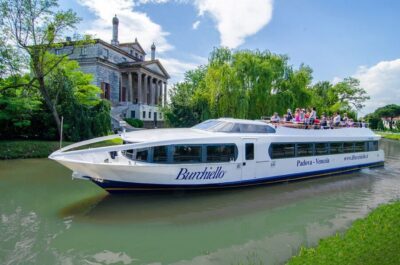
Padua to Venice Boat Cruise of the Brenta Riviera
Read our review →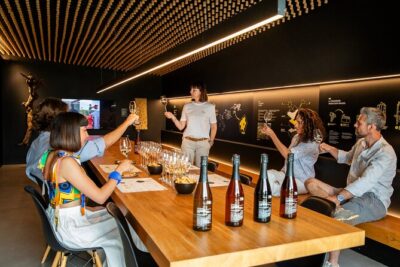
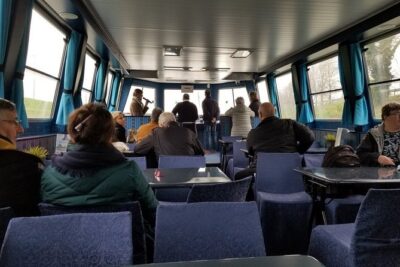
Full-Day Padua to Venice Burchiello Brenta Riviera Boat Cruise
Read our review →
Prosecco tasting, appetizers and tour of the cellar and vineyards
Read our review →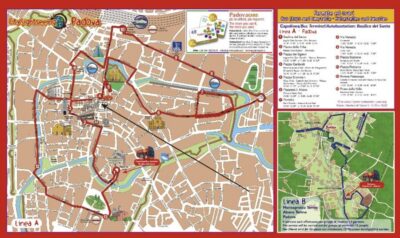
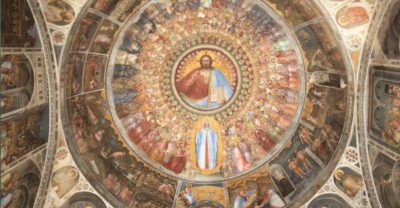
Baptistery of the Cathedral & Museum of the Diocese
Read our review →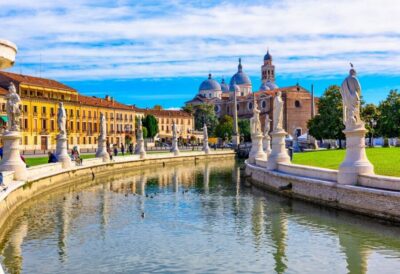
Private City Walking Tour & Scrovegni’s Chapel Visit
Read our review →
Browse the lists this tour appears in