
Reviewed · MUSEUMS
Padua: Jewish Heritage Museum and Synagogue Tour
Padua’s Jewish Museum occupies a former Ashkenazi Synagogue, giving this tour an unusual sense of place from the start. You’ll learn how Jewish life developed in Padua, meet ten important figures through short films, and finish inside the community’s working Italian Synagogue.
I especially like the way the tour links Jewish history with the University of Padua, one of Europe’s oldest universities and an institution that welcomed Jewish scholars. I also like the walk through the old ghetto, where narrow streets help you picture the community’s commercial and religious life. The main consideration is the weekday booking rule: a €60 ticket may be required unless your time slot is shared with others.
In This Review
- Key points
- Starting in Padua’s old Jewish quarter
- The former Ashkenazi Synagogue and its layered past
- Ten personal stories through film
- Walking the narrow ghetto streets
- Entering the Italian Synagogue
- What the guides add to the experience
- Is the $17 price good value?
- Timing, access, and practical planning
- Who should book this tour?
- Should you book the Padua Jewish Museum and Synagogue Tour?
- FAQ
- How long does the Padua Jewish Museum and Synagogue Tour last?
- What does the tour include?
- Which languages are available?
- Where does the tour meet?
- Is the tour wheelchair accessible?
- What should I wear to the synagogue?
Key points
- The museum occupies a former 16th-century Ashkenazi Synagogue, rebuilt after a 1943 fire.
- Ten Jewish figures appear through multimedia installations, turning local history into personal stories.
- The ghetto walk connects buildings and streets with daily Jewish life, including trade, study, worship, and community affairs.
- The Italian Synagogue is still used for prayer, and its polychrome marble Aron-ha-Kodesh is a major highlight.
- Guides such as Antonella, Simonetta, Isaiah, and Simonetta have been praised for clear, engaging explanations.
- The 1 to 1.5-hour visit is short enough for a day in Padua, but important clothing and reservation rules apply.
Starting in Padua’s old Jewish quarter
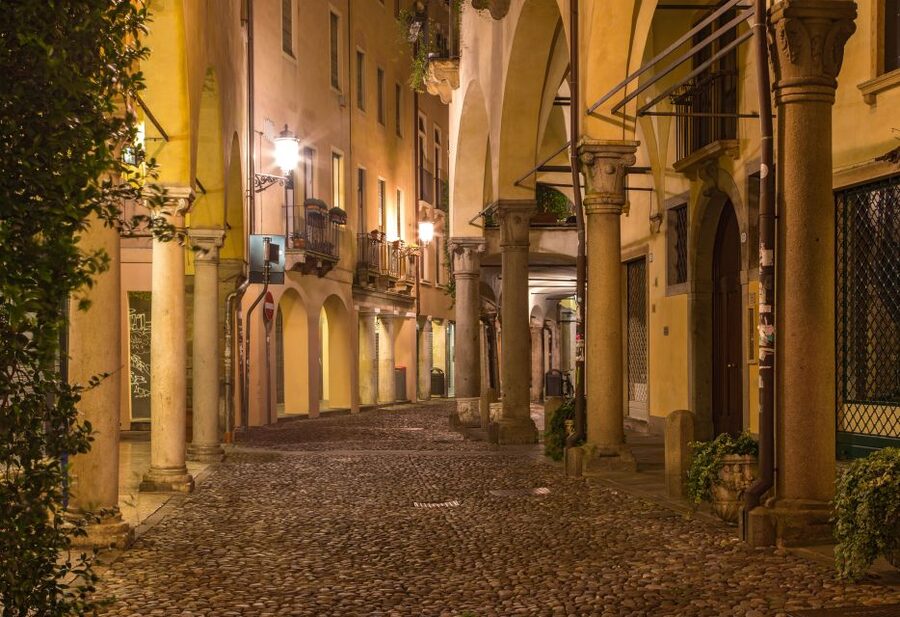
The tour takes place in the historic center, in and around Padua’s ancient ghetto near Piazza delle Erbe. This is a useful setting because you are not studying Jewish life from a distant museum display. You are standing in the streets where the community worked, prayed, studied, and built its social world.
The meeting point is marked by a magenta-colored building. Before the tour begins, show your voucher at the ticket counter. That small practical step matters, since the visit is guided and access to the museum and synagogue is controlled.
The route is compact, but it is not just an indoor museum visit. You move between the former Ashkenazi Synagogue, the narrow ghetto streets, and the Italian Synagogue. Each place adds something different. The museum gives you historical context, the streets show how the quarter was arranged, and the working synagogue brings the story into the present.
The tour lasts about an hour to an hour and a half. That makes it easy to fit into a day that also includes the Scrovegni Chapel, the University of Padua, the Basilica of Saint Anthony, or the central squares. Still, allow the full 90 minutes rather than planning something immediately afterward. A guide may spend extra time answering questions, especially if your group is interested in religious practice, scholarship, or family connections.
More museums in Padua:
- Padova: Baptistery of the Cathedral & Museum of the Diocese
★ 4.6 · 128 reviews - Venice: Leonardo Da Vinci Museum Entrance Ticket
★ 4.5 · 3,560 reviews - Venice’s Best: Basilica, Doge’s Palace, Gondola & History Gallery
★ 4.5 · 2,478 reviews
The former Ashkenazi Synagogue and its layered past
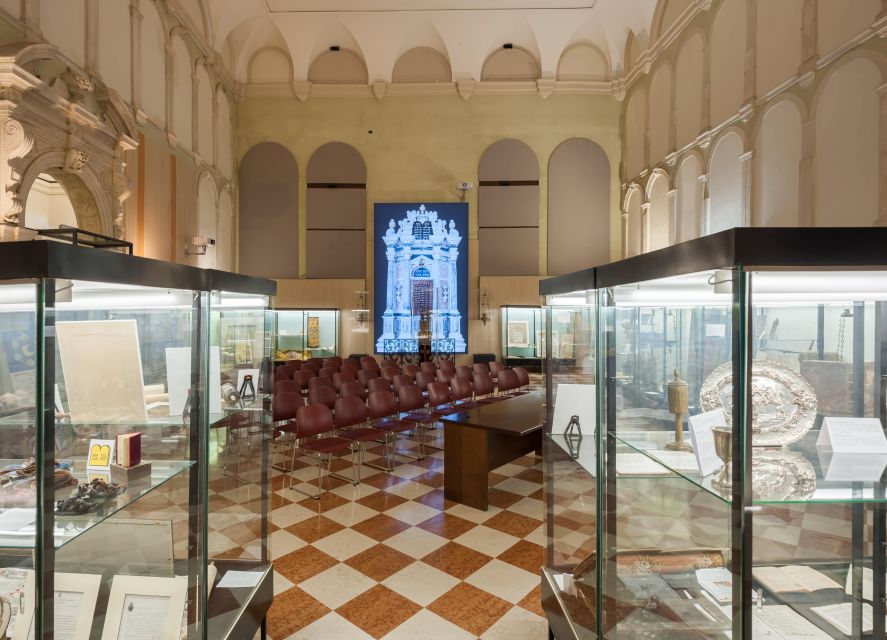
The Padua Jewish Museum is housed in a restored 16th-century Ashkenazi Synagogue. That fact gives the building more weight than a standard gallery. Its walls and layout are part of the subject.
The synagogue was rebuilt in the 1990s after a fire set by fascists in 1943. Knowing this before you enter changes how you look at the building. You are seeing both an older place of worship and a later act of preservation. The museum does not treat Jewish history as something that ended in the past. It connects centuries of community life with the survival and renewal of Jewish institutions in Padua today.
Inside, the museum explains the customs and events of the Padua Jewish community from its beginnings to the present. The displays cover religious practice, community organization, and the people who gave Padua its particular place in Jewish Italian history.
I find this approach more useful than a collection of beautiful objects without a clear story. The guide explains what you are seeing and why it mattered. If you have little background in Jewish history, the visit gives you a firm introduction. If you already know something about Italian Jewish communities, the focus on Padua’s scholars and institutions adds local detail.
Ten personal stories through film
One of the most distinctive parts of the museum is a multimedia installation directed by Denis Brotto. Ten important figures from Padua’s Jewish life appear through video and storytelling connected to specific places in the city.
This technique gives the tour a human scale. Dates and institutions can blur together, but a person’s choices, work, and religious life are easier to remember. The figures narrate their stories through locations connected with Padua Judaism, so the films also prepare you for the walking portion of the visit.
Two short documentary films have been especially noted as powerful parts of the museum experience. The installation is not a substitute for the guide. Instead, it gives the guide another tool for explaining how scholarship, worship, and city life intersected.
The museum’s figures include major rabbis and scholars linked with Padua’s long Jewish tradition, including Rabbi Judah Minz, Maharam Padua, and Rabbi Moshe Chaim Luzzatto, also known as the Ramchal. Your guide can explain why these names matter and how Padua became an important center for Jewish learning.
This is also where the University of Padua enters the story. The university, nearly 800 years old, was among the early European universities open to Jewish students and scholars. That link helps explain why Padua’s Jewish past is not only about worship and commerce. It is also about study, medicine, law, and the movement of ideas.
Walking the narrow ghetto streets
After the museum, the guide leads you through the old ghetto. The streets are narrow and access can be restricted, so this is a walking segment rather than a broad city tour. Wear sensible shoes, and expect the pace to be easy and focused on explanation rather than distance.
The guide describes how the Jewish settlement developed and how the quarter functioned. You hear about its commercial, social, cultural, and religious life. The value here comes from making connections. A street is not simply an old lane. It becomes part of a story about where people lived, worked, traded, studied, and met one another.
This portion may be the least dramatic visually, especially if you expect grand monuments. It is also the part most likely to reward careful listening. Padua’s Jewish story is spread through ordinary urban spaces, and the guide helps you notice what you would probably pass without a second thought.
Families can handle this section well because the walk is short and the subject is presented through stories rather than a long lecture. Older children with an interest in history, religion, or city life should find it approachable. Younger children may get less from the historical detail, particularly during the museum videos.
More history tours in Padua:
- Venice: City Center Historical Guided Walking Tour
★ 4.2 · 1,873 reviews - Verona: History and Hidden Gems Guided Walking Tour
★ 5.0 · 1,379 reviews - Venice: Bell Tower & St Mark’s Square History Gallery Ticket
★ 4.3 · 910 reviews - Basilica, Doge’s Palace, History Gallery & Bell Tower Option
★ 5.0 · 586 reviews
Entering the Italian Synagogue
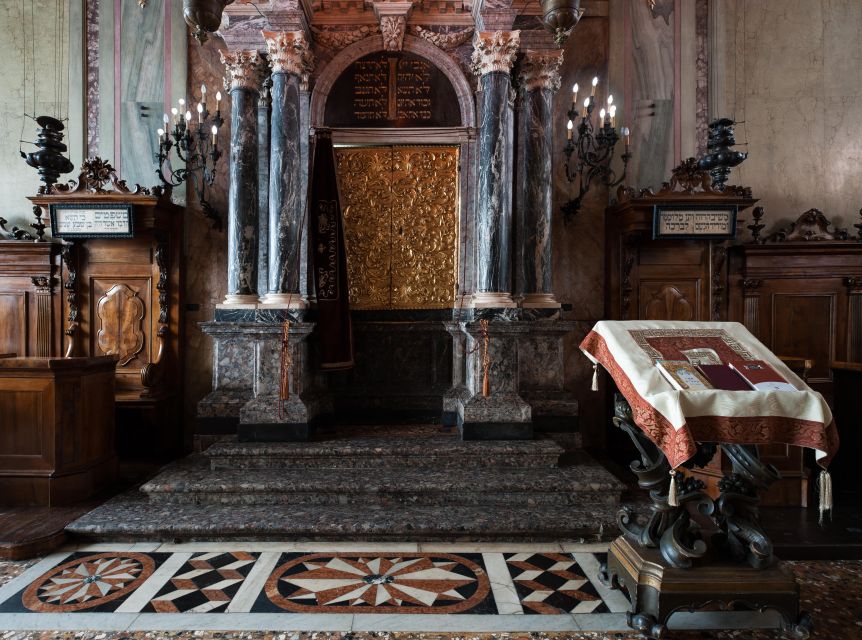
The tour ends at the Italian Synagogue, which remains an active place of prayer for Padua’s Jewish community. This is an important distinction. You are not looking only at a preserved monument. You are entering a religious space that still serves its original purpose.
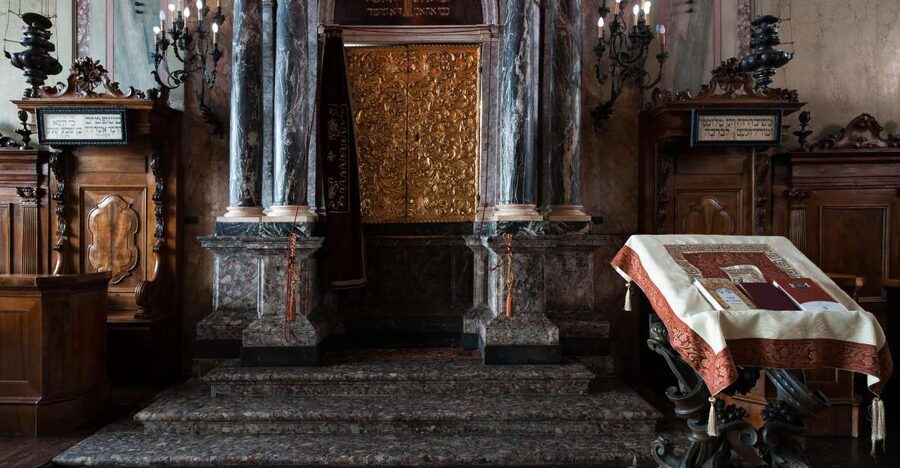
The synagogue’s central feature is the polychrome marble Aron-ha-Kodesh, the sacred cabinet on the eastern wall that holds the Torah scrolls. The guide explains its architecture, color, placement, and role in worship. Because it is still used for prayer, the visit also gives you a clearer sense of how a synagogue functions rather than treating it as a decorative room.
Dress respectfully. Shorts and sleeveless shirts are not allowed, and nudity is obviously prohibited. Modest clothing is the safe choice for any visit to an active house of worship.
The synagogue is a strong ending because it shifts the focus from historical loss to continued religious life. After the museum’s account of persecution, destruction, and rebuilding, you see a functioning community space. The result is more balanced than a visit that presents Jewish life only as a chapter from the past.
What the guides add to the experience
The guide is a major part of the value here. The tour is offered in English or Italian, and the strongest praise has gone to guides who combine historical detail with a clear, warm presentation.
Antonella has been singled out for her storytelling and for her ability to explain Padua’s Jewish scholars, the ghetto, and the synagogue’s art with care. Simonetta has also been praised for making a large amount of information easy to follow. Isaiah led a particularly question-heavy visit and was able to discuss Jewish sites, the rabbis connected with the museum, and the university’s role.
You should feel comfortable asking questions. The experience is not just a fixed speech followed by a quick exit. The guides can explain points of architecture, religious practice, and local history in more depth when the group shows interest.
The quality of a guided tour can vary with the individual guide and group dynamic, so it is wise to allow some flexibility. If you want a private, highly customized scholarly tour, this may not be the right format. If you want a compact introduction with access to places you might not understand on your own, it is a strong choice.
Is the $17 price good value?
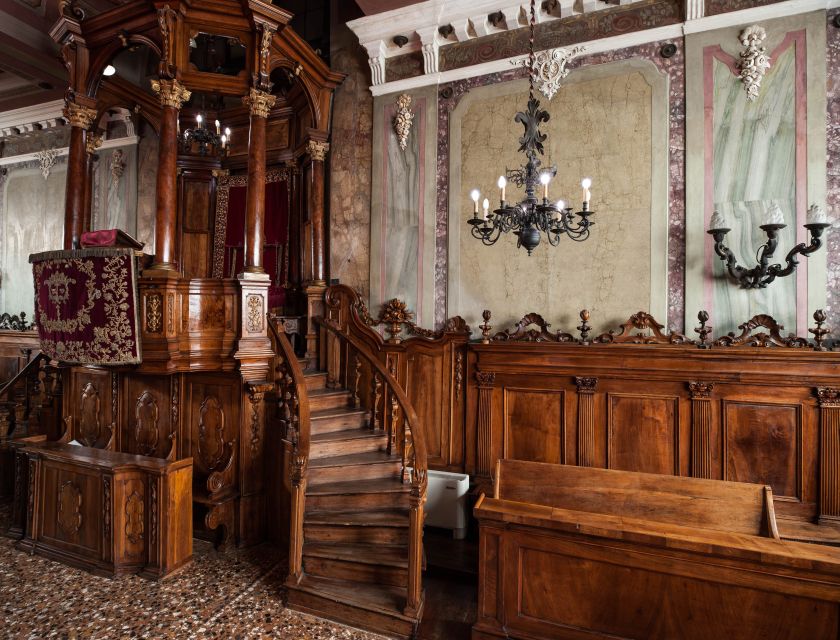
At about $17 per person, the tour is good value if that is the applicable rate for your booking. The fee includes admission to both the Padua Jewish Museum and the synagogue, a live guided tour, and the multimedia presentation.
You are paying for more than entry to a small museum. The guide supplies the historical links, the museum provides the films and displays, and the synagogue adds access to an active religious site. That combination would be difficult to recreate by wandering through the ghetto alone.
There is one important pricing wrinkle. On weekdays, a €60 ticket is requested for reservations. The information provided says you should book a time slot where other people have already booked if you want to share that amount. Check the exact terms before paying, especially if you are booking for a small party or arranging a weekday visit.
For a family or group of several adults, the regular per-person price offers particularly good value. A family group of nine adults found the visit meaningful, and the format works well for relatives with different levels of prior knowledge. For a solo visitor, the value depends more on your interest in Jewish history and the guide’s ability to tailor the discussion.
Timing, access, and practical planning
The stated duration is 1 to 1.5 hours. The tour is short, but it covers several settings and includes video, indoor explanations, and a walking segment. You do not need to set aside half a day.
The experience is wheelchair accessible. Since the route includes narrow and restricted ghetto streets, ask about the exact route when booking if you have specific mobility needs. The supplied information confirms accessibility, but it does not give detailed measurements or describe every surface.
English and Italian tours are available. Check the starting time when you reserve, since departure times vary by availability. The booking terms allow free cancellation up to 24 hours in advance for a full refund, and you can reserve now and pay later.
The museum and synagogue are in Padua’s historic center, so this tour pairs naturally with a broader walking day. You can combine it with the university area, the central markets near Piazza delle Erbe, or other central sights without arranging separate transportation between each stop.
Who should book this tour?
I would put this near the top of the list for anyone with an interest in Jewish history, Italian religious heritage, architecture, or the history of universities. It is also a thoughtful choice if you want to see Padua beyond its most famous Christian monuments.
The tour suits adults and older children who can follow historical explanation. It is especially useful for people with Jewish family or religious connections, since the working synagogue and the discussion of scholars such as Judah Minz and the Ramchal add a strong sense of continuity.
You do not need to be religious to appreciate it. The tour covers urban history, architecture, scholarship, politics, and the effects of fascist persecution. It also shows how a minority community shaped and was shaped by the city around it.
You may want to skip it if your schedule is extremely tight or if you prefer independent sightseeing with little guided explanation. The museum is small, and the experience depends on listening. But if you can spare 90 minutes, the tour offers a focused and substantial look at a part of Padua that many people miss.
Should you book the Padua Jewish Museum and Synagogue Tour?
Book it if you want a personal, well-explained account of Padua’s Jewish community rather than a quick look at an old building. The former Ashkenazi Synagogue, Denis Brotto’s multimedia installation, the ghetto streets, and the active Italian Synagogue form a clear and moving sequence.
Pay close attention to the weekday €60 condition, dress modestly, and choose a slot that fits your day. For most visitors interested in history or culture, the modest regular price and short duration make this one of Padua’s more worthwhile specialist tours.
FAQ
How long does the Padua Jewish Museum and Synagogue Tour last?
The tour lasts about 1 to 1.5 hours, depending on the starting time and the pace of the guided visit.
What does the tour include?
The price includes admission to the Padua Jewish Museum and Padua Synagogue, a live guided tour, and the multimedia experience.
Which languages are available?
The tour is offered in English and Italian.
Where does the tour meet?
The meeting point is at a magenta-colored building on the street. Show your voucher at the ticket counter before the tour begins.
Is the tour wheelchair accessible?
Yes, the activity is listed as wheelchair accessible. The route also includes narrow and restricted streets in the old ghetto.
What should I wear to the synagogue?
Shorts and sleeveless shirts are not allowed. Wear modest clothing suitable for entering an active place of worship.
Just added around Padua
- Live Padua as a local★ 5.0 · 43 reviews
- Padova: Digital Guide made with a Local for your tour★ 4.1 · 53 reviews
- Best of Padova: Private Walking Tour with a Local★ 3.8 · 56 reviews
- Padua: Scrovegni Chapel Ticket and Audio Guide★ 3.9 · 61 reviews
- Padova: Baptistery of the Cathedral & Museum of the Diocese★ 4.6 · 128 reviews
- Padua Hop-on Hop-off Tour: 24-Hour Ticket★ 3.5 · 134 reviews
- Cesarine: Small group Pasta and Tiramisu class in Padua★ 4.5 · 13 reviews
- DA Padova: Wine tour in the Euganean Hills★ 5.0 · 15 reviews
Museums, compared.
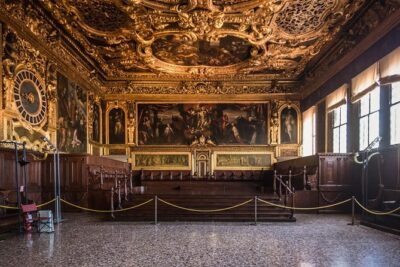
Venice’s Best: Basilica, Doge’s Palace, Gondola & History Gallery
Read our review →
Vivaldi’s Four Seasons Concert & Music Museum Visit
Read our review →
Charming Gondola Ride on the Grand Canal & Gondola Gallery™
Read our review →
Bell Tower & St Mark’s Square History Gallery Ticket
Read our review →
Venice Museum Pass & Doge’s Palace Entrance Ticket
Read our review →
Basilica, Doge’s Palace, History Gallery & Bell Tower Option
Read our review →
Browse the lists this tour appears in