
Reviewed · WALKING TOURS
Trieste Private Walking Tour
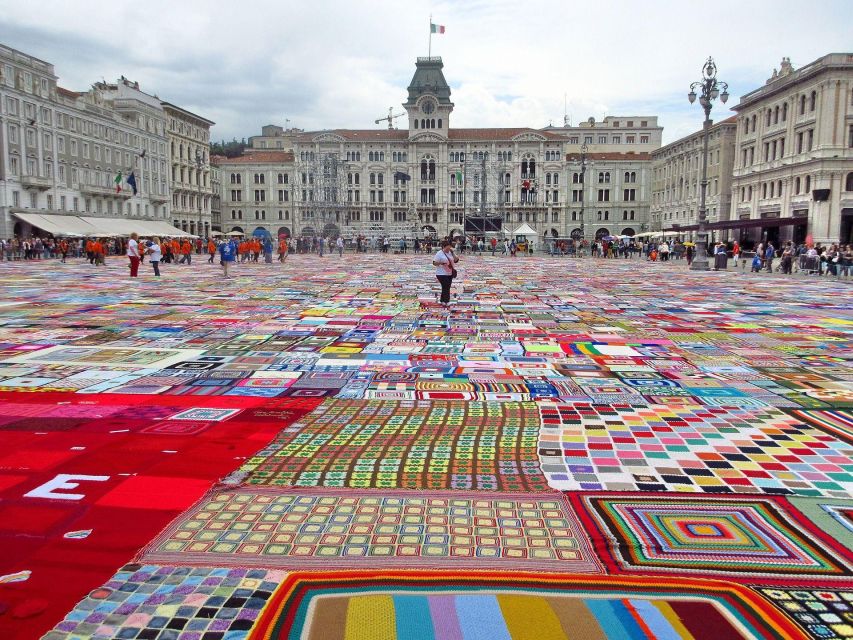
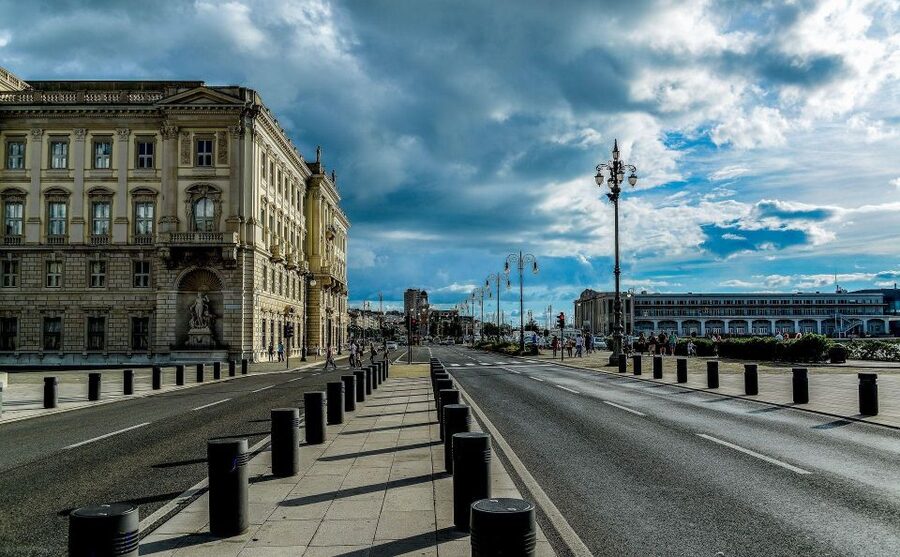
Trieste’s best introduction begins beside the Adriatic, in Piazza Unità d’Italia, where grand Neoclassical buildings frame one of Europe’s largest squares by the sea. This private walk connects that impressive setting with the city’s Italian, Austro-Hungarian, and Slovenian influences, giving you a useful first look at a place that feels unlike most of Italy.
I like the private format, since your guide can adjust the pace and explain the past in a way that works for your group. I also like the compact 1.5-hour route, which fits neatly into a port stop or a first afternoon in town. The main drawback is timing: one booking required a last-minute change to the starting hour, so keep some flexibility in your day.
In This Review
- Key Points to Know Before You Book
- Why Trieste Feels More Central European Than Italian
- Starting in Piazza Unità d’Italia
- Reading Trieste’s Early Chapters
- From the League of Cambrai to Habsburg Trieste
- The Grand Canal and the City’s Seafaring Side
- What a Private Guide Changes
- How Much Value Do You Get for $283.21?
- Timing, Flexibility, and One Important Caution
- Who Will Get the Most from This Walk?
- Should You Book the Trieste Private Walking Tour?
- FAQ
- Where does the Trieste private walking tour start?
- Where does the tour end?
- How long does the tour last?
- Which languages are available?
- Is the tour private?
- Are entrance fees included?
Key Points to Know Before You Book
- Piazza Unità d’Italia is the natural centerpiece: Begin and end beside Trieste’s grand Adriatic-facing square.
- The tour covers many centuries: Expect references to Illyrian origins, the Battle of the Frigidus, Charlemagne in 788, the League of Cambrai, and Habsburg rule.
- Your group stays private: The guide is with your party only, with possible changes to the tour made on the spot.
- The Grand Canal adds a café-lined pause: Trieste’s seafaring past becomes easier to picture along this handsome waterway.
- The tour lasts 1.5 hours: It is a focused orientation walk, not a full-day survey of every sight.
- The price works best for a larger party: At $283.21 for up to 15 people, the per-person cost drops sharply as your group grows.
Why Trieste Feels More Central European Than Italian
Trieste sits at the upper end of the Adriatic, and its character comes from several borders and powers meeting in one port. Italian culture is clear, but so are Austro-Hungarian and Slovenian influences. The result is a city center of broad squares, formal façades, cafés, and seafront views rather than the tight medieval lanes you may expect elsewhere in Italy.
The nickname Vienna by the sea gives you a helpful starting point. It points to the city’s grand Central European look, while the Adriatic explains its open, maritime feel. You get both on this walk: elegant buildings on one side and the water on the other.
I find that this mix is the main reason to take a guided walk here. Trieste can look simple at first glance, with one handsome square leading to another. A local guide gives those façades a purpose and explains why the city developed in a style that feels different from nearby Venice or other Italian ports.
More Walking Tours in Trieste
- Trieste: Guided Foodie Walking Tour
★ 4.9 · 142 reviews - Trieste: 2-Hour Private Walking Tour
★ 4.8 · 87 reviews - Trieste Walking Tour with Audio and Written Guide by a Local
★ 4.5 · 73 reviews
Starting in Piazza Unità d’Italia
The meeting point is Piazza Unità d’Italia, at 34121 Trieste. This is an excellent place to begin because the square gives you an immediate sense of Trieste’s scale and position. It opens toward the Adriatic and is lined with imposing Neoclassical buildings.
You can expect the guide to use the square as a visual introduction to the city’s political and commercial importance. Instead of starting with a long list of dates, look at the buildings around you and consider what kind of city needed such a formal public space. The setting makes the story easier to follow.
The square is also practical. Since the activity ends back at the meeting point, you can continue your own plans from the same central area. That makes the tour useful before dinner, after arriving by cruise ship, or at the start of a day spent exploring Trieste on foot.
The route’s emphasis is on the historic center rather than paid attractions. That matters because entrance fees are not included, and this activity is built around streets, squares, architecture, and explanation. You should not book it expecting a museum visit or a tour inside a specific monument.
Reading Trieste’s Early Chapters
The historical discussion reaches back to Trieste’s Illyrian origins. You will not simply hear that the city is old. You will get a sense of the earlier peoples and forces that shaped the area before later Roman, medieval, and imperial chapters took over.
The Battle of the Frigidus is another unusual subject included in the tour. It is not the kind of event most short city walks mention, so it gives the experience a wider frame. The battle helps place Trieste within the shifting power struggles of late antiquity and shows that the area’s story was tied to events far beyond its waterfront.
The tour also reaches Charlemagne’s submission in 788. This date gives you a clear marker for the city’s medieval period and shows how political control changed over time. A short walk cannot explain every detail, but these selected turning points help you understand why Trieste’s identity is layered rather than simple.
This is where a private guide can be particularly useful. Your group can stop to ask how one period connects with the next, or ask for more explanation if medieval politics is your interest. If your group prefers architecture and has less patience for dates, the guide can likely adjust the balance on the spot, though the exact changes depend on the guide and the time available.
From the League of Cambrai to Habsburg Trieste
The League of Cambrai forms another part of the story. This political and military alliance affected the balance of power in northern Italy and nearby territories. Including it helps explain why Trieste cannot be understood only through its local streets. The city’s fate was often tied to wider struggles between powerful states.
The most important later chapter is Trieste’s role in the Habsburg Empire. This is the key to much of the city’s Central European appearance and its position as a major seaport. The Habsburg connection helps explain why the city’s public spaces can feel more like an imperial capital than a typical Italian town.
You will get more from the buildings when you know what to look for. Formal architecture is not just decoration here. It reflects administration, trade, civic pride, and a long period when Trieste served a large empire facing the Adriatic.
The walk does not promise an exhaustive account of every ruler or conflict. Its strength is selection. In 90 minutes, you receive a series of useful historical signposts, then see how those changes appear in the city center. If you want a specialist military history tour, this is probably too short. If you want context before exploring on your own, the scope is sensible.
A different sort of day out around Trieste:
- Trieste Bus Tour with Audio Guide
★ 4.5 · 1,648 reviews - Trieste Bus Tour with Audio Guide
★ 4.0 · 214 reviews - Trieste: Miramare Castle & Museum Entry Ticket & Audio App
★ 4.2 · 213 reviews - Lake Bled and Ljubljana Tour from Trieste
★ 4.5 · 193 reviews
The Grand Canal and the City’s Seafaring Side
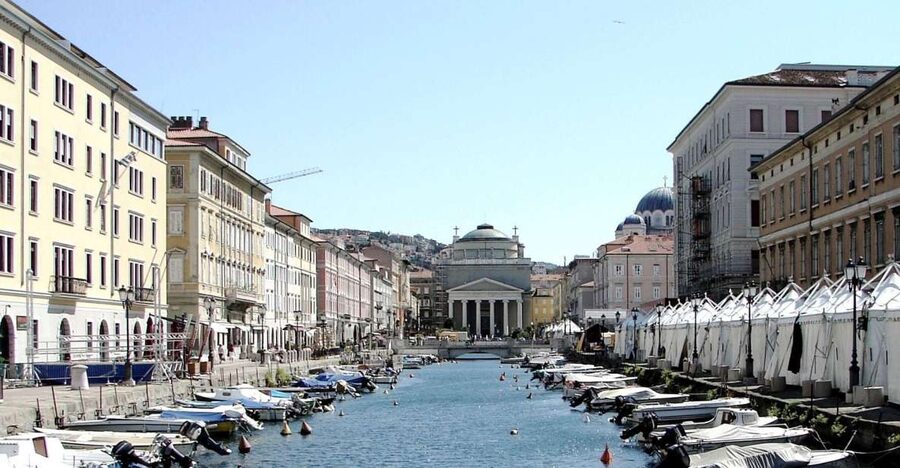
The Grand Canal adds a different mood to the tour. Open-air cafés line the water, and the canal offers a direct reminder that Trieste was shaped by shipping and commerce. After the formal setting of Piazza Unità d’Italia, this is a more relaxed place to see the city’s everyday public life.
The canal also helps connect Trieste with its wider Adriatic setting. The city’s story is not only about emperors and battles. It is also about water, trade, movement, and the people who made a living from a seaport.
I like this contrast in a short walking tour. You move between grand civic architecture and a waterway with cafés, so the city does not feel like a collection of dates. You get a look at both the official face of Trieste and the social side of its historic center.
Do not expect a long waterfront excursion. The listed duration is only 1.5 hours, and the experience ends where it begins. The value is in seeing the central highlights in a clear order, not in covering the entire coastline.
What a Private Guide Changes
A private group means the guide is with your party only. That is a meaningful advantage if you are traveling with family or friends who want to ask questions without holding up a large crowd. It also gives the guide room to adjust the pace, within the limits of a short tour.
The activity allows possible customization with your local guide on the spot. This does not mean every request can be added, especially when the walk has only 90 minutes. It does mean you can speak up about your interests. If you care most about Habsburg Trieste, architecture, or the city’s seafaring past, say so early.
The available tour languages are English and Italian. Check that your preferred language is offered when selecting a time. A guide who can explain the city clearly matters more here than a long list of stops, since much of the experience comes from connecting what you see with the historical background.
Alessia Pearson Abagnale is one guide associated with this experience. Her approach has been described as warm, clear, and able to draw younger members of a group into the discussion. That detail is useful if you are traveling with teenagers or children who may lose interest during a history-heavy walk. The important point is not just the amount of information, but the way it is delivered.
How Much Value Do You Get for $283.21?
The listed price is $283.21 per group of up to 15 people. That is expensive for one or two people, but the calculation changes when several people share the cost. For a full group of 15, the price works out to about $18.88 per person. For six people, it is about $47.20 each, while a couple would pay the full group rate between them.
That makes this a better fit for families, friends, or a small organized group than for solo visitors. A shared public walk could be cheaper, but it would not give you the same private setting or the same chance to shape the conversation.
You should also factor in what is not included. Entrance fees are extra, although the stated program focuses on outdoor city sights and does not promise admission to a specific attraction. You are mainly paying for the guide’s time, interpretation, and the convenience of a private route through the center.
For a first look at Trieste, that can be fair value, especially if your group wants context rather than wandering without a plan. For visitors who already know the city well, or who prefer to explore at their own pace, the price may be harder to justify.
Timing, Flexibility, and One Important Caution
The tour lasts 1.5 hours, with starting times based on availability. That short length is easy to fit into a busy schedule. It can work as an orientation before an independent afternoon, or as a compact introduction during a brief stop in Trieste.
There is one practical warning. A scheduled departure once had to be changed at very short notice, with the new time communicated late the evening before. The tour was saved, but the group had to alter its plans quickly. I would avoid placing an unmovable reservation immediately afterward.
The experience offers free cancellation up to 24 hours before the start for a full refund. You can also reserve and pay later, which helps if your wider travel plans are still shifting. Those terms do not remove the need to check the starting time carefully, but they do make the booking less rigid.
Since the walk starts and ends at Piazza Unità d’Italia, you do not need to arrange transport between two separate points. That is especially handy if you are building a day around the historic center.
Who Will Get the Most from This Walk?
I would choose this tour if you are visiting Trieste for the first time and want someone to explain why the city looks and feels different from much of Italy. The combination of seafront architecture, the Grand Canal, and imperial history gives you a useful framework for later independent sightseeing.
It also suits families. The private setup gives a guide more room to respond to questions, and Alessia Pearson Abagnale’s ability to involve younger participants is a good sign for groups with children or teenagers. Still, the tour is history-focused, so very young children may not care about the Battle of the Frigidus or Charlemagne.
This is also a good choice for people who prefer a focused walk rather than a long day of sightseeing. Ninety minutes is enough to get your bearings without wearing out your feet. The tradeoff is that you will not see every district, museum, or church in Trieste.
I would be less likely to book it if you need guaranteed departure times with no chance of adjustment, or if you want entrance to an attraction included. The activity is strongest as a guided outdoor introduction.
Should You Book the Trieste Private Walking Tour?
Book it if you are sharing the cost with a group and want a clear, personal introduction to Trieste’s unusual blend of Italian, Slovenian, and Austro-Hungarian culture. Piazza Unità d’Italia and the Grand Canal give the walk strong visual appeal, while the historical subjects add substance beyond a quick photo stop.
The best value comes with a larger party. Solo visitors and couples may find the group price steep for 90 minutes, while families and groups of friends can split it into a more reasonable per-person cost. Keep your schedule a little loose because the starting time may require adjustment, and remember that entrance fees are separate.
If you want a friendly guide, a private pace, and a useful explanation of Trieste’s past, this is a sensible booking. If you prefer a low-cost, self-guided stroll, you can see the central squares on your own, but you will miss the connections that make the city’s complicated story easier to understand.
FAQ
Where does the Trieste private walking tour start?
The tour starts at Piazza Unità d’Italia, 34121 Trieste TS, Italy.
Where does the tour end?
The activity ends back at the meeting point in Piazza Unità d’Italia.
How long does the tour last?
The walking tour lasts 1.5 hours. Starting times depend on availability.
Which languages are available?
The live guide is available in English and Italian.
Is the tour private?
Yes. The activity is for a private group, and the local professional guide is with your group only.
Are entrance fees included?
No. Entrance fees are not included in the tour price.
Just added around Trieste
- Private Tour to Slovenia from Trieste★ 4.0 · 3 reviews
- Lipica Stud Farm & Skocjan Caves – Small Group Tour from Trieste★ 4.5 · 3 reviews
- Trieste: coffee dive! espresso tasting★ 5.0 · 3 reviews
- Trieste Exploration Game and City Tour on your Phone★ 5.0 · 3 reviews
- Trieste: Freemasons and Secret Societies Guided Tour★ 4.3 · 3 reviews
- Trieste: Private Pasta-Making Class at a Local’s Home★ 3.8 · 4 reviews
- Habsburg Trieste Private Guided Walking Tour★ 5.0 · 4 reviews
- Airport transfer from Trieste Airport to Koper★ 5.0 · 4 reviews
Walking Tours, compared.
Rialto Bridge & Offbeat Unusual Venice Walking Tour
Read our review →
Private 3 hrs Venice Tour: St Mark’s, Walking tour & Boat tour
Read our review →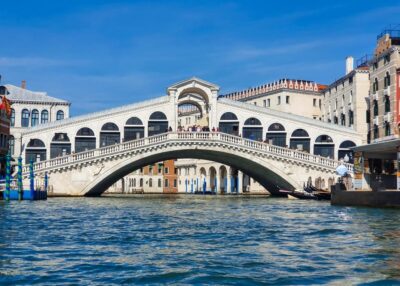
Walking Guided Tour of the City Must-See Sites
Read our review →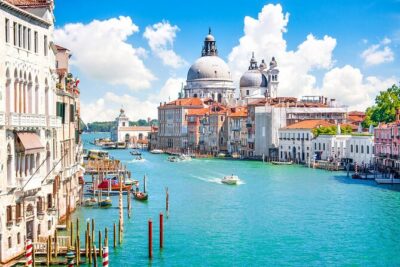
Private Best of Venice Walking Tour with St Mark’s Basilica
Read our review →
Venice Sightseeing Small Group Walking Tour with a Local Guide
Read our review →Browse the lists this tour appears in