Reviewed · TICKETS
Venice: Ticket to Scuola Grande San Giovanni Evangelista
The most striking thing here is the chance to enter a working piece of Venice’s religious and civic past without the crowds that gather around the city’s famous palaces. The Scuola Grande San Giovanni Evangelista was founded in 1261, and its rooms bring together Gothic stonework, Renaissance design, Baroque painting, and a revered relic linked to miracles.
I like the Mauro Codussi staircase, a grand architectural moment that makes simply going upstairs feel like part of the visit. I also like the quiet focus of the place: you come for art and faith, not for a sweeping canal view. The main consideration is that no guide is included, so you need to bring your own context or read the information as you go.
In This Review
- Key points at a glance
- Why this old Venetian scuola is worth your time
- Entering through the marble septum
- The Gothic Columns Hall and its public role
- Climbing Mauro Codussi’s staircase
- The Chapter Hall and its Baroque paintings
- The Oratory Hall and the true-cross relic
- How the visit compares with Venice’s better-known sights
- Time, language, and ticket details
- Who should book this $9 experience
- Should you book the Scuola Grande San Giovanni Evangelista?
- FAQ
- Where is the experience held?
- How much does the ticket cost?
- How long is the ticket valid?
- Is a guide included?
- Is assistance available in English?
- What are the main rooms and features I will see?
- Can I cancel the booking?
Key points at a glance
- 800 years of Venetian history: Visit the second-oldest scuola in Venice, founded in 1261.
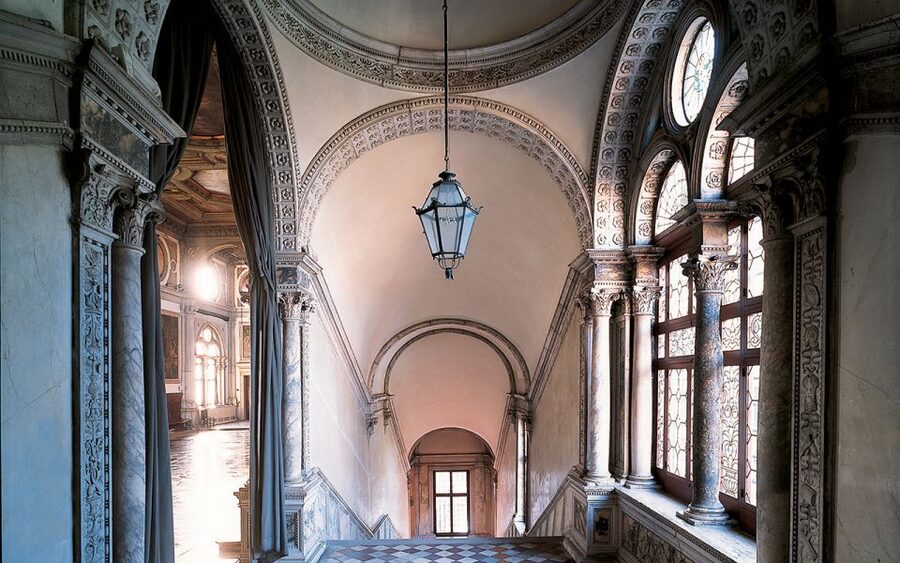
- Mauro Codussi’s Renaissance staircase: Climb the monumental staircase added in 1498.
- Gothic Columns Hall: Enter the former reception space for brothers and pilgrims.
- Baroque painting: See works connected with Domenico Tintoretto, Giandomenico Tiepolo, and Jacopo Marieschi.
- The 1369 true-cross relic: Visit the Oratory Hall and the object that inspired the Cycle on the Miracles of the Cross.
- Good value for a self-guided stop: At $9 per person, this is an inexpensive way to add serious art and architecture to a Venice day.
Why this old Venetian scuola is worth your time
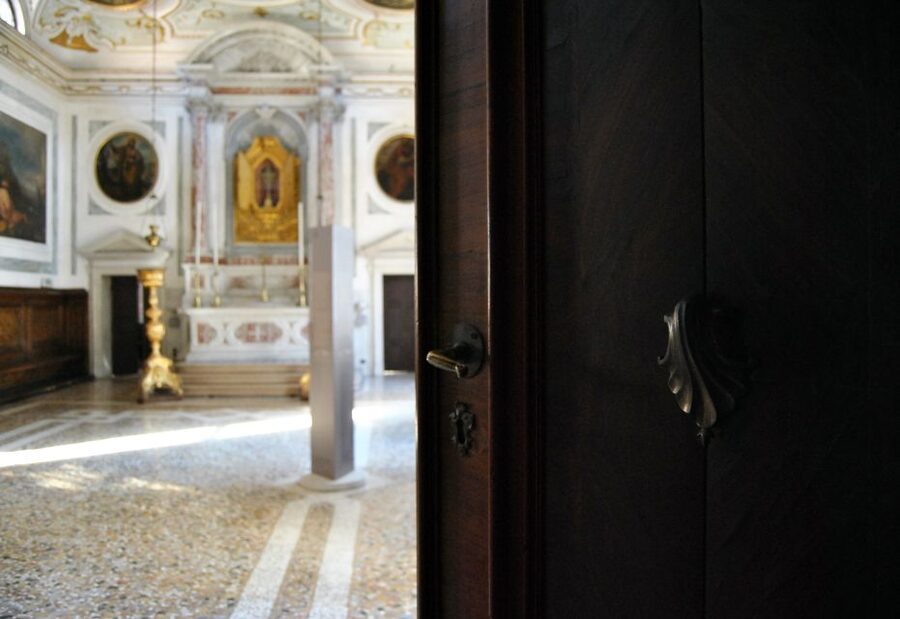
Venice is full of grand churches and famous museums, but the Scuola Grande San Giovanni Evangelista offers a different kind of visit. A scuola was a lay brotherhood, a religious and social institution run by citizens rather than a monastery. These groups supported charitable work, worship, and community life.
That distinction matters. You are not simply looking at a church interior. You are moving through the rooms where a brotherhood welcomed members, pilgrims, and visitors. The building shows how devotion, public ceremony, art, and Venetian civic life once fitted together.
The scuola was founded in 1261 and is described as the second oldest in Venice. That gives the visit a long time span, but the building is not frozen in one era. Gothic elements sit beside Renaissance design, while Baroque paintings fill later rooms. You can read the place almost like a layered city street, with each period leaving its mark.
The attraction currently carries a 4.8 out of 5 rating from 71 bookings. The strongest praise centers on three things: the impressive building, the serious artistic content, and the helpful, courteous welcome. One useful point comes from a longtime Venice resident who had returned to the city many times yet had never visited the scuola. That tells you something about its place in the city: it is easy to miss, even for people who know Venice well.
A few more Venice days to weigh up
- Venice: Doge’s Palace Reserved Entry Ticket
★ 4.6 · 42,716 reviews - Venice: Grand Canal Gondola Ride with App Commentary
★ 4.1 · 18,908 reviews - Boat Trip: Glimpse of Murano, Torcello & Burano Islands
★ 4.3 · 15,699 reviews
Entering through the marble septum
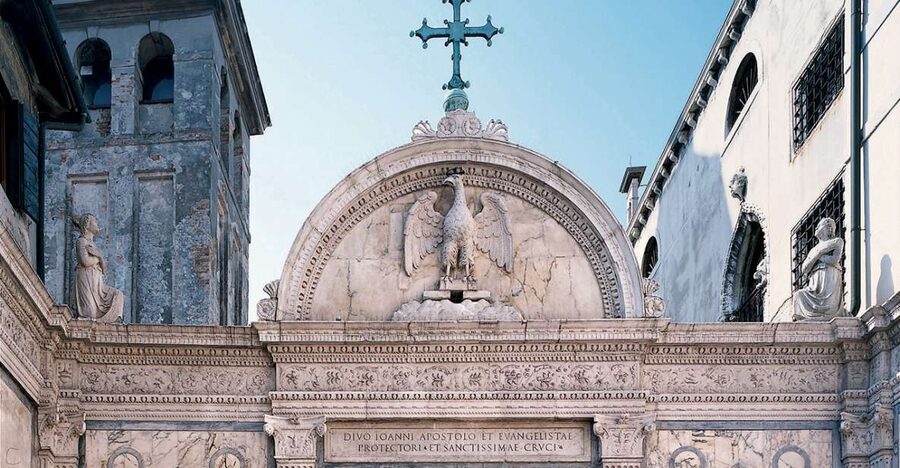
Your visit begins when you show your ticket at the Scuola Grande San Giovanni Evangelista di Venezia. The first major feature is the extraordinary marble septum, which forms the transition into the historic interior.
This is not just a decorative doorway. It prepares you for the building’s formal purpose. The scuola was designed for gatherings, ceremonies, worship, and the display of objects important to the brotherhood. The marble work gives the entrance a sense of ceremony before you have even reached the main halls.
I would take a moment here rather than rushing toward the next room. Venice rewards slow looking, and the entrance gives you an early clue that this is an architectural visit as much as an art visit.
The Gothic Columns Hall and its public role
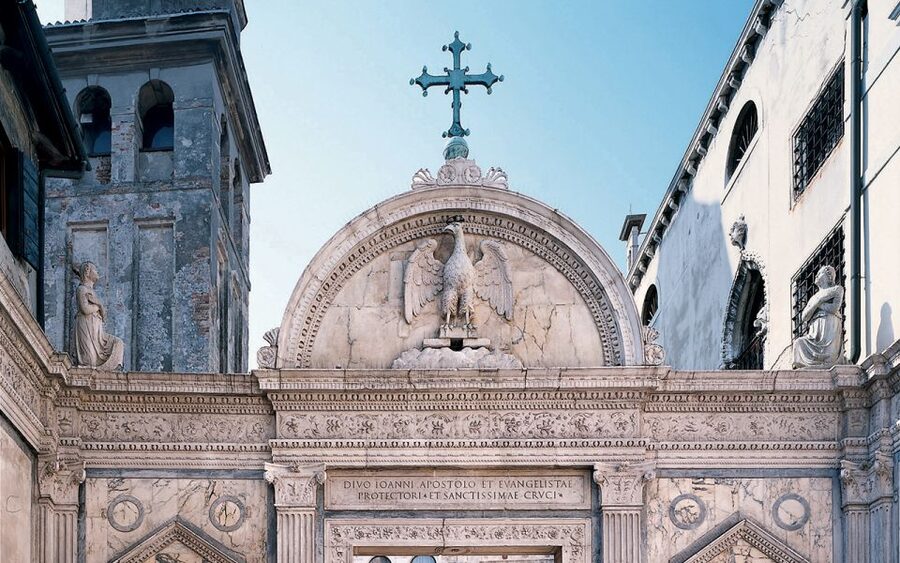
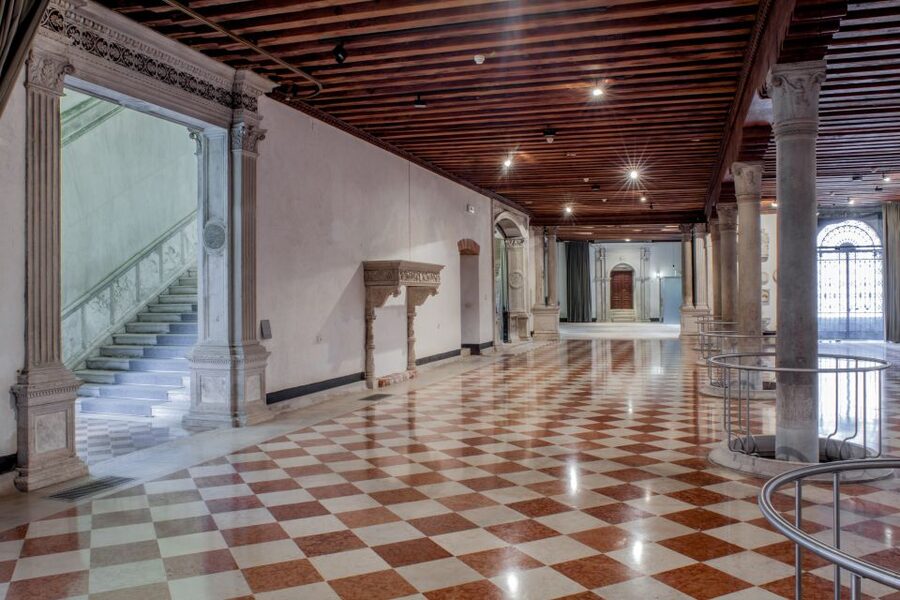
The Gothic Columns Hall was intended to welcome assemblies of the brothers and pilgrims. Its name points to the feature you will notice first: the columns and the medieval character of the space.
This room helps explain how the scuola functioned. It was not a private chapel hidden from public life. People gathered here, visitors arrived here, and the brotherhood presented itself through the design of the hall. The Gothic setting gives the room a strong sense of age without relying on a single famous painting to make the visit worthwhile.
If your main interest is architecture, this is one of the most satisfying parts of the experience. You can study the proportions, the columns, and the way the room handles movement. If you prefer paintings, give it time anyway. The hall provides the setting that makes the later rooms feel connected rather than like a series of unrelated displays.
One practical point: the ticket is valid for one day, not for a fixed guided departure. That lets you fit the visit around your Venice plans, but you should still check the available starting times when booking. The supplied details do not state how long you must spend inside, so plan enough room to look carefully rather than treating it as a quick photo stop.
Climbing Mauro Codussi’s staircase
The staircase added by Mauro Codussi in 1498 is the architectural centerpiece of the route. Codussi was one of the important Renaissance architects working in Venice, and this staircase gives you a clear change from the Gothic character below.
I like stops such as this because they make architecture physical. You are not only looking at a Renaissance design from across a room. You are ascending it. The staircase controls your pace and creates a sense of arrival as you move toward the upper halls.
Its date, 1498, also places it at a useful point in Venetian history. The scuola was already more than two centuries old when this new Renaissance feature was added. That contrast is the point: the institution continued to develop, and its building changed to reflect new artistic ideas.
The staircase may be less suitable for anyone who finds stairs difficult, since the visit specifically includes ascending it and no accessibility details are provided. The available information does not state whether an alternative route or lift exists, so contact the venue directly if that question matters to you.
A different sort of day out around Venice:
- Venice: Grand Canal by Gondola with Live Commentary
★ 4.1 · 13,681 reviews - Venice: La Fenice Opera House Entry Ticket with Audio Guide
★ 4.6 · 11,742 reviews - Doge’s Palace & St. Mark’s Basilica with Terrace Access Tour
★ 4.7 · 10,697 reviews - Venice: Burano, Torcello & Murano Boat Tour w/Glassblowing
★ 4.4 · 10,245 reviews
The Chapter Hall and its Baroque paintings
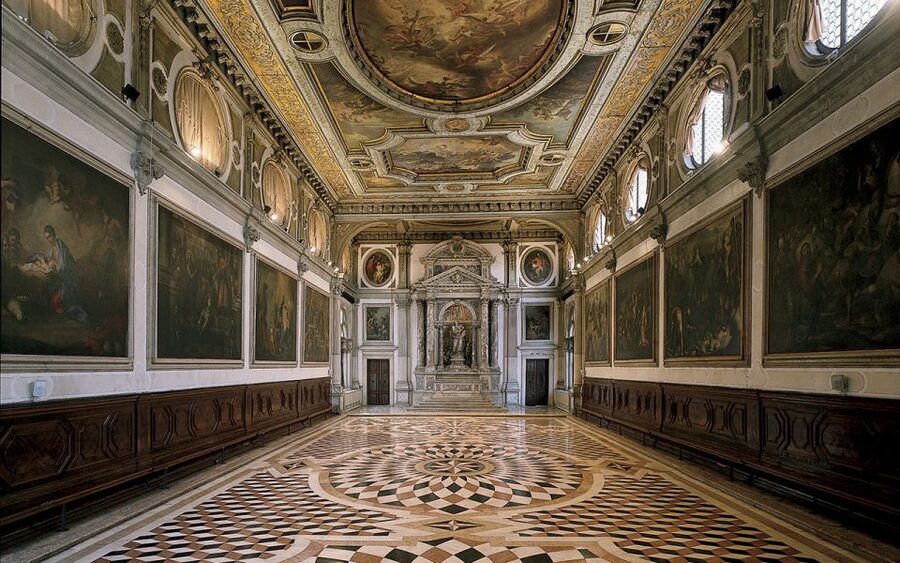
Upstairs, the route continues to the Chapter Hall. This is where the visit shifts into Baroque splendor, with works associated with Domenico Tintoretto, Giandomenico Tiepolo, and Jacopo Marieschi.
Domenico Tintoretto connects the room to Venice’s great painting tradition. Giandomenico Tiepolo brings a later Baroque voice, while Jacopo Marieschi adds another chapter to the city’s long story of decorative and religious art. You do not need to be an art specialist to appreciate the change in mood from the Gothic Columns Hall to this more elaborate room.
I would pay attention to how the paintings work with the architecture. In a room made for the governing chapter of the brotherhood, large religious pictures were not random decoration. They helped shape the identity of the group and gave its meetings a formal, sacred setting.
The attraction also has a connection to the famous Cycle on the Miracles of the Cross. Some of the major canvases are now at the Accademia, so the full cycle is not presented in one place here. That is worth knowing before you arrive. Even without every canvas, the Chapter Hall retains its architectural power and its link to one of Venice’s important religious art cycles.
This is also the room most likely to reward a little preparation. Since the ticket does not include a guide, knowing the names Tintoretto, Tiepolo, and Marieschi in advance will help you make sense of what you are seeing. Italian and English host or greeter assistance is available, but this is not described as a guided art-history tour.
The Oratory Hall and the true-cross relic
The Oratory Hall holds the visit’s most important religious object: the relic of the True Cross, dated to 1369. According to the supplied information, this relic inspired the Cycle on the Miracles of the Cross.
That connection gives the paintings a clearer purpose. The cycle was not simply a grand decorative project. It grew from devotion to a specific object believed to have a direct link to the cross. The relic and the paintings belong to the same story, even when the artwork is viewed elsewhere.
For a visitor interested in faith, this may be the most meaningful stop. You are seeing the object around which the scuola’s religious imagination developed. For an art-focused visitor, it provides the subject behind the painting cycle. And for anyone interested in Venice, it shows how relics shaped public life, ceremony, and artistic commissions.
Approach this room with a little respect for its religious role. It is easy to rush through historic interiors in Venice, especially when several sights compete for your attention. Here, the object is not merely an exhibit. It remains a focus of devotion, and that changes the tone of the room.
How the visit compares with Venice’s better-known sights
The Scuola Grande San Giovanni Evangelista will not give you the grand square views of St. Mark’s or the canal-side drama of the Doge’s Palace. If you want a landmark that defines Venice at first glance, choose one of those better-known sights first.
What you gain here is a more focused look at how a Venetian brotherhood lived, gathered, prayed, and expressed its status through art. The building is less famous, and that is part of its appeal. The visit can feel like a useful correction to a Venice schedule built only around headline attractions.
I especially like it for a return visit. One Italian visitor who had lived in Venice from 1998 to 2005 and had returned many times still had not seen the scuola. If you already know the major churches and museums, this is a smart way to add another side of the city without committing to a full-day excursion.
It also suits visitors who want substance for a small price. At $9, you are paying less than many major museum admissions for access to a historic building, several important halls, a Renaissance staircase, Baroque painting, and a medieval relic. The value is strongest if you care about architecture and can give the rooms your attention. It is less compelling if you only want a fast list of famous names.
Time, language, and ticket details
This is a one-day admission rather than a multi-stop tour. You show your ticket at the scuola and explore the stated rooms in sequence. A guide is not included, so expect a self-guided visit with Italian and English host or greeter support available.
The activity information refers to starting times, so check availability for the date you want. The details do not provide a set visit length or group size. That makes it hard to promise how long the experience will take, but it also leaves room for you to fit it into a wider day in Venice.
The reserve-now, pay-later option can help if your plans are still moving. You can also cancel up to 24 hours in advance for a full refund. Those terms are useful in Venice, where weather, train delays, and changing museum plans can quickly rearrange a day.
For the smoothest visit, I would read a little about the scuola before arriving, then let the building lead you. Note the transition from marble entrance to Gothic hall, from Gothic hall to Codussi’s Renaissance staircase, and from staircase to the Baroque Chapter Hall. That sequence is the real story.
Who should book this $9 experience
I would recommend the Scuola Grande San Giovanni Evangelista to:
- Architecture fans: The combination of Gothic columns, the marble septum, and Codussi’s staircase gives you several styles in one compact visit.
- Art lovers: The Chapter Hall brings together names from Venice’s Baroque tradition, including Domenico Tintoretto and Giandomenico Tiepolo.
- Visitors interested in religious history: The 1369 True Cross relic and its link to the miracle cycle make the Oratory Hall especially worthwhile.
- Repeat visitors to Venice: This is an excellent addition after you have seen the most famous sights.
- Budget-conscious sightseers: The $9 ticket offers genuine historical and artistic value without taking over your day.
- Independent explorers: You can visit without committing to a guided group, while Italian and English assistance is available.
I would hesitate only if you need a fully narrated tour, have difficulty with stairs, or want a major landmark with broad city views. The available information does not confirm an alternative to the staircase, and the ticket does not include a guide.
Should you book the Scuola Grande San Giovanni Evangelista?
Book it if you want to see a quieter, more layered side of Venice. For $9, you get an 800-year-old institution, a memorable Renaissance staircase, Gothic and Baroque rooms, notable Venetian painting, and a relic tied to one of the city’s important religious art cycles.
Do not book it expecting a guided lecture or a sprawling museum. This is a compact, self-guided visit, and its rewards come from looking closely. If that sounds like your kind of sightseeing, the high 4.8 rating makes sense, and this lesser-known scuola deserves a place in your Venice plans.
FAQ
Where is the experience held?
The visit takes place at the Scuola Grande San Giovanni Evangelista di Venezia in Veneto, Italy.
How much does the ticket cost?
The listed price is $9 per person.
How long is the ticket valid?
The ticket is valid for one day.
Is a guide included?
No. The ticket includes admission only, and a guide is not included.
Is assistance available in English?
Yes. The host or greeter information lists Italian and English.
What are the main rooms and features I will see?
You can see the marble septum, Gothic Columns Hall, Mauro Codussi’s Renaissance staircase, Chapter Hall, and Oratory Hall.
Can I cancel the booking?
Yes. You can cancel up to 24 hours in advance for a full refund.
Just added around Venice
- Exclusive Private Venice Jewish Ghetto Tour★ 5.0 · 41 reviews
- The Secret Corners of Burano★ 5.0 · 41 reviews
- Verona: Private 2-Hour Walking Tour★ 4.9 · 41 reviews
- Venice: 3-Course Dining Experience at Local Home★ 4.8 · 41 reviews
- Wine Tasting in Venice★ 4.6 · 42 reviews
- St Mark’s Basilica & Doge’s Palace Skip the Line – Semi-Private★ 5.0 · 42 reviews
- Venice Skip lines at Doge’s & St. Mark’s with Exclusive Sky Walk★ 4.5 · 42 reviews
- Venice Saint Mark’s Basilica afternoon guided tour★ 4.5 · 42 reviews
Tickets, compared.
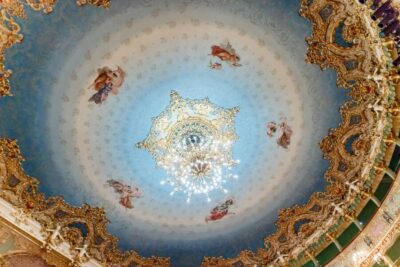
La Fenice Opera House Entry Ticket with Audio Guide
Read our review →
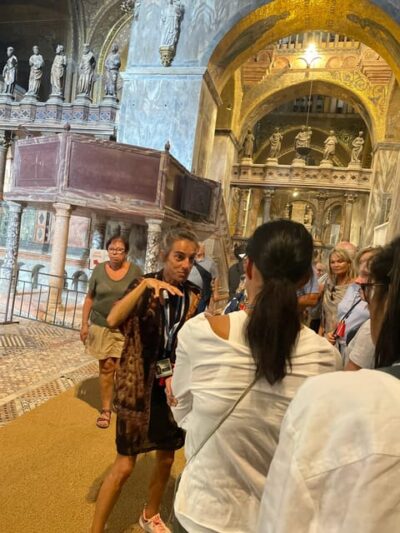
St. Mark’s Basilica & Doge’s Palace Tour with Ticket
Read our review →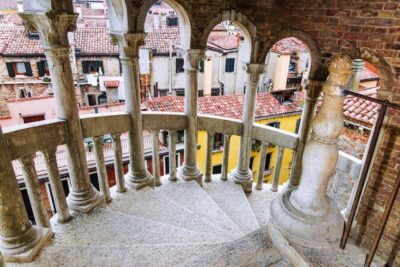
Doge’s Palace & St. Mark’s Basilica Tickets + Tour Options
Read our review →