
Reviewed · HIDDEN GEMS WALKING TOURS
Trieste: Revealing the secrets.
Trieste’s best secret is that it is not just Italian. On this two-hour walk, you’ll meet a city shaped by Roman rule, Slavic and Germanic neighbors, the Habsburg world, modern shipping, and some wonderfully odd local stories. The route begins at the Maria Theresa thaler in Piazza del Ponterosso and leads toward Piazza Unità d’Italia, the grand waterfront square.
I like two things here. First, the tour uses writers and rulers as guides to the city, from Umberto Saba and Italo Svevo to Charles VI and Maria Theresa. Second, it connects history to everyday pleasures, including James Joyce’s favorite cafe and the possibility of tasting blue coffee. Those details give the walk a human scale.
The main consideration is the walking itself. The tour is not suitable for pregnant women, wheelchair users, or people with mobility impairments, and strong wind or sunny weather can affect comfort. Wear good shoes, carry water, and confirm the exact finishing arrangement when you book, since the route is described as ending in Piazza Unità while the meeting information also says the activity ends back at the meeting point.
In This Review
- Key points to know before booking
- Why Trieste needs a story-led walking tour
- Meeting the tour at Piazza del Ponterosso
- Ancient Trieste, Roman remains, and the medieval hill
- Maria Theresa, Charles VI, and the Habsburg connection
- Literary Trieste through Saba, Svevo, and Joyce
- The Spanish prince and Trieste’s stranger stories
- Piazza Unità d’Italia and the waterfront finish
- What the $130.28 group price really means
- Who will enjoy this walk most
- Practical advice for a smoother two hours
- Should you book Trieste: Revealing the Secrets?
- FAQ
- Where does the tour start?
- Where does the tour finish?
- How long does the tour last?
- What languages are available?
- How much does the tour cost?
- Are food and drinks included?
- Are entrance fees included?
- What should I bring?
- Is the tour suitable for wheelchair users?
- Can I cancel for a full refund?
Key points to know before booking
- Start at the Maria Theresa thaler: Meet in Piazza del Ponterosso, a useful central point for beginning your orientation to Trieste.
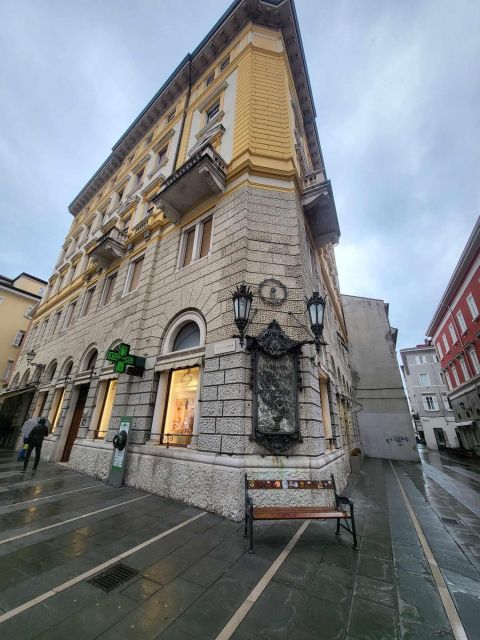
- Follow Trieste through several eras: The walk links the Roman city, medieval defenses, Habsburg rule, modern port, and today’s Italian street life.
- See the city through famous residents: Umberto Saba, Italo Svevo, and James Joyce help turn buildings and cafes into personal stories.
- Expect legends as well as dates: The guide adds local tales, explanations for building obelisks, and stories about a disgraced Spanish prince.
- Finish at Piazza Unità d’Italia: This is Trieste’s grand public room beside the sea and a natural place to continue exploring.
- Book for flexibility: The price is $130.28 per group of up to three, with free cancellation up to 24 hours before the start.
Why Trieste needs a story-led walking tour
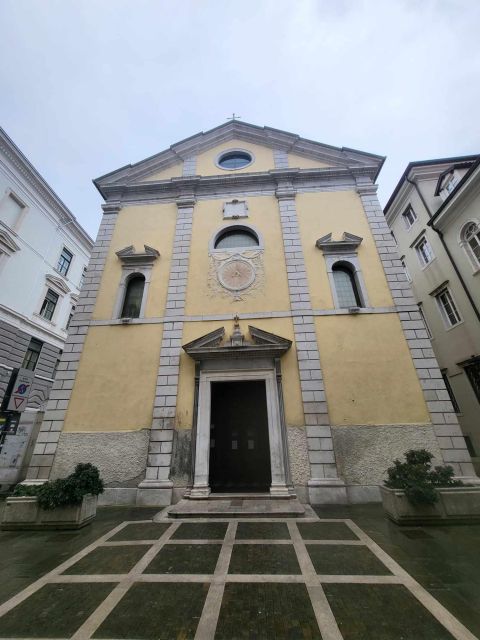
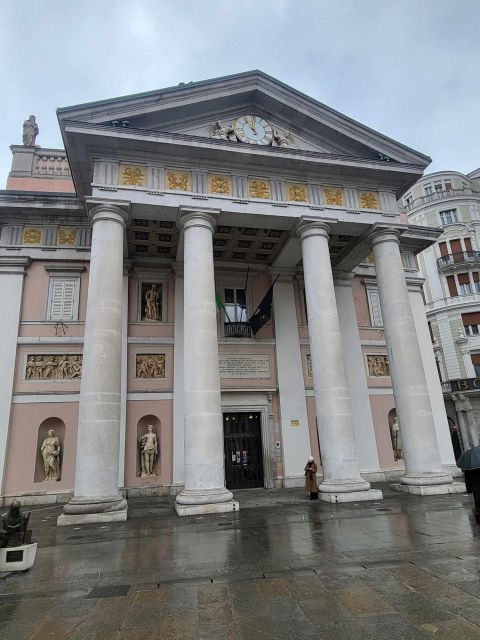
Trieste can feel puzzling at first. It is an Italian city, yet its architecture and public life also reflect Central Europe. It faces the Adriatic, but its history reaches inland toward Austria, Slovenia, and the wider Habsburg realm.
That mix is the point of this tour. Instead of treating Trieste as a simple list of monuments, the guide explains how the city became a meeting place for Latin, Slavic, and Germanic cultures. You also get the practical context of a working port that supplies Europe with coffee and carries containers from the Far East to Austria, Italy, and Slovenia.
I find that useful because Trieste’s appearance makes more sense once you know its political past. Over the last century, the city changed hands several times between opposing sides. The walk sets those changes beside the familiar Italian pleasures of cafes, food, public squares, and busy streets.
The experience is led by a live guide in English, Russian, or Slovenian. The guide also uses cards during the walk, which can help bring people, dates, and events into focus. You are not simply expected to remember a stream of names. The strongest part of the format is its effort to move beyond facts that you could read in a book.
More quiet corners of Trieste:
- Trieste: City Hidden Gems Private Walking Tour
★ 4.9 · 53 reviews - Tour of The Real Hidden Venice
★ 5.0 · 2,006 reviews - Verona: History and Hidden Gems Guided Walking Tour
★ 5.0 · 1,379 reviews
Meeting the tour at Piazza del Ponterosso
Your starting point is the Maria Theresa thaler at Piazza del Ponterosso. The square gives the tour a fitting opening because Maria Theresa is one of the historic figures connected with Trieste’s development.
The exact meeting point matters in a city with several central squares, so allow time to locate the Maria Theresa thaler before the scheduled start. The supplied directions identify Piazza del Ponterosso as the place to meet, with a Google Maps link provided for navigation.
From here, the guide begins the city story rather than dropping you into a single attraction. You should expect an orientation to Trieste’s setting and its layers of rule, trade, and culture. Since the tour lasts two hours, the pace is designed for a concentrated introduction rather than a full museum visit.
The route is on foot, so comfortable shoes are essential. Bring water and a camera. Sunscreen is sensible on a bright day, while a windproof layer may help near the open waterfront. One guide continued despite strong winds, but bad weather can still make a walking tour less pleasant.
Ancient Trieste, Roman remains, and the medieval hill
One of the tour’s most useful promises is the chance to see Trieste in the first century AD. The city has Roman roots, including an amphitheater, and the guide places those remains in the story of the wider settlement.
That context is more valuable than a quick photograph alone. You can begin to see the city as a place that was already established long before its later imperial and literary associations. The Roman layer also explains why Trieste cannot be reduced to its elegant cafes and Habsburg-era image.
The walk also points toward the medieval hilltop fortress. This gives you another change in scale, from the Roman city below to the defensive world above it. The information provided does not promise an interior visit, so treat the fortress as a historical site viewed and explained during the walking route rather than as a guaranteed admission stop.
Entrance fees to certain attractions are not included. If the guide suggests entering a site, you should be prepared to pay separately. This keeps the base price clear, but it means you should not assume every historic building on the route is part of the admission.
Maria Theresa, Charles VI, and the Habsburg connection
Trieste’s connection with Maria Theresa and Charles VI adds a Central European turn to the walk. These are not random names inserted into a history lesson. They help explain why Trieste developed as an important port within a larger political and commercial system.
The starting reference to the Maria Theresa thaler gives the tour a physical way into that subject. From there, the guide can connect money, rulers, trade, and urban growth. You’ll hear how Trieste became important to Austria as well as Italy and Slovenia, and why its position made it useful far beyond the immediate coastline.
This is also where the tour’s focus on important data can be useful. Trieste’s history is not only about battles and famous people. It is about the movement of goods, the city’s port, and the way different communities shaped its streets and buildings.
You should expect interpretation rather than a long stop inside a single royal site. The value comes from linking several places into one explanation. If you prefer detailed interior visits, this walk may feel too broad. If you want the city to make sense before choosing museums or castles on your own, the format works well.
A few more Trieste days to weigh up
- Trieste Bus Tour with Audio Guide
★ 4.5 · 1,648 reviews - Trieste Bus Tour with Audio Guide
★ 4.0 · 214 reviews - Trieste: Miramare Castle & Museum Entry Ticket & Audio App
★ 4.2 · 213 reviews - Trieste: 2.5-Hour Prosecco Origins Tour and Tastings
★ 4.9 · 193 reviews
Literary Trieste through Saba, Svevo, and Joyce
The literary angle is one of the tour’s most appealing features. Umberto Saba and Italo Svevo offer two ways to see Trieste through local writers, while James Joyce brings an international connection.
The guide does not present these figures as isolated names. The aim is to show the city through their eyes, which can change how you notice streets, cafes, and the atmosphere of the center. A city often becomes easier to remember when you connect it to people who lived, worked, and wrote there.
James Joyce’s favorite cafe is a particularly good detail for a short city walk. You may have an opportunity to sit there, depending on the visit and timing. You may also taste blue coffee, a distinctly unusual reference that gives the tour a sense of local character.
Meals and beverages are not included, so budget separately for anything you order. The cafe element is best understood as an opportunity rather than a guaranteed full coffee stop. If you care especially about sitting in the cafe or tasting blue coffee, ask the guide or provider how that part operates before booking.
The Spanish prince and Trieste’s stranger stories
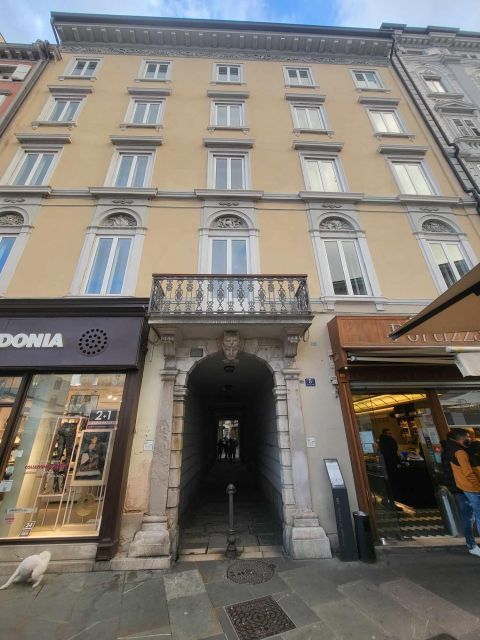
Facts explain a city, but legends help you remember it. This tour includes stories associated with Trieste, including the house where a disgraced Spanish prince lived with his family and court.
That is the sort of stop that can break up a sequence of dates and architectural terms. You get a personal drama tied to a real building, along with a reminder that Trieste has long attracted people caught between courts, countries, and political forces.
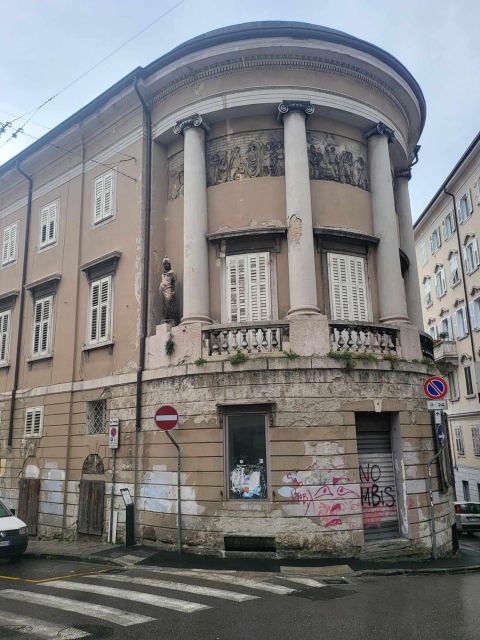
The guide also explains why obelisks were installed on buildings. That promise is a good example of the tour’s approach. Instead of only pointing out an unusual feature, the guide gives you a reason to look up and ask what it means.
Some people prefer a strictly factual tour. I would choose this one if you enjoy history with a little mystery and local storytelling. The legends are not a replacement for the historical background. They are the memorable hooks that help the wider story stay with you.
Piazza Unità d’Italia and the waterfront finish
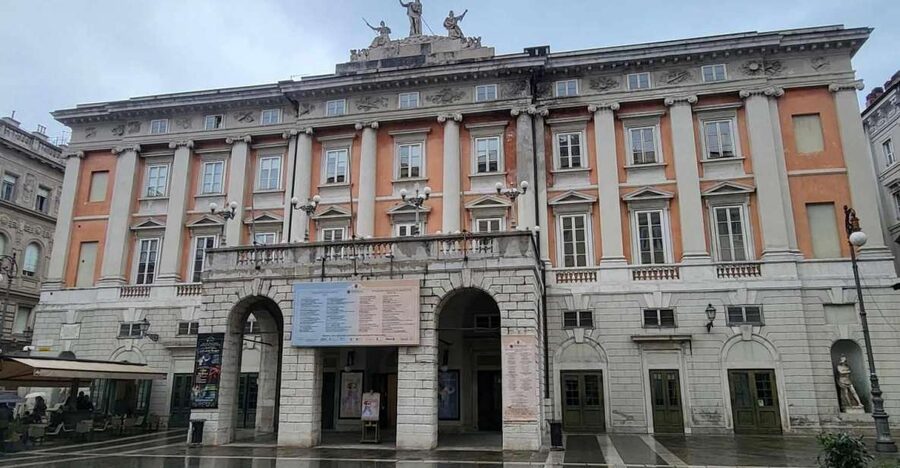
The advertised finish is Piazza Unità d’Italia, one of Trieste’s defining spaces. Its position by the water makes it an effective final scene for a tour that has covered Roman origins, imperial connections, writers, cafes, and the modern port.
A stop here helps tie together the city’s relationship with the Adriatic. Trieste’s waterfront is not merely scenic. It reflects the city’s role as a port and its long connection with trade beyond Italy.
This is also a practical ending point. From Piazza Unità d’Italia, you can continue your own walk, find a cafe, or use the square as a reference for further sightseeing. The activity information also says the experience ends back at the meeting point, which conflicts with the stated finish at Piazza Unità. Confirm that detail before you set up another appointment or arrange transportation.
The route’s final location is one reason the tour makes a good first activity in Trieste. You finish with a clear sense of the city center and can decide which museum, castle, cafe, or waterfront area deserves more of your time.
What the $130.28 group price really means
The price is $130.28 for a group of up to three people. That works out to about $43.43 per person for three people, though the cost per person rises if only one or two people book.
For a private or small-group experience, that can be fair value if you want a guide focused on your party rather than a large crowd. The value is strongest for first-time visitors who want a quick orientation and a coherent explanation of Trieste’s many identities.
You are paying for two hours with a professional guide, historical interpretation, local legends, and the chance to visit historical sites. You are not paying for meals, beverages, personal expenses, or entrance fees to certain attractions. Keep that difference in mind when comparing this walk with a longer sightseeing package.
The tour has a 4.6 rating from five published ratings, which suggests a positive early reception but is still a small sample. One detailed response praised the engaging presentation, the use of cards, and the guide’s commitment during strong winds. Another focused on the large amount of historical information. Those points tell you what the experience aims to do: provide an energetic introduction with plenty of context.
Free cancellation up to 24 hours before the start and reserve-now, pay-later booking add useful flexibility. You can hold the place without paying immediately, then change plans within the stated cancellation window.
Who will enjoy this walk most
I would recommend this tour to you if you want Trieste explained rather than simply photographed. It suits first-time visitors, readers interested in Saba, Svevo, or Joyce, and anyone curious about the city’s connections with Austria, Slovenia, and the wider Adriatic world.
It is also a good choice if you like unusual details. The blue coffee, the Spanish prince, the building obelisks, and the use of cards give the walk more personality than a standard list of dates.
You should think twice if you need step-free access, use a wheelchair, or have mobility limitations. The experience is specifically not suitable for wheelchair users or people with mobility impairments. It is also not suitable for pregnant women.
The tour is offered in English, Russian, and Slovenian. Choose the language in which you can comfortably follow historical names and complicated political changes. A two-hour tour can cover a lot, and missing key links would reduce its value.
Practical advice for a smoother two hours
Arrive with comfortable walking shoes, water, a camera, and sunscreen for sunny weather. The waterfront setting can bring strong winds, so a light extra layer is sensible even when the forecast looks mild.
Do not plan a tight appointment immediately afterward until you confirm the actual finish. The public description points to Piazza Unità d’Italia, while the meeting details say the activity ends back at the meeting point.
Meals and drinks are not part of the price. If the cafe or blue coffee opportunity appeals to you, carry a little extra spending money and ask whether your visit includes a purchase or simply a stop at the location.
The guide speaks live rather than sending you through an audio app. That matters if you want to ask questions or hear the stories adjusted to your interests. It also means weather and walking conditions can shape the experience more than they would on an indoor tour.
Should you book Trieste: Revealing the Secrets?
Book this walk if you want a lively two-hour introduction to a city that can otherwise feel historically complicated. The combination of Roman remains, Habsburg figures, literary connections, port life, legends, and cafe culture gives you several ways into Trieste.
I would be especially inclined to book it at the start of a stay. The finish at Piazza Unità d’Italia leaves you well placed to continue exploring, while the stories about Joyce, Saba, Svevo, Maria Theresa, and the Spanish prince give later sightseeing more meaning.
Skip it if you need a fully accessible route, guaranteed interior admissions, or a food-focused experience. Meals and beverages cost extra, and the exact cafe activity should be confirmed. For everyone else, the group price is reasonable when shared by three people, and the tour offers a thoughtful way to understand why Trieste feels both Italian and unmistakably Central European.
FAQ
Where does the tour start?
Meet at the Maria Theresa thaler in Piazza del Ponterosso, Trieste.
Where does the tour finish?
The advertised itinerary finishes at Piazza Unità d’Italia. The meeting information also says the activity ends back at the meeting point, so confirm the final arrangement before booking other plans.
How long does the tour last?
The walking tour lasts two hours.
What languages are available?
The live guide can conduct the tour in English, Russian, or Slovenian.
How much does the tour cost?
The price is $130.28 per group of up to three people.
Are food and drinks included?
No. Meals and beverages are not included, and personal expenses are also separate.
Are entrance fees included?
Entrance fees to certain attractions are not included.
What should I bring?
Bring comfortable shoes, water, and a camera. Sunscreen is recommended on sunny days.
Is the tour suitable for wheelchair users?
No. The experience is not suitable for wheelchair users or people with mobility impairments.
Can I cancel for a full refund?
Yes. You can cancel up to 24 hours in advance for a full refund. You can also reserve now and pay later to keep your plans flexible.
Just added around Trieste
- Private Tour to Slovenia from Trieste★ 4.0 · 3 reviews
- Lipica Stud Farm & Skocjan Caves – Small Group Tour from Trieste★ 4.5 · 3 reviews
- Trieste: coffee dive! espresso tasting★ 5.0 · 3 reviews
- Trieste Exploration Game and City Tour on your Phone★ 5.0 · 3 reviews
- Trieste: Freemasons and Secret Societies Guided Tour★ 4.3 · 3 reviews
- Trieste: Private Pasta-Making Class at a Local’s Home★ 3.8 · 4 reviews
- Habsburg Trieste Private Guided Walking Tour★ 5.0 · 4 reviews
- Airport transfer from Trieste Airport to Koper★ 5.0 · 4 reviews
Hidden Gems Walking Tours, compared.
Venice 3,5 hrs tour: Doge’s Palace, St Mark’s and Hidden Gems
Read our review →
Local Secrets of Venice Tapas & Wine Walking Tour
Read our review →
Private Secret Venice Tour; Rialto Market, San Polo & Food and Wine tasting
Read our review →
Browse the lists this tour appears in